
exynos4412—链接脚本复习
在u-boot下,定义变量,
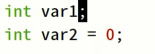

编译,编译完后 使用arm-linux-nm arm 没有去头的二进制可执行文件
 都在BSS段,均为初始化。
打印之后会出算随机值。
目前还处于uboot阶段,如果在根文件系统的话,加载器把二进制可执行文件加载到内存,并将BSS段清零。 放在BSS段的变量所对应的空间,在二进制可执行文件中不占空间。放在Data段才分配空间。
ld --help

默认链接脚本:arm-linux-ld -verbose
 GNU ld (GNU Binutils) 2.20.1.20100303

   Supported emulations:

    armelf_linux_eabi

    armelfb_linux_eabi

 using internal linker script:

 ==================================================

 /* Script for -z combreloc: combine and sort reloc sections */

 OUTPUT_FORMAT("elf32-littlearm", "elf32-bigarm",

           "elf32-littlearm")    //小端存储的arm

 OUTPUT_ARCH(arm)

 ENTRY(_start)

 SEARCH_DIR("=/usr/local/lib"); SEARCH_DIR("=/lib"); SEARCH_DIR("=/usr/lib");

 SECTIONS

 {

   /* Read-only sections, merged into text segment: */

   PROVIDE (__executable_start = SEGMENT_START("text-segment", 0x00008000)); . = SEGMENT_START("text-segment", 0x00008000) + SIZEOF_HEADERS;

   .interp         : { *(.interp) }

   .note.gnu.build-id : { *(.note.gnu.build-id) }

   .hash           : { *(.hash) }

   .gnu.hash       : { *(.gnu.hash) }

   .dynsym         : { *(.dynsym) }

   .dynstr         : { *(.dynstr) }

   .gnu.version    : { *(.gnu.version) }

   .gnu.version_d  : { *(.gnu.version_d) }

   .gnu.version_r  : { *(.gnu.version_r) }

   .rel.dyn        :

     {

       *(.rel.init)

       *(.rel.text .rel.text.* .rel.gnu.linkonce.t.*)

       *(.rel.fini)

       *(.rel.rodata .rel.rodata.* .rel.gnu.linkonce.r.*)

       *(.rel.data.rel.ro* .rel.gnu.linkonce.d.rel.ro.*)

       *(.rel.data .rel.data.* .rel.gnu.linkonce.d.*)

       *(.rel.tdata .rel.tdata.* .rel.gnu.linkonce.td.*)

       *(.rel.tbss .rel.tbss.* .rel.gnu.linkonce.tb.*)

       *(.rel.ctors)

       *(.rel.dtors)

       *(.rel.got)

       *(.rel.bss .rel.bss.* .rel.gnu.linkonce.b.*)

       PROVIDE_HIDDEN (__rel_iplt_start = .);

       *(.rel.iplt)

       PROVIDE_HIDDEN (__rel_iplt_end = .);

       PROVIDE_HIDDEN (__rela_iplt_start = .);

       PROVIDE_HIDDEN (__rela_iplt_end = .);

     }

   .rela.dyn       :

     {

       *(.rela.init)

       *(.rela.text .rela.text.* .rela.gnu.linkonce.t.*)

       *(.rela.fini)

       *(.rela.rodata .rela.rodata.* .rela.gnu.linkonce.r.*)

       *(.rela.data .rela.data.* .rela.gnu.linkonce.d.*)

       *(.rela.tdata .rela.tdata.* .rela.gnu.linkonce.td.*)

       *(.rela.tbss .rela.tbss.* .rela.gnu.linkonce.tb.*)

       *(.rela.ctors)

       *(.rela.dtors)

       *(.rela.got)

       *(.rela.bss .rela.bss.* .rela.gnu.linkonce.b.*)

       PROVIDE_HIDDEN (__rel_iplt_start = .);

       PROVIDE_HIDDEN (__rel_iplt_end = .);

       PROVIDE_HIDDEN (__rela_iplt_start = .);

       *(.rela.iplt)

       PROVIDE_HIDDEN (__rela_iplt_end = .);

     }

   .rel.plt        :

     {

       *(.rel.plt)

     }

   .rela.plt       :

     {

       *(.rela.plt)

     }

   .init           :

   {

     KEEP (*(.init))

   } =

   .plt            : { *(.plt) }

   .iplt           : { *(.iplt) }

   .text           :

   {

     *(.text.unlikely .text.*_unlikely)

     *(.text .stub .text.* .gnu.linkonce.t.*)

     /* .gnu.warning sections are handled specially by elf32.em.  */

     *(.gnu.warning)

     *(.glue_7t) *(.glue_7) *(.vfp11_veneer) *(.v4_bx)

   } =

   .fini           :

   {

     KEEP (*(.fini))

   } =

   PROVIDE (__etext = .);

   PROVIDE (_etext = .);

   PROVIDE (etext = .);

   .rodata         : { *(.rodata .rodata.* .gnu.linkonce.r.*) }

   .rodata1        : { *(.rodata1) }

   .ARM.extab   : { *(.ARM.extab* .gnu.linkonce.armextab.*) }

    __exidx_start = .;

   .ARM.exidx   : { *(.ARM.exidx* .gnu.linkonce.armexidx.*) }

    __exidx_end = .;

   .eh_frame_hdr : { *(.eh_frame_hdr) }

   .eh_frame       : ONLY_IF_RO { KEEP (*(.eh_frame)) }

   .gcc_except_table   : ONLY_IF_RO { *(.gcc_except_table .gcc_except_table.*) }

   /* Adjust the address for the data segment.  We want to adjust up to

      the same address within the page on the next page up.  */

   . = ALIGN (CONSTANT (MAXPAGESIZE)) - ((CONSTANT (MAXPAGESIZE) - .) & (CONSTANT (MAXPAGESIZE) - )); . = DATA_SEGMENT_ALIGN (CONSTANT (MAXPAGESIZE), CONSTANT (COMMONPAGESIZE));

   /* Exception handling  */

   .eh_frame       : ONLY_IF_RW { KEEP (*(.eh_frame)) }

   .gcc_except_table   : ONLY_IF_RW { *(.gcc_except_table .gcc_except_table.*) }

   /* Thread Local Storage sections  */

   .tdata      : { *(.tdata .tdata.* .gnu.linkonce.td.*) }

   .tbss          : { *(.tbss .tbss.* .gnu.linkonce.tb.*) *(.tcommon) }

   .preinit_array     :

   {

     PROVIDE_HIDDEN (__preinit_array_start = .);

     KEEP (*(.preinit_array))

     PROVIDE_HIDDEN (__preinit_array_end = .);

   }

   .init_array     :

   {

      PROVIDE_HIDDEN (__init_array_start = .);

      KEEP (*(SORT(.init_array.*)))

      KEEP (*(.init_array))

      PROVIDE_HIDDEN (__init_array_end = .);

   }

   .fini_array     :

   {

     PROVIDE_HIDDEN (__fini_array_start = .);

     KEEP (*(.fini_array))

     KEEP (*(SORT(.fini_array.*)))

     PROVIDE_HIDDEN (__fini_array_end = .);

   }

   .ctors          :

   {

     /* gcc uses crtbegin.o to find the start of

        the constructors, so we make sure it is

        first.  Because this is a wildcard, it

        doesn't matter if the user does not

        actually link against crtbegin.o; the

        linker won't look for a file to match a

        wildcard.  The wildcard also means that it

        doesn't matter which directory crtbegin.o

        is in.  */

     KEEP (*crtbegin.o(.ctors))

     KEEP (*crtbegin?.o(.ctors))

     /* We don't want to include the .ctor section from

        the crtend.o file until after the sorted ctors.

        The .ctor section from the crtend file contains the

        end of ctors marker and it must be last */

     KEEP (*(EXCLUDE_FILE (*crtend.o *crtend?.o ) .ctors))

     KEEP (*(SORT(.ctors.*)))

     KEEP (*(.ctors))

   }

   .dtors          :

   {

     KEEP (*crtbegin.o(.dtors))

     KEEP (*crtbegin?.o(.dtors))

     KEEP (*(EXCLUDE_FILE (*crtend.o *crtend?.o ) .dtors))

     KEEP (*(SORT(.dtors.*)))

     KEEP (*(.dtors))

   }

   .jcr            : { KEEP (*(.jcr)) }

   .data.rel.ro : { *(.data.rel.ro.local* .gnu.linkonce.d.rel.ro.local.*) *(.data.rel.ro* .gnu.linkonce.d.rel.ro.*) }

   .dynamic        : { *(.dynamic) }

   . = DATA_SEGMENT_RELRO_END (, .);

   .got            : { *(.got.plt) *(.igot.plt) *(.got) *(.igot) }

   .data           :

   {

     PROVIDE (__data_start = .);

     *(.data .data.* .gnu.linkonce.d.*)

     SORT(CONSTRUCTORS)

   }

   .data1          : { *(.data1) }

   _edata = .; PROVIDE (edata = .);

   __bss_start = .;

   __bss_start__ = .;

   .bss            :        //找到了

   {

    *(.dynbss)

    *(.bss .bss.* .gnu.linkonce.b.*)

    *(COMMON)

    /* Align here to ensure that the .bss section occupies space up to

       _end.  Align after .bss to ensure correct alignment even if the

       .bss section disappears because there are no input sections.

       FIXME: Why do we need it? When there is no .bss section, we don't

       pad the .data section.  */

    . = ALIGN(. !=  ?  /  : );

   }

   _bss_end__ = . ; __bss_end__ = . ;

   . = ALIGN( / );

   . = ALIGN( / );

   __end__ = . ;

   _end = .; PROVIDE (end = .);

   . = DATA_SEGMENT_END (.);

   /* Stabs debugging sections.  */

   .stab           : { *(.stab) }

   .stabstr        : { *(.stabstr) }

   .stab.excl      : { *(.stab.excl) }

   .stab.exclstr   : { *(.stab.exclstr) }

   .stab.index     : { *(.stab.index) }

   .stab.indexstr  : { *(.stab.indexstr) }

   .comment        : { *(.comment) }

   /* DWARF debug sections.

      Symbols in the DWARF debugging sections are relative to the beginning

      of the section so we begin them at 0.  */

   /* DWARF 1 */

   .debug           : { *(.debug) }

   .line            : { *(.line) }

   /* GNU DWARF 1 extensions */

   .debug_srcinfo   : { *(.debug_srcinfo) }

   .debug_sfnames   : { *(.debug_sfnames) }

   /* DWARF 1.1 and DWARF 2 */

   .debug_aranges   : { *(.debug_aranges) }

   .debug_pubnames  : { *(.debug_pubnames) }

   /* DWARF 2 */

   .debug_info      : { *(.debug_info .gnu.linkonce.wi.*) }

   .debug_abbrev    : { *(.debug_abbrev) }

   .debug_line      : { *(.debug_line) }

   .debug_frame     : { *(.debug_frame) }

   .debug_str       : { *(.debug_str) }

   .debug_loc       : { *(.debug_loc) }

   .debug_macinfo   : { *(.debug_macinfo) }

   /* SGI/MIPS DWARF 2 extensions */

   .debug_weaknames  : { *(.debug_weaknames) }

   .debug_funcnames  : { *(.debug_funcnames) }

   .debug_typenames  : { *(.debug_typenames) }

   .debug_varnames   : { *(.debug_varnames) }

   /* DWARF 3 */

   .debug_pubtypes  : { *(.debug_pubtypes) }

   .debug_ranges    : { *(.debug_ranges) }

   .gnu.attributes  : { KEEP (*(.gnu.attributes)) }

   .note.gnu.arm.ident  : { KEEP (*(.note.gnu.arm.ident)) }

   /DISCARD/ : { *(.note.GNU-stack) *(.gnu_debuglink) *(.gnu.lto_*) }

 }

 ==================================================
现在不使用默认的BSS段,使用自己写的BSS段。
OUTPUT_FORMAT("elf32-littlearm", "elf32-bigarm",

          "elf32-littlearm")

OUTPUT_ARCH(arm)

ENTRY(_start)

SECTIONS

{

    . = 0x50000000;

    .text : {

        start.o

        *(.text)

    }

    . = ALIGN();

    laomi_data_start = .;

    .laomi : {

        *(.laomi)

    }

    laomi_data_end = .;

    .data : {

        *(.data)

    }

    . = ALIGN();

    _bss_start = .;

    .bss : {

        *(.bss)

    }

    . = ALIGN();

    _bss_end = .;

}
ld.lds
 #include <led.h>

 #include <key.h>

 #include <lib.h>

 #include <uart.h>

 #include <backlight.h>

 #include <lcd.h>

 #include <mmu.h>

 u32 *T = (void *)0x60000000;

 int var0;

 int var1 = ;

 int data = ;

 int glb0 __attribute__ ((unused, section(".jason")))= ;

 int glb1 __attribute__ ((unused, section(".jason")))= ;

 int glb2 __attribute__ ((unused, section(".jason")))= ;

 int glb3 __attribute__ ((unused, section(".jason")))= ;

 extern int jason_data_start;

 extern int jason_data_end;

 void entry(void)

 {

     int *p = &jason_data_start;

     while (p < &jason_data_end) {

         printf("*p = %d\n", *p);

         p++;

     }

 }
entry.c
 .PHONE:clean

 TARGET        := arm

 BIN          := $(TARGET).bin

 LDADD        := 0x50000000

 ASM        := start.o

 OBJS        := entry.o lib.o mmu.o

 CROSS_COMPILE    := arm-linux-

 CC        := $(CROSS_COMPILE)gcc

 LD        := $(CROSS_COMPILE)ld

 OBJCOPY        := $(CROSS_COMPILE)objcopy

 NM        := $(CROSS_COMPILE)nm

 OBJDUMP        := $(CROSS_COMPILE)objdump

 all:$(TARGET)

     $(OBJCOPY) -O binary $< $(BIN)

 $(TARGET):$(ASM) $(OBJS)

     $(LD) $(ASM) $(OBJS) -Tld.lds -o $@

 %.o:%.S

     $(CC) -c $^

 %.o:%.c

     $(CC) -c $^ -Iinclude -Wall -fno-builtin

 clean:

     rm -f *.o $(BIN) $(TARGET)
Makefile
并且指定链接脚本,拿到结果

exynos4412—链接脚本复习的更多相关文章
- u-boot链接脚本分析
eclipse 64位下载地址:http://www.eclipse.org/downloads/download.php?file=/technology/epp/downloads/release ...
- 驱动开发学习笔记. 0.07 Uboot链接地址 加载地址 和 链接脚本地址
驱动开发学习笔记. 0.07 Uboot链接地址 加载地址 和 链接脚本地址 最近重新看了乾龙_Heron的<ARM 上电启动及 Uboot 代码分析>(下简称<代码分析>) ...
- [转]Linux下的lds链接脚本详解
转载自:http://linux.chinaunix.net/techdoc/beginner/2009/08/12/1129972.shtml 一. 概论 每一个链接过程都由链接脚本(lin ...
- Linux下的lds链接脚本基础
转载:http://soft.chinabyte.com/os/104/12255104.shtml 今天在看uboot引导Linux部分,发现要对链接脚本深入了解,才能知道各个目标文件的内存分布 ...
- Linux下的lds链接脚本简介
转载:http://hubingforever.blog.163.com/blog/static/171040579201192472552886/ 一. 概论 每一个链接过程都由链接脚本(lin ...
- 链接脚本之LMA VMA解释
链接脚本中的LMA和VMA是什么意思.这个问题纠结了一段时间,今天在看<ARM体系结构与编程>时,豁然开朗,写下自己的认识.分享例如以下: LMA:载入地址 位于存储器中的地址 LOAD ...
- 第2阶段——编写uboot之硬件初始化和制作链接脚本lds(1)
目标: 1.关看门狗 2.设置时钟 3.初始化SDRAM (初始化寄存器以及清除bss段) 4.重定位 (将nand/nor中代码COPY到链接地址上,需要初始化nandflash,读flash) 5 ...
- makefile使用.lds链接脚本以及 $@ ,$^, $,< 解析
先来分析一个简单的.lds链接脚本 例1,假如现在有head.c init.c nand.c main.c这4个文件: 1.1 首先创建链接脚本nand.lds: SECTIONS { firtst ...
- 裸板驱动总结(makefile+lds链接脚本+裸板调试)
在裸板2440中,当我们使用nand启动时,2440会自动将前4k字节复制到内部sram中,如下图所示: 然而此时的SDRAM.nandflash的控制时序等都还没初始化,所以我们就只能使用前0~40 ...
随机推荐
- oracle的乐观锁和悲观锁
一.问题引出 1. 假设当当网上用户下单买了本书,这时数据库中有条订单号为001的订单,其中有个status字段是’有效’,表示该订单是有效的: 2. 后台管理人员查询到这条001的订单,并且看到状态 ...
- [翻译] SvpplyTable
SvpplyTable https://github.com/liuminqian/SvpplyTable SvpplyTable is a demo to realize expandable an ...
- 附加进程找不到w3wp.exe进程解决方案
在进程列表的下面,有个show processes in all sessions(显示所有用户的进程(U)),把它勾上就能看到了 ,就是这么简单.
- 理解活在Iphone中的那些App (四)
App生存环境之宿主环境 终于开始说一些技术性的话题了,从这里开始的一些技术细节的东西,以前我也没有太刻意的注意过.为了写这个也是刚刚看了一点资料,如果有纰漏,恳请指出. 一个App生存的宿主环境主要 ...
- SQLAlchemy总结
SQL相关操作 创建一个test库 create database test; 授权一个用户 grant all privileges on *.* to 'yangjian'@'%' identif ...
- jq封装-无缝滚动效果
<!DOCTYPE html> <html> <head lang="en"> <meta charset="UTF-8&quo ...
- jwplayer视频--不兼容IE8
<!DOCTYPE html> <html> <head lang="en"> <meta charset="UTF-8&quo ...
- POJ-2452 Sticks Problem 二分+RMQ
题目链接: https://cn.vjudge.net/problem/POJ-2452 题目大意: 给出一个数组a,求最大的j-i满足 i<j && a[i] ... a[j] ...
- ClassNotFoundException: INameEnvironment
springboot兼容jsp启动是报错,ClassNotFoundException: INameEnvironment 降低springboot版本即可,原版本1.5.10,降为1.5.2可使用
- Django中的CBV和FBV
Django中的CBV和FBV 一. CBV CBV是采用面向对象的方法写视图文件. CBV的执行流程: 浏览器向服务器端发送请求,服务器端的urls.py根据请求匹配url,找到要执行的视图类,执 ...