
paper 83:前景检测算法_1(codebook和平均背景法)
前景分割中一个非常重要的研究方向就是背景减图法,因为背景减图的方法简单,原理容易被想到,且在智能视频监控领域中,摄像机很多情况下是固定的,且背景也是基本不变或者是缓慢变换的,在这种场合背景减图法的应用驱使了其不少科研人员去研究它。
但是背景减图获得前景图像的方法缺点也很多:比如说光照因素,遮挡因素,动态周期背景,且背景非周期背景,且一般情况下我们考虑的是每个像素点之间独立,这对实际应用留下了很大的隐患。
这一小讲主要是讲简单背景减图法和codebook法。
一、简单背景减图法的工作原理。
在视频对背景进行建模的过程中,每2帧图像之间对应像素点灰度值算出一个误差值,在背景建模时间内算出该像素点的平均值,误差平均值,然后在平均差值的基础上+-误差平均值的常数(这个系数需要手动调整)倍作为背景图像的阈值范围,所以当进行前景检测时,当相应点位置来了一个像素时,如果来的这个像素的每个通道的灰度值都在这个阈值范围内,则认为是背景用0表示,否则认为是前景用255表示。
下面的一个工程是learning opencv一书中作者提供的源代码,关于简单背景减图的代码和注释如下:
avg_background.h文件:
///////////////////////////////////////////////////////////////////////////////////////////////////////////////////

// Accumulate average and ~std (really absolute difference) image and use this to detect background and foreground

//

// Typical way of using this is to:

//     AllocateImages();

////loop for N images to accumulate background differences

//    accumulateBackground();

////When done, turn this into our avg and std model with high and low bounds

//    createModelsfromStats();

////Then use the function to return background in a mask (255 == foreground, 0 == background)

//    backgroundDiff(IplImage *I,IplImage *Imask, int num);

////Then tune the high and low difference from average image background acceptance thresholds

//    float scalehigh,scalelow; //Set these, defaults are 7 and 6. Note: scalelow is how many average differences below average

//    scaleHigh(scalehigh);

//    scaleLow(scalelow);

////That is, change the scale high and low bounds for what should be background to make it work.

////Then continue detecting foreground in the mask image

//    backgroundDiff(IplImage *I,IplImage *Imask, int num);

//

//NOTES: num is camera number which varies from 0 ... NUM_CAMERAS - 1.  Typically you only have one camera, but this routine allows

//          you to index many.

//

#ifndef AVGSEG_

#define AVGSEG_

#include "cv.h"                // define all of the opencv classes etc.

#include "highgui.h"

#include "cxcore.h"

//IMPORTANT DEFINES:

#define NUM_CAMERAS   1              //This function can handle an array of cameras

#define HIGH_SCALE_NUM 7.0            //How many average differences from average image on the high side == background

#define LOW_SCALE_NUM 6.0        //How many average differences from average image on the low side == background

void AllocateImages(IplImage *I);

void DeallocateImages();

void accumulateBackground(IplImage *I, int number=0);

void scaleHigh(float scale = HIGH_SCALE_NUM, int num = 0);

void scaleLow(float scale = LOW_SCALE_NUM, int num = 0);

void createModelsfromStats();

void backgroundDiff(IplImage *I,IplImage *Imask, int num = 0);

#endif
avg_background.cpp文件:
// avg_background.cpp : 定义控制台应用程序的入口点。

//

#include "stdafx.h"

#include "avg_background.h"

//GLOBALS

IplImage *IavgF[NUM_CAMERAS],*IdiffF[NUM_CAMERAS], *IprevF[NUM_CAMERAS], *IhiF[NUM_CAMERAS], *IlowF[NUM_CAMERAS];

IplImage *Iscratch,*Iscratch2,*Igray1,*Igray2,*Igray3,*Imaskt;

IplImage *Ilow1[NUM_CAMERAS],*Ilow2[NUM_CAMERAS],*Ilow3[NUM_CAMERAS],*Ihi1[NUM_CAMERAS],*Ihi2[NUM_CAMERAS],*Ihi3[NUM_CAMERAS];

float Icount[NUM_CAMERAS];

void AllocateImages(IplImage *I)  //I is just a sample for allocation purposes

{

    for(int i = 0; i<NUM_CAMERAS; i++){

        IavgF[i] = cvCreateImage( cvGetSize(I), IPL_DEPTH_32F, 3 );

        IdiffF[i] = cvCreateImage( cvGetSize(I), IPL_DEPTH_32F, 3 );

        IprevF[i] = cvCreateImage( cvGetSize(I), IPL_DEPTH_32F, 3 );

        IhiF[i] = cvCreateImage( cvGetSize(I), IPL_DEPTH_32F, 3 );

        IlowF[i] = cvCreateImage(cvGetSize(I), IPL_DEPTH_32F, 3 );

        Ilow1[i] = cvCreateImage( cvGetSize(I), IPL_DEPTH_32F, 1 );

        Ilow2[i] = cvCreateImage( cvGetSize(I), IPL_DEPTH_32F, 1 );

        Ilow3[i] = cvCreateImage( cvGetSize(I), IPL_DEPTH_32F, 1 );

        Ihi1[i] = cvCreateImage( cvGetSize(I), IPL_DEPTH_32F, 1 );

        Ihi2[i] = cvCreateImage( cvGetSize(I), IPL_DEPTH_32F, 1 );

        Ihi3[i] = cvCreateImage( cvGetSize(I), IPL_DEPTH_32F, 1 );

        cvZero(IavgF[i]  );

        cvZero(IdiffF[i]  );

        cvZero(IprevF[i]  );

        cvZero(IhiF[i] );

        cvZero(IlowF[i]  );

        Icount[i] = 0.00001; //Protect against divide by zero

    }

    Iscratch = cvCreateImage( cvGetSize(I), IPL_DEPTH_32F, 3 );

    Iscratch2 = cvCreateImage( cvGetSize(I), IPL_DEPTH_32F, 3 );

    Igray1 = cvCreateImage( cvGetSize(I), IPL_DEPTH_32F, 1 );

    Igray2 = cvCreateImage( cvGetSize(I), IPL_DEPTH_32F, 1 );

    Igray3 = cvCreateImage( cvGetSize(I), IPL_DEPTH_32F, 1 );

    Imaskt = cvCreateImage( cvGetSize(I), IPL_DEPTH_8U, 1 );

    cvZero(Iscratch);

    cvZero(Iscratch2 );

}

void DeallocateImages()

{

    for(int i=0; i<NUM_CAMERAS; i++){

        cvReleaseImage(&IavgF[i]);

        cvReleaseImage(&IdiffF[i] );

        cvReleaseImage(&IprevF[i] );

        cvReleaseImage(&IhiF[i] );

        cvReleaseImage(&IlowF[i] );

        cvReleaseImage(&Ilow1[i]  );

        cvReleaseImage(&Ilow2[i]  );

        cvReleaseImage(&Ilow3[i]  );

        cvReleaseImage(&Ihi1[i]   );

        cvReleaseImage(&Ihi2[i]   );

        cvReleaseImage(&Ihi3[i]  );

    }

    cvReleaseImage(&Iscratch);

    cvReleaseImage(&Iscratch2);

    cvReleaseImage(&Igray1  );

    cvReleaseImage(&Igray2 );

    cvReleaseImage(&Igray3 );

    cvReleaseImage(&Imaskt);

}

// Accumulate the background statistics for one more frame

// We accumulate the images, the image differences and the count of images for the

//    the routine createModelsfromStats() to work on after we're done accumulating N frames.

// I        Background image, 3 channel, 8u

// number    Camera number

void accumulateBackground(IplImage *I, int number)

{

    static int first = 1;

    cvCvtScale(I,Iscratch,1,0); //To float;#define cvCvtScale cvConvertScale #define cvScale cvConvertScale

    if (!first){

        cvAcc(Iscratch,IavgF[number]);//将2幅图像相加:IavgF[number]=IavgF[number]+Iscratch,IavgF[]里面装的是时间序列图片的累加

        cvAbsDiff(Iscratch,IprevF[number],Iscratch2);//将2幅图像相减:Iscratch2=abs(Iscratch-IprevF[number]);

        cvAcc(Iscratch2,IdiffF[number]);//IdiffF[]里面装的是图像差的累积和

        Icount[number] += 1.0;//累积的图片帧数计数

    }

    first = 0;

    cvCopy(Iscratch,IprevF[number]);//执行完该函数后,将当前帧数据保存为前一帧数据

}

// Scale the average difference from the average image high acceptance threshold

void scaleHigh(float scale, int num)//设定背景建模时的高阈值函数

{

    cvConvertScale(IdiffF[num],Iscratch,scale); //Converts with rounding and saturation

    cvAdd(Iscratch,IavgF[num],IhiF[num]);//将平均累积图像与误差累积图像缩放scale倍然后再相加

    cvCvtPixToPlane( IhiF[num], Ihi1[num],Ihi2[num],Ihi3[num], 0 );//#define cvCvtPixToPlane cvSplit,且cvSplit是将一个多通道矩阵转换为几个单通道矩阵

}

// Scale the average difference from the average image low acceptance threshold

void scaleLow(float scale, int num)//设定背景建模时的低阈值函数

{

    cvConvertScale(IdiffF[num],Iscratch,scale); //Converts with rounding and saturation

    cvSub(IavgF[num],Iscratch,IlowF[num]);//将平均累积图像与误差累积图像缩放scale倍然后再相减

    cvCvtPixToPlane( IlowF[num], Ilow1[num],Ilow2[num],Ilow3[num], 0 );

}

//Once you've learned the background long enough, turn it into a background model

void createModelsfromStats()

{

    for(int i=0; i<NUM_CAMERAS; i++)

    {

        cvConvertScale(IavgF[i],IavgF[i],(double)(1.0/Icount[i]));//此处为求出累积求和图像的平均值

        cvConvertScale(IdiffF[i],IdiffF[i],(double)(1.0/Icount[i]));//此处为求出累计误差图像的平均值

        cvAddS(IdiffF[i],cvScalar(1.0,1.0,1.0),IdiffF[i]);  //Make sure diff is always something,cvAddS是用于一个数值和一个标量相加

        scaleHigh(HIGH_SCALE_NUM,i);//HIGH_SCALE_NUM初始定义为7,其实就是一个倍数

        scaleLow(LOW_SCALE_NUM,i);//LOW_SCALE_NUM初始定义为6

    }

}

// Create a binary: 0,255 mask where 255 means forground pixel

// I        Input image, 3 channel, 8u

// Imask    mask image to be created, 1 channel 8u

// num        camera number.

//

void backgroundDiff(IplImage *I,IplImage *Imask, int num)  //Mask should be grayscale

{

    cvCvtScale(I,Iscratch,1,0); //To float;

//Channel 1

    cvCvtPixToPlane( Iscratch, Igray1,Igray2,Igray3, 0 );

    cvInRange(Igray1,Ilow1[num],Ihi1[num],Imask);//Igray1[]中相应的点在Ilow1[]和Ihi1[]之间时,Imask中相应的点为255(背景符合)

//Channel 2

    cvInRange(Igray2,Ilow2[num],Ihi2[num],Imaskt);//也就是说对于每一幅图像的绝对值差小于绝对值差平均值的6倍或者大于绝对值差平均值的7倍被认为是前景图像

    cvOr(Imask,Imaskt,Imask);

    //Channel 3

    cvInRange(Igray3,Ilow3[num],Ihi3[num],Imaskt);//这里的固定阈值6和7太不合理了,还好工程后面可以根据实际情况手动调整!

    cvOr(Imask,Imaskt,Imask);

    //Finally, invert the results

    cvSubRS( Imask, cvScalar(255), Imask);//前景用255表示了,背景是用0表示

}
二、codebook算法工作原理
考虑到简单背景减图法无法对动态的背景建模,有学者就提出了codebook算法。
该算法为图像中每一个像素点建立一个码本,每个码本可以包括多个码元,每个码元有它的学习时最大最小阈值,检测时的最大最小阈值等成员。在背景建模期间,每当来了一幅新图片,对每个像素点进行码本匹配,也就是说如果该像素值在码本中某个码元的学习阈值内,则认为它离过去该对应点出现过的历史情况偏离不大,通过一定的像素值比较,如果满足条件,此时还可以更新对应点的学习阈值和检测阈值。如果新来的像素值对码本中每个码元都不匹配,则有可能是由于背景是动态的,所以我们需要为其建立一个新的码元,并且设置相应的码元成员变量。因此,在背景学习的过程中,每个像素点可以对应多个码元,这样就可以学到复杂的动态背景。
关于codebook算法的代码和注释如下:
cv_yuv_codebook.h文件:
///////////////////////////////////////////////////////////////////////////////////////////////////////////////////

// Accumulate average and ~std (really absolute difference) image and use this to detect background and foreground

//

// Typical way of using this is to:

//     AllocateImages();

////loop for N images to accumulate background differences

//    accumulateBackground();

////When done, turn this into our avg and std model with high and low bounds

//    createModelsfromStats();

////Then use the function to return background in a mask (255 == foreground, 0 == background)

//    backgroundDiff(IplImage *I,IplImage *Imask, int num);

////Then tune the high and low difference from average image background acceptance thresholds

//    float scalehigh,scalelow; //Set these, defaults are 7 and 6. Note: scalelow is how many average differences below average

//    scaleHigh(scalehigh);

//    scaleLow(scalelow);

////That is, change the scale high and low bounds for what should be background to make it work.

////Then continue detecting foreground in the mask image

//    backgroundDiff(IplImage *I,IplImage *Imask, int num);

//

//NOTES: num is camera number which varies from 0 ... NUM_CAMERAS - 1.  Typically you only have one camera, but this routine allows

//          you to index many.

//

#ifndef AVGSEG_

#define AVGSEG_

#include "cv.h"                // define all of the opencv classes etc.

#include "highgui.h"

#include "cxcore.h"

//IMPORTANT DEFINES:

#define NUM_CAMERAS   1              //This function can handle an array of cameras

#define HIGH_SCALE_NUM 7.0            //How many average differences from average image on the high side == background

#define LOW_SCALE_NUM 6.0        //How many average differences from average image on the low side == background

void AllocateImages(IplImage *I);

void DeallocateImages();

void accumulateBackground(IplImage *I, int number=0);

void scaleHigh(float scale = HIGH_SCALE_NUM, int num = 0);

void scaleLow(float scale = LOW_SCALE_NUM, int num = 0);

void createModelsfromStats();

void backgroundDiff(IplImage *I,IplImage *Imask, int num = 0);

#endif
cv_yuv_codebook.cpp文件:
////////YUV CODEBOOK

// Gary Bradski, July 14, 2005

#include "stdafx.h"

#include "cv_yuv_codebook.h"

//GLOBALS FOR ALL CAMERA MODELS

//For connected components:

int CVCONTOUR_APPROX_LEVEL = 2;   // Approx.threshold - the bigger it is, the simpler is the boundary

int CVCLOSE_ITR = 1;                // How many iterations of erosion and/or dialation there should be

//#define CVPERIMSCALE 4            // image (width+height)/PERIMSCALE.  If contour lenght < this, delete that contour

//For learning background

//Just some convienience macros

#define CV_CVX_WHITE    CV_RGB(0xff,0xff,0xff)

#define CV_CVX_BLACK    CV_RGB(0x00,0x00,0x00)

///////////////////////////////////////////////////////////////////////////////////

// int updateCodeBook(uchar *p, codeBook &c, unsigned cbBounds)

// Updates the codebook entry with a new data point

//

// p            Pointer to a YUV pixel

// c            Codebook for this pixel

// cbBounds        Learning bounds for codebook (Rule of thumb: 10)

// numChannels    Number of color channels we're learning

//

// NOTES:

//        cvBounds must be of size cvBounds[numChannels]

//

// RETURN

//    codebook index

int cvupdateCodeBook(uchar *p, codeBook &c, unsigned *cbBounds, int numChannels)

{

    if(c.numEntries == 0) c.t = 0;//说明每个像素如果遍历了的话至少对应一个码元

    c.t += 1;        //Record learning event,遍历该像素点的次数加1

//SET HIGH AND LOW BOUNDS

    int n;

    unsigned int high[3],low[3];

    for(n=0; n<numChannels; n++)//为该像素点的每个通道设置最大阈值和最小阈值,后面用来更新学习的高低阈值时有用

    {

        high[n] = *(p+n)+*(cbBounds+n);

        if(high[n] > 255) high[n] = 255;

        low[n] = *(p+n)-*(cbBounds+n);

        if(low[n] < 0) low[n] = 0;

    }

    int matchChannel;

    //SEE IF THIS FITS AN EXISTING CODEWORD

    int i;

    for(i=0; i<c.numEntries; i++)//需要对所有的码元进行扫描

    {

        matchChannel = 0;

        for(n=0; n<numChannels; n++)

        {

            //这个地方要非常小心,if条件不是下面表达的

//if((c.cb[i]->min[n]-c.cb[i]->learnLow[n] <= *(p+n)) && (*(p+n) <= c.cb[i]->max[n]+c.cb[i]->learnHigh[n]))

//原因是因为在每次建立一个新码元的时候,learnHigh[n]和learnLow[n]的范围就在max[n]和min[n]上扩展了cbBounds[n],所以说

//learnHigh[n]和learnLow[n]的变化范围实际上比max[n]和min[n]的大

            if((c.cb[i]->learnLow[n] <= *(p+n)) && (*(p+n) <= c.cb[i]->learnHigh[n])) //Found an entry for this channel

            {

                matchChannel++;

            }

        }

        if(matchChannel == numChannels) //If an entry was found over all channels,找到了该元素此刻对应的码元

        {

            c.cb[i]->t_last_update = c.t;

            //adjust this codeword for the first channel

//更新每个码元的最大最小阈值,因为这2个阈值在后面的前景分离过程要用到

            for(n=0; n<numChannels; n++)

            {

                if(c.cb[i]->max[n] < *(p+n))//用该点的像素值更新该码元的最大值,所以max[n]保存的是实际上历史出现过的最大像素值

                {

                    c.cb[i]->max[n] = *(p+n);//因为这个for语句是在匹配成功了的条件阈值下的,所以一般来说改变后的max[n]和min[n]

//也不会过学习的高低阈值,并且学习的高低阈值也一直在缓慢变化

                }

                else if(c.cb[i]->min[n] > *(p+n))//用该点的像素值更新该码元的最小值,所以min[n]保存的是实际上历史出现过的最小像素值

                {

                    c.cb[i]->min[n] = *(p+n);

                }

            }

            break;//一旦找到了该像素的一个码元后就不用继续往后找了,加快算法速度。因为最多只有一个码元与之对应

        }

    }

    //OVERHEAD TO TRACK POTENTIAL STALE ENTRIES

    for(int s=0; s<c.numEntries; s++)

    {

        //This garbage is to track which codebook entries are going stale

        int negRun = c.t - c.cb[s]->t_last_update;//negRun表示码元没有更新的时间间隔

        if(c.cb[s]->stale < negRun) c.cb[s]->stale = negRun;//更新每个码元的statle

    }

    //ENTER A NEW CODE WORD IF NEEDED

    if(i == c.numEntries)  //No existing code word found, make a new one,只有当该像素码本中的所有码元都不符合要求时才满足if条件

    {

        code_element **foo = new code_element* [c.numEntries+1];//创建一个新的码元序列

        for(int ii=0; ii<c.numEntries; ii++)

        {

            foo[ii] = c.cb[ii];//将码本前面所有的码元地址赋给foo

        }

        foo[c.numEntries] = new code_element;//创建一个新码元并赋给foo指针的下一个空位

        if(c.numEntries) delete [] c.cb;//?

        c.cb = foo;

        for(n=0; n<numChannels; n++)//给新建立的码元结构体元素赋值

        {

            c.cb[c.numEntries]->learnHigh[n] = high[n];//当建立一个新码元时,用当前值附近cbBounds范围作为码元box的学习阈值

            c.cb[c.numEntries]->learnLow[n] = low[n];

            c.cb[c.numEntries]->max[n] = *(p+n);//当建立一个新码元时,用当前值作为码元box的最大最小边界值

            c.cb[c.numEntries]->min[n] = *(p+n);

        }

        c.cb[c.numEntries]->t_last_update = c.t;

        c.cb[c.numEntries]->stale = 0;//因为刚建立,所有为0

        c.numEntries += 1;//码元的个数加1

    }

    //SLOWLY ADJUST LEARNING BOUNDS

    for(n=0; n<numChannels; n++)//每次遍历该像素点就将每个码元的学习最大阈值变大,最小阈值变小,但是都是缓慢变化的

    {                           //如果是新建立的码元,则if条件肯定不满足

        if(c.cb[i]->learnHigh[n] < high[n]) c.cb[i]->learnHigh[n] += 1;

        if(c.cb[i]->learnLow[n] > low[n]) c.cb[i]->learnLow[n] -= 1;

    }

    return(i);//返回所找到码本中码元的索引

}

///////////////////////////////////////////////////////////////////////////////////

// uchar cvbackgroundDiff(uchar *p, codeBook &c, int minMod, int maxMod)

// Given a pixel and a code book, determine if the pixel is covered by the codebook

//

// p        pixel pointer (YUV interleaved)

// c        codebook reference

// numChannels  Number of channels we are testing

// maxMod    Add this (possibly negative) number onto max level when code_element determining if new pixel is foreground

// minMod    Subract this (possible negative) number from min level code_element when determining if pixel is foreground

//

// NOTES:

// minMod and maxMod must have length numChannels, e.g. 3 channels => minMod[3], maxMod[3].

//

// Return

// 0 => background, 255 => foreground

uchar cvbackgroundDiff(uchar *p, codeBook &c, int numChannels, int *minMod, int *maxMod)

{

    int matchChannel;

    //SEE IF THIS FITS AN EXISTING CODEWORD

    int i;

    for(i=0; i<c.numEntries; i++)

    {

        matchChannel = 0;

        for(int n=0; n<numChannels; n++)

        {

            if((c.cb[i]->min[n] - minMod[n] <= *(p+n)) && (*(p+n) <= c.cb[i]->max[n] + maxMod[n]))

            {

                matchChannel++; //Found an entry for this channel

            }

            else

            {

                break;//加快速度,当一个通道不满足时提前结束

            }

        }

        if(matchChannel == numChannels)

        {

            break; //Found an entry that matched all channels,加快速度,当一个码元找到时,提前结束

        }

    }

    if(i >= c.numEntries) return(255);//255代表前景,因为所有的码元都不满足条件

    return(0);//0代表背景,因为至少有一个码元满足条件

}

//UTILITES/////////////////////////////////////////////////////////////////////////////////////

/////////////////////////////////////////////////////////////////////////////////

//int clearStaleEntries(codeBook &c)

// After you've learned for some period of time, periodically call this to clear out stale codebook entries

//

//c        Codebook to clean up

//

// Return

// number of entries cleared

int cvclearStaleEntries(codeBook &c)//对每一个码本进行检查

{

    int staleThresh = c.t>>1;//阈值设置为访问该码元的次数的一半,经验值

    int *keep = new int [c.numEntries];

    int keepCnt = 0;

    //SEE WHICH CODEBOOK ENTRIES ARE TOO STALE

    for(int i=0; i<c.numEntries; i++)

    {

        if(c.cb[i]->stale > staleThresh)//当在背景建模期间有一半的时间内,codebook的码元条目没有被访问,则该条目将被删除

            keep[i] = 0; //Mark for destruction

        else

        {

            keep[i] = 1; //Mark to keep,为1时,该码本的条目将被保留

            keepCnt += 1;//keepCnt记录了要保持的codebook的数目

        }

    }

    //KEEP ONLY THE GOOD

    c.t = 0;                        //Full reset on stale tracking

    code_element **foo = new code_element* [keepCnt];//重新建立一个码本的双指针

    int k=0;

    for(int ii=0; ii<c.numEntries; ii++)

    {

        if(keep[ii])

        {

            foo[k] = c.cb[ii];//要保持该码元的话就要把码元结构体复制到fook

            foo[k]->stale = 0;        //We have to refresh these entries for next clearStale,不被访问的累加器stale重新赋值0

            foo[k]->t_last_update = 0;//

            k++;

        }

    }

    //CLEAN UP

    delete [] keep;

    delete [] c.cb;

    c.cb = foo;

    int numCleared = c.numEntries - keepCnt;//numCleared中保存的是被删除码元的个数

    c.numEntries = keepCnt;//最后新的码元数为保存下来码元的个数

    return(numCleared);//返回被删除的码元个数

}

/////////////////////////////////////////////////////////////////////////////////

//int countSegmentation(codeBook *c, IplImage *I)

//

//Count how many pixels are detected as foreground

// c    Codebook

// I    Image (yuv, 24 bits)

// numChannels  Number of channels we are testing

// maxMod    Add this (possibly negative) number onto max level when code_element determining if new pixel is foreground

// minMod    Subract this (possible negative) number from min level code_element when determining if pixel is foreground

//

// NOTES:

// minMod and maxMod must have length numChannels, e.g. 3 channels => minMod[3], maxMod[3].

//

//Return

// Count of fg pixels

//

int cvcountSegmentation(codeBook *c, IplImage *I, int numChannels, int *minMod, int *maxMod)

{

    int count = 0,i;

    uchar *pColor;

    int imageLen = I->width * I->height;

    //GET BASELINE NUMBER OF FG PIXELS FOR Iraw

    pColor = (uchar *)((I)->imageData);

    for(i=0; i<imageLen; i++)

    {

        if(cvbackgroundDiff(pColor, c[i], numChannels, minMod, maxMod))//对每一个像素点都要检测其是否为前景,如果是的话,计数器count就加1

            count++;

        pColor += 3;

    }

    return(count);//返回图像I的前景像素点的个数

}

///////////////////////////////////////////////////////////////////////////////////////////

//void cvconnectedComponents(IplImage *mask, int poly1_hull0, float perimScale, int *num, CvRect *bbs, CvPoint *centers)

// This cleans up the forground segmentation mask derived from calls to cvbackgroundDiff

//

// mask            Is a grayscale (8 bit depth) "raw" mask image which will be cleaned up

//

// OPTIONAL PARAMETERS:

// poly1_hull0    If set, approximate connected component by (DEFAULT) polygon, or else convex hull (0)

// perimScale     Len = image (width+height)/perimScale.  If contour len < this, delete that contour (DEFAULT: 4)

// num            Maximum number of rectangles and/or centers to return, on return, will contain number filled (DEFAULT: NULL)

// bbs            Pointer to bounding box rectangle vector of length num.  (DEFAULT SETTING: NULL)

// centers        Pointer to contour centers vectore of length num (DEFULT: NULL)

//

void cvconnectedComponents(IplImage *mask, int poly1_hull0, float perimScale, int *num, CvRect *bbs, CvPoint *centers)

{

static CvMemStorage*    mem_storage    = NULL;

static CvSeq*            contours    = NULL;

//CLEAN UP RAW MASK

//开运算作用:平滑轮廓,去掉细节,断开缺口

    cvMorphologyEx( mask, mask, NULL, NULL, CV_MOP_OPEN, CVCLOSE_ITR );//对输入mask进行开操作,CVCLOSE_ITR为开操作的次数,输出为mask图像

//闭运算作用:平滑轮廓,连接缺口

    cvMorphologyEx( mask, mask, NULL, NULL, CV_MOP_CLOSE, CVCLOSE_ITR );//对输入mask进行闭操作,CVCLOSE_ITR为闭操作的次数,输出为mask图像

//FIND CONTOURS AROUND ONLY BIGGER REGIONS

    if( mem_storage==NULL ) mem_storage = cvCreateMemStorage(0);

    else cvClearMemStorage(mem_storage);

    //CV_RETR_EXTERNAL=0是在types_c.h中定义的,CV_CHAIN_APPROX_SIMPLE=2也是在该文件中定义的

    CvContourScanner scanner = cvStartFindContours(mask,mem_storage,sizeof(CvContour),CV_RETR_EXTERNAL,CV_CHAIN_APPROX_SIMPLE);

    CvSeq* c;

    int numCont = 0;

    while( (c = cvFindNextContour( scanner )) != NULL )

    {

        double len = cvContourPerimeter( c );

        double q = (mask->height + mask->width) /perimScale;   //calculate perimeter len threshold

        if( len < q ) //Get rid of blob if it's perimeter is too small

        {

            cvSubstituteContour( scanner, NULL );

        }

        else //Smooth it's edges if it's large enough

        {

            CvSeq* c_new;

            if(poly1_hull0) //Polygonal approximation of the segmentation

                c_new = cvApproxPoly(c,sizeof(CvContour),mem_storage,CV_POLY_APPROX_DP, CVCONTOUR_APPROX_LEVEL,0);

            else //Convex Hull of the segmentation

                c_new = cvConvexHull2(c,mem_storage,CV_CLOCKWISE,1);

            cvSubstituteContour( scanner, c_new );

            numCont++;

        }

    }

    contours = cvEndFindContours( &scanner );

// PAINT THE FOUND REGIONS BACK INTO THE IMAGE

    cvZero( mask );

    IplImage *maskTemp;

    //CALC CENTER OF MASS AND OR BOUNDING RECTANGLES

    if(num != NULL)

    {

        int N = *num, numFilled = 0, i=0;

        CvMoments moments;

        double M00, M01, M10;

        maskTemp = cvCloneImage(mask);

        for(i=0, c=contours; c != NULL; c = c->h_next,i++ )

        {

            if(i < N) //Only process up to *num of them

            {

                cvDrawContours(maskTemp,c,CV_CVX_WHITE, CV_CVX_WHITE,-1,CV_FILLED,8);

                //Find the center of each contour

                if(centers != NULL)

                {

                    cvMoments(maskTemp,&moments,1);

                    M00 = cvGetSpatialMoment(&moments,0,0);

                    M10 = cvGetSpatialMoment(&moments,1,0);

                    M01 = cvGetSpatialMoment(&moments,0,1);

                    centers[i].x = (int)(M10/M00);

                    centers[i].y = (int)(M01/M00);

                }

                //Bounding rectangles around blobs

                if(bbs != NULL)

                {

                    bbs[i] = cvBoundingRect(c);

                }

                cvZero(maskTemp);

                numFilled++;

            }

            //Draw filled contours into mask

            cvDrawContours(mask,c,CV_CVX_WHITE,CV_CVX_WHITE,-1,CV_FILLED,8); //draw to central mask

        } //end looping over contours

        *num = numFilled;

        cvReleaseImage( &maskTemp);

    }

    //ELSE JUST DRAW PROCESSED CONTOURS INTO THE MASK

    else

    {

        for( c=contours; c != NULL; c = c->h_next )

        {

            cvDrawContours(mask,c,CV_CVX_WHITE, CV_CVX_BLACK,-1,CV_FILLED,8);

        }

    }

}
三、2种算法进行对比。
Learning Opencv的作者将这两种算法做了下对比,用的视频是有风吹动树枝的动态背景,一段时间过后的前景是视频中移动的手。
当然在这个工程中,作者除了体现上述简单背景差法和codobook算法的一些原理外,还引入了很多细节来优化前景分割效果。比如说误差计算时的方差和协方差计算加速方法,消除像素点内长时间没有被访问过的码元,对检测到的粗糙原始前景图用连通域分析法清楚噪声,其中引入了形态学中的几种操作,使用多边形拟合前景轮廓等细节处理。
在看作者代码前,最好先看下下面几个变量的物理含义。
maxMod[n]:用训练好的背景模型进行前景检测时用到,判断点是否小于max[n] + maxMod[n])。
minMod[n]:用训练好的背景模型进行前景检测时用到,判断点是否小于min[n] -minMod[n])。
cbBounds*:训练背景模型时用到,可以手动输入该参数,这个数主要是配合high[n]和low[n]来用的。
learnHigh[n]:背景学习过程中当一个新像素来时用来判断是否在已有的码元中,是阈值的上界部分。
learnLow[n]:背景学习过程中当一个新像素来时用来判断是否在已有的码元中,是阈值的下界部分。
max[n]: 背景学习过程中每个码元学习到的最大值,在前景分割时配合maxMod[n]用的。
min[n]: 背景学习过程中每个码元学习到的最小值,在前景分割时配合minMod[n]用的。
high[n]:背景学习过程中用来调整learnHigh[n]的,如果learnHigh[n]<high[n],则learnHigh[n]缓慢加1
low[n]: 背景学习过程中用来调整learnLow[n]的,如果learnLow[n]>Low[n],则learnLow[缓慢减1
该工程带主函数部分代码和注释如下:
#include "stdafx.h" #include "cv.h"
#include "highgui.h"
#include <stdio.h>
#include <stdlib.h>
#include <ctype.h>
#include "avg_background.h"
#include "cv_yuv_codebook.h" //VARIABLES for CODEBOOK METHOD:
codeBook *cB; //This will be our linear model of the image, a vector
//of lengh = height*width
int maxMod[CHANNELS]; //Add these (possibly negative) number onto max
// level when code_element determining if new pixel is foreground
int minMod[CHANNELS]; //Subract these (possible negative) number from min
//level code_element when determining if pixel is foreground
unsigned cbBounds[CHANNELS]; //Code Book bounds for learning
bool ch[CHANNELS]; //This sets what channels should be adjusted for background bounds
int nChannels = CHANNELS;
int imageLen = 0;
uchar *pColor; //YUV pointer void help() {
printf("\nLearn background and find foreground using simple average and average difference learning method:\n"
"\nUSAGE:\n ch9_background startFrameCollection# endFrameCollection# [movie filename, else from camera]\n"
"If from AVI, then optionally add HighAvg, LowAvg, HighCB_Y LowCB_Y HighCB_U LowCB_U HighCB_V LowCB_V\n\n"
"***Keep the focus on the video windows, NOT the consol***\n\n"
"INTERACTIVE PARAMETERS:\n"
"\tESC,q,Q - quit the program\n"
"\th - print this help\n"
"\tp - pause toggle\n"
"\ts - single step\n"
"\tr - run mode (single step off)\n"
"=== AVG PARAMS ===\n"
"\t- - bump high threshold UP by 0.25\n"
"\t= - bump high threshold DOWN by 0.25\n"
"\t[ - bump low threshold UP by 0.25\n"
"\t] - bump low threshold DOWN by 0.25\n"
"=== CODEBOOK PARAMS ===\n"
"\ty,u,v- only adjust channel 0(y) or 1(u) or 2(v) respectively\n"
"\ta - adjust all 3 channels at once\n"
"\tb - adjust both 2 and 3 at once\n"
"\ti,o - bump upper threshold up,down by 1\n"
"\tk,l - bump lower threshold up,down by 1\n"
);
} //
//USAGE: ch9_background startFrameCollection# endFrameCollection# [movie filename, else from camera]
//If from AVI, then optionally add HighAvg, LowAvg, HighCB_Y LowCB_Y HighCB_U LowCB_U HighCB_V LowCB_V
//
int main(int argc, char** argv)
{
IplImage* rawImage = 0, *yuvImage = 0; //yuvImage is for codebook method
IplImage *ImaskAVG = 0,*ImaskAVGCC = 0;
IplImage *ImaskCodeBook = 0,*ImaskCodeBookCC = 0;
CvCapture* capture = 0; int startcapture = 1;
int endcapture = 30;
int c,n; maxMod[0] = 3; //Set color thresholds to default values
minMod[0] = 10;
maxMod[1] = 1;
minMod[1] = 1;
maxMod[2] = 1;
minMod[2] = 1;
float scalehigh = HIGH_SCALE_NUM;//默认值为6
float scalelow = LOW_SCALE_NUM;//默认值为7 if(argc < 3) {//只有1个参数或者没有参数时,输出错误,并提示help信息,因为该程序本身就算进去了一个参数
printf("ERROR: Too few parameters\n");
help();
}else{//至少有2个参数才算正确
if(argc == 3){//输入为2个参数的情形是从摄像头输入数据
printf("Capture from Camera\n");
capture = cvCaptureFromCAM( 0 );
}
else {//输入大于2个参数时是从文件中读入视频数据
printf("Capture from file %s\n",argv[3]);//第三个参数是读入视频文件的文件名
// capture = cvCaptureFromFile( argv[3] );
capture = cvCreateFileCapture( argv[3] );
if(!capture) { printf("Couldn't open %s\n",argv[3]); return -1;}//读入视频文件失败
}
if(isdigit(argv[1][0])) { //Start from of background capture
startcapture = atoi(argv[1]);//第一个参数表示视频开始的背景训练时的帧,默认是1
printf("startcapture = %d\n",startcapture);
}
if(isdigit(argv[2][0])) { //End frame of background capture
endcapture = atoi(argv[2]);//第二个参数表示的结束背景训练时的,默认为30
printf("endcapture = %d\n");
}
if(argc > 4){ //See if parameters are set from command line,输入多于4个参数表示后面的算法中用到的参数在这里直接输入
//FOR AVG MODEL
if(argc >= 5){
if(isdigit(argv[4][0])){
scalehigh = (float)atoi(argv[4]);
}
}
if(argc >= 6){
if(isdigit(argv[5][0])){
scalelow = (float)atoi(argv[5]);
}
}
//FOR CODEBOOK MODEL, CHANNEL 0
if(argc >= 7){
if(isdigit(argv[6][0])){
maxMod[0] = atoi(argv[6]);
}
}
if(argc >= 8){
if(isdigit(argv[7][0])){
minMod[0] = atoi(argv[7]);
}
}
//Channel 1
if(argc >= 9){
if(isdigit(argv[8][0])){
maxMod[1] = atoi(argv[8]);
}
}
if(argc >= 10){
if(isdigit(argv[9][0])){
minMod[1] = atoi(argv[9]);
}
}
//Channel 2
if(argc >= 11){
if(isdigit(argv[10][0])){
maxMod[2] = atoi(argv[10]);
}
}
if(argc >= 12){
if(isdigit(argv[11][0])){
minMod[2] = atoi(argv[11]);
}
}
}
} //MAIN PROCESSING LOOP:
bool pause = false;
bool singlestep = false; if( capture )
{
cvNamedWindow( "Raw", 1 );//原始视频图像
cvNamedWindow( "AVG_ConnectComp",1);//平均法连通区域分析后的图像
cvNamedWindow( "ForegroundCodeBook",1);//codebook法后图像
cvNamedWindow( "CodeBook_ConnectComp",1);//codebook法连通区域分析后的图像
cvNamedWindow( "ForegroundAVG",1);//平均法后图像
int i = -1; for(;;)
{
if(!pause){
// if( !cvGrabFrame( capture ))
// break;
// rawImage = cvRetrieveFrame( capture );
rawImage = cvQueryFrame( capture );
++i;//count it
// printf("%d\n",i);
if(!rawImage)
break;
//REMOVE THIS FOR GENERAL OPERATION, JUST A CONVIENIENCE WHEN RUNNING WITH THE SMALL tree.avi file
if(i == 56){//程序开始运行几十帧后自动暂停,以便后面好手动调整参数
pause = 1;
printf("\n\nVideo paused for your convienience at frame 50 to work with demo\n"
"You may adjust parameters, single step or continue running\n\n");
help();
}
}
if(singlestep){
pause = true;
}
//First time:
if(0 == i) {
printf("\n . . . wait for it . . .\n"); //Just in case you wonder why the image is white at first
//AVG METHOD ALLOCATION
AllocateImages(rawImage);//为算法的使用分配内存
scaleHigh(scalehigh);//设定背景建模时的高阈值函数
scaleLow(scalelow);//设定背景建模时的低阈值函数
ImaskAVG = cvCreateImage( cvGetSize(rawImage), IPL_DEPTH_8U, 1 );
ImaskAVGCC = cvCreateImage( cvGetSize(rawImage), IPL_DEPTH_8U, 1 );
cvSet(ImaskAVG,cvScalar(255));
//CODEBOOK METHOD ALLOCATION:
yuvImage = cvCloneImage(rawImage);
ImaskCodeBook = cvCreateImage( cvGetSize(rawImage), IPL_DEPTH_8U, 1 );//用来装前景背景图的,当然只要一个通道的图像即可
ImaskCodeBookCC = cvCreateImage( cvGetSize(rawImage), IPL_DEPTH_8U, 1 );
cvSet(ImaskCodeBook,cvScalar(255));
imageLen = rawImage->width*rawImage->height;
cB = new codeBook [imageLen];//创建一个码本cB数组,每个像素对应一个码本
for(int f = 0; f<imageLen; f++)
{
cB[f].numEntries = 0;//每个码本的初始码元个数赋值为0
}
for(int nc=0; nc<nChannels;nc++)
{
cbBounds[nc] = 10; //Learning bounds factor,初始值为10
}
ch[0] = true; //Allow threshold setting simultaneously for all channels
ch[1] = true;
ch[2] = true;
}
//If we've got an rawImage and are good to go:
if( rawImage )
{
cvCvtColor( rawImage, yuvImage, CV_BGR2YCrCb );//YUV For codebook method
//This is where we build our background model
if( !pause && i >= startcapture && i < endcapture ){
//LEARNING THE AVERAGE AND AVG DIFF BACKGROUND
accumulateBackground(rawImage);//平均法累加过程
//LEARNING THE CODEBOOK BACKGROUND
pColor = (uchar *)((yuvImage)->imageData);//yuvImage矩阵的首位置
for(int c=0; c<imageLen; c++)
{
cvupdateCodeBook(pColor, cB[c], cbBounds, nChannels);//codebook算法建模过程
pColor += 3;
}
}
//When done, create the background model
if(i == endcapture){
createModelsfromStats();//平均法建模过程
}
//Find the foreground if any
if(i >= endcapture) {//endcapture帧后开始检测前景
//FIND FOREGROUND BY AVG METHOD:
backgroundDiff(rawImage,ImaskAVG);
cvCopy(ImaskAVG,ImaskAVGCC);
cvconnectedComponents(ImaskAVGCC);//平均法中的前景清除
//FIND FOREGROUND BY CODEBOOK METHOD
uchar maskPixelCodeBook;
pColor = (uchar *)((yuvImage)->imageData); //3 channel yuv image
uchar *pMask = (uchar *)((ImaskCodeBook)->imageData); //1 channel image
for(int c=0; c<imageLen; c++)
{
maskPixelCodeBook = cvbackgroundDiff(pColor, cB[c], nChannels, minMod, maxMod);//前景返回255,背景返回0
*pMask++ = maskPixelCodeBook;//将前景检测的结果返回到ImaskCodeBook中
pColor += 3;
}
//This part just to visualize bounding boxes and centers if desired
cvCopy(ImaskCodeBook,ImaskCodeBookCC);
cvconnectedComponents(ImaskCodeBookCC);//codebook算法中的前景清除
}
//Display
cvShowImage( "Raw", rawImage );//除了这张是彩色图外,另外4张都是黑白图
cvShowImage( "AVG_ConnectComp",ImaskAVGCC);
cvShowImage( "ForegroundAVG",ImaskAVG);
cvShowImage( "ForegroundCodeBook",ImaskCodeBook);
cvShowImage( "CodeBook_ConnectComp",ImaskCodeBookCC); //USER INPUT:
c = cvWaitKey(10)&0xFF;
//End processing on ESC, q or Q
if(c == 27 || c == 'q' | c == 'Q')
break;
//Else check for user input
switch(c)
{
case 'h':
help();
break;
case 'p':
pause ^= 1;
break;
case 's':
singlestep = 1;
pause = false;
break;
case 'r':
pause = false;
singlestep = false;
break;
//AVG BACKROUND PARAMS
case '-'://调整scalehigh的参数,scalehigh的物理意义是误差累加的影响因子,其倒数为缩放倍数,加0.25实际上是减小其影响力
if(i > endcapture){
scalehigh += 0.25;
printf("AVG scalehigh=%f\n",scalehigh);
scaleHigh(scalehigh);
}
break;
case '='://scalehigh减少2.5是增加其影响力
if(i > endcapture){
scalehigh -= 0.25;
printf("AVG scalehigh=%f\n",scalehigh);
scaleHigh(scalehigh);
}
break;
case '[':
if(i > endcapture){//设置设定背景建模时的低阈值函数,同上
scalelow += 0.25;
printf("AVG scalelow=%f\n",scalelow);
scaleLow(scalelow);
}
break;
case ']':
if(i > endcapture){
scalelow -= 0.25;
printf("AVG scalelow=%f\n",scalelow);
scaleLow(scalelow);
}
break;
//CODEBOOK PARAMS
case 'y':
case '0'://激活y通道
ch[0] = 1;
ch[1] = 0;
ch[2] = 0;
printf("CodeBook YUV Channels active: ");
for(n=0; n<nChannels; n++)
printf("%d, ",ch[n]);
printf("\n");
break;
case 'u':
case '1'://激活u通道
ch[0] = 0;
ch[1] = 1;
ch[2] = 0;
printf("CodeBook YUV Channels active: ");
for(n=0; n<nChannels; n++)
printf("%d, ",ch[n]);
printf("\n");
break;
case 'v':
case '2'://激活v通道
ch[0] = 0;
ch[1] = 0;
ch[2] = 1;
printf("CodeBook YUV Channels active: ");
for(n=0; n<nChannels; n++)
printf("%d, ",ch[n]);
printf("\n");
break;
case 'a': //All
case '3'://激活所有通道
ch[0] = 1;
ch[1] = 1;
ch[2] = 1;
printf("CodeBook YUV Channels active: ");
for(n=0; n<nChannels; n++)
printf("%d, ",ch[n]);
printf("\n");
break;
case 'b': //both u and v together
ch[0] = 0;
ch[1] = 1;
ch[2] = 1;
printf("CodeBook YUV Channels active: ");
for(n=0; n<nChannels; n++)
printf("%d, ",ch[n]);
printf("\n");
break;
case 'i': //modify max classification bounds (max bound goes higher)
for(n=0; n<nChannels; n++){//maxMod和minMod是最大值和最小值跳动的阈值
if(ch[n])
maxMod[n] += 1;
printf("%.4d,",maxMod[n]);
}
printf(" CodeBook High Side\n");
break;
case 'o': //modify max classification bounds (max bound goes lower)
for(n=0; n<nChannels; n++){
if(ch[n])
maxMod[n] -= 1;
printf("%.4d,",maxMod[n]);
}
printf(" CodeBook High Side\n");
break;
case 'k': //modify min classification bounds (min bound goes lower)
for(n=0; n<nChannels; n++){
if(ch[n])
minMod[n] += 1;
printf("%.4d,",minMod[n]);
}
printf(" CodeBook Low Side\n");
break;
case 'l': //modify min classification bounds (min bound goes higher)
for(n=0; n<nChannels; n++){
if(ch[n])
minMod[n] -= 1;
printf("%.4d,",minMod[n]);
}
printf(" CodeBook Low Side\n");
break;
} }
}
cvReleaseCapture( &capture );
cvDestroyWindow( "Raw" );
cvDestroyWindow( "ForegroundAVG" );
cvDestroyWindow( "AVG_ConnectComp");
cvDestroyWindow( "ForegroundCodeBook");
cvDestroyWindow( "CodeBook_ConnectComp");
DeallocateImages();//释放平均法背景建模过程中用到的内存
if(yuvImage) cvReleaseImage(&yuvImage);
if(ImaskAVG) cvReleaseImage(&ImaskAVG);
if(ImaskAVGCC) cvReleaseImage(&ImaskAVGCC);
if(ImaskCodeBook) cvReleaseImage(&ImaskCodeBook);
if(ImaskCodeBookCC) cvReleaseImage(&ImaskCodeBookCC);
delete [] cB;
}
else{ printf("\n\nDarn, Something wrong with the parameters\n\n"); help();
}
return 0;
}
运行结果截图如下:
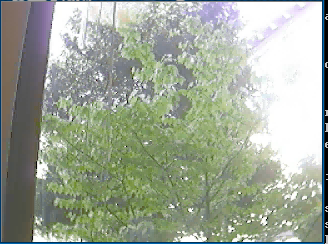
训练过程视频原图截图:
测试过程视频原图截图:
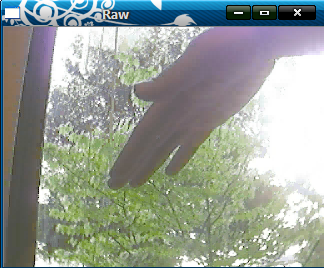
前景检测过程截图:

可以看到左边2幅截图的对比,codebook算法的效果明显比简单减图法要好,手型比较清晰些。
四、参考文献
Bradski, G. and A. Kaehler (2008). Learning OpenCV: Computer vision with the OpenCV library, O'Reilly Media.
paper 83:前景检测算法_1(codebook和平均背景法)的更多相关文章
- [转]前景检测算法--ViBe算法
原文:http://blog.csdn.net/zouxy09/article/details/9622285 转自:http://blog.csdn.net/app_12062011/article ...
- [综]前景检测GMM
tornadomeet 前景检测算法_4(opencv自带GMM) http://www.cnblogs.com/tornadomeet/archive/2012/06/02/2531705.html ...
- 运动检测(前景检测)之(一)ViBe
运动检测(前景检测)之(一)ViBe zouxy09@qq.com http://blog.csdn.net/zouxy09 因为监控发展的需求,目前前景检测的研究还是很多的,也出现了很多新的方法和思 ...
- ViBe(Visual Background extractor)背景建模或前景检测
ViBe算法:ViBe - a powerful technique for background detection and subtraction in video sequences 算法官网: ...
- 目标检测之vibe---ViBe(Visual Background extractor)背景建模或前景检测
ViBe算法:ViBe - a powerful technique for background detection and subtraction in video sequences 算法官网: ...
- 检测算法简介及其原理——fast R-CNN,faster R-CNN,YOLO,SSD,YOLOv2,YOLOv3
1 引言 深度学习目前已经应用到了各个领域,应用场景大体分为三类:物体识别,目标检测,自然语言处理.本文着重与分析目标检测领域的深度学习方法,对其中的经典模型框架进行深入分析. 目标检测可以理解为是物 ...
- 基于COCO数据集验证的目标检测算法天梯排行榜
基于COCO数据集验证的目标检测算法天梯排行榜 AP50 Rank Model box AP AP50 Paper Code Result Year Tags 1 SwinV2-G (HTC++) 6 ...
- 基于Shading Model(对光照变化一定不变性)的运动目标检测算法
光照模型(Shading Model)在很多论文中得到了广泛的应用,如robust and illumination invariant change detection based on linea ...
- 基于模糊Choquet积分的目标检测算法
本文根据论文:Fuzzy Integral for Moving Object Detection-FUZZ-IEEE_2008的内容及自己的理解而成,如果想了解更多细节,请参考原文.在背景建模中,我 ...
随机推荐
- JavaScript函数小结
JS基础知识 /********************** 1:基础知识 1 创建脚本块 1: <script language=”JavaScript”> 2: JavaScript ...
- jdk 8 lambda表达式 及在Android Studio的使用示例
以前觉得java让人觉得有趣的一个特点是支持:匿名内部类,而最近发现jdk8已支持lambda并有更简便的方式,来实现匿名内部类. 这会让程序员更舒服,更喜欢java. 多年前觉得java语法和C#语 ...
- 371. Sum of Two Integers
不用加减法计算两个整数的和.这道题其实是考察一些基本的布尔代数知识.我们知道,二进制表示时: 0 + 0 = 00 1 + 0 = 01 0 + 1 = 01 1 + 1 = 10 所以,两个二进制整 ...
- Selenium2学习-014-WebUI自动化实战实例-012-Selenium 操作下拉列表实例-div+{js|jquery}
之前已经讲过了 Selenium 操作 Select 实现的下拉列表:Selenium2学习-010-WebUI自动化实战实例-008-Selenium 操作下拉列表实例-Select,但是在实际的日 ...
- 如何在intellj Idea中给新建的项目添加jar包?
1. 假如我加入joda.jar 2. 找到发布的你想要的jar包,下载! 3. 解压刚下载的jar包,复制 4. 在intellj idea中新建一个java项目,然后创建一个专门用于放jar的li ...
- http文件的断点续传和下载
http://www.tuicool.com/articles/ZbyymqJ Content-Disposition:inline; filename= "c501b_01_h264_sd ...
- How to delete expired archive log files using rman?
he following commands will helpful to delete the expired archive log files using Oracle Recovery Man ...
- 微信公开课PRO版张小龙演讲全文
今天,微信当家人张小龙通过微信官方账户发布了一则视频,视频中张小龙阐述了微信对于开放平台的一些理念和方向.张小龙用八点概括.以下是张小龙发言: 各位参加微信公开课的朋友们,大家好. 首先很遗憾这一次不 ...
- 8、JavaScript深入浅出——数据类型
一.六种数据类型 Javascript是弱类型. 五种原始类型和一种对象类型: number String boolean null undefined Object 二.隐式转换 +与-的运算举例: ...
- iOS - (懒加载)
今天很坑爹,做界面的时候,tableview 明显做了复用了,数组也做了懒加载了,获取数据前也把数组给清空了,但是每次获取数据刷新表格的时候,数据确重复覆盖了(重复创建),后来给 cell 加了个白色 ...