
【LeetCode链表#6】移除链表元素
移除链表元素
题目
题意:删除链表中等于给定值 val 的所有节点。
示例 1:
输入:head = [1,2,6,3,4,5,6], val = 6
输出:[1,2,3,4,5]
示例 2:
输入:head = [], val = 1
输出:[]
示例 3:
输入:head = [7,7,7,7], val = 7
输出:[]
初见思路
就操作链表咯
常规思路
如果直接使用头节点作为当前节点的话,在删除头节点时的操作会与删除其他节点时不一致
要统一所有节点的删除方式,需要引入虚拟节点dummy
这样,每当需要删除某个节点时(包括头节点)
都可以遵循:将待删除节点的前一个节点的next指针指向待删除节点的后一个节点 这样一个规则
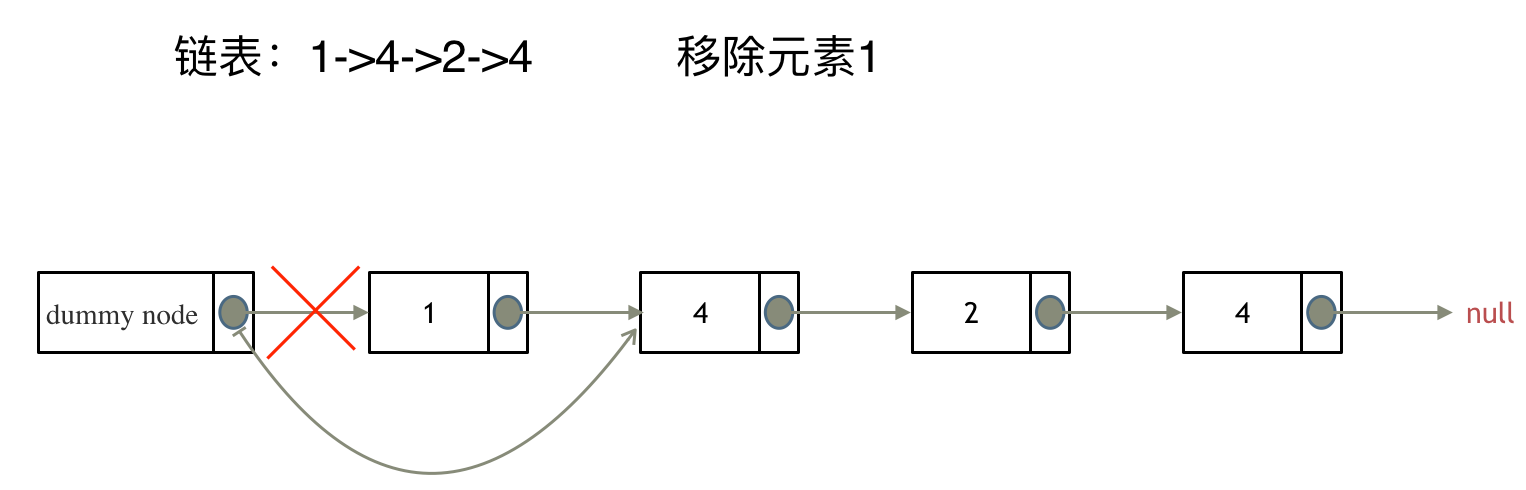
解题模板
不使用虚拟节点
具体还有两种写法:使用pre、cur指针和只用cur指针
具体看代码:
class Solution {

    public ListNode removeElements(ListNode head, int val) {

        //删除头节点的情况

        while(head != null && head.val == val){

            head = head.next;

        }

        //不要忘了,如果头节点为空就直接退出

        if(head == null){

            return head;

        }

        //删除其他节点的情况

        //正常情况

        ListNode pre = head;

        ListNode cur = head.next;

        while(cur != null){

            if(cur.val == val){

                pre.next = cur.next;

            }else{

                pre = cur;

            }

            cur = cur.next;

        }

        // //只使用一个临时节点cur

        // //当前节点的指针应该指向head而不是head.next

        // //因为如果要删除的就是当前cur指向的值,那么直接指向head的方式就有问题,因为在单向链表中,它找不到待删除节点的上一个节点

        // //而第二种方式就避免了这种情况

        // ListNode cur = head;

        // while(cur != null){

        //     while(cur.next != null && cur.next.val == val){

        //         cur.next = cur.next.next;

        //     }

        //     cur = cur.next;

        // }

        return head;//不是返回临时节点cur,要找回最开始的头节点head

    }

}
使用虚拟节点
/**

 * Definition for singly-linked list.

 * public class ListNode {

 *     int val;

 *     ListNode next;

 *     ListNode() {}

 *     ListNode(int val) { this.val = val; }

 *     ListNode(int val, ListNode next) { this.val = val; this.next = next; }

 * }

 */

class Solution {

    public ListNode removeElements(ListNode head, int val) {

        if(head == null){//先判断头节点是否为空,防止操作空指针

            return head;

        }

        //创建一个虚拟节点

        ListNode dummy = new ListNode(1, head);

        //定义前一个节点pre与当前节点cur

        ListNode pre = dummy;

        ListNode cur = head;

        while(cur != null){//要用循环而不是if,因为删除操作应该是连续的

            if(cur.val == val){

                pre.next = cur.next;

            }else{

                pre = cur;

            }

            cur = cur.next;

        }

        //注意!要返回虚拟节点的下一个节点,即头节点。而不是直接返回头节点,因为原来的head有可能已经被删了

        return dummy.next;

    }

}
反正以后就记住使用虚拟节点的方式就行,用的时候也优先这种方式
c++版本
先分析一下给的解题模板
class Solution {

public:

    ListNode* removeElements(ListNode* head, int val) {

    }

};
这里需要我们补完一个Solution类,该类中有一个公共的成员函数removeElements
其输入值是ListNode* head(头节点的指针)和一个整形val
代码如下:(没用cur+pre,只定义一个cur)
class Solution {

public:

    ListNode* removeElements(ListNode* head, int val) {

        if(head == nullptr){

            return head;

        }

        //创建dummy节点,接在头节点之前

        ListNode* dummy = new ListNode(0, head);

        ListNode* cur = dummy;

        while(cur->next != nullptr){

            if(cur->next->val == val){

                //处理被删除的节点

                ListNode* temp = cur->next;

                cur->next = cur->next->next;

                delete temp;

            }else{

                cur = cur->next;

            }

        }

        //这里可以删除定义的dummy,也可以不删,估计是占用内存不同

        //head = dummyHead->next;

        //delete dummyHead;

        //return head;

        return dummy->next;

    }

};
【LeetCode链表#6】移除链表元素的更多相关文章
- 【LeetCode】203.移除链表元素
203.移除链表元素 知识点:链表:双指针 题目描述 给你一个链表的头节点 head 和一个整数 val ,请你删除链表中所有满足 Node.val == val 的节点,并返回 新的头节点 . 示例 ...
- LeetCode 203:移除链表元素 Remove LinkedList Elements
删除链表中等于给定值 val 的所有节点. Remove all elements from a linked list of integers that have value val. 示例: 输入 ...
- 【Leetcode链表】移除链表元素(203)
题目 删除链表中等于给定值 val 的所有节点. 示例: 输入: 1->2->6->3->4->5->6, val = 6 输出: 1->2->3-&g ...
- [LeetCode] Remove Linked List Elements 移除链表元素
Remove all elements from a linked list of integers that have value val. Example Given: 1 --> 2 -- ...
- Java实现 LeetCode 203 移除链表元素
203. 移除链表元素 删除链表中等于给定值 val 的所有节点. 示例: 输入: 1->2->6->3->4->5->6, val = 6 输出: 1->2 ...
- [LeetCode] 203. 移除链表元素(链表基本操作-删除)、876. 链表的中间结点(链表基本操作-找中间结点)
题目 203. 移除链表元素 删除链表中等于给定值 val 的所有节点. 题解 删除结点:要注意虚拟头节点. 代码 class Solution { public ListNode removeEle ...
- [LeetCode] Remove Nth Node From End of List 移除链表倒数第N个节点
Given a linked list, remove the nth node from the end of list and return its head. For example, Give ...
- Leecode刷题之旅-C语言/python-203移除链表元素
/* * @lc app=leetcode.cn id=203 lang=c * * [203] 移除链表元素 * * https://leetcode-cn.com/problems/remove- ...
- [LeetCode] 19. Remove Nth Node From End of List 移除链表倒数第N个节点
Given a linked list, remove the nth node from the end of list and return its head. For example, Give ...
- 移除链表元素&反转链表&设计链表
一.移除链表元素 203.移除链表元素 leetcode链接 1.方法概述 带傀儡节点的方法: 创建一个傀儡节点puppet来充当该链表的假头节点,当真正的头结点head不为null时,且在真正的头节 ...
随机推荐
- element-plus 按需引入将英文组件修改为中文
element-plus 默认是英文组件:如下图 将它设置为中文组件 app.vue文件 <template> <el-config-provider :locale="l ...
- Linux慢 进程kswapd0与events/0消耗大量CPU的问题 一次网站宕机的处理
今天下午网站宕了两次机,发工单给阿里云,发现原因是服务器的CPU 100%了. 重启服务器后,使用 top 命令看看是哪些进程消耗那么大的 CPU 使用.盯了有好十几分钟,主要消耗 CPU 的进程有两 ...
- c++基础之字符串、向量和数组
上一次整理完了<c++ primer>的第二章的内容.这次整理本书的第3章内容. 这里还是声明一下,我整理的主要是自己不知道的或者需要注意的内容,以我本人的主观意志为准,并不具备普适性. ...
- 【五】gym搭建自己的环境之寻宝游戏,详细定义自己myenv.py文件以及算法实现
相关文章: 相关文章: [一]gym环境安装以及安装遇到的错误解决 [二]gym初次入门一学就会-简明教程 [三]gym简单画图 [四]gym搭建自己的环境,全网最详细版本,3分钟你就学会了! [五] ...
- 【深度学习项目三】ResNet50多分类任务【十二生肖分类】
相关文章: [深度学习项目一]全连接神经网络实现mnist数字识别 [深度学习项目二]卷积神经网络LeNet实现minst数字识别 [深度学习项目三]ResNet50多分类任务[十二生肖分类] 『深度 ...
- 多路io复用Select [补档-2023-07-16]
select 2.1 简介 select函数可以用于实现高效的多路复用 I/O,同时处理多个文件描述符的事件,包括监听可读.可写和异常条件,具有阻塞和非阻塞模式,并可以设置超时时间.这使得程序能够 ...
- ROS之交叉编译配置
参考资料: https://zhuanlan.zhihu.com/p/183819313 https://www.guyuehome.com/33759 1.原理 所谓的交叉编译,其实我们可以从编译原 ...
- 如何在Visual Studio新C++项目中调用之前配置过的库?
本文介绍在Visual Studio软件中调用C++各种配置.编译完毕的第三方库的方法. 在撰写C++代码时,如果需要用到他人撰写的第三方库(例如地理数据处理库GDAL.矩阵运算库Armadi ...
- PHP中文件锁
PHP中文件锁 文件锁的用途: 若一个人在写入一个文件,另外一个人同时也打个了这个文件进行写入文件. 这情况下,如果遇到一定的碰撞概率的话,不知道到底谁的操作为准. 因此,这个时候我们引入锁机制. 若 ...
- Linux-Shell变量的算术运算
一.算术运算符 1.+.- 求和. a+b a-b 2. *./.% 求乘积,商,余数 a*b a/b a/b 3.** 幂运算,例如 3**3 是求 3 的立方,即 27 4. ...