
JAVA数据结构--优先队列(堆实现)
优先队列(堆)的定义
堆(英语:Heap)是计算机科学中一类特殊的数据结构的统称。堆通常是一个可以被看做一棵树的数组对象。在队列中,调度程序反复提取队列中第一个作业并运行,因为实际情况中某些时间较短的任务将等待很长时间才能结束,或者某些不短小,但具有重要性的作业,同样应当具有优先权。堆即为解决此类问题设计的一种数据结构。
我个人比较通俗的理解就是比如我们平常下载视频看,我们打算下载两部视频,一部2G,一部只有200M。优先队列的思想就是先下载那部体积较小的视频,这样也比较合理,可以下完200M后看的同时再下2G的视频。

堆是一颗被完全填满的二叉树,唯一可能的例外是在最底层。所以堆具有两个性质——堆序性和结构性。一个高为h的完全二叉树有2h或2h-1个节点,并且堆中每一个节点X的父亲的值小于或等于X中的关键字,所以堆的最小值总可以在根中找到。
堆的构造实现
private static final int DEFAULT_CAPACITY=10;//定义堆的大小

private int currentSize;//当前实际堆的大小

private T [] array;    //数组表示堆中元素
 public BinaryHeap(int capacity) {//初始化堆数组

         currentSize=0;

         array=(T[])new Comparable[capacity+1];

 }

 public BinaryHeap(T[] items) {

         currentSize=items.length;

         array=(T[])new Comparable[(currentSize+2)*11/10];

         int i=1;

         for(T item:items)

             array[i++]=item;//堆数组赋值

         buildHeap();

 }
private void buildHeap() {

    for(int i=currentSize/2;i>0;i--)//逐层下滤

        percolateDown(i);

}
注意!用数组实现堆时,元素的下标是从1开始,不是从0开始。原因是因为当插入的元素是比堆顶还小的元素时,我们不需要对堆做任何操作即可把堆冒出。
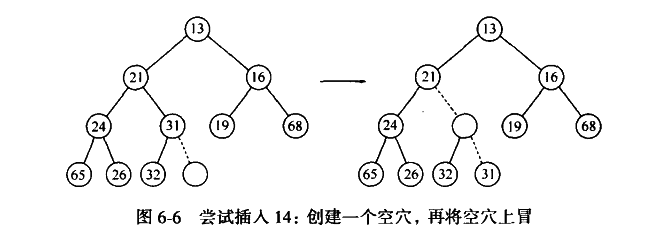
元素插入
 public void insert(T x) {

         if(currentSize==array.length-1)

             enlargeArray(array.length*2+1);//堆扩容

         int hole=++currentSize;    //空穴表示的数组下标

         /*

          * hole/2是当前空穴的父节点的数组下标,如果x比父节点的元素小,则父节点元素下沉,空穴上冒

          * */

         for(array[0]=x;x.compareTo(array[hole/2])<0;hole/=2)

             array[hole]=array[hole/2];    //元素交换

         array[hole]=x;

 }

删除最小元
删除最小元基本的思想是将最小元置为空穴,再将堆的最后一个元素放入其中,则此时的堆是不合法的,我们需要做的就是将此时的堆顶元素下沉到合适的位置。
 public T deleteMin() throws Exception {

         if(isEmpty())

             throw new Exception();

         T minItem=findMin();//获取最小元

         array[1]=array[currentSize--];//取出最后一个元素

         percolateDown(1);//元素下滤

         return minItem;

 }
 private void percolateDown(int hole) {//下滤元素

         int child;

         T tmp=array[hole];

         for(;hole*2<=currentSize;hole=child) {

             child=hole*2;//孩子节点的下标

             if(child!=currentSize&&

                     array[child+1].compareTo(array[child])<0)//找出较小的孩子节点

                 child++;

             if(array[child].compareTo(tmp)<0)//逐层下滤

                 array[hole]=array[child];//元素替换

             else

                 break;

         }

         array[hole]=tmp;

 }

全部代码实现(数据结构与算法分析中的demo)
 // BinaryHeap class

 //

 // CONSTRUCTION: with optional capacity (that defaults to 100)

 //               or an array containing initial items

 //

 // ******************PUBLIC OPERATIONS*********************

 // void insert( x )       --> Insert x

 // Comparable deleteMin( )--> Return and remove smallest item

 // Comparable findMin( )  --> Return smallest item

 // boolean isEmpty( )     --> Return true if empty; else false

 // void makeEmpty( )      --> Remove all items

 // ******************ERRORS********************************

 // Throws UnderflowException as appropriate

 /**

  * Implements a binary heap.

  * Note that all "matching" is based on the compareTo method.

  * @author Mark Allen Weiss

  */

 public class BinaryHeap<AnyType extends Comparable<? super AnyType>>

 {

     /**

      * Construct the binary heap.

      */

     public BinaryHeap( )

     {

         this( DEFAULT_CAPACITY );

     }

     /**

      * Construct the binary heap.

      * @param capacity the capacity of the binary heap.

      */

     public BinaryHeap( int capacity )

     {

         currentSize = 0;

         array = (AnyType[]) new Comparable[ capacity + 1 ];

     }

     /**

      * Construct the binary heap given an array of items.

      */

     public BinaryHeap( AnyType [ ] items )

     {

             currentSize = items.length;

             array = (AnyType[]) new Comparable[ ( currentSize + 2 ) * 11 / 10 ];

             int i = 1;

             for( AnyType item : items )

                 array[ i++ ] = item;

             buildHeap( );

     }

     /**

      * Insert into the priority queue, maintaining heap order.

      * Duplicates are allowed.

      * @param x the item to insert.

      */

     public void insert( AnyType x )

     {

         if( currentSize == array.length - 1 )

             enlargeArray( array.length * 2 + 1 );

             // Percolate up

         int hole = ++currentSize;

         for( array[ 0 ] = x; x.compareTo( array[ hole / 2 ] ) < 0; hole /= 2 )

             array[ hole ] = array[ hole / 2 ];

         array[ hole ] = x;

     }

     private void enlargeArray( int newSize )

     {

             AnyType [] old = array;

             array = (AnyType []) new Comparable[ newSize ];

             for( int i = 0; i < old.length; i++ )

                 array[ i ] = old[ i ];

     }

     /**

      * Find the smallest item in the priority queue.

      * @return the smallest item, or throw an UnderflowException if empty.

      */

     public AnyType findMin( )

     {

         if( isEmpty( ) )

             throw new UnderflowException( );

         return array[ 1 ];

     }

     /**

      * Remove the smallest item from the priority queue.

      * @return the smallest item, or throw an UnderflowException if empty.

      */

     public AnyType deleteMin( )

     {

         if( isEmpty( ) )

             throw new UnderflowException( );

         AnyType minItem = findMin( );

         array[ 1 ] = array[ currentSize-- ];

         percolateDown( 1 );

         return minItem;

     }

     /**

      * Establish heap order property from an arbitrary

      * arrangement of items. Runs in linear time.

      */

     private void buildHeap( )

     {

         for( int i = currentSize / 2; i > 0; i-- )

             percolateDown( i );

     }

     /**

      * Test if the priority queue is logically empty.

      * @return true if empty, false otherwise.

      */

     public boolean isEmpty( )

     {

         return currentSize == 0;

     }

     /**

      * Make the priority queue logically empty.

      */

     public void makeEmpty( )

     {

         currentSize = 0;

     }

     private static final int DEFAULT_CAPACITY = 10;

     private int currentSize;      // Number of elements in heap

     private AnyType [ ] array; // The heap array

     /**

      * Internal method to percolate down in the heap.

      * @param hole the index at which the percolate begins.

      */

     private void percolateDown( int hole )

     {

         int child;

         AnyType tmp = array[ hole ];

         for( ; hole * 2 <= currentSize; hole = child )

         {

             child = hole * 2;

             if( child != currentSize &&

                     array[ child + 1 ].compareTo( array[ child ] ) < 0 )

                 child++;

             if( array[ child ].compareTo( tmp ) < 0 )

                 array[ hole ] = array[ child ];

             else

                 break;

         }

         array[ hole ] = tmp;

     }

         // Test program

     public static void main( String [ ] args )

     {

         int numItems = 10000;

         BinaryHeap<Integer> h = new BinaryHeap<>( );

         int i = 37;

         for( i = 37; i != 0; i = ( i + 37 ) % numItems )

             h.insert( i );

         for( i = 1; i < numItems; i++ )

             if( h.deleteMin( ) != i )

                 System.out.println( "Oops! " + i );

     }

 }
JAVA数据结构--优先队列(堆实现)的更多相关文章
- Java数据结构之堆和优先队列
概述 在谈堆之前,我们先了解什么是优先队列.我们每天都在排队,银行,医院,购物都得排队.排在队首先处理事情,处理完才能从这个队伍离开,又有新的人来排在队尾.但仅仅这样就能满足我们生活需求吗,明显不能. ...
- java数据结构之(堆)栈
(堆)栈概述栈是一种特殊的线性表,是操作受限的线性表栈的定义和特点•定义:限定仅在表尾进行插入或删除操作的线性表,表尾—栈顶,表头—栈底,不含元素的空表称空栈•特点:先进后出(FILO)或后进先出(L ...
- Java数据结构和算法(四)赫夫曼树
Java数据结构和算法(四)赫夫曼树 数据结构与算法目录(https://www.cnblogs.com/binarylei/p/10115867.html) 赫夫曼树又称为最优二叉树,赫夫曼树的一个 ...
- Java数据结构和算法(十四)——堆
在Java数据结构和算法(五)——队列中我们介绍了优先级队列,优先级队列是一种抽象数据类型(ADT),它提供了删除最大(或最小)关键字值的数据项的方法,插入数据项的方法,优先级队列可以用有序数组来实现 ...
- Java数据结构和算法 - 堆
堆的介绍 Q: 什么是堆? A: 这里的“堆”是指一种特殊的二叉树,不要和Java.C/C++等编程语言里的“堆”混淆,后者指的是程序员用new能得到的计算机内存的可用部分 A: 堆是有如下特点的二叉 ...
- java数据结构和算法10(堆)
这篇我们说说堆这种数据结构,其实到这里就暂时把java的数据结构告一段落,感觉说的也差不多了,各种常见的数据结构都说到了,其实还有一种数据结构是“图”,然而暂时对图没啥兴趣,等有兴趣的再说:还有排序算 ...
- java数据结构----堆
1.堆:堆是一种树,由它实现的优先级队列的插入和删除的时间复杂度都是O(logn),用堆实现的优先级队列虽然和数组实现相比较删除慢了些,但插入的时间快的多了.当速度很重要且有很多插入操作时,可以选择堆 ...
- Java数据结构和算法 - 栈和队列
Q: 栈.队列与数组的区别? A: 本篇主要涉及三种数据存储类型:栈.队列和优先级队列,它与数组主要有如下三个区别: A: (一)程序员工具 数组和其他的结构(栈.队列.链表.树等等)都适用于数据库应 ...
- Java之优先队列
PriorityQueue属于Java Collections Framework.PriorityQueue基于优先级堆,它是Queue接口的实现.当我们需要一个Queue实现时,可以使用这种数据结 ...
随机推荐
- 怎样下载网页中的js文件?
1.按下F12,会看到调试的界面,如下图所示,先点击最上面的Resources选项,Frames--(你想下载的网址)--Script,下面就是全部的js文件啦,网站的图片啊什么的都可以下载了.
- python2中的__new__与__init__,新式类和经典类-乾颐堂
在python2.x中,从object继承得来的类称为新式类(如class A(object))不从object继承得来的类称为经典类(如class A()) 新式类跟经典类的差别主要是以下几点: 1 ...
- ConfigureAwait(false)避免上下文延续
之前MVC利用MvcHtmlString封装通用下拉菜单,菜单数据需要从webapi获取,自然用到了 await Http Client.GetAsync(Url)方法,前端 @Html.Select ...
- CodeForces 427A Police Recruits (水题)
题意:给定 n 个数,有正数和-1, -1表示罪犯,正数表示招了几个警察,一个警察只能看一个罪犯,并且要按顺序,问你有多少罪犯逃脱. 析:很简单么,从开始扫到最后,把是正数就加上,是-1判断剩余警察大 ...
- word上传博客教程
目前大部分的博客作者在写博客这件事情上都会遇到以下3个痛点:1.所有博客平台关闭了文档发布接口,用户无法使用Word,Windows Live Writer等工具来发布博客.2.发布到博客或公众号平台 ...
- 第二章第一个项目——关于mime
一句话就能解释清楚. MIME标注HTTP响应类型. 而后缀名标注文件类型. ---------分割线-------- http响应实质上只有数据,没有文件名. 举个例子吧. HTTP/1.1 200 ...
- ibatis源码学习1_整体设计和核心流程
背景介绍ibatis实现之前,先来看一段jdbc代码: Class.forName("com.mysql.jdbc.Driver"); String url = "jdb ...
- Java Input Stream Diagram
JAVA IO Diagram |-- ByteArrayInputStream |-- BufferedInputStream |-- FileInputStream |-- DataInputSt ...
- 微信公众平台开发框架 Bee.WeiXin
我们来看一下如何通过Bee.WeiXin开发微信公众平台.关于微信公众平台的一般性介绍, 这里不做展开. 园里找一找就可以了. 本文主要是介绍Bee.WeXin, 代码已发布到https://beew ...
- PMBOK项目管理相关知识梳理
该次梳理,依据PMBOK(第五版),罗列项目管理十三章节重要的知识点. 一.引论1.项目的定义与举例:2.项目.项目组合.项目集与项目组织管理:3.范进本质是风资(范围.进度.成本.质量.风险.资源) ...