
基于Spring Boot的线程池监控方案
前言
这篇是推动大家异步编程的思想的线程池的准备篇,要做好监控,让大家使用无后顾之忧,敬畏生产。
为什么需要对线程池进行监控
Java线程池作为最常使用到的并发工具,相信大家都不陌生,但是你真的确定使用对了吗?大名鼎鼎的阿里Java代码规范要求我们不使用 Executors来快速创建线程池,但是抛弃Executors,使用其它方式创建线程池就一定不会出现问题吗?本质上对于我们来说线程池本身的运行过程是一个黑盒,我们没办法了解线程池中的运行状态时,出现问题没有办法及时判断和预警。面对这种黑盒操作必须通过监控方式让其透明化,这样对我们来说才能更好的使用好线程池。因此必须对线程池做监控。
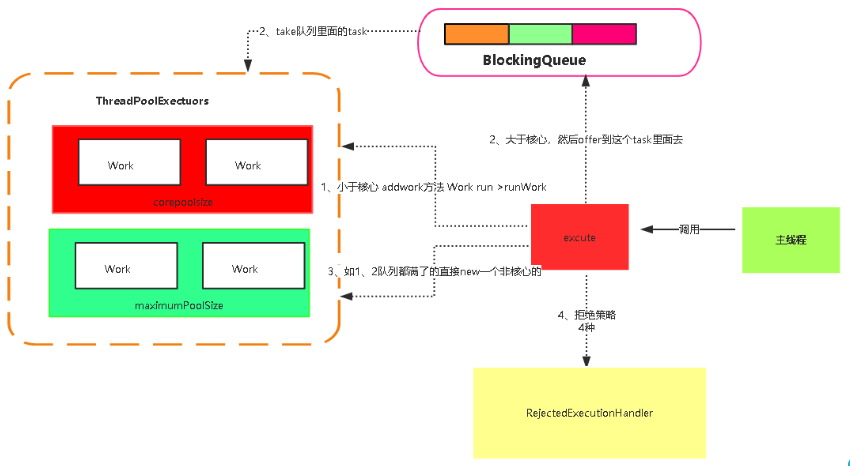
如何做线程池的监控
对于如何做监控,本质就是涉及三点,分别是数据采集、数据存储以及大盘的展示,接下来我们分说下这三点;
数据采集
采集什么数据,对于我们来说需要采集就是黑盒的数据,什么又是线程池的黑盒数据,其实也就是整个线程处理的整个流程,在整个流程中,我们可以通过ThreadPoolExecutor中的七个方法获取数据,通过这七个方法采集到的数据就可以使线程池的执行过程透明化。
getCorePoolSize():获取核心线程数; getMaximumPoolSize:获取最大线程数; getQueue():获取线程池中的阻塞队列,并通过阻塞队列中的方法获取队列长度、元素个数等; getPoolSize():获取线程池中的工作线程数(包括核心线程和非核心线程); getActiveCount():获取活跃线程数,也就是正在执行任务的线程; getLargestPoolSize():获取线程池曾经到过的最大工作线程数; getTaskCount():获取历史已完成以及正在执行的总的任务数量;
除了我们了解的这些流程以外,ThreadPoolExecutor中还提供了三种钩子函数,
beforeExecute():Worker线程执行任务之前会调用的方法; afterExecute():在Worker线程执行任务之后会调用的方法; terminated():当线程池从运行状态变更到TERMINATED状态之前调用的方法;
对于beforeExecute和afterExecute可以理解为使用Aop监听线程执行的时间,这样子我们可以对每个线程运行的时间整体做监控,terminated可以理解为线程关闭时候的监控,这样我们就可以整体获取采集到线程池生命周期的所有数据了。
数据存储以及大盘的展示
对于存储我们这个比较适合采用时序性数据库,此外现在很多成熟的监控产品都可以满足我们大屏展示的诉求,这里推荐下美团Cat和Prometheus,这里不展开进行讲解,大家可以根据自己公司的监控产品进行选择,对于不同的方案采取的存储形式会有些差异,甚至自己都可以自定义实现一个功能,反正难度不大。
进一步扩展以及思考
在实际的项目开发中我们会遇到以下场景:
不同的业务采用同一个线程池,这样如果某个服务阻塞,会影响到整体共用线程池的所有服务,会触发线程池的拒绝策略; 流量突然增加,需要动态调整线程池的参数,这个时候又不能重启;
针对这两种场景,我们对线程池再次进行了深入的思考:
如何合理配置线程池参数; 如何动态调整线程池参数; 如何给不同的服务之间做线程池的隔离;
如何合理配置线程池参数
关于这个问题面试的时候也是经常被问到,我只能说这个问题开始就是一个坑,针对与CPU密集型和I/O密集型,线程池的参数是有不同设计的,也不是遵守几个公式就可以搞定,当然可以参考,我认为对于线程池合理的参数的配置是经过多次调整得到的,甚至增加和减少业务都会影响一些参数,我不太建议大家每天背书式的CPU密集型就是N+1,非CPU密集型就是2N,因此我们更希望看到线程池动态配置。
如何动态调整线程池参数
关于如何动态调整线程池,还是回到我们场景问题的解决上,对于流量突增核心就是提升线程池的处理速度,那如何提升线程池的处理速度,有两种方式,一种是加快业务的处理,也就是消费的快,显然这种在运行的业务中我们想改变还是比较困难,这个可以作为复盘的重点;还有一种就是增加消费者,增加消费者的重点就是调整核心线程数以及非核心线程数的数量。
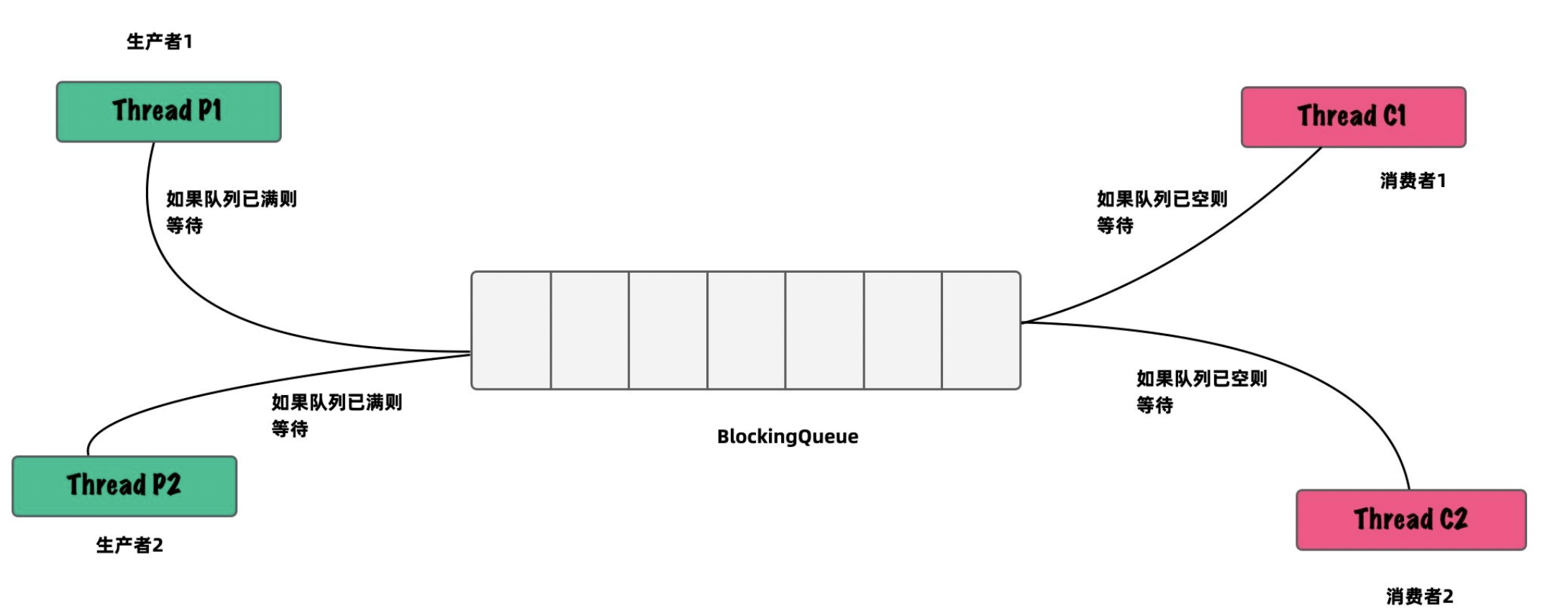
居于这种思考,这个时候我们需要看下ThreadPoolExecutor线程池源码,首先看下开始定义的变量,通过变量的设计我们就会发现大师就是大师,大师通过AtomicInteger修饰的ctl变量,高3位存储了线程池的状态,低29存储线程的个数,通过一个变量完成两件事情,完成状态判断以及限制线程最大个数。使用一个HashSet存储Worker的引用,而Worker继承了AbstractQueuedSynchronizer,实现一个一个不可冲入的独占锁保证线程的安全性。

//用来标记线程池状态(高3位),线程个数(低29位)
private final AtomicInteger ctl = new AtomicInteger(ctlOf(RUNNING, 0));
//工作状态存储在高3位中
private static final int COUNT_BITS = Integer.SIZE - 3;
//线程个数所能表达的最大数值
private static final int CAPACITY   = (1 << COUNT_BITS) - 1;
//线程池状态
//RUNNING -1 能够接收新任务,也可以处理阻塞队列中的任务
private static final int RUNNING    = -1 << COUNT_BITS;
//SHUTDOWN 0 不可以接受新任务,继续处理阻塞队列中的任务
private static final int SHUTDOWN   =  0 << COUNT_BITS;
//STOP 1 不接收新任务,不处理阻塞队列中的任务,并且会中断正在处理的任务
private static final int STOP       =  1 << COUNT_BITS;
//TIDYING 2 所有任务已经中止,且工作线程数量为0,最后变迁到这个状态的线程将要执行terminated()钩子方法,只会有一个线程执行这个方法;
private static final int TIDYING    =  2 << COUNT_BITS;
//TERMINATED 3 中止状态,已经执行完terminated()钩子方法
private static final int TERMINATED =  3 << COUNT_BITS;
//任务队列,当线程池中的线程达到核心线程数量时,再提交任务 就会直接提交到 workQueue
private final BlockingQueue<Runnable> workQueue;
//线程池全局锁,增加worker减少worker时需要持有mainLock,修改线程池运行状态时,也需要
private final ReentrantLock mainLock = new ReentrantLock();
//线程池中真正存放worker的地方。
private final HashSet<Worker> workers = new HashSet<Worker>();
private final Condition termination = mainLock.newCondition();
//记录线程池生命周期内 线程数最大值
private int largestPoolSize;
//记录线程池所完成任务总数
private long completedTaskCount;
//创建线程会使用线程工厂
private volatile ThreadFactory threadFactory;
//拒绝策略
private volatile RejectedExecutionHandler handler;
//存活时间
private volatile long keepAliveTime;
//控制核心线程数量内的线程 是否可以被回收。true 可以,false不可以。
private volatile boolean allowCoreThreadTimeOut;
//核心线程池数量
private volatile int corePoolSize;
//线程池最大数量
private volatile int maximumPoolSize;
我们的重点看的是volatile修饰的corePoolSize、maximumPoolSize以及keepAliveTime,当然threadFactory和handler也可以看下,不过这两个不是我们解决动态调整线程池的关键。对于这些volatile修饰的关键的变量,从并发角度思考的,必然是有并发读写的操作才使用volatile修饰的,在指标采集中我们看到其get的方法,对于写的操作我们可以猜测肯定提供了set的方式,这个时候我们可以搜索下setCorePoolSize,果不其然我们真的搜索到了。
    public void setCorePoolSize(int corePoolSize) {
        if (corePoolSize < 0)
            throw new IllegalArgumentException();
        int delta = corePoolSize - this.corePoolSize;
        this.corePoolSize = corePoolSize;
        //新设置的corePoolSize小于当前核心线程数的时候
        //会调用interruptIdleWorkers方法来中断空闲的工作线程
        if (workerCountOf(ctl.get()) > corePoolSize)
            interruptIdleWorkers();
        else if (delta > 0) {
            //当设置的值大于当前值的时候核心线程数的时候
            //按照等待队列中的任务数量来创建新的工作线程
            int k = Math.min(delta, workQueue.size());
            while (k-- > 0 && addWorker(null, true)) {
                if (workQueue.isEmpty())
                    break;
            }
        }
    }
接下来我们看下interruptIdleWorkers的源码,此处源码使用ReentrantLock可重入锁,因为Worker的是通过一个全局的HashSer存储,这里通过ReentrantLock保证线程安全。
    private void interruptIdleWorkers(boolean onlyOne) {
        //可重入锁
        final ReentrantLock mainLock = this.mainLock;
        mainLock.lock();
        try {
            for (Worker w : workers) {
                Thread t = w.thread;
                if (!t.isInterrupted() && w.tryLock()) {
                    try {
                        //中断当前线程
                        t.interrupt();
                    } catch (SecurityException ignore) {
                    } finally {
                        w.unlock();
                    }
                }
                if (onlyOne)
                    break;
            }
        } finally {
            mainLock.unlock();
        }
    }
接下来我们在验证一下是否存在其他相关的参数设置,如下:
    public void setMaximumPoolSize(int maximumPoolSize) {
        if (maximumPoolSize <= 0 || maximumPoolSize < corePoolSize)
            throw new IllegalArgumentException();
        this.maximumPoolSize = maximumPoolSize;
        if (workerCountOf(ctl.get()) > maximumPoolSize)
            interruptIdleWorkers();
    }
    public void setKeepAliveTime(long time, TimeUnit unit) {
        if (time < 0)
            throw new IllegalArgumentException();
        if (time == 0 && allowsCoreThreadTimeOut())
            throw new IllegalArgumentException("Core threads must have nonzero keep alive times");
        long keepAliveTime = unit.toNanos(time);
        long delta = keepAliveTime - this.keepAliveTime;
        this.keepAliveTime = keepAliveTime;
        if (delta < 0)
            interruptIdleWorkers();
    }
    public void setRejectedExecutionHandler(RejectedExecutionHandler handler) {
        if (handler == null)
            throw new NullPointerException();
        this.handler = handler;
    }
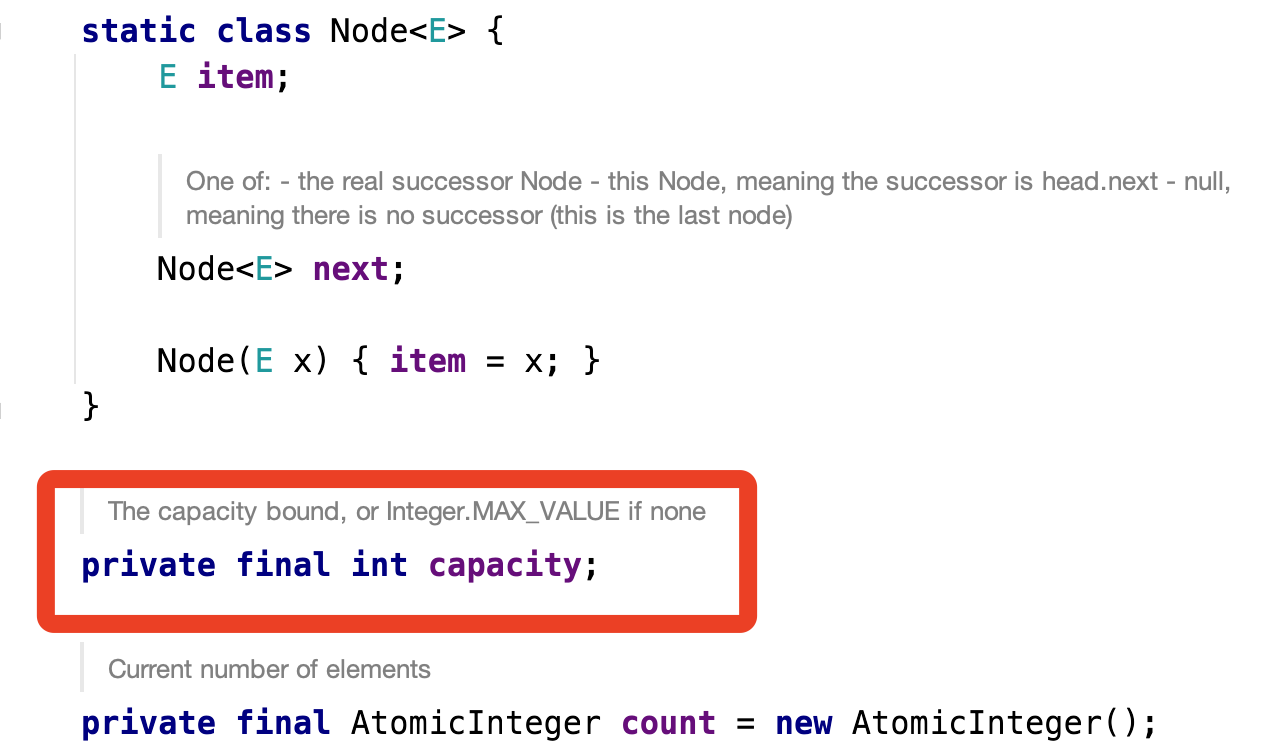
这里我们会发现一个问题BlockingQueue的队列容量不能修改,看到美团的文章提供的一个可修改的队列ResizableCapacityLinkedBlockingQueue,于是乎去看了一下LinkedBlockingQueue的源码,发现了关于capacity是一个final修饰的,这个时候我就思考一番,这个地方采用volatile修饰,对外暴露可修改,这样就实现了动态修改阻塞队列的大小。
如何给不同的服务之间做线程池的隔离
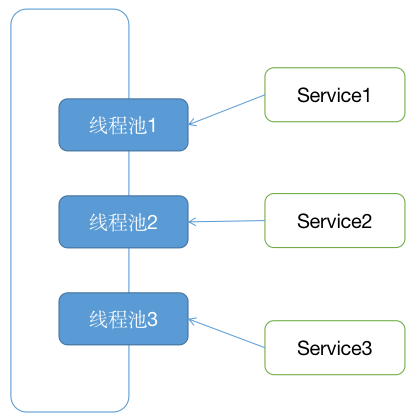
关于如何给不同服务之间做线程池的隔离,这里我们可以采用Hystrix的舱壁模式,也就是说针对不同服务类型的服务单独创建线程池,这样就可以实现服务之间不相互影响,不会因为某个服务导致整体的服务影响都阻塞。
实现方案
聊了这么多前置的知识储备,接下来我们来聊聊实现方案,整体的实现方案我们建立在Spring Boot的基础实现,采用Spring Cloud刷新动态配置,采用该方式比较合适单体应用,对于有Appllo和Nacos可以通过监听配置方式的来动态刷新。
Maven依赖如下;
    <dependencies>
        <dependency>
            <groupId>org.springframework.boot</groupId>
            <artifactId>spring-boot-starter</artifactId>
        </dependency>
        <dependency>
            <groupId>org.springframework.boot</groupId>
            <artifactId>spring-boot-starter-web</artifactId>
        </dependency>
        <dependency>
            <groupId>org.springframework.cloud</groupId>
            <artifactId>spring-cloud-context</artifactId>
        </dependency>
        <dependency>
            <groupId>org.springframework.boot</groupId>
            <artifactId>spring-boot-starter-test</artifactId>
            <scope>test</scope>
        </dependency>
        <dependency>
            <groupId>org.projectlombok</groupId>
            <artifactId>lombok</artifactId>
            <version>1.18.12</version>
        </dependency>
        <dependency>
            <groupId>org.slf4j</groupId>
            <artifactId>slf4j-api</artifactId>
            <version>1.7.5</version>
        </dependency>
        <dependency>
            <groupId>ch.qos.logback</groupId>
            <artifactId>logback-core</artifactId>
            <version>1.2.3</version>
        </dependency>
        <dependency>
            <groupId>ch.qos.logback</groupId>
            <artifactId>logback-classic</artifactId>
            <version>1.2.3</version>
        </dependency>

    </dependencies>

    <dependencyManagement>
        <dependencies>
            <dependency>
                <groupId>org.springframework.cloud</groupId>
                <artifactId>spring-cloud-dependencies</artifactId>
                <version>Hoxton.SR7</version>
                <type>pom</type>
                <scope>import</scope>
            </dependency>
        </dependencies>
    </dependencyManagement>
配置信息如下:
monitor.threadpool.executors[0].thread-pool-name=first-monitor-thread-pool
monitor.threadpool.executors[0].core-pool-size=4
monitor.threadpool.executors[0].max-pool-size=8
monitor.threadpool.executors[0].queue-capacity=100

monitor.threadpool.executors[1].thread-pool-name=second-monitor-thread-pool
monitor.threadpool.executors[1].core-pool-size=2
monitor.threadpool.executors[1].max-pool-size=4
monitor.threadpool.executors[1].queue-capacity=40

/**
 * 线程池配置
 *
 * @author wangtongzhou
 * @since 2022-03-11 21:41
 */
@Data
public class ThreadPoolProperties {

    /**
     * 线程池名称
     */
    private String threadPoolName;

    /**
     * 核心线程数
     */
    private Integer corePoolSize = Runtime.getRuntime().availableProcessors();

    /**
     * 最大线程数
     */
    private Integer maxPoolSize;

    /**
     * 队列最大数量
     */
    private Integer queueCapacity;

    /**
     * 拒绝策略
     */
    private String rejectedExecutionType = "AbortPolicy";

    /**
     * 空闲线程存活时间
     */
    private Long keepAliveTime = 1L;

    /**
     * 空闲线程存活时间单位
     */
    private TimeUnit unit = TimeUnit.MILLISECONDS;

}

/**
 * 动态刷新线程池配置
 *
 * @author wangtongzhou
 * @since 2022-03-13 14:09
 */
@ConfigurationProperties(prefix = "monitor.threadpool")
@Data
@Component
public class DynamicThreadPoolProperties {

    private List<ThreadPoolProperties> executors;
}
自定可修改阻塞队列大小的方式如下:
/**
* 可重新设定队列大小的阻塞队列
*
* @author wangtongzhou
* @since 2022-03-13 11:54
*/
public class ResizableCapacityLinkedBlockingQueue<E> extends AbstractQueue<E>
implements BlockingDeque<E>, java.io.Serializable {
/*
* Implemented as a simple doubly-linked list protected by a
* single lock and using conditions to manage blocking.
*
* To implement weakly consistent iterators, it appears we need to
* keep all Nodes GC-reachable from a predecessor dequeued Node.
* That would cause two problems:
* - allow a rogue Iterator to cause unbounded memory retention
* - cause cross-generational linking of old Nodes to new Nodes if
* a Node was tenured while live, which generational GCs have a
* hard time dealing with, causing repeated major collections.
* However, only non-deleted Nodes need to be reachable from
* dequeued Nodes, and reachability does not necessarily have to
* be of the kind understood by the GC. We use the trick of
* linking a Node that has just been dequeued to itself. Such a
* self-link implicitly means to jump to "first" (for next links)
* or "last" (for prev links).
*/
/*
* We have "diamond" multiple interface/abstract class inheritance
* here, and that introduces ambiguities. Often we want the
* BlockingDeque javadoc combined with the AbstractQueue
* implementation, so a lot of method specs are duplicated here.
*/
private static final long serialVersionUID = -387911632671998426L;
/**
* Doubly-linked list node class
*/
static final class Node<E> {
/**
* The item, or null if this node has been removed.
*/
E item;
/**
* One of:
* - the real predecessor Node
* - this Node, meaning the predecessor is tail
* - null, meaning there is no predecessor
*/
Node<E> prev;
/**
* One of:
* - the real successor Node
* - this Node, meaning the successor is head
* - null, meaning there is no successor
*/
Node<E> next;
Node(E x) {
item = x;
}
}
/**
* Pointer to first node.
* Invariant: (first == null && last == null) ||
* (first.prev == null && first.item != null)
*/
transient Node<E> first;
/**
* Pointer to last node.
* Invariant: (first == null && last == null) ||
* (last.next == null && last.item != null)
*/
transient Node<E> last;
/**
* Number of items in the deque
*/
private transient int count;
/**
* Maximum number of items in the deque
*/
private volatile int capacity;
public int getCapacity() {
return capacity;
}
public void setCapacity(int capacity) {
this.capacity = capacity;
}
/**
* Main lock guarding all access
*/
final ReentrantLock lock = new ReentrantLock();
/**
* Condition for waiting takes
*/
private final Condition notEmpty = lock.newCondition();
/**
* Condition for waiting puts
*/
private final Condition notFull = lock.newCondition();
/**
* Creates a {@code ResizableCapacityLinkedBlockIngQueue} with a capacity of
* {@link Integer#MAX_VALUE}.
*/
public ResizableCapacityLinkedBlockingQueue() {
this(Integer.MAX_VALUE);
}
/**
* Creates a {@code ResizableCapacityLinkedBlockIngQueue} with the given (fixed) capacity.
*
* @param capacity the capacity of this deque
* @throws IllegalArgumentException if {@code capacity} is less than 1
*/
public ResizableCapacityLinkedBlockingQueue(int capacity) {
if (capacity <= 0) {
throw new IllegalArgumentException();
}
this.capacity = capacity;
}
/**
* Creates a {@code ResizableCapacityLinkedBlockIngQueue} with a capacity of
* {@link Integer#MAX_VALUE}, initially containing the elements of
* the given collection, added in traversal order of the
* collection's iterator.
*
* @param c the collection of elements to initially contain
* @throws NullPointerException if the specified collection or any
* of its elements are null
*/
public ResizableCapacityLinkedBlockingQueue(Collection<? extends E> c) {
this(Integer.MAX_VALUE);
final ReentrantLock lock = this.lock;
lock.lock(); // Never contended, but necessary for visibility
try {
for (E e : c) {
if (e == null) {
throw new NullPointerException();
}
if (!linkLast(new Node<E>(e))) {
throw new IllegalStateException("Deque full");
}
}
} finally {
lock.unlock();
}
}
// Basic linking and unlinking operations, called only while holding lock
/**
* Links node as first element, or returns false if full.
*/
private boolean linkFirst(Node<E> node) {
// assert lock.isHeldByCurrentThread();
if (count >= capacity) {
return false;
}
Node<E> f = first;
node.next = f;
first = node;
if (last == null) {
last = node;
} else {
f.prev = node;
}
++count;
notEmpty.signal();
return true;
}
/**
* Links node as last element, or returns false if full.
*/
private boolean linkLast(Node<E> node) {
// assert lock.isHeldByCurrentThread();
if (count >= capacity) {
return false;
}
Node<E> l = last;
node.prev = l;
last = node;
if (first == null) {
first = node;
} else {
l.next = node;
}
++count;
notEmpty.signal();
return true;
}
/**
* Removes and returns first element, or null if empty.
*/
private E unlinkFirst() {
// assert lock.isHeldByCurrentThread();
Node<E> f = first;
if (f == null) {
return null;
}
Node<E> n = f.next;
E item = f.item;
f.item = null;
f.next = f; // help GC
first = n;
if (n == null) {
last = null;
} else {
n.prev = null;
}
--count;
notFull.signal();
return item;
}
/**
* Removes and returns last element, or null if empty.
*/
private E unlinkLast() {
// assert lock.isHeldByCurrentThread();
Node<E> l = last;
if (l == null) {
return null;
}
Node<E> p = l.prev;
E item = l.item;
l.item = null;
l.prev = l; // help GC
last = p;
if (p == null) {
first = null;
} else {
p.next = null;
}
--count;
notFull.signal();
return item;
}
/**
* Unlinks x.
*/
void unlink(Node<E> x) {
// assert lock.isHeldByCurrentThread();
Node<E> p = x.prev;
Node<E> n = x.next;
if (p == null) {
unlinkFirst();
} else if (n == null) {
unlinkLast();
} else {
p.next = n;
n.prev = p;
x.item = null;
// Don't mess with x's links. They may still be in use by
// an iterator.
--count;
notFull.signal();
}
}
// BlockingDeque methods
/**
* @throws IllegalStateException if this deque is full
* @throws NullPointerException {@inheritDoc}
*/
@Override
public void addFirst(E e) {
if (!offerFirst(e)) {
throw new IllegalStateException("Deque full");
}
}
/**
* @throws IllegalStateException if this deque is full
* @throws NullPointerException {@inheritDoc}
*/
@Override
public void addLast(E e) {
if (!offerLast(e)) {
throw new IllegalStateException("Deque full");
}
}
/**
* @throws NullPointerException {@inheritDoc}
*/
@Override
public boolean offerFirst(E e) {
if (e == null) {
throw new NullPointerException();
}
Node<E> node = new Node<E>(e);
final ReentrantLock lock = this.lock;
lock.lock();
try {
return linkFirst(node);
} finally {
lock.unlock();
}
}
/**
* @throws NullPointerException {@inheritDoc}
*/
@Override
public boolean offerLast(E e) {
if (e == null) throw new NullPointerException();
Node<E> node = new Node<E>(e);
final ReentrantLock lock = this.lock;
lock.lock();
try {
return linkLast(node);
} finally {
lock.unlock();
}
}
/**
* @throws NullPointerException {@inheritDoc}
* @throws InterruptedException {@inheritDoc}
*/
@Override
public void putFirst(E e) throws InterruptedException {
if (e == null) {
throw new NullPointerException();
}
Node<E> node = new Node<E>(e);
final ReentrantLock lock = this.lock;
lock.lock();
try {
while (!linkFirst(node)) {
notFull.await();
}
} finally {
lock.unlock();
}
}
/**
* @throws NullPointerException {@inheritDoc}
* @throws InterruptedException {@inheritDoc}
*/
@Override
public void putLast(E e) throws InterruptedException {
if (e == null) {
throw new NullPointerException();
}
Node<E> node = new Node<E>(e);
final ReentrantLock lock = this.lock;
lock.lock();
try {
while (!linkLast(node)) {
notFull.await();
}
} finally {
lock.unlock();
}
}
/**
* @throws NullPointerException {@inheritDoc}
* @throws InterruptedException {@inheritDoc}
*/
@Override
public boolean offerFirst(E e, long timeout, TimeUnit unit)
throws InterruptedException {
if (e == null) {
throw new NullPointerException();
}
Node<E> node = new Node<E>(e);
long nanos = unit.toNanos(timeout);
final ReentrantLock lock = this.lock;
lock.lockInterruptibly();
try {
while (!linkFirst(node)) {
if (nanos <= 0) {
return false;
}
nanos = notFull.awaitNanos(nanos);
}
return true;
} finally {
lock.unlock();
}
}
/**
* @throws NullPointerException {@inheritDoc}
* @throws InterruptedException {@inheritDoc}
*/
@Override
public boolean offerLast(E e, long timeout, TimeUnit unit)
throws InterruptedException {
if (e == null) throw new NullPointerException();
Node<E> node = new Node<E>(e);
long nanos = unit.toNanos(timeout);
final ReentrantLock lock = this.lock;
lock.lockInterruptibly();
try {
while (!linkLast(node)) {
if (nanos <= 0) {
return false;
}
nanos = notFull.awaitNanos(nanos);
}
return true;
} finally {
lock.unlock();
}
}
/**
* @throws NoSuchElementException {@inheritDoc}
*/
@Override
public E removeFirst() {
E x = pollFirst();
if (x == null) {
throw new NoSuchElementException();
}
return x;
}
/**
* @throws NoSuchElementException {@inheritDoc}
*/
@Override
public E removeLast() {
E x = pollLast();
if (x == null) {
throw new NoSuchElementException();
}
return x;
}
@Override
public E pollFirst() {
final ReentrantLock lock = this.lock;
lock.lock();
try {
return unlinkFirst();
} finally {
lock.unlock();
}
}
@Override
public E pollLast() {
final ReentrantLock lock = this.lock;
lock.lock();
try {
return unlinkLast();
} finally {
lock.unlock();
}
}
@Override
public E takeFirst() throws InterruptedException {
final ReentrantLock lock = this.lock;
lock.lock();
try {
E x;
while ((x = unlinkFirst()) == null) {
notEmpty.await();
}
return x;
} finally {
lock.unlock();
}
}
@Override
public E takeLast() throws InterruptedException {
final ReentrantLock lock = this.lock;
lock.lock();
try {
E x;
while ((x = unlinkLast()) == null) {
notEmpty.await();
}
return x;
} finally {
lock.unlock();
}
}
@Override
public E pollFirst(long timeout, TimeUnit unit)
throws InterruptedException {
long nanos = unit.toNanos(timeout);
final ReentrantLock lock = this.lock;
lock.lockInterruptibly();
try {
E x;
while ((x = unlinkFirst()) == null) {
if (nanos <= 0) {
return null;
}
nanos = notEmpty.awaitNanos(nanos);
}
return x;
} finally {
lock.unlock();
}
}
@Override
public E pollLast(long timeout, TimeUnit unit)
throws InterruptedException {
long nanos = unit.toNanos(timeout);
final ReentrantLock lock = this.lock;
lock.lockInterruptibly();
try {
E x;
while ((x = unlinkLast()) == null) {
if (nanos <= 0) {
return null;
}
nanos = notEmpty.awaitNanos(nanos);
}
return x;
} finally {
lock.unlock();
}
}
/**
* @throws NoSuchElementException {@inheritDoc}
*/
@Override
public E getFirst() {
E x = peekFirst();
if (x == null) {
throw new NoSuchElementException();
}
return x;
}
/**
* @throws NoSuchElementException {@inheritDoc}
*/
@Override
public E getLast() {
E x = peekLast();
if (x == null) {
throw new NoSuchElementException();
}
return x;
}
@Override
public E peekFirst() {
final ReentrantLock lock = this.lock;
lock.lock();
try {
return (first == null) ? null : first.item;
} finally {
lock.unlock();
}
}
@Override
public E peekLast() {
final ReentrantLock lock = this.lock;
lock.lock();
try {
return (last == null) ? null : last.item;
} finally {
lock.unlock();
}
}
@Override
public boolean removeFirstOccurrence(Object o) {
if (o == null) {
return false;
}
final ReentrantLock lock = this.lock;
lock.lock();
try {
for (Node<E> p = first; p != null; p = p.next) {
if (o.equals(p.item)) {
unlink(p);
return true;
}
}
return false;
} finally {
lock.unlock();
}
}
@Override
public boolean removeLastOccurrence(Object o) {
if (o == null) {
return false;
}
final ReentrantLock lock = this.lock;
lock.lock();
try {
for (Node<E> p = last; p != null; p = p.prev) {
if (o.equals(p.item)) {
unlink(p);
return true;
}
}
return false;
} finally {
lock.unlock();
}
}
// BlockingQueue methods
/**
* Inserts the specified element at the end of this deque unless it would
* violate capacity restrictions. When using a capacity-restricted deque,
* it is generally preferable to use method {@link #offer(Object) offer}.
*
* <p>This method is equivalent to {@link #addLast}.
*
* @throws IllegalStateException if this deque is full
* @throws NullPointerException if the specified element is null
*/
@Override
public boolean add(E e) {
addLast(e);
return true;
}
/**
* @throws NullPointerException if the specified element is null
*/
@Override
public boolean offer(E e) {
return offerLast(e);
}
/**
* @throws NullPointerException {@inheritDoc}
* @throws InterruptedException {@inheritDoc}
*/
@Override
public void put(E e) throws InterruptedException {
putLast(e);
}
/**
* @throws NullPointerException {@inheritDoc}
* @throws InterruptedException {@inheritDoc}
*/
@Override
public boolean offer(E e, long timeout, TimeUnit unit)
throws InterruptedException {
return offerLast(e, timeout, unit);
}
/**
* Retrieves and removes the head of the queue represented by this deque.
* This method differs from {@link #poll poll} only in that it throws an
* exception if this deque is empty.
*
* <p>This method is equivalent to {@link #removeFirst() removeFirst}.
*
* @return the head of the queue represented by this deque
* @throws NoSuchElementException if this deque is empty
*/
@Override
public E remove() {
return removeFirst();
}
@Override
public E poll() {
return pollFirst();
}
@Override
public E take() throws InterruptedException {
return takeFirst();
}
@Override
public E poll(long timeout, TimeUnit unit) throws InterruptedException {
return pollFirst(timeout, unit);
}
/**
* Retrieves, but does not remove, the head of the queue represented by
* this deque. This method differs from {@link #peek peek} only in that
* it throws an exception if this deque is empty.
*
* <p>This method is equivalent to {@link #getFirst() getFirst}.
*
* @return the head of the queue represented by this deque
* @throws NoSuchElementException if this deque is empty
*/
@Override
public E element() {
return getFirst();
}
@Override
public E peek() {
return peekFirst();
}
/**
* Returns the number of additional elements that this deque can ideally
* (in the absence of memory or resource constraints) accept without
* blocking. This is always equal to the initial capacity of this deque
* less the current {@code size} of this deque.
*
* <p>Note that you <em>cannot</em> always tell if an attempt to insert
* an element will succeed by inspecting {@code remainingCapacity}
* because it may be the case that another thread is about to
* insert or remove an element.
*/
@Override
public int remainingCapacity() {
final ReentrantLock lock = this.lock;
lock.lock();
try {
return capacity - count;
} finally {
lock.unlock();
}
}
/**
* @throws UnsupportedOperationException {@inheritDoc}
* @throws ClassCastException {@inheritDoc}
* @throws NullPointerException {@inheritDoc}
* @throws IllegalArgumentException {@inheritDoc}
*/
@Override
public int drainTo(Collection<? super E> c) {
return drainTo(c, Integer.MAX_VALUE);
}
/**
* @throws UnsupportedOperationException {@inheritDoc}
* @throws ClassCastException {@inheritDoc}
* @throws NullPointerException {@inheritDoc}
* @throws IllegalArgumentException {@inheritDoc}
*/
@Override
public int drainTo(Collection<? super E> c, int maxElements) {
if (c == null) {
throw new NullPointerException();
}
if (c == this) {
throw new IllegalArgumentException();
}
if (maxElements <= 0) {
return 0;
}
final ReentrantLock lock = this.lock;
lock.lock();
try {
int n = Math.min(maxElements, count);
for (int i = 0; i < n; i++) {
c.add(first.item); // In this order, in case add() throws.
unlinkFirst();
}
return n;
} finally {
lock.unlock();
}
}
// Stack methods
/**
* @throws IllegalStateException if this deque is full
* @throws NullPointerException {@inheritDoc}
*/
@Override
public void push(E e) {
addFirst(e);
}
/**
* @throws NoSuchElementException {@inheritDoc}
*/
@Override
public E pop() {
return removeFirst();
}
// Collection methods
/**
* Removes the first occurrence of the specified element from this deque.
* If the deque does not contain the element, it is unchanged.
* More formally, removes the first element {@code e} such that
* {@code o.equals(e)} (if such an element exists).
* Returns {@code true} if this deque contained the specified element
* (or equivalently, if this deque changed as a result of the call).
*
* <p>This method is equivalent to
* {@link #removeFirstOccurrence(Object) removeFirstOccurrence}.
*
* @param o element to be removed from this deque, if present
* @return {@code true} if this deque changed as a result of the call
*/
@Override
public boolean remove(Object o) {
return removeFirstOccurrence(o);
}
/**
* Returns the number of elements in this deque.
*
* @return the number of elements in this deque
*/
@Override
public int size() {
final ReentrantLock lock = this.lock;
lock.lock();
try {
return count;
} finally {
lock.unlock();
}
}
/**
* Returns {@code true} if this deque contains the specified element.
* More formally, returns {@code true} if and only if this deque contains
* at least one element {@code e} such that {@code o.equals(e)}.
*
* @param o object to be checked for containment in this deque
* @return {@code true} if this deque contains the specified element
*/
@Override
public boolean contains(Object o) {
if (o == null) {
return false;
}
final ReentrantLock lock = this.lock;
lock.lock();
try {
for (Node<E> p = first; p != null; p = p.next) {
if (o.equals(p.item)) {
return true;
}
}
return false;
} finally {
lock.unlock();
}
}
/*
* TODO: Add support for more efficient bulk operations.
*
* We don't want to acquire the lock for every iteration, but we
* also want other threads a chance to interact with the
* collection, especially when count is close to capacity.
*/
// /**
// * Adds all of the elements in the specified collection to this
// * queue. Attempts to addAll of a queue to itself result in
// * {@code IllegalArgumentException}. Further, the behavior of
// * this operation is undefined if the specified collection is
// * modified while the operation is in progress.
// *
// * @param c collection containing elements to be added to this queue
// * @return {@code true} if this queue changed as a result of the call
// * @throws ClassCastException {@inheritDoc}
// * @throws NullPointerException {@inheritDoc}
// * @throws IllegalArgumentException {@inheritDoc}
// * @throws IllegalStateException if this deque is full
// * @see #add(Object)
// */
// public boolean addAll(Collection<? extends E> c) {
// if (c == null)
// throw new NullPointerException();
// if (c == this)
// throw new IllegalArgumentException();
// final ReentrantLock lock = this.lock;
// lock.lock();
// try {
// boolean modified = false;
// for (E e : c)
// if (linkLast(e))
// modified = true;
// return modified;
// } finally {
// lock.unlock();
// }
// }
/**
* Returns an array containing all of the elements in this deque, in
* proper sequence (from first to last element).
*
* <p>The returned array will be "safe" in that no references to it are
* maintained by this deque. (In other words, this method must allocate
* a new array). The caller is thus free to modify the returned array.
*
* <p>This method acts as bridge between array-based and collection-based
* APIs.
*
* @return an array containing all of the elements in this deque
*/
@Override
@SuppressWarnings("unchecked")
public Object[] toArray() {
final ReentrantLock lock = this.lock;
lock.lock();
try {
Object[] a = new Object[count];
int k = 0;
for (Node<E> p = first; p != null; p = p.next) {
a[k++] = p.item;
}
return a;
} finally {
lock.unlock();
}
}
/**
* Returns an array containing all of the elements in this deque, in
* proper sequence; the runtime type of the returned array is that of
* the specified array. If the deque fits in the specified array, it
* is returned therein. Otherwise, a new array is allocated with the
* runtime type of the specified array and the size of this deque.
*
* <p>If this deque fits in the specified array with room to spare
* (i.e., the array has more elements than this deque), the element in
* the array immediately following the end of the deque is set to
* {@code null}.
*
* <p>Like the {@link #toArray()} method, this method acts as bridge between
* array-based and collection-based APIs. Further, this method allows
* precise control over the runtime type of the output array, and may,
* under certain circumstances, be used to save allocation costs.
*
* <p>Suppose {@code x} is a deque known to contain only strings.
* The following code can be used to dump the deque into a newly
* allocated array of {@code String}:
*
* <pre> {@code String[] y = x.toArray(new String[0]);}</pre>
* <p>
* Note that {@code toArray(new Object[0])} is identical in function to
* {@code toArray()}.
*
* @param a the array into which the elements of the deque are to
* be stored, if it is big enough; otherwise, a new array of the
* same runtime type is allocated for this purpose
* @return an array containing all of the elements in this deque
* @throws ArrayStoreException if the runtime type of the specified array
* is not a supertype of the runtime type of every element in
* this deque
* @throws NullPointerException if the specified array is null
*/
@Override
@SuppressWarnings("unchecked")
public <T> T[] toArray(T[] a) {
final ReentrantLock lock = this.lock;
lock.lock();
try {
if (a.length < count) {
a = (T[]) java.lang.reflect.Array.newInstance
(a.getClass().getComponentType(), count);
}
int k = 0;
for (Node<E> p = first; p != null; p = p.next) {
a[k++] = (T) p.item;
}
if (a.length > k) {
a[k] = null;
}
return a;
} finally {
lock.unlock();
}
}
@Override
public String toString() {
final ReentrantLock lock = this.lock;
lock.lock();
try {
Node<E> p = first;
if (p == null) {
return "[]";
}
StringBuilder sb = new StringBuilder();
sb.append('[');
for (; ; ) {
E e = p.item;
sb.append(e == this ? "(this Collection)" : e);
p = p.next;
if (p == null) {
return sb.append(']').toString();
}
sb.append(',').append(' ');
}
} finally {
lock.unlock();
}
}
/**
* Atomically removes all of the elements from this deque.
* The deque will be empty after this call returns.
*/
@Override
public void clear() {
final ReentrantLock lock = this.lock;
lock.lock();
try {
for (Node<E> f = first; f != null; ) {
f.item = null;
Node<E> n = f.next;
f.prev = null;
f.next = null;
f = n;
}
first = last = null;
count = 0;
notFull.signalAll();
} finally {
lock.unlock();
}
}
/**
* Returns an iterator over the elements in this deque in proper sequence.
* The elements will be returned in order from first (head) to last (tail).
*
* <p>The returned iterator is
* <a href="package-summary.html#Weakly"><i>weakly consistent</i></a>.
*
* @return an iterator over the elements in this deque in proper sequence
*/
@Override
public Iterator<E> iterator() {
return new Itr();
}
/**
* Returns an iterator over the elements in this deque in reverse
* sequential order. The elements will be returned in order from
* last (tail) to first (head).
*
* <p>The returned iterator is
* <a href="package-summary.html#Weakly"><i>weakly consistent</i></a>.
*
* @return an iterator over the elements in this deque in reverse order
*/
@Override
public Iterator<E> descendingIterator() {
return new DescendingItr();
}
/**
* Base class for Iterators for ResizableCapacityLinkedBlockIngQueue
*/
private abstract class AbstractItr implements Iterator<E> {
/**
* The next node to return in next()
*/
Node<E> next;
/**
* nextItem holds on to item fields because once we claim that
* an element exists in hasNext(), we must return item read
* under lock (in advance()) even if it was in the process of
* being removed when hasNext() was called.
*/
E nextItem;
/**
* Node returned by most recent call to next. Needed by remove.
* Reset to null if this element is deleted by a call to remove.
*/
private Node<E> lastRet;
abstract Node<E> firstNode();
abstract Node<E> nextNode(Node<E> n);
AbstractItr() {
// set to initial position
final ReentrantLock lock = ResizableCapacityLinkedBlockingQueue.this.lock;
lock.lock();
try {
next = firstNode();
nextItem = (next == null) ? null : next.item;
} finally {
lock.unlock();
}
}
/**
* Returns the successor node of the given non-null, but
* possibly previously deleted, node.
*/
private Node<E> succ(Node<E> n) {
// Chains of deleted nodes ending in null or self-links
// are possible if multiple interior nodes are removed.
for (; ; ) {
Node<E> s = nextNode(n);
if (s == null) {
return null;
} else if (s.item != null) {
return s;
} else if (s == n) {
return firstNode();
} else {
n = s;
}
}
}
/**
* Advances next.
*/
void advance() {
final ReentrantLock lock = ResizableCapacityLinkedBlockingQueue.this.lock;
lock.lock();
try {
// assert next != null;
next = succ(next);
nextItem = (next == null) ? null : next.item;
} finally {
lock.unlock();
}
}
@Override
public boolean hasNext() {
return next != null;
}
@Override
public E next() {
if (next == null) {
throw new NoSuchElementException();
}
lastRet = next;
E x = nextItem;
advance();
return x;
}
@Override
public void remove() {
Node<E> n = lastRet;
if (n == null) {
throw new IllegalStateException();
}
lastRet = null;
final ReentrantLock lock = ResizableCapacityLinkedBlockingQueue.this.lock;
lock.lock();
try {
if (n.item != null) {
unlink(n);
}
} finally {
lock.unlock();
}
}
}
/**
* Forward iterator
*/
private class Itr extends AbstractItr {
@Override
Node<E> firstNode() {
return first;
}
@Override
Node<E> nextNode(Node<E> n) {
return n.next;
}
}
/**
* Descending iterator
*/
private class DescendingItr extends AbstractItr {
@Override
Node<E> firstNode() {
return last;
}
@Override
Node<E> nextNode(Node<E> n) {
return n.prev;
}
}
/**
* A customized variant of Spliterators.IteratorSpliterator
*/
static final class LBDSpliterator<E> implements Spliterator<E> {
static final int MAX_BATCH = 1 << 25; // max batch array size;
final ResizableCapacityLinkedBlockingQueue<E> queue;
Node<E> current; // current node; null until initialized
int batch; // batch size for splits
boolean exhausted; // true when no more nodes
long est; // size estimate
LBDSpliterator(ResizableCapacityLinkedBlockingQueue<E> queue) {
this.queue = queue;
this.est = queue.size();
}
@Override
public long estimateSize() {
return est;
}
@Override
public Spliterator<E> trySplit() {
Node<E> h;
final ResizableCapacityLinkedBlockingQueue<E> q = this.queue;
int b = batch;
int n = (b <= 0) ? 1 : (b >= MAX_BATCH) ? MAX_BATCH : b + 1;
if (!exhausted &&
((h = current) != null || (h = q.first) != null) &&
h.next != null) {
Object[] a = new Object[n];
final ReentrantLock lock = q.lock;
int i = 0;
Node<E> p = current;
lock.lock();
try {
if (p != null || (p = q.first) != null) {
do {
if ((a[i] = p.item) != null) {
++i;
}
} while ((p = p.next) != null && i < n);
}
} finally {
lock.unlock();
}
if ((current = p) == null) {
est = 0L;
exhausted = true;
} else if ((est -= i) < 0L) {
est = 0L;
}
if (i > 0) {
batch = i;
return Spliterators.spliterator
(a, 0, i, Spliterator.ORDERED | Spliterator.NONNULL |
Spliterator.CONCURRENT);
}
}
return null;
}
@Override
public void forEachRemaining(Consumer<? super E> action) {
if (action == null) {
throw new NullPointerException();
}
final ResizableCapacityLinkedBlockingQueue<E> q = this.queue;
final ReentrantLock lock = q.lock;
if (!exhausted) {
exhausted = true;
Node<E> p = current;
do {
E e = null;
lock.lock();
try {
if (p == null) {
p = q.first;
}
while (p != null) {
e = p.item;
p = p.next;
if (e != null) {
break;
}
}
} finally {
lock.unlock();
}
if (e != null) {
action.accept(e);
}
} while (p != null);
}
}
@Override
public boolean tryAdvance(Consumer<? super E> action) {
if (action == null) {
throw new NullPointerException();
}
final ResizableCapacityLinkedBlockingQueue<E> q = this.queue;
final ReentrantLock lock = q.lock;
if (!exhausted) {
E e = null;
lock.lock();
try {
if (current == null) {
current = q.first;
}
while (current != null) {
e = current.item;
current = current.next;
if (e != null) {
break;
}
}
} finally {
lock.unlock();
}
if (current == null) {
exhausted = true;
}
if (e != null) {
action.accept(e);
return true;
}
}
return false;
}
@Override
public int characteristics() {
return Spliterator.ORDERED | Spliterator.NONNULL |
Spliterator.CONCURRENT;
}
}
/**
* Returns a {@link Spliterator} over the elements in this deque.
*
* <p>The returned spliterator is
* <a href="package-summary.html#Weakly"><i>weakly consistent</i></a>.
*
* <p>The {@code Spliterator} reports {@link Spliterator#CONCURRENT},
* {@link Spliterator#ORDERED}, and {@link Spliterator#NONNULL}.
*
* @return a {@code Spliterator} over the elements in this deque
* @implNote The {@code Spliterator} implements {@code trySplit} to permit limited
* parallelism.
* @since 1.8
*/
@Override
public Spliterator<E> spliterator() {
return new LBDSpliterator<E>(this);
}
/**
* Saves this deque to a stream (that is, serializes it).
*
* @param s the stream
* @throws java.io.IOException if an I/O error occurs
* @serialData The capacity (int), followed by elements (each an
* {@code Object}) in the proper order, followed by a null
*/
private void writeObject(java.io.ObjectOutputStream s)
throws java.io.IOException {
final ReentrantLock lock = this.lock;
lock.lock();
try {
// Write out capacity and any hidden stuff
s.defaultWriteObject();
// Write out all elements in the proper order.
for (Node<E> p = first; p != null; p = p.next) {
s.writeObject(p.item);
}
// Use trailing null as sentinel
s.writeObject(null);
} finally {
lock.unlock();
}
}
/**
* Reconstitutes this deque from a stream (that is, deserializes it).
*
* @param s the stream
* @throws ClassNotFoundException if the class of a serialized object
* could not be found
* @throws java.io.IOException if an I/O error occurs
*/
private void readObject(java.io.ObjectInputStream s)
throws java.io.IOException, ClassNotFoundException {
s.defaultReadObject();
count = 0;
first = null;
last = null;
// Read in all elements and place in queue
for (; ; ) {
@SuppressWarnings("unchecked")
E item = (E) s.readObject();
if (item == null) {
break;
}
add(item);
}
}
}
自定义线程池,增加每个线程处理的耗时,以及平均耗时、最大耗时、最小耗时,以及输出监控日志信息等等;
/**
 * 线程池监控类
 *
 * @author wangtongzhou
 * @since 2022-02-23 07:27
 */
public class ThreadPoolMonitor extends ThreadPoolExecutor {

    private static final Logger LOGGER = LoggerFactory.getLogger(ThreadPoolMonitor.class);

    /**
     * 默认拒绝策略
     */
    private static final RejectedExecutionHandler defaultHandler = new AbortPolicy();

    /**
     * 线程池名称,一般以业务名称命名,方便区分
     */
    private String poolName;

    /**
     * 最短执行时间
     */
    private Long minCostTime;

    /**
     * 最长执行时间
     */
    private Long maxCostTime;
    /**
     * 总的耗时
     */
    private AtomicLong totalCostTime = new AtomicLong();

    private ThreadLocal<Long> startTimeThreadLocal = new ThreadLocal<>();

    /**
     * 调用父类的构造方法,并初始化HashMap和线程池名称
     *
     * @param corePoolSize    线程池核心线程数
     * @param maximumPoolSize 线程池最大线程数
     * @param keepAliveTime   线程的最大空闲时间
     * @param unit            空闲时间的单位
     * @param workQueue       保存被提交任务的队列
     * @param poolName        线程池名称
     */
    public ThreadPoolMonitor(int corePoolSize, int maximumPoolSize, long keepAliveTime,
                             TimeUnit unit, BlockingQueue<Runnable> workQueue, String poolName) {
        this(corePoolSize, maximumPoolSize, keepAliveTime, unit, workQueue,
                Executors.defaultThreadFactory(), poolName);
    }

    /**
     * 调用父类的构造方法,并初始化HashMap和线程池名称
     *
     * @param corePoolSize    线程池核心线程数
     * @param maximumPoolSize 线程池最大线程数
     * @param keepAliveTime   线程的最大空闲时间
     * @param unit            空闲时间的单位
     * @param workQueue       保存被提交任务的队列
     * @param
     * @param poolName        线程池名称
     */
    public ThreadPoolMonitor(int corePoolSize, int maximumPoolSize, long keepAliveTime,
                             TimeUnit unit, BlockingQueue<Runnable> workQueue, RejectedExecutionHandler handler, String poolName) {
        this(corePoolSize, maximumPoolSize, keepAliveTime, unit, workQueue,
                Executors.defaultThreadFactory(), handler, poolName);
    }

    /**
     * 调用父类的构造方法,并初始化HashMap和线程池名称
     *
     * @param corePoolSize    线程池核心线程数
     * @param maximumPoolSize 线程池最大线程数
     * @param keepAliveTime   线程的最大空闲时间
     * @param unit            空闲时间的单位
     * @param workQueue       保存被提交任务的队列
     * @param threadFactory   线程工厂
     * @param poolName        线程池名称
     */
    public ThreadPoolMonitor(int corePoolSize, int maximumPoolSize, long keepAliveTime,
                             TimeUnit unit, BlockingQueue<Runnable> workQueue,
                             ThreadFactory threadFactory, String poolName) {
        super(corePoolSize, maximumPoolSize, keepAliveTime, unit, workQueue, threadFactory, defaultHandler);
        this.poolName = poolName;
    }

    /**
     * 调用父类的构造方法,并初始化HashMap和线程池名称
     *
     * @param corePoolSize    线程池核心线程数
     * @param maximumPoolSize 线程池最大线程数
     * @param keepAliveTime   线程的最大空闲时间
     * @param unit            空闲时间的单位
     * @param workQueue       保存被提交任务的队列
     * @param threadFactory   线程工厂
     * @param handler         拒绝策略
     * @param poolName        线程池名称
     */
    public ThreadPoolMonitor(int corePoolSize, int maximumPoolSize, long keepAliveTime,
                             TimeUnit unit, BlockingQueue<Runnable> workQueue,
                             ThreadFactory threadFactory, RejectedExecutionHandler handler, String poolName) {
        super(corePoolSize, maximumPoolSize, keepAliveTime, unit, workQueue, threadFactory, handler);
        this.poolName = poolName;
    }

    /**
     * 线程池延迟关闭时(等待线程池里的任务都执行完毕),统计线程池情况
     */
    @Override
    public void shutdown() {
        // 统计已执行任务、正在执行任务、未执行任务数量
        LOGGER.info("{} 关闭线程池, 已执行任务: {}, 正在执行任务: {}, 未执行任务数量: {}",
                this.poolName, this.getCompletedTaskCount(), this.getActiveCount(), this.getQueue().size());
        super.shutdown();
    }

    /**
     * 线程池立即关闭时,统计线程池情况
     */
    @Override
    public List<Runnable> shutdownNow() {
        // 统计已执行任务、正在执行任务、未执行任务数量
        LOGGER.info("{} 立即关闭线程池,已执行任务: {}, 正在执行任务: {}, 未执行任务数量: {}",
                this.poolName, this.getCompletedTaskCount(), this.getActiveCount(), this.getQueue().size());
        return super.shutdownNow();
    }

    /**
     * 任务执行之前,记录任务开始时间
     */
    @Override
    protected void beforeExecute(Thread t, Runnable r) {
        startTimeThreadLocal.set(System.currentTimeMillis());
    }

    /**
     * 任务执行之后,计算任务结束时间
     */
    @Override
    protected void afterExecute(Runnable r, Throwable t) {
        long costTime = System.currentTimeMillis() - startTimeThreadLocal.get();
        startTimeThreadLocal.remove();
        maxCostTime = maxCostTime > costTime ? maxCostTime : costTime;
        if (getCompletedTaskCount() == 0) {
            minCostTime = costTime;
        }
        minCostTime = minCostTime < costTime ? minCostTime : costTime;
        totalCostTime.addAndGet(costTime);
        LOGGER.info("{}-pool-monitor: " +
                        "任务耗时: {} ms, 初始线程数: {}, 核心线程数: {}, 执行的任务数量: {}, " +
                        "已完成任务数量: {}, 任务总数: {}, 队列里缓存的任务数量: {}, 池中存在的最大线程数: {}, " +
                        "最大允许的线程数: {},  线程空闲时间: {}, 线程池是否关闭: {}, 线程池是否终止: {}",
                this.poolName,
                costTime, this.getPoolSize(), this.getCorePoolSize(), this.getActiveCount(),
                this.getCompletedTaskCount(), this.getTaskCount(), this.getQueue().size(), this.getLargestPoolSize(),
                this.getMaximumPoolSize(), this.getKeepAliveTime(TimeUnit.MILLISECONDS), this.isShutdown(), this.isTerminated());
    }

    public Long getMinCostTime() {
        return minCostTime;
    }

    public Long getMaxCostTime() {
        return maxCostTime;
    }

    public long getAverageCostTime(){
        if(getCompletedTaskCount()==0||totalCostTime.get()==0){
            return 0;
        }
        return totalCostTime.get()/getCompletedTaskCount();
    }

    /**
     * 生成线程池所用的线程,改写了线程池默认的线程工厂,传入线程池名称,便于问题追踪
     */
    static class MonitorThreadFactory implements ThreadFactory {
        private static final AtomicInteger poolNumber = new AtomicInteger(1);
        private final ThreadGroup group;
        private final AtomicInteger threadNumber = new AtomicInteger(1);
        private final String namePrefix;

        /**
         * 初始化线程工厂
         *
         * @param poolName 线程池名称
         */
        MonitorThreadFactory(String poolName) {
            SecurityManager s = System.getSecurityManager();
            group = Objects.nonNull(s) ? s.getThreadGroup() : Thread.currentThread().getThreadGroup();
            namePrefix = poolName + "-pool-" + poolNumber.getAndIncrement() + "-thread-";
        }

        @Override
        public Thread newThread(Runnable r) {
            Thread t = new Thread(group, r, namePrefix + threadNumber.getAndIncrement(), 0);
            if (t.isDaemon()) {
                t.setDaemon(false);
            }
            if (t.getPriority() != Thread.NORM_PRIORITY) {
                t.setPriority(Thread.NORM_PRIORITY);
            }
            return t;
        }
    }
}
动态修改线程池的类,通过Spring的监听器监控配置刷新方法,实现动态更新线程池的参数;
/**
 * 动态刷新线程池
 *
 * @author wangtongzhou
 * @since 2022-03-13 14:13
 */
@Component
@Slf4j
public class DynamicThreadPoolManager {

    @Autowired
    private DynamicThreadPoolProperties dynamicThreadPoolProperties;

    /**
     * 存储线程池对象
     */
    public Map<String, ThreadPoolMonitor> threadPoolExecutorMap = new HashMap<>();

    public Map<String, ThreadPoolMonitor> getThreadPoolExecutorMap() {
        return threadPoolExecutorMap;
    }

    /**
     * 初始化线程池
     */
    @PostConstruct
    public void init() {
        createThreadPools(dynamicThreadPoolProperties);
    }

    /**
     * 初始化线程池的创建
     *
     * @param dynamicThreadPoolProperties
     */
    private void createThreadPools(DynamicThreadPoolProperties dynamicThreadPoolProperties) {
        dynamicThreadPoolProperties.getExecutors().forEach(config -> {
            if (!threadPoolExecutorMap.containsKey(config.getThreadPoolName())) {
                ThreadPoolMonitor threadPoolMonitor = new ThreadPoolMonitor(
                        config.getCorePoolSize(),
                        config.getMaxPoolSize(),
                        config.getKeepAliveTime(),
                        config.getUnit(),
                        new ResizableCapacityLinkedBlockingQueue<>(config.getQueueCapacity()),
                        RejectedExecutionHandlerEnum.getRejectedExecutionHandler(config.getRejectedExecutionType()),
                        config.getThreadPoolName()
                );
                threadPoolExecutorMap.put(config.getThreadPoolName(),
                        threadPoolMonitor);
            }

        });
    }

    /**
     * 调整线程池
     *
     * @param dynamicThreadPoolProperties
     */
    private void changeThreadPools(DynamicThreadPoolProperties dynamicThreadPoolProperties) {
        dynamicThreadPoolProperties.getExecutors().forEach(config -> {
            ThreadPoolExecutor threadPoolExecutor = threadPoolExecutorMap.get(config.getThreadPoolName());
            if (Objects.nonNull(threadPoolExecutor)) {
                threadPoolExecutor.setCorePoolSize(config.getCorePoolSize());
                threadPoolExecutor.setMaximumPoolSize(config.getMaxPoolSize());
                threadPoolExecutor.setKeepAliveTime(config.getKeepAliveTime(), config.getUnit());
                threadPoolExecutor.setRejectedExecutionHandler(RejectedExecutionHandlerEnum.getRejectedExecutionHandler(config.getRejectedExecutionType()));
                BlockingQueue<Runnable> queue = threadPoolExecutor.getQueue();
                if (queue instanceof ResizableCapacityLinkedBlockingQueue) {
                    ((ResizableCapacityLinkedBlockingQueue<Runnable>) queue).setCapacity(config.getQueueCapacity());
                }
            }
        });
    }

    @EventListener
    public void envListener(EnvironmentChangeEvent event) {
        log.info("配置发生变更" + event);
        changeThreadPools(dynamicThreadPoolProperties);
    }

}
DynamicThreadPoolPropertiesController对外暴露两个方法,第一个通过ContextRefresher提供对外刷新配置的接口,实现及时更新配置信息,第二提供一个查询接口的方法,
/**
 * 动态修改线程池参数
 *
 * @author wangtongzhou
 * @since 2022-03-13 17:27
 */
@RestController
public class DynamicThreadPoolPropertiesController {

    @Autowired
    private ContextRefresher contextRefresher;

    @Autowired
    private DynamicThreadPoolProperties dynamicThreadPoolProperties;

    @Autowired
    private DynamicThreadPoolManager dynamicThreadPoolManager;

    @PostMapping("/threadPool/properties")
    public void update() {
        ThreadPoolProperties threadPoolProperties =
                dynamicThreadPoolProperties.getExecutors().get(0);
        threadPoolProperties.setCorePoolSize(20);
        threadPoolProperties.setMaxPoolSize(50);
        threadPoolProperties.setQueueCapacity(200);
        threadPoolProperties.setRejectedExecutionType("CallerRunsPolicy");
        contextRefresher.refresh();
    }

    @GetMapping("/threadPool/properties")
    public Map<String, Object> queryThreadPoolProperties() {
        Map<String, Object> metricMap = new HashMap<>();
        List<Map> threadPools = new ArrayList<>();
        dynamicThreadPoolManager.getThreadPoolExecutorMap().forEach((k, v) -> {
            ThreadPoolMonitor threadPoolMonitor = (ThreadPoolMonitor) v;
            Map<String, Object> poolInfo = new HashMap<>();
            poolInfo.put("thread.pool.name", k);
            poolInfo.put("thread.pool.core.size", threadPoolMonitor.getCorePoolSize());
            poolInfo.put("thread.pool.largest.size", threadPoolMonitor.getLargestPoolSize());
            poolInfo.put("thread.pool.max.size", threadPoolMonitor.getMaximumPoolSize());
            poolInfo.put("thread.pool.thread.count", threadPoolMonitor.getPoolSize());
            poolInfo.put("thread.pool.max.costTime", threadPoolMonitor.getMaxCostTime());
            poolInfo.put("thread.pool.average.costTime", threadPoolMonitor.getAverageCostTime());
            poolInfo.put("thread.pool.min.costTime", threadPoolMonitor.getMinCostTime());
            poolInfo.put("thread.pool.active.count", threadPoolMonitor.getActiveCount());
            poolInfo.put("thread.pool.completed.taskCount", threadPoolMonitor.getCompletedTaskCount());
            poolInfo.put("thread.pool.queue.name", threadPoolMonitor.getQueue().getClass().getName());
            poolInfo.put("thread.pool.rejected.name", threadPoolMonitor.getRejectedExecutionHandler().getClass().getName());
            poolInfo.put("thread.pool.task.count", threadPoolMonitor.getTaskCount());
            threadPools.add(poolInfo);
        });
        metricMap.put("threadPools", threadPools);
        return metricMap;
    }

}
整体上的流程到这里就完成了,算是一个Demo版,对于该组件更深入的思考我认为还可以做以下三件事情:
应该以starter的形式嵌入到应用,通过判断启动类加载的Appllo、Nacos还是默认实现; 对外可以Push、也可以是日志,还可以支持各种库,提供丰富的输出形式,这个样子的话更加通用化; 提供统一查询接口、修改接口、增加权限校验、增加预警规则配置;
参考以下内容:
结束
欢迎大家点点关注,点点赞!

基于Spring Boot的线程池监控方案的更多相关文章
- spring boot自定义线程池以及异步处理
spring boot自定义线程池以及异步处理@Async:什么是线程池?线程池是一种多线程处理形式,处理过程中将任务添加到队列,然后在创建线程后自动启动这些任务.线程池线程都是后台线程.每个线程都使 ...
- Spring boot 异步线程池
package com.loan.msg.config; import org.springframework.aop.interceptor.AsyncUncaughtExceptionHandle ...
- 基于Spring Boot、Spring Cloud、Docker的微服务系统架构实践
由于最近公司业务需要,需要搭建基于Spring Cloud的微服务系统.遍访各大搜索引擎,发现国内资料少之又少,也难怪,国内Dubbo正统治着天下.但是,一个技术总有它的瓶颈,Dubbo也有它捉襟见肘 ...
- 基于Spring Boot和Spring Cloud实现微服务架构学习
转载自:http://blog.csdn.net/enweitech/article/details/52582918 看了几周Spring相关框架的书籍和官方demo,是时候开始总结下这中间的学习感 ...
- 基于Spring Boot和Spring Cloud实现微服务架构学习--转
原文地址:http://blog.csdn.net/enweitech/article/details/52582918 看了几周spring相关框架的书籍和官方demo,是时候开始总结下这中间的学习 ...
- 基于Spring Boot和Spring Cloud实现微服务架构
官网的技术导读真的描述的很详细,虽然对于我们看英文很费劲,但如果英文不是很差,请选择沉下心去读,你一定能收获好多.我的学习是先从Spring boot开始的,然后接触到微服务架构,当然,这一切最大的启 ...
- 基于Spring Boot+Cloud构建微云架构
前言 首先,最想说的是,当你要学习一套最新的技术时,官网的英文文档是学习的最佳渠道.因为网上流传的多数资料是官网翻译而来,很多描述的重点也都偏向于作者自身碰到的问题,这样就很容易让你理解和操作出现偏差 ...
- 如何优雅的关闭基于Spring Boot 内嵌 Tomcat 的 Web 应用
背景 最近在搞云化项目的启动脚本,觉得以往kill方式关闭服务项目太粗暴了,这种kill关闭应用的方式会让当前应用将所有处理中的请求丢弃,响应失败.这种形式的响应失败在处理重要业务逻辑中是要极力避免的 ...
- spring提供的线程池
SPRING中的线程池ThreadPoolTaskExecutor 分类: JAVA Spring2013-07-12 10:36 14896人阅读 评论(9) 收藏 举报 Spring线程池多线程 ...
随机推荐
- ApacheCN 大数据译文集 20211206 更新
PySpark 大数据分析实用指南 零.前言 一.安装 Pyspark 并设置您的开发环境 二.使用 RDD 将您的大数据带入 Spark 环境 三.Spark 笔记本的大数据清理和整理 四.将数据汇 ...
- 布客·ApacheCN 编程/后端/大数据/人工智能学习资源 2020.11
公告 我们始终与所有创作者站在一起,为创作自由而战.我们还会提供一切必要的技术支持. 我们全力支持科研开源(DOCX)计划.希望大家了解这个倡议,把这个倡议与自己的兴趣点结合,做点力所能及的事情. 我 ...
- js读取txt文件并下载
//我在vue中测试, 可行, 这个只适用于google浏览器, ie需要xObject对象 // 下载txt if (/(txt)$/.test(name[1])) { var xhr = new ...
- FTP工具安装
开放ftp端口,开房ftp服务即可 firewall-cmd --add-service=ftp --permanent firewall-cmd --reload
- @property基本概念
1.什么是@property @property是编译器的指令 什么是编译器的指令 ? 编译器指令就是用来告诉编译器要做什么! @property会让编译器做什么呢? @property 用在声明文件 ...
- tcp协议下的Socket
import java.io.IOException; import java.io.InputStream; import java.io.OutputStream; import java.net ...
- 关于 BSGS 以及 ExBSGS 算法的理解
BSGS 引入 求解关于\(X\)的方程, \[A^X\equiv B \pmod P \] 其中\(Gcd(A,P)=1\) 求解 我们令\(X=i*\sqrt{P}-j\),其中\(0<=i ...
- java程序出现oom如何解决?什么场景下会出现oom?
1.什么是oom? OOM,全称"Out Of Memory",翻译成中文就是"内存用完了",来源于java.lang.OutOfMemoryError. 当J ...
- ABCD四个顺序执行方法,拓展性延申
今天在群里,有人问 有几个void返回值的方法,但是我想让这几个方法有执行顺序,要怎么处理,ABCD 四个方法,依次执行,但是这几个方法都是无返回值的 这个问题其实很简单,如果方法是同步方法,直接四个 ...
- shell脚本部署redis以及redis主从复制和redis-cluster集群
# 关于脚本: # 使用root用户执行此脚本,提前关闭selinux: # 执行脚本之前,hostsIP内的IP修改成自己的机器IP: # hostsIp内的IP数量如果有增加或者减少,for循环的 ...