
Netty ByteBuf 详解
ByteBuf类:Netty的数据容器
ByteBuf 维护了两个不同的索引:① readerIndex:用于读取;② writerIndex:用于写入;起始位置都从0开始: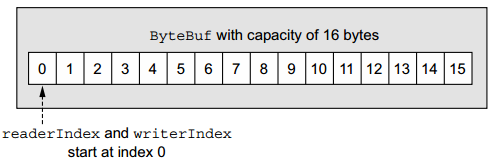

名称以 read或者 write开头的方法会更新 ByteBuf 对应的索引,而名称以 set或者 get开头的操作不会。 AbstractByteBuf.readByte 代码如下:
1 public byte readByte() {

2     checkReadableBytes0(1);

3     int i = readerIndex;

4     byte b = _getByte(i);

5     readerIndex = i + 1;// 这里更新了索引

6     return b;

7 }
AbstractByteBuf.getByte 代码如下:
1 public byte getByte(int index) {

2     checkIndex(index);

3     return _getByte(index);// 直接返回,没有更新索引

4 }
ByteBuf 的使用模式
【1】堆缓冲区:将数据存储在 JVM的堆空间。好处:提供快速分配和释放;场景:遗留数据处理;
1 public static void heapBuffer() {

2     ByteBuf heapBuf = BYTE_BUF_FROM_SOMEWHERE; //get reference form somewhere

3     if (heapBuf.hasArray()) { //检查 ByteBuf 是否有一个支撑数组

4         byte[] array = heapBuf.array();//如果有,则获取对该数组的引用

5         int offset = heapBuf.arrayOffset() + heapBuf.readerIndex();//计算第一个字节的偏移量

6         int length = heapBuf.readableBytes();//获得可读字节数

7         handleArray(array, offset, length);//使用数组、偏移量和长度作为参数调用你的方法

8     }

9 }
如果 hasArray()返回false,仍然去访问array()会抛出 UnsupportedOperationException。
【2】直接缓冲区:NIO在JDK1.4中引入的 ByteBuffer类允许JVM实现通过本地调用来分配内存。直接缓冲区的内容将驻留在常规的会被垃圾回收的堆之外。 如果数据包含在一个在堆上分配的缓冲区中,在通过套接字发送它之前,JVM会在内部把缓冲区复制到一个直接缓冲区中。
目的:避免在每次调用本地I/O操作之前(后)将缓冲区的内容复制到一个中间缓冲区(或者从中间缓冲区把内容复制到缓冲区)
缺点:直接缓冲区的分配和释放较堆缓冲区昂贵。
1 public static void directBuffer() {

2     ByteBuf directBuf = BYTE_BUF_FROM_SOMEWHERE; //get reference form somewhere

3     if (!directBuf.hasArray()) {//检查 ByteBuf 是否由数组支撑。如果不是,则这是一个直接缓冲区

4         int length = directBuf.readableBytes();//获取可读字节数

5         byte[] array = new byte[length];//分配一个新的数组来保存具有该长度的字节数据

6         directBuf.getBytes(directBuf.readerIndex(), array);//将字节复制到该数组

7         handleArray(array, 0, length);//使用数组、偏移量和长度作为参数调用你的方法

8     }

9 }
【3】复合缓冲区:为多个ByteBuf提供一个聚合视图,可以根据需要添加或者删除 ByteBuf实例。 CompositeByteBuf ByteBuf的子类,提供一个将多个缓冲区表示为单个合并缓冲区的虚拟表示。CompositeByteBuf中的 ByteBuf实例可能同时包含直接内存分配和非直接内存分配。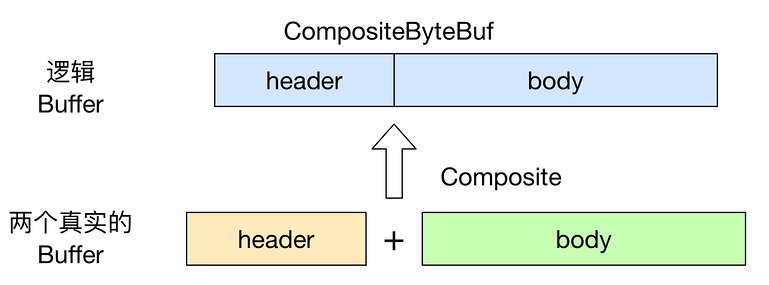
通过JDK的 ByteBuffer实现:创建一个包含两个 ByteBuffer的数组来保存消息组件
 1 public static void byteBufferComposite(ByteBuffer header, ByteBuffer body) {

 2     // Use an array to hold the message parts

 3     ByteBuffer[] message =  new ByteBuffer[]{ header, body };

 4     // Create a new ByteBuffer and use copy to merge the header and body

 5     ByteBuffer message2 =

 6             ByteBuffer.allocate(header.remaining() + body.remaining());

 7     message2.put(header);

 8     message2.put(body);

 9     message2.flip();

10 }
使用 CompositeByteBuf实现的复合缓冲区模式:
 1 public static void byteBufComposite() {

 2     CompositeByteBuf messageBuf = Unpooled.compositeBuffer();

 3     ByteBuf headerBuf = BYTE_BUF_FROM_SOMEWHERE; // can be backing or direct

 4     ByteBuf bodyBuf = BYTE_BUF_FROM_SOMEWHERE;   // can be backing or direct

 5     messageBuf.addComponents(headerBuf, bodyBuf);//将 ByteBuf 实例追加到 CompositeByteBuf

 6     //...

 7     //删除位于索引位置为 0(第一个组件)的 ByteBuf

 8     messageBuf.removeComponent(0); // remove the header

 9     //循环遍历所有的 ByteBuf 实例

10     for (ByteBuf buf : messageBuf) {

11         System.out.println(buf.toString());

12     }

13 }
因为 CompositeByteBuf可能不支持访问其支撑数组,访问 CompositeByteBuf中的数据类似于直接缓冲区的模式:
1 public static void byteBufCompositeArray() {

2     CompositeByteBuf compBuf = Unpooled.compositeBuffer();

3     int length = compBuf.readableBytes();//获得可读字节数

4     byte[] array = new byte[length];//分配一个具有可读字节数长度的新数组

5     compBuf.getBytes(compBuf.readerIndex(), array);//将字节读到该数组中

6     handleArray(array, 0, array.length);//使用偏移量和长度作为参数使用该数组

7 }
ByteBuf 字节级操作
ByteBuf 提供了许多超出基本读/写操作的方法用于修改数据。
【1】随机访问索引:第一个字节的索引 0, 最后一个字节的索引:capacity() - 1;
1 public static void byteBufRelativeAccess() {

2     ByteBuf buffer = BYTE_BUF_FROM_SOMEWHERE; //get reference form somewhere

3     for (int i = 0; i < buffer.capacity(); i++) {

4         byte b = buffer.getByte(i);

5         System.out.println((char) b);

6     }

7 }
【2】顺序访问索引:首先看下 ByteBuf的内部分段:
+-------------------+------------------+------------------+

| discardable bytes |  readable bytes  |  writable bytes  |

|                   |     (CONTENT)    |                  |

+-------------------+------------------+------------------+

|                   |                  |                  |

0      <=      readerIndex   <=   writerIndex    <=    capacity
After discardReadBytes():对可写分段的内容并没有任何保证,因为只是移动了可以读取的字节以及 writerIndex,并没有对所有可写入的字节进行擦除写。
+------------------+--------------------------------------+

|  readable bytes  |    writable bytes (got more space)   |

+------------------+--------------------------------------+

|                  |                                      |

readerIndex (0) <= writerIndex (decreased) <= capacity
可以看出,ByteBuf被读索引和写索引划分成了3个区域:
● 可丢弃字节:已经被读过的字节,调用 discardReadBytes() 丢弃并回收空间(丢弃字节部分变为可写)。初始大小是0,存储在readerIndex中,随着 read操作的执行而增加。
●可读字节:可读字节分段存储了实际数据。新分配的/包装的/复制的缓冲区的默认的 readerIndex值为0。任何 read或者 skip开头的操作都将检索或者跳过位于当前 readerIndex的数据,并且将它增加已读字节数。如果被调用的方法需要一个 ByteBuf参数作为写入的目标,并且没有指定目标索引参数,那么该目标缓冲区的 writerIndex也将被增加。如果尝试在缓冲区的可读字节数已经耗尽时从中读取数据,将抛出 IndexOutOfBoundsException 见下面代码
●可写字节:可写字节分段指一个未定义内容/写入就绪的内存区域。新分配的缓冲区的 writerIndex的默认值是0。任何 write开头的操作都将从当前的 writerIndex处开始写数据,并将它增加已经写入的字节数。
readBytes(ByteBuf dst) 代码
 1 public ByteBuf readBytes(ByteBuf dst) {

 2     readBytes(dst, dst.writableBytes());

 3     return this;

 4 }

 5 public ByteBuf readBytes(ByteBuf dst, int length) {

 6     if (checkBounds) {

 7         if (length > dst.writableBytes()) {

 8             throw new IndexOutOfBoundsException(String.format(

 9                     "length(%d) exceeds dst.writableBytes(%d) where dst is: %s", length, dst.writableBytes(), dst));

10         }

11     }

12     readBytes(dst, dst.writerIndex(), length);

13     dst.writerIndex(dst.writerIndex() + length);

14     return this;

15 }
如何读取所有可读字节:
1 public static void readAllData() {

2     ByteBuf buffer = BYTE_BUF_FROM_SOMEWHERE; //get reference form somewhere

3     while (buffer.isReadable()) {

4         System.out.println(buffer.readByte());

5     }

6 }
如何往可写字节分段写数据:
1 public static void write() {

2     // Fills the writable bytes of a buffer with random integers.

3     ByteBuf buffer = BYTE_BUF_FROM_SOMEWHERE; //get reference form somewhere

4     while (buffer.writableBytes() >= 4) {

5         buffer.writeInt(random.nextInt());

6     }

7 }
Netty ByteBuf 详解的更多相关文章
- netty系列之:netty中的ByteBuf详解
目录 简介 ByteBuf详解 创建一个Buff 随机访问Buff 序列读写 搜索 其他衍生buffer方法 和现有JDK类型的转换 总结 简介 netty中用于进行信息承载和交流的类叫做ByteBu ...
- netty之ByteBuf详解
[ChannelPromise作用:可以设置success或failure 是为了通知ChannelFutureListener]Netty的数据处理API通过两个组件暴露——abstract cla ...
- BAT面试必问细节:关于Netty中的ByteBuf详解
在Netty中,还有另外一个比较常见的对象ByteBuf,它其实等同于Java Nio中的ByteBuffer,但是ByteBuf对Nio中的ByteBuffer的功能做了很作增强,下面我们来简单了解 ...
- Netty学习摘记 —— ByteBuf详解
本文参考 本篇文章是对<Netty In Action>一书第五章"ByteBuf"的学习摘记,主要内容为JDK 的ByteBuffer替代品ByteBuf的优越性 你 ...
- netty解码器详解(小白也能看懂!)
什么是编解码器? 首先,我们回顾一下netty的组件设计:Netty的主要组件有Channel.EventLoop.ChannelFuture.ChannelHandler.ChannelPipe等. ...
- [转帖]技术扫盲:新一代基于UDP的低延时网络传输层协议——QUIC详解
技术扫盲:新一代基于UDP的低延时网络传输层协议——QUIC详解 http://www.52im.net/thread-1309-1-1.html 本文来自腾讯资深研发工程师罗成的技术分享, ...
- Java网络编程和NIO详解9:基于NIO的网络编程框架Netty
Java网络编程和NIO详解9:基于NIO的网络编程框架Netty 转自https://sylvanassun.github.io/2017/11/30/2017-11-30-netty_introd ...
- netty系列之:netty中的Channel详解
目录 简介 Channel详解 异步IO和ChannelFuture Channel的层级结构 释放资源 事件处理 总结 简介 Channel是连接ByteBuf和Event的桥梁,netty中的Ch ...
- Netty 中文教程 Hello World !详解
1.HelloServer 详解 HelloServer首先定义了一个静态终态的变量---服务端绑定端口7878.至于为什么是这个7878端口,纯粹是笔者个人喜好.大家可以按照自己的习惯选择端口.当然 ...
- Netty详解
Netty详解 http://blog.csdn.net/suifeng3051/article/category/2161821
随机推荐
- vivado程序示例
//full_add.v 全加器 module full_add( input a, input b, input carry, output sum, output count ); assign ...
- java 递归查子菜单
递归查: @Override public List<PromotionOrgInfoPO> queryOrgInfo() { List<PromotionOrgInfoPO> ...
- OO课程第二阶段(实验和期中试题)总结Blog2
OO课程第二阶段(实验和期中试题)总结Blog2 前言:学习OOP课程的第二阶段已经结束了,在此进行对于知识点,题量,难度的个人看法. 学习OOP课程的第二阶段已经结束了,较第一次阶段学习难度加大,学 ...
- HashMap长度为什么是2的幂
虽然hash值很多,范围很大,但是内存存不了那么大的数组,所以取hash的散列值的时候,需要用hash值,除以数组长度取余数.又由于取余数(%)的性能不如与运算(&),所以想用与运算来代替取余 ...
- C#发送字符串转字节含空格与0x需删去
主要作用:清除发送字符串转字节中的空格和16进制前缀0x, 字节转换按两位字符转换为一个字节,多余一位按一位字符转换一个字节 //清除空格和16进制前缀发送 String sendstr;// = n ...
- StringIO 和 BytesIO
StringIO 要把 str 字符串写入内存中,我们需要创建一个 StringIO 对象,然后像文件一样对读取内容.其中 StringIO 中多了一个 getvalue() 方法,目的是用于获取写入 ...
- SQL数据库和语法
增删改查 SELECT prod_id, prod_name, prod_price FROM Products; SELECT * FROM Products; //增 INSERT INTO Cu ...
- 使用 Transformers 在你自己的数据集上训练文本分类模型
最近实在是有点忙,没啥时间写博客了.趁着周末水一文,把最近用 huggingface transformers 训练文本分类模型时遇到的一个小问题说下. 背景 之前只闻 transformers 超厉 ...
- pod控制器
Pod控制器介绍 Pod是kubernetes的最小管理单元,在kubernetes中,按照pod的创建方式可以将其分为两类: 自主式pod:kubernetes直接创建出来的Pod,这种pod删除后 ...
- element-ui el-tree 内容过多出现横向滚动条
/deep/ .el-tree>.el-tree-node { display: inline-block; min-width: 100%;}