
mysql层的内存分配
参考 http://www.cnblogs.com/justfortaste/p/3198406.html
http://m.blog.csdn.net/blog/IT_PCode/17007833
http://blog.chinaunix.net/uid-28364803-id-3419777.html
http://blog.chinaunix.net/uid-26896862-id-3412033.html
mysql数据库分mysql层和存储引擎层,每个层都有各自的分配内存方法
mysql层分配内存方法比较简单
当一个请求过来后,使用一个线程为其服务,mysql层为它分配内存
mysql层mem_root
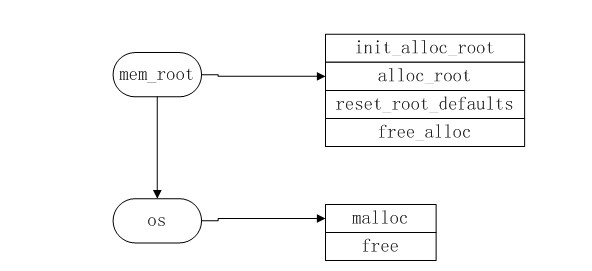
typedef struct st_used_mem

{                   /* struct for once_alloc (block) */

  struct st_used_mem *next;       /* Next block in use */

  unsigned int    left;           /* memory left in block  */

  unsigned int    size;           /* size of block */

} USED_MEM;

typedef struct st_mem_root

{

  USED_MEM *free;                  /* blocks with free memory in it */

  USED_MEM *used;                  /* blocks almost without free memory */

  USED_MEM *pre_alloc;             /* preallocated block */

  /* if block have less memory it will be put in 'used' list */

  size_t min_malloc;

  size_t block_size;               /* initial block size */

  unsigned int block_num;          /* allocated blocks counter */

  /*

     first free block in queue test counter (if it exceed

     MAX_BLOCK_USAGE_BEFORE_DROP block will be dropped in 'used' list)

  */

  unsigned int first_block_usage;

  void (*error_handler)(void);

} MEM_ROOT;
mysql内存池

mysql内部使用的内存管理程序,可以实现多次申请内存块, 中途任何时刻失败, 或者下次使用前释放内存, 无需再关心每次申请和释放了哪些内存.

工作原理:

初始化定义每次分配的最小内存块大小M,如果申请一次内存, 大小为X, X大于M, 就分配一块X的内存, 加入到管理链表中.如果小于的话, 看之前剩余的还够不够, 如果足够的话, 返回之前多余的内存地址.如果不够,则申请这么大的内存, 也计入链表中。

释放是一次性的,也可以不释放内存,而是标记已经使用的内存为“未使用”,下次同样的应用可以继续使用。

创建内存池

/*

 Initialize memory root

 SYNOPSIS

 init_alloc_root()

 mem_root       - memory root to initialize

 block_size     - size of chunks (blocks) used for memory allocation

 (It is external size of chunk i.e. it should include

 memory required for internal structures, thus it

 should be no less than ALLOC_ROOT_MIN_BLOCK_SIZE)

 pre_alloc_size - if non-0, then size of block that should be

 pre-allocated during memory root initialization.

 DESCRIPTION

 This function prepares memory root for further use, sets initial size of

 chunk for memory allocation and pre-allocates first block if specified.

 Altough error can happen during execution of this function if

 pre_alloc_size is non-0 it won't be reported. Instead it will be

 reported as error in first alloc_root() on this memory root.

 */

void init_alloc_root(MEM_ROOT *mem_root, uint block_size,

        uint pre_alloc_size __attribute__((unused))) {

    DBUG_ENTER("init_alloc_root");

    mem_root->free = mem_root->used = mem_root->pre_alloc = ;

    mem_root->min_malloc = ;

    mem_root->block_size = block_size - ALLOC_ROOT_MIN_BLOCK_SIZE;

    mem_root->error_handler = ;

    mem_root->block_num = ; /* We shift this with >>2 */

    mem_root->first_block_usage = ;

    if (pre_alloc_size) {

        if ((mem_root->free = mem_root->pre_alloc = (USED_MEM*) my_malloc(

                pre_alloc_size + ALIGN_SIZE(sizeof(USED_MEM)),

                MYF())))

                {

                    mem_root->free->size= pre_alloc_size+ALIGN_SIZE(sizeof(USED_MEM));

      mem_root->free->left= pre_alloc_size;

      mem_root->free->next= ;

    }

    }

    DBUG_VOID_RETURN;

}

申请内存

gptr alloc_root(MEM_ROOT *mem_root, unsigned int Size) {

    uint get_size, block_size;

    gptr point;

    reg1 USED_MEM *next = ;

    reg2 USED_MEM **prev;

    DBUG_ENTER("alloc_root");DBUG_ASSERT(alloc_root_inited(mem_root));

    Size = ALIGN_SIZE(Size);

    if ((*(prev = &mem_root->free)) != NULL)

    {

        if ((*prev)->left < Size

                && mem_root->first_block_usage++

                        >= ALLOC_MAX_BLOCK_USAGE_BEFORE_DROP

                && (*prev)->left < ALLOC_MAX_BLOCK_TO_DROP)

                {

            next = *prev;

            *prev = next->next; /* Remove block from list */

            next->next = mem_root->used;

            mem_root->used = next;

            mem_root->first_block_usage = ;

        }

        for (next = *prev; next && next->left < Size; next = next->next)

            prev = &next->next;

    }

    if (!next) { /* Time to alloc new block */

        block_size = mem_root->block_size * (mem_root->block_num >> );

        get_size = Size + ALIGN_SIZE(sizeof(USED_MEM));

        get_size = max(get_size, block_size);

        if (!(next = (USED_MEM*) my_malloc(get_size, MYF(MY_WME)))) {

            if (mem_root->error_handler)

                (*mem_root->error_handler)();

            return ((gptr) ); /* purecov: inspected */

        }

        mem_root->block_num++;

        next->next = *prev;

        next->size = get_size;

        next->left = get_size - ALIGN_SIZE(sizeof(USED_MEM));

        *prev = next;

    }

    point = (gptr) ((char*) next + (next->size - next->left));

    /*TODO: next part may be unneded due to mem_root->first_block_usage counter*/

    if ((next->left -= Size) < mem_root->min_malloc) { /* Full block */

        *prev = next->next; /* Remove block from list */

        next->next = mem_root->used;

        mem_root->used = next;

        mem_root->first_block_usage = ;

    }DBUG_RETURN(point);

}

释放内存

/*

 Deallocate everything used by alloc_root or just move

 used blocks to free list if called with MY_USED_TO_FREE

 SYNOPSIS

 free_root()

 root        Memory root

 MyFlags        Flags for what should be freed:

 MY_MARK_BLOCKS_FREED    Don't free blocks, just mark them free

 MY_KEEP_PREALLOC    If this is not set, then free also the

 preallocated block

 NOTES

 One can call this function either with root block initialised with

 init_alloc_root() or with a bzero()-ed block.

 It's also safe to call this multiple times with the same mem_root.

 */

void free_root(MEM_ROOT *root, myf MyFlags) {

    reg1 USED_MEM *next, *old;

    DBUG_ENTER("free_root");

    if (!root) /* QQ: Should be deleted */

        DBUG_VOID_RETURN; /* purecov: inspected */

    if (MyFlags & MY_MARK_BLOCKS_FREE)

    {

        mark_blocks_free(root);

        DBUG_VOID_RETURN;

    }

    if (!(MyFlags & MY_KEEP_PREALLOC))

        root->pre_alloc = ;

    for (next = root->used; next;) {

        old = next;

        next = next->next;

        if (old != root->pre_alloc)

            my_free((gptr) old, MYF());

    }

    for (next = root->free; next;) {

        old = next;

        next = next->next;

        if (old != root->pre_alloc)

            my_free((gptr) old, MYF());

    }

    root->used = root->free = ;

    if (root->pre_alloc) {

        root->free = root->pre_alloc;

        root->free->left = root->pre_alloc->size - ALIGN_SIZE(sizeof(USED_MEM));

        TRASH_MEM(root->pre_alloc);

        root->free->next = ;

    }

    root->block_num = ;

    root->first_block_usage = ;

    DBUG_VOID_RETURN;

}

内存池使用实例

void test_myalloc() {

    MEM_ROOT root;

    char *str;

    init_alloc_root(&root,  << ,  << );

    str = (char *) alloc_root(&root,  * sizeof(double));

    if (NULL == str)

        printf("cannot get memory for alloc root for str\n");

    strcpy(str, "hello\n");

    puts(str);

    //mark free, can be used again

    free_root(&root, MY_MARK_BLOCKS_FREE);

    //free, can not be used

    free_root(&root, );

}
void my_free(void *ptr)

{

  DBUG_ENTER("my_free");

  DBUG_PRINT("my",("ptr: %p", ptr));

  free(ptr);

  DBUG_VOID_RETURN;

}
mysql层的内存分配的更多相关文章
- MYSQL,innodb_buffer_pool_size内存分配
为MYSQL.innodb_buffer_pool_size=8G.MySQL一起动就会将占用掉8G内存(觉得TOP能够看到内存被使用了8G),可是近期才细致研究一下.原来不是这种(可能自己对Linu ...
- 深入理解Linux内存分配
深入理解Linux内存分配 为了写一个用户层程序,你也许会声明一个全局变量,这个全局变量可能是一个int类型也可能是一个数组,而声明之后你有可能会先初始化它,也有可能放在之后用到它的时候再初始化.除此 ...
- Android O Bitmap 内存分配
我们知道,一般认为在Android进程的内存模型中,heap分为两部分,一部分是native heap,一部分是Dalvik heap(实际上也是native heap的一部分). Andro ...
- mysql 与linux ~ 内存分析与调优
一 简介:linux内存和mysql二 分类 1 用户空间和内核空间 用户空间内存,从低到高分别是五种不同的内存段 1 只读段 包含代码和常量等 2 数据段 包含全局 ...
- 高性能go服务之高效内存分配
高性能go服务之高效内存分配 手动内存管理真的很坑爹(如C C++),好在我们有强大的自动化系统能够管理内存分配和生命周期,从而解放我们的双手. 但是呢,如果你想通过调整JVM垃圾回收器参数或者是优化 ...
- TCMalloc优化MySQL、Nginx内存管理
TCMalloc的全称为Thread-Caching Malloc,是谷歌开发的开源工具google-perftools中的一个成员. 与标准的glibc库的Malloc相比,TCMalloc库在内存 ...
- java\c程序的内存分配
JAVA 文件编译执行与虚拟机(JVM)介绍 Java 虚拟机(JVM)是可运行Java代码的假想计算机.只要根据JVM规格描述将解释器移植到特定的计算机上,就能保证经过编译的任何Java代码能够在该 ...
- <转载>内存管理内幕-动态分配的选择、折衷和实现 对malloc内存分配有个简单的描述,对内存管理有个大致的说明
这篇文章看后感觉不错,和我在glibc下的hurdmalloc.c文件里关于malloc的实现基本意思相同,同时,这篇文章还介绍了一些内存管理方面的知识,值得推荐. 原文链接地址为:http://ww ...
- c++内存分配
[导语] 内存管理是C++最令人切齿痛恨的问题,也是C++最有争议的问题,C++高手从中获得了更好的性能,更大的自由,C++菜鸟的收获则是一遍一遍的检查代码和对C++的痛恨,但内存管理在C++中无处不 ...
随机推荐
- 创建 maven web 项目时 ,更改 为 Dynamic web module 为 3.0 时 项目报错
更改 项目 project facets 将 dynamic web module 改为 3.0 ,如果 java 的 版本 为 1.7 以下 ,项目会出现 叉 , 原因是 web 3.0 要和 ...
- smrtlink
SMRT Link is the web-based end-to-end workflow manager for the Sequel™ System. It includes software ...
- android 网站上下的 adt 不能显示没有安装的
问题描述 使用SDK Manager更新时出现问题Failed to fetch URL https://dl-ssl.google.com/android/repository/repository ...
- kbmMWEncodeEscapes 中汉字编码的问题及解决办法
kbmMWEncodeEscapes 是kbmmw 里面的一个函数,用来对URL 中的汉字进行编码,例如 http://127.0.0.1/getname?name=春节,由于'春节'是汉字,浏览器向 ...
- Java 增强 for 循环
Java 增强 for 循环 Java5 引入了一种主要用于数组的增强型 for 循环. Java 增强 for 循环语法格式如下: for(声明语句 : 表达式) { //代码句子 } 声明语句:声 ...
- @media screen
参考地址: http://www.swordair.com/blog/2010/08/431/ http://ashaochangfu.blog.163.com/blog/static/1042517 ...
- Hdu1427 速算24点 2017-01-18 17:26 46人阅读 评论(0) 收藏
速算24点 Time Limit : 2000/1000ms (Java/Other) Memory Limit : 65536/32768K (Java/Other) Total Submiss ...
- 5款替代微软Visio的开源免费软件(转)
5款替代微软Visio的开源免费软件 提到流程图和图表设计,自然会想到微软出品的Office Visio,它是一款强大的流程图设计工具.Visio并不在Office标准套装中,需要额外付费购买,这可能 ...
- hdu 1205 吃糖果【鸽巢原理】
题目 这道题不难,看别人博客的时候发现大家都说用鸽巢原理,这是个什么鬼,于是乎百度之. 1.把某种糖果看做隔板,如果某种糖果有n个,那么就有n+1块区域,至少需要n-1块其他种糖果才能使得所有隔板不挨 ...
- hdu 2048 神上帝以及老天爷
题目 解题思路: 典型的错排题目 首先求出所有的拿错的情况,然后求出错排的所有情况,以前者除以后者就是百分比 现在求对应的所有都拿错的情况.容易知道,f(1)=0,f(2 ...