
netty之编解码
1、netty的编码和解码,在数据传输的时候,考虑数据安全,数据完整性都是很有必要的。这里主要是介绍netty3和netty5的编解码方式。其实从StringEncoder和StringDecoder中也可以获取源码的编解码规则。然后改变成自己的编解码规则也是可以的。
2、netty3和netty5的编解码方式还是存在一定差别的。个人感觉netty5来的更加实用和方便。
3、netty3的编解码规则
1)数据编码规则(我这里只是用于显示,数据规则很简单)
包头+模块+数据(请求编解码)
包头+模块+状态+数据(响应编解码)
2)目录
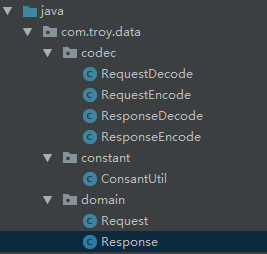
3)请求和相应对象
package com.troy.data.domain;

//请求数据

public class Request {

    //模块类型

    private int model;

    //数据

    private byte[] data;

    public int getModel() {

        return model;

    }

    public void setModel(int model) {

        this.model = model;

    }

    public byte[] getData() {

        return data;

    }

    public void setData(byte[] data) {

        this.data = data;

    }

    @Override

    public String toString() {

        return "Request{" +

                "model=" + model +

                ", data=" + new String(data) +

                '}';

    }

}
package com.troy.data.domain;

import java.util.Arrays;

//响应数据

public class Response {

    //模块类型

    private int model;

    //状态码

    private int status;

    //数据

    private byte[] data;

    public int getModel() {

        return model;

    }

    public void setModel(int model) {

        this.model = model;

    }

    public int getStatus() {

        return status;

    }

    public void setStatus(int status) {

        this.status = status;

    }

    public byte[] getData() {

        return data;

    }

    public void setData(byte[] data) {

        this.data = data;

    }

    @Override

    public String toString() {

        return "Response{" +

                "model=" + model +

                ", status=" + status +

                ", data=" + new String(data) +

                '}';

    }

}
4)常量(这里的包头,因为是固定的就写了一个常量)
package com.troy.data.constant;

//常量

public class ConsantUtil {

    //固定常量用于数据拼接,确认

    public static final int PACKAGE_HEADER = -;

}
5)请求编解码
package com.troy.data.codec;

import com.troy.data.constant.ConsantUtil;

import com.troy.data.domain.Request;

import org.jboss.netty.buffer.ChannelBuffer;

import org.jboss.netty.buffer.ChannelBuffers;

import org.jboss.netty.channel.Channel;

import org.jboss.netty.channel.ChannelHandlerContext;

import org.jboss.netty.handler.codec.oneone.OneToOneEncoder;

public class RequestEncode extends OneToOneEncoder {

    protected Object encode(ChannelHandlerContext channelHandlerContext, Channel channel, Object o) throws Exception {

        Request request = (Request) o;

        ChannelBuffer channelBuffer = ChannelBuffers.dynamicBuffer();

        channelBuffer.writeInt(ConsantUtil.PACKAGE_HEADER);

        channelBuffer.writeInt(ConsantUtil.PACKAGE_HEADER);

        channelBuffer.writeBytes(request.getData());

        return channelBuffer;

    }

}
package com.troy.data.codec;

import com.troy.data.constant.ConsantUtil;

import com.troy.data.domain.Request;

import org.jboss.netty.buffer.ChannelBuffer;

import org.jboss.netty.channel.Channel;

import org.jboss.netty.channel.ChannelHandlerContext;

import org.jboss.netty.handler.codec.oneone.OneToOneDecoder;

//请求数据解码

public class RequestDecode extends OneToOneDecoder {

    protected Object decode(ChannelHandlerContext channelHandlerContext, Channel channel, Object o) throws Exception {

        ChannelBuffer channelBuffer = (ChannelBuffer) o;

        if (ConsantUtil.PACKAGE_HEADER == channelBuffer.readInt()) {

            Request request = new Request();

            request.setModel(channelBuffer.readInt());

            byte[] bytes = new byte[channelBuffer.readableBytes()];

            channelBuffer.readBytes(bytes);

            request.setData(bytes);

            return request;

        }

        return null;

    }

}
6)响应编解码
package com.troy.data.codec;

import com.troy.data.constant.ConsantUtil;

import com.troy.data.domain.Response;

import org.jboss.netty.buffer.ChannelBuffer;

import org.jboss.netty.buffer.ChannelBuffers;

import org.jboss.netty.channel.Channel;

import org.jboss.netty.channel.ChannelHandlerContext;

import org.jboss.netty.handler.codec.oneone.OneToOneEncoder;

//响应编码器

public class ResponseEncode extends OneToOneEncoder {

    protected Object encode(ChannelHandlerContext channelHandlerContext, Channel channel, Object o) throws Exception {

        Response response = (Response) o;

        ChannelBuffer channelBuffer = ChannelBuffers.dynamicBuffer();

        channelBuffer.writeInt(ConsantUtil.PACKAGE_HEADER);

        channelBuffer.writeInt(response.getModel());

        channelBuffer.writeInt(response.getStatus());

        channelBuffer.writeBytes(response.getData());

        return channelBuffer;

    }

}
package com.troy.data.codec;

import com.troy.data.constant.ConsantUtil;

import com.troy.data.domain.Response;

import org.jboss.netty.buffer.ChannelBuffer;

import org.jboss.netty.channel.Channel;

import org.jboss.netty.channel.ChannelHandlerContext;

import org.jboss.netty.handler.codec.oneone.OneToOneDecoder;

//响应解码

public class ResponseDecode extends OneToOneDecoder{

    protected Object decode(ChannelHandlerContext channelHandlerContext, Channel channel, Object o) throws Exception {

            ChannelBuffer channelBuffer = (ChannelBuffer) o;

        if (ConsantUtil.PACKAGE_HEADER == channelBuffer.readInt()) {

            Response response = new Response();

            response.setModel(channelBuffer.readInt());

            response.setStatus(channelBuffer.readInt());

            byte[] bytes = new byte[channelBuffer.readableBytes()];

            channelBuffer.readBytes(bytes);

            response.setData(bytes);

            return response;

        }

        return null;

    }

}
7)设置对应的管道编解码就可以了
a、客户端
     //设置管道工厂

        clientBootstrap.setPipelineFactory(new ChannelPipelineFactory() {

            public ChannelPipeline getPipeline() throws Exception {

                ChannelPipeline channelPipeline = Channels.pipeline();

                channelPipeline.addLast("decode",new RequestEncode());

                channelPipeline.addLast("encode",new ResponseDecode());

                channelPipeline.addLast("client",new ClientHandler());

                return channelPipeline;

            }

        });
  @Override

    public void messageReceived(ChannelHandlerContext ctx, MessageEvent e) throws Exception {

        Response response = (Response) e.getMessage();

        System.out.println(response.toString());

        super.messageReceived(ctx, e);

    }
b、服务端
        //设置管道流

        serverBootstrap.setPipelineFactory(new ChannelPipelineFactory() {

            public ChannelPipeline getPipeline() throws Exception {

                ChannelPipeline channelPipeline = Channels.pipeline();

                //添加处理方式

                channelPipeline.addLast("idle",new IdleStateHandler(new HashedWheelTimer(),,,));

                channelPipeline.addLast("decode",new RequestDecode());

                channelPipeline.addLast("encode",new ResponseEncode());

                channelPipeline.addLast("server",new ServerHandler());

                return channelPipeline;

            }

        });
  @Override

    public void messageReceived(ChannelHandlerContext ctx, MessageEvent e) throws Exception {

        Request request = (Request) e.getMessage();

        System.out.println("client:"+request.toString());

        Response response = new Response();

        response.setModel();

        response.setStatus();

        response.setData("hello client".getBytes());

        ctx.getChannel().write(response);

        super.messageReceived(ctx, e);

    }
4、netty5的编解码规则
1)数据结构、目录结构、对象、常量都是一样。
2)编解码的编写方式有些不一样
a、请求编解码
package com.troy.data.codec;

import com.troy.data.constant.ConsantUtil;

import com.troy.data.domain.Request;

import io.netty.buffer.ByteBuf;

import io.netty.buffer.Unpooled;

import io.netty.channel.ChannelHandler;

import io.netty.channel.ChannelHandlerContext;

import io.netty.handler.codec.MessageToMessageEncoder;

import java.util.List;

@ChannelHandler.Sharable

public class RequestEncode extends MessageToMessageEncoder<Request> {

    protected void encode(ChannelHandlerContext channelHandlerContext, Request request, List<Object> list) throws Exception {

        ByteBuf byteBuf = Unpooled.buffer();

        byteBuf.writeInt(ConsantUtil.PACKAGE_HEADER);

        byteBuf.writeInt(request.getModel());

        byteBuf.writeBytes(request.getData());

        list.add(byteBuf);

    }

}
package com.troy.data.codec;

import com.troy.data.constant.ConsantUtil;

import com.troy.data.domain.Request;

import io.netty.buffer.ByteBuf;

import io.netty.channel.ChannelHandler;

import io.netty.channel.ChannelHandlerContext;

import io.netty.handler.codec.MessageToMessageDecoder;

import java.util.List;

//请求数据解码

@ChannelHandler.Sharable

public class RequestDecode extends MessageToMessageDecoder<ByteBuf>{

    protected void decode(ChannelHandlerContext channelHandlerContext, ByteBuf byteBuf, List<Object> list) throws Exception {

        if (ConsantUtil.PACKAGE_HEADER == byteBuf.readInt()) {

            //当数据超过指定值的时候跳过这部分数据

            if (byteBuf.readableBytes() > ) {

                byteBuf.skipBytes(byteBuf.readableBytes());

            }

            //一个字节一个字节的读取,知道读取到包头

            while(true) {

                byteBuf.markReaderIndex();

                if (ConsantUtil.PACKAGE_HEADER == byteBuf.readInt()) {

                    break;

                }

                byteBuf.resetReaderIndex();

                byteBuf.readByte();

            }

            Request request = new Request();

            request.setModel(byteBuf.readInt());

            byte[] bytes = new byte[byteBuf.readableBytes()];

            byteBuf.readBytes(bytes);

            request.setData(bytes);

            list.add(request);

        }

    }

}
b、响应编解码
package com.troy.data.codec;

import com.troy.data.constant.ConsantUtil;

import com.troy.data.domain.Response;

import io.netty.buffer.ByteBuf;

import io.netty.buffer.Unpooled;

import io.netty.channel.ChannelHandler;

import io.netty.channel.ChannelHandlerContext;

import io.netty.handler.codec.MessageToMessageEncoder;

import java.util.List;

//响应编码器

@ChannelHandler.Sharable

public class ResponseEncode extends MessageToMessageEncoder<Response> {

    protected void encode(ChannelHandlerContext channelHandlerContext, Response response, List<Object> list) throws Exception {

        ByteBuf byteBuf = Unpooled.buffer();

        byteBuf.writeInt(ConsantUtil.PACKAGE_HEADER);

        byteBuf.writeInt(response.getModel());

        byteBuf.writeInt(response.getStatus());

        byteBuf.writeBytes(response.getData());

        list.add(byteBuf);

    }

}
package com.troy.data.codec;

import com.troy.data.constant.ConsantUtil;

import com.troy.data.domain.Response;

import io.netty.buffer.ByteBuf;

import io.netty.channel.ChannelHandler;

import io.netty.channel.ChannelHandlerContext;

import io.netty.handler.codec.MessageToMessageDecoder;

import java.util.List;

//响应解码

@ChannelHandler.Sharable

public class ResponseDecode extends MessageToMessageDecoder<ByteBuf>{

    protected void decode(ChannelHandlerContext channelHandlerContext, ByteBuf byteBuf, List<Object> list) throws Exception {

        if (ConsantUtil.PACKAGE_HEADER == byteBuf.readInt()) {

            //当数据超过指定值的时候跳过这部分数据

            if (byteBuf.readableBytes() > ) {

                byteBuf.skipBytes(byteBuf.readableBytes());

            }

            //一个字节一个字节的读取,知道读取到包头

            while(true) {

                byteBuf.markReaderIndex();

                if (ConsantUtil.PACKAGE_HEADER == byteBuf.readInt()) {

                    break;

                }

                byteBuf.resetReaderIndex();

                byteBuf.readByte();

            }

            Response response = new Response();

            response.setModel(byteBuf.readInt());

            response.setStatus(byteBuf.readInt());

            byte[] bytes = new byte[byteBuf.readableBytes()];

            byteBuf.readBytes(bytes);

            response.setData(bytes);

            list.add(response);

        }

    }

}
3)处理上面基本上都是一样的。
5、netty的编解码,主要目的就是处理通讯问题,对数据进行自定义处理!
6、源码下载:https://pan.baidu.com/s/1nvUnmEt
netty之编解码的更多相关文章
- Netty入门系列(3) --使用Netty进行编解码的操作
前言 何为编解码,通俗的来说,我们需要将一串文本信息从A发送到B并且将这段文本进行加工处理,如:A将信息文本信息编码为2进制信息进行传输.B接受到的消息是一串2进制信息,需要将其解码为文本信息才能正常 ...
- java架构之路-(netty专题)netty的编解码(出入战)与粘包拆包
上次回归: 上次博客我们主要说了netty的基本使用,都是一些固定的模式去写的,我们只需要关注我们的拦截器怎么去写就可以了,然后我们用我们的基础示例,改造了一个简单的聊天室程序,可以看到内部加了一个S ...
- Netty 编解码技术 数据通信和心跳监控案例
Netty 编解码技术 数据通信和心跳监控案例 多台服务器之间在进行跨进程服务调用时,需要使用特定的编解码技术,对需要进行网络传输的对象做编码和解码操作,以便完成远程调用.Netty提供了完善,易扩展 ...
- Netty 源码 ChannelHandler(四)编解码技术
Netty 源码 ChannelHandler(四)编解码技术 Netty 系列目录(https://www.cnblogs.com/binarylei/p/10117436.html) 一.拆包与粘 ...
- 【转】Netty系列之Netty编解码框架分析
http://www.infoq.com/cn/articles/netty-codec-framework-analyse/ 1. 背景 1.1. 编解码技术 通常我们也习惯将编码(Encode)称 ...
- Netty系列之Netty编解码框架分析
1. 背景 1.1. 编解码技术 通常我们也习惯将编码(Encode)称为序列化(serialization),它将对象序列化为字节数组,用于网络传输.数据持久化或者其它用途. 反之,解码(Decod ...
- netty源码解解析(4.0)-19 ChannelHandler: codec--常用编解码实现
数据包编解码过程中主要的工作就是:在编码过程中进行序列化,在解码过程中从Byte流中分离出数据包然后反序列化.在MessageToByteEncoder中,已经解决了序列化之后的问题,ByteToMe ...
- Netty对常用编解码的支持
参考文献:极客时间傅健老师的<Netty源码剖析与实战>Talk is cheap.show me the code! Netty对编解码的支持 打开Netty的源码,它对很多的编码器都提 ...
- Netty 编解码奥秘
Netty中编解码 Netty 的解码器有很多种,比如基于长度的,基于分割符的,私有协议的.但是,总体的思路都是一致的. 拆包思路:当数据满足了 解码条件时,将其拆开.放到数组.然后发送到业务 han ...
随机推荐
- 如何删除Word 2010中的“向下箭头”
原文:https://jingyan.baidu.com/article/e75aca85552916142edac614.html 在日常办公中,如果从网站复制了一段文字,直接粘贴到Word中时,常 ...
- 弃坑pexpect,入坑paramiko
上文书说到,ssh库pexpect的使用,简直就是个“月亮公主”——满眼全是坑.勉强把程序写好了,跑起来的时候发现了一个新坑,让我不可抗拒的把它弃掉了——经常莫名其妙的连不上服务器!开线程连接14台服 ...
- 折腾apt源的时候发生的错误
在折腾Ubuntu源的时候,把新的源替换进去,然后 sudo apt-get update 之后报错: W: Unknown Multi-Arch type 'no' for package 'com ...
- gpu 显卡 本质
根据一切皆文件的理念,显卡.gpu.显示器是特殊的单向的只写文件.
- [零基础学pythyon]安装python编程环境
不论什么高级语言都是须要一个自己的编程环境的,这就好比写字一样,须要有纸和笔,在计算机上写东西.也须要有文字处理软件,比方各种名称的OFFICE.笔和纸以及office软件,就是写东西的硬件或软件.总 ...
- 解决hash冲突方法
转自:https://www.cnblogs.com/wuchaodzxx/p/7396599.html 目录 开放定址法 线性探测再散列 二次探测再散列 伪随机探测再散列 再哈希法 链地址法 建立公 ...
- Jenkins+maven(testng)项目(本地项目配置)
一.前提: 1. Jenkins下载安装. 2. testng的Maven项目. 二.检测: maven项目自身配置及检测. 1. POM.XML配置文件增加: <build> <p ...
- Spring自定义注解(验证身份证+性别+地区)
第一步:定义注解 PersonFormId: package com.wbg.maven1128.demo_formatter; import java.lang.annotation.*; @Doc ...
- OSD仿真_MFC程序01
Windows系统具有强大的绘图功能,可以用来模拟OSD显示.接下来将设计一个简单的模拟显示终端的程序,用于后续显示功能和菜单系统的开发.说明一下,对于Windows下的MFC编程我不怎么了解,只知道 ...
- zipfile 解压文件名乱码
zipfile 中文文件名 解压乱码 上传文件功能模块需求及BUG现象: 环境 mac django 1.11.13 python 3.6 功能需求: 上传一个.zip格式的压缩文件 解压该test. ...