
Geoffrey E. Hinton
https://www.cs.toronto.edu/~hinton/
Geoffrey E. Hinton
I am an Engineering Fellow at Google where I manage Brain Team Toronto, which is a new part of the Google Brain Team and is located at Google's Toronto office at 111 Richmond Street. Brain Team Toronto does basic research on ways to improve neural network learning techniques. I also do pro bono work as the Chief Scientific Adviser of the new Vector Institute. I am also an Emeritus Professor at the University of Toronto.
| Department of Computer Science | email: geoffrey [dot] hinton [at] gmail [dot] com | |||
| University of Toronto | voice: send email | |||
| 6 King's College Rd. | fax: scan and send email | |||
| Toronto, Ontario | ||||
Information for prospective students:
I advise interns at Brain team Toronto.
I also advise some of the residents in the Google Brain Residents Program.
I will not be taking any more visiting students, summer students or visitors at the University of Toronto. I will not be the sole advisor of any new graduate students, but I may co-advise a few graduate students with Prof. Roger Grosse or soon to be Prof. Jimmy Ba.
News
Results of the 2012 competition to recognize 1000 different types of object
How George Dahl won the competition to predict the activity of potential drugs
How Vlad Mnih won the competition to predict job salaries from job advertisements
How Laurens van der Maaten won the competition to visualize a dataset of potential drugs
Using big data to make people vote against their own interests
A possible motive for making people vote against their own interests
Basic papers on deep learning
Hinton, G. E., Osindero, S. and Teh, Y. (2006)
A fast learning algorithm for deep belief nets.
Neural Computation, 18, pp 1527-1554. [pdf]
Movies of the neural network generating and recognizing digits
Hinton, G. E. and Salakhutdinov, R. R. (2006)
Reducing the dimensionality of data with neural networks.
Science, Vol. 313. no. 5786, pp. 504 - 507, 28 July 2006.
[full paper] [supporting online material (pdf)] [Matlab code]
 LeCun, Y., Bengio, Y. and Hinton, G. E. (2015)
Deep Learning
Nature, Vol. 521, pp 436-444. [pdf]
Papers on deep learning without much math
Hinton, G. E. (2007)
To recognize shapes, first learn to generate images
In P. Cisek, T. Drew and J. Kalaska (Eds.)
Computational Neuroscience: Theoretical Insights into Brain Function. Elsevier. [pdf of final draft]
Hinton, G. E. (2007)
Learning Multiple Layers of Representation.
Trends in Cognitive Sciences, Vol. 11, pp 428-434. [pdf]
Hinton, G. E. (2014)
Where do features come from?.
Cognitive Science, Vol. 38(6), pp 1078-1101. [pdf]
A practical guide to training restricted Boltzmann machines
[pdf]
Recent Papers
Shazeer, N., Mirhoseini, A., Maziarz, K., Davis, A., Le, Q., Hinton, G., & Dean, J. (2017)
Outrageously large neural networks: The sparsely-gated mixture-of-experts layer
arXiv preprint arXiv:1701.06538 [pdf]
Ba, J. L., Hinton, G. E., Mnih, V., Leibo, J. Z. and Ionescu, C. (2016)
Using Fast Weights to Attend to the Recent Past
{\it NIPS-2016}, arXiv preprint arXiv:1610.06258v2 [pdf]
Ba, J. L., Kiros, J. R. and Hinton, G. E. (2016)
Layer normalization
{\it Deep Learning Symposium, NIPS-2016}, arXiv preprint arXiv:1607.06450 [pdf]
Ali Eslami, S. M., Nicolas Heess, N., Theophane Weber, T., Tassa, Y., Szepesvari, D., Kavukcuoglu, K. and Hinton, G. E. (2016)
Attend, Infer, Repeat: Fast Scene Understanding with Generative Models
{\it NIPS-2016}, arXiv preprint arXiv:1603.08575v3 [pdf]
LeCun, Y., Bengio, Y. and Hinton, G. E. (2015)
Deep Learning
Nature, Vol. 521, pp 436-444. [pdf]
Hinton, G. E., Vinyals, O., and Dean, J. (2015)
Distilling the knowledge in a neural network
arXiv preprint arXiv:1503.02531 [pdf]
Vinyals, O., Kaiser, L., Koo, T., Petrov, S., Sutskever, I., & Hinton, G. E. (2014)
Grammar as a foreign language.
arXiv preprint arXiv:1412.7449 [pdf]
Hinton, G. E. (2014)
Where do features come from?.
Cognitive Science, Vol. 38(6), pp 1078-1101. [pdf]
Srivastava, N., Hinton, G., Krizhevsky, A., Sutskever, I. and Salakhutdinov, R. (2014)
Dropout: A simple way to prevent neural networks from overfitting
The Journal of Machine Learning Research, 15(1), pp 1929-1958. [pdf]
Srivastava, N., Salakhutdinov, R. R. and Hinton, G. E. (2013)
Modeling Documents with a Deep Boltzmann Machine
arXiv preprint arXiv:1309.6865 [pdf]
Graves, A., Mohamed, A. and Hinton, G. E. (2013)
Speech Recognition with Deep Recurrent Neural Networks
In IEEE International Conference on Acoustic Speech and Signal Processing (ICASSP 2013) Vancouver, 2013. [pdf]
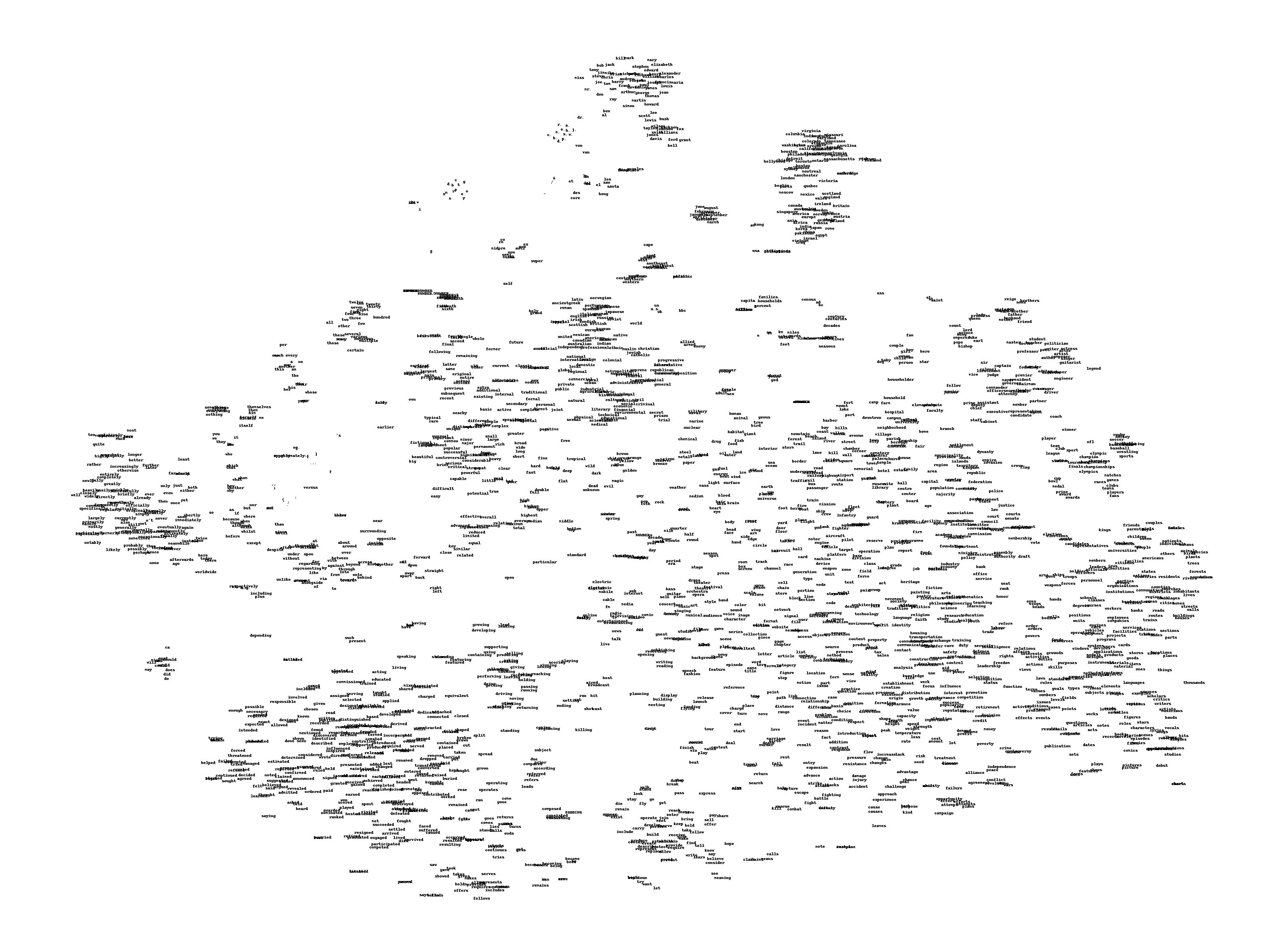
Doing analogies by using vector algebra on word embeddings
Geoffrey E. Hinton的更多相关文章
- Yann LeCun, Geoffrey E. Hinton, and Yoshua Bengio
- 【机器学习Machine Learning】资料大全
昨天总结了深度学习的资料,今天把机器学习的资料也总结一下(友情提示:有些网站需要"科学上网"^_^) 推荐几本好书: 1.Pattern Recognition and Machi ...
- 反向传播(BP)算法
著作权归作者所有.商业转载请联系作者获得授权,非商业转载请注明出处.作者:刘皮皮链接:https://www.zhihu.com/question/24827633/answer/29120394来源 ...
- (转) Deep Learning Resources
转自:http://www.jeremydjacksonphd.com/category/deep-learning/ Deep Learning Resources Posted on May 13 ...
- 学习Data Science/Deep Learning的一些材料
原文发布于我的微信公众号: GeekArtT. 从CFA到如今的Data Science/Deep Learning的学习已经有一年的时间了.期间经历了自我的兴趣.擅长事务的探索和试验,有放弃了的项目 ...
- deep learning 的综述
从13年11月初开始接触DL,奈何boss忙or 各种问题,对DL理解没有CSDN大神 比如 zouxy09等 深刻,主要是自己觉得没啥进展,感觉荒废时日(丢脸啊,这么久....)开始开文,即为记录自 ...
- Deep Learning(深度学习)学习笔记整理
申明:本文非笔者原创,原文转载自:http://www.sigvc.org/bbs/thread-2187-1-3.html 4.2.初级(浅层)特征表示 既然像素级的特征表示方法没有作用,那怎样的表 ...
- [OpenCV] Face Detection
即将进入涉及大量数学知识的阶段,先读下“别人家”的博文放松一下. 读罢该文,基本能了解面部识别领域的整体状况. 后生可畏. 结尾的Google Facenet中的2亿数据集,仿佛隐约听到:“你们都玩儿 ...
- FAQ: Machine Learning: What and How
What: 就是将统计学算法作为理论,计算机作为工具,解决问题.statistic Algorithm. How: 如何成为菜鸟一枚? http://www.quora.com/How-can-a-b ...
随机推荐
- Atcoder CODE FESTIVAL 2017 qual B D - 101 to 010 dp
题目链接 题意 对于一个\(01\)串,如果其中存在子串\(101\),则可以将它变成\(010\). 问最多能进行多少次这样的操作. 思路 官方题解 转化 倒过来考虑. 考虑,最终得到的串中的\(' ...
- Perl语言入门--3--perl的控制结构
表达式真假值总结: 表达式不一定是逻辑表达式,但一定要得出真假值 假值:逻辑值为假 值为0 字符串为空 列表为空 undef 其他情况为真 1.if {} elsif {} else {} 2.u ...
- docker mysql 导入导出数据
导出数据 1.导出mysql单张表结构和数据: docker exec -it my-mysql mysqldump dbname -uroot -p123456 --tables tname > ...
- 模块化开发(seajs)
<!DOCTYPE html PUBLIC "-//W3C//DTD XHTML 1.0 Transitional//EN" "http://www.w3.org/ ...
- Spring Tool Suite(STS)安装
Spring Tool Suite是一个基于Eclipse的开发环境,可以自定义用于开发Spring应用程序.它提供了一个随时可用的环境来实现,调试,运行和部署Spring应用程序,包括Pivotal ...
- Intellij从无到有创建项目
Intellij虽然提供了很多模板可以创建maven web javaee等等各种项目,但是你知道项目从无到有到底怎么来的,各个配置分别是做什么的?现在就来一步步说明. 1.idea打开一个空文件夹: ...
- KeyStore和TrustStore
笔者的这篇文章参考了http://docs.oracle.com/cd/E19509-01/820-3503/ggfgo/index.html KeyStore和TrustStore在很多HTTPS双 ...
- Xamarin XAML语言教程XAML文件结构与解析XAML
Xamarin XAML语言教程XAML文件结构与解析XAML XAML文件结构 在上文中,我们创建XAML文件后,会看到类似图1.16所示的结构 图1.16 结构 其中,.xaml文件和.xaml ...
- golang实现dns域名解析(一)
本文将详细讲解如何用go语言一步一步实现dns域名解析的过程,并简单介绍点dns有关的知识,直接开始正题吧. 首先我们要了解dns解析的过程,没有了解的请看这里DNS入门(转)很详细.扫盲结束后,我们 ...
- Generate C and C++ Header File
1. 2. 其中bootclasspath 后面的参数就是自己android.jar具体位置 location: ${system_path:javah} working Directoy: ${pr ...