
[编织消息框架][netty源码分析]11 ByteBuf 实现类UnpooledHeapByteBuf职责与实现

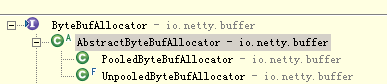
每种ByteBuf都有相应的分配器ByteBufAllocator,类似工厂模式。我们先学习UnpooledHeapByteBuf与其对应的分配器UnpooledByteBufAllocator
如何知道alloc分配器那是个?
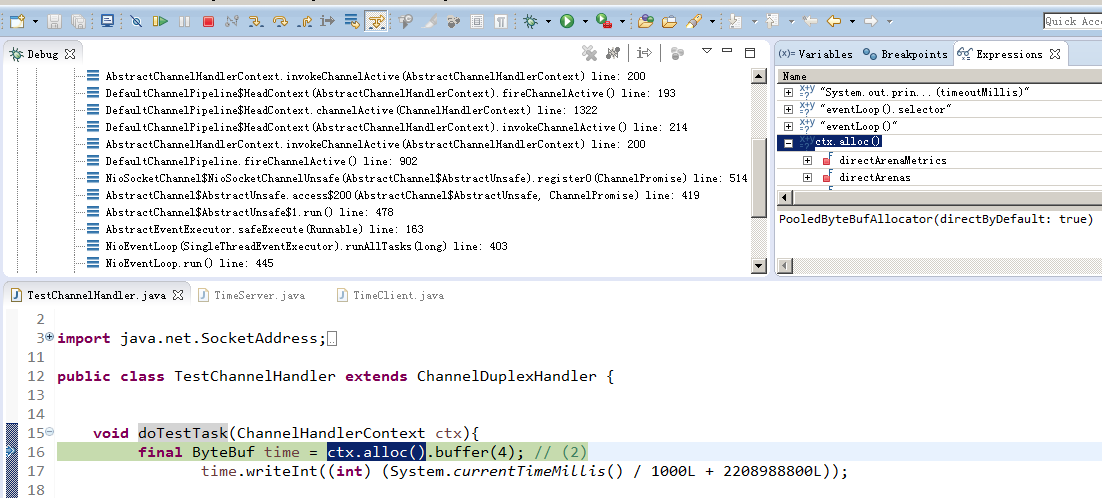
可以从官方下载的TimeServer 例子来学习,本项目已有源码可在 TestChannelHandler.class里断点追踪
从图可以看出netty 4.1.8默认的ByteBufAllocator是PooledByteBufAllocator,可以参过启动参数-Dio.netty.allocator.type unpooled/pooled 设置
细心的读者可以看出分配ByteBuf只有pool跟unpool,但ByteBuf有很多类型,可能出于使用方面考虑,有时不一定设计太死板,太规范反而使学习成本很大
public final class ByteBufUtil {

    static final ByteBufAllocator DEFAULT_ALLOCATOR;

    static {

        String allocType = SystemPropertyUtil.get(

                "io.netty.allocator.type", PlatformDependent.isAndroid() ? "unpooled" : "pooled");

        allocType = allocType.toLowerCase(Locale.US).trim();

        ByteBufAllocator alloc;

        if ("unpooled".equals(allocType)) {

            alloc = UnpooledByteBufAllocator.DEFAULT;

        } else if ("pooled".equals(allocType)) {

            alloc = PooledByteBufAllocator.DEFAULT;

        } else {

            alloc = PooledByteBufAllocator.DEFAULT;

        }

        DEFAULT_ALLOCATOR = alloc;

    }

}
AbstractReferenceCountedByteBuf是统计引用总数处理,用到Atomic*技术。
refCnt是从1开始,每引用一次加1,释放引用减1,当refCnt变成1时执行deallocate由子类实现
public abstract class AbstractReferenceCountedByteBuf extends AbstractByteBuf {

    private static final AtomicIntegerFieldUpdater<AbstractReferenceCountedByteBuf> refCntUpdater =

            AtomicIntegerFieldUpdater.newUpdater(AbstractReferenceCountedByteBuf.class, "refCnt");

    private volatile int refCnt = 1;

    @Override

    public ByteBuf retain() {

        return retain0(1);

    }

    private ByteBuf retain0(int increment) {

        for (;;) {

            int refCnt = this.refCnt;

            final int nextCnt = refCnt + increment;

            if (nextCnt <= increment) {

                throw new IllegalReferenceCountException(refCnt, increment);

            }

            if (refCntUpdater.compareAndSet(this, refCnt, nextCnt)) {

                break;

            }

        }

        return this;

    }

    @Override

    public boolean release() {

        return release0(1);

    }

    private boolean release0(int decrement) {

        for (;;) {

            int refCnt = this.refCnt;

            if (refCnt < decrement) {

                throw new IllegalReferenceCountException(refCnt, -decrement);

            }

            if (refCntUpdater.compareAndSet(this, refCnt, refCnt - decrement)) {

                if (refCnt == decrement) {

                    deallocate();

                    return true;

                }

                return false;

            }

        }

    }

    protected abstract void deallocate();

}
对于ByteBuf I/O 操作经常用的是 writeByte readByte两种
由于ByteBuf支持多种bytes对象,如 OutputStream、GatheringByteChannel、ByteBuffer、ByteBuf等,
我们只拿两三种常用的API来做分析,其它逻辑大同小异
如果读者有印象的话,通常底层只负责流程控制,实现交给应用层/子类处理,AbstractByteBuf.class writeByte/readByte 也是这种处理方式
public class UnpooledHeapByteBuf extends AbstractReferenceCountedByteBuf {

    //分配器

    private final ByteBufAllocator alloc;

    //数据

    byte[] array;

    //临时ByteBuffer,用于内部缓存

    private ByteBuffer tmpNioBuf;

    private UnpooledHeapByteBuf(

            ByteBufAllocator alloc, byte[] initialArray, int readerIndex, int writerIndex, int maxCapacity) {

        //省去部分代码同边界处理

        super(maxCapacity);

        this.alloc = alloc;

        array = initialArray;

        this.readerIndex = readerIndex;

        this.writerIndex = writerIndex;

    }

    //获取ByteBuffer容量

    @Override

    public int capacity() {

        ensureAccessible();

        return array.length;

    }

    @Override

    public boolean hasArray() {

        return true;

    }

    //获取原始数据

    @Override

    public byte[] array() {

        ensureAccessible();

        return array;

    }

    //扩容/缩容

    @Override

    public ByteBuf capacity(int newCapacity) {

        ensureAccessible();

        //newCapacity参数边界判断

        if (newCapacity < 0 || newCapacity > maxCapacity()) {

            throw new IllegalArgumentException("newCapacity: " + newCapacity);

        }

        int oldCapacity = array.length;

        //扩容处理,直接cp到新的array

        if (newCapacity > oldCapacity) {

            byte[] newArray = new byte[newCapacity];

            System.arraycopy(array, 0, newArray, 0, array.length);

            setArray(newArray);

        } else if (newCapacity < oldCapacity) {

            //减容处理

            //这里有两种处理情况

            //1.readerIndex > newCapacity 说明还有数据未处理直接将 readerIndex,writerIndex相等 newCapacity

            //2.否则 writerIndex =Math.min(writerIndex,newCapacity),取最少值,然后直接复制数据

            //可以看出netty处理超出readerIndex、writerIndex 限界直接丢弃数据。。。。。。

            byte[] newArray = new byte[newCapacity];

            int readerIndex = readerIndex();

            if (readerIndex < newCapacity) {

                int writerIndex = writerIndex();

                if (writerIndex > newCapacity) {

                    writerIndex = newCapacity

                    this.writerIndex = writerIndex;

                }

                System.arraycopy(array, readerIndex, newArray, readerIndex, writerIndex - readerIndex);

              //System.arraycopy(复制来源数组, 来源组起始坐标, 目标数组, 目标数组起始坐标, 复制数据长度);

            } else {

                this.readerIndex = newCapacity;

                this.writerIndex = newCapacity;

            }

            setArray(newArray);

        }

        return this;

    }

}
AbstractByteBuf.class readBytes 调用子类实现 getBytes方法,区别是调用readBytes会改变readerIndex记录
public abstract class AbstractByteBuf extends ByteBuf {

    @Override

    public ByteBuf readBytes(ByteBuffer dst) {

        int length = dst.remaining();

        //checkReadableBytes(length);

         if (readerIndex > (writerIndex - length)) {

            throw new IndexOutOfBoundsException(String.format(

                    "readerIndex(%d) + length(%d) exceeds writerIndex(%d): %s",

                    readerIndex, length, writerIndex, this));

        }

        //调用子类实现

        getBytes(readerIndex, dst);

        //记录已读长度

        readerIndex += length;

        return this;

    }

    @Override

    public ByteBuf readBytes(ByteBuf dst, int dstIndex, int length) {

        checkReadableBytes(length);

        getBytes(readerIndex, dst, dstIndex, length);

        readerIndex += length;

        return this;

    }

    //这里如果index不为负的话只需要 capacity - (index + length) < 0 判断就可以

    //用到 | 运算 如果 index为-1的话 index | length 还是负数 第二个 | (index + length)运算有可能 index + length相加为负

    public static boolean isOutOfBounds(int index, int length, int capacity) {

        return (index | length | (index + length) | (capacity - (index + length))) < 0;

    }

}
public class UnpooledHeapByteBuf extends AbstractReferenceCountedByteBuf {

    //支持ByteBuffer读取

    @Override

    public ByteBuf getBytes(int index, ByteBuffer dst) {

        //checkIndex(index, dst.remaining());

        if (isOutOfBounds(index,  dst.remaining(), capacity())) {

            throw new IndexOutOfBoundsException(String.format(

                    "index: %d, length: %d (expected: range(0, %d))", index, dst.remaining(), capacity()));

        }

        dst.put(array, index, dst.remaining());

        return this;

    }

    //支持ByteBuf读取

    @Override

    public ByteBuf getBytes(int index, ByteBuf dst, int dstIndex, int length) {

        checkDstIndex(index, length, dstIndex, dst.capacity());

        //是unsafe类型,要调用jdk unsafe方法复制

        if (dst.hasMemoryAddress()) {

            PlatformDependent.copyMemory(array, index, dst.memoryAddress() + dstIndex, length);

        } else if (dst.hasArray()) { //如果是数组即 heap类型,直接复制过去

            getBytes(index, dst.array(), dst.arrayOffset() + dstIndex, length);

        } else {

            dst.setBytes(dstIndex, array, index, length);

        }

        return this;

    }

    //支持数组读取

    @Override

    public ByteBuf getBytes(int index, byte[] dst, int dstIndex, int length) {

        checkDstIndex(index, length, dstIndex, dst.length);

        System.arraycopy(array, index, dst, dstIndex, length);

        return this;

    }

}
AbstractByteBuf.class writeBytes 调用子类实现 setBytes方法,区别是调用writeBytes会改变writerIndex记录
public abstract class AbstractByteBuf extends ByteBuf {

    @Override

    public ByteBuf writeBytes(ByteBuf src) {

        writeBytes(src, src.readableBytes());

        return this;

    }

    @Override

    public ByteBuf writeBytes(ByteBuf src, int length) {

        if (length > src.readableBytes()) {

            throw new IndexOutOfBoundsException(String.format(

                    "length(%d) exceeds src.readableBytes(%d) where src is: %s", length, src.readableBytes(), src));

        }

        writeBytes(src, src.readerIndex(), length);

        //读取src数据到this.ByteBuf 所以要更改src readerIndex

        src.readerIndex(src.readerIndex() + length);

        return this;

    }

    @Override

    public ByteBuf writeBytes(ByteBuf src, int srcIndex, int length) {

        ensureAccessible();

        //是否扩容处理

        ensureWritable(length);

        //调用子类实现

        setBytes(writerIndex, src, srcIndex, length);

        //记录已写长度

        writerIndex += length;

        return this;

    }

    private void ensureWritable0(int minWritableBytes) {

        if (minWritableBytes <= writableBytes()) {

            return;

        }

        //写入数据长度大于最大空间剩余长度抛异常

        if (minWritableBytes > maxCapacity - writerIndex) {

            throw new IndexOutOfBoundsException(String.format(

                    "writerIndex(%d) + minWritableBytes(%d) exceeds maxCapacity(%d): %s",

                    writerIndex, minWritableBytes, maxCapacity, this));

        }

        //通过分配器计算,参数1写完后的writerIndex记录,参数2最大容量长度

        int newCapacity = alloc().calculateNewCapacity(writerIndex + minWritableBytes, maxCapacity);

        //子类实现

        capacity(newCapacity);

    }

    //////////////////////////////AbstractByteBufAllocator.class//////////////////////////////////////

    @Override

    public int calculateNewCapacity(int minNewCapacity, int maxCapacity) {

        if (minNewCapacity < 0) {

            throw new IllegalArgumentException("minNewCapacity: " + minNewCapacity + " (expectd: 0+)");

        }

        if (minNewCapacity > maxCapacity) {

            throw new IllegalArgumentException(String.format(

                    "minNewCapacity: %d (expected: not greater than maxCapacity(%d)",

                    minNewCapacity, maxCapacity));

        }

        final int threshold = 1048576 * 4; // 4 MiB page

        if (minNewCapacity == threshold) {

            return threshold;

        }

        //如果新容量大于4M,不走双倍扩大算法,数值范围取 minNewCapacity <= maxCapacity

        if (minNewCapacity > threshold) {

            // 除以threshold再乘以threshold得出的结果是 threshold的倍数,可以理解是去掉余数

            int newCapacity = minNewCapacity / threshold * threshold;

            //如果剩余容量不够4M直接给maxCapacity,否则自增4M

            if (newCapacity > maxCapacity - threshold) {

                newCapacity = maxCapacity;

            } else {

                newCapacity += threshold;

            }

            return newCapacity;

        }

        //newCapacity <<= 1 意思是 newCapacity*2,双倍自增

        int newCapacity = 64;

        while (newCapacity < minNewCapacity) {

            newCapacity <<= 1;

        }

        return Math.min(newCapacity, maxCapacity);

    }

}
//setBytes逻辑跟getBytes一样

public class UnpooledHeapByteBuf extends AbstractReferenceCountedByteBuf {

    @Override

    public ByteBuf setBytes(int index, ByteBuf src, int srcIndex, int length) {

        checkSrcIndex(index, length, srcIndex, src.capacity());

        if (src.hasMemoryAddress()) {

            PlatformDependent.copyMemory(src.memoryAddress() + srcIndex, array, index, length);

        } else  if (src.hasArray()) {

            setBytes(index, src.array(), src.arrayOffset() + srcIndex, length);

        } else {

            src.getBytes(srcIndex, array, index, length);

        }

        return this;

    }

    @Override

    public ByteBuf setBytes(int index, byte[] src, int srcIndex, int length) {

        checkSrcIndex(index, length, srcIndex, src.length);

        System.arraycopy(src, srcIndex, array, index, length);

        return this;

    }

}
总结:
1.writeBytes跟setBytes、readBytes跟getBytes区别是前者有记录,后者没有,而后者是子类的实现
2.扩容算法是两种策略:
2.1.大于4M时不走double自增,数值范围取 minNewCapacity <= maxCapacity
2.2.少于4M时从64开始double自增
3.更改容量也是每个子类实现,要考虑两种情况
3.1.大于当前容量
3.2.小于当前容量,当小于的时候要考虑 readerIndex、writerIndex边界,当超过 readerIndex、writerIndex边界heap的策略是丢去原来的数据
4.heap是继承 AbstractReferenceCountedByteBuf的,当refCnt记录为1时释放数据
[编织消息框架][netty源码分析]11 ByteBuf 实现类UnpooledHeapByteBuf职责与实现的更多相关文章
- [编织消息框架][netty源码分析]13 ByteBuf 实现类CompositeByteBuf职责与实现
public class CompositeByteBuf extends AbstractReferenceCountedByteBuf implements Iterable<ByteBuf ...
- [编织消息框架][netty源码分析]12 ByteBuf 实现类UnpooledDirectByteBuf职责与实现
public class UnpooledDirectByteBuf extends AbstractReferenceCountedByteBuf { private final ByteBufAl ...
- [编织消息框架][netty源码分析]6 ChannelPipeline 实现类DefaultChannelPipeline职责与实现
ChannelPipeline 负责channel数据进出处理,如数据编解码等.采用拦截思想设计,经过A handler处理后接着交给next handler ChannelPipeline 并不是直 ...
- [编织消息框架][netty源码分析]4 eventLoop 实现类NioEventLoop职责与实现
NioEventLoop 是jdk nio多路处理实现同修复jdk nio的bug 1.NioEventLoop继承SingleThreadEventLoop 重用单线程处理 2.NioEventLo ...
- [编织消息框架][netty源码分析]5 eventLoop 实现类NioEventLoopGroup职责与实现
分析NioEventLoopGroup最主有两个疑问 1.next work如何分配NioEventLoop 2.boss group 与child group 是如何协作运行的 从EventLoop ...
- [编织消息框架][netty源码分析]8 Channel 实现类NioSocketChannel职责与实现
Unsafe是托委访问socket,那么Channel是直接提供给开发者使用的 Channel 主要有两个实现 NioServerSocketChannel同NioSocketChannel 致于其它 ...
- [编织消息框架][netty源码分析]9 Promise 实现类DefaultPromise职责与实现
netty Future是基于jdk Future扩展,以监听完成任务触发执行Promise是对Future修改任务数据DefaultPromise是重要的模板类,其它不同类型实现基本是一层简单的包装 ...
- [编织消息框架][netty源码分析]5 EventLoopGroup 实现类NioEventLoopGroup职责与实现
分析NioEventLoopGroup最主有两个疑问 1.next work如何分配NioEventLoop 2.boss group 与child group 是如何协作运行的 从EventLoop ...
- [编织消息框架][netty源码分析]7 Unsafe 实现类NioSocketChannelUnsafe职责与实现
Unsafe 是channel的内部接口,从书写跟命名上看是不公开给开发者使用的,直到最后实现NioSocketChannelUnsafe也没有公开出去 public interface Channe ...
随机推荐
- 解决eclipse启动时出现“failed to load the jni shared library”
如何解决启动eclipse出现failed to load the jni shared library的问题 问题描述:启动eclipse时,出现以下弹出框 此时,即表示eclispe和jdk位数不 ...
- c++与js脚本交互,C++调用JS函数JS调用C++函数
一.javascript调用c++,方法有两种 方案1: 1.html编写 <html><head></head><body><h1>TES ...
- Exception from HRESULT:
在MFC工程中,在类向导的时候,偶尔会遇到 "Exception from HRESULT:" 的问题,问题的原因可能是移动工程之类的操作破坏了工程的某些文件或者更改了某些路径的映 ...
- 关于web前端网站优化
不知道是哪位大牛的文章,转过来嘻嘻. 作者:斯迪链接:https://www.zhihu.com/question/21658448/answer/18903129来源:知乎著作权归作者所有.商业转载 ...
- vuex的简单介绍
.vuex的定义 )Vuex 是一个专门为 Vue.js 应用程序开发的状态管理模式,使用插件的形式引进项目中 )集中存储和管理应用的所有组件的状态,并以相应的规则保证状态以一种可预测的方式发生变化 ...
- VUE的组件为什么要EXPORT DEFAULT 转载
Vue的组件为什么要export default Vue 的模块机制 Vue 是通过 webpack 实现的模块化,因此可以使用 import 来引入模块,例如: 此外,你还可以在 bulid/w ...
- hibernate annotation 之 注解声明
@Entity 将一个 POJO 类注解成一个实体 bean ( 持久化 POJO 类 ) @Table 为实体 bean 映射指定具体的表,如果该注解没有被声明,系统将使用默认值 ( 即实体 bea ...
- day 65 Django基础十一之认证系统
Django基础十一之认证系统 本节目录 一 auth模块 二 User对象 三 扩展默认的auth_user表 四 xxx 五 xxx 六 xxx 七 xxx 八 xxx 一 auth模块 我们 ...
- zookeeper 选举白话理解
- IDEA 安装lombok及使用
1.File-Settings-Plugins-Brows Repositories-输入lombok-install 2.重启idea 3.添加maven依赖 <dependency> ...