
C# 连接SQLServer数据库自动生成model类代码
Program.cs
using System;

using System.Collections.Generic;

using System.Linq;

using System.Threading.Tasks;

using System.Windows.Forms;

namespace ModelFactory

{

    static class Program

    {

        /// <summary>

        /// 应用程序的主入口点。

        /// </summary>

        [STAThread]

        static void Main()

        {

            Application.EnableVisualStyles();

            Application.SetCompatibleTextRenderingDefault(false);

            DBSelect dbs = new DBSelect();

            dbs.ShowDialog();

            TableSelect ts = new TableSelect();

            ts.ShowDialog();

            Application.Run(new ModelFactory());

        }

    }

}
DataBase.cs
using System;

using System.Collections.Generic;

using System.Data;

using System.Data.SqlClient;

using System.Linq;

using System.Text;

using System.Threading.Tasks;

namespace ModelFactory

{

    public static class DataBase

    {

        public static string DataSouse { get; set; }

        public static string USER_ID { get; set; }

        public static string PASSWORD { get; set; }

        public static string database { get; set; }

        private static string connectString{ get; set; }

        public static List<string> tablenames = new List<string>();

        public static void Init()

        {

            if (string.IsNullOrEmpty(DataBase.database)) DataBase.database = "master";

            connectString = string.Format("DATA SOURCE={0};INITIAL CATALOG={1};USER ID={2};PASSWORD={3};", DataSouse, database, USER_ID, PASSWORD);

        }

        public static SqlConnection SqlOpen()

        {

            SqlConnection connection = null;

            try

            {

                connection = new SqlConnection(connectString);

                //connection.Open();

                return connection;

            }

            catch

            {

                return connection;

            }

        }

        public static bool SqlClose(SqlConnection connection)

        {

            if (connection != null)

            {

                connection.Close();

                return true;

            }

            else

                return false;

        }

        public static DataSet ProcSet(string commandstr)

        {

            //	data.Clear();

            DataSet data = new DataSet();

            SqlConnection connection = SqlOpen();

            SqlDataAdapter aCommand = new SqlDataAdapter(commandstr, connection);

            try

            {

                aCommand.SelectCommand.CommandTimeout = 120;

                connection.Open();

                aCommand.Fill(data);

                SqlClose(connection);

                return data;

            }

            catch (Exception e)

            {

                return null;

            }

            finally

            {

                SqlClose(connection);

            }

        }

        public static int DoProc(string commandstr)

        {

            SqlConnection connection = SqlOpen();

            SqlCommand sqlCom = new SqlCommand(commandstr, connection);

            sqlCom.CommandTimeout = 1200;

            try

            {

                connection.Open();

                int x = Convert.ToInt32(sqlCom.ExecuteNonQuery());

                SqlClose(connection);

                return x;

            }

            catch (Exception e)

            {

                return 0;

            }

            finally

            {

                SqlClose(connection);

            }

        }

        public static string ProcString(string commandstr)

        {

            SqlConnection connection = SqlOpen();

            SqlCommand sqlCom = new SqlCommand(commandstr, connection);

            sqlCom.CommandTimeout = 600;

            string str = "";

            try

            {

                connection.Open();

                var obj = sqlCom.ExecuteScalar();

                if (obj != null)

                    str = obj.ToString();

                return str;

            }

            catch (Exception e)

            {

                return "";

            }

            finally

            {

                SqlClose(connection);

            }

        }

        public static void Add(string tablename)

        {

            tablenames.Add(tablename);

        }

    }

}
DBSelect
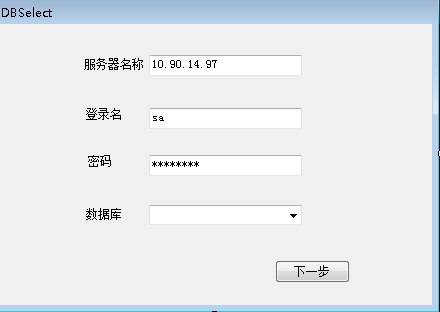
using System;

using System.Collections.Generic;

using System.ComponentModel;

using System.Data;

using System.Drawing;

using System.Linq;

using System.Text;

using System.Threading.Tasks;

using System.Windows.Forms;

namespace ModelFactory

{

    public partial class DBSelect : Form

    {

        public DBSelect()

        {

            InitializeComponent();

        }

        private void textBox3_Leave(object sender, EventArgs e)

        {

            DataBase.DataSouse = textBox1.Text.Trim();

            DataBase.USER_ID = textBox2.Text.Trim();

            DataBase.PASSWORD = textBox3.Text.Trim();

            DataBase.Init();

            DataSet ds = DataBase.ProcSet("SELECT d.name,d.database_id FROM sys.databases AS d WHERE d.log_reuse_wait>0");

            comboBox1.DisplayMember = "name";

            comboBox1.ValueMember = "database_id";

            comboBox1.DataSource = ds.Tables[0];

        }

        private void button1_Click(object sender, EventArgs e)

        {

            DataBase.database = comboBox1.Text;

            DataBase.Init();

            this.Close();

        }

        private void comboBox1_Enter(object sender, EventArgs e)

        {

            textBox3_Leave(sender, e);

        }

    }

}
TableSelect
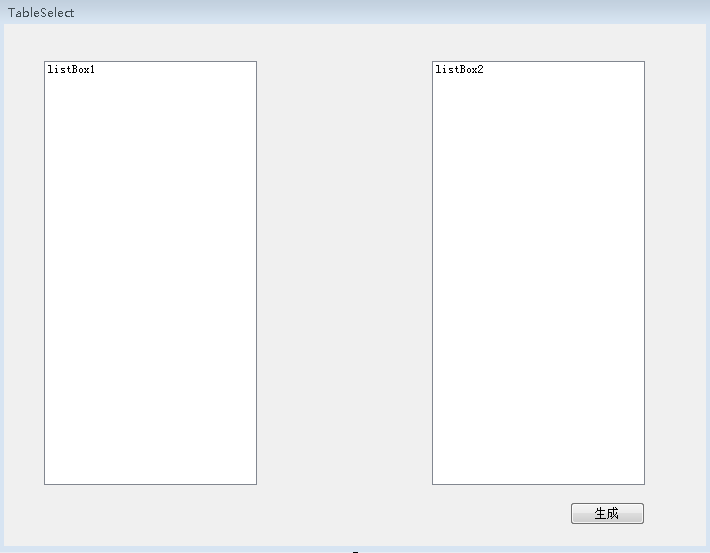
using System;

using System.Collections.Generic;

using System.ComponentModel;

using System.Data;

using System.Drawing;

using System.Linq;

using System.Text;

using System.Threading.Tasks;

using System.Windows.Forms;

namespace ModelFactory

{

    public partial class TableSelect : Form

    {

        public TableSelect()

        {

            InitializeComponent();

            listBox2.DisplayMember = "name";

            listBox2.ValueMember = "name";

            listBox1.DataSource = DataBase.ProcSet("SELECT t.name FROM sys.tables AS t").Tables[0];

            listBox1.DisplayMember = "name";

            listBox1.ValueMember = "name";

        }

        private void listBox1_DoubleClick(object sender, EventArgs e)

        {

            //listBox1.Items.Remove(listBox1.SelectedItem);

            listBox2.Items.Add(listBox1.SelectedItem);

        }

        private void listBox2_DoubleClick(object sender, EventArgs e)

        {

            listBox2.Items.Remove(listBox2.SelectedItem);

        }

        private void button3_Click(object sender, EventArgs e)

        {

           foreach(System.Data.DataRowView row in listBox2.Items)

           {

               DataBase.Add(row.Row.ItemArray[0].ToString());

           }

           this.Close();

        }

    }

}
ModelFactory.cs
using System;

using System.Collections.Generic;

using System.ComponentModel;

using System.Data;

using System.Drawing;

using System.Linq;

using System.Text;

using System.Threading.Tasks;

using System.Windows.Forms;

namespace ModelFactory

{

    public partial class ModelFactory : Form

    {

        private StringBuilder sb = new StringBuilder();

        public ModelFactory()

        {

            InitializeComponent();

            foreach (string tablename in DataBase.tablenames)

            {

                sb.AppendLine("    public class " + tablename);

                sb.AppendLine("    {");

                DataTable dt = DataBase.ProcSet("select top 1 * from " + tablename).Tables[0];

                //DbType dbtype;

                string dbtype,columnname;

                for (int i = 0; i < dt.Columns.Count;i++ )

                {

                    dbtype = CastType(dt.Columns[i].DataType);

                    columnname = dt.Columns[i].ColumnName;

                    sb.AppendLine("         public " + dbtype + " " + columnname+" {get;set;}");

                }

                sb.AppendLine("    }");

            }

            textBox1.Text = sb.ToString();

        }

        public string CastType(Type type)

        {

            if (type == typeof(string))

            {

                return "string";

            }

            else if (type == typeof(DateTime))

            {

                return "DateTime";

            }

            else if (type == typeof(bool))

            {

                return "bool";

            }

            else if (type == typeof(int))

            {

                return "int";

            }

            else

            {

                return type.ToString().Split('.')[type.ToString().Split('.').Length - 1];

            }

        }

    }

}
C# 连接SQLServer数据库自动生成model类代码的更多相关文章
- django根据已有数据库表生成model类
django根据已有数据库表生成model类 创建一个Django项目 django-admin startproject 'xxxx' 修改setting文件,在setting里面设置你要连接的数据 ...
- 使用T4为数据库自动生成实体类
T4 (Text Template Transformation Toolkit) 是一个基于模板的代码生成器.使用T4你可以通过写一些ASP.NET-like模板,来生成C#, T-SQL, XML ...
- Asp.Net Core如何根据数据库自动生成实体类
通过引用Nuget包添加实体类 运行 Install-Package Microsoft.EntityFrameworkCore.SqlServer 运行 Install-Package Micros ...
- SpringBoot整合Mybatis 使用generator自动生成实体类代码、Mapper代码、dao层代码
1.新建一个SpringBoot项目,并引入Mybatis和mybatis-generator相关的依赖. <dependency> <groupId>org.springfr ...
- 使用mybatis-generator在自动生成Model类和Mapper文件
使用mybatis-generator插件可以很轻松的实现mybatis的逆向工程,即,能通过表结构自动生成对应的java类及mapper文件,可以大大提高工作效率,并且它提供了很多自定义的设置可以应 ...
- c# 利用t4模板,自动生成Model类
我们在用ORM(比如dapper)的时候,很多时候都需要自己写Model层(当然也有很多orm框架自带了这种功能,比如ef),特别是表里字段比较多的时候,一个Model要写半天,而且Model如果用于 ...
- Entity Framework连接Mysql数据库并生成Model和DAL层
Entity Framework (EF,ADO.NET Entity Framework)是微软官方提供的.NET平台的ORM框架.相比于LINQ TO SQL,EF框架具有很明显的优势: EF框架 ...
- mybatis自定义代码生成器(Generator)——自动生成model&dao代码
花了两天的时间研究了下mybatis的generator大体了解了其生成原理以及实现过程.感觉generator做的非常不错,给开发者也留足了空间.看完之后在generator的基础上实现了自定义的生 ...
- MVC Html辅助方法DropDownList的简单使用、连接MYSQL数据库用自定义model类接收
附上启发链接:https://www.cnblogs.com/CreateMyself/p/5424894.html [HttpGet] public ActionResult Edit(int id ...
随机推荐
- 微信小程序 base64格式图片的显示及保存
当我们拿到如下base64格式的图片(如下图)时, base64格式的图片数据: 如何显示 ? 使用image标签,src属性添加data:image/png;base64, (注意:若imgData ...
- compass和paoding分词器的基本使用
1.实现搜索的技术: 数据库查询:like查询:lucene全文检索技术: 1)在数据量比较大,查询字段比较多的情况下,如果采用数据库like sql查询,性能比较差:采用lucene来查询,性能相对 ...
- Windows安装Python3 curses模块
目录 0.前提 1.pip install wheel 2.下载.whl文件 3.pip install 它 参考 0.前提 确定你已经配置好了Python相关环境,可以正常在命令行使用pip安装. ...
- Lararel安装和虚拟主机配置
Laravel 对系统有些要求,当然,所有这些要求 Laravel Homestead 虚拟机都能满足,因此强烈推荐你使用 Homestead 作为你的开发环境. 当然,假如你不使用 Homestea ...
- Net core学习系列(六)——Net Core路由
一.概述 路由主要有两个主要功能: 1.将请求的URL与已定义的路由进行匹配,找到该URL对应的处理程序并传入该请求进行处理. 2.根据已定义的路由生成URL 这两个功能看起来这两个是相反的. A.路 ...
- Spring Boot-intellij idea导入方式搭建SpringBoot
Spring Boot概念 从最根本上来讲,Spring Boot就是一些库的集合,它能够被任意项目的构建系统所使用.简便起见,该框架也提供了命令行界面,它可以用来运行和测试Boot应用.框架的发布版 ...
- vue---使用Class
在用vue-cli开发项目的时候,很多时候会用到类.具体的使用方法: config.js(使用类,还可以定义构造函数) class config { /** * 构造函数 * @param {stri ...
- Java12新特性 -- JVM 常量 API
Java 12 中引入 JVM 常量 API,用来更容易地对关键类文件 (key class-file) 和运行时构件(artefact)的名义描述 (nominal description) 进行建 ...
- Spring cloud微服务安全实战-7-13章节总结
日志信息可以放到kafka,像指标监控就可以从kafka里面拿出日志来,分析日志里面的东西,把日志里面的一些信息变成数字,比如某个关键字出现了多少次,这样的信息同样去做监控,做报警. 调用链监控也是和 ...
- 【mysql 默认密码】ubuntu 上 初次启动mysql 默认密码
对于debian系的系统,mysql初始默认密码 cat /etc/mysql/debian.cnf