
Java自学-集合框架 ArrayList常用方法
ArrayList常用方法
步骤 1 : 增加
add 有两种用法:
第一种是直接add对象,把对象加在最后面
heros.add(new Hero("hero " + i));
第二种是在指定位置加对象
heros.add(3, specialHero);

package collection;

import java.util.ArrayList;

import charactor.Hero;

public class TestCollection {

    public static void main(String[] args) {

        ArrayList heros = new ArrayList();

        // 把5个对象加入到ArrayList中

        for (int i = 0; i < 5; i++) {

            heros.add(new Hero("hero " + i));

        }

        System.out.println(heros);

        // 在指定位置增加对象

        Hero specialHero = new Hero("special hero");

        heros.add(3, specialHero);

        System.out.println(heros.toString());

    }

}

package charactor;

public class Hero {

    public String name;

    public float hp;

    public int damage;

    public Hero() {

    }

    // 增加一个初始化name的构造方法

    public Hero(String name) {

        this.name = name;

    }

    // 重写toString方法

    public String toString() {

        return name;

    }

}
步骤 2 : 判断是否存在
通过方法contains 判断一个对象是否在容器中
判断标准: 是否是同一个对象,而不是name是否相同

package collection;

import java.util.ArrayList;

import charactor.Hero;

public class TestCollection {

    public static void main(String[] args) {

        ArrayList heros = new ArrayList();

        // 初始化5个对象

        for (int i = 0; i < 5; i++) {

            heros.add(new Hero("hero " + i));

        }

        Hero specialHero = new Hero("special hero");

        heros.add(specialHero);

        System.out.println(heros);

        // 判断一个对象是否在容器中

        // 判断标准: 是否是同一个对象,而不是name是否相同

        System.out.print("虽然一个新的对象名字也叫 hero 1,但是contains的返回是:");

        System.out.println(heros.contains(new Hero("hero 1")));

        System.out.print("而对specialHero的判断,contains的返回是:");

        System.out.println(heros.contains(specialHero));

    }

}
步骤 3 : 获取指定位置的对象
通过get获取指定位置的对象,如果输入的下标越界,一样会报错 
package collection;

import java.util.ArrayList;

import charactor.Hero;

public class TestCollection {

    public static void main(String[] args) {

        ArrayList heros = new ArrayList();

        // 初始化5个对象

        for (int i = 0; i < 5; i++) {

            heros.add(new Hero("hero " + i));

        }

        Hero specialHero = new Hero("special hero");

        heros.add(specialHero);

        //获取指定位置的对象

        System.out.println(heros.get(5));

        //如果超出了范围,依然会报错

        System.out.println(heros.get(6));

    }

}
步骤 4 : 获取对象所处的位置
indexOf用于判断一个对象在ArrayList中所处的位置
与contains一样,判断标准是对象是否相同,而非对象的name值是否相等

package collection;

import java.util.ArrayList;

import charactor.Hero;

public class TestCollection {

    public static void main(String[] args) {

        ArrayList heros = new ArrayList();

        // 初始化5个对象

        for (int i = 0; i < 5; i++) {

            heros.add(new Hero("hero " + i));

        }

        Hero specialHero = new Hero("special hero");

        heros.add(specialHero);

        System.out.println(heros);

        System.out.println("specialHero所处的位置:"+heros.indexOf(specialHero));

        System.out.println("新的英雄,但是名字是\"hero 1\"所处的位置:"+heros.indexOf(new Hero("hero 1")));

    }

}
步骤 5 : 删除
remove用于把对象从ArrayList中删除
remove可以根据下标删除ArrayList的元素
heros.remove(2);
也可以根据对象删除
heros.remove(specialHero);
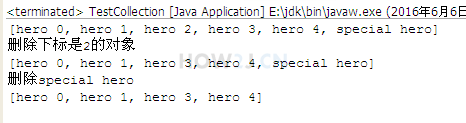
package collection;

import java.util.ArrayList;

import charactor.Hero;

public class TestCollection {

    public static void main(String[] args) {

        ArrayList heros = new ArrayList();

        // 初始化5个对象

        for (int i = 0; i < 5; i++) {

            heros.add(new Hero("hero " + i));

        }

        Hero specialHero = new Hero("special hero");

        heros.add(specialHero);

        System.out.println(heros);

        heros.remove(2);

        System.out.println("删除下标是2的对象");

        System.out.println(heros);

        System.out.println("删除special hero");

        heros.remove(specialHero);

        System.out.println(heros);

    }

}
步骤 6 : 替换
set用于替换指定位置的元素

package collection;

import java.util.ArrayList;

import charactor.Hero;

public class TestCollection {

    public static void main(String[] args) {

        ArrayList heros = new ArrayList();

        // 初始化5个对象

        for (int i = 0; i < 5; i++) {

            heros.add(new Hero("hero " + i));

        }

        Hero specialHero = new Hero("special hero");

        heros.add(specialHero);

        System.out.println(heros);

        System.out.println("把下标是5的元素,替换为\"hero 5\"");

        heros.set(5, new Hero("hero 5"));

        System.out.println(heros);

    }

}
步骤 7 : 获取大小
size 用于获取ArrayList的大小

package collection;

import java.util.ArrayList;

import charactor.Hero;

public class TestCollection {

    public static void main(String[] args) {

        ArrayList heros = new ArrayList();

        // 初始化5个对象

        for (int i = 0; i < 5; i++) {

            heros.add(new Hero("hero " + i));

        }

        Hero specialHero = new Hero("special hero");

        heros.add(specialHero);

        System.out.println(heros);

        System.out.println("获取ArrayList的大小:");

        System.out.println(heros.size());

    }

}
步骤 8 : 转换为数组
toArray可以把一个ArrayList对象转换为数组。
需要注意的是,如果要转换为一个Hero数组,那么需要传递一个Hero数组类型的对象给toArray(),这样toArray方法才知道,你希望转换为哪种类型的数组,否则只能转换为Object数组

package collection;

import java.util.ArrayList;

import charactor.Hero;

public class TestCollection {

    public static void main(String[] args) {

        ArrayList heros = new ArrayList();

        // 初始化5个对象

        for (int i = 0; i < 5; i++) {

            heros.add(new Hero("hero " + i));

        }

        Hero specialHero = new Hero("special hero");

        heros.add(specialHero);

        System.out.println(heros);

        Hero hs[] = (Hero[])heros.toArray(new Hero[]{});

        System.out.println("数组:" +hs);

    }

}
步骤 9 : 把另一个容器所有对象都加进来
addAll 把另一个容器所有对象都加进来

package collection;

import java.util.ArrayList;

import charactor.Hero;

public class TestCollection {

    public static void main(String[] args) {

        ArrayList heros = new ArrayList();

        // 初始化5个对象

        for (int i = 0; i < 5; i++) {

            heros.add(new Hero("hero " + i));

        }

        System.out.println("ArrayList heros:\t" + heros);

        //把另一个容器里所有的元素,都加入到该容器里来

        ArrayList anotherHeros = new ArrayList();

        anotherHeros.add(new Hero("hero a"));

        anotherHeros.add(new Hero("hero b"));

        anotherHeros.add(new Hero("hero c"));

        System.out.println("anotherHeros heros:\t" + anotherHeros);

        heros.addAll(anotherHeros);

        System.out.println("把另一个ArrayList的元素都加入到当前ArrayList:");

        System.out.println("ArrayList heros:\t" + heros);

    }

}
步骤 10 : 清空
clear 清空一个ArrayList
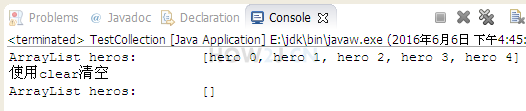
package collection;

import java.util.ArrayList;

import charactor.Hero;

public class TestCollection {

    public static void main(String[] args) {

        ArrayList heros = new ArrayList();

        // 初始化5个对象

        for (int i = 0; i < 5; i++) {

            heros.add(new Hero("hero " + i));

        }

        System.out.println("ArrayList heros:\t" + heros);

        System.out.println("使用clear清空");

        heros.clear();

        System.out.println("ArrayList heros:\t" + heros);

    }

}
Java自学-集合框架 ArrayList常用方法的更多相关文章
- Java自学-集合框架 ArrayList和LinkedList的区别
ArrayList和LinkedList的区别 步骤 1 : ArrayList和LinkedList的区别 ArrayList ,插入,删除数据慢 LinkedList, 插入,删除数据快 Arra ...
- Java自学-集合框架 ArrayList和HashSet的区别
Java ArrayList和HashSet的区别 示例 1 : 是否有顺序 ArrayList: 有顺序 HashSet: 无顺序 HashSet的具体顺序,既不是按照插入顺序,也不是按照hashc ...
- Java自学-集合框架 LinkedList
Java集合框架 LinkedList 序列分先进先出FIFO,先进后出FILO FIFO在Java中又叫Queue 队列 FILO在Java中又叫Stack 栈 示例 1 : LinkedList ...
- Java自学-集合框架 Collections
Java集合框架 工具类Collections Collections是一个类,容器的工具类,就如同Arrays是数组的工具类 步骤 1 : 反转 reverse 使List中的数据发生翻转 pack ...
- Java自学-集合框架 二叉树
Java集合框架 二叉树 示例 1 : 二叉树概念 二叉树由各种节点组成 二叉树特点: 每个节点都可以有左子节点,右子节点 每一个节点都有一个值 package collection; public ...
- Java自学-集合框架 与数组的区别
Java集合框架与数组的区别 示例 1 : 使用数组的局限性 如果要存放多个对象,可以使用数组,但是数组有局限性 比如 声明长度是10的数组 不用的数组就浪费了 超过10的个数,又放不下 //Test ...
- Java基础-集合框架-ArrayList源码分析
一.JDK中ArrayList是如何实现的 1.先看下ArrayList从上而下的层次图: 说明: 从图中可以看出,ArrayList只是最下层的实现类,集合的规则和扩展都是AbstractList. ...
- Java自学-集合框架 Collection
Java集合框架 Collection Collection是一个接口 步骤 1 : Collection Collection是 Set List Queue和 Deque的接口 Queue: 先进 ...
- Java自学-集合框架 HashSet
Java集合框架 HashSet 示例 1 : 元素不能重复 Set中的元素,不能重复 package collection; import java.util.HashSet; public cla ...
随机推荐
- 挑战常规 -- 为什么不要再用cookie作为储存?
不要使用cookie当存储 Cookie 是什么? Cookie 由浏览器储存在本地,每次访问目标网址会带上的请求头,服务器可以通过Set-Cookie响应头设置Cookie. Cookie的用途 由 ...
- MySQL基础之数据管理【2】
where条件筛选记录 select id,username,age from uesr where id=5; alter table user add userDesc varchar(100); ...
- 结对编程(Java实现)
一.Github项目地址:https://github.com/qiannai/CreateArithmetic 二.PSP2.1表格: PSP2.1 Personal Software Proces ...
- win10安装ubuntu系统出现的一些问题以及解决方案
前言 在win10系统进行安装新的ubuntu环境的时候遇到的一些问题,以及解决方案,供以后参考. 准备 从ubuntu官网下载最近版本的ubuntu系统,Ubuntu最新版本下载地址 操作系统:wi ...
- Linux(二)-- Linux配置及指令
一.linux中常用软件的安装 yum install -y bash-completion vim lrzsz wget expect net-tools nc nmap tree dos2unix ...
- Incorrect datetime value: '' for column 'examDate' at row 1
出问题的程序:user.setCreateTime(new Date()); 控制台图片一张,问题是:Incorrect datetime value: '' for column 'createTi ...
- scrapy 爬取图片
scrapy 爬取图片 1.scrapy 有下载图片的自带接口,不用我们在去实现 setting.py设置 # 保存log信息的文件名 LOG_LEVEL = "INFO" # L ...
- C++ class内的 ++ 重载,左++,右++,重载示例。
#include <iostream> // overloading "operator ++ " inside class // ++ 是一元操作符 //////// ...
- K-消亡的质数-(简单数学)
https://ac.nowcoder.com/acm/contest/3346/K 题意:判断一个素数p是不是某两个数的立方差. 刚看到这道题一时半会都没有什么思路,看了题解恍然大悟,太久没碰数学或 ...
- 安装Rtools
1.好多工具需要安装Rtools install.packages("installr") install.packages("stringr") ###依赖包 ...