
flink 批量梯度下降算法线性回归参数求解(Linear Regression with BGD(batch gradient descent) )
1、线性回归
假设线性函数如下:
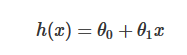
假设我们有10个样本x1,y1),(x2,y2).....(x10,y10),求解目标就是根据多个样本求解theta0和theta1的最优值。
什么样的θ最好的呢?最能反映这些样本数据之间的规律呢?
为了解决这个问题,我们需要引入误差分析预测值与真实值之间的误差为最小。
2、梯度下降算法
梯度下降的场景:
梯度下降法的基本思想可以类比为一个下山的过程。假设这样一个场景:一个人被困在山上,需要从山上下来(i.e. 找到山的最低点,也就是山谷)。

但此时山上的浓雾很大,导致可视度很低。因此,下山的路径就无法确定,他必须利用自己周围的信息去找到下山的路径。这个时候,他就可以利用梯度下降算法来帮助自己下山。

具体来说就是,以他当前的所处的位置为基准,寻找这个位置最陡峭的地方,然后朝着山的高度下降的地方走,同理,如果我们的目标是上山,也就是爬到山顶,那么此时应该是朝着最陡峭的方向往上走。

然后每走一段距离,都反复采用同一个方法,最后就能成功的抵达山谷。
梯度下降实现:原理baidu,这里略过。下图来自internet,解释的非常到位。
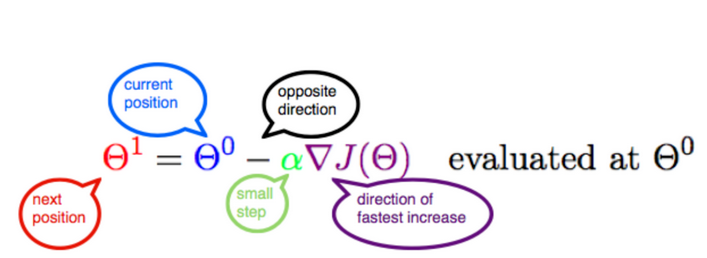
α含义

α在梯度下降算法中被称作为学习率或者步长,意味着我们可以通过α来控制每一步走的距离,以保证不要步子跨的太大,就是不要走太快,错过了最低点。
同时也要保证不要走的太慢,导致太阳下山了,还没有走到山下。所以α的选择在梯度下降法中往往是很重要的!α不能太大也不能太小,太小的话,可能导致迟迟走不到最低点,太大的话,会导致错过最低点!

梯度要乘以一个负号

梯度前加一个负号,就意味着朝着梯度相反的方向前进!梯度的方向实际就是函数在此点上升最快的方向!而我们需要朝着下降最快的方向走,自然就是负的梯度的方向,所以此处需要加上负号。
实现梯度下降,需要定义一个代价函数,比如:
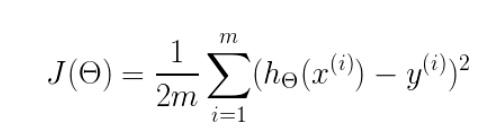
这是均方误差代价函数
m是数据集中点的个数

二分之一(½)是一个常量,这样是为了在求梯度的时候,二次方乘下来就和这里的½抵消了,自然就没有多余的常数系数,方便后续的计算,同时对结果不会有影响

y 是数据集中每个点的真实y坐标的值

h 是预测函数,根据每一个输入x,根据Θ 计算得到预测的y值
即: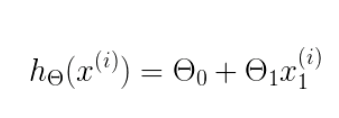
3、最终求解公式,代价函数是j=h(x)-y
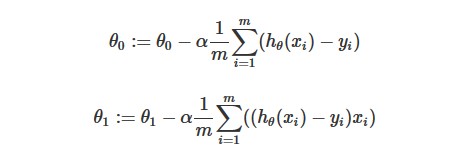
4、代码实现
/**

 * @Author: xu.dm

 * @Date: 2019/7/16 21:52

 * @Description: 批量梯度下降算法解决线性回归 y = theta0 + theta1*x 的参数求解。

 * 本例实现一元数据求解二元参数。

 * BGD(批量梯度下降)算法的线性回归是一种迭代聚类算法,其工作原理如下:

 * BGD给出了数据集和目标集,试图找出适合目标集的数据集的最佳参数。

 * 在每次迭代中,算法计算代价函数(cost function)的梯度并使用它来更新所有参数。

 * 算法在固定次数的迭代后终止(如本实现中所示)通过足够的迭代,算法可以最小化成本函数并找到最佳参数。

 * Linear Regression with BGD(batch gradient descent) algorithm is an iterative clustering algorithm and works as follows:

 * Giving a data set and target set, the BGD try to find out the best parameters for the data set to fit the target set.

 * In each iteration, the algorithm computes the gradient of the cost function and use it to update all the parameters.

 * The algorithm terminates after a fixed number of iterations (as in this implementation)

 * With enough iteration, the algorithm can minimize the cost function and find the best parameters

 *

 * This implementation works on one-dimensional data. And find the two-dimensional theta.

 * It find the best Theta parameter to fit the target.

 *

 * <p>Input files are plain text files and must be formatted as follows:

 * <ul>

 * <li>Data points are represented as two double values separated by a blank character. The first one represent the X(the training data) and the second represent the Y(target).

 * Data points are separated by newline characters.<br>

 * For example <code>"-0.02 -0.04\n5.3 10.6\n"</code> gives two data points (x=-0.02, y=-0.04) and (x=5.3, y=10.6).

 * </ul>

 */

public class LinearRegression {

    public static void main(String args[]) throws Exception{

        final ParameterTool params = ParameterTool.fromArgs(args);

        final ExecutionEnvironment env = ExecutionEnvironment.getExecutionEnvironment();

        env.getConfig().setGlobalJobParameters(params);

        final int iterations = params.getInt("iterations", 10);

        // get input x data from elements

        DataSet<Data> data;

        if (params.has("input")) {

            // read data from CSV file

            data = env.readCsvFile(params.get("input"))

                    .fieldDelimiter(" ")

                    .includeFields(true, true)

                    .pojoType(Data.class);

        } else {

            System.out.println("Executing LinearRegression example with default input data set.");

            System.out.println("Use --input to specify file input.");

            data = LinearRegressionData.getDefaultDataDataSet(env);

        }

        // get the parameters from elements

        DataSet<Params> parameters = LinearRegressionData.getDefaultParamsDataSet(env);

        // set number of bulk iterations for SGD linear Regression

        IterativeDataSet<Params> loop = parameters.iterate(iterations);

        DataSet<Params> newParameters = data

                // compute a single step using every sample

                .map(new SubUpdate()).withBroadcastSet(loop,"parameters")

                // sum up all the steps

                .reduce(new UpdateAccumulator())

                // average the steps and update all parameters

                .map(new Update());

        // feed new parameters back into next iteration

        DataSet<Params> result = loop.closeWith(newParameters);

        // emit result

        if (params.has("output")) {

            result.writeAsText(params.get("output"));

            // execute program

            env.execute("Linear Regression example");

        } else {

            System.out.println("Printing result to stdout. Use --output to specify output path.");

            result.print();

        }

    }

    /**

     * A simple data sample, x means the input, and y means the target.

     */

    public static class Data implements Serializable{

        public double x, y;

        public Data() {}

        public Data(double x, double y) {

            this.x = x;

            this.y = y;

        }

        @Override

        public String toString() {

            return "(" + x + "|" + y + ")";

        }

    }

    /**

     * A set of parameters -- theta0, theta1.

     */

    public static class Params implements Serializable {

        private double theta0, theta1;

        public Params() {}

        public Params(double x0, double x1) {

            this.theta0 = x0;

            this.theta1 = x1;

        }

        @Override

        public String toString() {

            return theta0 + " " + theta1;

        }

        public double getTheta0() {

            return theta0;

        }

        public double getTheta1() {

            return theta1;

        }

        public void setTheta0(double theta0) {

            this.theta0 = theta0;

        }

        public void setTheta1(double theta1) {

            this.theta1 = theta1;

        }

        public Params div(Integer a) {

            this.theta0 = theta0 / a;

            this.theta1 = theta1 / a;

            return this;

        }

    }

    /**

     * Compute a single BGD type update for every parameters.

     * h(x) = theta0*X0 + theta1*X1,假设X0=1,则h(x) = theta0 + theta1*X1,即y = theta0 + theta1*x

     * 代价函数:j=h(x)-y,这里用的是比较简单的cost function

     * theta0 = theta0 - α∑(h(x)-y)

     * theta1 = theta1 - α∑((h(x)-y)*x)

     *

     */

    public static class SubUpdate extends RichMapFunction<Data, Tuple2<Params, Integer>> {

        private Collection<Params> parameters;

        private Params parameter;

        private int count = 1;

        /** Reads the parameters from a broadcast variable into a collection. */

        @Override

        public void open(Configuration parameters) throws Exception {

            this.parameters = getRuntimeContext().getBroadcastVariable("parameters");

        }

        @Override

        public Tuple2<Params, Integer> map(Data in) throws Exception {

            for (Params p : parameters){

                this.parameter = p;

            }

            //核心计算,对于y = theta0 + theta1*x 假定theta0乘以X0=1,所以theta0计算不用乘以in.x

            double theta0 = parameter.theta0 - 0.01 * ((parameter.theta0 + (parameter.theta1 * in.x)) - in.y);

            double theta1 = parameter.theta1 - 0.01 * (((parameter.theta0 + (parameter.theta1 * in.x)) - in.y) * in.x);

            System.out.println("theta0: "+theta0+" , theta1: "+theta1);

            return new Tuple2<>(new Params(theta0, theta1), count);

        }

    }

    /**

     * Accumulator all the update.

     * */

    public static class UpdateAccumulator implements ReduceFunction<Tuple2<Params, Integer>> {

        @Override

        public Tuple2<Params, Integer> reduce(Tuple2<Params, Integer> val1, Tuple2<Params, Integer> val2) {

            double newTheta0 = val1.f0.theta0 + val2.f0.theta0;

            double newTheta1 = val1.f0.theta1 + val2.f0.theta1;

            Params result = new Params(newTheta0, newTheta1);

            return new Tuple2<>(result, val1.f1 + val2.f1);

        }

    }

    /**

     * Compute the final update by average them.

     */

    public static class Update implements MapFunction<Tuple2<Params, Integer>, Params> {

        @Override

        public Params map(Tuple2<Params, Integer> arg0) throws Exception {

            return arg0.f0.div(arg0.f1);

        }

    }

}
数据准备:
public class LinearRegressionData {

    // We have the data as object arrays so that we can also generate Scala Data

    // Sources from it.

    public static final Object[][] PARAMS = new Object[][] { new Object[] {

            0.0, 0.0 } };

    public static final Object[][] DATA = new Object[][] {

            new Object[] { 0.5, 1.0 }, new Object[] { 1.0, 2.0 },

            new Object[] { 2.0, 4.0 }, new Object[] { 3.0, 6.0 },

            new Object[] { 4.0, 8.0 }, new Object[] { 5.0, 10.0 },

            new Object[] { 6.0, 12.0 }, new Object[] { 7.0, 14.0 },

            new Object[] { 8.0, 16.0 }, new Object[] { 9.0, 18.0 },

            new Object[] { 10.0, 20.0 }, new Object[] { -0.08, -0.16 },

            new Object[] { 0.13, 0.26 }, new Object[] { -1.17, -2.35 },

            new Object[] { 1.72, 3.45 }, new Object[] { 1.70, 3.41 },

            new Object[] { 1.20, 2.41 }, new Object[] { -0.59, -1.18 },

            new Object[] { 0.28, 0.57 }, new Object[] { 1.65, 3.30 },

            new Object[] { -0.55, -1.08 } };

    public static DataSet<LinearRegression.Params> getDefaultParamsDataSet(ExecutionEnvironment env) {

        List<LinearRegression.Params> paramsList = new LinkedList<>();

        for (Object[] params : PARAMS) {

            paramsList.add(new LinearRegression.Params((Double) params[0], (Double) params[1]));

        }

        return env.fromCollection(paramsList);

    }

    public static DataSet<LinearRegression.Data> getDefaultDataDataSet(ExecutionEnvironment env) {

        List<LinearRegression.Data> dataList = new LinkedList<>();

        for (Object[] data : DATA) {

            dataList.add(new LinearRegression.Data((Double) data[0], (Double) data[1]));

        }

        return env.fromCollection(dataList);

    }

}
flink 批量梯度下降算法线性回归参数求解(Linear Regression with BGD(batch gradient descent) )的更多相关文章
- ng机器学习视频笔记(二) ——梯度下降算法解释以及求解θ
ng机器学习视频笔记(二) --梯度下降算法解释以及求解θ (转载请附上本文链接--linhxx) 一.解释梯度算法 梯度算法公式以及简化的代价函数图,如上图所示. 1)偏导数 由上图可知,在a点 ...
- 线性回归模型(Linear Regression)及Python实现
线性回归模型(Linear Regression)及Python实现 http://www.cnblogs.com/sumai 1.模型 对于一份数据,它有两个变量,分别是Petal.Width和Se ...
- 贝叶斯线性回归(Bayesian Linear Regression)
贝叶斯线性回归(Bayesian Linear Regression) 2016年06月21日 09:50:40 Duanxx 阅读数 54254更多 分类专栏: 监督学习 版权声明:本文为博主原 ...
- 局部权重线性回归(Locally weighted linear regression)
在线性回归中,因为对參数个数选择的问题是在问题求解之前已经确定好的,因此參数的个数不能非常好的确定,假设參数个数过少可能拟合度不好,产生欠拟合(underfitting)问题,或者參数过多,使得函数过 ...
- 几种梯度下降方法对比(Batch gradient descent、Mini-batch gradient descent 和 stochastic gradient descent)
https://blog.csdn.net/u012328159/article/details/80252012 我们在训练神经网络模型时,最常用的就是梯度下降,这篇博客主要介绍下几种梯度下降的变种 ...
- 梯度下降算法&线性回归算法
**机器学习的过程说白了就是让我们编写一个函数使得costfunction最小,并且此时的参数值就是最佳参数值. 定义 假设存在一个代价函数 fun:\(J\left(\theta_{0}, \the ...
- 随机梯度下降(Stochastic gradient descent)和 批量梯度下降(Batch gradient descent )的公式对比、实现对比[转]
梯度下降(GD)是最小化风险函数.损失函数的一种常用方法,随机梯度下降和批量梯度下降是两种迭代求解思路,下面从公式和实现的角度对两者进行分析,如有哪个方面写的不对,希望网友纠正. 下面的h(x)是要拟 ...
- 【转】 随机梯度下降(Stochastic gradient descent)和 批量梯度下降(Batch gradient descent )的公式对比、实现对比
梯度下降(GD)是最小化风险函数.损失函数的一种常用方法,随机梯度下降和批量梯度下降是两种迭代求解思路,下面从公式和实现的角度对两者进行分析,如有哪个方面写的不对,希望网友纠正. 下面的h(x)是要拟 ...
- 机器学习-随机梯度下降(Stochastic gradient descent)和 批量梯度下降(Batch gradient descent )
梯度下降(GD)是最小化风险函数.损失函数的一种常用方法,随机梯度下降和批量梯度下降是两种迭代求解思路,下面从公式和实现的角度对两者进行分析,如有哪个方面写的不对,希望网友纠正. 下面的h(x)是要拟 ...
随机推荐
- git零基础快速入门实战,重点讲解,在实际生产中整合idea对版本、分支的管理等
1.什么是版本管理 (多人协作)项目中常见的问题: 代码放在什么地方 ?? 同步(到服务器),代码的冲突问题 ?? 服务器访问权限问题 ?? (代码)服务器内容修改的细节 ?? 项目版本的发布 ?? ...
- Shell命令-搜索文件或目录之whereis、locate
文件及内容处理 - whereis.locate 1. whereis:查找二进制命令,按环境变量PATH路径查找 whereis命令的功能说明 whereis 命令用于查找文件.该指令会在特定目录中 ...
- jmeter BeanShell的几种使用方式
jmeter的BeanShell Sampler,可以直接引用java代码,有下面3种方式: 1.直接输入java代码:2.导入java文件:3.导入class文件 BeanShell脚本访问变量主要 ...
- pointNet代码
介绍 组成 1.PointNet classification network分类网络 part segmentation network 数据集 1.point clouds sampled fro ...
- ICCV
ICCV 简介 ICCV 的全称是 IEEE International Conference on Computer Vision,即国际计算机视觉大会,由IEEE主办,与计算机视觉模式识别会议(C ...
- luoguP3975 [TJOI2015]弦论
题意 第一问有一个经典做法:学习笔记 对于第二问,其实就是对于一个状态的所有串,第一问看成一个,第二问看成多个. code: #include<bits/stdc++.h> using n ...
- angular的Hash 模式和 HTML 5 模式
去除地址 # ,将{ provide: LocationStrategy, useClass: HashLocationStrategy }改为 { provide: LocationStrategy ...
- 15 C++遍历某个文件夹下的文件
1 遍历所有的,包括文件夹套文件夹 #include<iostream> #include<string> #include<io.h> #include<c ...
- 【ECNU620】数学题(结论题)
点此看题面 大致题意: 求\((n-1)!\ mod\ n\)的值. 大力猜结论 首先,看到样例,我们可以猜测: 当\(n\)为质数时,答案为\(n-1\). 当\(n\)为合数时,答案为\(0\). ...
- 小米笔试题:无序数组中最小的k个数
题目描述 链接:https://www.nowcoder.com/questionTerminal/ec2575fb877d41c9a33d9bab2694ba47?source=relative 来 ...