
UVA 1601 双向BFS
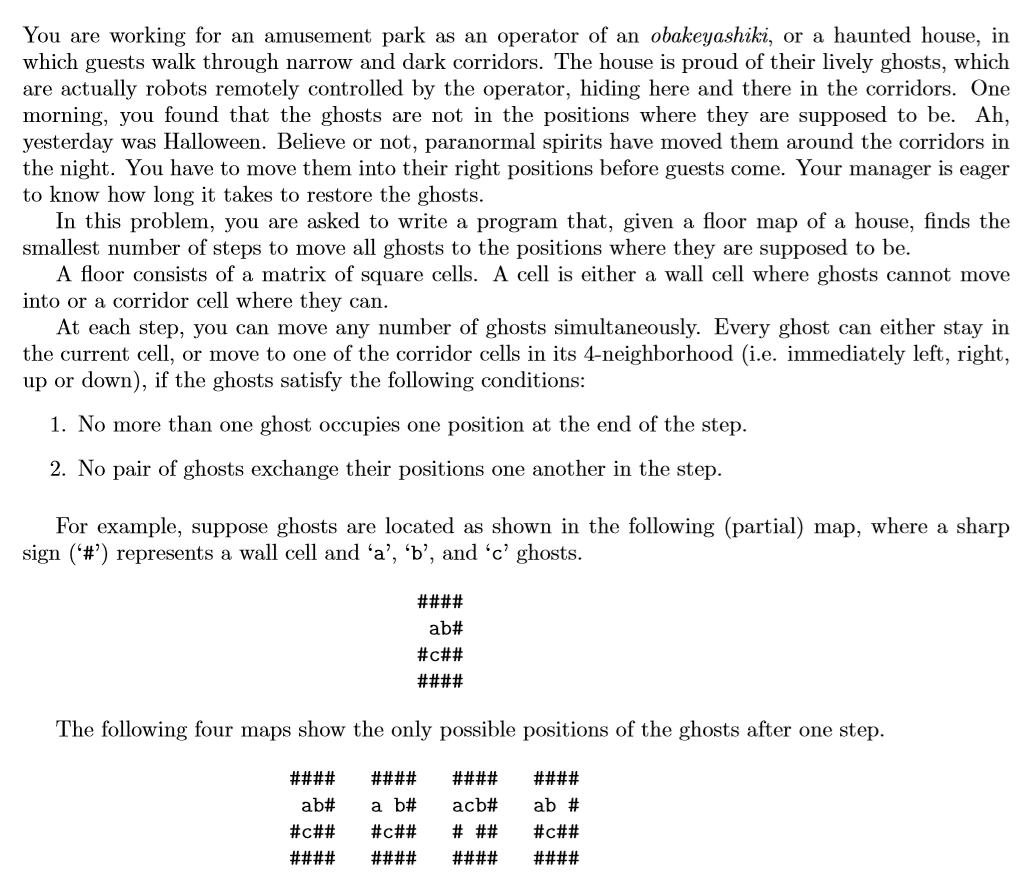
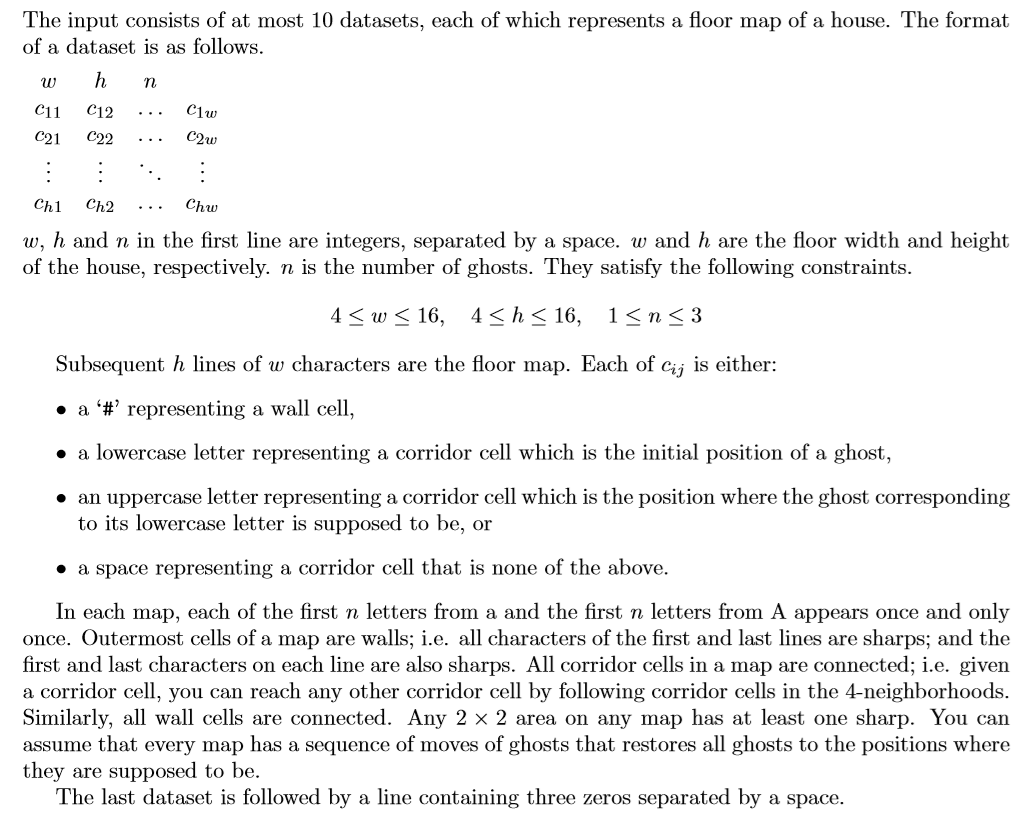
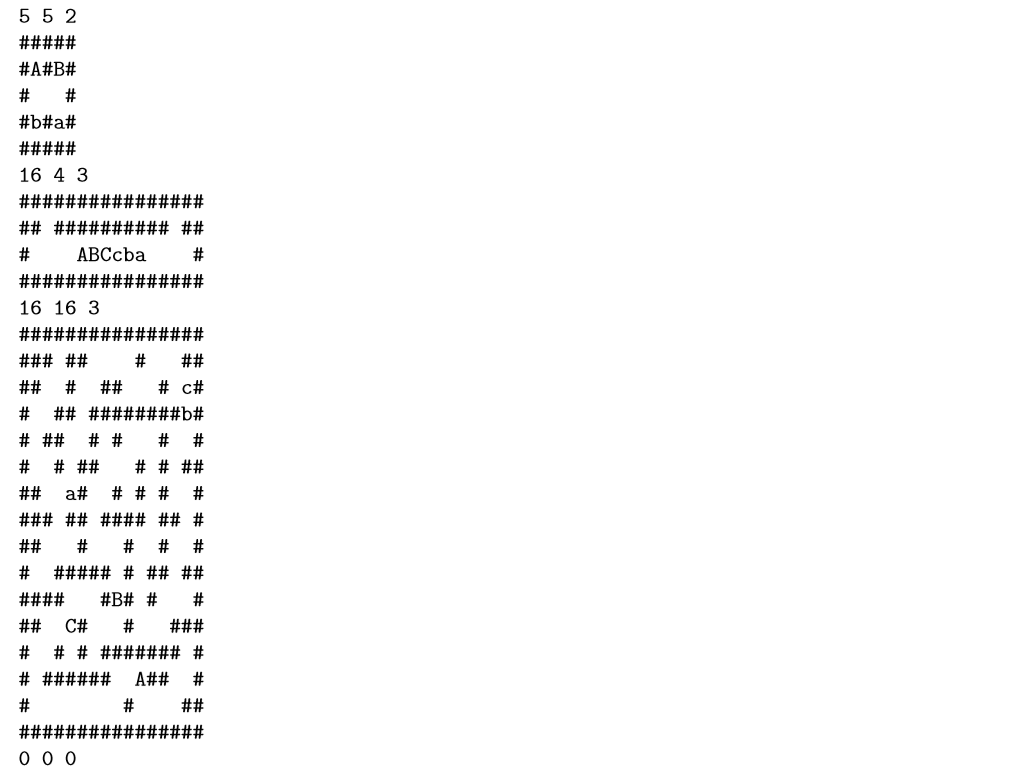
但是我们还不是很清楚每一次的状态怎么储存?我们可以用一个结构体,将每次的位置存起来,但是这个程序中用了一个更好的储存方法:我们知道最大的格数是16*16个,也就是256个,那么我们转换为二进制表示就是8位数,那么我们可以使用24位的二进制表示啊!然后我们再进行解压缩,所以这就是很神奇的地方!
普通BFS
#include<iostream>

#include<string>

#include<cmath>

#include<cstring>

#include<vector>

#include<map>

#include<set>

#include<algorithm>

#include<queue>

#include<stack>

#include<sstream>

#include<cstdio>

#define INF 0x3f3f3f3f

//const int maxn = 1e6 + 5;

const double PI = acos(-1.0);

typedef long long ll;

using namespace std;

const int maxn = ;

const int maxs = ;

const int dx[] = { ,-,,, };

const int dy[] = { ,,,-, };

inline int ID(int a, int b, int c) {

    return (a << ) | (b << ) | c;

}

int s[], t[];

int deg[maxn];    //记录每个编号为i的空格周围可以走的步数

int G[maxn][];

inline bool conflict(int a, int b, int a2, int b2) {

    return    a2 == b2 || (a2 == b && b2 == a);

}

int d[maxn][maxn][maxn];

int bfs() {

    queue<int> q;

    memset(d, -, sizeof d);

    q.push(ID(s[], s[], s[]));

    d[s[]][s[]][s[]] = ;

    while (!q.empty()) {

        int u = q.front();

        q.pop();

        int a = (u >> ) & 0xff, b = (u >> ) & 0xff, c = u & 0xff;   //解码出三个鬼的位置

        if (a == t[] && b == t[] && c == t[]) return d[a][b][c];

        for (int i = ; i < deg[a]; i++) {

            int a2 = G[a][i];

            for (int j = ; j < deg[b]; j++) {

                int b2 = G[b][j];

                if (conflict(a, b, a2, b2)) continue;

                for (int k = ; k < deg[c]; k++) {

                    int c2 = G[c][k];

                    if (conflict(a, c, a2, c2)) continue;

                    if (conflict(b, c, b2, c2)) continue;

                    if (d[a2][b2][c2] != -) continue;

                    d[a2][b2][c2] = d[a][b][c] + ;

                    q.push(ID(a2, b2, c2));

                }

            }

        }

    }

    return -;

}

int main() {

    int w, h, n;

    while (scanf("%d%d%d", &w, &h, &n) ==  && n) {

        char maze[][];

        for (int i = ; i < h; i++) fgets(maze[i], , stdin);

        int cnt, x[maxn], y[maxn], id[maxs][maxs];

        cnt = ;

        for (int i = ; i < h; i++) {

            for(int j=;j<w;j++)

                if (maze[i][j] != '#') {

                    x[cnt] = i;

                    y[cnt] = j;

                    id[i][j] = cnt;

                    if (islower(maze[i][j])) s[maze[i][j] - 'a'] = cnt;

                    else if (isupper(maze[i][j])) t[maze[i][j] - 'A'] = cnt;

                    cnt++;

                }

        }

        for (int i = ; i < cnt; i++) {

            deg[i] = ;

            for (int dir = ; dir < ; dir++) {

                int xx = x[i] + dx[dir], yy = y[i] + dy[dir];

                if (maze[xx][yy] != '#') G[i][deg[i]++] = id[xx][yy];

            }

        }

        if (n <= ) {

            deg[cnt] = ;

            G[cnt][] = cnt;

            s[] = t[] = cnt++;

        }

        if (n <= ) {

            deg[cnt] = ;

            G[cnt][] = cnt;

            s[] = t[] = cnt++;

        }

        printf("%d\n", bfs());

    }

    return ;

}
双向BFS
#include<iostream>

#include<string>

#include<cmath>

#include<cstring>

#include<vector>

#include<map>

#include<set>

#include<algorithm>

#include<queue>

#include<stack>

#include<sstream>

#include<cstdio>

#define INF 0x3f3f3f3f

//const int maxn = 1e6 + 5;

const double PI = acos(-1.0);

typedef long long ll;

using namespace std;

const int maxn = ;

const int maxs = ;

const int dx[] = { ,-,,, };

const int dy[] = { ,,,-, };

inline int ID(int a, int b, int c) {

    return (a << ) | (b << ) | c;

}

int s[], t[];

int deg[maxn];    //记录每个编号为i的空格周围可以走的步数

int G[maxn][];

char maze[maxn][maxn];

int color[maxn][maxn][maxn];

inline bool conflict(int a, int b, int a2, int b2) {

    //两个鬼是exchange位置(违反第2条)

    //两个鬼移动到同一个格子(违反第1条)

    return    a2 == b2 || (a2 == b && b2 == a);

}

int d1[maxn][maxn][maxn];

int bfs() {

    queue<int> qf;

    queue<int> qb;

    d1[s[]][s[]][s[]] = ;

    d1[t[]][t[]][t[]] = ;

    qf.push(ID(s[], s[], s[]));

    qb.push(ID(t[], t[], t[]));

    while (!qf.empty() || !qb.empty()) {

        int fnum = qf.size(), bnum = qb.size();

        while (fnum--) {

            int u = qf.front(); qf.pop();

            int a = (u >> ) & 0xff, b = (u >> ) & 0xff, c = u & 0xff;

            for (int i = ; i < deg[a]; i++) {

                int a2 = G[a][i];

                for (int j = ; j < deg[b]; j++) {

                    int b2 = G[b][j];

                    if (conflict(a, b, a2, b2)) continue;

                    for (int k = ; k < deg[c]; k++) {

                        int c2 = G[c][k];

                        if (conflict(a, c, a2, c2) || conflict(b, c, b2, c2)) continue;

                        if (color[a2][b2][c2] == ) {

                            d1[a2][b2][c2] = d1[a][b][c] + ;

                            color[a2][b2][c2] = ;

                            qf.push(ID(a2, b2, c2));

                        }

                        else if (color[a2][b2][c2] == ) {

                            return d1[a][b][c] + d1[a2][b2][c2];

                        }

                    }

                }

            }

        }

        while (bnum--) {

            int u = qb.front(); qb.pop();

            int a = (u >> ) & 0xff, b = (u >> ) & 0xff, c = u & 0xff;

            for (int i = ; i < deg[a]; i++) {

                int a2 = G[a][i];

                for (int j = ; j < deg[b]; j++) {

                    int b2 = G[b][j];

                    if (conflict(a, b, a2, b2)) continue;

                    for (int k = ; k < deg[c]; k++) {

                        int c2 = G[c][k];

                        if (conflict(a, c, a2, c2) || conflict(b, c, b2, c2)) continue;

                        if (color[a2][b2][c2] == ) {

                            d1[a2][b2][c2] = d1[a][b][c] + ;

                            color[a2][b2][c2] = ;

                            qb.push(ID(a2, b2, c2));

                        }

                        else if (color[a2][b2][c2] == ) {

                            return d1[a][b][c] + d1[a2][b2][c2];

                        }

                    }

                }

            }

        }

    }

    return -;

}

int main() {

    int w, h, n;

    while (scanf("%d%d%d", &w, &h, &n) == , n) {

        for (int i = ; i < h; i++) fgets(maze[i], , stdin);

        int cnt = ;

        int x[maxn], y[maxn];

        int id[maxs][maxs];

        for (int i = ; i < h; i++) {

            for (int j = ; j < w; j++) {

                if (maze[i][j] != '#') {

                    x[cnt] = i, y[cnt] = j, id[i][j] = cnt;

                    if (islower(maze[i][j])) s[maze[i][j] - 'a'] = cnt;

                    else if (isupper(maze[i][j])) t[maze[i][j] - 'A'] = cnt;

                    cnt++;

                }

            }

        }

        for (int i = ; i < cnt; i++) {

            for (int j = ; j < ; j++) {

                int xx = x[i] + dx[j], yy = y[i] + dy[j];

                if (maze[xx][yy] != '#') G[i][deg[i]++] = id[xx][yy];

            }

        }

        if (n <= ) {

            deg[cnt] = ;

            G[cnt][] = cnt;

            s[] = t[] = cnt++;

        }

        if (n <= ) {

            deg[cnt] = ;

            G[cnt][] = cnt;

            s[] = t[] = cnt++;

        }

        memset(d1, , sizeof d1);

        memset(color, , sizeof color);

        if (s[] == t[] && s[] == t[] && s[] == t[]) printf("0\n");

        else printf("%d\n", bfs());

    }

    return ;

}
UVA 1601 双向BFS的更多相关文章
- 【UVa】1601 The Morning after Halloween(双向bfs)
题目 题目 分析 双向bfs,对着书打的,我还调了好久. 代码 #include<cstdio> #include<cstring> #include<c ...
- UVA - 1601 The Morning after Halloween (双向BFS&单向BFS)
题目: w*h(w,h≤16)网格上有n(n≤3)个小写字母(代表鬼).要求把它们分别移动到对应的大写字母里.每步可以有多个鬼同时移动(均为往上下左右4个方向之一移动),但每步结束之后任何两个鬼不能占 ...
- UVa 1601 || POJ 3523 The Morning after Halloween (BFS || 双向BFS && 降维 && 状压)
题意 :w*h(w,h≤16)网格上有n(n≤3)个小写字母(代表鬼).要求把它们分别移动到对应的大写字母里.每步可以有多个鬼同时移动(均为往上下左右4个方向之一移动),但每步结束之后任何两个鬼不能占 ...
- UVA - 11624 Fire! 双向BFS追击问题
Fire! Joe works in a maze. Unfortunately, portions of the maze have caught on fire, and the owner of ...
- <<操作,&0xff以及|的巧妙运用(以POJ3523---The Morning after Halloween(UVa 1601)为例)
<<表示左移,如a<<1表示将a的二进制左移一位,加一个0,&0xff表示取最后8个字节,如a&0xff表示取a表示的二进制中最后8个数字组成一个新的二进制数, ...
- POJ1915Knight Moves(单向BFS + 双向BFS)
题目链接 单向bfs就是水题 #include <iostream> #include <cstring> #include <cstdio> #include & ...
- HDU 3085 Nightmare II 双向bfs 难度:2
http://acm.hdu.edu.cn/showproblem.php?pid=3085 出的很好的双向bfs,卡时间,普通的bfs会超时 题意方面: 1. 可停留 2. ghost无视墙壁 3. ...
- POJ 3170 Knights of Ni (暴力,双向BFS)
题意:一个人要从2先走到4再走到3,计算最少路径. 析:其实这个题很水的,就是要注意,在没有到4之前是不能经过3的,一点要注意.其他的就比较简单了,就是一个双向BFS,先从2搜到4,再从3到搜到4, ...
- [转] 搜索之双向BFS
转自:http://www.cppblog.com/Yuan/archive/2011/02/23/140553.aspx 如果目标也已知的话,用双向BFS能很大程度上提高速度. 单向时,是 b^le ...
随机推荐
- jdk 档案库(包含历史版本)
http://java.sun.com/products/archive/ 参考:https://blog.csdn.net/shiluyong8068/article/details/7894747 ...
- SWD学习笔记
SWD其实和JTAG类似,是一种调试串口. JTAG大致了解了一下.JTAG(Joint Test Action Group)主要4 lines:TMS(模式选择),TCK(时钟),TDI(数据输入) ...
- The Google File System中文版
译者:alex 摘要 我们设计并实现了Google GFS文件系统,一个面向大规模数据密集型应用的.可伸缩的分布式文件系统.GFS虽然运行在廉价的普遍硬件设备上,但是它依然了提供灾难冗余的能力,为大量 ...
- Lesson 13 The search for oil
What do oilmen want to achieve as soon as they strike oil? The deepest holes of all are made for oil ...
- 为什么阿里Java规约要求谨慎修改serialVersionUID字段
serialVersionUID简要介绍 serialVersionUID是在Java序列化.反序列化对象时起作用的一个字段.Java的序列化机制是通过判断类的serialVersionUID来验证版 ...
- 六 一对多关联查询&关联查询小结
一对多关联查询:基于用户表关联查询订单表 在pojo中,一的一方方式多的一方的集合 在代理映射中配置查询方法,ResultMap一对多关系(注意:当两表有字段重名时,在一方字段设置别名,以免造成查询混 ...
- Day9 - C - Bookshelf 2 POJ - 3628
Farmer John recently bought another bookshelf for the cow library, but the shelf is getting filled u ...
- Java中的输入"scanf",Scanner用法
1.输入程序 1)Scnner的初始用法: 1 import java.util.Scanner; 2 public class Textone { 3 public static void main ...
- 【C#】关于左移/右移运算符的使用
吐槽先~为什么我的老师大学时候没教过我这东西 - -. 继续送栗子: 比如 “(1+2)<<3” 你们猜等于几~ Debug.Log((1+2)<<3)之后输出的是“24”. ...
- 1_01_MSSQL课程_基础入门
0. 课程安排: 课程共7天课,前两天SQL基础,后面三天Ado.Net ,最后两天数据库高级进阶学习. 1.数据库的概念 ->数据库就是数据仓库. ->DBMS:数据库管理系统.SQLS ...