
Roles on a Machine Learning Project (机器学习项目中的角色)
原文 :https://medium.com/machine-learning-in-practice/roles-on-a-machine-learning-project-216903a6dc12


Machine learning is a technical process, but it starts and ends with people. The first step to structuring your machine learning project is to consider the people you need to make it happen.
角色1 数据科学家 Data Scientists
Data scientists are the “x factor” in a machine learning project, representing the main difference between an ML project and other kinds of software development. They create (or select) and train algorithms, building the models for machine learning. Data scientists may specialize in certain kinds of problems or data sets. Some are more research-driven and academically minded, while others are more results and task focused. While both kinds can contribute, it’s preferable for team leaders have a results orientation, rather than a tendency to linger on questions.
Data scientists can grab data, throw together an algorithm, and show that it works. But when they hack together a demo, they may take shortcuts. They may create their solution under idealized assumptions about the data inputs and algorithmic outputs. Integrating and scaling a data scientist’s work into production requires building pipelines for data to go to the right place. In other words, it requires . . .
角色2 软件工程师 Software Engineers
Engineers are the people that typically put the “In Practice” into “Machine Learning in Practice.” They ensure the technology is built in a robust way so that it can be packaged and deployed into production in mission-critical systems. Engineers help with software development, best practices, and data wrangling/pre-processing. They might set the infrastructure, get the data pipeline in place, and ensure the data scientists have everything they need to focus on the models.
A machine learning algorithm often ends up as a single function in a working piece of software. Software engineers think about how to maintain the software over time, making the algorithm robust for the real world. Data scientists are often not classically trained programmers, and so they may not have the best practices when it comes to creating reusable code.
Engineers also help ensure the entire effort is not beholden to the one expert who worked on the project. They make sure the software does appropriate levels of logging, that it can be monitored, that there is proper documentation, and that other software best practices are followed. This allows data scientists to build the best algorithm possible. Without engineers, data scientists may be stuck just doing cool demos.
A “unicorn” developer is one that can do both leading data science and implement software best practices. It’s rare to find one person that can handle all of these responsibilities.
Note that while it is preferable to involve engineers from the beginning of a project, the full engineering need may be difficult to know during early planning stages. Engineers are most necessary during the later deployment stage (see below), at which point the project may have evolved significantly.
角色3: 数据工程师 Data Engineer
This role is focused on wrangling/pre-processing data to prepare it for machine learning.
Text data, for example, may come in as a PDF, a .docx file, a .txt file, or a string from a database. A data engineer may need to convert the text to the proper format for a given programming language. After the text is loaded, more pre-processing might be required due to language, length, word frequency, and word variation.
It’s an iterative process: if an algorithm isn’t working, a data engineer will try finessing the data in a different way. After a project goes into production, data engineers may work together with software engineers and data scientists to assess and optimize the data feeding back into the model.
The need for this role will vary with projects and team size. In cases where a lot of pre-processing is required and senior data scientists are better focused elsewhere, more junior data experts could take on this role. In other cases, data scientists may take on the data prep themselves.
Project Roles During Project Phases
Data Processing Phase
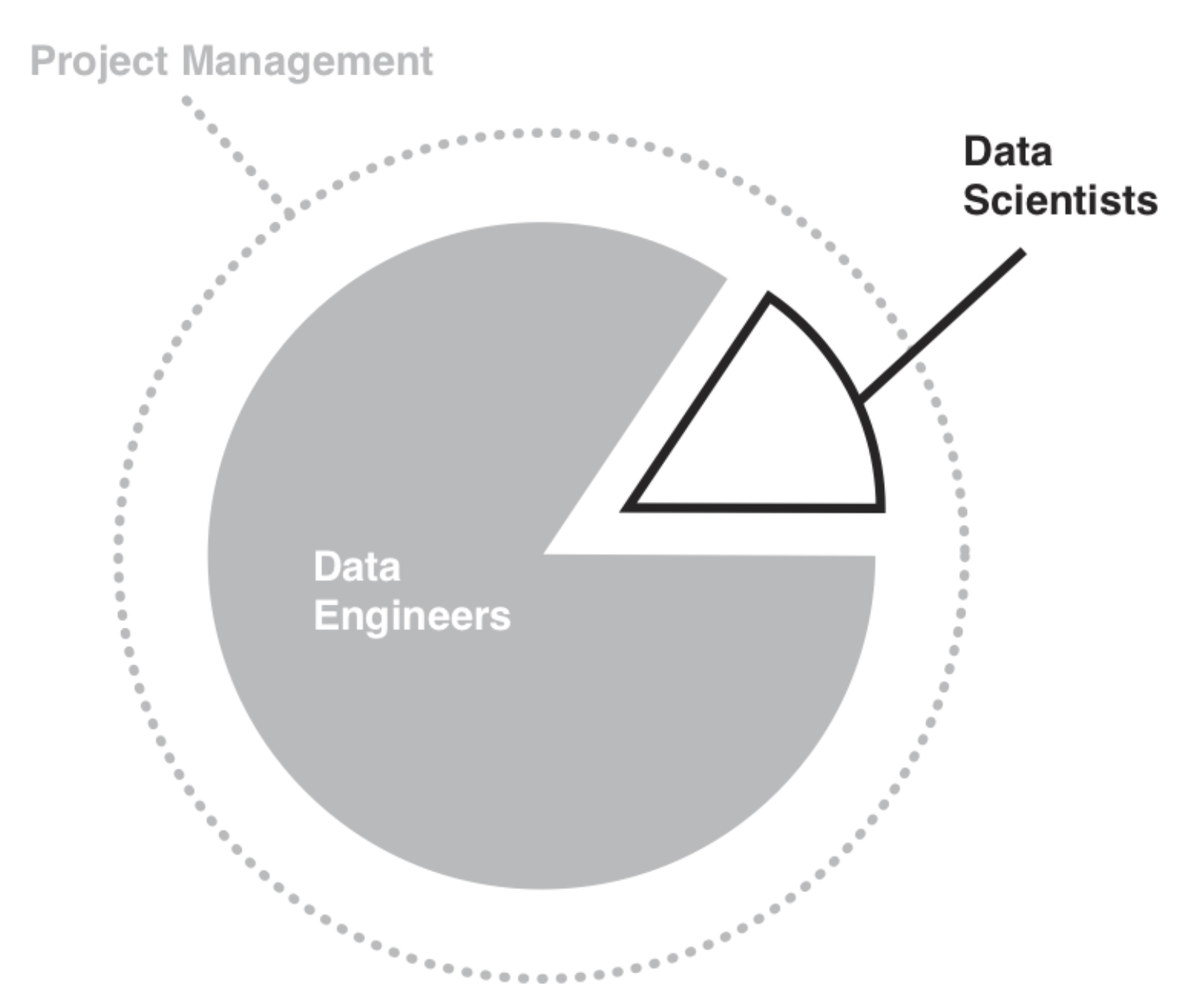
Data Engineers wrangle the data while Data Scientists offer guidance (and do data engineering as needed).
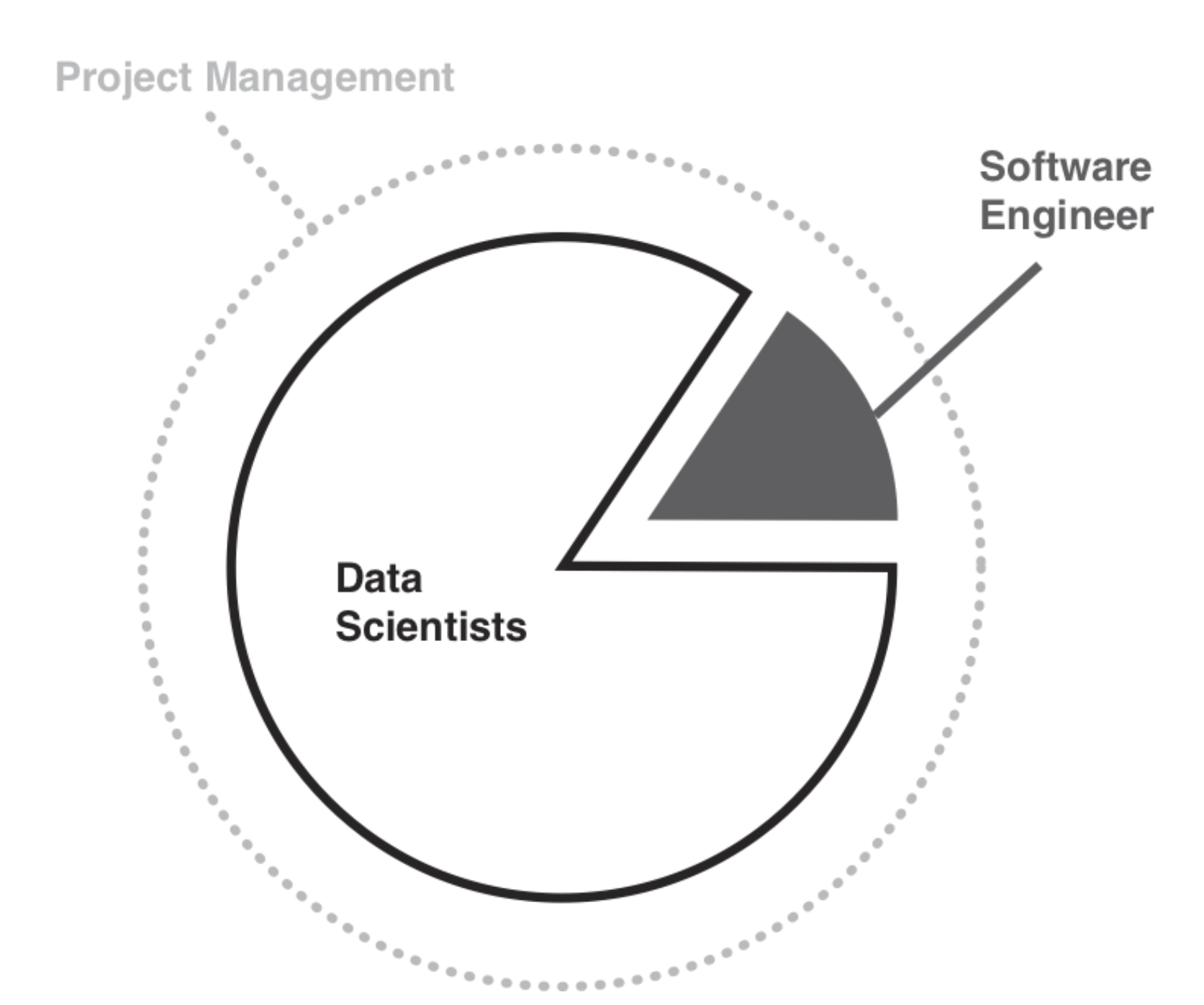
Algorithm Development Phase
Data Scientists create algorithms while Software Engineers offer help and guidance.
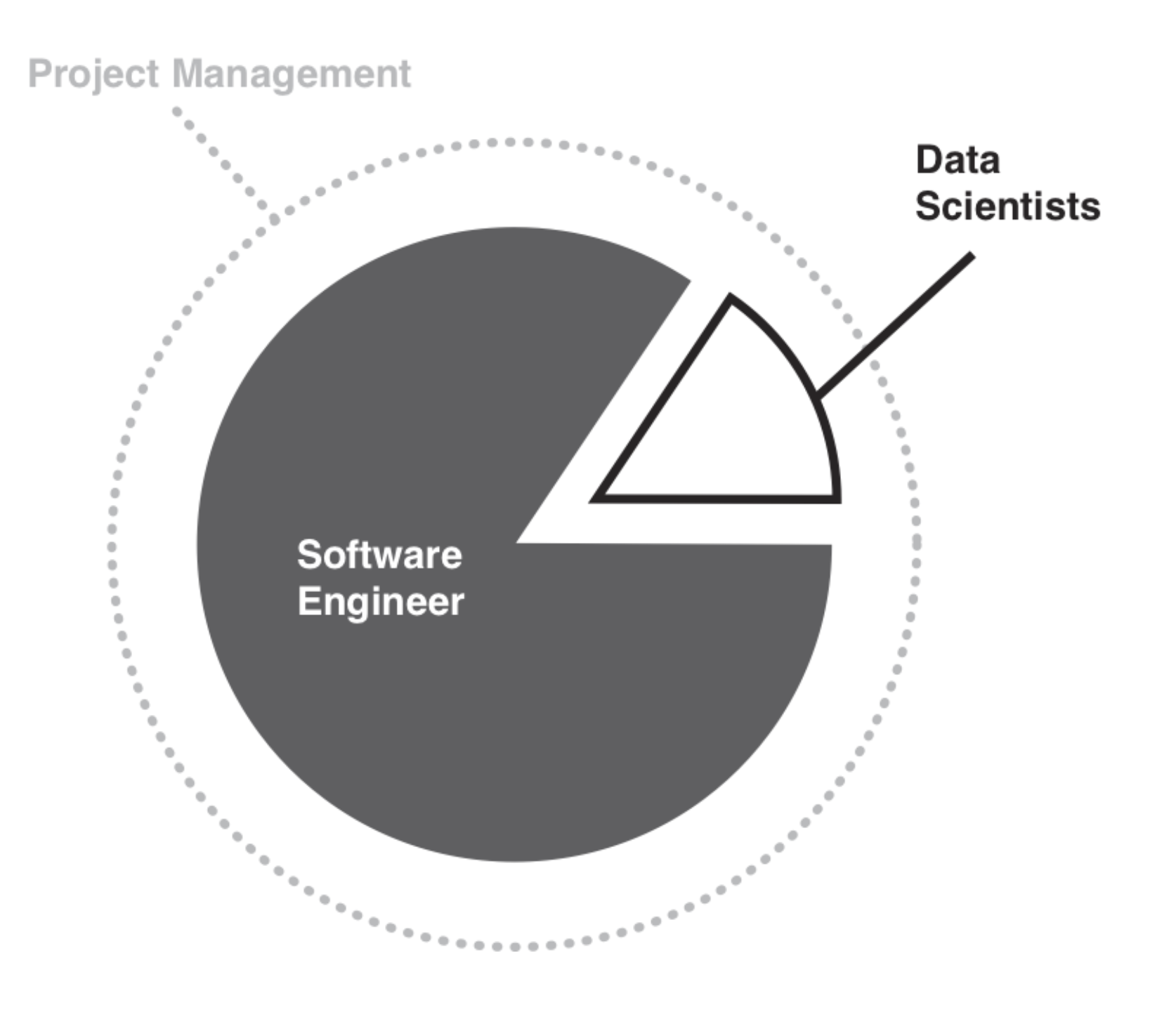
Solution Deployment Phase
Software Engineers implement the solution while Data Scientists tweak algorithms as needed.
Leadership Roles
Beyond the core technical team, more roles are crucial for achieving business impact in a machine learning:
- The Business Owner
The Business Owner is responsible for focusing the team on the core business problem to be solved and for providing business support via the budget. Business owners may also need to communicate the unique attributes of machine learning projects to the leaders above them, including the potential ebb and flow of project timelines. The business owner’s biggest challenge is often understanding what is actually possible with machine learning. Making promises without a firm understanding can hurt a project. - The Technical Lead
The Technical Lead is responsible for the overall architecture of the solution. They know how to put all the necessary data sources and infrastructure elements together to complete a project. While this person should have some technical understanding, they may not be a machine learning authority. - The Project Manager
The Project Manager structures and guides the project, interfaces with stakeholders, adheres to standard procedures, keep projects on time and on budget, reuses lessons and technologies from past projects, and appropriately documents the endeavor and business results.
A given ML project may see different individuals in each of these positions. But it’s also possible for one person to hold multiple roles (a technical team member may take on project management tasks, a data scientist may do data engineering). Also, a machine learning team may have members from different companies: business owners will likely be internal employees, but data scientists and engineers may come from external partners.
Roles on a Machine Learning Project (机器学习项目中的角色)的更多相关文章
- 【Machine Learning】机器学习及其基础概念简介
机器学习及其基础概念简介 作者:白宁超 2016年12月23日21:24:51 摘要:随着机器学习和深度学习的热潮,各种图书层出不穷.然而多数是基础理论知识介绍,缺乏实现的深入理解.本系列文章是作者结 ...
- Teaching Your Computer To Play Super Mario Bros. – A Fork of the Google DeepMind Atari Machine Learning Project
Teaching Your Computer To Play Super Mario Bros. – A Fork of the Google DeepMind Atari Machine Learn ...
- 【原】Coursera—Andrew Ng机器学习—课程笔记 Lecture 17—Large Scale Machine Learning 大规模机器学习
Lecture17 Large Scale Machine Learning大规模机器学习 17.1 大型数据集的学习 Learning With Large Datasets 如果有一个低方差的模型 ...
- 第二章——机器学习项目完整案例(End-to-End Machine Learning Project)
本章通过一个例子,介绍机器学习的整个流程. 2.1 使用真实数据集练手(Working with Real Data) 国外一些获取数据的网站: Popular open data repositor ...
- 人工智能(Machine Learning)—— 机器学习
https://blog.csdn.net/luyao_cxy/article/details/82383091 转载:https://blog.csdn.net/qq_27297393/articl ...
- 【Machine Learning】机器学习の特征
绘制了一张导图,有不对的地方欢迎指正: 下载地址 机器学习中,特征是很关键的.其中包括,特征的提取和特征的选择.他们是降维的两种方法,但又有所不同: 特征抽取(Feature Extraction): ...
- 機器學習基石(Machine Learning Foundations) 机器学习基石 课后习题链接汇总
大家好,我是Mac Jiang,非常高兴您能在百忙之中阅读我的博客!这个专题我主要讲的是Coursera-台湾大学-機器學習基石(Machine Learning Foundations)的课后习题解 ...
- 壁虎书2 End-to-End Machine Learning Project
the main steps: 1. look at the big picture 2. get the data 3. discover and visualize the data to gai ...
- 機器學習基石(Machine Learning Foundations) 机器学习基石 作业三 课后习题解答
今天和大家分享coursera-NTU-機器學習基石(Machine Learning Foundations)-作业三的习题解答.笔者在做这些题目时遇到非常多困难,当我在网上寻找答案时却找不到,而林 ...
随机推荐
- sql 语句系列(字符串的遍历嵌入删除与统计)[八百章之第十一章]
遍历字符串 我觉得首先要提出一个疑问: 一个数据库本身就是用于存储的,遍历字符串究竟有何意义? 先看如何实现的,毕竟sql service 是没有for循环,也没有loop和while的. selec ...
- Chrome80调整SameSite策略对IdentityServer4的影响以及处理方案(翻译)
首先,好消息是Goole将于2020年2月份发布Chrome 80版本.本次发布将推进Google的"渐进改良Cookie"策略,打造一个更为安全和保障用户隐私的网络环境. 坏消息 ...
- Nuget多项目批量打包上传服务器的简明教程
本篇不会介绍Nuget是什么,如何打包上传Nuget包,怎么搭建私有Nuget服务器.这些问题园子里都有相应的文章分享,这里不做过多阐述.另外本文假设你已经下载了Nuget.exe,并且已经设置好了环 ...
- sql-lib闯关51-60
第五十一关 这一关和三十八关基本一样 ,堆叠注入问题 只不过是字符型 ?sort=1';create table test51 like users;%23 看数据 ...
- MP3音频文件的剪切合并方法
package com.bytx.ai.service.base.controller.util; import it.sauronsoftware.jave.Encoder;import it.sa ...
- shell脚本介绍以及常用命令
Shell脚本 Shell Script,Shell脚本与Windows/Dos下的批处理相似,也就是用各类命令预先放入到一个文件中,方便一次性执行的一个程序文件,主要是方便管理员进行设置或者管理用的 ...
- 一份精简的Numpy使用指引(附python演练)
欢迎大家关注我们的网站和系列教程:http://www.tensorflownews.com/,学习更多的机器学习.深度学习的知识! Numpy 的主要用途是以数组的形式进行数据操作. 机器学习中大多 ...
- 本机安装oracle12C
1.先安装的oracle12C,创建了oracle主目录用户admin,其中主目录用户为admin,口令为123456. 2.其次创建监听,再创建数据库实例. 3.全局数据库名称为orcl.lan,管 ...
- 【原创】linux spinlock/rwlock/seqlock原理剖析(基于ARM64)
背景 Read the fucking source code! --By 鲁迅 A picture is worth a thousand words. --By 高尔基 说明: Kernel版本: ...
- js 的位运算
api 用途 待更...