
mysql如何查看自己数据库文件所在的位置
mysql如何查看自己数据库文件所在的位置
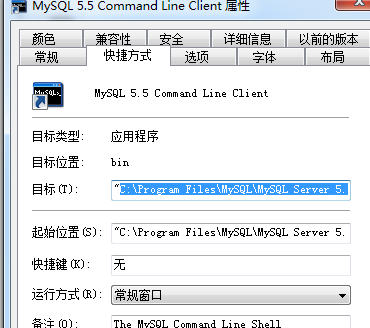
C:\Program Files\MySQL\MySQL Server 5.5
- mysql数据库
方法/步骤
第1步:
打开mysqml文件夹,显示的文件如下,然后找到my.ini文件,如图所示。

第2步:
选中my.ini文件,这时候点击鼠标右键依次选择”打开方式“然后选择”记事本打开“

第3步:
以记事本的方式打开my.ini文件后,按ctrl+f搜索”datadir“就可以找到你数据库的物理路径

第4步:
如果你想修改数据库文件的存储位置,可以直接在这里修改,如下图红框所示。

第5步:
按照上面所找到的路径,我们打开上面的路径的data文件夹,显示如下图。

- 6
第6步:
如果想对数据库进行搬迁,只需要复制”data“这个文件夹,覆盖新环境下的”data“文件就可以了。

解决方法:
1、增加id文件是否存在的判断
2、方法写了2次h.GetFilePath("txtpath");
3、使用线程发生get请求增加时间限制2000
// 执行get请求.
RequestConfig requestConfig = RequestConfig.custom().setSocketTimeout(2000).setConnectTimeout(2000).build();//设置请求和传输超时时间
httpget.setConfig(requestConfig);4、Cache类使用静态类,静态方法
5、数据池链接数
6、内存网站
7、if (!str.equals(""))增加日志判断
序列化类增加
解决办法:
1.将内部类写成静态的
2.将内部类单独写一个.java文件 implements Serializable避免死循环
方法写了2次h.GetFilePath("txtpath");
public static String readFile(String websiteid) {Illegal access: this web application instance has been stopped already. Could not load META-INF/services/javax.xml.bind.JAXBContext. The eventual following stack trace is caused by an error thrown for debugging purposes as well as to attempt to terminate the thread which caused the illegal access, and has no functional impact.
javax.xml.bind.UnmarshalException: Unable to create an instance of javax.xml.ws.wsaddressing.W3CEndpointReference
- with linked exception:
# MySQL Server Instance Configuration File
# ----------------------------------------------------------------------
# Generated by the MySQL Server Instance Configuration Wizard
#
#
# Installation Instructions
# ----------------------------------------------------------------------
#
# On Linux you can copy this file to /etc/my.cnf to set global options,
# mysql-data-dir/my.cnf to set server-specific options
# (@localstatedir@ for this installation) or to
# ~/.my.cnf to set user-specific options.
#
# On Windows you should keep this file in the installation directory
# of your server (e.g. C:\Program Files\MySQL\MySQL Server X.Y). To
# make sure the server reads the config file use the startup option
# "--defaults-file".
#
# To run run the server from the command line, execute this in a
# command line shell, e.g.
# mysqld --defaults-file="C:\Program Files\MySQL\MySQL Server X.Y\my.ini"
#
# To install the server as a Windows service manually, execute this in a
# command line shell, e.g.
# mysqld --install MySQLXY --defaults-file="C:\Program Files\MySQL\MySQL Server X.Y\my.ini"
#
# And then execute this in a command line shell to start the server, e.g.
# net start MySQLXY
#
#
# Guildlines for editing this file
# ----------------------------------------------------------------------
#
# In this file, you can use all long options that the program supports.
# If you want to know the options a program supports, start the program
# with the "--help" option.
#
# More detailed information about the individual options can also be
# found in the manual.
#
#
# CLIENT SECTION
# ----------------------------------------------------------------------
#
# The following options will be read by MySQL client applications.
# Note that only client applications shipped by MySQL are guaranteed
# to read this section. If you want your own MySQL client program to
# honor these values, you need to specify it as an option during the
# MySQL client library initialization.
#
[client]
port=3309
[mysql]
default-character-set=gb2312
# SERVER SECTION
# ----------------------------------------------------------------------
#
# The following options will be read by the MySQL Server. Make sure that
# you have installed the server correctly (see above) so it reads this
# file.
#
[mysqld]
# The TCP/IP Port the MySQL Server will listen on
port=3309
#Path to installation directory. All paths are usually resolved relative to this.
basedir="C:/Program Files/MySQL/MySQL Server 5.5/"
#Path to the database root
datadir="C:/ProgramData/MySQL/MySQL Server 5.5/Data/"
# The default character set that will be used when a new schema or table is
# created and no character set is defined
character-set-server=gb2312
# The default storage engine that will be used when create new tables when
default-storage-engine=INNODB
# Set the SQL mode to strict
sql-mode="STRICT_TRANS_TABLES,NO_AUTO_CREATE_USER,NO_ENGINE_SUBSTITUTION"
# The maximum amount of concurrent sessions the MySQL server will
# allow. One of these connections will be reserved for a user with
# SUPER privileges to allow the administrator to login even if the
# connection limit has been reached.
max_connections=100
# Query cache is used to cache SELECT results and later return them
# without actual executing the same query once again. Having the query
# cache enabled may result in significant speed improvements, if your
# have a lot of identical queries and rarely changing tables. See the
# "Qcache_lowmem_prunes" status variable to check if the current value
# is high enough for your load.
# Note: In case your tables change very often or if your queries are
# textually different every time, the query cache may result in a
# slowdown instead of a performance improvement.
query_cache_size=32M
# The number of open tables for all threads. Increasing this value
# increases the number of file descriptors that mysqld requires.
# Therefore you have to make sure to set the amount of open files
# allowed to at least 4096 in the variable "open-files-limit" in
# section [mysqld_safe]
table_cache=256
# Maximum size for internal (in-memory) temporary tables. If a table
# grows larger than this value, it is automatically converted to disk
# based table This limitation is for a single table. There can be many
# of them.
tmp_table_size=35M
# How many threads we should keep in a cache for reuse. When a client
# disconnects, the client's threads are put in the cache if there aren't
# more than thread_cache_size threads from before. This greatly reduces
# the amount of thread creations needed if you have a lot of new
# connections. (Normally this doesn't give a notable performance
# improvement if you have a good thread implementation.)
thread_cache_size=8
#*** MyISAM Specific options
# The maximum size of the temporary file MySQL is allowed to use while
# recreating the index (during REPAIR, ALTER TABLE or LOAD DATA INFILE.
# If the file-size would be bigger than this, the index will be created
# through the key cache (which is slower).
myisam_max_sort_file_size=100G
# If the temporary file used for fast index creation would be bigger
# than using the key cache by the amount specified here, then prefer the
# key cache method. This is mainly used to force long character keys in
# large tables to use the slower key cache method to create the index.
myisam_sort_buffer_size=69M
# Size of the Key Buffer, used to cache index blocks for MyISAM tables.
# Do not set it larger than 30% of your available memory, as some memory
# is also required by the OS to cache rows. Even if you're not using
# MyISAM tables, you should still set it to 8-64M as it will also be
# used for internal temporary disk tables.
key_buffer_size=50M
# Size of the buffer used for doing full table scans of MyISAM tables.
# Allocated per thread, if a full scan is needed.
read_buffer_size=64K
read_rnd_buffer_size=256K
# This buffer is allocated when MySQL needs to rebuild the index in
# REPAIR, OPTIMZE, ALTER table statements as well as in LOAD DATA INFILE
# into an empty table. It is allocated per thread so be careful with
# large settings.
sort_buffer_size=256K
#*** INNODB Specific options ***
# Use this option if you have a MySQL server with InnoDB support enabled
# but you do not plan to use it. This will save memory and disk space
# and speed up some things.
#skip-innodb
# Additional memory pool that is used by InnoDB to store metadata
# information. If InnoDB requires more memory for this purpose it will
# start to allocate it from the OS. As this is fast enough on most
# recent operating systems, you normally do not need to change this
# value. SHOW INNODB STATUS will display the current amount used.
innodb_additional_mem_pool_size=2M
# If set to 1, InnoDB will flush (fsync) the transaction logs to the
# disk at each commit, which offers full ACID behavior. If you are
# willing to compromise this safety, and you are running small
# transactions, you may set this to 0 or 2 to reduce disk I/O to the
# logs. Value 0 means that the log is only written to the log file and
# the log file flushed to disk approximately once per second. Value 2
# means the log is written to the log file at each commit, but the log
# file is only flushed to disk approximately once per second.
innodb_flush_log_at_trx_commit=1
# The size of the buffer InnoDB uses for buffering log data. As soon as
# it is full, InnoDB will have to flush it to disk. As it is flushed
# once per second anyway, it does not make sense to have it very large
# (even with long transactions).
innodb_log_buffer_size=1M
# InnoDB, unlike MyISAM, uses a buffer pool to cache both indexes and
# row data. The bigger you set this the less disk I/O is needed to
# access data in tables. On a dedicated database server you may set this
# parameter up to 80% of the machine physical memory size. Do not set it
# too large, though, because competition of the physical memory may
# cause paging in the operating system. Note that on 32bit systems you
# might be limited to 2-3.5G of user level memory per process, so do not
# set it too high.
innodb_buffer_pool_size=96M
# Size of each log file in a log group. You should set the combined size
# of log files to about 25%-100% of your buffer pool size to avoid
# unneeded buffer pool flush activity on log file overwrite. However,
# note that a larger logfile size will increase the time needed for the
# recovery process.
innodb_log_file_size=20M
# Number of threads allowed inside the InnoDB kernel. The optimal value
# depends highly on the application, hardware as well as the OS
# scheduler properties. A too high value may lead to thread thrashing.
innodb_thread_concurrency=8
log-error="C:/D/lamp/log/error.log"
general-log=1
general-log-file="C:/D/lamp/log/mysql.log"
long_query_time=3
slow_query_log=1
slow-query-log_file="C:/D/lamp/log/slowquery.log"
mysql如何查看自己数据库文件所在的位置的更多相关文章
- 查找mysql数据库文件的存放位置
在mysql数据库中,有时候并不是很容易找出mysql数据库文件data的存放位置吗,这时就可以使用mysql自带的命令行工具进行查询. 具体命令如下:show variables like '%da ...
- MySQL语句查看各个数据库占用空间
select table_schema, sum(DATA_LENGTH)+sum(INDEX_LENGTH) from information_schema.tables group by tabl ...
- 查看Android数据库文件
使用Eclipse DDMS的File Explorer不能能看到Data目录下面的东西,可能由下面原因引起的 手机没有Root -- 可以使用Root大师 Data文件权限不够 -- 可以使用Ro ...
- eclipse打开本地文件所在目录位置的快捷键
在开发的过程中总是会遇到需要在本地文件夹找到该本地文件的情况,比如说要发送给同事什么的. 在使用Eclipse的过程中,大多数人都是先在Eclipse目录中定位到文件,然后通过在文件的右键属性中找到文 ...
- 【学亮IT手记】mysql创建/查看/切换数据库
--创建数据库 create database web_test1 CHARACTER set utf8; --切换数据库 use web_test1; --查看当前使用的数据库 select DAT ...
- 3.Hive中查看数据来源文件和具体位置方法
虚拟列 -- 当 hive 产生了非预期的或 null 的时候,可以通过虚拟列进行诊断,判断哪行数据出现问题 INPUT__FILE__NAME (输入文件名)map任务读入File的全路径 ...
- Idea 设置单击打开文件或者双击打开文件、自动定位文件所在的位置
以下定位,框架下,打开文件的点击方式,以及点击标签导航页上的已打开文件定位到展开路径,如下图:
- Linux下使用ps命令查看某个进程文件的启动位置
ps -ef|grep shutdown ls -al /proc/4170
- IntelliJ Idea设置单击打开文件或者双击打开文件、自动定位文件所在的位置
随机推荐
- 如何使用eclipse创建JAVA项目并写一个简单的HelloWorld
输入项目名称 点击完成(Finish) 原文地址:https://blog.csdn.net/qq_36798713/article/details/79530056
- black-hole《XSS的原理分析与解剖》阅读笔记
0×01 前言: <xss攻击手法>一开始在互联网上资料并不多(都是现成的代码,没有从基础的开始),直到刺的<白帽子讲WEB安全>和cn4rry的<XSS跨站脚本攻击剖析 ...
- 使用html中的<input>标签上传多个文件(转)
如何使用html上传多个文件呢?我搜索中文怎么也找不到合适的,都是用js动态添加input,然后提交,不能满足我想要的——打开选择文件的窗口后可以一次性选择多个文件. 然后我尝试搜索英文"h ...
- 反转链表(python)
题目描述 输入一个链表,反转链表后,输出新链表的表头. # -*- coding:utf-8 -*- # class ListNode: # def __init__(self, x): # self ...
- Centos 7 下 Mysql 5.7 Galera Cluster 集群部署
一.介绍 传统架构的使用,一直被人们所诟病,因为MySQL的主从模式,天生的不能完全保证数据一致,很多大公司会花很大人力物力去解决这个问题,而效果却一般,可以说,只能是通过牺牲性能,来获得数据一致性 ...
- poj 1789 prime
链接:Truck History - POJ 1789 - Virtual Judge https://vjudge.net/problem/POJ-1789 题意:先给出一个n,代表接下来字符串的 ...
- APIcloud制作APP 微信支付与支付宝支付
首先要在云端绑定相应模块如alipay和wxpay其次编写代码. 配置区域 var cfg = { webName:'',//APP名字 payDebug:true, isUseWxPay:true, ...
- SQL2008用sql语句给字段添加说明
EXEC sys.sp_addextendedproperty @name=N'MS_Description', @value=N'字段说明文字' , @level0type=N'SCHEMA',@l ...
- swift4.2 - 距离传感器
import UIKit class ViewController: UIViewController { deinit { NotificationCenter.default.removeObse ...
- Ajax中什么时候用同步,什么时候用异步?
AJAX中根据async的值不同分为同步(async = false)和异步(async = true)两种执行方式:在W3C的教程中推荐使用异步执行: $.ajax({ type: "po ...