
大聊Python----装饰器
什么是装饰器?
装饰器其实和函数没啥区别,都是用def去定义的,其本质就是函数,而功能就是装饰其他的函数,说白了就是为其他函数提供附加功能
装饰器有什么作用?
比如你是一个公司的员工,你所写的程序里有100个函数,但是你所写的程序都已经上线运行了,突然有一天你的产品经理来找你,让你在咱们的APP上新增一段功能!那你说该怎么做这件事情?问题是你的程序都已经在运行了 ,不能修改你程序的源代码,否则会出现意想不到的效果!所以你想新增一项功能,但是不能修改你的源代码!那该怎么办呢?
装饰器对待被修饰的函数是完全透明的状态!也就是函数感觉不到装饰器的存在,装饰器没有动函数的源代码,也不影响函数的运行。
先看一下代码:
import time

def timmer(func): # 装饰器

    def warpper(*args,**kwargs):

        start_time = time.time() # 开始的时间

        func()

        stop_time = time.time() # 结束的时间

        print('the fun run time is %s'%(stop_time - start_time))

    return warpper

@timmer # 被装饰的函数

def test1():

    time.sleep(3) # 延时3秒

    print("in the test1")

test1()
结果展示:

实现装饰器知识储备
1、函数即“变量”
机制:
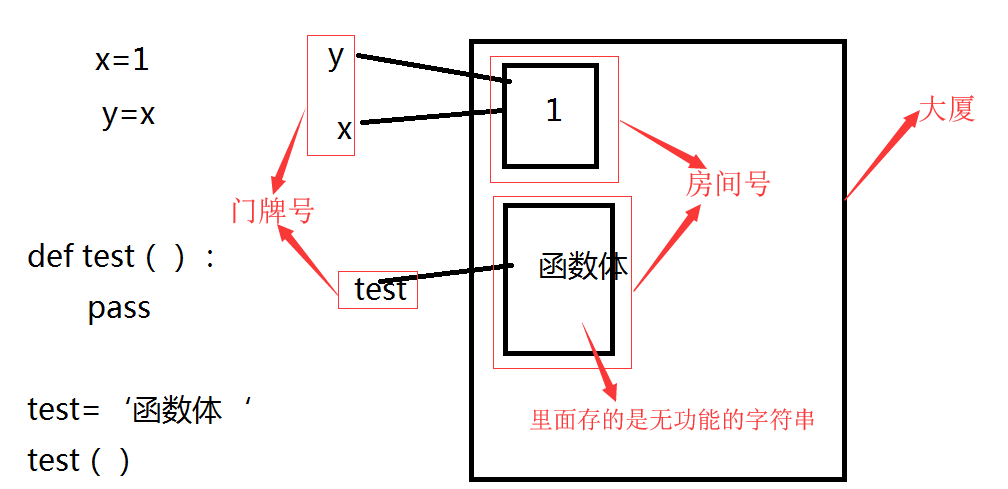
函数调用顺序:其他高级语言类似,Python 不允许在函数未声明之前,对其进行引用或者调用
错误示范:
def foo():

    print 'in the foo'

    bar()


foo()


报错:

in the foo


Traceback (most recent call last):

  File "<pyshell#13>", line 1, in <module>

    foo()

  File "<pyshell#12>", line 3, in foo

    bar()

NameError: global name 'bar' is not defined
def foo():

    print 'foo'

    bar()

foo()

def bar():

    print 'bar'


报错:NameError: global name 'bar' is not defined
正确示范:(注意,python为解释执行,函数foo在调用前已经声明了bar和foo,所以bar和foo无顺序之分)
def bar():

    print 'in the bar'

def foo():

    print 'in the foo'

    bar()


foo()


def foo():

    print 'in the foo'

    bar()

def bar():

    print 'in the bar'

foo()
2、高阶函数
a、就是把函数名当做实参传给另外一个函数(在不修改被装饰函数源代码的情况下为其增添功能)
示例:
import time

def bar():

    time.sleep(3)

    print("in the bar")

def test1(func):

    start_time = time.time()

    func()

    stop_time = time.time()

    print("the func run rime is %s"%(stop_time - start_time))

test1(bar)
结果:

b、返回值中包含函数名(不修改函数的调用方式)
示例:
import time

def bar():

    time.sleep(3)

    print("in the bar")

def test2(func):

    print(func)

    return func

bar = test2(bar)

print(bar) # run bar
效果:
<function bar at 0x00000000007C48C8>
<function bar at 0x00000000007C48C8>
3、嵌套函数
局部作用域和全局作用域的访问顺序
x=0

def grandpa():

    # x=1

    def dad():

        x=2

        def son():

            x=3

            print(x)

        son()

    dad()

grandpa()
显示效果为:
3

高阶函数 + 嵌套函数 ==》 装饰器
先看个例子
import time

def timer(func):

    def deco():

        start_time = time.time()

        func()

        stop_time = time.time()

        print("the func's run time is %s "%(stop_time - start_time))

    return deco

@timer

def test1():

    time.sleep(3)

    print("the test1 is running!")

@timer

def test2():

    time.sleep(3)

    print("the test2 is running!")

test1()

test2()
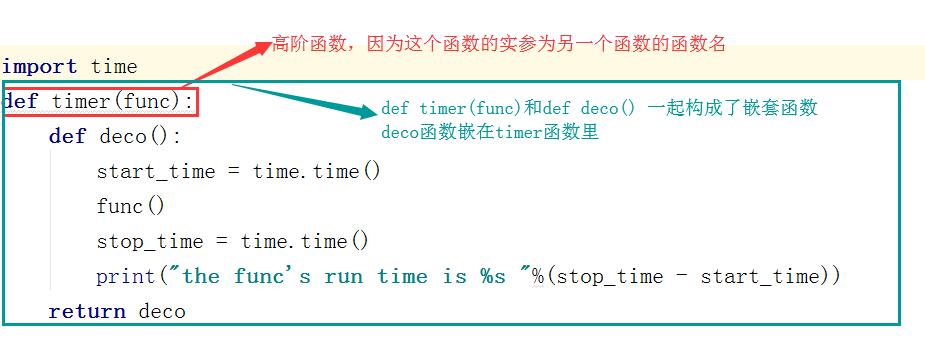
结果显示:
the test1 is running!
the func's run time is 3.000171422958374
the test2 is running!
the func's run time is 3.000171661376953
若想给test2传递参数,如下例,该怎么做呢?
import time

def timer(func):

    def deco():

        start_time = time.time()

        func()

        stop_time = time.time()

        print("the func's run time is %s "%(stop_time - start_time))

    return deco

@timer

def test1():

    time.sleep(3)

    print("the test1 is running!")

@timer

def test2(name):

    time.sleep(3)

    print("the test2 is running!",name)

test1()

test2("alex")
通过执行,会出现下面的错误

意思是说,deco()缺少了一个元素!
那该怎么解决这个问题呢?
咱们先来捋顺下思路!
通过@timer可知test2() =timer(test2) = deco ,test2(name) = deco(name)
所以可以看出要给deco传递实参,所以做了下面
def timer(func):

    def deco(name):

        start_time = time.time()

        func(name)

        stop_time = time.time()

        print("the func's run time is %s "%(stop_time - start_time))

    return deco
通过执行,会看到下面的结果!

这回好了,test2不出错了,反而test1报错了,那个该怎么办呢?
看下test1出错的原因是test1的deco缺少了一个实参,那么问题来了,test1该怎么处理呢?
其实很简单,使用*args,和**kwargs尽可以完美的解决这个问题!
现在来看看经过改正的程序
import time

def timer(func):

    def deco(*args,**kwargs):

        start_time = time.time()

        func(*args,**kwargs)

        stop_time = time.time()

        print("the func's run time is %s "%(stop_time - start_time))

    return deco

@timer

def test1():

    time.sleep(3)

    print("the test1 is running!")

@timer

def test2(name):

    time.sleep(3)

    print("the test2 is running!",name)

test1()

test2("alex")
结果显示:
the test1 is running!
the func's run time is 3.000171661376953
the test2 is running! alex
the func's run time is 3.000171422958374
装饰器之高潮
进入高潮之前,我们先来点前戏
先看下面的代码
import time

user , passwd = "sutaoyu" , "sutaoyu01"

def auth(func):

    def wrapper(*args,**kwargs):

        username = input("Username").strip()

        password = input("Password").strip()

        if user == username and passwd == password:

            print("\033[32;1mUser has passed authentication\033[0m")

            func(*args,**kwargs)

        else:

            exit("\033[31;1mInvalid username and password\033[0m")

    return wrapper

@auth

def index():

    print("welcome to index Page!")

@auth

def home():

    print("welcome to index Home!")

@auth

def bbs():

    print("welcome to index BBS!")

index()

home()

bbs()
其输出的结果为:
输入正确时:

输入错误时:
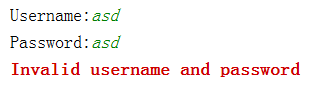
现在当我们把前面的代码稍微改一下,装饰器代码不动,只改变下面两个地方
def index():

    print("welcome to index Page!")

    return "Page"

print(index())
此时看输出的结果:
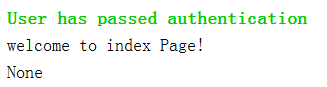
会发现无结果并为None,那是因为什么呢?
因为装饰器里的wrapper没有返回值所以,我们给他提供返回值即可!
def auth(func):

    def wrapper(*args,**kwargs):

        username = input("Username:").strip()

        password = input("Password:").strip()

        if user == username and passwd == password:

            print("\033[32;1mUser has passed authentication\033[0m")

            return func(*args,**kwargs)

        else:

            exit("\033[31;1mInvalid username and password\033[0m")

    return wrapper
运行下程序,看看结果
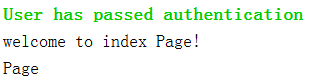
可以看出,问题已经解决!
现在高潮部分即将来临:
我能不能让我的home在认证的时候用本地的认证,但是bbs认证的时候用远程的ldap?
答案是肯定的!
先看下代码!
import time

user , passwd = "" , ""

def auth(auth_type):

    print("auth_typr:",auth_type)

    def outer_wrapper(func):

        def wrapper(*args,**kwargs):

            print("wrapper func args:",*args,**kwargs)

            if auth_type == "local":

                username = input("Username:").strip()

                password = input("Password:").strip()

                if user == username and passwd == password:

                    print("\033[32;1mUser has passed authentication\033[0m")

                    func(*args,**kwargs)

                else:

                    exit("\033[31;1mInvalid username and password\033[0m")

            elif auth_type == "ldap":

                print("搞毛啊!!!!!")

        return wrapper

    return outer_wrapper

# @auth

def index():

    print("welcome to Index page!")

    return "Page"

@auth(auth_type =  "local")

def home():

    print("welcome to Home page!")

@auth(auth_type = "ldap")

def bbs():

    print("welcome to BBS page!")

index()

home()

bbs()
运行的结果为:
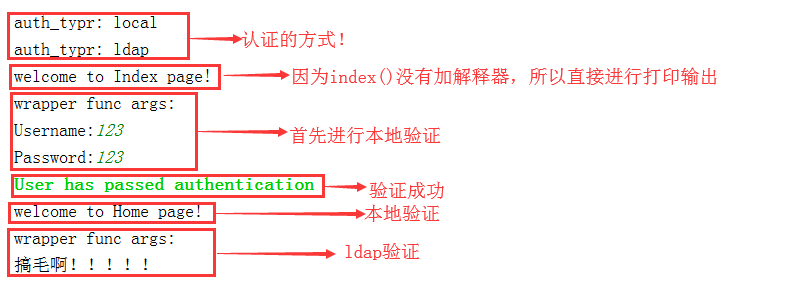
可以看出,我们的认真已经成功!
大聊Python----装饰器的更多相关文章
- Python装饰器总结,带你几步跨越此坑!
欢迎添加华为云小助手微信(微信号:HWCloud002 或 HWCloud003),输入关键字"加群",加入华为云线上技术讨论群:输入关键字"最新活动",获取华 ...
- Python装饰器由浅入深
装饰器的功能在很多语言中都有,名字也不尽相同,其实它体现的是一种设计模式,强调的是开放封闭原则,更多的用于后期功能升级而不是编写新的代码.装饰器不光能装饰函数,也能装饰其他的对象,比如类,但通常,我们 ...
- Python装饰器与面向切面编程
今天来讨论一下装饰器.装饰器是一个很著名的设计模式,经常被用于有切面需求的场景,较为经典的有插入日志.性能测试.事务处理等.装饰器是解决这类问题的绝佳设计,有了装饰器,我们就可以抽离出大量函数中与函数 ...
- 一篇关于Python装饰器的博文
这是一篇关于python装饰器的博文 在学习python的过程中处处受阻,之前的学习中Python的装饰器学习了好几遍也没能真正的弄懂.这一次抓住视频猛啃了一波,就连python大佬讲解装饰器起来也需 ...
- python 装饰器 一篇就能讲清楚
装饰器一直是我们学习python难以理解并且纠结的问题,想要弄明白装饰器,必须理解一下函数式编程概念,并且对python中函数调用语法中的特性有所了解,使用装饰器非常简单,但是写装饰器却很复杂.为了讲 ...
- Python装饰器模式学习总结
装饰器模式,重点在于装饰.装饰的核心仍旧是被装饰对象. 类比于Java编程的时候的包装模式,是同样的道理.虽然概念上稍有不同但是原理上还是比较相近的.下面我就来谈一谈我对Python的装饰器的学习的一 ...
- 转发对python装饰器的理解
[Python] 对 Python 装饰器的理解的一些心得分享出来给大家参考 原文 http://blog.csdn.net/sxw3718401/article/details/3951958 ...
- 利用世界杯,读懂 Python 装饰器
Python 装饰器是在面试过程高频被问到的问题,装饰器也是一个非常好用的特性, 熟练掌握装饰器会让你的编程思路更加宽广,程序也更加 pythonic. 今天就结合最近的世界杯带大家理解下装饰器. 德 ...
- 理解 Python 装饰器看这一篇就够了
讲 Python 装饰器前,我想先举个例子,虽有点污,但跟装饰器这个话题很贴切. 每个人都有的内裤主要功能是用来遮羞,但是到了冬天它没法为我们防风御寒,咋办?我们想到的一个办法就是把内裤改造一下,让它 ...
- Python高级特性: 12步轻松搞定Python装饰器
12步轻松搞定Python装饰器 通过 Python 装饰器实现DRY(不重复代码)原则: http://python.jobbole.com/84151/ 基本上一开始很难搞定python的装 ...
随机推荐
- PAT L1 - 046 整除光棍
https://pintia.cn/problem-sets/994805046380707840/problems/994805084284633088 这里所谓的“光棍”,并不是指单身汪啦~ 说的 ...
- linux之JDK安装
1.JDK安装 a.卸载JDK (1)卸载默认的JDK 用root用户登陆到系统,打开一个终端输入 # rpm -qa|grep gcj 显示内容其中包含下面两行信息 # java-1.4.2-gcj ...
- Linux下修改环境变量PATH
1.什么是环境变量(PATH) 在Linux中,在执行命令时,系统会按照PATH的设置,去每个PATH定义的路径下搜索执行文件,先搜索到的文件先执行. 我们知道查阅文件属性的指令ls 完整文件名为:/ ...
- 【Quartz.NET】Quartz.NET 入门
概述 Quartz.NET是一个开源的作业调度框架,非常适合在平时的工作中,定时轮询数据库同步,定时邮件通知,定时处理数据等. Quartz.NET允许开发人员根据时间间隔(或天)来调度作业.它实现了 ...
- 【bzoj5028】小Z的加油店 扩展裴蜀定理+差分+线段树
题目描述 给出 $n$ 个瓶子和无限的水,每个瓶子有一定的容量.每次你可以将一个瓶子装满水,或将A瓶子内的水倒入B瓶子中直到A倒空或B倒满.$m$ 次操作,每次给 $[l,r]$ 内的瓶子容量增加 $ ...
- Django 2.0 学习(16):Django ORM 数据库操作(下)
Django ORM数据库操作(下) 一.增加表记录 对于表单有两种方式: # 方式一:实例化对象就是一条表记录france_obj = models.Student(name="海地&qu ...
- BZOJ5091 摘苹果(概率期望)
大胆猜想每一步都相当于是第一步.稍微验证一下发现是对的.就做完了. #include<iostream> #include<cstdio> #include<cmath& ...
- l洛谷 (水题)P4144 大河的序列
题目戳 Solution: 这题前面都是废话,关键的一句就是本题求的是序列中连续一段的相与值(&)+相或值(|)最大,然后对这个值进行快速幂取模.考虑到两个数相与最大能得到的就是这两个数中的最 ...
- 【刷题】BZOJ 2753 [SCOI2012]滑雪与时间胶囊
Description a180285非常喜欢滑雪.他来到一座雪山,这里分布着M条供滑行的轨道和N个轨道之间的交点(同时也是景点),而且每个景点都有一编号i(1<=i<=N)和一高度Hi. ...
- scala(三)
一.面向对象编程——类 1.定义一个简单的类 class HelloWorld { private var name = "leo" def sayHello() { print( ...