
解决问题,链表finish
从一个不懂链表,到反反复复改了不下50遍,提交该题页数更是突破了五页,从周三下午到周五中午的面向对象课前的20分钟,终于把这道题AC了,其实这题本来是原来C语言综合实验的一道题,但是本次在PAT上的审核却没有那么简单。
说下心路历程
- 其实这个链表在开始的十个小时的学习中对我来说就跟之前的CLASS一样,完完全全的新东西,不知道从何temp->next,也不知道题意,让我反转什么。圈圈画画,终于写了出来,后来发现前面写的指针代码都比较复杂。可以简化。在之后的小时里都是在跟PTA的测试点作斗争,正如前面的随笔所言,只有两个AC,我就在想为什么有两个AC而其他的问题都是答案错误,于是我遍历了所有的代码,感觉虽然愚钝,但是符合逻辑,可执行才对,于是开始了各种数据的测试,从小数据,特殊数据,到大数据,乱七八糟的,打乱顺序的都试过,然而命运就像是和我开玩笑,测试的数据全对,但是过不了PAT的测试点。当时的我真的想把PAT的测试点挖出来问问,到底是什么原因。因此我上了C语言综合实验的测试网站,提交了自己的代码,结果竟然是AC了。这我就更疑惑了,为什们我能够通过那个测试,却过不了PAT,在沉默了跟打代码一样长的时间后,我终于发现了问题症结。PAT测试点会呈现段错误,而段错误在我这里会因为某种原因继续下去,因为我的段错误是一种非数组越界,或者是栈 队列溢出那种的问题,我的问题在于循环中加入了太多的循环和判断,我想这个问题原因可能是对于小数据,PAT会规定具体的循环次数,以及if的次数如果超过,就会段错误,但是会继续执行,答案输出了,即使对了,也会按照答案错误处理并张贴。这个就会让人误以为是代码的问题,而实际并不是。PAT果然严格。不过希望他能告诉我是段错误。
下面贴出代码和截图。
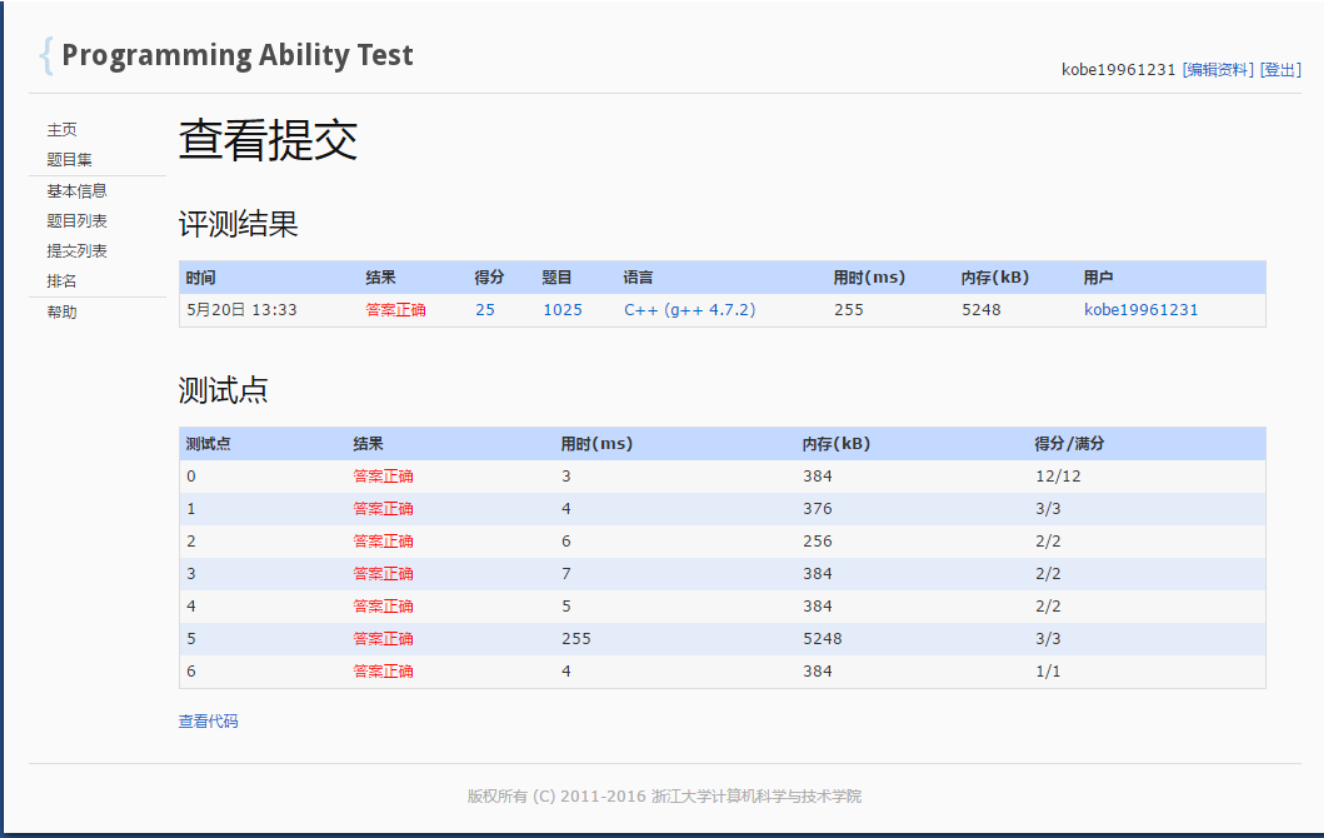
代码部分
#include<iostream>

#include<stdlib.h>

#include<string>

#include<iomanip>

#include<stdio.h>

using namespace std;

int main()

{

    struct Date

    {

      	    int Adress;

	    int num;

	    int Next;

	    struct Date *next;

    };

    int all, ts, i = 0;

Date*head = (Date*)malloc(sizeof(Date));

Date*p1 = (Date*)malloc(sizeof(Date));

Date*p2 = (Date*)malloc(sizeof(Date));

scanf("%d %d %d", &head->Adress, &all,&ts);

while (i != all)

{

	Date*p1 = (Date*)malloc(sizeof(Date));

	scanf("%d %d %d", &p1->Adress, &p1->num, &p1->Next);

	if (i == 0)

		head->next = p1;

	else

		p2->next = p1;

	p2 = p1;

	i++;

}

p2->next = NULL;

Date*temp1 = (Date*)malloc(sizeof(Date));

Date*temp2 = (Date*)malloc(sizeof(Date));

Date*r = (Date*)malloc(sizeof(Date));

Date*p = (Date*)malloc(sizeof(Date));

temp1 = head;

temp2 = temp1->next;

while (1)

{

	if (head->Adress == temp2->Adress)

	{

		p = temp1;

		for (;;)

		{

			if (p->next == temp2)

			{

				p->next = temp2->next;

				break;

			}

			else

			{

				p = p->next;

			}

		}

		r = head->next;

		head->next = temp2;

		temp2->next = r;

		break;

	}

	temp2 = temp2->next;

}

temp1 = temp1->next;

temp2 = temp1->next;

while (temp1 != NULL)

{

	while (temp2 != NULL)

	{

		if (temp2->Adress == temp1->Next&&temp2->Next != -1)

		{

			p = temp1;

			for (;;)

			{

				if (p->next == temp2)

				{

					p->next = temp2->next;

					break;

				}

				else

				{

					p = p->next;

				}

			}

			r = temp1->next;

			temp1->next = temp2;

			temp2->next = r;

			break;

		}

		else if (temp2->Adress == temp1->Next&&temp2->Next == -1)

		{

			p = temp1;

			for (;;)

			{

				if (p->next == temp2)

				{

					p->next = temp2->next;

					break;

				}

				else

				{

					p = p->next;

				}

			}

			temp1->next = temp2;

			temp2->next = NULL;

			break;

		}

		else

		{

			temp2 = temp2->next;

			continue;

		}

	}

	if (temp1->next != NULL)

	{

		temp1 = temp1->next;

		temp2 = temp1->next;

	}

	else

		break;

}

int js = 0;

Date*check = (Date*)malloc(sizeof(Date));

check = head->next;

for (;;)

{

	if (check->Next != -1)

	{

		check = check->next;

		js++;

	}

	else if (check->Next == -1)

	{

		js++;

		break;

	}

}

all =js;

if (ts == 0)

	ts = 1;

	int j=all/ts;

	if (ts > all || all == 1||j==0)

		j = 0;

	else

	{

		temp1 = head;

		temp2 = temp1->next;

		i = 0;

		for (int l = 1; j > 0; l++, j--)

		{

			while (i != l*(ts - 1))

			{

				temp2 = temp2->next;

				i++;

			}

			p1 = temp2;

			r = temp2->next;

			p = temp1;

			while (p->next != temp2)

			{

				for (;;)

				{

					if (p->next == temp2)

					{

						temp2->next = p;

						temp2 = temp2->next;

						p = temp1;

						break;

					}

					else

					{

						p = p->next;

					}

				}

			}

			temp2->next = r;

			temp1->next = p1;

			while (temp1 != temp2)

			{

				temp1 = temp1->next;

			}

			if (temp1 == NULL)

				break;

			else

			{

				temp2 = temp1->next;

			}

		}

	}

temp1 = head->next;

temp2 = temp1->next;

head->Adress = head->next->Adress;

for (i = 0; i < all-1 ; i++)

{

	temp1->Next = temp2->Adress;

	temp1 = temp1->next;

	temp2 = temp1->next;

}

if(temp1->next==NULL)

temp1->Next = -1;

Date*out = (Date*)malloc(sizeof(Date));

out = head->next;

while (out != NULL)

{

	if (out->Next != -1)

	{

		cout << setfill('0') << setw(5) << out->Adress << " " << out->num << " " << setfill('0') << setw(5) << out->Next << endl;

		out = out->next;

	}

	else

	{

		cout << setfill('0') << setw(5) << out->Adress << " " << out->num << " " << out->Next << endl;

		out = out->next;

	}

}

return 0;

}
解决问题,链表finish的更多相关文章
- 防御性编程习惯:求出链表中倒数第 m 个结点的值及其思想的总结
防御性编程习惯 程序员在编写代码的时候,预料有可能出现问题的地方或者点,然后为这些隐患提前制定预防方案或者措施,比如数据库发生异常之后的回滚,打开某些资源之前,判断图片是否存在,网络断开之后的重连次数 ...
- [LeetCode] Merge k Sorted Lists 合并k个有序链表
Merge k sorted linked lists and return it as one sorted list. Analyze and describe its complexity. 这 ...
- [LeetCode] Remove Nth Node From End of List 移除链表倒数第N个节点
Given a linked list, remove the nth node from the end of list and return its head. For example, Give ...
- 单链表、循环链表的JS实现
数据结构系列前言: 数据结构作为程序员的基本知识,需要我们每个人牢牢掌握.近期我也展开了对数据结构的二次学习,来弥补当年挖的坑...... 当时上课的时候也就是跟着听课,没有亲自实现任何一种数据结 ...
- 剑指Offer面试题:4.从尾到头打印链表
一.题目:从尾到头打印链表 题目:输入一个链表的头结点,从尾到头反过来打印出每个结点的值. 到解决这个问题肯定要遍历链表.遍历的顺序是从头到尾的顺序,可输出的顺序却是从尾到头.也就是说第一个遍历到的结 ...
- 剑指Offer面试题:12.在O(1)时间删除链表结点
一.题目:在O(1)时间删除链表结点 题目:给定单向链表的头指针和一个结点指针,定义一个函数在O(1)时间删除该结点. 原文采用的是C/C++,这里采用C#,节点定义如下: public class ...
- 剑指Offer面试题:14.链表的倒数第k个节点
PS:这是一道出境率极高的题目,记得去年参加校园招聘时我看到了3次,但是每次写的都不完善. 一.题目:链表的倒数第k个节点 题目:输入一个链表,输出该链表中倒数第k个结点.为了符合大多数人的习惯,本题 ...
- delphi.数据结构.链表
链表作为一种基础的数据结构,用途甚广,估计大家都用过.链表有几种,常用的是:单链表及双链表,还有N链表,本文着重单/双链表,至于N链表...不经常用,没法说出一二三来. 在D里面,可能会用Contnr ...
- 数据结构之链表C语言实现以及使用场景分析
牢骚:本篇博客两个星期前已经存为草稿,鉴于发生一些糟糕的事情,今天才基本完成.本人6月份应届毕业生一枚,毕业后当天来到帝都,之后也非常顺利,面试了俩家公司都成功了.一家做C++方面电商ERP,一家做w ...
随机推荐
- HighCharts理解与总结
摘自:http://www.highcharts.com/docs/getting-started/installation Installation Highcharts requires two ...
- 证书透明度Certificate Transparency
发现使用google浏览器访问HTTPS网址时,点击小锁-->>连接-->>有一项服务器未提供任何 certificate transparency 信息?只有google浏览 ...
- 事务,约束,范式,视图,索引,pl/sql
1.操作分类: DML. DDL. DCL manipulation definition control 2.transction 事务 起始于DML,遇到 commit ,rollb ...
- (三)JNI常用示例
针对我之前文章的练习:JNI方法总结 1. 字符串 JAVA层: test.testString("HELLOWORLD"); JNI层: JNIEXPORT jstring JN ...
- 使用IndexOf方法来判断“咳嗽”出现的次数及索引、使用Dictionary<key,value> 集合统计没个字符出现的次数
static void Main(string[] args) { #region string str = "患者:医生我咳嗽的很严重,大夫:你多大年纪了? 患者:我75岁 大夫:那二十岁 ...
- WCF 创建WCF
一.概述 Windows Communication Foundation(WCF)是由微软发展的一组数据通信的应用程序开发接口,可以翻译为Windows通讯接口,它是.NET框架的一部分.由 .NE ...
- MySQL (一)(未完成)
并发控制 读写锁 读锁: 共享锁 写锁: 排它锁 颗粒度 表锁,MySQL中开销最小的锁 行锁,MySQL中开销最大的锁 事务 ACID特性 原子性(Automatic) 隔离性(Isolation) ...
- hdu 1392 Surround the Trees 凸包模板
Surround the Trees Time Limit: 2000/1000 MS (Java/Others) Memory Limit: 65536/32768 K (Java/Other ...
- 原生canvas写的飞机游戏
一个原生canvas写的飞机游戏,实用性不大,主要用于熟悉canvas的一些熟悉用法. 项目地址:https://github.com/BothEyes1993/canvas_game
- 02:奇数单增序列 个人博客doubleq.win
个人博客doubleq.win 02:奇数单增序列 查看 提交 统计 提问 总时间限制: 1000ms 内存限制: 65536kB 描述 给定一个长度为N(不大于500)的正整数序列,请将其中的所 ...