
Spring学习(八)AOP详解
文章更新时间:2020/04/06
一、一个例子
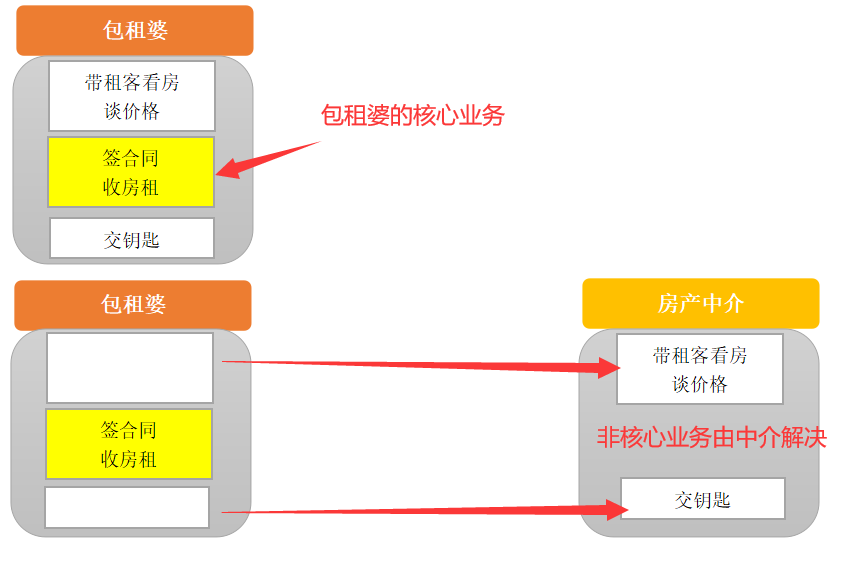
在上面的例子中,包租婆的核心业务就是签合同,收房租,那么这就够了,灰色框起来的部分都是重复且边缘的事,交给中介商就好了,这就是 AOP 的一个思想:让关注点代码与业务代码分离!
例子解析:
1.在 Package【service】下新建一个【LandlordService】类(核心业务)
/**

 * 包租婆关心的业务~(模拟核心业务)

 */

@Component("landlord")

public class LandlordService {

    public void service() {

        // 仅仅只是实现了核心的业务功能

        System.out.println("签合同");

        System.out.println("收房租");

    }

}
2.在 Package【aspect】下新建一个中介商【BrokerAspect】类(周边功能)
/**

 * 包租婆不关心~

 * 中介关心的业务~(模拟周边功能)

 */

@Component

@Aspect

class BrokerAspect {

    @Before("execution(* service.LandlordService.service())")

    public void before() {

        System.out.println("带租客看房");

        System.out.println("谈价格");

    }

    @After("execution(* service.LandlordService.service())")

    public void after() {

        System.out.println("交钥匙");

    }

}
3.在 applicationContext.xml 中配置自动注入,并告诉 Spring IoC 容器去哪里扫描这两个 Bean
<?xml version="1.0" encoding="UTF-8"?>

<beans xmlns="http://www.springframework.org/schema/beans"

       xmlns:xsi="http://www.w3.org/2001/XMLSchema-instance"

       xmlns:context="http://www.springframework.org/schema/context"

       xmlns:aop="http://www.springframework.org/schema/aop"

       xsi:schemaLocation="http://www.springframework.org/schema/beans

       http://www.springframework.org/schema/beans/spring-beans.xsd http://www.springframework.org/schema/context http://www.springframework.org/schema/context/spring-context.xsd http://www.springframework.org/schema/aop http://www.springframework.org/schema/aop/spring-aop.xsd">

    <context:component-scan base-package="aspect"/>

    <context:component-scan base-package="service"/>

    <!--声明自动为spring容器中那些配置@Aspect切面的bean创建代理,织入切面。-->

    <aop:aspectj-autoproxy/>

</beans>
4.编写测试类
public class TestSpring {

    @Test

    public void test() {

        ApplicationContext context = new ClassPathXmlApplicationContext("applicationContext.xml");

        LandlordService landlord = (LandlordService) context.getBean("landlord", LandlordService.class);

        landlord.service();

    }

}
5.查看执行结果

二、使用注解来开发 Spring AOP
第一步:选择连接点
Spring 是方法级别的 AOP 框架,我们主要也是以某个类额某个方法作为连接点,另一种说法就是:选择哪一个类的哪一方法用以增强功能。
    ....

    public void service() {

        // 仅仅只是实现了核心的业务功能

        System.out.println("签合同");

        System.out.println("收房租");

    }

    ....
这里就选择上述 LandlordService 类中的 service() 方法作为连接点。
第二步:创建切面
选择好了连接点就可以创建切面了,我们可以把切面理解为一个拦截器,当程序运行到连接点的时候,被拦截下来,在开头加入了初始化的方法,在结尾也加入了销毁的方法而已,在 Spring 中只要使用 @Aspect 注解一个类,那么 Spring IoC 容器就会认为这是一个切面了:
/**

 * 包租婆不关心~

 * 中介关心的业务~(模拟周边功能)

 */

@Component

@Aspect

class BrokerAspect {

    @Before("execution(* service.LandlordService.service())")

    public void before() {

        System.out.println("带租客看房");

        System.out.println("谈价格");

    }

    @After("execution(* service.LandlordService.service())")

    public void after() {

        System.out.println("交钥匙");

    }

}
PS: 被定义为切面的类仍然是一个 Bean ,需要 @Component 注解标注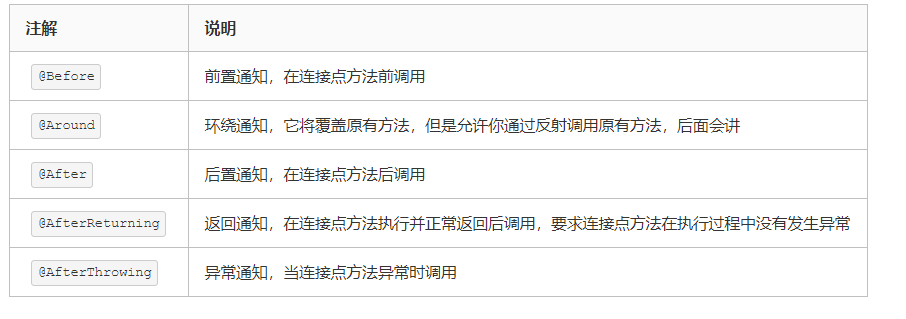
第三步:定义切点
在上面的注解中定义了 execution 的正则表达式,Spring 通过这个正则表达式判断具体要拦截的是哪一个类的哪一个方法:
execution(* service.LandlordService.service())
依次对这个表达式作出分析:
- execution:代表执行方法的时候会触发
- * :代表任意返回类型的方法
- service.LandlordService:代表类的全限定名
- service():被拦截的方法名称
第四步:测试 AOP
我们来探讨一下环绕通知,这是 Spring AOP 中最强大的通知,因为它集成了前置通知和后置通知,它保留了连接点原有的方法的功能,所以它及强大又灵活,让我们来看看:
/**

 * 包租婆不关心~

 * 中介关心的业务~(模拟周边功能)

 */

@Component

@Aspect

class BrokerAspect {

//  注释掉之前的 @Before 和 @After 注解以及对应的方法

//  @Before("execution(* service.LandlordService.service())")

//  public void before() {

//      System.out.println("带租客看房");

//      System.out.println("谈价格");

//  }

//

//  @After("execution(* service.LandlordService.service())")

//  public void after() {

//      System.out.println("交钥匙");

//  }

    //  使用 @Around 注解来同时完成前置和后置通知

    @Around("execution(* service.LandlordService.service())")

    public void around(ProceedingJoinPoint joinPoint) {

        System.out.println("带租客看房");

        System.out.println("谈价格");

        try {

            joinPoint.proceed();

        } catch (Throwable throwable) {

            throwable.printStackTrace();

        }

        System.out.println("交钥匙");

    }

}
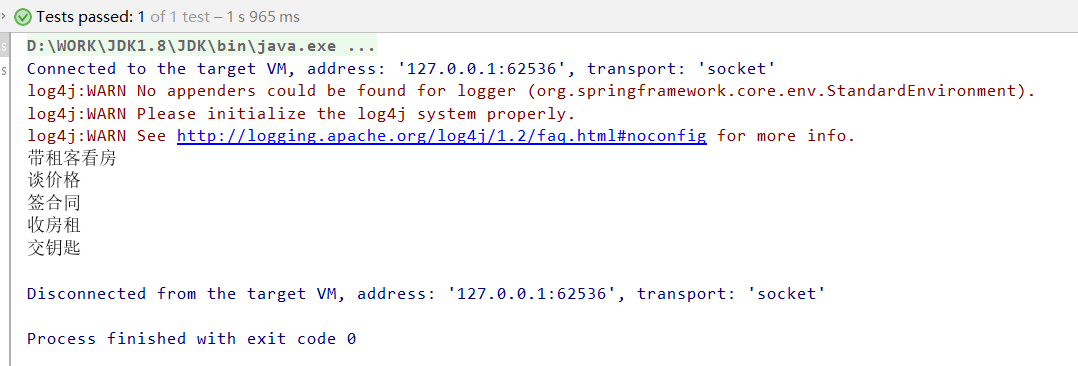
运行测试代码,结果仍然正确:
三、使用 XML 配置开发 Spring AOP
注解是很强大的东西,但基于 XML 的开发我们仍然需要了解,我们先来了解一下 AOP 中可以配置的元素:

有了之前通过注解来编写的经验,并且有了上面的表,我们将上面的例子改写成 XML 配置很容易(去掉所有的注解):
<!-- 装配 Bean-->

<bean name="landlord" class="pojo.Landlord"/>

<bean id="broker" class="aspect.Broker"/>

<!-- 配置AOP -->

<aop:config>

    <!-- where:在哪些地方(包.类.方法)做增加 -->

    <aop:pointcut id="landlordPoint"

                  expression="execution(* pojo.Landlord.service())"/>

    <!-- what:做什么增强 -->

    <aop:aspect id="logAspect" ref="broker">

        <!-- when:在什么时机(方法前/后/前后) -->

        <aop:around pointcut-ref="landlordPoint" method="around"/>

    </aop:aspect>

</aop:config>
运行测试程序,看到正确结果:
Spring学习(八)AOP详解的更多相关文章
- Spring学习之AOP详解
aop使用方式 @Aspect注解 wildcards通配符: * 匹配任意数量的字符 + 匹配指定类及其子类 .. 一般用于匹配任意数的子包或参数 operators运算符 && 与 ...
- [Spring学习笔记 5 ] Spring AOP 详解1
知识点回顾:一.IOC容器---DI依赖注入:setter注入(属性注入)/构造子注入/字段注入(注解 )/接口注入 out Spring IOC容器的使用: A.完全使用XML文件来配置容器所要管理 ...
- Spring AOP详解及简单应用
Spring AOP详解 一.前言 在以前的项目中,很少去关注spring aop的具体实现与理论,只是简单了解了一下什么是aop具体怎么用,看到了一篇博文写得还不错,就转载来学习一下,博文地址: ...
- 转:Spring AOP详解
转:Spring AOP详解 一.前言 在以前的项目中,很少去关注spring aop的具体实现与理论,只是简单了解了一下什么是aop具体怎么用,看到了一篇博文写得还不错,就转载来学习一下,博文地址: ...
- 【转载】Spring AOP详解 、 JDK动态代理、CGLib动态代理
Spring AOP详解 . JDK动态代理.CGLib动态代理 原文地址:https://www.cnblogs.com/kukudelaomao/p/5897893.html AOP是Aspec ...
- Spring AOP详解(转载)所需要的包
上一篇文章中,<Spring Aop详解(转载)>里的代码都可以运行,只是包比较多,中间缺少了几个相应的包,根据报错,几经百度搜索,终于补全了所有包. 截图如下: 在主测试类里面,有人怀疑 ...
- Spring全家桶——SpringBoot之AOP详解
Spring全家桶--SpringBoot之AOP详解 面向方面编程(AOP)通过提供另一种思考程序结构的方式来补充面向对象编程(OOP). OOP中模块化的关键单元是类,而在AOP中,模块化单元是方 ...
- Spring Aop 详解二
这是Spring Aop的第二篇,案例代码很详解,可以查看https://gitee.com/haimama/java-study/tree/master/spring-aop-demo. 阅读前,建 ...
- spring cache 学习——@CachePut 使用详解
1. 功能说明 当需要在不影响方法执行的情况下更新缓存时,可以使用 @CachePut,也就是说,被 @CachePut 注解的缓存方法总是会执行,而且会尝试将结果放入缓存(当然,是否真的会缓存还跟一 ...
- Spring4 AOP详解
Spring4 AOP详解 第一章Spring 快速入门并没有对Spring4 的 AOP 做太多的描述,是因为AOP切面编程概念不好理解.所以这章主要从三个方面详解AOP:AOP简介(了解),基于注 ...
随机推荐
- 第4篇scrum冲刺(5.24)
一.站立会议 1.照片 2.工作安排 成员 昨天已完成的工作 今天的工作安排 困难 陈芝敏 完成云开发配置,初始化数据库: 线下模块(还剩下获取词的数据库) 倒计时模块的初加载还是有点慢 冯晓凤 ...
- python元组的概念与基本操作
元组与列表类似,关于元组同样需要做如下三点: A.概念 1.元组通过英文状态下的圆括号构成“()”.其存放元素与列表一样,可以是不通的数值类型,也可以是不通的数据结构. 2.元组仍然是一种序列,所以几 ...
- 区块链入门到实战(36)之Solidity – 运算符
Solidity – 算术运算符 Solidity 支持的算术运算符,如下表所示: 假设变量A的值为10,变量B的值为20. 序号 运算符与描述 1 + (加)求和例: A + B = 30 2 – ...
- URL与视图函数的映射
今天跟大家讲的是URL与视图函数的映射 URL与视图函数的映射 url与视图函数的映射是通过@app.route()装饰器实现的. 1.只有一个斜杠代表的是根目录——首页. # coding: utf ...
- SQL语句中IF的简单使用 - 关联leetcode 627.交换工资
MySQL的IF既可以作为表达式用,也可在存储过程中作为流程控制语句使用,如下是做为表达式使用: IF表达式 IF(expr1,expr2,expr3) 如果 expr1 是TRUE (expr1 & ...
- Android开发之SDCardUtils工具类。java工具详细代码,附源代码。判断SD卡是否挂载等功能
package com.xiaobing.zhbj.utils; import java.io.BufferedInputStream; import java.io.BufferedOutputSt ...
- Codeforces 1324F Maximum White Subtree DFS
题意 给你无根一颗树,每个节点是黑色或白色.对于每一个节点,问包含该节点的权值最大的子树. 子树的权值等于子树中白点的个数减去黑点的个数. 注意,这里的子树指的是树的联通子图. 解题思路 这场就这题卡 ...
- 知识点干货——CSS动画
CSS动画 (transition.animation) //2D动画 transform:translate(); /*偏移*/ transform:rotate(); /*旋转角度*/ trans ...
- 使用jackson解析json串得到树模型,然后遍历树模型获得需要的数据
Problem:从网址 http://quotes.money.163.com/hs/service/marketradar_ajax.php?host=http%3A%2F%2Fquotes.mon ...
- 20190930-01 Redis的事务 000 031