
Linux kernel驱动相关抽象概念及其实现 之“linux设备模型kobject,kset,ktype”
kobject,kset,ktype三个很重要的概念贯穿Linux内核驱动架构,特转载一篇博文:
(转载自http://blog.csdn.net/gdt_a20/article/details/6424597)
一、sysfs文件系统下的每个目录对应于一个kobj,kset是kobj的封装,内嵌了一个kobj,其代表kset自身,ktype代表属性操作集,但由于通用性,因此把ktype单独剥离出来,kobj,kset,ktype成为了各个驱动模型最底层的关联元素,并由此形成了sys下的各种拓扑结构。
二、关于kobject
首先看一下kobject的原型
struct kobject {

    const char      *name;         //名字

    struct list_head    entry;         //连接到kset建立层次结构

    struct kobject      *parent;       //指向父节点,面向对象的层次架构

    struct kset     *kset;

    struct kobj_type    *ktype;        //属性文件

    struct sysfs_dirent *sd;

    struct kref     kref;          //引用计数

    unsigned int state_initialized:1;      //初始化状态...

    unsigned int state_in_sysfs:1;

    unsigned int state_add_uevent_sent:1;

    unsigned int state_remove_uevent_sent:1;

    unsigned int uevent_suppress:1;

};
分析一下kobject的初始化过程
初始化函数为
---int kobject_init_and_add(struct kobject *kobj, struct kobj_type *ktype,  //参数为kobject和属性结构体

             struct kobject *parent, const char *fmt, ...)

{

    va_list args;

    int retval;

    kobject_init(kobj, ktype);

    va_start(args, fmt);

    retval = kobject_add_varg(kobj, parent, fmt, args);

    va_end(args);

    return retval;

}

---void kobject_init(struct kobject *kobj, struct kobj_type *ktype)

{

    char *err_str;

    if (!kobj) {                        //kobj为NULL错误退出

        err_str = "invalid kobject pointer!";

        goto error;

    }

    if (!ktype) {                       //ktype为NULL错误退出

        err_str = "must have a ktype to be initialized properly!/n";

        goto error;

    }

    if (kobj->state_initialized) {   //如果初始化状态为1报错

        /* do not error out as sometimes we can recover */

        printk(KERN_ERR "kobject (%p): tried to init an initialized "

               "object, something is seriously wrong./n", kobj);

        dump_stack();

    }

    kobject_init_internal(kobj);       //初始化kobj

    kobj->ktype = ktype;            //关联obj和ktype

    return;

error:

    printk(KERN_ERR "kobject (%p): %s/n", kobj, err_str);

    dump_stack();

}

-------static void kobject_init_internal(struct kobject *kobj)

{

    if (!kobj)

        return;

    kref_init(&kobj->kref);        //计数变成1

    INIT_LIST_HEAD(&kobj->entry);  //都指向自己,prev和next

    kobj->state_in_sysfs = 0;

    kobj->state_add_uevent_sent = 0;

    kobj->state_remove_uevent_sent = 0;

    kobj->state_initialized = 1;

}

-------static int kobject_add_varg(struct kobject *kobj, struct kobject *parent,

                const char *fmt, va_list vargs)

{

    int retval;

    retval = kobject_set_name_vargs(kobj, fmt, vargs);  //设置名字,名字中不能有“/”

    if (retval) {

        printk(KERN_ERR "kobject: can not set name properly!/n");

        return retval;

    }

    kobj->parent = parent;                 //设置parent,其父节点

    return kobject_add_internal(kobj);

}

----static int kobject_add_internal(struct kobject *kobj)

{

    int error = 0;

    struct kobject *parent;

    if (!kobj)

        return -ENOENT;

    if (!kobj->name || !kobj->name[0]) {             //名字不能为空

        WARN(1, "kobject: (%p): attempted to be registered with empty "

             "name!/n", kobj);

        return -EINVAL;

    }

    parent = kobject_get(kobj->parent);  //如果parent为真,则增加kobj->kref计数,也就是父节点的引用计数

    /* join kset if set, use it as parent if we do not already have one */

    if (kobj->kset) {

        if (!parent)

            parent = kobject_get(&kobj->kset->kobj);  //如果kobj-parent父节点为NULL那么就用kobj->kset->kobj

                                                                            //  作其父节点,并增加其引用计数

        kobj_kset_join(kobj);                         //把kobj的entry成员添加到kobj->kset>list的尾部,现在的层次就是

        kobj->parent = parent;                     //kobj->kset->list指向kobj->parent

    }                                                     //    ->parent 指向kset->kobj

    pr_debug("kobject: '%s' (%p): %s: parent: '%s', set: '%s'/n",

         kobject_name(kobj), kobj, __func__,

         parent ? kobject_name(parent) : "<NULL>",

         kobj->kset ? kobject_name(&kobj->kset->kobj) : "<NULL>");

    error = create_dir(kobj);   //利用kobj创建目录和属性文件,其中会判断,如果parent为NULL那么就在sysfs_root下创建

    if (error) {

        kobj_kset_leave(kobj);

        kobject_put(parent);

        kobj->parent = NULL;

        /* be noisy on error issues */

        if (error == -EEXIST)

            printk(KERN_ERR "%s failed for %s with "

                   "-EEXIST, don't try to register things with "

                   "the same name in the same directory./n",

                   __func__, kobject_name(kobj));

        else

            printk(KERN_ERR "%s failed for %s (%d)/n",

                   __func__, kobject_name(kobj), error);

        dump_stack();

    } else

        kobj->state_in_sysfs = 1;

    return error;

}

---static int create_dir(struct kobject *kobj)

{

    int error = 0;

    if (kobject_name(kobj)) {

        error = sysfs_create_dir(kobj);       //创建目录

        if (!error) {

            error = populate_dir(kobj);   //创建属性文件

            if (error)

                sysfs_remove_dir(kobj);

        }

    }

    return error;

}
三、关于 kset
首先看一下kset的原型
struct kset {

    struct list_head list;  //连接着他下面的kobj成员,与kobj-entry关联

    spinlock_t list_lock;

    struct kobject kobj;    //代表kset自己

    const struct kset_uevent_ops *uevent_ops;

};
再来看一下kset的初始化操作,kset表现为更高级一点的kobj,其初始化操作仍然是围绕其内部的kobj展开的。
struct kset *kset_create_and_add(const char *name,

                 const struct kset_uevent_ops *uevent_ops,

                 struct kobject *parent_kobj)

{

    struct kset *kset;

    int error;

    kset = kset_create(name, uevent_ops, parent_kobj);  //创建kset,关联操作函数和其父节点

    if (!kset)

        return NULL;

    error = kset_register(kset);

    if (error) {

        kfree(kset);

        return NULL;

    }

    return kset;

}

---static struct kset *kset_create(const char *name,

                const struct kset_uevent_ops *uevent_ops,

                struct kobject *parent_kobj)

{

    struct kset *kset;

    int retval;

    kset = kzalloc(sizeof(*kset), GFP_KERNEL);  //申请结构体内存

    if (!kset)

        return NULL;

    retval = kobject_set_name(&kset->kobj, name);  //设置名字

    if (retval) {

        kfree(kset);

        return NULL;

    }

    kset->uevent_ops = uevent_ops;               //关联操作函数

    kset->kobj.parent = parent_kobj;             //关联父节点

    /*

     * The kobject of this kset will have a type of kset_ktype and belong to

     * no kset itself.  That way we can properly free it when it is

     * finished being used.

     */

    kset->kobj.ktype = &kset_ktype;            //关联属性文件

    kset->kobj.kset = NULL;

    return kset;

}

----int kset_register(struct kset *k)

{

    int err;

    if (!k)

        return -EINVAL;

    kset_init(k);

    err = kobject_add_internal(&k->kobj);     //调用kobj操作函数

    if (err)

        return err;

    kobject_uevent(&k->kobj, KOBJ_ADD);

    return 0;

}

----void kset_init(struct kset *k)

{

    kobject_init_internal(&k->kobj);          //调用kobj操作函数

    INIT_LIST_HEAD(&k->list);

    spin_lock_init(&k->list_lock);

}
四、上面给出了kobj,kset的初始化过程,以及相互产生关联的关键点,下面给出整体的一个流程图:
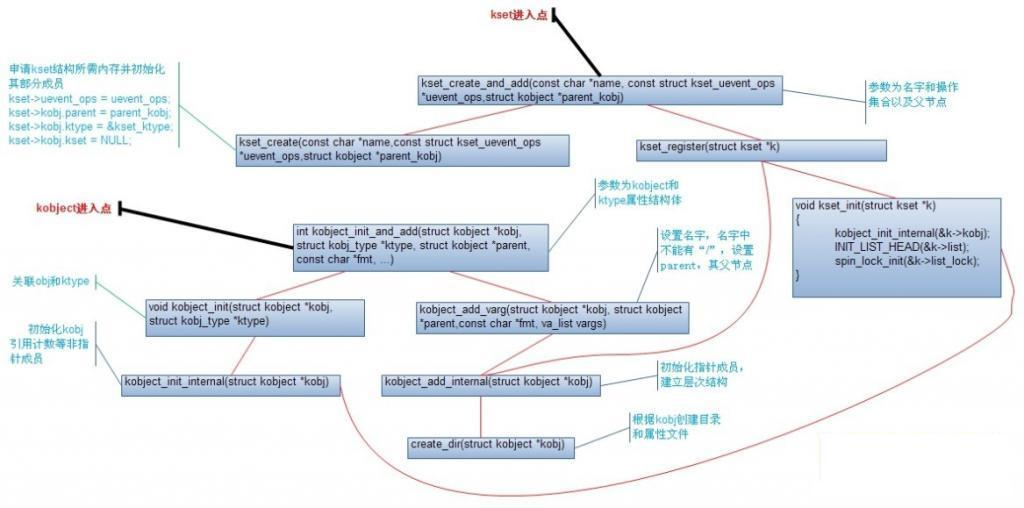
Linux kernel驱动相关抽象概念及其实现 之“linux设备模型kobject,kset,ktype”的更多相关文章
- Linux kernel驱动相关抽象概念及其实现 之“bus,device,driver”
bus,device,driver三个很重要的概念贯穿Linux内核驱动架构,特转载一篇博文: (转载自http://blog.csdn.net/gdt_a20/article/details/642 ...
- 【原创】linux设备模型之kset/kobj/ktype分析
背 景 Read the fucking source code! --By 鲁迅 A picture is worth a thousand words. --By 高尔基 说明: Kernel版本 ...
- Linux Framebuffer 驱动框架之一概念介绍及LCD硬件原理【转】
本文转载自:http://blog.csdn.net/liuxd3000/article/details/17464779 一.基本概念 帧缓冲(Framebuffer)是Linux系统为显示设备提供 ...
- linux uart驱动——相关数据结构以及API(二)
一.核心数据结构 串口驱动有3个核心数据结构,它们都定义在<#include linux/serial_core.h>1.uart_driver uart_driver包 ...
- linux系统负载相关的概念和度量
系统负载有 CPU利用率 和 LoadAverage这2个概念. cpu利用率:cpu utilization,是进程(task)被内核调度进程实际分配了CPU资源后,在时间片内使用CPU进行工作运算 ...
- Linux kernel 之 uart 驱动解析
uart 是一种非常之常见的总线,比如DEBUG信息输出,小数据量数据传输,485,以及蓝牙的控制,GPS,很多都是通过uart 进行数据传输并进行控制. 在Linux kernel 内部,uart ...
- 移植Linux Kernel SM750 驱动到VxWorks 7
一.SM750简介 SM750 是SiliconMotion 推出的一款适合嵌入式设备的显卡(Embedded GPU),采用PCIe接口与CPU连接,内部集成16MB DDR SDRAM显存,产品具 ...
- 【原创】Linux PCI驱动框架分析(二)
背 景 Read the fucking source code! --By 鲁迅 A picture is worth a thousand words. --By 高尔基 说明: Kernel版本 ...
- Linux Kernel中断子系统来龙去脉浅析【转】
转自:http://blog.csdn.net/u011461299/article/details/9772215 版权声明:本文为博主原创文章,未经博主允许不得转载. 一般来说,在一个device ...
随机推荐
- 汤姆大叔的6道js题目
汤姆大叔的6道javascript编程题题解 看汤姆大叔的博文,其中有篇(猛戳这里)的最后有6道编程题,于是我也试试,大家都可以先试试. 1.找出数字数组中最大的元素(使用Math.max函数) 1 ...
- source insight 使用技巧
一.在所有文件中查找字符串 1.菜单栏选择“search project” 2.在随便一个工程文件中把所要查找的字符串输入到空白的地方,然后点连接
- JDK下sun.net.www.protocol.http.HttpURLConnection类-----Http客户端实现类的实现分析
HttpClient类是进行TCP连接的实现类, package sun.net.www.http; import java.io.*; import java.net.*; import java. ...
- java相关各种页面跳转
AK相信页面跳转在这个圈圈圆圆里是个地球人都能经常遇到的事,AK也在平时的工作学习中记录了一些,这里就做一个小小的总结,有任何的疑问和质疑都希望您能告诉我,不用担心后果,必定至少您还能理我,AK万分感 ...
- 根据http协议传送数据
发送的内容: [50 4f 53 54 20 2f 64 65 78 2f 66 69 72 65 70 6f 77 65 72 20 48 54 54 50 2f 31 2e 31 0d 0a 43 ...
- 【Java】Checked、Unchecked Exception
Checked Exception:需要强制catch的异常, Unchecked Exception:这种异常时无法预料的,即RuntimeException,就是运行时的异常. Exception ...
- 2016 年开发者应该掌握的十个 Postgres 技巧
[编者按]作为一款开源的对象-关系数据库,Postgres 一直得到许多开发者喜爱.近日,Postgres 正式发布了9.5版本,该版本进行了大量的修复和功能改进.而本文将分享10个 Postgres ...
- PHP日常杂记
1.php点击按钮跳转页面 <input type="button" onclick="window.location.href='login.php'" ...
- 译文: async/await SynchronizationContext 上下文问题
async / await 使异步代码更容易写,因为它隐藏了很多细节. 许多这些细节都捕获在 SynchronizationContext 中,这些可能会改变异步代码的行为完全由于你执行你的代码的环境 ...
- XAMPP下的composer的安装
很多开源软件,都需要通过composer来安装,Composer 是 PHP 的一个依赖管理工具.它允许你申明项目所依赖的代码库,它会在你的项目中为你安装他们. 声明关系 比方说,你正在创建一个项目, ...