
写高并发程序时慎用strncpy和sprintf
分享一下最近做程序优化的一点小心得:在写高并发交易代码时要谨慎使用strncpy和sprintf。
下面详细介绍一下这样说的原因及建议实践:
1 慎用strncpy因为它的副作用极大
我们平时使用strncpy防止字符串拷贝时溢出,常常这样写
char buf[] = {};

char str[] = "hello";

strncpy(buf, sizefo(buf), str);
这样写当然没问题,但有些人不知道的是:strncpy一行代码执行时是往buf写了sizeof(buf) = 1024个字节,而不是直观以为的strlen(str) + 1 = 6个字符。
也就是说我们为了复制6个字符却写了1024个字节,多了不少额外消耗。如果这个函数被频繁调用,会导致系统性能出现不少损失。
因为调用strncpy(dest, n, str)时,函数首先将字符从源缓冲区str逐个复制到目标缓冲区dest,直到拷贝了n碰上\0。
紧接着,strncpy函数会往buf填充\0字符直到写满n个字符。
所以我才会说上面的代码strncpy才会写了1024个字节。
可以做一个小实验:
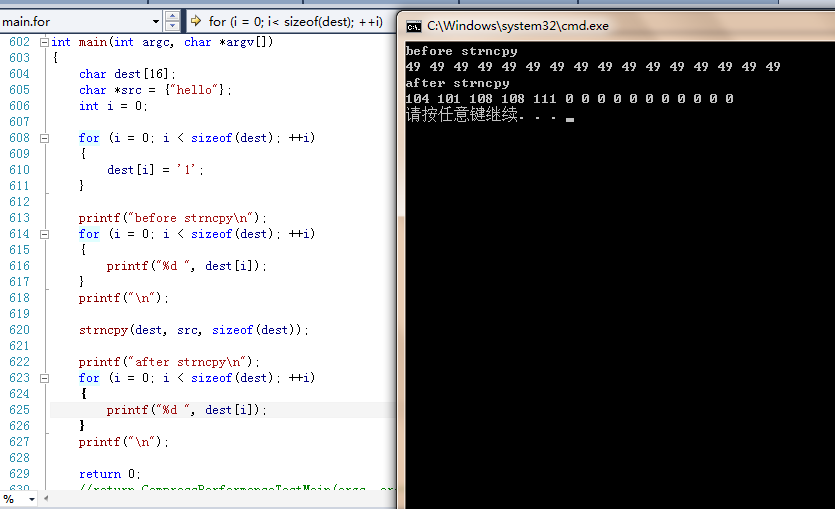
看上面代码及输出结果,我们可以知道在执行strncpy之前dest是用'1'填充的,但在执行strncpy后,前面几个字符变成hello,后面的字符全变成\0;
我个人的解决方法是写一个宏专用于往字符数组拷贝的,与大家分享一下,抛砖引玉。
// 静态断言  从vc拷贝过来(_STATIC_ASSERT) 稍微修改了一下

// 原来是typedef char __static_assert_t[ (expr) ]

// 现在是typedef char __static_assert_t[ (expr) - 1 ]

// 原因是gcc支持0字符数组

//TODO: 这里在win上编译有警告 有待优化 另外在linux宏好像不起作用 原因待查。暂时只有在win编译代码可以用

#ifndef _STATIC_ASSERT_RCC

#   ifdef __GNUC__

#       define _STATIC_ASSERT_RCC(expr) typedef char __static_assert_t[ (expr) -  ]

#   else

#       define _STATIC_ASSERT_RCC(expr) do { typedef char __static_assert_t[ (expr) ]; } while ()

#   endif

#endif

//将src复制到字符数组arr 保证不会越界并且末尾肯定会加\0

//_STATIC_ASSERT_RCC这里作用是防止有人传字符串指针进来

#define strncpy2arr(arr, src) do { \

    char *dest_ = arr; \

    size_t n = strnlen(src, sizeof(arr) - ); \

    _STATIC_ASSERT_RCC(sizeof(arr) != sizeof(char *)); \

    memcpy(dest_, src, n); \

    dest_[n] = '\0'; \

} while ()

#ifdef WIN32

int main(int argc, char *argv[])

{

    char dest[];

    char *src = "hello                                    222";

    int i = ;

    for (i = ; i < sizeof(dest); ++i)

    {

        dest[i] = '';

    }

    printf("before strncpy\n");

    for (i = ; i < sizeof(dest); ++i)

    {

        printf("%d ", dest[i]);

    }

    printf("\n");

    strncpy2arr(dest, src);

    printf("after strncpy\n");

    for (i = ; i < sizeof(dest); ++i)

    {

        printf("%d ", dest[i]);

    }

    printf("\n");

    strncpy(dest, src, sizeof(dest));

    printf("after strncpy\n");

    for (i = ; i < sizeof(dest); ++i)

    {

        printf("%d ", dest[i]);

    }

    printf("\n");

    return ;

    //return CompressPerformanceTestMain(argc, argv);

}

#endif
2 慎用sprintf,因为它的效率比你想象的低
之前我一直没注意到sprintf效率低的问题,直到有一次使用callgrind对程序进行性能分析时,发现有相当大的资源消耗在sprintf上面,我才有所警觉。
为此,我写了一点测试代码,对常用的函数做了一下基准测试,结果如下:
|
测试内容 |
耗时(us) |
|
for循环赋值40亿次 |
13023889 |
|
调用简单函数40亿次 |
16967986 |
|
调用memset函数4亿次 (256个字节) |
6932237 |
|
调用strcpy函数4亿次 (12个字节) |
3239218 |
|
调用memcpy函数4亿次 (12个字节) |
3239201 |
|
调用strcmp函数4亿次 (12个字节) |
2500568 |
|
调用memcmp函数4亿次 (12个字节) |
2668378 |
|
调用strcpy函数4亿次 (74个字节) |
4951085 |
|
调用memcpy函数4亿次 (74个字节) |
4950890 |
|
调用strcmp函数4亿次 (74个字节) |
5551391 |
|
调用memcmp函数4亿次 (74个字节) |
3840448 |
|
调用sprintf函数8千万次 (约27个字节) |
21398106 |
|
调用scanf函数8千万次 (约27个字节) |
36158749 |
|
调用fwrite函数8千万次 |
5913579 |
|
调用fprintf函数8千万次 |
24806837 |
|
调用fread函数8千万次 |
3182704 |
|
调用fscanf函数8千万次 |
18739442 |
|
调用WriteLog函数20万次 (15个字节) |
4873746 |
|
调用WriteLog函数20万次 (47个字节) |
4846449 |
|
调用WriteLog函数20万次 (94个字节) |
4950448 |
|
|
1us = 1000ms
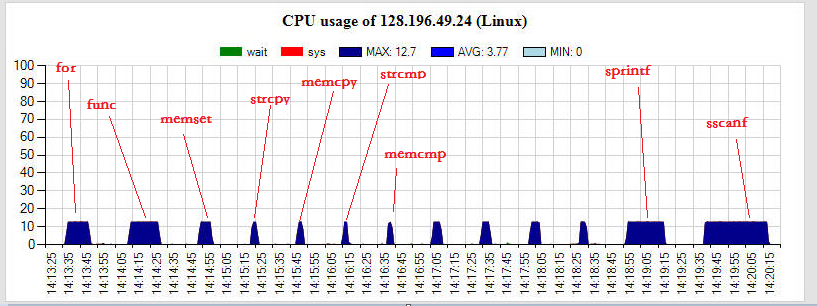
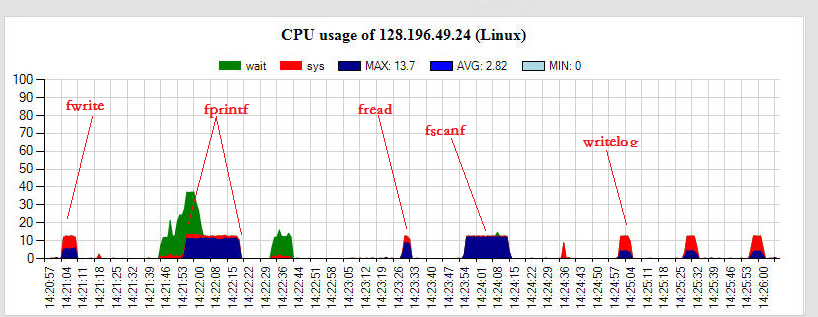
图示:scanf/printf系列函数耗时是其它常见字符串操作函数的10倍以上,甚至比io操作还耗时
测试代码见这里:
#define TEST_LOG_INF NULL, __FILE__, __LINE__

#ifdef WIN32

#define WriteLog lazy_log_output

#define LOG_ERROR NULL, __FILE__, __LINE__

#define LOG_KEY NULL, __FILE__, __LINE__

#define sleep(n) Sleep(100 * n)

int gettimeofday(struct timeval *tv, struct timezone *tz)

{

    SYSTEMTIME wtm;

    GetLocalTime(&wtm);

    tv->tv_sec = (long)(wtm.wDayOfWeek *  *  + wtm.wHour *  + wtm.wMinute *  + wtm.wSecond);

    tv->tv_usec = wtm.wMilliseconds * ;

    return ;

}

void InitLog(const char *logname)

{

}

#endif

struct timeval  begTimes = {}, endTims = {};

void beginTimer()

{

    gettimeofday(&begTimes, NULL);

}

int g_nSleepSec = ;

void stopTimer(char *userdata, const char *file, int fileno, int nSleepFlag)

{

    size_t totalTranTimes;

    gettimeofday(&endTims, NULL);

    totalTranTimes = (size_t)(endTims.tv_sec - begTimes.tv_sec) *  + (endTims.tv_usec - begTimes.tv_usec);

#ifdef WIN32

    WriteLog(userdata, file, fileno, "== == end == == == totalTranTimes %lu us", (unsigned long) totalTranTimes);

#else

    WriteLog(, file, fileno, "== == end == == == totalTranTimes %lu us", (unsigned long) totalTranTimes);

#endif

    if (nSleepFlag)

    {

        WriteLog(LOG_ERROR, "sleep");

        sleep(g_nSleepSec);

    }

    else

    {

        beginTimer();

    }

}

void PerformanceTestLog(char *userdata, const char *file, int fileno, const char *log)

{

    stopTimer(userdata, file, fileno, );

#ifdef WIN32

    WriteLog(userdata, file, fileno, "== == beg == == == %s", log);

#else

    WriteLog(, file, fileno, "== == beg == == == %s", log);

#endif

    beginTimer();

}

int func(int argc, char *argv[], char *tmp)

{

    tmp[argc] = '';

    return ;

}

//基准测试

int BaseTest(unsigned long nTimes)

{

    unsigned long i = ;

    char tmp[], t1[], t2[], t3[];

    int nTmp;

    const char *strWriten;

    nTimes *= ; //40亿

    WriteLog(LOG_KEY, "BaseTest %lu", nTimes);

    beginTimer();

    PerformanceTestLog(TEST_LOG_INF, "test for");

    for (i = ; i < nTimes; ++i)

    {

        i = i;

    }

    PerformanceTestLog(TEST_LOG_INF, "test call func");

    for (i = ; i < nTimes; ++i)

    {

        func(, NULL, tmp);

    }

    stopTimer(TEST_LOG_INF, );

    nTimes /= ; //4亿

    WriteLog(LOG_KEY, "BaseTest %lu", nTimes);

    PerformanceTestLog(TEST_LOG_INF, "test memset");

    for (i = ; i < nTimes; ++i)

    {

        memset(tmp, , sizeof(tmp));

    }

    PerformanceTestLog(TEST_LOG_INF, "test strcpy");

    for (i = ; i < nTimes; ++i)

    {

        strcpy(tmp, "test strcpy");

    }

    PerformanceTestLog(TEST_LOG_INF, "test memcpy");

    for (i = ; i < nTimes; ++i)

    {

        memcpy(tmp, "test strcpy", sizeof("test strcpy"));

    }

    PerformanceTestLog(TEST_LOG_INF, "test strcmp");

    for (i = ; i < nTimes; ++i)

    {

        if ( == strcmp(tmp, "test strcpy"))

        {

            i = i;

        }

    }

    PerformanceTestLog(TEST_LOG_INF, "test memcmp");

    for (i = ; i < nTimes; ++i)

    {

        if ( == memcmp(tmp, "test strcpy", sizeof("test strcpy")))

        {

            i = i;

        }

    }

    PerformanceTestLog(TEST_LOG_INF, "test strcpy1");

    for (i = ; i < nTimes; ++i)

    {

        strcpy(tmp, "test strcpy  test strcpy  test strcpy  test strcpy test strcpytest strcpy");

    }

    PerformanceTestLog(TEST_LOG_INF, "test memcpy1");

    for (i = ; i < nTimes; ++i)

    {

        memcpy(tmp, "test strcpy  test strcpy  test strcpy  test strcpy test strcpytest strcpy",

            sizeof("test strcpy  test strcpy  test strcpy  test strcpy test strcpytest strcpy"));

    }

    PerformanceTestLog(TEST_LOG_INF, "test strcmp1");

    for (i = ; i < nTimes; ++i)

    {

        if ( == strcmp(tmp, "test strcpy  test strcpy  test strcpy  test strcpy test strcpytest strcpy"))

        {

            i = i;

        }

    }

    PerformanceTestLog(TEST_LOG_INF, "test memcmp1");

    for (i = ; i < nTimes; ++i)

    {

        if ( == memcmp(tmp, "test strcpy  test strcpy  test strcpy  test strcpy test strcpytest strcpy",

            sizeof("test strcpy  test strcpy  test strcpy  test strcpy test strcpytest strcpy")))

        {

            i = i;

        }

    }

    stopTimer(TEST_LOG_INF, );

    nTimes /= ; //8千万

    WriteLog(LOG_KEY, "BaseTest %lu", nTimes);

    PerformanceTestLog(TEST_LOG_INF, "test sprintf");

    for (i = ; i < nTimes; ++i)

    {

        sprintf(tmp, "thiis %s testing %d", "sprintf", i);

    }

    PerformanceTestLog(TEST_LOG_INF, "test sscanf");

    for (i = ; i < nTimes; ++i)

    {

        sscanf(tmp, "%s %s %s %d", t1, t2, t3, &nTmp);

    }

    {

        FILE *fp;

        int nStr;

        PerformanceTestLog(TEST_LOG_INF, "fopen");

        fp = fopen("performancetest.txt", "w");

        strWriten = "this is testing write\n";

        nStr = strlen(strWriten);

        PerformanceTestLog(TEST_LOG_INF, "test write file");

        for (i = ; i < nTimes; ++i)

        {

            fwrite(strWriten, , nStr, fp);

        }

        PerformanceTestLog(TEST_LOG_INF, "fflush");

        fflush(fp);

        PerformanceTestLog(TEST_LOG_INF, "test fprintf file");

        for (i = ; i < nTimes; ++i)

        {

            //太过简单的fprintf好像会被自动优化成fwrite,即使没开优化选项

            //例如 fprintf(fp, "%s", "strWriten");

            fprintf(fp, "%s %d\n", "strWriten", i);

        }

        PerformanceTestLog(TEST_LOG_INF, "fclose");

        fclose(fp);

    }

    {

        FILE *fp;

        int nStr;

        PerformanceTestLog(TEST_LOG_INF, "fopen 1");

        fp = fopen("performancetest.txt", "r");

        nStr = strlen(strWriten);

        PerformanceTestLog(TEST_LOG_INF, "test read file");

        for (i = ; i < nTimes; ++i)

        {

            fread(tmp, , nStr, fp);

            tmp[nStr] = '\0';

        }

        PerformanceTestLog(TEST_LOG_INF, "test fscanf file");

        tmp[] = t1[] = '\0';

        for (i = ; i < nTimes; ++i)

        {

            fscanf(fp, "%s %s", tmp, t1);

        }

        PerformanceTestLog(TEST_LOG_INF, "fclose");

        fclose(fp);

    }

    fclose(fopen("performancetest.txt", "w"));

    nTimes /= ; //20万

    WriteLog(LOG_KEY, "BaseTest %lu", nTimes);

    PerformanceTestLog(TEST_LOG_INF, "WriteLog 1");

    for (i = ; i < nTimes; ++i)

    {

        WriteLog(LOG_ERROR, "this is loging");

    }

    PerformanceTestLog(TEST_LOG_INF, "WriteLog 2");

    for (i = ; i < nTimes; ++i)

    {

        WriteLog(LOG_ERROR, "this is loging  this is loging  this is loging");

    }

    PerformanceTestLog(TEST_LOG_INF, "WriteLog 3");

    for (i = ; i < nTimes; ++i)

    {

        WriteLog(LOG_ERROR, "this is loging  this is loging  this is loging  this is loging  this is loging this is loging");

    }

    stopTimer(TEST_LOG_INF, );

    return ;

}
从基准测试结果可以知道,sprintf系列函数效率是比较低的,是我们常见的字符串操作函数的1/10以下。
我个人的解决方案是sprintf该用还是用,但有些情况不是特别必要用的情况,用自己写一些小函数代替。例如下面这个宏是用来代替sprintf(buf, "%02d", i)的
//sprintf比较慢 这里需要写一些简单的字符串组装函数

//这个是代替%02d的(但不会添加\0结尾)顾名思义,传入的值需要保证0 <= vallue < 100

//再次提醒注意,这里为了方便调用,不会添加\0! 不会添加\0! 不会添加\0!

#define itoaLt100Ge0(value, buff_output) do \

{\

    int value_ = (int)(value);\

    char *buff_output_ = (buff_output);\

    if ((value_) >= ) { int nDigit_ = value_ / ; buff_output_[] = '' + nDigit_; buff_output_[] = '' + (value_ - nDigit_ * ); }\

    else { buff_output_[] = ''; buff_output_[] = '' + (value_);  } \

} while ()
总结一下就是:高并发交易需要慎用strncpy和sprintf,因为不恰当使用它们可能会成为程序性能瓶颈。
如果大家有啥想法,欢迎分享,我是黄词辉,一个程序员 ^_^
写高并发程序时慎用strncpy和sprintf的更多相关文章
- 【Java并发基础】利用面向对象的思想写好并发程序
前言 下面简单总结学习Java并发的笔记,关于如何利用面向对象思想写好并发程序的建议.面向对象的思想和并发编程属于两个领域,但是在Java中这两个领域却可以融合到一起.在Java语言中,面向对象编程的 ...
- java高并发程序设计模式-并发级别:阻塞、无障碍、无锁、无等待【转载】
一般认为并发可以分为阻塞与非阻塞,对于非阻塞可以进一步细分为无障碍.无锁.无等待,下面就对这几个并发级别,作一些简单的介绍. 1.阻塞 阻塞是指一个线程进入临界区后,其它线程就必须在临界区外等待,待进 ...
- javascript小记一则:今天在写VS2005——.NET程序时,写的一个JS图片示例案例
源码如下,如遇调试问题,可以找我解决: <!DOCTYPE html PUBLIC "-//W3C//DTD XHTML 1.0 Transitional//EN" &quo ...
- OpenResty + Lua访问Redis,实现高并发访问时的毫秒级响应打回
一.lua中redis的配置依赖: 1.OpenResty的lua访问redis的插件:https://github.com/openresty/lua-resty-redis 二.下载后,导入对应的 ...
- 分布式大数据高并发的web开发框架
一.引言 通常我们认为静态网页html的网站速度是最快的,但是自从有了动态网页之后,很多交互数据都从数据库查询而来,数据也是经常变化的,除了一些新闻资讯类的网站,使用html静态化来提高访问速度是不太 ...
- Golang适合高并发场景的原因分析
http://blog.csdn.NET/ghj1976/article/details/27996095 典型的两个现实案例: 我们先看两个用Go做消息推送的案例实际处理能力. 360消息推送的数据 ...
- 高并发系统保护~ing
由于公司业务发展,需要考虑一些高并发系统保护的问题,整理记录一下. 当发现你的系统出现访问卡顿,服务器各种性能指标接近100%(如果一个初创型企业系统正常运行情况下出现这个问题,那么应该恭喜你,你懂得 ...
- 朱晔的互联网架构实践心得S2E6:浅谈高并发架构设计的16招
朱晔的互联网架构实践心得S2E6:浅谈高并发架构设计的16招 概览 标题中的高并发架构设计是指设计一套比较合适的架构来应对请求.并发量很大的系统,使系统的稳定性.响应时间符合预期并且能在极端的情况下自 ...
- 15套java互联网架构师、高并发、集群、负载均衡、高可用、数据库设计、缓存、性能优化、大型分布式 项目实战视频教程
* { font-family: "Microsoft YaHei" !important } h1 { color: #FF0 } 15套java架构师.集群.高可用.高可扩 展 ...
随机推荐
- mysql数据库配置文件
一.数据库配置文件 数据库配置文件是很一个很强大的功能,这是数据库管理员经常需要关注的配置文件. my.ini #这是在windows下的配置文件名称. my.conf #这是在linux下的配置 ...
- 硬盘上的一些算法小题目||and今天看了下林锐的书以及gdb调试 及一些变成算法小题目
gdb调试:观察点,断点,事件捕捉点.step 进入函数,next 跳过函数,until 跳出循环,finish 结束函数 林锐:书后试题 & c++的对象模型图 看了二叉树的非递归遍历, 链 ...
- 手写HASHMAP
手写HASHMAP const int MAXN=10010; const int HASH=10100; //需要hash的数的总个数最大值 struct HASHMAP { ...
- poj 2289 Jamie's Contact Groups【二分+最大流】【二分图多重匹配问题】
题目链接:http://poj.org/problem?id=2289 Jamie's Contact Groups Time Limit: 7000MS Memory Limit: 65536K ...
- Day3 MySql高级查询
DQL高级查询 多表查询(关联查询.连接查询) 1.笛卡尔积 emp表15条记录,dept表4条记录. 连接查询的笛卡尔积为60条记录. 2.内连接 不区分主从表,与连接顺序无关.两张表均满足条件则出 ...
- POJ Football Game 【NIMK博弈 && Bash 博弈】
Football Game Time Limit: 1000MS Memory Limit: 65536K Total Submissions: 451 Accepted: 178 Descr ...
- Redis与高级语言内置的数据结构相比的异同及优势
相关链接: 为什么要用redis而不用map做缓存? Redis的数据结构及应用场景 Redis缓存和直接使用内存的比较 Java自带的数据结构(如HashMap,BitSet等)做缓存和NoSQL( ...
- Python spli指定多个分隔符
#!/usr/bin/python # -*- coding: UTF-8 -*- import re a='Beautiful, is; better*than\nugly' 以竖线"|& ...
- ddt 测试用例UI运用
import xlrd from selenium import webdriver import ddt import time import unittest class Excel(object ...
- SSH免密码登录远程linux服务器
Linux下实现SSH无密码验证登陆 ssh配置 主机A:10.0.5.199 主机B:10.0.5.198 需要配置主机A无密码登录主机A,主机B 先确保所有主机的防火墙处于关闭状态. 在主机A上执 ...