
Mybatis中collection和association的使用区别
1. 关联-association
2. 集合-collection
比如同时有User.java和Card.java两个类
User.java如下:
public class User{
private Card card_one;
private List<Card> card_many;
}
在映射card_one属性时用association标签, 映射card_many时用collection标签.
所以association是用于一对一和多对一,而collection是用于一对多的关系
下面就用一些例子解释下吧
association-一对一
人和身份证的关系
下面是pojo
|
1
2
3
4
5
|
public class Card implements Serializable{
private Integer id;
private String code;
//省略set和get方法.
}
|
|
1
2
3
4
5
6
7
8
9
|
public class Person implements Serializable{
private Integer id;
private String name;
private String sex;
private Integer age;
//人和身份证是一对一的关系
private Card card;
//省略set/get方法.
}
|
下面是mapper和实现的接口
|
1
2
3
4
5
6
7
|
package com.glj.mapper;
import com.glj.poji.Card;
public interface CardMapper {
Card selectCardById(Integer id);
}
|
|
1
2
3
4
5
6
7
8
9
|
<?xml version="1.0" encoding="UTF-8"?>
<!DOCTYPE mapper
PUBLIC "-//mybatis.org//DTD Mapper 3.0//EN"
"http://mybatis.org/dtd/mybatis-3-mapper.dtd">
<mapper namespace="com.glj.mapper.CardMapper">
<select id="selectCardById" parameterType="int" resultType="com.glj.poji.Card">
select * from tb_card where id = #{id}
</select>
</mapper>
|
|
1
2
3
4
5
6
7
|
package com.glj.mapper;
import com.glj.poji.Person;
public interface PersonMapper {
Person selectPersonById(Integer id);
}
|
|
1
2
3
4
5
6
7
8
9
10
11
12
13
14
15
16
17
18
19
|
<?xml version="1.0" encoding="UTF-8"?>
<!DOCTYPE mapper
PUBLIC "-//mybatis.org//DTD Mapper 3.0//EN"
"http://mybatis.org/dtd/mybatis-3-mapper.dtd">
<mapper namespace="com.glj.mapper.PersonMapper">
<resultMap type="com.glj.poji.Person" id="personMapper">
<id property="id" column="id"/>
<result property="name" column="name"/>
<result property="sex" column="sex"/>
<result property="age" column="age"/>
<association property="card" column="card_id"
select="com.glj.mapper.CardMapper.selectCardById"
javaType="com.glj.poji.Card">
</association>
</resultMap>
<select id="selectPersonById" parameterType="int" resultMap="personMapper">
select * from tb_person where id = #{id}
</select>
</mapper>
|
PersonMapper.xml 还使用association的分步查询。
同理多对一,也是一样
只要那个pojo出现private Card card_one;
即使用association
collection 一对多和association的多对一关系
学生和班级的一对多的例子
pojo类
|
1
2
3
4
5
6
7
8
9
10
11
12
13
|
package com.glj.pojo;
import java.io.Serializable;
import java.util.List;
public class Clazz implements Serializable{
private Integer id;
private String code;
private String name;
//班级与学生是一对多的关系
private List<Student> students;
//省略set/get方法
}
|
|
1
2
3
4
5
6
7
8
9
10
11
12
13
|
package com.glj.pojo;
import java.io.Serializable;
public class Student implements Serializable {
private Integer id;
private String name;
private String sex;
private Integer age;
//学生与班级是多对一的关系
private Clazz clazz;
//省略set/get方法
}
|
|
1
2
3
4
5
6
7
8
9
10
11
12
13
14
15
16
17
18
19
20
21
22
23
|
<?xml version="1.0" encoding="UTF-8"?>
<!DOCTYPE mapper
PUBLIC "-//mybatis.org//DTD Mapper 3.0//EN"
"http://mybatis.org/dtd/mybatis-3-mapper.dtd">
<mapper namespace="com.glj.mapper.ClazzMapper">
<select id="selectClazzById" parameterType="int" resultMap="clazzResultMap">
select * from tb_clazz where id = #{id}
</select>
<resultMap type="com.glj.pojo.Clazz" id="clazzResultMap">
<id property="id" column="id"/>
<result property="code" column="code"/>
<result property="name" column="name"/>
<!-- property: 指的是集合属性的值, ofType:指的是集合中元素的类型 -->
<collection property="students" ofType="com.glj.pojo.Student"
column="id" javaType="ArrayList"
fetchType="lazy" select="com.glj.mapper.StudentMapper.selectStudentByClazzId">
<id property="id" column="id"/>
<result property="name" column="name"/>
<result property="sex" column="sex"/>
<result property="age" column="age"/>
</collection>
</resultMap>
</mapper>
|
|
1
2
3
4
5
6
7
|
package com.glj.mapper;
import com.glj.pojo.Clazz;
public interface ClazzMapper {
Clazz selectClazzById(Integer id);
}
|
ClazzMapper使用到了集合-collection 即为一对多,一个班级面对多个学生
|
1
2
3
4
5
6
7
8
9
10
11
12
13
14
15
16
17
18
19
20
21
22
23
|
<?xml version="1.0" encoding="UTF-8"?>
<!DOCTYPE mapper
PUBLIC "-//mybatis.org//DTD Mapper 3.0//EN"
"http://mybatis.org/dtd/mybatis-3-mapper.dtd">
<mapper namespace="com.glj.mapper.StudentMapper">
<select id="selectStudentById" parameterType="int" resultMap="studentResultMap">
select * from tb_clazz c,tb_student s where c.id = s.id and s.id = #{id}
</select>
<select id="selectStudentByClazzId" parameterType="int" resultMap="studentResultMap">
select * from tb_student where clazz_id = #{id}
</select>
<resultMap type="com.glj.pojo.Student" id="studentResultMap">
<id property="id" column="id"/>
<result property="name" column="name"/>
<result property="sex" column="sex"/>
<result property="age" column="age"/>
<association property="clazz" javaType="com.glj.pojo.Clazz">
<id property="id" column="id"/>
<result property="code" column="code"/>
<result property="name" column="name"/>
</association>
</resultMap>
</mapper>
|
|
1
2
3
4
5
6
7
|
package com.glj.mapper;
import com.glj.pojo.Student;
public interface StudentMapper {
Student selectStudentById(Integer id);
}
|
StudentMapper则是与班级为多对一关系,所以使用了关联-association
嗯,希望我以后又不记得二者的关系时,能感谢现在总结的自己
附上一张mybatis的类型别名图
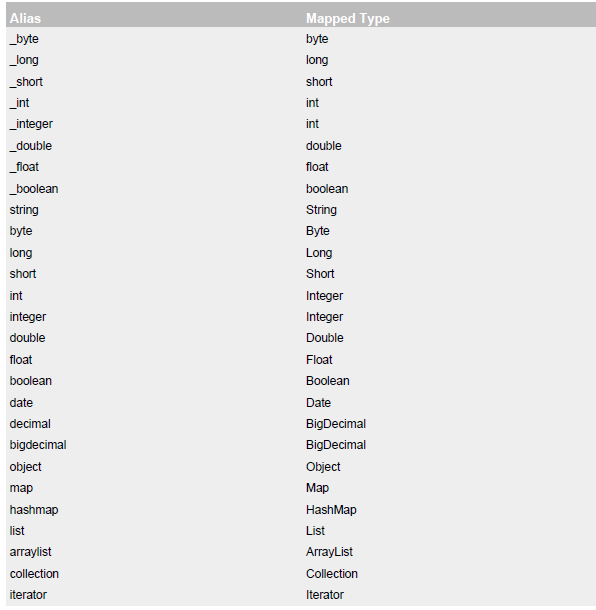
Mybatis中collection和association的使用区别的更多相关文章
- mybatis中collection和association的作用以及用法
deptDaoMapper.xml 部门对应员工(1对多的关系) <resultMap type="com.hw.entity.Dept" id="deptinfo ...
- Mybatis中 collection 和 association 的区别
public class A{ private B b1; private List<B> b2;} 在映射b1属性时用association标签,(一对一的关系) 映射b2时用colle ...
- Mybatis中 collection 和 association 的区别?
public class A{ private B b1; private List<B> b2;} 在映射b1属性时用association标签,(一对一的关系) 映射b2时用colle ...
- Mybatis中collection与association的区别
association是多对一的关系 collection是一个一对多的关系
- myBatis中 collection 或 association 联合查询 中column 传入多个参数值
下面是一个树形结构表自连接 联合查询 Demo <resultMap id="BaseResultMap" type="com.maidan.daas.entit ...
- Mybatis之collection与association标签
collection与association标签的功能就是为了解决查询条件映射到一个类或一个集合上,适用于对于多对一,一对多的映射结果,现在我们就探究其具体使用吧. 环境搭建: 数据库搭建 CREAT ...
- mybatis中collection association优化使用及多参数传递
mybatis都会用,但要优雅的用就不是那么容易了 今天就简单举例,抛砖引玉,供大家探讨 1.主表 CREATE TABLE `test_one` ( `id` int(11) NOT NULL AU ...
- MyBatis中collection (一对一,一对多)
MyBatis学习:http://www.mybatis.org/mybatis-3/zh/index.html 大对象InsuranceDetailsVO: com.quicksure.mobile ...
- mybatis中collection子查询注入参数为null
具体实现参照网上,但是可能遇到注入参数为null的情况,经过查阅及自己测试记录一下: 子查询的参数中,有<if test="">之类,需要指定别名,通过 http:// ...
随机推荐
- go15---select
package main import ( "fmt" ) //go语言提供了一个结构或者形式来帮助处理多个channel的发送和接收问题,这个结构叫做select, //sele ...
- Notification操作大全
目录 一:普通的Notification Notification 的基本操作 给 Notification 设置 Action 更新 Notification 取消 Notification 设置 ...
- bzoj1597 [Usaco2008 Mar]土地购买——斜率优化DP
题目:https://www.lydsy.com/JudgeOnline/problem.php?id=1597 就是斜率优化水题... 然而WA了十几遍,正负号处理真让人心累... 还是该负就负,别 ...
- 830C
分块+二分 这道题思路很巧妙 我们大概可以推出一个式子sigma(d-[(ai-1)%d+1])<=k,要求求出d的最大值 然后我们化简一下,sigma(d-[(ai-1)-[(ai-1)/d] ...
- Android 网络请求及数据处理
Android 网络请求: 1.Volley http://blog.csdn.net/t12x3456/article/details/9221611 2.Android-Async-Http ...
- centos6之前版本的启动流程
centos6 之前的系统启动: linux启动流程: 1)加电自检 2)读取MBR,引导加载程序grub,完成grub的三个阶段. 3)加载系统内核kernel,执行系统初始化信息. 4)启动用户空 ...
- 符号修饰与函数签名、extern “C”(转载)
转自:http://www.cnblogs.com/monotone/archive/2012/11/16/2773772.html 参考资料: <程序员的自我修养>3.5.3以及3.5. ...
- MySQL权限及登陆、退出方法
用户权限列表 SELECT 查询权限 INSERT 插入权限 UPDATE 更新权限 DELETE 删除权限(用于删除数据) CREATE 创建权限 DROP 删除权限(用户删除文件) RELOAD ...
- bzoj 3498: PA2009 Cakes【瞎搞】
参考:https://www.cnblogs.com/spfa/p/7495438.html 为什么邻接表会TTTTTTTLE啊...只能用vector? 把点按照点权从大到小排序,把无向边变成排名靠 ...
- 公司4:JrVue主题定制
JrVue是我们基于element重新封装的一套组件库; 具体组件使用方法可以mnote->研发小组查看; 这里我们定制了一套主题色, 具体变动如下: 1.主题色变动: mfront有蓝.紫. ...