
zookeeper系列(七)zookeeper的序列化及通讯协议
作者:leesf 掌控之中,才会成功;掌控之外,注定失败。原创地址http://www.cnblogs.com/leesf456/p/6091208.html尊重作者原创,奇文共欣赏,大家共同学习;
一、前言
前面介绍了Zookeeper的系统模型,下面进一步学习Zookeeper的底层序列化机制,Zookeeper的客户端与服务端之间会进行一系列的网络通信来实现数据传输,Zookeeper使用Jute组件来完成数据的序列化和反序列化操作。
二、首先我们普及下序列化和反序列化的知识:
概念:把对象转换为字节序列的过程称为对象的序列化;把字节序列恢复为对象的过程称为对象的反序列化。
用途:把对象的字节序列永久地保存到硬盘上,通常存放在一个文件中;在网络上传送对象的字节序列;
描述:在很多应用中,需要对某些对象进行序列化,让它们离开内存空间,入住物理硬盘,以便长期保存。比如最常见的是Web服务器中的Session对象,当有10万用户并发访问,就有可能出现10万个Session对象,内存可能吃不消,于是Web容器就会把一些seesion先序列化到硬盘中,等要用了,再把保存在硬盘中的对象还原到内存中;
当两个进程在进行远程通信时,彼此可以发送各种类型的数据。无论是何种类型的数据,都会以二进制序列的形式在网络上传送。发送方需要把这个Java对象转换为字节序列,才能在网络上传送;接收方则需要把字节序列再恢复为Java对象;
综述:序列化的目的就是方便对应的传输与存储。
serialVersionUID这个也有必要说一下,若不指定serialVersionUID的值,java编译器会自动给这个class进行一个摘要算法,生成一个UID(类似于指纹算法)。只要这个文件有变动,得到的UID就会截然不同。若对当前的java文件变动并且也没有指定serialVersionUID的值,编译器会为我们生成了一个UID,这样会导致序列化前后的值不一致,从而就会导致对象的反序列化失败。若在java文件中指定serialVersionUID的值,则在序列化或反序列化时就不在生成新的UID,直接拿文件中的比对;
三、Jute
Jute是Zookeeper底层序列化组件,其用于Zookeeper进行网络数据传输和本地磁盘数据存储的序列化和反序列化工作。
2.1 Jute序列化
MockReHeader实体类
package com.hust.grid.leesf.examples;

import java.io.IOException;

import org.apache.jute.InputArchive;

import org.apache.jute.OutputArchive;

import org.apache.jute.Record;

/**

 * 创建MockReHeader实体类,实现Record接口

 */

public class MockReHeader implements Record{

	private long sessionId;

    private String type;

    public MockReHeader() {}

    public MockReHeader(long sessionId, String type) {

        this.sessionId = sessionId;

        this.type = type;

    }

	/**

	 * 序列化

	 */

	public void serialize(OutputArchive archive, String tag) throws IOException {

		archive.startRecord(this, tag);

        archive.writeLong(sessionId, "sessionId");

        archive.writeString(type, "type");

        archive.endRecord(this, tag);

	}

	/**

	 * 反序列化

	 */

	public void deserialize(InputArchive archive, String tag)

			throws IOException {

		archive.startRecord(tag);

        this.sessionId = archive.readLong("sessionId");

        this.type = archive.readString("type");

        archive.endRecord(tag);

	}

    public void setSessionId(long sessionId) {

        this.sessionId = sessionId;

    }

    public void setType(String type) {

        this.type = type;

    }

    public long getSessionId() {

        return sessionId;

    }

    public String getType() {

        return type;

    }

}

package com.hust.grid.leesf.examples;

import java.io.ByteArrayOutputStream;

import java.nio.ByteBuffer;

import org.apache.jute.BinaryInputArchive;

import org.apache.jute.BinaryOutputArchive;

import org.apache.zookeeper.server.ByteBufferInputStream;

public class Main {

	public static void main(String[] args) throws Exception {

    	ByteArrayOutputStream baos = new ByteArrayOutputStream();

        BinaryOutputArchive boa = BinaryOutputArchive.getArchive(baos);

        new MockReHeader(0x3421eccb92a34el, "create").serialize(boa, "header");

        ByteBuffer bb = ByteBuffer.wrap(baos.toByteArray());

        ByteBufferInputStream bbis = new ByteBufferInputStream(bb);

        BinaryInputArchive bia = BinaryInputArchive.getArchive(bbis);

        MockReHeader header = new MockReHeader();

        System.out.println("sessionId:"+header.getSessionId()+"  type:"+header.getType() );

        header.deserialize(bia, "create");

        System.out.println("sessionId:"+header.getSessionId()+"  type:"+header.getType() );

        bbis.close();

        baos.close();

	}

}
运行结果

说明:可以看到MockReHeader实体类需要实现Record接口并且实现serialize和deserialize方法。OutputArchive和InputArchive分别是Jute底层的序列化器和反序列化器。
在Zookeeper的src文件夹下有zookeeper.jute文件,其内容如下:
其定义了所有的实体类的所属包名、类名及类的所有成员变量和类型,该文件会在源代码编译时,Jute会使用不同的代码生成器为这些类定义生成实际编程语言的类文件,如java语言生成的类文件保存在src/java/generated目录下,每个类都会实现Record接口。
/**

 * Licensed to the Apache Software Foundation (ASF) under one

 * or more contributor license agreements.  See the NOTICE file

 * distributed with this work for additional information

 * regarding copyright ownership.  The ASF licenses this file

 * to you under the Apache License, Version 2.0 (the

 * "License"); you may not use this file except in compliance

 * with the License.  You may obtain a copy of the License at

 *

 *     http://www.apache.org/licenses/LICENSE-2.0

 *

 * Unless required by applicable law or agreed to in writing, software

 * distributed under the License is distributed on an "AS IS" BASIS,

 * WITHOUT WARRANTIES OR CONDITIONS OF ANY KIND, either express or implied.

 * See the License for the specific language governing permissions and

 * limitations under the License.

 */

module org.apache.zookeeper.data {

    class Id {

        ustring scheme;

        ustring id;

    }

    class ACL {

        int perms;

        Id id;

    }

    // information shared with the client

    class Stat {

        long czxid;      // created zxid

        long mzxid;      // last modified zxid

        long ctime;      // created

        long mtime;      // last modified

        int version;     // version

        int cversion;    // child version

        int aversion;    // acl version

        long ephemeralOwner; // owner id if ephemeral, 0 otw

        int dataLength;  //length of the data in the node

        int numChildren; //number of children of this node

        long pzxid;      // last modified children

    }

    // information explicitly stored by the server persistently

    class StatPersisted {

        long czxid;      // created zxid

        long mzxid;      // last modified zxid

        long ctime;      // created

        long mtime;      // last modified

        int version;     // version

        int cversion;    // child version

        int aversion;    // acl version

        long ephemeralOwner; // owner id if ephemeral, 0 otw

        long pzxid;      // last modified children

    }

   // information explicitly stored by the version 1 database of servers

   class StatPersistedV1 {

       long czxid; //created zxid

       long mzxid; //last modified zxid

       long ctime; //created

       long mtime; //last modified

       int version; //version

       int cversion; //child version

       int aversion; //acl version

       long ephemeralOwner; //owner id if ephemeral. 0 otw

    }

}

module org.apache.zookeeper.proto {

    class ConnectRequest {

        int protocolVersion;

        long lastZxidSeen;

        int timeOut;

        long sessionId;

        buffer passwd;

    }

    class ConnectResponse {

        int protocolVersion;

        int timeOut;

        long sessionId;

        buffer passwd;

    }

    class SetWatches {

        long relativeZxid;

        vector<ustring>dataWatches;

        vector<ustring>existWatches;

        vector<ustring>childWatches;

    }

    class RequestHeader {

        int xid;

        int type;

    }

    class MultiHeader {

        int type;

        boolean done;

        int err;

    }

    class AuthPacket {

        int type;

        ustring scheme;

        buffer auth;

    }

    class ReplyHeader {

        int xid;

        long zxid;

        int err;

    }

    class GetDataRequest {

        ustring path;

        boolean watch;

    }

    class SetDataRequest {

        ustring path;

        buffer data;

        int version;

    }

    class SetDataResponse {

        org.apache.zookeeper.data.Stat stat;

    }

    class GetSASLRequest {

        buffer token;

    }

    class SetSASLRequest {

        buffer token;

    }

    class SetSASLResponse {

        buffer token;

    }

    class CreateRequest {

        ustring path;

        buffer data;

        vector<org.apache.zookeeper.data.ACL> acl;

        int flags;

    }

    class DeleteRequest {

        ustring path;

        int version;

    }

    class GetChildrenRequest {

        ustring path;

        boolean watch;

    }

    class GetChildren2Request {

        ustring path;

        boolean watch;

    }

    class CheckVersionRequest {

        ustring path;

        int version;

    }

    class GetMaxChildrenRequest {

        ustring path;

    }

    class GetMaxChildrenResponse {

        int max;

    }

    class SetMaxChildrenRequest {

        ustring path;

        int max;

    }

    class SyncRequest {

        ustring path;

    }

    class SyncResponse {

        ustring path;

    }

    class GetACLRequest {

        ustring path;

    }

    class SetACLRequest {

        ustring path;

        vector<org.apache.zookeeper.data.ACL> acl;

        int version;

    }

    class SetACLResponse {

        org.apache.zookeeper.data.Stat stat;

    }

    class WatcherEvent {

        int type;  // event type

        int state; // state of the Keeper client runtime

        ustring path;

    }

    class ErrorResponse {

        int err;

    }

    class CreateResponse {

        ustring path;

    }

    class ExistsRequest {

        ustring path;

        boolean watch;

    }

    class ExistsResponse {

        org.apache.zookeeper.data.Stat stat;

    }

    class GetDataResponse {

        buffer data;

        org.apache.zookeeper.data.Stat stat;

    }

    class GetChildrenResponse {

        vector<ustring> children;

    }

    class GetChildren2Response {

        vector<ustring> children;

        org.apache.zookeeper.data.Stat stat;

    }

    class GetACLResponse {

        vector<org.apache.zookeeper.data.ACL> acl;

        org.apache.zookeeper.data.Stat stat;

    }

}

module org.apache.zookeeper.server.quorum {

    class LearnerInfo {

        long serverid;

        int protocolVersion;

    }

    class QuorumPacket {

        int type; // Request, Ack, Commit, Ping

        long zxid;

        buffer data; // Only significant when type is request

        vector<org.apache.zookeeper.data.Id> authinfo;

    }

}

module org.apache.zookeeper.server.persistence {

    class FileHeader {

        int magic;

        int version;

        long dbid;

    }

}

module org.apache.zookeeper.txn {

    class TxnHeader {

        long clientId;

        int cxid;

        long zxid;

        long time;

        int type;

    }

    class CreateTxnV0 {

        ustring path;

        buffer data;

        vector<org.apache.zookeeper.data.ACL> acl;

        boolean ephemeral;

    }

    class CreateTxn {

        ustring path;

        buffer data;

        vector<org.apache.zookeeper.data.ACL> acl;

        boolean ephemeral;

        int parentCVersion;

    }

    class DeleteTxn {

        ustring path;

    }

    class SetDataTxn {

        ustring path;

        buffer data;

        int version;

    }

    class CheckVersionTxn {

        ustring path;

        int version;

    }

    class SetACLTxn {

        ustring path;

        vector<org.apache.zookeeper.data.ACL> acl;

        int version;

    }

    class SetMaxChildrenTxn {

        ustring path;

        int max;

    }

    class CreateSessionTxn {

        int timeOut;

    }

    class ErrorTxn {

        int err;

    }

    class Txn {

        int type;

        buffer data;

    }

    class MultiTxn {

        vector<org.apache.zookeeper.txn.Txn> txns;

    }

}
四、通信协议
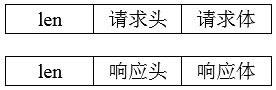
基于TCP/IP协议,Zookeeper实现了自己的通信协议来完成客户端与服务端、服务端与服务端之间的网络通信;对于请求,主要包含请求头和请求体;对于响应,主要包含响应头和响应体。
4.1 请求协议
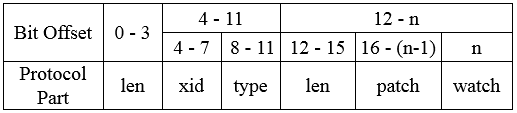
对于请求协议而言,如下为获取节点数据请求的完整协议定义
class RequestHeader {

        int xid;

        int type;

    }
从zookeeper.jute中可知RequestHeader包含了xid和type,xid用于记录客户端请求发起的先后序号,用来确保单个客户端请求的响应顺序,type代表请求的操作类型,如创建节点(OpCode.create)、删除节点(OpCode.delete)、获取节点数据(OpCode.getData)。
协议的请求主体内容部分,包含了请求的所有操作内容,不同的请求类型请求体不同。对于会话创建而言,其请求体如下
class ConnectRequest {

        int protocolVersion;

        long lastZxidSeen;

        int timeOut;

        long sessionId;

        buffer passwd;

    }
Zookeeper客户端和服务器在创建会话时,会发送ConnectRequest请求,该请求包含协议版本号protocolVersion、最近一次接收到服务器ZXID lastZxidSeen、会话超时时间timeOut、会话标识sessionId和会话密码passwd。
对于获取节点数据而言,其请求体如下:
class GetDataRequest {

        ustring path;

        boolean watch;

    }
Zookeeper客户端在向服务器发送节点数据请求时,会发送GetDataRequest请求,该请求包含了数据节点路径path、是否注册Watcher的标识watch。
对于更新节点数据而言,其请求体如下
class SetDataRequest {

        ustring path;

        buffer data;

        int version;

    }
Zookeeper客户端在向服务器发送更新节点数据请求时,会发送SetDataRequest请求,该请求包含了数据节点路径path、数据内容data、节点数据的期望版本号version。
针对不同的请求类型,Zookeeper都会定义不同的请求体,可以在zookeeper.jute中查看。
4.2 响应协议
对于响应协议而言,如下为获取节点数据响应的完整协议定义
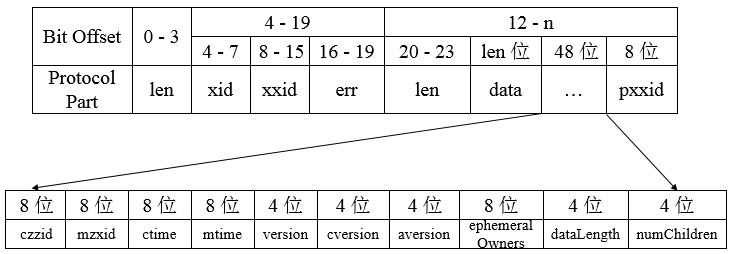
响应头中包含了每个响应最基本的信息,包括xid、zxid和err:
class ReplyHeader {

        int xid;

        long zxid;

        int err;

    }
xid与请求头中的xid一致,zxid表示Zookeeper服务器上当前最新的事务ID,err则是一个错误码,表示当请求处理过程出现异常情况时,就会在错误码中标识出来,常见的包括处理成功(Code.OK)、节点不存在(Code.NONODE)、没有权限(Code.NOAUTH)。
协议的响应主体内容部分,包含了响应的所有数据,不同的响应类型请求体不同。对于会话创建而言,其响应体如下
class ConnectResponse {

        int protocolVersion;

        int timeOut;

        long sessionId;

        buffer passwd;

    }
针对客户端的会话创建请求,服务端会返回客户端一个ConnectResponse响应,该响应体包含了版本号protocolVersion、会话的超时时间timeOut、会话标识sessionId和会话密码passwd。
对于获取节点数据而言,其响应体如下:
class GetDataResponse {

        buffer data;

        org.apache.zookeeper.data.Stat stat;

    }
针对客户端的获取节点数据请求,服务端会返回客户端一个GetDataResponse响应,该响应体包含了数据节点内容data、节点状态stat。
对于更新节点数据而言,其响应体如下
class SetDataResponse {

        org.apache.zookeeper.data.Stat stat;

    }
针对客户端的更新节点数据请求,服务端会返回客户端一个SetDataResponse响应,该响应体包含了最新的节点状态stat。
针对不同的响应类型,Zookeeper都会定义不同的响应体,可以在zookeeper.jute中查看。
四、总结
本篇博客讲解了Zookeeper中的序列化机制和客户端与服务端、服务端与服务端的通信协议,内容相对较为简单,容易理解
zookeeper系列(七)zookeeper的序列化及通讯协议的更多相关文章
- 分布式系列七: zookeeper简单用法
zookeeper是分布式开源框架, 是Google Chubby的一个实现, 主要作为分布式系统的协调服务. Dobbo等框架使用了其功能. zookeeper特性 顺序一致性: 事务请求最终会严格 ...
- 【Zookeeper系列】ZooKeeper一致性原理(转)
原文链接:https://www.cnblogs.com/sunddenly/p/4138580.html 一.ZooKeeper 的实现 1.1 ZooKeeper处理单点故障 我们知道可以通过Zo ...
- 【Zookeeper系列】Zookeeper简单介绍(转)
原文链接:https://www.cnblogs.com/sunddenly/p/4033574.html 一.分布式协调技术 在给大家介绍ZooKeeper之前先来给大家介绍一种技术——分布式协调技 ...
- zookeeper系列之六—zookeeper之应用
http://www.cnblogs.com/sharpxiajun/archive/2013/06/02/3113923.html Zookeeper是hadoop的一个子项目,虽然源自hadoop ...
- 【Zookeeper系列】zookeeper面试题(转)
原文链接:https://segmentfault.com/a/1190000014479433 1.ZooKeeper是什么? ZooKeeper是一个分布式的,开放源码的分布式应用程序协调服务,是 ...
- 【Zookeeper系列】ZooKeeper机制架构(转)
原文链接:https://www.cnblogs.com/sunddenly/p/4133784.html 一.ZooKeeper权限管理机制 1.1 权限管理ACL(Access Control L ...
- 【Zookeeper系列】ZooKeeper管理分布式环境中的数据(转)
原文地址:https://www.cnblogs.com/sunddenly/p/4092654.html 引言 本节本来是要介绍ZooKeeper的实现原理,但是ZooKeeper的原理比较复杂,它 ...
- 【Zookeeper系列】Zookeeper命令操作(转)
原文链接:https://www.cnblogs.com/sunddenly/p/4031881.html 一.Zookeeper的四字命令 Zookeeper支持某些特定的四字命令字母与其的交互.他 ...
- 【Zookeeper系列】ZooKeeper安装配置(转)
原文链接:https://www.cnblogs.com/sunddenly/p/4018459.html 一.Zookeeper的搭建方式 Zookeeper安装方式有三种,单机模式和集群模式以及伪 ...
随机推荐
- 【原创】大叔经验分享(59)kudu查看table size
kudu并没有命令可以直接查看每个table占用的空间,可以从cloudera manager上间接查看 CM is scrapping and aggregating the /metrics pa ...
- Django: ORM 数据库设置和读写分离
一.Django的数据库配置 (一)修改settings.py文件关于数据库的配置: Django默认使用sqlite: # Django默认的数据库库,SQLit配置 DATABASES = { ' ...
- python爬虫下正则各种字符串数据匹配
s = '*\/:?"<>|' #这9个字符在Windows系统下是不可以出现在文件名中的str1 = '\巴拉<1"!11[]>1*hgn/p:?|' # ...
- CentOS7安装Docker-CE并部署项目
前言 这是我第一次使用dokcer部署项目,现学现卖.成功之后把所有用到的安装及部署和操作命令做一个总结.如有不足,请指教. 使用的是阿里云服务器.CentOS7版本. Dokcer安装 1.Cent ...
- Redis之各版本特性
1.Redis2.6 Redis2.6在2012年正是发布,经历了17个版本,到2.6.17版本,相对于Redis2.4,主要特性如下: 1)服务端支持Lua脚本. 2)去掉虚拟内存相关功能. 3)放 ...
- 销售订单(SO)-API-登记销售订单
登记销售订单可以在新增订单的时候就登记:并不是去修改 flow_status 为booked,而是赋值action request:就下面两句 l_action_request_tbl(l_actio ...
- LINUX中lrzsz软件的使用
安装lrzsz 可以在Linux 和 windows直接相互传文件 Linux无论ssh跳过去也可以sz rz打开图像进行传输文件 [root@master2 ~]# yum install lrzs ...
- UE中正则表达式
UltraEdit(后简称UE),是我经常使用的文本编辑软件,其功能的强大,令我由衷地爱上了它.每天不用就全身不爽.从最开始的9.0到现在的 12.10a(本人只用到这个版本),UE都是系统重装后必安 ...
- linux基础—课堂随笔08_进程(转)
进程优先级 命令 pstree -p 显示各个子线程 ps 进程状态(process state) UNIX风格:ps -ef BSD风格:ps aux 还有用到o参数,选项显示定制的信息: pid. ...
- Django REST Framework(DRF)_第四篇
DRF分页(总共三种) PageNumberPagination(指定第n页,每页显示n条数据) 说明 既然要用人家的那么我们就先来看下源码,这个分页类源码中举例通过参数指定第几页和每页显示的数据:h ...