
Java中的异常处理try catch(第八周课堂示例总结)
异常处理
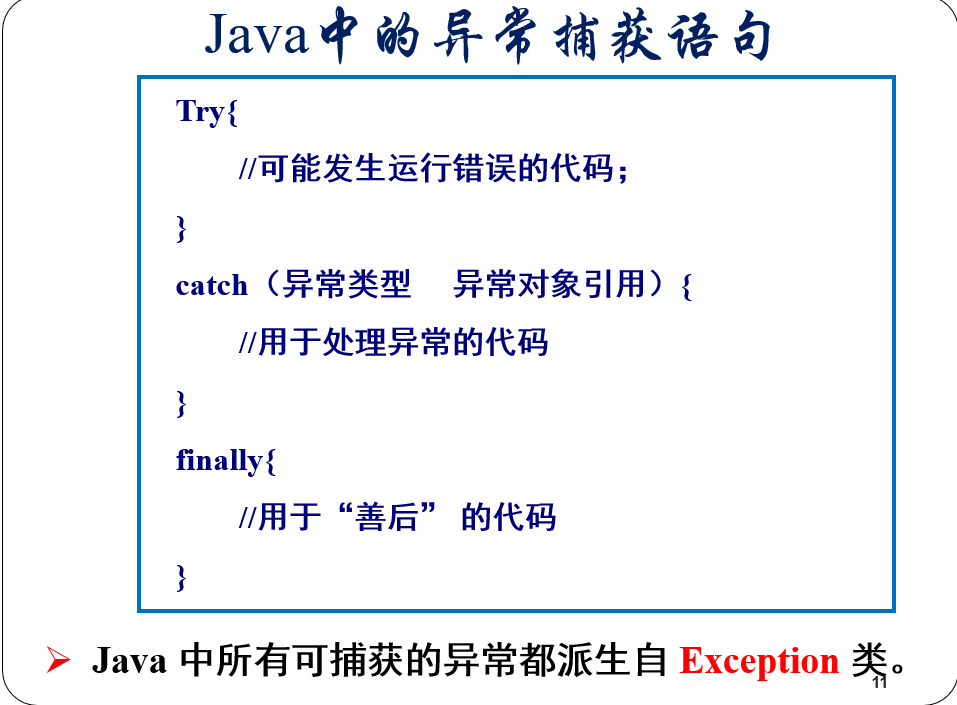
使用Java异常处理机制:
把可能会发生错误的代码放进try语句块中。
当程序检测到出现了一个错误时会抛出一个异常对象。
异常处理代码会捕获并处理这个错误。
catch语句块中的代码用于处理错误。
当异常发生时,程序控制流程由try语句块跳转到catch语句块。
不管是否有异常发生,finally语句块中的语句始终保证被执行。
如果没有提供合适的异常处理代码,JVM将会结束掉整个应用程序。
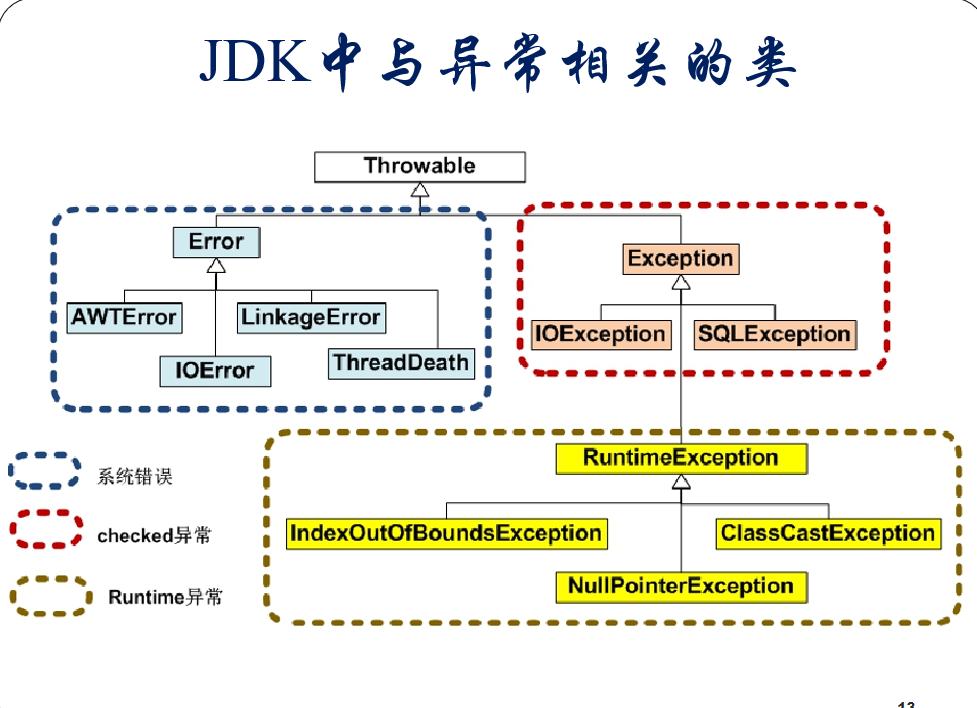
异常分类:
Throwable类有两个直接子类:
Exception:出现的问题是可以被捕获的;
Error:系统错误,通常由JVM处理。
可捕获的异常又可以分为两类:
(1)Check异常:直接派生自Exception的异常类,必须被捕获或再次声明抛出
(2)Runtime异常:派生自RuntimeException的异常类。使用throw语句可以随时抛出这种异常对象: throw new ArithmeticException(…);
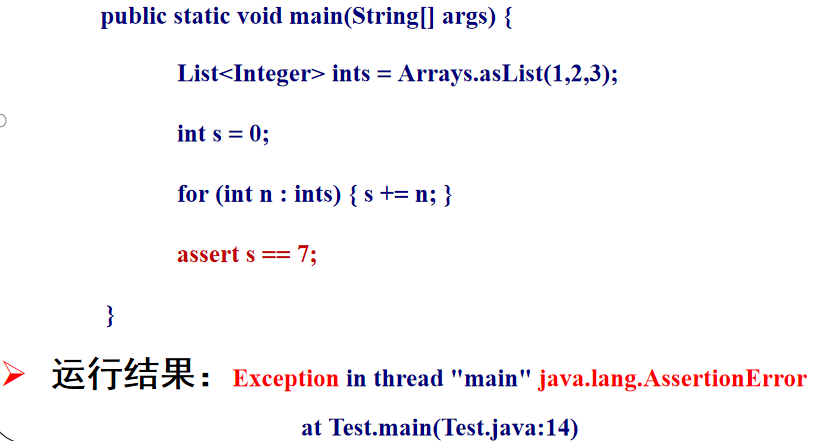
JDK1.4 以上提供了assert语句,允许程序在运行期间判断某个条件是否满足,不满足时,抛出AssertionError,例如:
异常的“多态”特性
可以有多个catch语句块,每个代码块捕获一种异常。在某个try块后有两个不同的catch 块捕获两个相同类型的异常是语法错误。
使用catch语句,只能捕获Exception类及其子类的对象。因此,一个捕获Exception对象的catch语句块可以捕获所有“可捕获”的异常。
将catch(Exception e)放在别的catch块前面会使这些catch块都不执行,因为Java不会编译这些catch块。
“finally”的功用
资源泄露:当一个资源不再被某应用程序使用,但此程序并未向系统声明不再使用此资源时发生这种情况
finally语句块主要用于解决资源泄露问题,它位于catch语句块之后,JVM保证它们一定执行。
注意:finally语句块中也可能发生异常,如果这种情况发生,先前的异常被放弃。
动手动脑:多层的异常捕获
比较两个代码的区别:
CatchWho1.java
 public class CatchWho {

     public static void main(String[] args) {

         try {

                 try {

                     throw new ArrayIndexOutOfBoundsException();

                 }

                 catch(ArrayIndexOutOfBoundsException e) {

                        System.out.println(  "ArrayIndexOutOfBoundsException" +  "/内层try-catch");

                 }

             throw new ArithmeticException();

         }

         catch(ArithmeticException e) {

             System.out.println("发生ArithmeticException");

         }

         catch(ArrayIndexOutOfBoundsException e) {

            System.out.println(  "ArrayIndexOutOfBoundsException" + "/外层try-catch");

         }

     }

 }
结果:

catchwho2.java
 public class CatchWho2 {

     public static void main(String[] args) {

         try {

                 try {

                     throw new ArrayIndexOutOfBoundsException();

                 }

                 catch(ArithmeticException e) {

                     System.out.println( "ArrayIndexOutOfBoundsException" + "/内层try-catch");

                 }

             throw new ArithmeticException();

         }

         catch(ArithmeticException e) {

             System.out.println("发生ArithmeticException");

         }

         catch(ArrayIndexOutOfBoundsException e) {

             System.out.println( "ArrayIndexOutOfBoundsException" + "/外层try-catch");

         }

     }

 }
结果:

分析:catchwho1按照内外层的try catch代码块一步一步执行
catchwho2结果的原因是内存try里的异常并没有被catch(ArithmeticException e)捕获到,故该字段异常,不执行此try catch块下的其他内容,而是此异常的ArrayIndexOutOfBoundsException()对象被外层的catch(ArrayIndexOutOfBoundsException e)捕获,打印出相应结果。
辨析:finally语句块一定会执行吗?
 public class SystemExitAndFinally {

     public static void main(String[] args)

     {

         try{

             System.out.println("in main");

             throw new Exception("Exception is thrown in main");

                     //System.exit(0);

         }

         catch(Exception e){

             System.out.println(e.getMessage());

             System.exit();

         }

         finally{

             System.out.println("in finally");

         }

     }

 }
结果:

结论:在exit(0)下, finally里的语句块不会执行。
特别注意: 当有多层嵌套的finally时,异常在不同的层次抛出 ,在不同的位置抛出,可能会导致不同的finally语句块执行顺序。
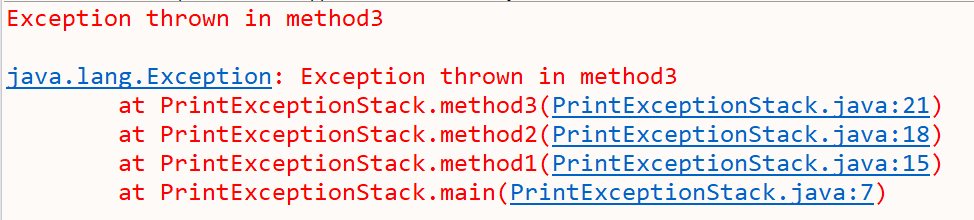
如何跟踪异常的传播路径?
当程序中出现异常时,JVM会依据方法调用顺序依次查找有关的错误处理程序。
可使用printStackTrace 和 getMessage方法了解异常发生的情况: printStackTrace:打印方法调用堆栈。
每个Throwable类的对象都有一个getMessage方法,它返回一个字串,这个字串是在Exception构造函数中传入的,通常让这一字串包含特定异常的相关信息。
 // UsingExceptions.java

 // Demonstrating the getMessage and printStackTrace

 // methods inherited into all exception classes.

 public class PrintExceptionStack {

    public static void main( String args[] ){

       try {

          method1();

       }

       catch ( Exception e ) {

          System.err.println( e.getMessage() + "\n" );

          e.printStackTrace();

       }

    }

    public static void method1() throws Exception {

       method2();

    }

    public static void method2() throws Exception{

       method3();

    }

    public static void method3() throws Exception{

       throw new Exception( "Exception thrown in method3" );

    }

 }
输出结果:
受控与不受控的异常
throws语句:throws语句表明某方法中可能出现某种(或多种)异常,但它自己不能处理这些异常,而需要由调用者来处理。 当一个方法包含throws子句时,需要在调用此方法的代码中使用try/catch/finally进行捕获,或者是重新对其进行声明,否则编译时报错。
throws语句中声明的异常称为受控(checked)的异常,通常直接派生自Exception类。
RuntimeException(其基类为Exception) 和Error(基类为Throwable)称为非受控的异常。这种异常不用在throws语句中声明。
 import java.io.*;

 public class CheckedExceptionDemo {

     public static void main(String[] args)  {

         try {

             BufferedReader buf = new BufferedReader(

                 new InputStreamReader(System.in));    //抛出受控的异常

             System.out.print("请输入整数: ");

             int input = Integer.parseInt(buf.readLine()); //有可能引发运行时异常

             System.out.println("input x 10 = " + (input*));

       }

         //以下异常处理语句块是必须的,否则无法通过编译

         catch(IOException e) {

             System.out.println("I/O错误");

         }

         //以下异常处理语句块可以省略,不影响编译,但在运行时出错

         catch(NumberFormatException e) {

             System.out.println("输入必须为整数");

         }

     }

 }
一个方法可以声明抛出多个异常: int g(float h) throws OneException,TwoException { …… }
 import java.io.*;

 public class ThrowMultiExceptionsDemo {

     public static void main(String[] args) {

       try {

             throwsTest();

        }

         catch(IOException e) {

             System.out.println("捕捉异常");

         }

     }

     private static void throwsTest()  throws ArithmeticException,IOException {

         System.out.println("这只是一个测试");

         // 程序处理过程假设发生异常

         throw new IOException();

         //throw new ArithmeticException();

     }

 }

在有继承关系中,一个子类的throws子句抛出的异常,不能是其基类同名方法抛出的异常对象的父类。
自定义异常与异常处理链
介绍一种被广泛使用的异常处理方法——通过自定义异常类捕获并处理业务逻辑错误 。
 class MyException extends Exception{

     public MyException(String Message) {

         super(Message);

     }

     public MyException(String message, Throwable cause) {

         super(message, cause);

     }

      public MyException(Throwable cause) {

         super(cause);

     }

 }

 public class ExceptionLinkInRealWorld {

    public static void main(String args[]){

       try {

          throwExceptionMethod();  //有可能抛出异常的方法调用

       }

       catch ( MyException e ){

          System.err.println( e.getMessage() +"--1");

          System.err.println(e.getCause().getMessage()+"--2");

       }

       catch ( Exception e ){

          System.err.println("Exception handled in main--3" );

       }

       doesNotThrowException(); //不抛出异常的方法调用

    }

    public static void throwExceptionMethod() throws MyException{

       try {

          System.out.println( "Method throwException--4" );

          throw new Exception("系统运行时引发的特定的异--W");  // 产生了一个特定的异常

       }

       catch( Exception e ){

          System.err.println("Exception handled in method throwException--5" );

          //转换为一个自定义异常,再抛出

          throw new MyException("在方法执行时出现异常-W",e);

       }

       finally {

          System.err.println("Finally executed in throwException--6" );

       }

       // any code here would not be reached

    }

    public static void doesNotThrowException()

    {

       try {

          System.out.println( "Method doesNotThrowException--7" );

       }

       catch( Exception e ){

          System.err.println( e.toString() );

       }

       finally {

          System.err.println("Finally executed in doesNotThrowException--8" );

       }

       System.out.println("End of method doesNotThrowException--9" );

    }

 }

 //
ExceptionLinkInRealWorld.java
结果:
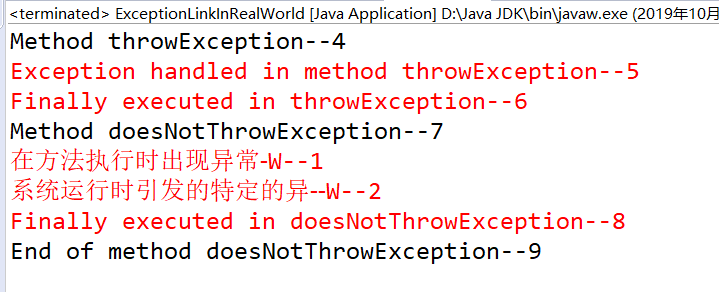
在实际开发中,可以参照ExceptionLinkInRealWorld.java 示例的做法,定义一些与业务逻辑相关的自定义异常类,供上层代码进行捕获,从而能更精确地反映系统真实运行情况并及时进行处理。
关于开发中异常处理的建议
在中间层组件中抛出异常,在界面层组件中捕获异常,在底层组件中捕获JVM抛出的“只有程序员能看懂的”异常,转换为中间层的业务逻辑异常,再由界面层捕获以提供有意义的信息。
自身能够处理的异常,不要再向外界抛出。
尽可能地在靠近异常发生的地方捕获并处理异常。
尽可能地捕获最具体的异常类型,不要在中间层用 catch(Exception)“吃掉”所有异常。
在开发阶段捕获并显示所有异常信息,发布阶段要移除部分代码,以避免“过于专业”的异常信息困扰用户,特别地,系统发布之后,不要将服务端异常的详细信息发给客户端,以免被黑客利用。
Java中的异常处理try catch(第八周课堂示例总结)的更多相关文章
- Java中实现异常处理的基础知识
Java中实现异常处理的基础知识 异常 (Exception):发生于程序执行期间,表明出现了一个非法的运行状况.许多JDK中的方法在检测到非法情况时,都会抛出一个异常对象. 例如:数组越界和被0除. ...
- java 中的异常处理
一. 异常的概念和Java异常体系结构 异常是程序运行过程中出现的错误.本文主要讲授的是Java语言的异常处理.Java语言的异常处理框架, 是Java语言健壮性的一个重要体现. Java把 ...
- 第八节:详细讲解Java中的异常处理情况与I/O流的介绍以及类集合框架
前言 大家好,给大家带来详细讲解Java中的异常处理情况与I/O流的介绍以及类集合框架的概述,希望你们喜欢 JAVA 异常 try...catch...finally结构的使用方法 class Tes ...
- Java中的异常处理:何时抛出异常,何时捕获异常,何时处理异常?
Java中的异常处理:何时抛出异常,何时捕获异常? 2017-06-07 1 异常分类 Throwable对象可以分为两组: 一组是unchecked异常,异常处理机制往往不用于这组异常,包括: Er ...
- 深入了解 Java 中的异常处理 + 面试题
# 深入了解 Java 中的异常处理 + 面试题 在程序开发中,异常处理也是我们经常使用到的模块,只是平常很少去深究异常模块的一些知识点.比如,try-catch 处理要遵循的原则是什么,finall ...
- Java中的try,catch,finally
讲解的是关于java中关于try.catch.finally中一些问题 下面看一个例子(例1),来讲解java里面中try.catch.finally的处理流程 public class TryCat ...
- 20145209刘一阳《JAVA程序设计》第八周课堂测试
第八周课堂测试 1.下面代码中共有(C)个线程? public class ThreadTest { public static void main(String args[]){ MyThread ...
- [Java] java中的异常处理
Java中的异常类都继承自Throwable类.一个Throwable类的对象都可以抛出(throw). Throwable对象可以分为两组.一组是unchecked异常,异常处理机制往往不用于这组异 ...
- js中的异常处理try...catch使用介绍
在JavaScript可以使用try...catch来进行异常处理. 例如: try { foo.bar();} catch (e) { alert(e.name + ": " + ...
随机推荐
- 超好用的富文本编辑器Summernote的使用
官网地址 中文文档 源码下载地址 Summernote依赖于jquery和bootstrap3/4 所以用时记得引入这俩依赖 奉上引入方法(官网说的很清楚,api也很详细): <!-- in ...
- 十八、MySQL 数据排名查询某条数据是总数据的第几条
) as rowno )) b ORDER BY a.zjf DESC 注意:mysql的下标是从0开始的 参考文章: https://blog.csdn.net/warylee/article/de ...
- python-日常用法小记
1.判断是否是数字 math.isnan("a") 2.数学math math.log(x) 3.查看安装路径 import sys print sys.path 4.字符串与日期 ...
- Java 注解指导手册(下)
9. 自定义注解 正如我们之前多次提及的,可以定义和实现自定义注解.本章我们即将探讨. 首先,定义一个注解: public @interface CustomAnnotationClass ...
- scrapy_redis的使用
配置Scrapy-Redis 配置Scrapy-Redis非常简单,只需要修改一下settings.py配置文件即可. 1. 核心配置 首先最主要的是,需要将调度器的类和去重的类替换为Scrapy-R ...
- JAVA开发框架
1.Bootstrap Bootstrap是美国Twitter公司的设计师Mark Otto和Jacob Thornton合作基于HTML.CSS.JavaScript 开发的简洁.直观.强悍 ...
- Docker安装Redis及Warning解决方法
虚拟机环境:VirtualBox 操作系统:CentOS 7 宿主机: Microsoft Windows 10 家庭中文版 Docker简介 Docker是一个轻量级容器技术.Docker直接运行在 ...
- Mac securecrt 破解
今天花了好长的时间终于在Mac上把SecureCRT安装成功了,网上教程大多没有截图,破解关键步骤含糊,现在把详细的破解过程和SecureCRT使用教程分享给大家.最后把参考的博客连接附在最下方. ...
- Android版本之间的区别
不同版本SDK适配要点 1,指定minSDKVersion与targetSDKVersion 2,运行时获取版本号 3,使用系统内置的主题,会随着版本的更换而自动适配 4,用android提供的注解 ...
- to_datetime 以及 dt.days、dt.months
Series类型的数据,经过 to_datetime 之后就可以用 pandas.Series.dt.day 和 pandas.Series.pd.month. import pandas as pd ...