
QT_OPENGL-------- 5.model
在qt中实现opengl obj模型导入:
main.cpp
#include<GL/glew.h>

#include <GLFW/glfw3.h>

#include<stdio.h>

#include<glm/glm.hpp>

#include<glm/ext.hpp>

#include"misc.h"

#include"model.h"

GLfloat deltaTime = 0.0f;

GLfloat lastFrame = 0.0f;

GLint CreateGPUProgram(const char*vsShaderPath,const char*fsShaderPath)

{

    GLuint vsShader=glCreateShader(GL_VERTEX_SHADER);

    GLuint fsShader=glCreateShader(GL_FRAGMENT_SHADER);

    const char*vsCode=LoadFileContent(vsShaderPath);

    const char*fsCode=LoadFileContent(fsShaderPath);

    glShaderSource(vsShader,,&vsCode,nullptr);

    glShaderSource(fsShader,,&fsCode,nullptr);

    glCompileShader(vsShader);

    glCompileShader(fsShader);

    GLuint program=glCreateProgram();

    glAttachShader(program,vsShader);

    glAttachShader(program,fsShader);

    glLinkProgram(program);

    glDetachShader(program,vsShader);

    glDetachShader(program,fsShader);

    glDeleteShader(vsShader);

    glDeleteShader(fsShader);

    return program;

}

void framebuffer_size_callback(GLFWwindow* window, int width, int height)

{

    glViewport(, , width, height);

}

int main(void)

{

    GLFWwindow* window;

    if (!glfwInit())

        return -;

    window = glfwCreateWindow(, , "Hello World", NULL, NULL);

    if (!window)

    {

        glfwTerminate();

        return -;

    }

    glfwMakeContextCurrent(window);

    glewExperimental = GL_TRUE;

    // 还需要注册这个函数,告诉GLFW我们希望每当窗口调整大小的时候调用这个函数。

    glfwSetFramebufferSizeCallback(window, framebuffer_size_callback);

    glewInit();

    GLuint program = CreateGPUProgram("/home/jun/OpenGL/model/sample.vs", "/home/jun/OpenGL/model/sample.fs");

    GLint posLocation, texcoordLocation,normalLocation, MLocation, VLocation, PLocation;

    posLocation = glGetAttribLocation(program, "pos");

    texcoordLocation = glGetAttribLocation(program, "texcoord");

    normalLocation = glGetAttribLocation(program, "normal");

    MLocation = glGetUniformLocation(program, "M");

    VLocation = glGetUniformLocation(program, "V");

    PLocation = glGetUniformLocation(program, "P");

    unsigned int *indexes = nullptr;

    int vertexCount = , indexCount = ;

    VertexData*vertexes = LoadObjModel("/home/jun/OpenGL/model/MODEL/niutou.obj", &indexes, vertexCount, indexCount);

    if (vertexes==nullptr)

    {

        printf("load obj model fail\n");

    }

    //obj model -> vbo & ibo

    GLuint vbo = CreateBufferObject(GL_ARRAY_BUFFER, sizeof(VertexData) * vertexCount, GL_STATIC_DRAW, vertexes);

    GLuint ibo = CreateBufferObject(GL_ELEMENT_ARRAY_BUFFER, sizeof(unsigned int) * indexCount, GL_STATIC_DRAW, indexes);

    printf("vertex count %d index count %d\n",vertexCount,indexCount);

    glClearColor(41.0f / 255.0f, 71.0f / 255.0f, 121.0f / 255.0f, 1.0f);

    //ShowWindow(hwnd, SW_SHOW);

    //UpdateWindow(hwnd);

    float identity[] = {

        ,,,,

        ,,,,

        ,,,,

        ,,,

    };

   //创建一个投影矩阵

   glm::mat4 model;

   model = glm::translate(model, glm::vec3(0.0f, 0.0f, -54.0f));

    model = glm::scale(model, glm::vec3(0.2f, 0.2f, 0.2f));

   glm::mat4 projection=glm::perspective(45.0f,800.0f/600.0f,0.1f,1000.0f);

   glEnable(GL_DEPTH_TEST);

   glEnable(GL_CULL_FACE);

    while (!glfwWindowShouldClose(window))

    {

        GLfloat currentFrame = (GLfloat)glfwGetTime();

        deltaTime = currentFrame - lastFrame;

        lastFrame = currentFrame;

        glfwPollEvents();

       // glClearColor(1.0f, 0.04f, 0.14f, 1.0f);

        glClear(GL_COLOR_BUFFER_BIT|GL_DEPTH_BUFFER_BIT);

        glUseProgram(program);

        glUniformMatrix4fv(MLocation, , GL_FALSE, glm::value_ptr(model));

        glUniformMatrix4fv(VLocation, , GL_FALSE, identity);

        glUniformMatrix4fv(PLocation, , GL_FALSE, glm::value_ptr(projection));

        glBindBuffer(GL_ARRAY_BUFFER, vbo);

        glEnableVertexAttribArray(posLocation);

        glVertexAttribPointer(posLocation, , GL_FLOAT, GL_FALSE, sizeof(VertexData), (void*));

        glEnableVertexAttribArray(texcoordLocation);

        glVertexAttribPointer(texcoordLocation, , GL_FLOAT, GL_FALSE, sizeof(VertexData), (void*)(sizeof(float) * ));

        glEnableVertexAttribArray(normalLocation);

        glVertexAttribPointer(normalLocation, , GL_FLOAT, GL_FALSE, sizeof(VertexData), (void*)(sizeof(float) * ));

        glBindBuffer(GL_ARRAY_BUFFER, );

        glBindBuffer(GL_ELEMENT_ARRAY_BUFFER, ibo);

        glDrawElements(GL_TRIANGLES, indexCount, GL_UNSIGNED_INT, );

        glBindBuffer(GL_ELEMENT_ARRAY_BUFFER, );

        glUseProgram();

        glfwSwapBuffers(window);

    }

    glfwTerminate();

    return ;

}
mish.h
#include<GL/glew.h>

GLuint CreateBufferObject(GLenum bufferType, GLsizeiptr size, GLenum usage, void*data = nullptr);

char *LoadFileContent(const char*path);
mish.cpp
#include "misc.h"

#include <stdio.h>

GLuint CreateBufferObject(GLenum bufferType, GLsizeiptr size, GLenum usage, void*data /* = nullptr */)

{

    GLuint object;

    glGenBuffers(, &object);

    glBindBuffer(bufferType, object);

    glBufferData(bufferType, size, data, usage);

    glBindBuffer(bufferType, );

    return object;

}

char *LoadFileContent(const char*path)

{

    FILE*pFile = fopen(path, "rb");

    if (pFile)

    {

        fseek(pFile, , SEEK_END);

        int nLen = ftell(pFile);

        char*buffer = nullptr;

        if (nLen!=)

        {

            buffer=new char[nLen + ];

            rewind(pFile);

            fread(buffer, nLen, , pFile);

            buffer[nLen] = '\0';

        }

        else

        {

            printf("load file fail %s content len is 0\n", path);

        }

        fclose(pFile);

        return buffer;

    }

    else

    {

        printf("open file %s fail\n",path);

    }

    fclose(pFile);

    return nullptr;

}
model.h
struct VertexData

{

    float position[];

    float texcoord[];

    float normal[];

};

VertexData*LoadObjModel(const char* filePath,unsigned int **indexes,int&vertexCount,int&indexCount);
model.cpp
#include "model.h"

#include "misc.h"

#include <stdio.h>

#include <string.h>

#include <sstream>

#include <vector>

VertexData*LoadObjModel(const char* filePath, unsigned int **indexes, int&vertexCount, int&indexCount)

{

    char*fileContent = LoadFileContent(filePath);

    if (fileContent!=nullptr)

    {

        //obj model decode

        struct VertexInfo

        {

            float v[];

        };

        struct VertexDefine

        {

            int positionIndex;

            int texcoordIndex;

            int normalIndex;

        };

        std::vector<VertexInfo> positions;

        std::vector<VertexInfo> texcoords;

        std::vector<VertexInfo> normals;

        std::vector<unsigned int> objIndexes;// -> opengl indexes

        std::vector<VertexDefine> vertices;// -> opengl vertexes

        std::stringstream ssObjFile(fileContent);

        char szOneLine[];

        std::string temp;

        while (!ssObjFile.eof())

        {

            memset(szOneLine, , );

            ssObjFile.getline(szOneLine,);

            if (strlen(szOneLine)>)

            {

                std::stringstream ssOneLine(szOneLine);

                if (szOneLine[]=='v')

                {

                    if (szOneLine[]=='t')

                    {

                        //vertex coord

                        ssOneLine >> temp;

                        VertexInfo vi;

                        ssOneLine >> vi.v[];

                        ssOneLine >> vi.v[];

                        texcoords.push_back(vi);

                        printf("%s %f,%f\n", temp.c_str(), vi.v[], vi.v[]);

                    }

                    else if(szOneLine[]=='n')

                    {

                        //normal

                        ssOneLine >> temp;

                        VertexInfo vi;

                        ssOneLine >> vi.v[];

                        ssOneLine >> vi.v[];

                        ssOneLine >> vi.v[];

                        normals.push_back(vi);

                        printf("%s %f,%f,%f\n", temp.c_str(), vi.v[], vi.v[], vi.v[]);

                    }

                    else

                    {

                        //position

                        ssOneLine >> temp;

                        VertexInfo vi;

                        ssOneLine >> vi.v[];

                        ssOneLine >> vi.v[];

                        ssOneLine >> vi.v[];

                        positions.push_back(vi);

                        printf("%s %f,%f,%f\n",temp.c_str(), vi.v[], vi.v[], vi.v[]);

                    }

                }

                else if (szOneLine[] == 'f')

                {

                    //face

                    ssOneLine >> temp;// 'f'

                    std::string vertexStr;

                    for (int i=;i<;i++)

                    {

                        ssOneLine >> vertexStr;

                        size_t pos = vertexStr.find_first_of('/');

                        std::string positionIndexStr = vertexStr.substr(, pos);

                        size_t pos2 = vertexStr.find_first_of('/', pos + );

                        std::string texcoordIndexStr = vertexStr.substr(pos + , pos2 - pos - );

                        std::string normalIndexStr = vertexStr.substr(pos2 + , vertexStr.length() - pos2 - );

                        VertexDefine vd;

                        vd.positionIndex = atoi(positionIndexStr.c_str())-;

                        vd.texcoordIndex = atoi(texcoordIndexStr.c_str()) - ;

                        vd.normalIndex = atoi(normalIndexStr.c_str()) - ;

                        int nCurrentIndex = -;//indexes

                        //check if exist

                        size_t nCurrentVerticeCount = vertices.size();

                        for (size_t j = ; j < nCurrentVerticeCount; j++)

                        {

                            if (vertices[j].positionIndex == vd.positionIndex&&

                                vertices[j].texcoordIndex == vd.texcoordIndex&&

                                vertices[j].normalIndex == vd.normalIndex)

                            {

                                nCurrentIndex = j;

                                break;

                            }

                        }

                        if (nCurrentIndex==-)

                        {

                            //create new vertice

                            nCurrentIndex = vertices.size();

                            vertices.push_back(vd);//vertexes define

                        }

                        objIndexes.push_back(nCurrentIndex);

                    }

                }

            }

        }

        printf("face count %u\n",objIndexes.size()/);

        //objIndexes->indexes buffer -> ibo

        indexCount = (int)objIndexes.size();

        *indexes = new unsigned int[indexCount];

        for (int i=;i<indexCount;i++)

        {

            (*indexes)[i] = objIndexes[i];

        }

        //vertices -> vertexes -> vbo

        vertexCount = (int)vertices.size();

        VertexData*vertexes = new VertexData[vertexCount];

        for (int i=;i<vertexCount;++i)

        {

            memcpy(vertexes[i].position, positions[vertices[i].positionIndex].v, sizeof(float) * );

            memcpy(vertexes[i].texcoord, texcoords[vertices[i].texcoordIndex].v, sizeof(float) * );

            memcpy(vertexes[i].normal, normals[vertices[i].normalIndex].v, sizeof(float) * );

        }

        return vertexes;

    }

    return nullptr;

}
model.pro
TEMPLATE = app

CONFIG += console c++

CONFIG -= app_bundle

CONFIG -= qt

SOURCES += main.cpp \

    misc.cpp \

    model.cpp

LIBS+= -L/usr/lib64 -lGLEW

LIBS +=-L/usr/local/lib -lglfw3 -lX11 -lXrandr -lXinerama -lXi -lXxf86vm -lXcursor -lGL -lpthread -ldl

HEADERS += \

    misc.h \

    model.h
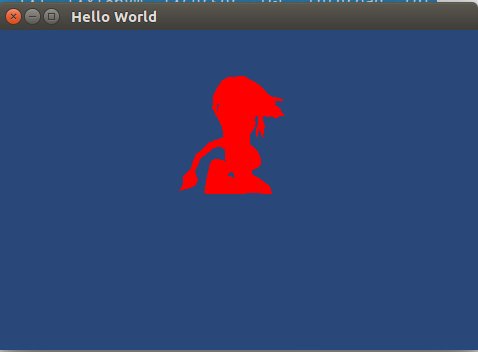
最后的效果:
QT_OPENGL-------- 5.model的更多相关文章
- Spring Boot笔记一
Spring Boot 入门 Spring Boot 简介 > 简化Spring应用开发的一个框架:> 整个Spring技术栈的一个大整合:> J2EE开发的一站式解决方案: 微服务 ...
- 【疯狂造轮子-iOS】JSON转Model系列之二
[疯狂造轮子-iOS]JSON转Model系列之二 本文转载请注明出处 —— polobymulberry-博客园 1. 前言 上一篇<[疯狂造轮子-iOS]JSON转Model系列之一> ...
- 【疯狂造轮子-iOS】JSON转Model系列之一
[疯狂造轮子-iOS]JSON转Model系列之一 本文转载请注明出处 —— polobymulberry-博客园 1. 前言 之前一直看别人的源码,虽然对自己提升比较大,但毕竟不是自己写的,很容易遗 ...
- 详解树莓派Model B+控制蜂鸣器演奏乐曲
步进电机以及无源蜂鸣器这些都需要脉冲信号才能够驱动,这里将用GPIO的PWM接口驱动无源蜂鸣器弹奏乐曲,本文基于树莓派Mode B+,其他版本树莓派实现时需参照相关资料进行修改! 1 预备知识 1.1 ...
- 【AutoMapper官方文档】DTO与Domin Model相互转换(上)
写在前面 AutoMapper目录: [AutoMapper官方文档]DTO与Domin Model相互转换(上) [AutoMapper官方文档]DTO与Domin Model相互转换(中) [Au ...
- 拨开迷雾,找回自我:DDD 应对具体业务场景,Domain Model 到底如何设计?
写在前面 除了博文内容之外,和 netfocus 兄的讨论,也可以让你学到很多(至少我是这样),不要错过哦. 阅读目录: 迷雾森林 找回自我 开源地址 后记 毫无疑问,领域驱动设计的核心是领域模型,领 ...
- 使用mybatis-generator在自动生成Model类和Mapper文件
使用mybatis-generator插件可以很轻松的实现mybatis的逆向工程,即,能通过表结构自动生成对应的java类及mapper文件,可以大大提高工作效率,并且它提供了很多自定义的设置可以应 ...
- “RazorEngine.Templating.TemplateParsingException”类型的异常在 RazorEngine.NET4.0.dll 中发生,但未在用户代码中进行处理 其他信息: Expected model identifier.
这个问题是由于在cshtml中 引用了model这个单词 它可能和Model在解析时有冲突. 解决方法:把model换成别的单词就可以了.
- QT内省机制、自定义Model、数据库
本文将介绍自定义Model过程中数据库数据源的获取方法,我使用过以下三种方式获取数据库数据源: 创建 存储对应数据库所有字段的 结构体,将结构体置于容器中返回,然后根据索引值(QModelIndex) ...
- iOS自定义model排序
在开发过程中,可能需要按照model的某种属性排序. 1.自定义model @interface Person : NSObject @property (nonatomic,copy) NSStri ...
随机推荐
- HTML入门:Tag学习
即使 <br> 在所有浏览器中的显示都没有问题,使用 <br /> 也是更长远的保障. 标签 描述 <html> 定义 HTML 文档. <body> ...
- python生成VOC2007的类库
VOCAnnotation.py: # -*-coding:utf-8-*- from lxml import etree import os class VOCAnnotation(object): ...
- MySQL事务、锁机制、查询缓存
MySQL事务 何为事务? 事务(Transaction)是访问并可能更新数据库中各种数据项的一个程序执行单元(unit). 一个事务可以是一条SQL语句,一组SQL语句或整个程序. 事务的特性: 事 ...
- 本地文件访问json数据格式,在chrome中没反应
原因:存在跨域问题 在JavaScript的安全性上,有一条很重要的安全限制,叫“同源策略”.就是一个脚本只能读取与它同源(如由同一个主机下载,通过同一个端口下载或者下载协议相同)的窗口或者文档的属性 ...
- 搭建单向HTTPS
//参考网址:https://blog.csdn.net/haolipengzhanshen/article/details/51278262 //打开CMD窗口 cd C:\wamp\bin\apa ...
- linux apache vhost
<VirtualHost *:80> DocumentRoot "/usr/www/yltgerp_old/" ServerName erp.yltg.com.cn E ...
- 哈哈哈哈,我竟然发现了个MSDN里面的笔误
typedef __PROCESSOR_INFO { WORD wVersion; WCHAR szProcessorCore[40]; WORD wCoreRevision; WCHAR ...
- 洛谷P1368 均分纸牌(加强版) [2017年6月计划 数论14]
P1368 均分纸牌(加强版) 题目描述 有 N 堆纸牌,编号分别为 1,2,…, N.每堆上有若干张,纸牌总数必为 N 的倍数.可以在任一堆上取1张纸牌,然后移动. 移牌规则为:在编号为 1 堆上取 ...
- 【洛谷P1827】【USACO】 美国血统 American Heritage 由二叉树两个序列求第三个序列
P1827 美国血统 American Heritage 题目描述 农夫约翰非常认真地对待他的奶牛们的血统.然而他不是一个真正优秀的记帐员.他把他的奶牛 们的家谱作成二叉树,并且把二叉树以更线性的&q ...
- vuecli3取消eslint
1.之前好好的项目,今天运行npm run serve.忽然报错运行不了了. 2.原因 在生成项目时候没有忽略 ESlint选项配置,其实建议创建项目的时候还是忽略掉这个选项比较好,因为后期写项目多空 ...