
100W数据,测试复合索引
复合索引不是那么容易被catch到的。
两个查询条件都是等于的时候,才会被catch到。
mysql> select count(*) from tf_user_index where sex = 2 and score > 80;

+----------+

| count(*) |

+----------+

|  1261904 |

+----------+

1 row in set (10.65 sec)

mysql> select count(*) from tf_user where sex = 2 and score > 80;

+----------+

| count(*) |

+----------+

|  1261904 |

+----------+

1 row in set (4.38 sec)

mysql> explain select count(*) from tf_user_index where sex = 2 and score > 80;

+----+-------------+---------------+------+---------------+------+---------+-------+---------+-------------+

| id | select_type | table         | type | possible_keys | key  | key_len | ref   | rows    | Extra       |

+----+-------------+---------------+------+---------------+------+---------+-------+---------+-------------+

|  1 | SIMPLE      | tf_user_index | ref  | score,sex     | sex  | 1       | const | 4481227 | Using where |

+----+-------------+---------------+------+---------------+------+---------+-------+---------+-------------+

1 row in set (0.08 sec)
查询条件中,如果有大于号。那么优先抓取等于号对应的索引,也就是sex对应的索引。经过索引的一番折腾,查询时间反而更长了。
即便是把score放到前面,一样的效果。
mysql> explain select count(*) from tf_user_index where score> 80 and sex = 2;

+----+-------------+---------------+------+---------------+------+---------+-------+---------+-------------+

| id | select_type | table         | type | possible_keys | key  | key_len | ref   | rows    | Extra       |

+----+-------------+---------------+------+---------------+------+---------+-------+---------+-------------+

|  1 | SIMPLE      | tf_user_index | ref  | score,sex     | sex  | 1       | const | 4481227 | Using where |

+----+-------------+---------------+------+---------------+------+---------+-------+---------+-------------+
两个条件都为等于的时候,索引的效果就有点明显了。
mysql> select count(*) from tf_user_index where sex = 2 and score = 80;

+----------+

| count(*) |

+----------+

|    63230 |

+----------+

1 row in set (1.09 sec)

mysql> select count(*) from tf_user where sex = 2 and score = 80;

+----------+

| count(*) |

+----------+

|    63230 |

+----------+

1 row in set (2.61 sec)

mysql> explain select count(*) from tf_user_index where sex = 2 and score = 80;

+----+-------------+---------------+-------------+---------------+-----------+---------+------+--------+------------------------------------------------------+

| id | select_type | table         | type        | possible_keys | key       | key_len | ref  | rows   | Extra                                                |

+----+-------------+---------------+-------------+---------------+-----------+---------+------+--------+------------------------------------------------------+

|  1 | SIMPLE      | tf_user_index | index_merge | score,sex     | score,sex | 4,1     | NULL | 124004 | Using intersect(score,sex); Using where; Using index |

+----+-------------+---------------+-------------+---------------+-----------+---------+------+--------+------------------------------------------------------+

1 row in set (0.00 sec)
这个时候,并没有添加复合索引。
加了复合索引,如果查询条件是大于号,一样catch不到。
mysql> explain select count(*) from tf_user_index where sex = 2 and score > 80;

+----+-------------+---------------+------+---------------------+------+---------+-------+---------+-------------+

| id | select_type | table         | type | possible_keys       | key  | key_len | ref   | rows    | Extra       |

+----+-------------+---------------+------+---------------------+------+---------+-------+---------+-------------+

|  1 | SIMPLE      | tf_user_index | ref  | score,sex,score_sex | sex  | 1       | const | 4481227 | Using where |

+----+-------------+---------------+------+---------------------+------+---------+-------+---------+-------------+

1 row in set (0.01 sec)

mysql> select count(*) from tf_user_index where score > 80 and sex =2;

+----------+

| count(*) |

+----------+

|  1261904 |

+----------+

1 row in set (15.32 sec)
竟然执行了15秒之久。
这条sql语句可以优化一下,将sex也改为大于号。
mysql> select count(*) from tf_user_index where score > 80 and sex >1;

+----------+

| count(*) |

+----------+

|  1261904 |

+----------+

1 row in set (0.66 sec)

mysql> explain select count(*) from tf_user_index where score > 80 and sex >1;

+----+-------------+---------------+-------+---------------------+-----------+---------+------+---------+--------------------------+

| id | select_type | table         | type  | possible_keys       | key       | key_len | ref  | rows    | Extra                    |

+----+-------------+---------------+-------+---------------------+-----------+---------+------+---------+--------------------------+

|  1 | SIMPLE      | tf_user_index | range | score,sex,score_sex | score_sex | 4       | NULL | 4481227 | Using where; Using index |

+----+-------------+---------------+-------+---------------------+-----------+---------+------+---------+--------------------------+

1 row in set (0.00 sec)
这样就捕捉到了索引。
mysql> select count(*) from tf_user_index where score = 80 and sex = 1;

+----------+

| count(*) |

+----------+

|    62866 |

+----------+

1 row in set (0.01 sec)

mysql> explain select count(*) from tf_user_index where score = 80 and sex = 1;

+----+-------------+---------------+------+---------------------+-----------+---------+-------------+--------+-------------+

| id | select_type | table         | type | possible_keys       | key       | key_len | ref         | rows   | Extra       |

+----+-------------+---------------+------+---------------------+-----------+---------+-------------+--------+-------------+

|  1 | SIMPLE      | tf_user_index | ref  | score,sex,score_sex | score_sex | 5       | const,const | 124794 | Using index |

+----+-------------+---------------+------+---------------------+-----------+---------+-------------+--------+-------------+

1 row in set (0.00 sec)
mysql> select count(*) from tf_user_index where  sex = 1 and score=80;

+----------+

| count(*) |

+----------+

|    62866 |

+----------+

1 row in set (0.01 sec)

mysql> explain select count(*) from tf_user_index where  sex = 1 and score=80;

+----+-------------+---------------+------+---------------------+-----------+---------+-------------+--------+-------------+

| id | select_type | table         | type | possible_keys       | key       | key_len | ref         | rows   | Extra       |

+----+-------------+---------------+------+---------------------+-----------+---------+-------------+--------+-------------+

|  1 | SIMPLE      | tf_user_index | ref  | score,sex,score_sex | score_sex | 5       | const,const | 124794 | Using index |

+----+-------------+---------------+------+---------------------+-----------+---------+-------------+--------+-------------+

1 row in set (0.00 sec)
顺序并不重要。
索引,复合索引,确实可以提供查询的速度。关键是,要能够捕捉到。要能够找寻它们捕捉的规律。理解它们执行的过程。
合理的分析查询的规律,合理的给表添加索引。分析常用的查询,分析常用的查询字段。通过explain字段来进行sql语句的分析,优化sql语句。
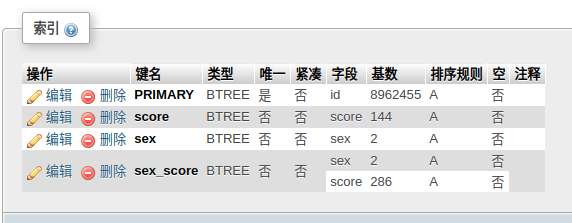
实践发现sex_score,score_sex查询的效果是一样的,关键是能否捕捉到。
mysql> explain select count(*) from tf_user_index where  sex = 2 and score>80;

+----+-------------+---------------+-------+---------------------+-----------+---------+------+---------+--------------------------+

| id | select_type | table         | type  | possible_keys       | key       | key_len | ref  | rows    | Extra                    |

+----+-------------+---------------+-------+---------------------+-----------+---------+------+---------+--------------------------+

|  1 | SIMPLE      | tf_user_index | range | score,sex,sex_score | sex_score | 5       | NULL | 2446346 | Using where; Using index |

+----+-------------+---------------+-------+---------------------+-----------+---------+------+---------+--------------------------+

1 row in set (0.00 sec)

mysql> select count(*) from tf_user_index where  sex = 2 and score>80;

+----------+

| count(*) |

+----------+

|  1261904 |

+----------+

1 row in set (0.31 sec)
我屮艸芔茻,sex_score竟然捕捉到了索引。看来顺序还是有所区别的。这个建索引还是多多的实验吧。孰能生巧。
100W数据,测试复合索引的更多相关文章
- 100W数据,测试索引
两张表,结构相同,数据内容相同.唯一不同的就是是否包含索引.tf_user_index表中包含索引. 这100w数据,我造了近一天时间. mysql> select count(*) from ...
- SQL Server 执行计划利用统计信息对数据行的预估原理二(为什么复合索引列顺序会影响到执行计划对数据行的预估)
本文出处:http://www.cnblogs.com/wy123/p/6008477.html 关于统计信息对数据行数做预估,之前写过对非相关列(单独或者单独的索引列)进行预估时候的算法,参考这里. ...
- 关于SQL查询效率,100w数据,查询只要1秒
1.关于SQL查询效率,100w数据,查询只要1秒,与您分享:机器情况p4: 2.4内存: 1 Gos: windows 2003数据库: ms sql server 2000目的: 查询性能测试,比 ...
- SQL Server创建复合索引时,复合索引列顺序对查询的性能影响
说说复合索引 写索引的博客太多了,一直不想动手写,有一下两个原因:一是觉得有炒剩饭的嫌疑,有兄弟曾说:索引吗,只要在查询条件上建索引就行了,真的可以这么暴力吗?二来觉得,索引是个非常大的话题,很难概括 ...
- SQL SERVER大话存储结构(4)_复合索引与包含索引
索引这块从存储结构来分,有2大类,聚集索引和非聚集索引,而非聚集索引在堆表或者在聚集索引表都会对其 键值有所影响,这块可以详细查看本系列第二篇文章:SQL SERVER大话存储结构 ...
- Mysql limit 优化,百万至千万级快速分页,--复合索引的引用并应用于轻量级框架
MySql 性能到底能有多高?用了php半年多,真正如此深入的去思考这个问题还是从前天开始.有过痛苦有过绝望,到现在充满信心!MySql 这个数据库绝对是适合dba级的高手去玩的,一般做一点1万篇新闻 ...
- MySQL复合索引探究
复合索引(又称为联合索引),是在多个列上创建的索引.创建复合索引最重要的是列顺序的选择,这关系到索引能否使用上,或者影响多少个谓词条件能使用上索引.复合索引的使用遵循最左匹配原则,只有索引左边的列匹配 ...
- Sql Server之旅——第九站 看公司这些DBA们设计的这些复合索引
这一篇再说下索引的最后一个主题,索引覆盖,当然学习比较好的捷径是看看那些大师们设计的索引,看从中能提取些什么营养的东西,下面我们看 看数据库中一个核心的Orders表. 一:查看表的架构 <1& ...
- Sql Server之旅——第八站 复合索引和include索引到底有多大区别?
周末终于搬进出租房了,装了宽带....才发现没网的日子...那是一个怎样的与世隔绝呀...再也受不了那样的日子了....好了,既然网 安上去了,还得继续我的这个系列. 索引和锁,这两个主题对我们开发工 ...
随机推荐
- Eclipse中将Java项目转换成Web项目的方法(转)
前言: 用Eclipse开发项目的时候,把一个Web项目导入到Eclipse里会变成了一个java工程,将无法在Tomcat中进行部署运行. 方法: 1.找到.project文件,找到里面的<n ...
- 在centos上用nginx访问php显示404
yum install nginx -y 可以在浏览器 访问html文件,但是访问不了php文件 后来我看见别人别人响应的参数有php,而我没有我,就觉得php配置应该有问题: 我 yum insta ...
- MacBook鼠标指针乱窜/不受控制问题的解决方法
用了快一年的MacBook Pro最近出现了奇怪的问题.出问题时,鼠标不受控制,屏幕上鼠标指针乱窜,还时不时自动点击,犹如电脑被人远程控制一般.不管是用trackpad还是用外接鼠标,都是同样问题.电 ...
- spring boot实战(第一篇)第一个案例
版权声明:本文为博主原创文章,未经博主允许不得转载. 目录(?)[+] spring boot实战(第一篇)第一个案例 前言 写在前面的话 一直想将spring boot相关内容写成一个系列的 ...
- K-均值聚类(K-means)算法
https://www.cnblogs.com/ybjourney/p/4714870.html 最近在看<机器学习实战>这本书,因为自己本身很想深入的了解机器学习算法,加之想学pytho ...
- jQuery change事件
定义和用法 当元素的值发生改变时,会发生 change 事件. 该事件仅适用于文本域(text field),以及 textarea 和 select 元素. change() 函数触发 change ...
- The Accomodation of Students---hdu2444(二分图,最大匹配)
题目链接:http://acm.hdu.edu.cn/showproblem.php?pid=2444 题意:有n个学生,m个关系,但是如果a认识b,b认识c,但是a不一定认识c: 求能不能把这n个人 ...
- python 面向对象 公有属性 用在哪里
公有属性也可以叫做静态字段 如果每个对象都有一个共同的值 , 应该把它设置为公有属性 公有属性使用场景,每个对象中保存相同的东西时,可以使用公有属性 类找公有属性 过程
- IETF国标查询
IETF官网 https://www.ietf.org/ rfc国标官网 https://www.ietf.org/standards/rfcs/ rfc国标查询 https://www.rfc-ed ...
- samba文件共享服务配置一(共2节)
一.samba服务简介 Samba是在Linux和UNIX系统上实现SMB协议的一个免费软件,由服务器及客户端程序构成.SMB(Server Messages Block,信息服务块)是一种在局域网上 ...