
xgboost 自定义评价函数(metric)与目标函数
比赛得分公式如下:
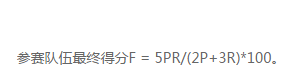
其中,P为Precision , R为 Recall。
GBDT训练基于验证集评价,此时会调用评价函数,XGBoost的best_iteration和best_score均是基于评价函数得出。
评价函数:
input: preds和dvalid,即为验证集和验证集上的预测值,
return string 类型的名称 和一个flaot类型的fevalerror值表示评价值的大小,其是以error的形式定义,即当此值越大是认为模型效果越差。
 from sklearn.metrics import confusion_matrix

 def customedscore(preds, dtrain):

     label = dtrain.get_label()

     pred = [int(i>=0.5) for i in preds]

     confusion_matrixs = confusion_matrix(label, pred)

     recall =float(confusion_matrixs[0][0]) / float(confusion_matrixs[0][1]+confusion_matrixs[0][0])

     precision = float(confusion_matrixs[0][0]) / float(confusion_matrixs[1][0]+confusion_matrixs[0][0])

     F = 5*precision* recall/(2*precision+3*recall)*100

     return 'FSCORE',float(F)
应用:
训练时要传入参数:feval = customedscore,
    params = { 'silent': 1,  'objective': 'binary:logistic' , 'gamma':0.1,

         'min_child_weight':5,

         'max_depth':5,

         'lambda':10,

         'subsample':0.7,

         'colsample_bytree':0.7,

         'colsample_bylevel':0.7,

         'eta': 0.01,

         'tree_method':'exact'}

     model = xgb.train(params, trainsetall, num_round,verbose_eval=10, feval = customedscore,maximize=False)
自定义 目标函数,这个我没有具体使用
 # user define objective function, given prediction, return gradient and second order gradient

 # this is log likelihood loss

 def logregobj(preds, dtrain):

     labels = dtrain.get_label()

     preds = 1.0 / (1.0 + np.exp(-preds))

     grad = preds - labels

     hess = preds * (1.0-preds)

     return grad, hess
# training with customized objective, we can also do step by step training

# simply look at xgboost.py's implementation of train

bst = xgb.train(param, dtrain, num_round, watchlist, logregobj, evalerror)
参考:
https://github.com/dmlc/xgboost/blob/master/demo/guide-python/custom_objective.py
http://blog.csdn.net/lujiandong1/article/details/52791117
xgboost 自定义评价函数(metric)与目标函数的更多相关文章
- xgboost 自定义目标函数和评估函数
https://zhpmatrix.github.io/2017/06/29/custom-xgboost/ https://www.cnblogs.com/silence-gtx/p/5812012 ...
- flink metric库的使用和自定义metric-reporter
简单介绍 flink内部实现了一套metric数据收集库. 同时flink自身系统有一些固定的metric数据, 包括系统的一些指标,CPU,内存, IO 或者各个task运行的一些指标.具体包含那些 ...
- 『开发技巧』Keras自定义对象(层、评价函数与损失)
1.自定义层 对于简单.无状态的自定义操作,你也许可以通过 layers.core.Lambda 层来实现.但是对于那些包含了可训练权重的自定义层,你应该自己实现这种层. 这是一个 Keras2.0 ...
- xgboost的sklearn接口和原生接口参数详细说明及调参指点
from xgboost import XGBClassifier XGBClassifier(max_depth=3,learning_rate=0.1,n_estimators=100,silen ...
- xgboost入门与实战(原理篇)
sklearn实战-乳腺癌细胞数据挖掘 https://study.163.com/course/introduction.htm?courseId=1005269003&utm_campai ...
- R语言︱XGBoost极端梯度上升以及forecastxgb(预测)+xgboost(回归)双案例解读
XGBoost不仅仅可以用来做分类还可以做时间序列方面的预测,而且已经有人做的很好,可以见最后的案例. 应用一:XGBoost用来做预测 ------------------------------- ...
- 机器学习 GBDT+xgboost 决策树提升
目录 xgboost CART(Classify and Regression Tree) GBDT(Gradient Boosting Desicion Tree) GB思想(Gradient Bo ...
- 前向分步算法 && AdaBoost算法 && 提升树(GBDT)算法 && XGBoost算法
1. 提升方法 提升(boosting)方法是一种常用的统计学方法,在分类问题中,它通过逐轮不断改变训练样本的权重,学习多个分类器,并将这些分类器进行线性组合,提高分类的性能 0x1: 提升方法的基本 ...
- Xgboost理解
一.xgboost模型函数形式 xgboost也是GBDT的一种,只不过GBDT在函数空间进行搜索最优F的时候,采用的是梯度下降法也就是一阶泰勒展开:而xgboost采用的是二阶泰勒展开也就是牛顿法, ...
随机推荐
- ios 判断GPS是否是在中国境内
博文转载至 http://blog.csdn.net/cuibo1123/article/details/45691631 ZCChinaLocation 基本思路是:把整个行政区域划分为几个小的矩形 ...
- 图像识别api
https://console-cloud.megvii.com/
- 实现Runnable接口和继承Thread类区别
如果一个类继承Thread,则不适合资源共享.但是如果实现了Runable接口的话,则很容易的实现资源共享. 实现Runnable接口比继承Thread类所具有的优势: 1):适合多个相同的程序代码的 ...
- Nginx遇上Access Denied提示怎么解决
这几天在摆弄linux下面的各种服务器,对nginx非常有兴趣. 于是把phpmyadmin传上去了,先是phpmyadmin配了半天,结果配好之后发现phpmyadmin一些logo.css.js文 ...
- OpenGL超级宝典总结(二)2D/3D笛卡尔坐标、坐标裁剪、纹理坐标、MVP转换等概念
如果你想把图形渲染在正确的位置上,那么坐标的设置就很重要了.在OpenGL中,与坐标相关的主要有笛卡尔坐标.坐标裁剪.纹理坐标.MVP(Model View Projection)转换. 1.笛卡尔坐 ...
- Core Location和MapKit的一些简单使用
Core Location 1. 基本对象是CLLocation,有属性coordinate, altitude, horizontal/vertical Accuracy, timestamp, ...
- 图片上传根据stream生成image
对于图片上传代码的整合 因为需要判断上传的图片的宽高是否符合尺寸,所以在最初拿到inputstream的时候,就直接获取image格式的图片 本来是想在下面的checkFile中获取的,不过直接使用S ...
- RxJava && Agera 从源码简要分析基本调用流程(2)
版权声明:本文由晋中望原创文章,转载请注明出处: 文章原文链接:https://www.qcloud.com/community/article/124 来源:腾云阁 https://www.qclo ...
- 关于移动端rem 布局的一些总结
1.rem是什么? rem(font size of the root element)是指相对于根元素的字体大小的单位 2.为什么web app要使用rem? 实现强大的屏幕适配布局(淘宝,腾讯,网 ...
- saltstack之syndic的配置
author: headsen chen date: 2018-08-04 22:22:09 1,架构 2,配置 2.1,配置master: yum -y install epel-relea ...