
Spring自学教程-声明式事务处理(六)
Spring事务处理分两种:
一、编程式事务:在程序中控制事务开始,执行和提交;
1.1 使用TransactionTemplate, 使用回调函数执行事务,不需要显示开始事务,不需要显示提交事务,但是出现异常时需要手动回滚;开始、执行和提交事务的过程在模板中定义好了;
1.2 使用PlatformTransactionManager,代码量要比使用TransactionTemplate大,需要在程序总中使用TransactionDefinetion和TransactionStatus对象显示开始、提交和回滚事务。
二、声明式事务:在Spring配置文件中对事务进行配置,无须在程序中写代码;
我对”声明式“的理解是这样的:Spring配置文件中定义好了这样一个规则,这个规则可以指定对哪些类的哪些方法在执行的时候添加事务控制,并配置好了事务的相关执行属性,就是在这些类的这些方法执行的时候隐式地添加事务开始、执行、提交或回滚的代码(当然我们看不到),然后在程序运行的时候就得执行这个规则,这是Spring提前声明好的,必须照办,不照办不行。
Spring事务代理:Spring为每个加了事务控制的类或方法生成一个代理,用这个代理来控制事务;
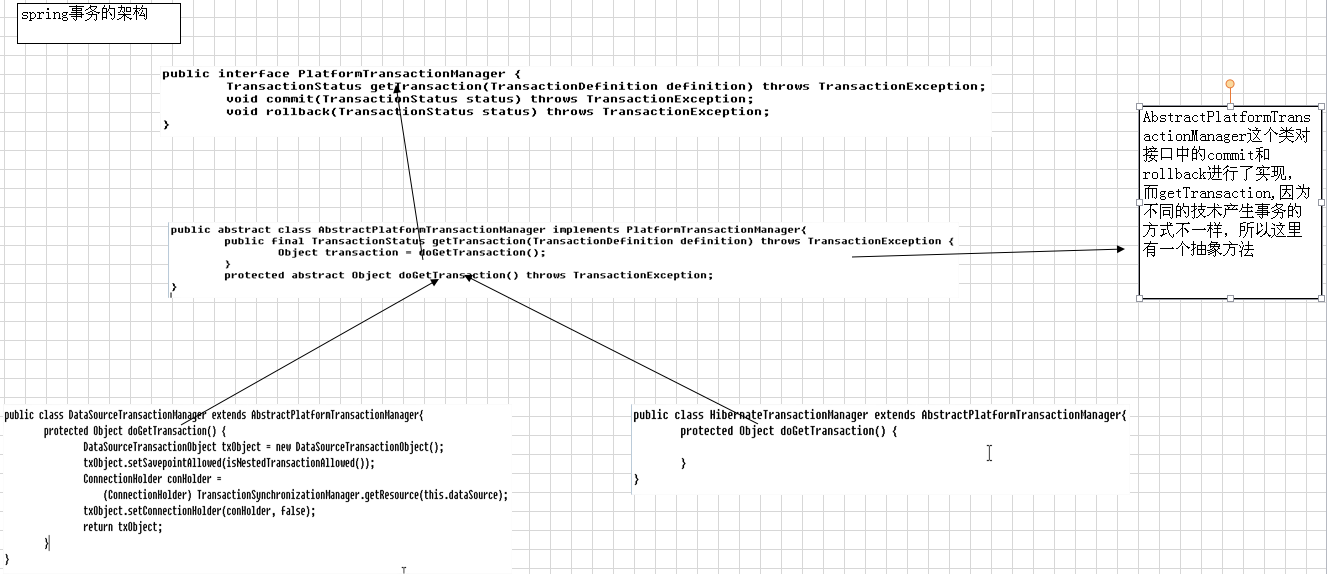
AbstractPlatformTransactionManager类是事务管理的核心类,我们只要能看懂此处的关系即可。而他则是实现的是PlatFormTransactionManager接口。
AbstractPlatformTransactionManager这个类对接口中的commit和 rollback进行了实现,而getTransaction,因为不同的技术产生事务的方式不一样,所以这里有一个抽象方法
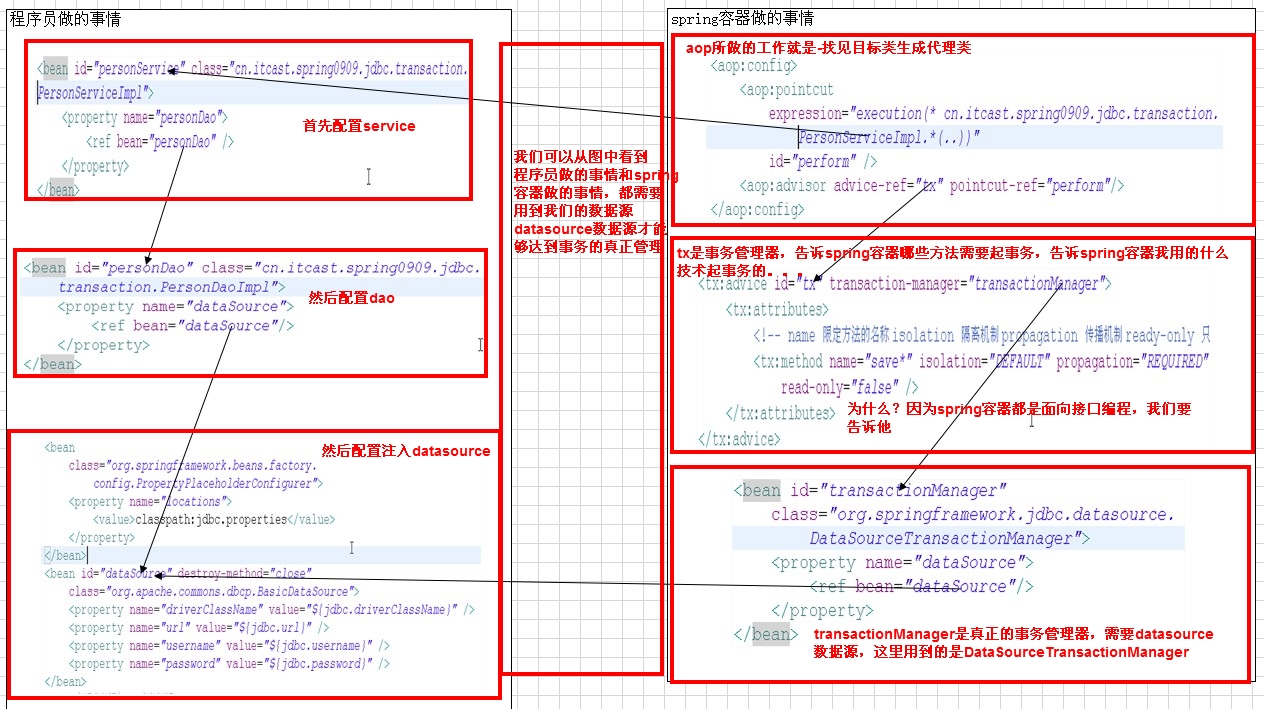
DataSource、TransactionManager这两部分只是会根据数据访问方式有所变化,比如使用Hibernate进行数据访问 时,DataSource实际为SessionFactory,TransactionManager的实现为 HibernateTransactionManager。

根据代理机制的不同,总结了五种Spring事务的配置方式,配置文件如下:
第一种方式:每个Bean都有一个代理
<beans xmlns="http://www.springframework.org/schema/beans"
xmlns:xsi="http://www.w3.org/2001/XMLSchema-instance"
xmlns:context="http://www.springframework.org/schema/context"
xmlns:aop="http://www.springframework.org/schema/aop"
xsi:schemaLocation="http://www.springframework.org/schema/beans
http://www.springframework.org/schema/beans/spring-beans-2.5.xsd
http://www.springframework.org/schema/context
http://www.springframework.org/schema/context/spring-context-2.5.xsd
http://www.springframework.org/schema/aop http://www.springframework.org/schema/aop/spring-aop-2.5.xsd">
<bean id="sessionFactory"
class="org.springframework.orm.hibernate3.LocalSessionFactoryBean">
<property name="configLocation" value="classpath:hibernate.cfg.xml" />
<property name="configurationClass" value="org.hibernate.cfg.AnnotationConfiguration" />
</bean>
<!-- 定义事务管理器(声明式的事务) -->
<bean id="transactionManager"
class="org.springframework.orm.hibernate3.HibernateTransactionManager">
<property name="sessionFactory" ref="sessionFactory" />
</bean>
<!-- 配置DAO -->
<bean id="userDaoTarget" class="com.bluesky.spring.dao.UserDaoImpl">
<property name="sessionFactory" ref="sessionFactory" />
</bean>
<bean id="userDao"
class="org.springframework.transaction.interceptor.TransactionProxyFactoryBean">
<!-- 配置事务管理器 -->
<property name="transactionManager" ref="transactionManager" />
<property name="target" ref="userDaoTarget" />
<property name="proxyInterfaces" value="com.bluesky.spring.dao.GeneratorDao" />
<!-- 配置事务属性 -->
<property name="transactionAttributes">
<props>
<prop key="*">PROPAGATION_REQUIRED</prop>
</props>
</property>
</bean>
</beans>
第二种方式:所有Bean共享一个代理基类
<beans xmlns="http://www.springframework.org/schema/beans"
xmlns:xsi="http://www.w3.org/2001/XMLSchema-instance"
xmlns:context="http://www.springframework.org/schema/context"
xmlns:aop="http://www.springframework.org/schema/aop"
xsi:schemaLocation="http://www.springframework.org/schema/beans
http://www.springframework.org/schema/beans/spring-beans-2.5.xsd
http://www.springframework.org/schema/context
http://www.springframework.org/schema/context/spring-context-2.5.xsd
http://www.springframework.org/schema/aop http://www.springframework.org/schema/aop/spring-aop-2.5.xsd">
<bean id="sessionFactory"
class="org.springframework.orm.hibernate3.LocalSessionFactoryBean">
<property name="configLocation" value="classpath:hibernate.cfg.xml" />
<property name="configurationClass" value="org.hibernate.cfg.AnnotationConfiguration" />
</bean>
<!-- 定义事务管理器(声明式的事务) -->
<bean id="transactionManager"
class="org.springframework.orm.hibernate3.HibernateTransactionManager">
<property name="sessionFactory" ref="sessionFactory" />
</bean>
<bean id="transactionBase"
class="org.springframework.transaction.interceptor.TransactionProxyFactoryBean"
lazy-init="true" abstract="true">
<!-- 配置事务管理器 -->
<property name="transactionManager" ref="transactionManager" />
<!-- 配置事务属性 -->
<property name="transactionAttributes">
<props>
<prop key="*">PROPAGATION_REQUIRED</prop>
</props>
</property>
</bean>
<!-- 配置DAO -->
<bean id="userDaoTarget" class="com.bluesky.spring.dao.UserDaoImpl">
<property name="sessionFactory" ref="sessionFactory" />
</bean>
<bean id="userDao" parent="transactionBase" >
<property name="target" ref="userDaoTarget" />
</bean>
</beans>
第三种方式:使用拦截器
<beans xmlns="http://www.springframework.org/schema/beans"
xmlns:xsi="http://www.w3.org/2001/XMLSchema-instance"
xmlns:context="http://www.springframework.org/schema/context"
xmlns:aop="http://www.springframework.org/schema/aop"
xsi:schemaLocation="http://www.springframework.org/schema/beans
http://www.springframework.org/schema/beans/spring-beans-2.5.xsd
http://www.springframework.org/schema/context
http://www.springframework.org/schema/context/spring-context-2.5.xsd
http://www.springframework.org/schema/aop http://www.springframework.org/schema/aop/spring-aop-2.5.xsd">
<bean id="sessionFactory"
class="org.springframework.orm.hibernate3.LocalSessionFactoryBean">
<property name="configLocation" value="classpath:hibernate.cfg.xml" />
<property name="configurationClass" value="org.hibernate.cfg.AnnotationConfiguration" />
</bean>
<!-- 定义事务管理器(声明式的事务) -->
<bean id="transactionManager"
class="org.springframework.orm.hibernate3.HibernateTransactionManager">
<property name="sessionFactory" ref="sessionFactory" />
</bean>
<bean id="transactionInterceptor"
class="org.springframework.transaction.interceptor.TransactionInterceptor">
<property name="transactionManager" ref="transactionManager" />
<!-- 配置事务属性 -->
<property name="transactionAttributes">
<props>
<prop key="*">PROPAGATION_REQUIRED</prop>
</props>
</property>
</bean>
<bean class="org.springframework.aop.framework.autoproxy.BeanNameAutoProxyCreator">
<property name="beanNames">
<list>
<value>*Dao</value>
</list>
</property>
<property name="interceptorNames">
<list>
<value>transactionInterceptor</value>
</list>
</property>
</bean>
<!-- 配置DAO -->
<bean id="userDao" class="com.bluesky.spring.dao.UserDaoImpl">
<property name="sessionFactory" ref="sessionFactory" />
</bean>
</beans>
第四种方式:使用tx标签配置的拦截器
<beans xmlns="http://www.springframework.org/schema/beans"
xmlns:xsi="http://www.w3.org/2001/XMLSchema-instance"
xmlns:context="http://www.springframework.org/schema/context"
xmlns:aop="http://www.springframework.org/schema/aop"
xmlns:tx="http://www.springframework.org/schema/tx"
xsi:schemaLocation="http://www.springframework.org/schema/beans
http://www.springframework.org/schema/beans/spring-beans-2.5.xsd
http://www.springframework.org/schema/context
http://www.springframework.org/schema/context/spring-context-2.5.xsd
http://www.springframework.org/schema/aop http://www.springframework.org/schema/aop/spring-aop-2.5.xsd
http://www.springframework.org/schema/tx http://www.springframework.org/schema/tx/spring-tx-2.5.xsd">
<context:annotation-config />
<context:component-scan base-package="com.bluesky" />
<bean id="sessionFactory"
class="org.springframework.orm.hibernate3.LocalSessionFactoryBean">
<property name="configLocation" value="classpath:hibernate.cfg.xml" />
<property name="configurationClass" value="org.hibernate.cfg.AnnotationConfiguration" />
</bean>
<!-- 定义事务管理器(声明式的事务) -->
<bean id="transactionManager"
class="org.springframework.orm.hibernate3.HibernateTransactionManager">
<property name="sessionFactory" ref="sessionFactory" />
</bean>
<tx:advice id="txAdvice" transaction-manager="transactionManager">
<tx:attributes>
<tx:method name="*" propagation="REQUIRED" />
</tx:attributes>
</tx:advice>
<aop:config>
<aop:pointcut id="interceptorPointCuts"
expression="execution(* com.bluesky.spring.dao.*.*(..))" />
<aop:advisor advice-ref="txAdvice"
pointcut-ref="interceptorPointCuts" />
</aop:config>
</beans>
第五种方式:全注解
<beans xmlns="http://www.springframework.org/schema/beans"
xmlns:xsi="http://www.w3.org/2001/XMLSchema-instance"
xmlns:context="http://www.springframework.org/schema/context"
xmlns:aop="http://www.springframework.org/schema/aop"
xmlns:tx="http://www.springframework.org/schema/tx"
xsi:schemaLocation="http://www.springframework.org/schema/beans
http://www.springframework.org/schema/beans/spring-beans-2.5.xsd
http://www.springframework.org/schema/context
http://www.springframework.org/schema/context/spring-context-2.5.xsd
http://www.springframework.org/schema/aop http://www.springframework.org/schema/aop/spring-aop-2.5.xsd
http://www.springframework.org/schema/tx http://www.springframework.org/schema/tx/spring-tx-2.5.xsd">
<context:annotation-config />
<context:component-scan base-package="com.bluesky" />
<tx:annotation-driven transaction-manager="transactionManager"/>
<bean id="sessionFactory"
class="org.springframework.orm.hibernate3.LocalSessionFactoryBean">
<property name="configLocation" value="classpath:hibernate.cfg.xml" />
<property name="configurationClass" value="org.hibernate.cfg.AnnotationConfiguration" />
</bean>
<!-- 定义事务管理器(声明式的事务) -->
<bean id="transactionManager"
class="org.springframework.orm.hibernate3.HibernateTransactionManager">
<property name="sessionFactory" ref="sessionFactory" />
</bean>
</beans>
此时在DAO上需加上@Transactional注解,如下:
import java.util.List;
import org.hibernate.SessionFactory;
import org.springframework.beans.factory.annotation.Autowired;
import org.springframework.orm.hibernate3.support.HibernateDaoSupport;
import org.springframework.stereotype.Component;
import com.bluesky.spring.domain.User;
@Transactional
@Component("userDao")
public class UserDaoImpl extends HibernateDaoSupport implements UserDao {
public List<User> listUsers() {
return this.getSession().createQuery("from User").list();
}

}
第一种方式与第二种方式是类似的,在所有方式中,第一种方式所需写的配置文件最多。
在Spring2.0时,一般都采用方式三,主要带来的好处就是配置文件的量变小。
在Spring2.5时,可以采用方式五,这样基本可以做到0配置了
Spring自学教程-声明式事务处理(六)的更多相关文章
- JAVAWEB 一一 框架整合(SSH,Spring+Struts2+Hibernate IOC/DI AOP声明式事务处理 定时任务)
package org.springframework.orm.hibernate3; import java.io.Serializable; import java.util.List; impo ...
- Spring3声明式事务处理事务无法回滚rollback分析(annotation与xml配置混用)
新项目试运行,DBA提示生产数据库一个表的事务20分钟都未提交,分析过程如下: 1.查看日志log文件,最近20分钟是否有error日志: 2.发现某表有insert错误日志,初步判断由该表插入异常, ...
- PHP系统声明式事务处理
转自:http://www.jianshu.com/p/34261804bc45 1.数据库事务 事务(Transaction)是并发控制的基本单位.所谓的事务,它是一个操作序列,这些操作要么都执行, ...
- Spring Cloud Feign 声明式服务调用
目录 一.Feign是什么? 二.Feign的快速搭建 三.Feign的几种姿态 参数绑定 继承特性 四.其他配置 Ribbon 配置 Hystrix 配置 一.Feign是什么? 通过对前面Sp ...
- Spring Cloud Feign声明式服务调用(转载)+遇到的问题
转载:原文 总结: 1.pom添加依赖 2.application中填写正确的eureka配置 3.启动项中增加注解 @EnableFeignClients 4.填写正确的调用接口 通过原文使用Fei ...
- Spring(四)-声明式事务
Spring-04 声明式事务 1.事务的定义 事务就是由一组逻辑上紧密关联的多个工作单元(数据库操作)而合并成一个整体,这些操作要么都执行,要么都不执行. 2.事务的特性:ACID 1)原子性A : ...
- Spring事务管理----声明式:利用TransactionProxyFactoryBean生成事务代理
通常建议采用声明式事务管理.声明式事务管理的优势非常明显:代码中无需关于关注事务逻辑,让spring声明式事务管理负责事务逻辑,声明式事务管理无需与具体的事务逻辑耦合,可以方便地在不同事务逻辑之间切换 ...
- Spring事务管理者与Spring事务注解--声明式事务
1.在Spring的applicationContext.xml中配置事务管理者 PS:具体的说明请看代码中的注释 Xml代码: <!-- 声明式事务管理的配置 --> <!-- 添 ...
- Spring学习之声明式事物管理
public List<Student> selectStudent() { Student s = new Student(); s.setName("zhengbin&quo ...
随机推荐
- 【servlet】 过滤器模板
EncodingFilter.java package Filter; import java.io.IOException; import javax.servlet.Filter; import ...
- ant android打包--学习第一弹
1. 准备工作 用eclipse创建一个android项目 安装ant和SDK,并且添加到系统环境变量 2.ant 使用 2.1 ant简单的帮助命令 ant -p 2.2 创建ant配置文件%AND ...
- oracle恢复一个数据表的方法
今天提交给客户方一个sql脚本去跟新历史数据,结果客户那边的部署人员犯了一个错误,直接拿系统账号去部署,结果第一段代码没有执行成功,结果第二段代码却执行成功了,并且已经提交了的,....由于事前没有备 ...
- Happy Matt Friends
Happy Matt Friends Time Limit: 6000/6000 MS (Java/Others) Memory Limit: 510000/510000 K (Java/Oth ...
- phpstudy 安装memcached服务和memcache扩展
memcached安装步骤: 首先,将下载好的memcahed解压到某个文件目录下,例如 C:\memcached 然后,在cmd里,输入"C:\memcached\memcached.ex ...
- Struts2中的验证框架
通过注解的方式,可以让方法不用验证 @SkipValidation public String toRegView() { System.out.println("toRegView&quo ...
- Arrays类与Array类探究
这里所说的Arrays类是util包中的java.util.Arrays,Array是反射包中的java.lang.reflect.Array. 首先介绍Arrays类的常用的静态方法: 1.排序方法 ...
- [Android]通过JNI访问并操作Bitmap的元素,支持RGB565和ARGB8888
[Android]通过JNI访问并操作Bitmap的元素,支持RGB565和ARGB8888 标签: androidbitmapjni 2014-05-09 20:35 2985人阅读 评论(1) 收 ...
- 两个byte[]拼接
//两个byte[]拼接 public byte[] copybyte(byte[] a, byte[] b, byte[] c, byte[] d, byte[] e)///,byte[] f,by ...
- equal与==区别
对于String中的“equal方法”和“==”一直有点混肴,今天重新看了一下他们两点的区别,记录下来让自己以后不在忘记! 先说“==”: “==”是用来比较两个String对象在内存中的存放地址是否 ...