
E. Karen and Supermarket
On the way home, Karen decided to stop by the supermarket to buy some groceries.
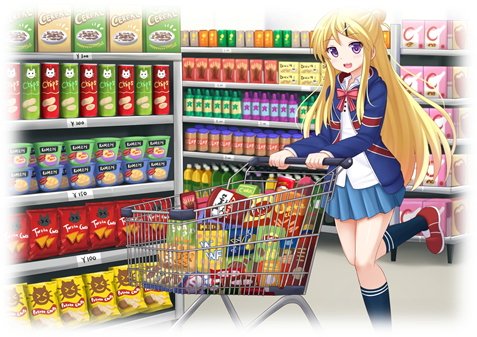
She needs to buy a lot of goods, but since she is a student her budget is still quite limited. In fact, she can only spend up to b dollars.
The supermarket sells n goods. The i-th good can be bought for ci dollars. Of course, each good can only be bought once.
Lately, the supermarket has been trying to increase its business. Karen, being a loyal customer, was given n coupons. If Karen purchases the i-th good, she can use the i-th coupon to decrease its price by di. Of course, a coupon cannot be used without buying the corresponding good.
There is, however, a constraint with the coupons. For all i ≥ 2, in order to use the i-th coupon, Karen must also use the xi-th coupon (which may mean using even more coupons to satisfy the requirement for that coupon).
Karen wants to know the following. What is the maximum number of goods she can buy, without exceeding her budget b?
The first line of input contains two integers n and b (1 ≤ n ≤ 5000, 1 ≤ b ≤ 109), the number of goods in the store and the amount of money Karen has, respectively.
The next n lines describe the items. Specifically:
- The i-th line among these starts with two integers, ci and di (1 ≤ di < ci ≤ 109), the price of the i-th good and the discount when using the coupon for the i-th good, respectively.
- If i ≥ 2, this is followed by another integer, xi (1 ≤ xi < i), denoting that the xi-th coupon must also be used before this coupon can be used.
Output a single integer on a line by itself, the number of different goods Karen can buy, without exceeding her budget.
6 16
10 9
10 5 1
12 2 1
20 18 3
10 2 3
2 1 5
4
5 10
3 1
3 1 1
3 1 2
3 1 3
3 1 4
5
In the first test case, Karen can purchase the following 4 items:
- Use the first coupon to buy the first item for 10 - 9 = 1 dollar.
- Use the third coupon to buy the third item for 12 - 2 = 10 dollars.
- Use the fourth coupon to buy the fourth item for 20 - 18 = 2 dollars.
- Buy the sixth item for 2 dollars.
The total cost of these goods is 15, which falls within her budget. Note, for example, that she cannot use the coupon on the sixth item, because then she should have also used the fifth coupon to buy the fifth item, which she did not do here.
In the second test case, Karen has enough money to use all the coupons and purchase everything.
题解:
一道比较经典的树形DP,一开始觉得就是做n次分组背包,但是发现是O(n^3)。
其实统计一下当前根节点所计算过的节点数,保存在size中就优化成O(n^2)了。
#include<iostream>

#include<cstdio>

#include<cstring>

#include<cmath>

#include<cstdlib>

#include<algorithm>

using namespace std;

int n,m;

struct node

{

    int next,to;

} edge[];

int head[],sze=;

void putin(int from,int to)

{

    sze++;

    edge[sze].next=head[from];

    edge[sze].to=to;

    head[from]=sze;

}

long long f[][][],size[],a[],b[];

void dfs(int u)

{

    int i;

    long long j,l;

    size[u]=;

    f[u][][]=;

    f[u][][]=a[u];

    f[u][][]=a[u]-b[u];

    for(i=head[u]; i!=-; i=edge[i].next)

    {

        int y=edge[i].to;

        dfs(y);

        for(j=size[u]; j>=; j--)

        {

            for(l=; l<=size[y]; l++)

            {

                f[u][j+l][]=min(f[u][j+l][],f[u][j][]+f[y][l][]);

                f[u][j+l][]=min(f[u][j+l][],min(f[u][j][]+f[y][l][],f[u][j][]+f[y][l][]));

            }

        }

        size[u]+=size[y];

    }

}

int main()

{

    int i,j,fa;

    memset(head,-,sizeof(head));

    scanf("%d%d",&n,&m);

    scanf("%I64d%I64d",&a[],&b[]);

    for(i=; i<=n; i++)

    {

        scanf("%I64d%I64d%d",&a[i],&b[i],&fa);

        putin(fa,i);

    }

    memset(f,/,sizeof(f));

    dfs();

    int ans=;

    for(i=; i<=n; i++)

    {

        if(f[][i][]<=m||f[][i][]<=m)ans=i;

    }

    printf("%d\n",ans);

    return ;

}
E. Karen and Supermarket的更多相关文章
- Codeforces 815C Karen and Supermarket 树形dp
Karen and Supermarket 感觉就是很普通的树形dp. dp[ i ][ 0 ][ u ]表示在 i 这棵子树中选择 u 个且 i 不用优惠券的最小花费. dp[ i ][ 1 ][ ...
- CF815C Karen and Supermarket
题目链接 CF815C Karen and Supermarket 题解 只要在最大化数量的前提下,最小化花费就好了 这个数量枚举ok, dp[i][j][1/0]表示节点i的子树中买了j件商品 i ...
- CF815C Karen and Supermarket [树形DP]
题目传送门 Karen and Supermarket On the way home, Karen decided to stop by the supermarket to buy some gr ...
- Codeforces Round #419 (Div. 1) C. Karen and Supermarket 树形DP
C. Karen and Supermarket On the way home, Karen decided to stop by the supermarket to buy some g ...
- codeforces 815C Karen and Supermarket
On the way home, Karen decided to stop by the supermarket to buy some groceries. She needs to buy a ...
- codeforces round #419 E. Karen and Supermarket
On the way home, Karen decided to stop by the supermarket to buy some groceries. She needs to buy a ...
- Codeforces 815 C Karen and Supermarket
On the way home, Karen decided to stop by the supermarket to buy some groceries. She needs to buy a ...
- 【Codeforces 815C】Karen and Supermarket
Codeforces 815 C 考虑树型dp. \(dp[i][0/1][k]\)表示现在在第i个节点, 父亲节点有没有选用优惠, 这个子树中买k个节点所需要花的最小代价. 然后转移的时候枚举i的一 ...
- Codeforces Round #419 (Div. 2) E. Karen and Supermarket(树形dp)
http://codeforces.com/contest/816/problem/E 题意: 去超市买东西,共有m块钱,每件商品有优惠卷可用,前提是xi商品的优惠券被用.问最多能买多少件商品? 思路 ...
随机推荐
- 取分组TOPN好理解案例
- hdfs 查看报告--命令(hdfs dfsadmin -report)
[hadoop@master sbin]$ hdfs dfsadmin -reportConfigured Capacity: 8202977280 (7.64 GB)Present Capacity ...
- 1111 Online Map (30)(30 分)
Input our current position and a destination, an online map can recommend several paths. Now your jo ...
- MySQL文本处理函数2_20160921
需求:从目前的 test_a03order 表里面提取出来产品规格,押金的数据 一.首先添加表字段我们在表里面添加这两个字段 命名为product_size,deposit 后期进行更新这两个字段内 ...
- 【Lintcode】119.Edit Distance
题目: Given two words word1 and word2, find the minimum number of steps required to convert word1 to w ...
- 一行代码解决IE6/7/8/9/10兼容问题
百度源代码如下 <!Doctype html><html xmlns=http://www.w3.org/1999/xhtml xmlns:bd=http://www.baidu.c ...
- Selenium Webdriver元素定位
http://www.cnblogs.com/qingchunjun/p/4208159.html
- request实现请求转发
ServletContext可以实现请求转发,request也可以. 在forward之前输入到response缓冲区中的数据,如果已经被发送到了客户端,forward将失败,抛出异常 在forwar ...
- Lagom学习 (二)
以一个官方的例子,开启lagom的学习之旅. 1: git clone https://github.com/lagom/activator-lagom-java-chirper.git. 2: ...
- openstack官方指导书
openstack官方网站:https://docs.openstack.org/ 由于openstack的官方文档有点多,所以这里对其进行梳理一下 Release Notes 发布版本 新功能,升级 ...