
input子系统事件处理层(evdev)的环形缓冲区【转】
在事件处理层(evdev.c)中结构体evdev_client定义了一个环形缓冲区(circular buffer),其原理是用数组的方式实现了一个先进先出的循环队列(circular queue),用以缓存内核驱动上报给用户层的input_event事件。
struct evdev_client {

    unsigned int head;                  // 头指针

    unsigned int tail;                  // 尾指针

    unsigned int packet_head;           // 包指针

    spinlock_t buffer_lock;

    struct fasync_struct *fasync;

    struct evdev *evdev;

    struct list_head node;

    unsigned int clk_type;

    bool revoked;

    unsigned long *evmasks[EV_CNT];

    unsigned int bufsize;               // 循环队列大小

    struct input_event buffer[];        // 循环队列数组

};
evdev_client对象维护了三个偏移量:head、tail以及packet_head。head、tail作为循环队列的头尾指针记录入口与出口偏移,那么包指针packet_head有什么作用呢?
packet_head
内核驱动处理一次输入,可能上报一到多个input_event事件,为表示处理完成,会在上报这些input_event事件后再上报一次同步事件。头指针head以input_event事件为单位,记录缓冲区的入口偏移量,而包指针packet_head则以“数据包”(一到多个input_event事件)为单位,记录缓冲区的入口偏移量。
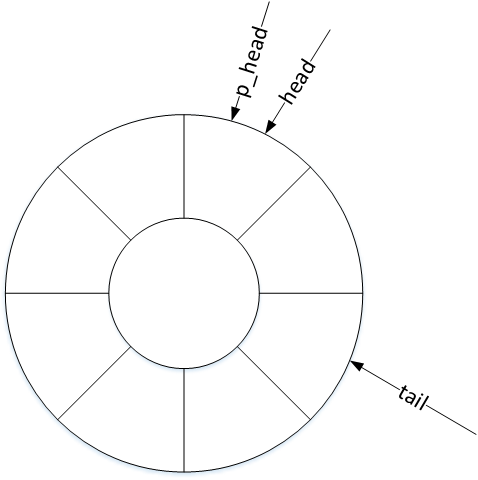
环形缓冲区的工作机制
- 循环队列入队算法:
head++;

head &= bufsize - 1;
- 循环队列出队算法:
tail++;

tail &= bufsize - 1;
- 循环队列已满条件:
head == tail
- 循环队列为空条件:
packet_head == tail
“求余”和“求与”
为解决头尾指针的上溢和下溢现象,使队列的元素空间可重复使用,一般循环队列的出入队算法都采用“求余”操作:
head = (head + 1) % bufsize; // 入队
tail = (tail + 1) % bufsize; // 出队
为避免计算代价高昂的“求余”操作,使内核运作更高效,input子系统的环形缓冲区采用了“求与”算法,这要求bufsize必须为2的幂,在后文中可以看到bufsize的值实际上是为64或者8的n倍,符合“求与”运算的要求。
环形缓冲区的构造以及初始化
用户层通过open()函数打开input设备节点时,调用过程如下:
open() -> sys_open() -> evdev_open()
在evdev_open()函数中完成了对evdev_client对象的构造以及初始化,每一个打开input设备节点的用户都在内核中维护了一个evdev_client对象,这些evdev_client对象通过evdev_attach_client()函数注册在evdev1对象的内核链表上。
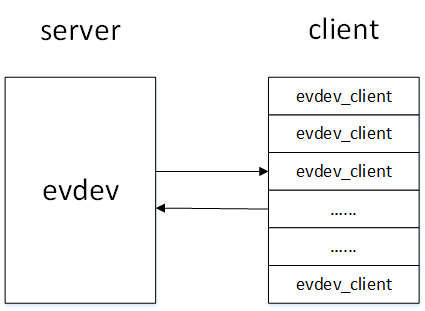
接下来我们具体分析evdev_open()函数:
static int evdev_open(struct inode *inode, struct file *file)

{

    struct evdev *evdev = container_of(inode->i_cdev, struct evdev, cdev);

    // 1.计算环形缓冲区大小bufsize以及evdev_client对象大小size

    unsigned int bufsize = evdev_compute_buffer_size(evdev->handle.dev);

    unsigned int size = sizeof(struct evdev_client) +

                    bufsize * sizeof(struct input_event);

    struct evdev_client *client;

    int error;

    // 2. 分配内核空间

    client = kzalloc(size, GFP_KERNEL | __GFP_NOWARN);

    if (!client)

        client = vzalloc(size);

    if (!client)

        return -ENOMEM;

    client->bufsize = bufsize;

    spin_lock_init(&client->buffer_lock);

    client->evdev = evdev;

    // 3. 注册到内核链表

    evdev_attach_client(evdev, client);

    error = evdev_open_device(evdev);

    if (error)

        goto err_free_client;

    file->private_data = client;

    nonseekable_open(inode, file);

    return 0;

 err_free_client:

    evdev_detach_client(evdev, client);

    kvfree(client);

    return error;

}
在evdev_open()函数中,我们看到了evdev_client对象从构造到注册到内核链表的过程,然而它是在哪里初始化的呢?其实kzalloc()函数在分配空间的同时就通过__GFP_ZERO标志做了初始化:
static inline void *kzalloc(size_t size, gfp_t flags)

{

    return kmalloc(size, flags | __GFP_ZERO);

}
生产者/消费者模型
内核驱动与用户程序就是典型的生产者/消费者模型,内核驱动产生input_event事件,然后通过input_event()函数写入环形缓冲区,用户程序通过read()函数从环形缓冲区中获取input_event事件。
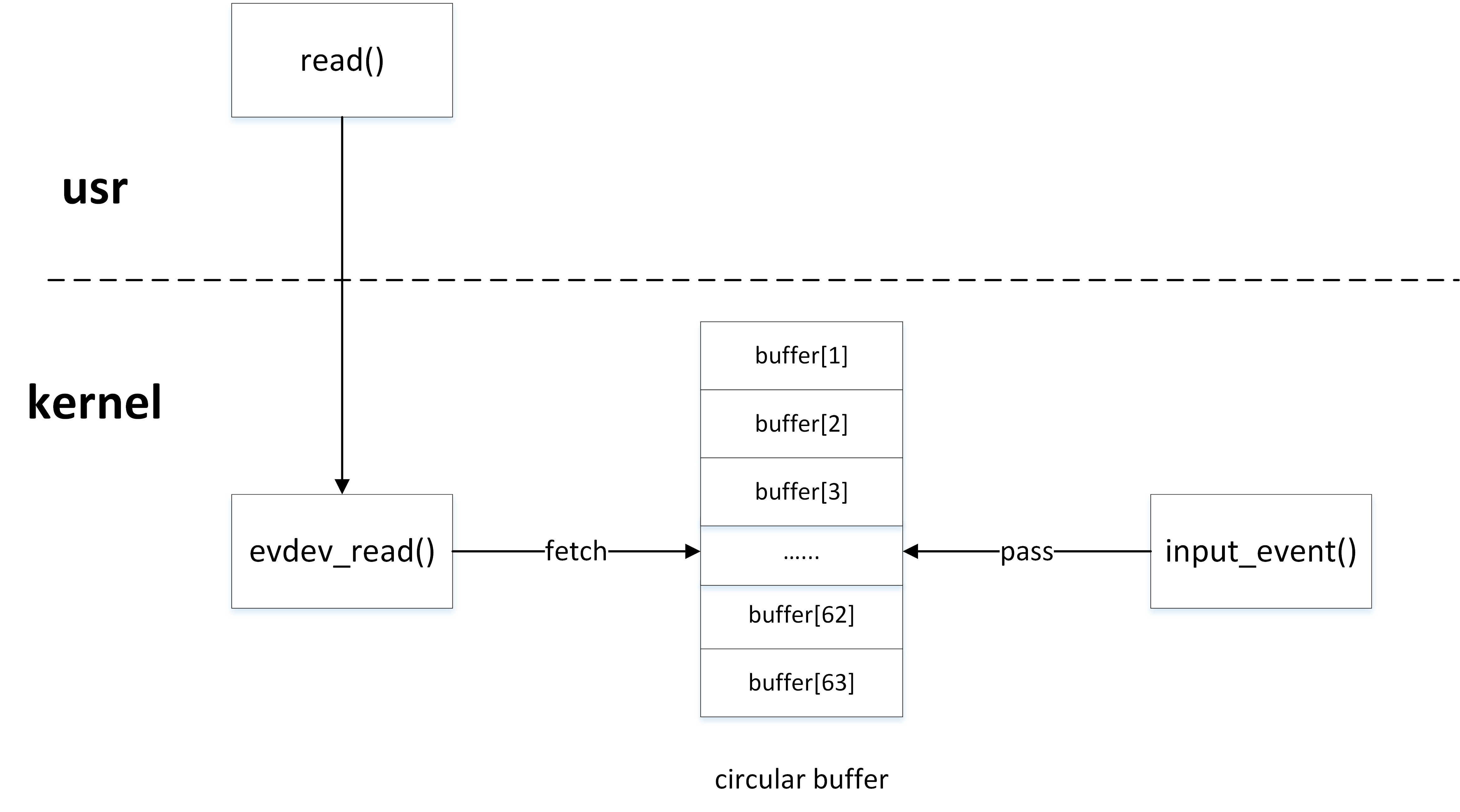
环形缓冲区的生产者
内核驱动作为生产者,通过input_event()上报input_event事件时,最终调用___pass_event()函数将事件写入环形缓冲区:
static void __pass_event(struct evdev_client *client,

             const struct input_event *event)

{

    // 将input_event事件存入缓冲区,队头head自增指向下一个元素空间

    client->buffer[client->head++] = *event;

    client->head &= client->bufsize - 1;

    // 当队头head与队尾tail相等时,说明缓冲区空间已满

    if (unlikely(client->head == client->tail)) {

        /*

         * This effectively "drops" all unconsumed events, leaving

         * EV_SYN/SYN_DROPPED plus the newest event in the queue.

         */

        client->tail = (client->head - 2) & (client->bufsize - 1);

        client->buffer[client->tail].time = event->time;

        client->buffer[client->tail].type = EV_SYN;

        client->buffer[client->tail].code = SYN_DROPPED;

        client->buffer[client->tail].value = 0;

        client->packet_head = client->tail;

    }

    // 当遇到EV_SYN/SYN_REPORT同步事件时,packet_head移动到队头head位置

    if (event->type == EV_SYN && event->code == SYN_REPORT) {

        client->packet_head = client->head;

        kill_fasync(&client->fasync, SIGIO, POLL_IN);

    }

}
环形缓冲区的消费者
用户程序作为消费者,通过read()函数读取input设备节点时,最终在内核调用evdev_fetch_next_event()函数从环形缓冲区中读取input_event事件:
static int evdev_fetch_next_event(struct evdev_client *client,

                  struct input_event *event)

{

    int have_event;

    spin_lock_irq(&client->buffer_lock);

    // 判缓冲区中是否有input_event事件

    have_event = client->packet_head != client->tail;

    if (have_event) {

    // 从缓冲区中读取一次input_event事件,队尾tail自增指向下一个元素空间

        *event = client->buffer[client->tail++];

        client->tail &= client->bufsize - 1;

        if (client->use_wake_lock &&

            client->packet_head == client->tail)

            wake_unlock(&client->wake_lock);

    }

    spin_unlock_irq(&client->buffer_lock);

    return have_event;

}
input子系统事件处理层(evdev)的环形缓冲区【转】的更多相关文章
- 【Linux高级驱动】input子系统框架
[1.input子系统框架(drivers\input)] 如何得出某个驱动所遵循的框架? 1) 通过网络搜索 2) 自己想办法跟内核代码! 2.1 定位此驱动是属于哪种类 ...
- 【Linux高级驱动】input子系统框架【转】
转自:http://www.cnblogs.com/lcw/p/3802617.html [1.input子系统框架(drivers\input)] 如何得出某个驱动所遵循的框架? 1) 通过网 ...
- 【驱动】input子系统全面分析
初识linux输入子系统 linux输入子系统(linux input subsystem)从上到下由三层实现,分别为:输入子系统事件处理层(EventHandler).输入子系统核心层(InputC ...
- linux输入子系统(6)-input子系统介绍及结构图
注:本系列转自: http://www.ourunix.org/post/290.html input子系统介绍 输入设备(如按键,键盘,触摸屏,鼠标,蜂鸣器等)是典型的字符设备,其一 ...
- input子系统详解
一.初识linux输入子系统 linux输入子系统(linux input subsystem)从上到下由三层实现,分别为:输入子系统事件处理层(EventHandler).输入子系统核心层(Inpu ...
- driver: Linux设备模型之input子系统详解
本节从整体上讲解了输入子系统的框架结构.有助于读者从整体上认识linux的输入子系统.在陷入代码分析的过程中,通过本节的知识能够找准方向,明白原理. 本节重点: 输入子系统的框架结构 各层对应内核中的 ...
- driver: Linux设备模型之input子系统具体解释
本节从总体上解说了输入子系统的框架结构.有助于读者从总体上认识linux的输入子系统.在陷入代码分析的过程中,通过本节的知识可以找准方向,明确原理. 本节重点: 输入子系统的框架结构 各层相应内核中的 ...
- linux kernel input 子系统分析
Linux 内核为了处理各种不同类型的的输入设备 , 比如说鼠标 , 键盘 , 操纵杆 , 触摸屏 , 设计并实现了一个对上层应用统一的试图的抽象层 , 即是Linux 输入子系统 . 输入子系统的层 ...
- Linux Input子系统
先贴代码: //input.c int input_register_handler(struct input_handler *handler) { //此处省略很多代码 list_for_each ...
随机推荐
- 测试工具之Match Tracer(正则表达式匹配工具)
这个工具完全界面化,非常好用,如果对自己写的正则表达式不够确定,可以使用这个软件来试水一下 从下面网址可以下载: http://www.regexlab.com/zh/mtracer/download ...
- yarn依赖管理工具,和fis3构建工具 gulp详细用法
看视频所了解到的,正在进行摸索. 参考:https://www.cnblogs.com/2050/p/4198792.html这篇介绍gulp的文章非常棒,唯一有一点,页面随时刷新的目前还没实现,不知 ...
- SVN服务器搭建实录
第一章 SVN介绍 1.1 什么是SVN(subversion) SVN是近年来崛起的非常优秀的版本管理工具,与CVS管理工具一样,SVN是一个固态的跨平台的开源的版本控制系统.SVN版本管理工具管 ...
- Django MTV
MTV模型 Django的MTV分别代表: Model(模型):负责业务对象与数据库的对象(ORM) Template(模版):负责如何把页面展示给用户 View(视图):负责业务逻辑,并在适当的时候 ...
- mysql 开发进阶篇系列 26 数据库RPM安装演示
一.概述 上一章讲到了RPM安装后的文件目录,这章还是介绍下安装步骤.也便以后做参考吧. 1. 移出centos 7系统自带的mysql库 yum remove mysql-libs 2. 将下载的m ...
- Android面试题(3)
1. 请描述下Activity的生命周期. activity的生命周期方法有: onCreate().onStart().onReStart().onResume().onPause().onSto ...
- 项目实战安装工具箱Busybox
1.Busybox是一个集成了100多个最常用Linux命令的软件工具箱,他在单一的可执行文件中提供了精简的UNIX工具集.该工具箱中包含了常见简单实用的工具如cat.echo.grep.find.m ...
- JS实现图片懒加载插件
一.前言 我在前几篇博客的记录中,有说自己在做一个图片懒加载的功能,然后巴拉巴拉的遇到哪些问题,结果做完了也没对懒加载这个功能做一些记录,所以这篇文章主要针对我所实现的思路,以及代码做个记录,实现不佳 ...
- varnish实践
一.实验环境: 1.软件版本: 系统版本:CentOS Linux release 7.4.1708 (Core) php版本:PHP 7.2 nginx版本:nginx-1.12.2 数据库版本:M ...
- 小白Python路上第一个难点,也是一个比较重要的点(闭包,迭代器,生成器)
一.闭包 闭包就是在内层函数中引用外层函数的变量 作用:1.保护变量不受侵害 2.让一个变量永驻内存 二.迭代器 Iterator:迭代器,包含_iter_()和_next_()函数 ...