
AOP执行增强-Spring 源码系列(5)
AOP增强实现-Spring 源码系列(5)
目录:
Ioc容器beanDefinition-Spring 源码(1)
Ioc容器BeanPostProcessor-Spring 源码(3)
AOP的核心就是个动态代理,Spring进行了大量抽象和封装形成一个方便上层使用的基础模块。
而动态代理的两种实现都在上一篇中提供了代码
直接ProxyFactoryBean入手来看Spring是如何产生这个代理对象的:
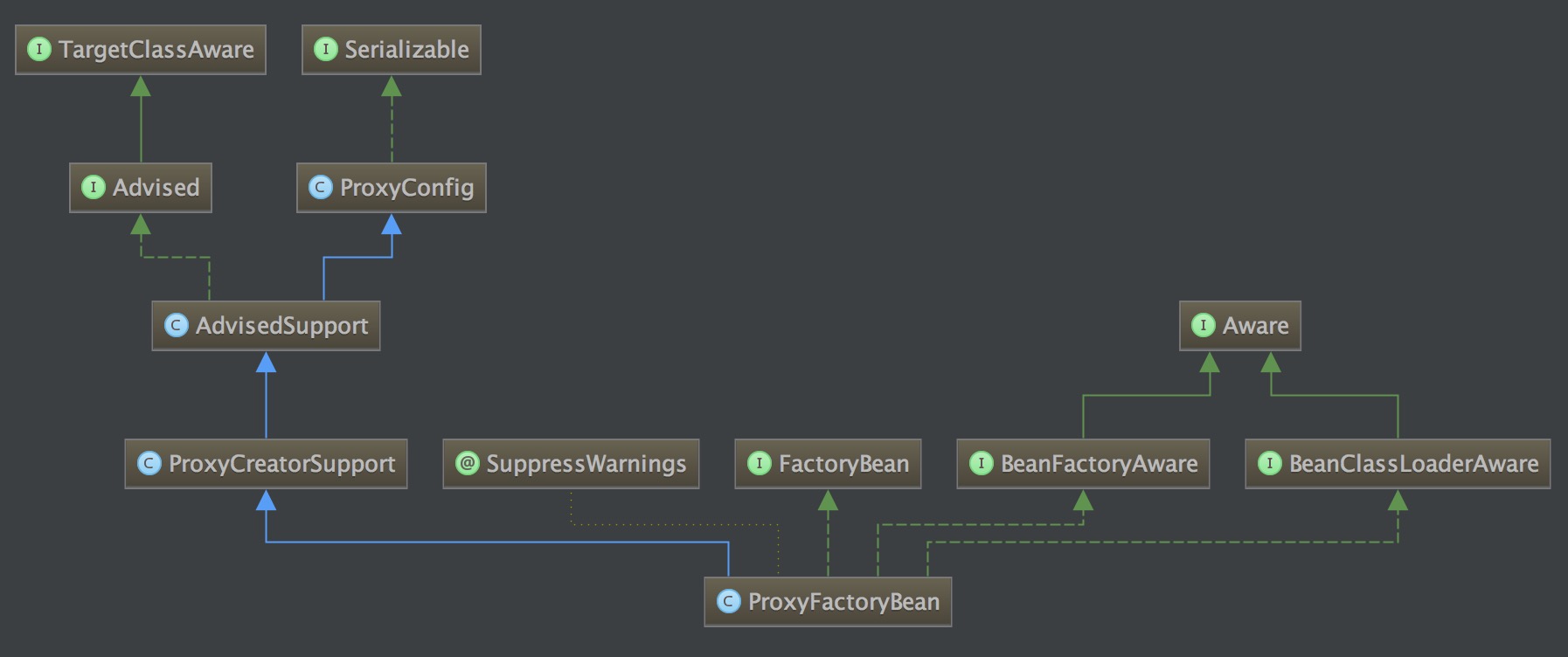
ProxyFactoryBean中getObject 作为入口:
    //获得代理

    //需要对target的增强都在这个入口里处理完成

    public Object getObject() throws BeansException {

      // 初始化通知链

        initializeAdvisorChain();

        // 默认单例

        if (isSingleton()) {

            return getSingletonInstance();

        }

        else {

            if (this.targetName == null) {

                logger.warn("Using non-singleton proxies with singleton targets is often undesirable. " +

                        "Enable prototype proxies by setting the 'targetName' property.");

            }

            return newPrototypeInstance();

        }

    }
singletonInstance缓存单例:
private synchronized Object getSingletonInstance() {

    //

        if (this.singletonInstance == null) {

            this.targetSource = freshTargetSource();

            if (this.autodetectInterfaces && getProxiedInterfaces().length == 0 && !isProxyTargetClass()) {

                // Rely on AOP infrastructure to tell us what interfaces to proxy.

                Class<?> targetClass = getTargetClass();

                if (targetClass == null) {

                    throw new FactoryBeanNotInitializedException("Cannot determine target class for proxy");

                }

                // 存住target继承的全部接口 ClassUtils api getAllInterfacesForClass

                setInterfaces(ClassUtils.getAllInterfacesForClass(targetClass, this.proxyClassLoader));

            }

            // Initialize the shared singleton instance.

            super.setFrozen(this.freezeProxy);

            // 这里createAopProxy产生一个AopProxy,在spring中的两个AopProxy实现你已经猜到了吧

            this.singletonInstance = getProxy(createAopProxy());

        }

        return this.singletonInstance;

    }

    // AopProxyFactory里去做了一个区分是用jdk的还是cglib

    protected final synchronized AopProxy createAopProxy() {

        if (!this.active) {

            activate();

        }

        // 默认DefaultAopProxyFactory

        return getAopProxyFactory().createAopProxy(this);

    }
DefaultAopProxyFactory实现,这个方法参数需要AdvisedSupport,在上面的调用代码上传的是this,因为它也继承了AdvisedSupport:
public AopProxy createAopProxy(AdvisedSupport config) throws AopConfigException {

        if (config.isOptimize() || config.isProxyTargetClass() || hasNoUserSuppliedProxyInterfaces(config)) {

            Class<?> targetClass = config.getTargetClass();

            if (targetClass == null) {

                throw new AopConfigException("TargetSource cannot determine target class: " +

                        "Either an interface or a target is required for proxy creation.");

            }

            // 有接口就用jdk方式

            if (targetClass.isInterface() || Proxy.isProxyClass(targetClass)) {

                return new JdkDynamicAopProxy(config);

            }

            return new ObjenesisCglibAopProxy(config);

        }

        else {

            return new JdkDynamicAopProxy(config);

        }

    }
再回去看getProxy方法:
public Object getProxy() {

// 调用JdkDynamicAopProxy 或 ObjenesisCglibAopProxy的getProxy方法

return createAopProxy().getProxy();

}
这里就只看一下JdkDynamicAopProxy实现,两者最终目的相同:
public Object getProxy(ClassLoader classLoader) {

   if (logger.isDebugEnabled()) {

      logger.debug("Creating JDK dynamic proxy: target source is " + this.advised.getTargetSource());

   }

   Class<?>[] proxiedInterfaces = AopProxyUtils.completeProxiedInterfaces(this.advised);

   // 筛选Equals方法和HashCode方法

   findDefinedEqualsAndHashCodeMethods(proxiedInterfaces);

   // 这个代码就熟悉了 调用newProxyInstance方法,最后传入的InvocationHandler是this,那么JdkDynamicAopProxy继承InvocationHandler,实现了invoke方法,增强都在这个方法里做文章

   return Proxy.newProxyInstance(classLoader, proxiedInterfaces, this);

}
invoke方法:
public Object invoke(Object proxy, Method method, Object[] args) throws Throwable {

   MethodInvocation invocation;

   Object oldProxy = null;

   boolean setProxyContext = false;

   TargetSource targetSource = this.advised.targetSource;

   Class<?> targetClass = null;

   Object target = null;

   try {

      if (!this.equalsDefined && AopUtils.isEqualsMethod(method)) {

         // The target does not implement the equals(Object) method itself.

         return equals(args[0]);

      }

      if (!this.hashCodeDefined && AopUtils.isHashCodeMethod(method)) {

         // The target does not implement the hashCode() method itself.

         return hashCode();

      }

      if (!this.advised.opaque && method.getDeclaringClass().isInterface() &&

            method.getDeclaringClass().isAssignableFrom(Advised.class)) {

         // Service invocations on ProxyConfig with the proxy config...

         return AopUtils.invokeJoinpointUsingReflection(this.advised, method, args);

      }

      Object retVal;

      if (this.advised.exposeProxy) {

         // Make invocation available if necessary.

         oldProxy = AopContext.setCurrentProxy(proxy);

         setProxyContext = true;

      }

      // May be null. Get as late as possible to minimize the time we "own" the target,

      // in case it comes from a pool.

      target = targetSource.getTarget();

      if (target != null) {

         targetClass = target.getClass();

      }

      // Get the interception chain for this method.

      // 拦截器链

      List<Object> chain = this.advised.getInterceptorsAndDynamicInterceptionAdvice(method, targetClass);

      // Check whether we have any advice. If we don't, we can fallback on direct

      // reflective invocation of the target, and avoid creating a MethodInvocation.

      if (chain.isEmpty()) {

         // We can skip creating a MethodInvocation: just invoke the target directly

         // Note that the final invoker must be an InvokerInterceptor so we know it does

         // nothing but a reflective operation on the target, and no hot swapping or fancy proxying.

         Object[] argsToUse = AopProxyUtils.adaptArgumentsIfNecessary(method, args);

         // 使用AopUtils直接使用反射机制调用目标方法

         retVal = AopUtils.invokeJoinpointUsingReflection(target, method, argsToUse);

      }

      else {

         // We need to create a method invocation...

         invocation = new ReflectiveMethodInvocation(proxy, target, method, args, targetClass, chain);

         // Proceed to the joinpoint through the interceptor chain.

         // 执行拦截器链

         retVal = invocation.proceed();

      }

      // Massage return value if necessary.

      Class<?> returnType = method.getReturnType();

      if (retVal != null && retVal == target && returnType.isInstance(proxy) &&

            !RawTargetAccess.class.isAssignableFrom(method.getDeclaringClass())) {

         // Special case: it returned "this" and the return type of the method

         // is type-compatible. Note that we can't help if the target sets

         // a reference to itself in another returned object.

         retVal = proxy;

      }

      else if (retVal == null && returnType != Void.TYPE && returnType.isPrimitive()) {

         throw new AopInvocationException(

               "Null return value from advice does not match primitive return type for: " + method);

      }

      return retVal;

   }

   finally {

      if (target != null && !targetSource.isStatic()) {

         // Must have come from TargetSource.

         targetSource.releaseTarget(target);

      }

      if (setProxyContext) {

         // Restore old proxy.

         AopContext.setCurrentProxy(oldProxy);

      }

   }

}
以上已经调用到增强部分的拦截器链,这些拦截器被调用由ReflectiveMethodInvocation来完成:
public Object proceed() throws Throwable {

        //    We start with an index of -1 and increment early.

        // 拦截器都被执行完成,跳出递归

        if (this.currentInterceptorIndex == this.interceptorsAndDynamicMethodMatchers.size() - 1) {

            return invokeJoinpoint();

        }

        Object interceptorOrInterceptionAdvice =

                this.interceptorsAndDynamicMethodMatchers.get(++this.currentInterceptorIndex);

        // 分两种拦截器:InterceptorAndDynamicMethodMatcher 和 MethodInterceptor

        if (interceptorOrInterceptionAdvice instanceof InterceptorAndDynamicMethodMatcher) {

            // Evaluate dynamic method matcher here: static part will already have

            // been evaluated and found to match.

            // 匹配一遍拦截器

            InterceptorAndDynamicMethodMatcher dm =

                    (InterceptorAndDynamicMethodMatcher) interceptorOrInterceptionAdvice;

            if (dm.methodMatcher.matches(this.method, this.targetClass, this.arguments)) {

              // 执行拦截器的invoke方法

                return dm.interceptor.invoke(this);

            }

            else {

                // Dynamic matching failed.

                // Skip this interceptor and invoke the next in the chain.

                // 递归调用

                return proceed();

            }

        }

        else {

            // It's an interceptor, so we just invoke it: The pointcut will have

            // been evaluated statically before this object was constructed.

            return ((MethodInterceptor) interceptorOrInterceptionAdvice).invoke(this);

        }

    }
其中调用目标方法的方式采用反射方式具体调用代码值得阅读,实际场景中可以借鉴:
protected Object invokeJoinpoint() throws Throwable {

   return AopUtils.invokeJoinpointUsingReflection(this.target, this.method, this.arguments);

}

public static Object invokeJoinpointUsingReflection(Object target, Method method, Object[] args)

      throws Throwable {

   // Use reflection to invoke the method.

   try {

      ReflectionUtils.makeAccessible(method);

      return method.invoke(target, args);

   }

   catch (InvocationTargetException ex) {

      // Invoked method threw a checked exception.

      // We must rethrow it. The client won't see the interceptor.

      throw ex.getTargetException();

   }

   catch (IllegalArgumentException ex) {

      throw new AopInvocationException("AOP configuration seems to be invalid: tried calling method [" +

            method + "] on target [" + target + "]", ex);

   }

   catch (IllegalAccessException ex) {

      throw new AopInvocationException("Could not access method [" + method + "]", ex);

   }

}
到这里,基本流通了一个代理类如何产生,实际增强执行,和目标方法最终被调用的流程,增强如何轻松配置的呢?
Object interceptorOrInterceptionAdvice =

                this.interceptorsAndDynamicMethodMatchers.get(++this.currentInterceptorIndex);
拦截器是叫interceptorsAndDynamicMethodMatchers的list在前面invoke方法中取得:
List<Object> chain = this.advised.getInterceptorsAndDynamicInterceptionAdvice(method, targetClass);
调用基类AdvisedSupport方法:
public List<Object> getInterceptorsAndDynamicInterceptionAdvice(Method method, Class<?> targetClass) {

  // 这里对缓存的key做了封装

   MethodCacheKey cacheKey = new MethodCacheKey(method);

   List<Object> cached = this.methodCache.get(cacheKey);

   if (cached == null) {

      cached = this.advisorChainFactory.getInterceptorsAndDynamicInterceptionAdvice(

            this, method, targetClass);

      this.methodCache.put(cacheKey, cached);

   }

   return cached;

}
advisorChainFactory 通知器链工厂
public List<Object> getInterceptorsAndDynamicInterceptionAdvice(

      Advised config, Method method, Class<?> targetClass) {

   // This is somewhat tricky... We have to process introductions first,

   // but we need to preserve order in the ultimate list.

   List<Object> interceptorList = new ArrayList<Object>(config.getAdvisors().length);

   Class<?> actualClass = (targetClass != null ? targetClass : method.getDeclaringClass());

   boolean hasIntroductions = hasMatchingIntroductions(config, actualClass);

   AdvisorAdapterRegistry registry = GlobalAdvisorAdapterRegistry.getInstance();

   // config.getAdvisors来自ioc容器的组装,也就是通过xml配置,注解等元数据来描述的通知器

   for (Advisor advisor : config.getAdvisors()) {

      if (advisor instanceof PointcutAdvisor) {

         // Add it conditionally.

         PointcutAdvisor pointcutAdvisor = (PointcutAdvisor) advisor;

         if (config.isPreFiltered() || pointcutAdvisor.getPointcut().getClassFilter().matches(actualClass)) {

           // 通知器转变成拦截器,拦截器才是执行链路上可以直接用于增强的

            MethodInterceptor[] interceptors = registry.getInterceptors(advisor);

            MethodMatcher mm = pointcutAdvisor.getPointcut().getMethodMatcher();

            // 匹配规则在Pointcut里

            if (MethodMatchers.matches(mm, method, actualClass, hasIntroductions)) {

               if (mm.isRuntime()) {

                  // Creating a new object instance in the getInterceptors() method

                  // isn't a problem as we normally cache created chains.

                  for (MethodInterceptor interceptor : interceptors) {

                     interceptorList.add(new InterceptorAndDynamicMethodMatcher(interceptor, mm));

                  }

               }

               else {

                  interceptorList.addAll(Arrays.asList(interceptors));

               }

            }

         }

      }

      else if (advisor instanceof IntroductionAdvisor) {

         IntroductionAdvisor ia = (IntroductionAdvisor) advisor;

         if (config.isPreFiltered() || ia.getClassFilter().matches(actualClass)) {

            Interceptor[] interceptors = registry.getInterceptors(advisor);

            interceptorList.addAll(Arrays.asList(interceptors));

         }

      }

      else {

         Interceptor[] interceptors = registry.getInterceptors(advisor);

         interceptorList.addAll(Arrays.asList(interceptors));

      }

   }

   return interceptorList;

}
将advisor转化成拦截器在DefaultAdvisorAdapterRegistry中完成:
public MethodInterceptor[] getInterceptors(Advisor advisor) throws UnknownAdviceTypeException {

   List<MethodInterceptor> interceptors = new ArrayList<MethodInterceptor>(3);

   Advice advice = advisor.getAdvice();

   if (advice instanceof MethodInterceptor) {

      interceptors.add((MethodInterceptor) advice);

   }

   // 遍历全部适配器,调用supportsAdvice方法

   for (AdvisorAdapter adapter : this.adapters) {

      if (adapter.supportsAdvice(advice)) {

         interceptors.add(adapter.getInterceptor(advisor));

      }

   }

   if (interceptors.isEmpty()) {

      throw new UnknownAdviceTypeException(advisor.getAdvice());

   }

   return interceptors.toArray(new MethodInterceptor[interceptors.size()]);

}
这里使用了适配器模式,也是spring中经常拿来做例子的代码,因为非常清晰。
MethodBeforeAdviceAdapter

AfterReturningAdviceAdapter

ThrowsAdviceAdapter
对应这三个Advice
MethodBeforeAdvice

AfterReturningAdvice

ThrowsAdvice
转变的三个拦截器:
MethodBeforeAdviceInterceptor

AfterReturningAdviceInterceptor

ThrowsAdviceInterceptor
而在前面的流程中调用到拦截器的入口在ReflectiveMethodInvocation的interceptor.invoke(this)方法,这三个拦截器的invoke方法如下:
public Object invoke(MethodInvocation mi) throws Throwable {

   this.advice.before(mi.getMethod(), mi.getArguments(), mi.getThis() );

   return mi.proceed();

}

public AfterReturningAdviceInterceptor(AfterReturningAdvice advice) {

   Assert.notNull(advice, "Advice must not be null");

   this.advice = advice;

}

public Object invoke(MethodInvocation mi) throws Throwable {

   try {

      return mi.proceed();

   }

   catch (Throwable ex) {

      Method handlerMethod = getExceptionHandler(ex);

      if (handlerMethod != null) {

         invokeHandlerMethod(mi, ex, handlerMethod);

      }

      throw ex;

   }

}
注意mi.proceed();的执行位置,这里继续递归了ReflectiveMethodInvocation的interceptor.invoke(this)方法
那么这个代码最终就可以实现一个执行链:
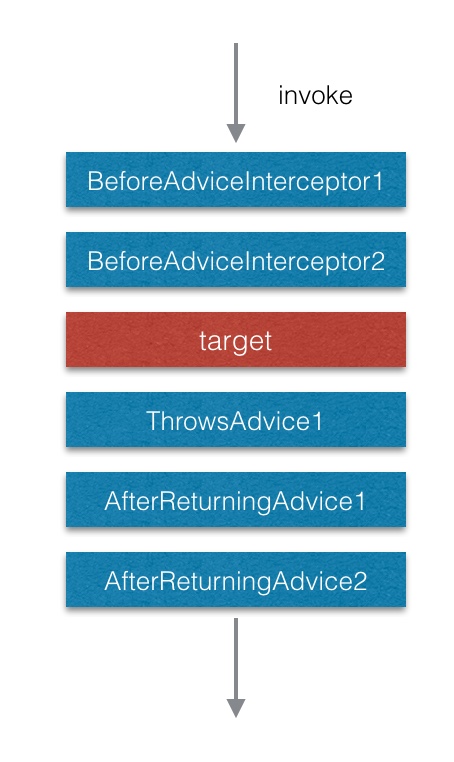
这样就明白了如何在目标方法执行后再执行配置的增强业务代码,我个人觉得这个递归的实现是整个串联执行链路的核心了,不得不说递归的写法非常简洁而高效。
AOP执行增强-Spring 源码系列(5)的更多相关文章
- 事件机制-Spring 源码系列(4)
事件机制-Spring 源码系列(4) 目录: Ioc容器beanDefinition-Spring 源码(1) Ioc容器依赖注入-Spring 源码(2) Ioc容器BeanPostProcess ...
- Ioc容器依赖注入-Spring 源码系列(2)
Ioc容器依赖注入-Spring 源码系列(2) 目录: Ioc容器beanDefinition-Spring 源码(1) Ioc容器依赖注入-Spring 源码(2) Ioc容器BeanPostPr ...
- Ioc容器BeanPostProcessor-Spring 源码系列(3)
Ioc容器BeanPostProcessor-Spring 源码系列(3) 目录: Ioc容器beanDefinition-Spring 源码(1) Ioc容器依赖注入-Spring 源码(2) Io ...
- Ioc容器beanDefinition-Spring 源码系列(1)
Ioc容器beanDefinition-Spring 源码系列(1) 目录: Ioc容器beanDefinition-Spring 源码(1) Ioc容器依赖注入-Spring 源码(2) Ioc容器 ...
- Spring源码系列 — Bean生命周期
前言 上篇文章中介绍了Spring容器的扩展点,这个是在Bean的创建过程之前执行的逻辑.承接扩展点之后,就是Spring容器的另一个核心:Bean的生命周期过程.这个生命周期过程大致经历了一下的几个 ...
- Spring源码系列 — BeanDefinition扩展点
前言 前文介绍了Spring Bean的生命周期,也算是XML IOC系列的完结.但是Spring的博大精深,还有很多盲点需要摸索.整合前面的系列文章,从Resource到BeanDefinition ...
- Spring源码系列 — BeanDefinition
一.前言 回顾 在Spring源码系列第二篇中介绍了Environment组件,后续又介绍Spring中Resource的抽象,但是对于上下文的启动过程详解并未继续.经过一个星期的准备,梳理了Spri ...
- Spring源码系列(三)--spring-aop的基础组件、架构和使用
简介 前面已经讲完 spring-bean( 详见Spring ),这篇博客开始攻克 Spring 的另一个重要模块--spring-aop. spring-aop 可以实现动态代理(底层是使用 JD ...
- Spring源码系列(四)--spring-aop是如何设计的
简介 spring-aop 用于生成动态代理类(底层是使用 JDK 动态代理或 cglib 来生成代理类),搭配 spring-bean 一起使用,可以使 AOP 更加解耦.方便.在实际项目中,spr ...
随机推荐
- HDU1172(枚举)
猜数字 Time Limit: 20000/10000 MS (Java/Others) Memory Limit: 65536/32768 K (Java/Others)Total Submi ...
- 开发团队在TFS中使用Git Repository (二)
使用Git作分支时,仅仅是对提交历史记录的一个引用,创建分支成本非常低,分支的切换快且简单.在分支管理方面,相对其他的版本管理工具,Git可谓是一骑绝尘. 开发过程中,我们可以针对任何的大小功能进行分 ...
- WinForm DataGridView增删改查
DataGridView连接数据库对表进行增删改查 一.绑定数据源 //做一个变量控制页面刷新 ; public Form1() { InitializeComponent(); } private ...
- vs基础:无法断点调试dll项目 无法命中
调试vs时,经常会出现,你设置了dll项目的一些断点,可f5之后,这些断点无效.时代定制的程序组的童鞋告诉你解决方法:在解决方案上右键“属性”,点击左侧树“配置属性”-->“配置”,右侧项目列表 ...
- Windows下搭建HTTP/HTTPS服务器及测试过程
1 安装Apache http://www.apachehaus.com/cgi-bin/download.plx 选择合适的版本下载 本次下载的是 Apache 2.4.x VC14 Apache版 ...
- matlab 利用while循环计算平均值和方差(第二版)
第一版中因为公式中含有:分母项:n(n-1),而程序并没有对输入数进行判定,如果仅仅输入一个或者一个都不输入,将会出现除0的情况 基于此,进行第二版改进. 代码: % 脚本文件:states.m % ...
- DLL 导出函数
DLL的链接方式分为两种:隐式链接和显式链接 DLL导出的函数 和 导出类在调用时,有些区别,这里暂时不讲,直说简单的导出函数: 隐式链接: #include "stdafx.h" ...
- devexpress实现单元格合并以及依据条件合并单元格
1.devexpress实现单元格合并非常的简单,只要设置属性[AllowCellMerge=True]就可以了,实现效果如下图: 2.但是在具体要求中并非需要所有的相同单元格都合并,可能需要其他的条 ...
- BZOJ 2456: mode(乱搞)
挺神奇的一道题,被1M内存坑了好久= =,这道题得记录当前众数以及众数与其他数的差,如果现在读入的这个数与众数相等,就加1,否则减一,如果差为0就替代掉他,可以证明如果众数存在的话这样一定能找出来 C ...
- JavaScript中值类型和引用类型的区别
JavaScript的数据类型分为两类:原始类型和对象类型.其中,原始类型包括:数字.字符串和布尔值.此外,JavaScript中还有两个特殊的原始值:null和undefined,它们既不是数字也不 ...