
Shrio04 自定义Realm

1 说明
1.1 Realm的作用
Realm和认证和授权时的数据交互有关,相当于DAO层。
1.2 AuthorizingRealm
》层次关系图
》作用
继承AuthorizingRealm类后重写doGetAuthorizationInfo和doGetAuthenticationInfo就可以实现授权和认证逻辑。
2 代码实现
2.1 创建一个maven项目并引入shiro、junit依赖
2.2 创建一个类继承AuthorizingRealm
2.3 重写doGetAuthorizationInfo和doGetAuthenticationInfo
2.4 完整代码
package com.xunyji.demo04.realm;

import com.xunyji.demo0.StringUtilsXyj;

import org.apache.shiro.authc.AuthenticationException;

import org.apache.shiro.authc.AuthenticationInfo;

import org.apache.shiro.authc.AuthenticationToken;

import org.apache.shiro.authc.SimpleAuthenticationInfo;

import org.apache.shiro.authz.AuthorizationInfo;

import org.apache.shiro.authz.SimpleAuthorizationInfo;

import org.apache.shiro.crypto.hash.Md5Hash;

import org.apache.shiro.realm.AuthorizingRealm;

import org.apache.shiro.subject.PrincipalCollection;

import org.apache.shiro.util.ByteSource;

import org.slf4j.Logger;

import org.slf4j.LoggerFactory;

import java.util.HashMap;

import java.util.HashSet;

import java.util.Map;

import java.util.Set;

/**

 * @author AltEnter

 * @create 2019-01-23 20:32

 * @desc 自定义Realm,md

 **/

public class CustomRealm extends AuthorizingRealm {

    private Logger log = LoggerFactory.getLogger(this.getClass());

    private Map<String, String> userMap = new HashMap<String, String>();

    {

        getName();

//        userMap.put("fury", "111111");

//        userMap.put("fury", "96e79218965eb72c92a549dd5a330112");

        userMap.put("fury", "66b747dd6c7c7c8ca4227a67fff8ea6e");

    }

    /**

     * 授权逻辑

     * @param principals

     * @return

     */

    @Override

    protected AuthorizationInfo doGetAuthorizationInfo(PrincipalCollection principals) {

        // 01 获取用户名

        String username = (String) principals.getPrimaryPrincipal();

        // 02 获取权限集合

        Set<String> permissionSet = getPermissionSetByUsername(username);

        // 03 获取角色集合

        Set<String> roleSet = getRoleSetByUsername(username);

        // 04 封装SimpleAuthorizationInfo对象

        SimpleAuthorizationInfo simpleAuthorizationInfo = new SimpleAuthorizationInfo();

        simpleAuthorizationInfo.setRoles(roleSet);

        simpleAuthorizationInfo.setStringPermissions(permissionSet);

        return simpleAuthorizationInfo;

    }

    /**

     * 根据用户名获取权限集合

     * @param username

     * @return

     */

    private Set<String> getPermissionSetByUsername(String username) {

        HashSet<String> permissionSet = new HashSet<>();

        permissionSet.add("user:create");

        permissionSet.add("user:delete");

        permissionSet.add("user:update");

        return permissionSet;

    }

    /**

     * 根据用户名获取角色集合

     * @param username

     * @return

     */

    private Set<String> getRoleSetByUsername(String username) {

        HashSet<String> roleSet = new HashSet<>();

        roleSet.add("admin");

        roleSet.add("user");

        return roleSet;

    }

    /**

     * 认证逻辑

     * @param token

     * @return

     * @throws AuthenticationException

     */

    @Override

    protected AuthenticationInfo doGetAuthenticationInfo(AuthenticationToken token) throws AuthenticationException {

        // 01 获取前端用户名和密码

        String username = (String) token.getPrincipal();

        String passoword = new String((char[]) token.getCredentials());

        if (StringUtilsXyj.isEmpty(passoword) || StringUtilsXyj.isEmpty(username)) {

            String msg = "doGetAuthenticationInfo - 用户名和密码不能为空";

            log.info(msg);

            throw new RuntimeException(msg);

        }

        log.info(String.format("doGetAuthenticationInfo - 前端传过来的用户信息为 - 用户名为:%s ,用户密码为:%s", username, passoword));

        System.out.println(String.format("doGetAuthenticationInfo - 前端传过来的用户信息为 - 用户名为:%s ,用户密码为:%s", username, passoword));

        // 02 根据用户名获取用户密码

        String pwd = getPasswordByUsername(username);

        // 03 前端密码加密加盐处理

        passoword = string2Md5Hash(passoword, "AltEnter");

        System.out.println("加盐加密后的密码为:" + pwd);

        // 04 密码比对

        if (passoword.equals(pwd)) {

            // 封装SimpleAuthenticationInfo对象

            SimpleAuthenticationInfo simpleAuthenticationInfo = new SimpleAuthenticationInfo(username, passoword, getName());

            // 加盐处理

            simpleAuthenticationInfo.setCredentialsSalt(ByteSource.Util.bytes("AltEnter"));

            return simpleAuthenticationInfo;

        } else {

            String msg = "doGetAuthenticationInfo - 用户名或者密码错误";

            log.info(msg);

            System.out.println(msg);

            throw new RuntimeException(msg);

        }

    }

    /**

     * 密码加密加盐处理

     * @param password 待加密密码

     * @param salt 盐

     * @return 经过加密和加盐处理后的密码

     */

    private String string2Md5Hash(String password, String salt) {

        return new Md5Hash(password, salt).toString();

    }

    /**

     * 根据用户名获取密码

     * @param username

     * @return

     */

    private String getPasswordByUsername(String username) {

        String pwd = userMap.get(username);

        return pwd;

    }

    public static void main(String[] args) {

//        Md5Hash md5Hash = new Md5Hash("111111");

//        System.out.println("111111加密后的结果为:" + md5Hash.toString());

//        96e79218965eb72c92a549dd5a330112

        Md5Hash md5Hash = new Md5Hash("111111", "AltEnter");

        System.out.println("111111经过MD5加密和AltEnter加盐后的结果为:" + md5Hash.toString());

//        66b747dd6c7c7c8ca4227a67fff8ea6e

    }

}
3 测试类
package com.xunyji.demo04.realm;

import org.apache.shiro.SecurityUtils;

import org.apache.shiro.authc.UsernamePasswordToken;

import org.apache.shiro.authc.credential.HashedCredentialsMatcher;

import org.apache.shiro.authc.pam.FirstSuccessfulStrategy;

import org.apache.shiro.authc.pam.ModularRealmAuthenticator;

import org.apache.shiro.mgt.DefaultSecurityManager;

import org.apache.shiro.subject.Subject;

import org.junit.Test;

import static org.junit.Assert.*;

public class CustomRealmTest {

    @Test

    public void test01() {

        CustomRealm customRealm = new CustomRealm();

        // shiro加密 start

        HashedCredentialsMatcher matcher = new HashedCredentialsMatcher();

        //选择加密方式

        matcher.setHashAlgorithmName("md5");

        //加密次数

        matcher.setHashIterations(1);

        // 给自定义Realm设置加密规则

        customRealm.setCredentialsMatcher(matcher);

//        shiro加密 end

        // 更改认证策略 start

        DefaultSecurityManager defaultSecurityManager = new DefaultSecurityManager();

        FirstSuccessfulStrategy firstSuccessfulStrategy = new FirstSuccessfulStrategy();

        ModularRealmAuthenticator modularRealmAuthenticator = new ModularRealmAuthenticator();

        modularRealmAuthenticator.setAuthenticationStrategy(firstSuccessfulStrategy);

        defaultSecurityManager.setAuthenticator(modularRealmAuthenticator);

        // 更改认证策略 end

        defaultSecurityManager.setRealm(customRealm);

        SecurityUtils.setSecurityManager(defaultSecurityManager);

        Subject subject = SecurityUtils.getSubject();

        UsernamePasswordToken token = new UsernamePasswordToken("fury", "111111");

        subject.login(token);

        System.out.println(String.format("认证信息为:%s", subject.isAuthenticated()));

        System.out.println(String.format("拥有admin角色吗? - %s", subject.hasRole("admin")));

        System.out.println(String.format("拥有user:create权限吗? - %s", subject.isPermitted("user:create")));

        subject.logout();

        System.out.println(String.format("认证信息为:%s", subject.isAuthenticated()));

    }

}
4 注意
4.1 可以给SecurityManager设置认证策略

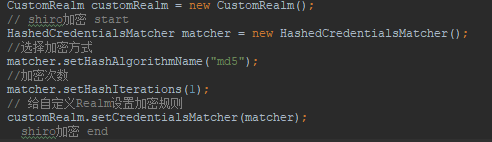
4.2 可以给Realm设置MD5加密
4.3 SecurityManager必须先设置认证策略再设置Realm

Shrio04 自定义Realm的更多相关文章
- 权限框架 - shiro 自定义realm
上篇文章中是使用的默认realm来实现的简单登录,这仅仅只是个demo,真正项目中使用肯定是需要连接数据库的 首先创建自定义realm文件,如下: 在shiro中注入自定义realm的完全限定类名: ...
- Shrio认证详解+自定义Realm
Authentication(身份认证)是Shiro权限控制的第一步,用来告诉系统你就是你. 在提交认证的时候,我们需要给系统提交两个信息: Principals:是一个表示用户的唯一属性,可以是用户 ...
- Shiro第二篇【介绍Shiro、认证流程、自定义realm、自定义realm支持md5】
什么是Shiro shiro是apache的一个开源框架,是一个权限管理的框架,实现 用户认证.用户授权. spring中有spring security (原名Acegi),是一个权限框架,它和sp ...
- shiro(二)自定义realm,模拟数据库查询验证
自定义一个realm类,实现realm接口 package com; import org.apache.shiro.authc.*; import org.apache.shiro.realm.Re ...
- shiro自定义Realm
1.1 自定义Realm 上边的程序使用的是shiro自带的IniRealm,IniRealm从ini配置文件中读取用户的信息,大部分情况下需要从系统的数据库中读取用户信息,所以需要自定义realm. ...
- Shiro入门 - 通过自定义Realm连数数据库进行授权
shiro-realm.ini [main] #自定义Realm myRealm=test.shiro.MyRealm #将myRealm设置到securityManager,相当于Spring中的注 ...
- Shiro入门 - 通过自定义Realm连数数据库进行认证(md5+salt形式)
shiro-realm-md5.ini [main] #定义凭证匹配器 credentialsMatcher=org.apache.shiro.authc.credential.HashedCrede ...
- Shiro入门 - 通过自定义Realm连数数据库进行认证
添加shiro-realm.ini文件 [main] #自定义Realm myRealm=test.shiro.MyRealm #将myRealm设置到securityManager,相当于Sprin ...
- shiro教程2(自定义Realm)
通过shiro教程1我们发现仅仅将数据源信息定义在ini文件中与我们实际开发环境有很大不兼容,所以我们希望能够自定义Realm. 自定义Realm的实现 创建自定义Realmjava类 创建一个jav ...
随机推荐
- PHPExcel解决内存占用过大问题-设置单元格对象缓存
PHPExcel解决内存占用过大问题-设置单元格对象缓存 PHPExcel是一个很强大的处理Excel的PHP开源类,但是很大的一个问题就是它占用内存太大,从1.7.3开始,它支持设置cell的缓存方 ...
- Hadoop/Spark入门学习笔记(完结)
Hadoop基础及演练 ---第1章 初识大数据 大数据是一个概念也是一门技术,是在以Hadoop为代表的大数据平台框架上进行各种数据分析的技术. ---第2章 Hadoop核心HDFS Hadoop ...
- Linux运维学习笔记-通配符及正则表达式知识总结
通配符: * 代表所有 ? 任意一个字符 : 两个命令的分隔符 # 注释 | 管道,将|前命令的执行结果作为|后命令的输入 ~ 用户的家目录 - 上一次的目录 $ 变量前面 ...
- .net core microservices 架构之 分布式
.net core microservices 架构之 分布式 一:简介 自动计算都是常驻内存的,没有人机交互.我们经常用到的就是console job和sql job了.sqljob有自己的宿 ...
- python的继承顺序
python的继承顺序 python 创建类时分为新式类和旧式类 class A: # 经典类 def __init__(self): pass # 新类,可以在这里加 __metaclass__ = ...
- python 之 collections
Python作为一个“内置电池”的编程语言,标准库里面拥有非常多好用的模块.比如今天想给大家 介绍的 collections 就是一个非常好的例子. 基本介绍 我们都知道,Python拥有一些内置的数 ...
- c#:Json字符串转成xml对象
没看到.net framework中有这样的功能, 懒得到处找了, 索性花点时间自己写一个 /* * Created by SharpDevelop. * Date: 2013/6/24 * User ...
- RK3288 红外遥控器增加自定义按键
转载请注明出处:https://www.cnblogs.com/lialong1st/p/10071557.html CPU:RK3288 系统:Android 5.1 1.在 dts 中增加红外遥控 ...
- 安全关闭MySQL
想要安全关闭 mysqld 服务进程,建议按照下面的步骤来进行: 0.用具有SUPER.ALL等最高权限的账号连接MySQL,最好是用 unix socket 方式连接: 1.在5.0及以上版本,设置 ...
- Erlang process structure -- refc binary
Erlang 的process 是虚拟机层面的进程,每个Erlang process 都包括一个 pcb(process control block), 一个stack 以及私有heap . 这部分的 ...