
EF CodeFirst方式 Fluent Api配置
一.One-to-One Relationship【一对一关系】
两个表之间,只能由一个记录在另外一个表中。每一个主键的值,只能关联到另外一张表的一条或者零条记录。请记住,这个一对一的关系不是非常的普遍,并且大多数的一对一的关系,是商业逻辑使然,并且数据也不是自然地。缺乏这样一条规则,就是在这种关系下,你可以把两个表合并为一个表,而不打破正常化的规则。
为了理解一对一关系,我们创建两个实体,一个是User另外一个是UserProfile,一个User只有单个Profile,User表将会有一个主键,并且这个字段将会是UserProfile表的主键和外键。我们看下图:

创建两个实体,一个是User实体,另外一个是UserProfile实体。我们的User实体的代码如下:
using System;

using System.Collections.Generic;

using System.Linq;

using System.Text;

using System.Threading.Tasks;

namespace EF.Core.Data

{

   public class User:BaseEntity

    {

       /// <summary>

       /// 用户名

       /// </summary>

       public string UserName { get; set; }

       /// <summary>

       /// 电子邮件

       /// </summary>

       public string Email { get; set; }

       /// <summary>

       /// 密码

       /// </summary>

       public string Password { get; set; }

       /// <summary>

       /// 导航属性--用户详情

       /// </summary>

       public virtual UserProfile UserProfile { get; set; }

    }

}
UserProfile实体的代码快如下:
using System;

using System.Collections.Generic;

using System.Linq;

using System.Text;

namespace EF.Core.Data

{

    /// <summary>

    /// 用户详情实体

    /// </summary>

   public class UserProfile:BaseEntity

    {

       /// <summary>

       /// 姓

       /// </summary>

       public string FirstName { get; set; }

       /// <summary>

       /// 名

       /// </summary>

       public string LastName { get; set; }

       /// <summary>

       /// 地址

       /// </summary>

       public string Address { get; set; }

       /// <summary>

       /// 导航属性--User

       /// </summary>

       public virtual User User { get; set; }

    }

}
就像你看到的一样,上面的两个部分的代码块中,每个实体都使用彼此的实体,作为导航属性,因此你可以从任何实体中访问另外的实体。
使用Fluent Api配置Users实体:
using EF.Core.Data;

using System;

using System.Collections.Generic;

using System.ComponentModel.DataAnnotations.Schema;

using System.Data.Entity.ModelConfiguration;

using System.Linq;

using System.Text;

using System.Threading.Tasks;

namespace EF.Data.Mapping

{

   public class UserMap:EntityTypeConfiguration<User>

    {

       public UserMap()

       {

           //配置主键

           this.HasKey(s => s.ID);

           //给ID配置自动增长

           this.Property(s => s.ID).HasDatabaseGeneratedOption(DatabaseGeneratedOption.Identity);

           //配置字段

           this.Property(s => s.UserName).IsRequired().HasColumnType("nvarchar").HasMaxLength(25);

           this.Property(s => s.Email).IsRequired().HasColumnType("nvarchar").HasMaxLength(25);

           this.Property(s => s.AddedDate).IsRequired();

           this.Property(s => s.ModifiedDate).IsRequired();

           this.Property(s => s.IP);

           //配置表

           this.ToTable("User");

       }

    }

}
使用Fluent Api配置UserProfile实体
using EF.Core.Data;

using System;

using System.Collections.Generic;

using System.Data.Entity.ModelConfiguration;

using System.Linq;

using System.Text;

using System.Threading.Tasks;

namespace EF.Data.Mapping

{

   public class UserProfileMap:EntityTypeConfiguration<UserProfile>

    {

       public UserProfileMap()

       {

           this.HasKey(s=>s.ID);

           this.Property(s => s.FirstName).IsRequired();

           this.Property(s => s.LastName).IsRequired();

           this.Property(s => s.Address).HasMaxLength(100).HasColumnType("nvarchar").IsRequired();

           this.Property(s => s.AddedDate).IsRequired();

           this.Property(s => s.ModifiedDate).IsRequired();

           this.Property(s => s.IP);

           //配置关系[一个用户只能有一个用户详情!!!]

           this.HasRequired(s => s.User).WithRequiredDependent(s => s.UserProfile);

           this.ToTable("UserProfile");

       }

    }

}
现在,我们创建一个数据库上下文类EFDbContext,这个类继承DbContext类,在这个数据库上下文类中,我们重写OnModelCreating方法,这个OnModelCreating方法,在数据库上下文(EFDbContext)已经初始化的完成的时候,被调用,在OnModelCreating方法中,我们使用了反射,来为每个实体生成配置类。
using System;

using System.Collections.Generic;

using System.Data.Entity;

using System.Data.Entity.ModelConfiguration;

using System.Linq;

using System.Reflection;

using System.Text;

using System.Threading.Tasks;

namespace EF.Data

{

    public class EFDbContext:DbContext

    {

        public EFDbContext()

            : base("name=DbConnectionString")

        {

        }

        protected override void OnModelCreating(DbModelBuilder modelBuilder)

        {

            {

                var typesToRegister = Assembly.GetExecutingAssembly().GetTypes()

               .Where(type => !String.IsNullOrEmpty(type.Namespace))

               .Where(type => type.BaseType != null && type.BaseType.IsGenericType

                    && type.BaseType.GetGenericTypeDefinition() == typeof(EntityTypeConfiguration<>));

                foreach (var type in typesToRegister)

                {

                    dynamic configurationInstance = Activator.CreateInstance(type);

                    modelBuilder.Configurations.Add(configurationInstance);

                }

                base.OnModelCreating(modelBuilder);

            }

        }

    }

}
二.One-to-Many Relationship【一对多关系】
主键表的一个记录,关联到关联表中,存在,没有,或者有一个,或者多个记录。这是最重要的也是最常见的关系
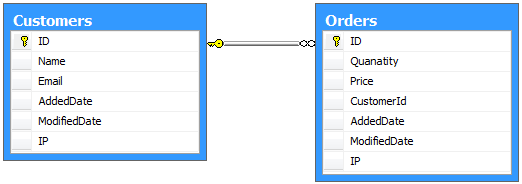
为了更好的理解一对多的关系,可以联想到电子商务系统中,单个用户可以下很多订单,所以我们定义了两个实体,一个是客户实体,另外一个是订单实体。我们看看下面的图片:
实体Customers代码:
using System;

using System.Collections.Generic;

using System.Linq;

using System.Text;

using System.Threading.Tasks;

namespace EF.Core.Data

{

  public  class Customer:BaseEntity

    {

      /// <summary>

      /// 客户名称

      /// </summary>

      public string Name { get; set; }

      /// <summary>

      /// 客户电子邮件

      /// </summary>

      public string Emial { get; set; }

      /// <summary>

      /// 导航属性--Order

      /// </summary>

      public virtual ICollection<Order> Orders { get; set; }

    }

}
实体Orders代码:
using System;

using System.Collections.Generic;

using System.Linq;

using System.Text;

namespace EF.Core.Data

{

   public class Order:BaseEntity

    {

       /// <summary>

       /// 数量

       /// </summary>

       public byte Quantity { get; set; }

       /// <summary>

       /// 价格

       /// </summary>

       public decimal Price { get; set; }

       /// <summary>

       /// 客户ID

       /// </summary>

       public int CustomerId { get; set; }

       /// <summary>

       /// 导航属性--Customer

       /// </summary>

       public virtual Customer Customer { get; set; }

    }

}
你已经在上面的代码中注意到了导航属性,Customer实体有一个集合类型的Order属性,Order实体有一个Customer实体的导航属性,也就是说,一个客户可以有很多订单。
使用Fluent Api配置Customer实体
using EF.Core.Data;

using System;

using System.Collections.Generic;

using System.ComponentModel.DataAnnotations.Schema;

using System.Data.Entity.ModelConfiguration;

using System.Linq;

using System.Text;

using System.Threading.Tasks;

namespace EF.Data.Mapping

{

   public class CustomerMap:EntityTypeConfiguration<Customer>

    {

       public CustomerMap()

       {

           this.HasKey(s => s.ID);

           //properties

           Property(t => t.ID).HasDatabaseGeneratedOption(DatabaseGeneratedOption.Identity);

           Property(t => t.Name);

           Property(t => t.Email).IsRequired();

           Property(t => t.AddedDate).IsRequired();

           Property(t => t.ModifiedDate).IsRequired();

           Property(t => t.IP);

           //table

           ToTable("Customers");

       }

    }

}
使用Fluent Api配置Orders实体
using EF.Core.Data;

using System;

using System.Collections.Generic;

using System.ComponentModel.DataAnnotations.Schema;

using System.Data.Entity.ModelConfiguration;

using System.Linq;

using System.Text;

using System.Threading.Tasks;

namespace EF.Data.Mapping

{

   public class OrderMap:EntityTypeConfiguration<Order>

    {

       public OrderMap()

       {

           this.HasKey(s=>s.ID);

           //fields

           Property(t => t.ID).HasDatabaseGeneratedOption(DatabaseGeneratedOption.Identity);

           Property(t => t.Quanatity).IsRequired().HasColumnType("tinyint");

           Property(t => t.Price).IsRequired();

           Property(t => t.CustomerId).IsRequired();

           Property(t => t.AddedDate).IsRequired();

           Property(t => t.ModifiedDate).IsRequired();

           Property(t => t.IP);

           //配置关系【一个用户有多个订单,外键是CusyomerId】

           this.HasRequired(s => s.Customer).WithMany(s => s.Orders).HasForeignKey(s => s.CustomerId).WillCascadeOnDelete(true);

           //table

           ToTable("Orders");

       }

    }

}
上面的代码表示:用户在每个Order中是必须的,并且用户可以下多个订单,两个表之间通过外键CustomerId联系,我们使用了四个方法来定义实体之间的关系,Withmany方法允许多个。HasForeignKey方法表示哪个属性是Order表的外键,WillCascadeOnDelete方法用来配置是否级联删除。
三.Many-to-Many Relationship【多对多关系】
每条记录在两个表中,都可以关联到另外一个表中的很多记录【或者0条记录】。多对多关系,需要第三方的表,也就是关联表或者链接表,因为关系型数据库不能直接适应这种关系。
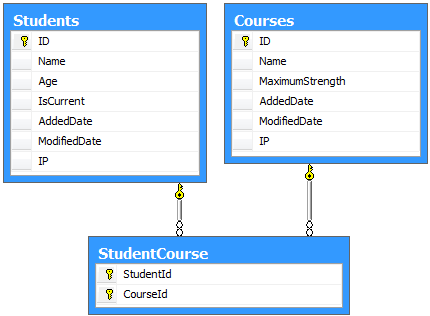
为了更好的理解多对多关系,我们想到,有一个选课系统,一个学生可以选秀很多课程,一个课程能够被很多学生选修,所以我们定义两个实体,一个是Syudent实体,另外一个是Course实体。我们来通过图表看看,多对多关系吧:
Student实体
using System;

using System.Collections.Generic;

using System.Linq;

using System.Text;

using System.Threading.Tasks;

namespace EF.Core.Data

{

   public class Student:BaseEntity

    {

        public string Name { get; set; }

        public byte Age { get; set; }

        public bool IsCurrent { get; set; }

        public virtual ICollection<Course> Courses { get; set; }

    }

}
Courses实体
using System;

using System.Collections.Generic;

using System.Linq;

using System.Text;

namespace EF.Core.Data

{

   public class Course:BaseEntity

    {

        public string Name { get; set; }

        public Int64 MaximumStrength { get; set; }

        public virtual ICollection<Student> Students { get; set; }

    }

}
使用Fluent Api配置Student实体
using EF.Core.Data;

using System;

using System.Collections.Generic;

using System.ComponentModel.DataAnnotations.Schema;

using System.Data.Entity.ModelConfiguration;

using System.Linq;

using System.Text;

using System.Threading.Tasks;

namespace EF.Data.Mapping

{

   public class StudentMap:EntityTypeConfiguration<Student>

    {

       public StudentMap()

       {

           //key

           HasKey(t => t.ID);

           //property

           Property(t => t.ID).HasDatabaseGeneratedOption(DatabaseGeneratedOption.Identity);

           Property(t => t.Name);

           Property(t => t.Age);

           Property(t => t.IsCurrent);

           Property(t => t.AddedDate).IsRequired();

           Property(t => t.ModifiedDate).IsRequired();

           Property(t => t.IP);

           //table

           ToTable("Students");

           //配置关系[多个课程,可以被多个学生选修]

           //多对多关系实现要领:hasmany,hasmany,然后映射生成第三个表,最后映射leftkey,rightkey

           this.HasMany(s => s.Courses).

               WithMany(s => s.Students)

               .Map(s => s.ToTable("StudentCourse").

                   MapLeftKey("StudentId").

                   MapRightKey("CourseId"));

       }

    }

}
上面的代码中,表示,一个学生可以选修多个课程,并且每个课程可以有很多学生,你知道,实现多对多的关系,我们需要第三个表,所以我们映射了第三个表,mapLeftkey和maprightkey定义了第三个表中的键,如果我们不指定的话,就会按照约定生成类名_Id的键。
使用Fluent Api配置Courses实体
using EF.Core.Data;

using System;

using System.Collections.Generic;

using System.ComponentModel.DataAnnotations.Schema;

using System.Data.Entity.ModelConfiguration;

using System.Linq;

using System.Text;

using System.Threading.Tasks;

namespace EF.Data.Mapping

{

   public class CourseMap:EntityTypeConfiguration<Course>

    {

       public CourseMap()

       {

           this.HasKey(t => t.ID);//少了一行代码

           //property

           Property(t => t.ID).HasDatabaseGeneratedOption(DatabaseGeneratedOption.Identity);

           Property(t => t.Name);

           Property(t => t.MaximumStrength);

           Property(t => t.AddedDate).IsRequired();

           Property(t => t.ModifiedDate).IsRequired();

           Property(t => t.IP);

           //table

           ToTable("Courses");

       }

    }

}
出处:https://www.cnblogs.com/caofangsheng/p/5715876.html
EF CodeFirst方式 Fluent Api配置的更多相关文章
- EF CodeFirst 之 Fluent API
如何访问Fluent API: 在自定义上下文类中重写OnModelCreating方法,在方法内调用. 注:用法基本一样,配置类中的this就相当于modelBuilder.Entity<Pe ...
- 1.【使用EF Code-First方式和Fluent API来探讨EF中的关系】
原文链接:http://www.c-sharpcorner.com/UploadFile/3d39b4/relationship-in-entity-framework-using-code-firs ...
- 10.翻译系列:EF 6中的Fluent API配置【EF 6 Code-First系列】
原文链接:https://www.entityframeworktutorial.net/code-first/fluent-api-in-code-first.aspx EF 6 Code-Firs ...
- EF里的默认映射以及如何使用Data Annotations和Fluent API配置数据库的映射
I.EF里的默认映射 上篇文章演示的通过定义实体类就可以自动生成数据库,并且EF自动设置了数据库的主键.外键以及表名和字段的类型等,这就是EF里的默认映射.具体分为: 数据库映射:Code First ...
- EF——默认映射以及如何使用Data Annotations和Fluent API配置数据库的映射 02 (转)
EF里的默认映射以及如何使用Data Annotations和Fluent API配置数据库的映射 I.EF里的默认映射 上篇文章演示的通过定义实体类就可以自动生成数据库,并且EF自动设置了数据库 ...
- EF的默认映射以及如何使用Data Annotations和Fluent API配置数据库的映射
I.EF的默认映射 上节我们创建项目,通过定义实体类就可以自动生成数据库,并且EF帮我们自动设置了数据库的主键.外键以及表名和字段的类型等,这就是EF的默认映射.具体分为: 数据库映射:Code Fi ...
- Fluent API 配置
EF里实体关系配置的方法,有两种: Data Annotation方式配置 也可以 Fluent API 方式配置 Fluent API 配置的方法 EF里的实体关系 Fluent API 配置分为H ...
- Entity Framework 实体框架的形成之旅--Code First模式中使用 Fluent API 配置(6)
在前面的随笔<Entity Framework 实体框架的形成之旅--Code First的框架设计(5)>里介绍了基于Code First模式的实体框架的经验,这种方式自动处理出来的模式 ...
- 使用Fluent API 配置/映射属性和类型
Code First约定-Fluent API配置 使用Fluent API 配置/映射属性和类型 简介 通常通过重写派生DbContext 上的OnModelCreating 方法来访问Code F ...
随机推荐
- Mycat 配置说明(server.xml)
server.xml 几乎保存了所有mycat需要的系统配置信息,包括 mycat 用户管理.DML权限管理等,其在代码内直接的映射类为SystemConfig 类. user 标签 该标签主要用于定 ...
- 桶排序/基数排序(Radix Sort)
说基数排序之前,我们先说桶排序: 基本思想:是将阵列分到有限数量的桶子里.每个桶子再个别排序(有可能再使用别的排序算法或是以递回方式继续使用桶排序进行排序).桶排序是鸽巢排序的一种归纳结果.当要被排序 ...
- STL --> deque双向队列
deque简介 deque是双向开口的连续性存储空间.虽说是连续性存储空间,但这种连续性只是表面上的,实际上它的内存是动态分配的,它在堆上分配了一块一块的动态储存区,每一块动态存储去本身是连续的,de ...
- c++ --> 父类与子类间的继承关系
父类与子类间的继承关系 一.父类与子类 父类与子类的相互转换 1.派生类的对象可以赋给基类,反之不行 2.基类的指针可以指向派生类,反之不行 3.基类的引用可以初始化为派生类的对象,反之不行 4.派生 ...
- 计时器setInterval()、setTimeout()
计时器setInterval() 在执行时,从载入页面后每隔指定的时间执行代码. 语法: setInterval(代码,交互时间); 参数说明: 1. 代码:要调用的函数或要执行的代码串. 2. 交互 ...
- Git详细教程(1)---个人Git的基本使用
分布式版本控制系统--git 一.什么是Git 1.Git是什么 Git是目前世界上最先进的分布式版本控制系统(没有之一). 实际上版本控制系统有如下几个: 1) CVS 2) SVN 3) Git ...
- Alpha第四天
Alpha第四天 听说 031502543 周龙荣(队长) 031502615 李家鹏 031502632 伍晨薇 031502637 张柽 031502639 郑秦 1.前言 任务分配是VV.ZQ. ...
- C语言——第四次作业
题目 题目一:计算分段函数 1.实验代码 #include <stdio.h> int main() { double x,y; scanf("%lf",&x) ...
- UIImage 内存细节
最近的一个项目,有大量的scrollView+imageView,当iPad启动较多程序,再启动自己的这个程序的时候,就爆内存退出了-- 后来把所有的生成图片的方法,全部由imageNamed改成了i ...
- 日志 --BUG记录
2014-12-15日 在做520wawa的免费推广 部署web应用时 错把path设置为"/*",导致启动tomcat时,导致错误 <Context path=&quo ...