
纸上谈兵:AVL树
作者:Vamei 出处:http://www.cnblogs.com/vamei 欢迎转载,也请保留这段声明。谢谢!
二叉搜索树的深度与搜索效率
我们在树, 二叉树, 二叉搜索树中提到,一个有n个节点的二叉树,它的最小深度为log(n),最大深度为n。比如下面两个二叉树:
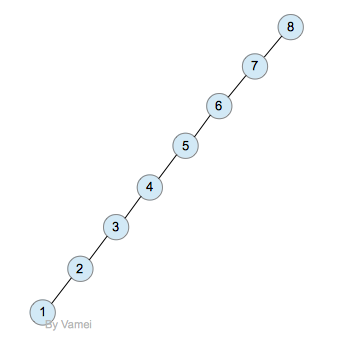
深度为n的二叉树
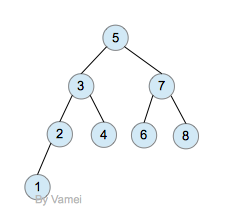
深度为log(n)的二叉树
这两个二叉树同时也是二叉搜索树(参考树, 二叉树, 二叉搜索树)。注意,log以2为基底。log(n)是指深度的量级。根据我们对深度的定义,精确的最小深度为floor(log(n)+1)。
我们将处于同一深度的节点归为一层。如果除最后一层外的其他层都被节点填满时,二叉树有最小深度log(n)。
二叉搜索树的深度越小,那么搜索所需要的运算时间越小。一个深度为log(n)的二叉搜索树,搜索算法的时间复杂度也是log(n)。然而,我们在二叉搜索树中已经实现的插入和删除操作并不能让保持log(n)的深度。如果我们按照8,7,6,5,4,3,2,1的顺序插入节点,那么就是一个深度为n的二叉树。那么,搜索算法的时间复杂度为n。
n和log(n)的时间复杂度意味着什么呢?时间复杂度代表了完成算法所需要的运算次数。时间复杂度越小,算法的速度越快。
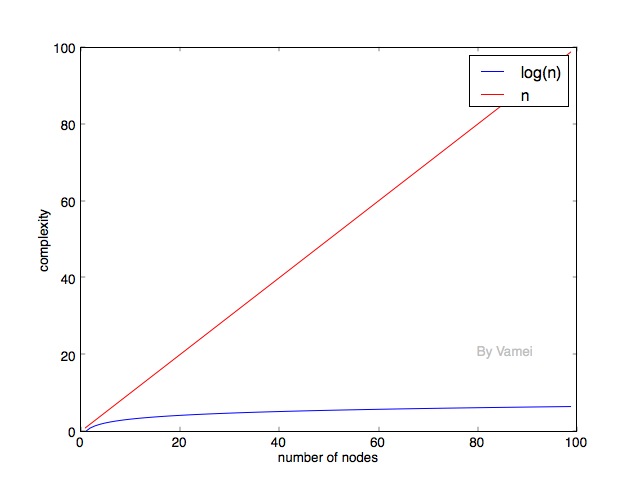
可以看到,随着元素的增加,log(n)的时间复杂度的增长要远小于n。所以,我们自然希望二叉搜索树能尽可能保持log(n)的深度。在上面深度为n的例子中,我们发现,每个节点只有左节点被填满。树的每一层都有很多空位。能不能尽可能减少每一层的空位呢? (相应的,减少树的深度)

“紧致”的树
一种想法是先填满一层,再去填充下一层,这样就是一个完全二叉树(complete binary tree)。这样的二叉树实现插入算法会比较复杂。我们将介绍一种思路相似,但比较容易实现的树状数据结构——AVL树。
AVL树
AVL树是根据它的发明者G. M. Adelson-Velskii和E. M. Landis命名的。它是一种特殊的二叉搜索树。AVL树要求: 任一节点的左子树深度和右子树深度相差不超过1
(空树的深度为0。注意,有的教材中,采用了不同的深度定义方法,所以空树的深度为-1)
下面是AVL树:
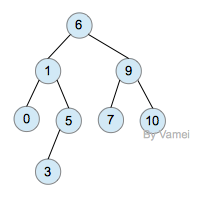
AVL树
AVL树的特性让二叉搜索树的节点实现平衡(balance):节点相对均匀分布,而不是偏向某一侧。因此,AVL树的搜索算法复杂度是log(n)的量级。
我们在二叉搜索树中定义的操作,除了插入,都可以用在AVL树上 (假设使用懒惰删除)。如果进行插入操作,有可能会破坏AVL树的性质,比如:
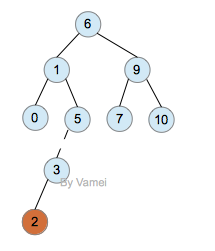
插入2: 破坏AVL树
观察节点5,它的左子树深度为2,右子树深度为0,所以左右两个子树深度相差为2,不再是AVL树。由于2的加入,从节点6,1,5,3到2的层数都增加1。6, 1, 5节点的AVL性质都被破坏。如果从节点2向上回溯,节点5是第一个被破坏的。从节点3开始的子树深度加1,这是造成6, 1, 5的AVL性质被破坏的本质原因。我们将5和3之间的路径画成虚线(就好像挂了重物,边被拉断一样)。
我们可以通过单旋照(single rotation),调整以5为根节点的子树,来修正因为插入一个元素而引起的对AVL性质的破坏。如下:
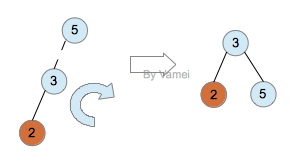
Single rotation: 左侧超重,向右转
通过单旋转,3成为新的根节点,2,5称为3的左右子节点。子树重新成为AVL树。该子树的深度减小1,这将自动修正2带给节点6,1的“超负荷”。
单旋转效果如下:
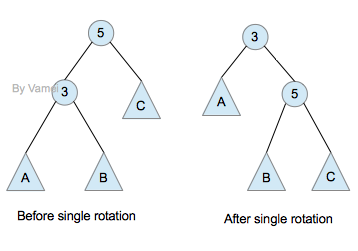 向右单旋转
向右单旋转
特别要注意的是,为了保持二叉树的性质,子树B过继给了节点5。
向左单旋转与之类似。作为练习,可以尝试绘制向左单旋转的示意图。
但如果插入的节点不是2,而是4,会是如何呢?

插入4
尝试单旋转,会发现无法解决问题。以5为根节点的子树向右单旋转后,树将以3为根节点,4,5为子节点。4比3大,却是3的左子节点,显然,这依然不符合二叉搜索树的性质。但基于和上面相似的原则(调整以5为根节点的树),我们发现有一个简单的解决方式:

double rotation
上面的操作被称作双旋转(double rotation)。双旋转实际上是进行两次单旋转: 4为根节点的子树先进行一次向左的单旋转,然后将5为根节点的子树进行了一次向右的单旋转。这样恢复了树的ACL性质。
对于AVL树,可以证明,在新增一个节点时,总可以通过一次旋转恢复AVL树的性质。
当我们插入一个新的节点时,在哪里旋转?是用单旋转还是双旋转?
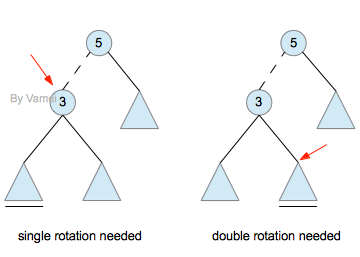
我们按照如下基本步骤进行:
1. 按照二叉搜索树的方式增加节点,新增节点称为一个叶节点。
2. 从新增节点开始,回溯到第一个失衡节点(5)。
(如果回溯到根节点,还没有失衡节点,就说明该树已经符合AVL性质。)
3. 找到断的边(5->3),并确定断弦的方向(5的左侧)
4. 以断边下端(3)为根节点,确定两个子树中的哪一个深度大(左子树还是右子树)。
(这两棵子树的深度不可能相等,而且深度大的子树包含有新增节点。想想为什么)
5. 如果第2和第3步中的方向一致(都为左或者都为右),需要单旋转以失衡节点为根节点的子树。
否则,双旋转以失衡节点为根节点的子树。
下面是AVL树的插入算法实现如下:

/* By Vamei */

/* binary search tree */

#include <stdio.h>

#include <stdlib.h>

typedef struct node *position;

typedef int ElementTP;

struct node {

    int depth;

    position parent;

    ElementTP element;

    position lchild;

    position rchild;

};

/* pointer => root node of the tree */

typedef struct node *TREE;

position insert_value(TREE, ElementTP);

int depth(TREE);

static void insert_node_to_nonempty_tree(TREE, position);

static void update_root_depth(TREE);

static TREE recover_avl(TREE, position);

static int depth_diff(TREE);

static position insert_leaf(TREE, ElementTP);

static void insert_node_to_nonempty_tree(TREE, position);

static TREE left_single_rotate(TREE);

static TREE left_double_rotate(TREE);

static TREE right_single_rotate(TREE);

static TREE right_double_rotate(TREE);

void main(void)

{

    TREE tr;

    position np;

    ElementTP element;

    tr = NULL;

    tr = insert_value(tr, 18);

    tr = insert_value(tr, 5);

    printf("root: %d\n", tr->element);

    printf("depth: %d\n", depth(tr));

    tr = insert_value(tr, 2);

    printf("root: %d\n", tr->element);

    printf("depth: %d\n", depth(tr));

    tr = insert_value(tr, 4);

    printf("root: %d\n", tr->element);

    printf("depth: %d\n", depth(tr));

    printf("root->lchild: %d\n", tr->lchild->element);

    tr = insert_value(tr, 3);

    printf("root: %d\n", tr->element);

    printf("depth: %d\n", depth(tr));

    printf("root->lchild: %d\n", tr->lchild->element);

    printf("root->lchild->lchild: %d\n", tr->lchild->lchild->element);

}

/*

 * insert value

 *

 */

position insert_value(TREE tr, ElementTP value)

{

    position new;

    /* insert a value to a binary search tree */

    new = insert_leaf(tr, value);

    update_root_depth(new);

    if (tr == NULL) {

        tr = new;

    }

    else {

        tr = recover_avl(tr, new);

    }

    return tr;

}

/*

 * get the depth of the tree

 * use this function to access depth

 */

int depth(TREE tr) {

    if (tr == NULL) {

        return 0;

    }

    else {

        return tr->depth;

    }

}

//========================================

// static functions: for internal use

/*

 * traverse the path from new node to root node

 * make one rotation, recover AVL and stop

 */

static TREE recover_avl(TREE tr, position np)

{

    int myDiff;

    while (np != NULL) {

        update_root_depth(np);

        myDiff = depth_diff(np);

    if (myDiff > 1 || myDiff < -1) {

            if (myDiff > 1) {

                /* left rotate needed */

                if(depth_diff(np->rchild) > 0) {

                    np = left_single_rotate(np);

                }

                else {

                    np = left_double_rotate(np);

                }

            }

            if (myDiff < -1) {

                if(depth_diff(np->lchild) < 0) {

                    np = right_single_rotate(np);

                }

                else {

                    np = right_double_rotate(np);

                }

            }

            /* if rotation changes root node */

            if (np->parent == NULL) tr = np;

            break;

        }

        np = np->parent;

    }

    return tr;

}

/*

 * difference of rchild->depth and lchild->depth

 */

static int depth_diff(TREE tr)

{

    if (tr == NULL) {

        return 0;

    }

    else {

        return depth(tr->rchild) - depth(tr->lchild);

    }

}

/*

 * left single rotation

 * return the new root

 */

static TREE left_single_rotate(TREE tr)

{

    TREE newRoot, parent;

    parent  = tr->parent;

    newRoot = tr->rchild;

    /* detach & attach */

    if (newRoot->lchild != NULL) newRoot->lchild->parent = tr;

    tr->rchild = newRoot->lchild;

    update_root_depth(tr);

    /* raise new root node */

    newRoot->lchild = tr;

    newRoot->parent = parent;

    if (parent != NULL) {

        if (parent->lchild == tr) {

        parent->lchild = newRoot;

    }

    else {

        parent->rchild = newRoot;

    }

    }

    tr->parent = newRoot;

    update_root_depth(newRoot);

    return newRoot;

}

/*

 * right single rotation

 * return the new root

 */

static TREE right_single_rotate(TREE tr)

{

    TREE newRoot, parent;

    parent  = tr->parent;

    newRoot = tr->lchild;

    /* detach & attach */

    if (newRoot->rchild != NULL) newRoot->rchild->parent = tr;

    tr->lchild = newRoot->rchild;

    update_root_depth(tr);

    /* raise new root node */

    newRoot->rchild = tr;

    newRoot->parent = parent;

    if (parent != NULL) {

        if (parent->lchild == tr) {

        parent->lchild = newRoot;

    }

    else {

        parent->rchild = newRoot;

    }

    }

    tr->parent = newRoot;

    update_root_depth(newRoot);

    return newRoot;

}

/*

 * left double rotation

 * return

 */

static TREE left_double_rotate(TREE tr)

{

    right_single_rotate(tr->rchild);

    return left_single_rotate(tr);

}

/*

 * right double rotation

 * return

 */

static TREE right_double_rotate(TREE tr)

{

    left_single_rotate(tr->lchild);

    return right_single_rotate(tr);

}

/*

 * update tr->depth

 * assume lchild->depth and rchild->depth are correct

 */

static void update_root_depth(TREE tr)

{

    int maxChildDepth;

    int depLChild, depRChild;

    if (tr==NULL) return;

    else {

        depLChild = depth(tr->lchild);

        depRChild = depth(tr->rchild);

        maxChildDepth = depLChild > depRChild ? depLChild : depRChild;

        tr->depth = maxChildDepth + 1;

    }

}

/*

 * insert a new value into the tree as a leaf

 * return address of the new node

 */

static position insert_leaf(TREE tr, ElementTP value)

{

    position np;

    /* prepare the node */

    np = (position) malloc(sizeof(struct node));

    np->element = value;

    np->parent  = NULL;

    np->lchild  = NULL;

    np->rchild  = NULL;

    if (tr != NULL) {

        insert_node_to_nonempty_tree(tr, np);

    }

    return np;

}

/*

 * insert a node to a non-empty tree

 * called by insert_value()

 */

static void insert_node_to_nonempty_tree(TREE tr, position np)

{

    /* insert the node */

    if(np->element <= tr->element) {

        if (tr->lchild == NULL) {

            /* then tr->lchild is the proper place */

            tr->lchild = np;

            np->parent = tr;

            return;

        }

        else {

            insert_node_to_nonempty_tree(tr->lchild, np);

        }

    }

    else if(np->element > tr->element) {

        if (tr->rchild == NULL) {

            tr->rchild = np;

            np->parent = tr;

            return;

        }

        else {

            insert_node_to_nonempty_tree(tr->rchild, np);

        }

    }

}
输出如下:
root: 18
depth: 2
root: 5
depth: 2
root: 5
depth: 3
root->lchild: 2
depth: 3
root->lchild: 3
root->lchild->lchild: 2
(空行是额外加的)
总结:
AVL树: 平衡,深度相差不超过1
单旋转,双旋转
纸上谈兵:AVL树的更多相关文章
- 纸上谈兵: AVL树[转]
作者:Vamei 出处:http://www.cnblogs.com/vamei 欢迎转载,也请保留这段声明.谢谢! 二叉搜索树的深度与搜索效率 我们在树, 二叉树, 二叉搜索树中提到,一个有n个节点 ...
- 纸上谈兵: 伸展树 (splay tree)[转]
作者:Vamei 出处:http://www.cnblogs.com/vamei 欢迎转载,也请保留这段声明.谢谢! 我们讨论过,树的搜索效率与树的深度有关.二叉搜索树的深度可能为n,这种情况下,每 ...
- 算法与数据结构(十一) 平衡二叉树(AVL树)
今天的博客是在上一篇博客的基础上进行的延伸.上一篇博客我们主要聊了二叉排序树,详情请戳<二叉排序树的查找.插入与删除>.本篇博客我们就在二叉排序树的基础上来聊聊平衡二叉树,也叫AVL树,A ...
- AVL树原理及实现(C语言实现以及Java语言实现)
欢迎探讨,如有错误敬请指正 如需转载,请注明出处http://www.cnblogs.com/nullzx/ 1. AVL定义 AVL树是一种改进版的搜索二叉树.对于一般的搜索二叉树而言,如果数据恰好 ...
- AVL树
AVL树 在二叉查找树(BST)中,频繁的插入操作可能会让树的性能发生退化,因此,需要加入一些平衡操作,使树的高度达到理想的O(logn),这就是AVL树出现的背景.注意,AVL树的起名来源于两个发明 ...
- AVL树的平衡算法(JAVA实现)
1.概念: AVL树本质上还是一个二叉搜索树,不过比二叉搜索树多了一个平衡条件:每个节点的左右子树的高度差不大于1. 二叉树的应用是为了弥补链表的查询效率问题,但是极端情况下,二叉搜索树会无限接近 ...
- 【数据结构】平衡二叉树—AVL树
(百度百科)在计算机科学中,AVL树是最先发明的自平衡二叉查找树.在AVL树中任何节点的两个子树的高度最大差别为一,所以它也被称为高度平衡树.查找.插入和删除在平均和最坏情况下都是O(log n).增 ...
- 数据结构图文解析之:AVL树详解及C++模板实现
0. 数据结构图文解析系列 数据结构系列文章 数据结构图文解析之:数组.单链表.双链表介绍及C++模板实现 数据结构图文解析之:栈的简介及C++模板实现 数据结构图文解析之:队列详解与C++模板实现 ...
- 数据结构之平衡二叉树(AVL树)
平衡二叉树(AVL树)定义如下:平衡二叉树或者是一棵空树,或者是具有以下性质的二叉排序树: (1)它的左子树和右子树的高度之差绝对值不超过1: (2)它的左子树和右子树都是平衡二叉树. AVL树避免了 ...
随机推荐
- A web crawler design for data mining
Abstract The content of the web has increasingly become a focus for academic research. Computer prog ...
- 利用反射将Datatable、SqlDataReader转换成List模型
1. DataTable转IList public class DataTableToList<T>whereT :new() { ///<summary> ///利用反射将D ...
- poj3268 最短路
//Accepted 1124 KB 0 ms #include <cstdio> #include <cstring> #include <iostream> # ...
- C# winform中的datagridview控件标头加入checkbox,实现全选功能。
/// <summary> /// 给DataGridView添加全选 /// </summary> public class AddCheckBoxToDataGridVie ...
- Debian 8(jessie)下设置系统启动直接进入命令行,无GUI
修改grub项 sudo vi /etc/default/grub 修改其中三项 ... GRUB_CMDLINE_LINUX_DEFAULT="quiet" GRUB_CMDLI ...
- python学习笔记 ——python写的猜数字游戏 002
from sys import exit import random def Arrfor(str): #CONTST = CONTST + 1 artificial = input("请输 ...
- python windows终端窗口下输出编码错误
windows简体中文版下终端默认字符集gbk,执行chcp 65001临时修改字符集. 修改默认字符集:注册表HKEY_CURRENT_USER\Console项中CodePage值修改为65001
- postfix启动脚本
使用该脚本是一定要注意postfix安装路径 #!/bin/bash # # postfix Postfix Mail Transger Agent # # chkconfig: # descript ...
- [USACO08DEC] Trick or Treat on the Farm
题目描述 每年万圣节,威斯康星的奶牛们都要打扮一番,出门在农场的N个牛棚里转 悠,来采集糖果.她们每走到一个未曾经过的牛棚,就会采集这个棚里的1颗糖果. 农场不大,所以约翰要想尽法子让奶牛们得到快乐. ...
- 解决IIS7该问.svc文件的错误问题
解决IIS7.5中部署WCF时,访问.svc文件的404错误问题如果你直接在IIS 7中配置WCF,访问.svc文件时会出现404错误.解决方法,以管理员身份进入命令行模式,运行:"%win ...