
6.Sentinel源码分析—Sentinel是如何动态加载配置限流的?
Sentinel源码解析系列:
1.Sentinel源码分析—FlowRuleManager加载规则做了什么?
2. Sentinel源码分析—Sentinel是如何进行流量统计的?
3. Sentinel源码分析— QPS流量控制是如何实现的?
4.Sentinel源码分析— Sentinel是如何做到降级的?
5.Sentinel源码分析—Sentinel如何实现自适应限流?
有时候我们做限流的时候并不想直接写死在代码里面,然后每次要改规则,或者增加规则的时候只能去重启应用来解决。而是希望能够动态的更改配置,这样万一出现紧急情况还能动态的进行配置修改。例如2018年的双十一,淘宝的其他服务没有一点问题,万万没想到在前几分钟购物车服务挂了,这个时候就可以紧急限流,对应用进行拯救。
其实看完前面的内容,对动态配置应该是水到渠成的事情,因为所有的配置修改都是通过限流管理器如FlowRuleManager的内部监听器来实现的,所以只要动态的给监听器信号,那么就可以做到动态的修改配置。
接下来我们来看看Sentinel是怎么做的。一般的情况下,动态配置常见的实现方式有两种:
- 拉模式:客户端主动向某个规则管理中心定期轮询拉取规则,这个规则中心可以是 RDBMS、文件,甚至是 VCS 等。这样做的方式是简单,缺点是无法及时获取变更;
- 推模式:规则中心统一推送,客户端通过注册监听器的方式时刻监听变化,比如使用 Nacos、Zookeeper 等配置中心。这种方式有更好的实时性和一致性保证。
而Sentinel目前两种都支持:
- Pull-based: 文件、Consul (since 1.7.0)
- Push-based: ZooKeeper, Redis, Nacos, Apollo
由于支持的方式太多,我这里只讲解两种,文件和ZooKeeper,分别对应推拉两种模式。
Pull-based: 文件
首先上个例子:
FlowRule.json
[

  {

    "resource": "abc",

    "controlBehavior": 0,

    "count": 20.0,

    "grade": 1,

    "limitApp": "default",

    "strategy": 0

  },

  {

    "resource": "abc1",

    "controlBehavior": 0,

    "count": 20.0,

    "grade": 1,

    "limitApp": "default",

    "strategy": 0

  }

]
SimpleFileDataSourceDemo:
public class SimpleFileDataSourceDemo {

    private static final String KEY = "abc";

    public static void main(String[] args) throws Exception {

        SimpleFileDataSourceDemo simpleFileDataSourceDemo = new SimpleFileDataSourceDemo();

        simpleFileDataSourceDemo.init();

        Entry entry = null;

        try {

            entry = SphU.entry(KEY);

            // dosomething

        } catch (BlockException e1) {

            // dosomething

        } catch (Exception e2) {

            // biz exception

        } finally {

            if (entry != null) {

                entry.exit();

            }

        }

    }

    private void init() throws Exception {

       String flowRulePath = "/Users/luozhiyun/Downloads/test/FlowRule.json";

        // Data source for FlowRule

        FileRefreshableDataSource<List<FlowRule>> flowRuleDataSource = new FileRefreshableDataSource<>(

                flowRulePath, flowRuleListParser);

        FlowRuleManager.register2Property(flowRuleDataSource.getProperty());

    }

    private Converter<String, List<FlowRule>> flowRuleListParser = source -> JSON.parseObject(source,

            new TypeReference<List<FlowRule>>() {});

}
这个例子主要就是写死一个资源文件,然后读取资源文件里面的内容,再通过自定义的资源解析器来解析文件的内容后设置规则。
这里我们主要需要分析FileRefreshableDataSource是怎么加载文件然后通过FlowRuleManager注册的。
FileRefreshableDataSource继承关系:

FileRefreshableDataSource
private static final int MAX_SIZE = 1024 * 1024 * 4;

private static final long DEFAULT_REFRESH_MS = 3000;

private static final int DEFAULT_BUF_SIZE = 1024 * 1024;

private static final Charset DEFAULT_CHAR_SET = Charset.forName("utf-8");

public FileRefreshableDataSource(String fileName, Converter<String, T> configParser) throws FileNotFoundException {

    this(new File(fileName), configParser, DEFAULT_REFRESH_MS, DEFAULT_BUF_SIZE, DEFAULT_CHAR_SET);

}

public FileRefreshableDataSource(File file, Converter<String, T> configParser, long recommendRefreshMs, int bufSize,

                                 Charset charset) throws FileNotFoundException {

    super(configParser, recommendRefreshMs);

    if (bufSize <= 0 || bufSize > MAX_SIZE) {

        throw new IllegalArgumentException("bufSize must between (0, " + MAX_SIZE + "], but " + bufSize + " get");

    }

    if (file == null || file.isDirectory()) {

        throw new IllegalArgumentException("File can't be null or a directory");

    }

    if (charset == null) {

        throw new IllegalArgumentException("charset can't be null");

    }

    this.buf = new byte[bufSize];

    this.file = file;

    this.charset = charset;

    // If the file does not exist, the last modified will be 0.

    this.lastModified = file.lastModified();

    firstLoad();

}
FileRefreshableDataSource的构造器里面会设置各种参数,如:缓冲区大小、字符编码、文件上次的修改时间、文件定时刷新时间等。
这个方法会调用父类的构造器进行初始化,我们再看一下AutoRefreshDataSource做了什么。
AutoRefreshDataSource
public AutoRefreshDataSource(Converter<S, T> configParser, final long recommendRefreshMs) {

    super(configParser);

    if (recommendRefreshMs <= 0) {

        throw new IllegalArgumentException("recommendRefreshMs must > 0, but " + recommendRefreshMs + " get");

    }

    this.recommendRefreshMs = recommendRefreshMs;

    startTimerService();

}
AutoRefreshDataSource的构造器一开始会调用父类的构造器进行初始化,如下:
AbstractDataSource
public AbstractDataSource(Converter<S, T> parser) {

    if (parser == null) {

        throw new IllegalArgumentException("parser can't be null");

    }

    this.parser = parser;

    this.property = new DynamicSentinelProperty<T>();

}
AbstractDataSource的构造器是为了给两个变量设值parser和property,其中property是DynamicSentinelProperty的实例。
我们再回到AutoRefreshDataSource中,AutoRefreshDataSource设值完recommendRefreshMs参数后会调用startTimerService方法来开启一个定时的调度任务。
AutoRefreshDataSource#startTimerService
private void startTimerService() {

    service = Executors.newScheduledThreadPool(1,

        new NamedThreadFactory("sentinel-datasource-auto-refresh-task", true));

    service.scheduleAtFixedRate(new Runnable() {

        @Override

        public void run() {

            try {

                if (!isModified()) {

                    return;

                }

                T newValue = loadConfig();

                getProperty().updateValue(newValue);

            } catch (Throwable e) {

                RecordLog.info("loadConfig exception", e);

            }

        }

    }, recommendRefreshMs, recommendRefreshMs, TimeUnit.MILLISECONDS);

}

public SentinelProperty<T> getProperty() {

    return property;

}
这个方法里面会开启一个线程,每3000ms调用一次run方法。run方法里会首先会校验一下文件有没有被修改过,如果有的话就调用loadConfig来加载配置,然后调用getProperty方法获取父类设置的property来更新配置。
下来我们依次来讲解一下这几个主要的方法:
isModified方法是一个钩子,调用的是FileRefreshableDataSource的isModified方法:
FileRefreshableDataSource#isModified
protected boolean isModified() {

    long curLastModified = file.lastModified();

    if (curLastModified != this.lastModified) {

        this.lastModified = curLastModified;

        return true;

    }

    return false;

}
isModified每次都会查看file有没有被修改,并记录一下修改的时间。
接着往下是调用loadConfig加载文件:
AbstractDataSource#loadConfig
public T loadConfig() throws Exception {

    return loadConfig(readSource());

}

public T loadConfig(S conf) throws Exception {

    T value = parser.convert(conf);

    return value;

}
FileRefreshableDataSource#readSource
public String readSource() throws Exception {

    if (!file.exists()) {

        // Will throw FileNotFoundException later.

        RecordLog.warn(String.format("[FileRefreshableDataSource] File does not exist: %s", file.getAbsolutePath()));

    }

    FileInputStream inputStream = null;

    try {

        inputStream = new FileInputStream(file);

        FileChannel channel = inputStream.getChannel();

        if (channel.size() > buf.length) {

            throw new IllegalStateException(file.getAbsolutePath() + " file size=" + channel.size()

                + ", is bigger than bufSize=" + buf.length + ". Can't read");

        }

        int len = inputStream.read(buf);

        return new String(buf, 0, len, charset);

    } finally {

        if (inputStream != null) {

            try {

                inputStream.close();

            } catch (Exception ignore) {

            }

        }

    }

}
loadConfig方法的实现还是很清晰的,首先是调用readSource通过io流读取文件,然后再通过传入的解析器解析文件的内容。
接着会调用DynamicSentinelProperty的updateValue方法,遍历监听器更新配置:
DynamicSentinelProperty#updateValue
public boolean updateValue(T newValue) {

    //判断新的元素和旧元素是否相同

    if (isEqual(value, newValue)) {

        return false;

    }

    RecordLog.info("[DynamicSentinelProperty] Config will be updated to: " + newValue);

    value = newValue;

    for (PropertyListener<T> listener : listeners) {

        listener.configUpdate(newValue);

    }

    return true;

}
当然,还没加载FlowRuleManager的时候肯定是没有监听器的。
讲完了FileRefreshableDataSource的父类的加载,我们再回到FileRefreshableDataSource的构造器中。继续往下走会调用firstLoad方法首次加载配置文件初始化一次。
FileRefreshableDataSource#firstLoad
private void firstLoad() {

    try {

        T newValue = loadConfig();

        getProperty().updateValue(newValue);

    } catch (Throwable e) {

        RecordLog.info("loadConfig exception", e);

    }

}
下面我们再看一下FlowRuleManager是怎么注册的。注册的时候会调用register2Property方法进行注册:
FlowRuleManager#register2Property
public static void register2Property(SentinelProperty<List<FlowRule>> property) {

    AssertUtil.notNull(property, "property cannot be null");

    synchronized (LISTENER) {

        RecordLog.info("[FlowRuleManager] Registering new property to flow rule manager");

        currentProperty.removeListener(LISTENER);

        property.addListener(LISTENER);

        currentProperty = property;

    }

}
这个方法实际上就是添加了一个监听器,然后将FlowRuleManager的currentProperty替换成flowRuleDataSource创建的property。然后flowRuleDataSource里面的定时线程会每隔3秒钟调用一下这个LISTENER的configUpdate方法进行刷新规则,这样就实现了动态更新规则。
Push-based:ZooKeeper
我们还是先给出一个例子:
public static void main(String[] args) {

    final String remoteAddress = "127.0.0.1:2181";

    final String path = "/Sentinel-Demo/SYSTEM-CODE-DEMO-FLOW";

    ReadableDataSource<String, List<FlowRule>> flowRuleDataSource = new ZookeeperDataSource<>(remoteAddress, path,

            source -> JSON.parseObject(source, new TypeReference<List<FlowRule>>() {}));

    FlowRuleManager.register2Property(flowRuleDataSource.getProperty());

}
在这里我定义了/Sentinel-Demo/SYSTEM-CODE-DEMO-FLOW这个path,如果这个path内的内容发生了变化,那么就会刷新规则。
我们先看一下ZookeeperDataSource的继承关系:
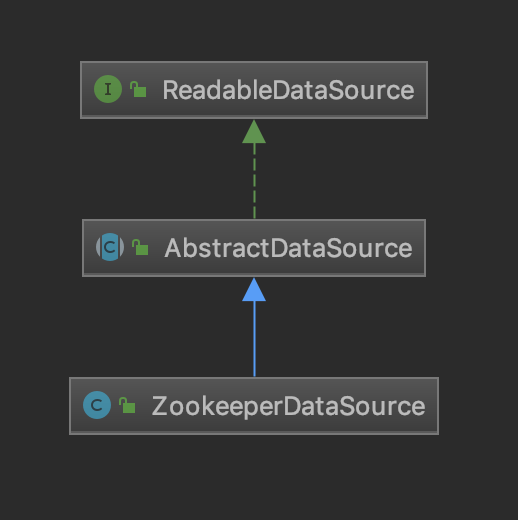
ZookeeperDataSource
public ZookeeperDataSource(final String serverAddr, final String path, Converter<String, T> parser) {

    super(parser);

    if (StringUtil.isBlank(serverAddr) || StringUtil.isBlank(path)) {

        throw new IllegalArgumentException(String.format("Bad argument: serverAddr=[%s], path=[%s]", serverAddr, path));

    }

    this.path = path;

    init(serverAddr, null);

}
AbstractDataSource
public AbstractDataSource(Converter<S, T> parser) {

    if (parser == null) {

        throw new IllegalArgumentException("parser can't be null");

    }

    this.parser = parser;

    this.property = new DynamicSentinelProperty<T>();

}
ZookeeperDataSource首先会调用父类进行参数的设置,在校验完之后调用init方法进行初始化。
ZookeeperDataSource#init
private void init(final String serverAddr, final List<AuthInfo> authInfos) {

    initZookeeperListener(serverAddr, authInfos);

    loadInitialConfig();

}
ZookeeperDataSource#initZookeeperListener
    private void initZookeeperListener(final String serverAddr, final List<AuthInfo> authInfos) {

        try {

            //设置监听

            this.listener = new NodeCacheListener() {

                @Override

                public void nodeChanged() {

                    try {

                        T newValue = loadConfig();

                        RecordLog.info(String.format("[ZookeeperDataSource] New property value received for (%s, %s): %s",

                                serverAddr, path, newValue));

                        // Update the new value to the property.

                        getProperty().updateValue(newValue);

                    } catch (Exception ex) {

                        RecordLog.warn("[ZookeeperDataSource] loadConfig exception", ex);

                    }

                }

            };

            String zkKey = getZkKey(serverAddr, authInfos);

            if (zkClientMap.containsKey(zkKey)) {

                this.zkClient = zkClientMap.get(zkKey);

            } else {

                //如果key不存在,那么就加锁设值

                synchronized (lock) {

                    if (!zkClientMap.containsKey(zkKey)) {

                        CuratorFramework zc = null;

                        //根据不同的条件获取client

                        if (authInfos == null || authInfos.size() == 0) {

                            zc = CuratorFrameworkFactory.newClient(serverAddr, new ExponentialBackoffRetry(SLEEP_TIME, RETRY_TIMES));

                        } else {

                            zc = CuratorFrameworkFactory.builder().

                                    connectString(serverAddr).

                                    retryPolicy(new ExponentialBackoffRetry(SLEEP_TIME, RETRY_TIMES)).

                                    authorization(authInfos).

                                    build();

                        }

                        this.zkClient = zc;

                        this.zkClient.start();

                        Map<String, CuratorFramework> newZkClientMap = new HashMap<>(zkClientMap.size());

                        newZkClientMap.putAll(zkClientMap);

                        newZkClientMap.put(zkKey, zc);

                        zkClientMap = newZkClientMap;

                    } else {

                        this.zkClient = zkClientMap.get(zkKey);

                    }

                }

            }

            //为节点添加watcher

            //监听数据节点的变更,会触发事件

            this.nodeCache = new NodeCache(this.zkClient, this.path);

            this.nodeCache.getListenable().addListener(this.listener, this.pool);

            this.nodeCache.start();

        } catch (Exception e) {

            RecordLog.warn("[ZookeeperDataSource] Error occurred when initializing Zookeeper data source", e);

            e.printStackTrace();

        }

    }
这个方法主要就是用来创建client和设值监听,都是zk的常规操作,不熟悉的,可以去看看Curator是怎么使用的。
private void loadInitialConfig() {

    try {

        //调用父类的loadConfig方法

        T newValue = loadConfig();

        if (newValue == null) {

            RecordLog.warn("[ZookeeperDataSource] WARN: initial config is null, you may have to check your data source");

        }

        getProperty().updateValue(newValue);

    } catch (Exception ex) {

        RecordLog.warn("[ZookeeperDataSource] Error when loading initial config", ex);

    }

}
设值完zk的client和监听后会调用一次updateValue,首次加载节点的信息。
AbstractDataSource
public T loadConfig() throws Exception {

    return loadConfig(readSource());

}

public T loadConfig(S conf) throws Exception {

    T value = parser.convert(conf);

    return value;

}
父类的loadConfig会调用子类的readSource读取配置信息,然后调用parser.convert进行反序列化。
ZookeeperDataSource#readSource
public String readSource() throws Exception {

    if (this.zkClient == null) {

        throw new IllegalStateException("Zookeeper has not been initialized or error occurred");

    }

    String configInfo = null;

    ChildData childData = nodeCache.getCurrentData();

    if (null != childData && childData.getData() != null) {

        configInfo = new String(childData.getData());

    }

    return configInfo;

}
这个方法是用来读取zk节点里面的信息。
最后FlowRuleManager.register2Property的方法就和上面的文件动态配置的是一样的了。
java学习笔记/SENTINEL
6.Sentinel源码分析—Sentinel是如何动态加载配置限流的?的更多相关文章
- 7.Sentinel源码分析—Sentinel是怎么和控制台通信的?
这里会介绍: Sentinel会使用多线程的方式实现一个类Reactor的IO模型 Sentinel会使用心跳检测来观察控制台是否正常 Sentinel源码解析系列: 1.Sentinel源码分析-F ...
- 4.Sentinel源码分析— Sentinel是如何做到降级的?
各位中秋节快乐啊,我觉得在这个月圆之夜有必要写一篇源码解析,以表示我内心的高兴~ Sentinel源码解析系列: 1.Sentinel源码分析-FlowRuleManager加载规则做了什么? 2. ...
- 5.Sentinel源码分析—Sentinel如何实现自适应限流?
Sentinel源码解析系列: 1.Sentinel源码分析-FlowRuleManager加载规则做了什么? 2. Sentinel源码分析-Sentinel是如何进行流量统计的? 3. Senti ...
- 2. Sentinel源码分析—Sentinel是如何进行流量统计的?
这一篇我还是继续上一篇没有讲完的内容,先上一个例子: private static final int threadCount = 100; public static void main(Strin ...
- angular源码分析:angular的整个加载流程
在前面,我们讲了angular的目录结构.JQLite以及依赖注入的实现,在这一期中我们将重点分析angular的整个框架的加载流程. 一.从源代码的编译顺序开始 下面是我们在目录结构哪一期理出的an ...
- Tomcat源码分析——SERVER.XML文件的加载与解析
前言 作为Java程序员,对于Tomcat的server.xml想必都不陌生.本文基于Tomcat7.0的Java源码,对server.xml文件是如何加载和解析的进行分析. 加载 server.xm ...
- Tomcat源码分析——server.xml文件的加载
前言 作为Java程序员,对于tomcat的server.xml想必都不陌生.本文基于Tomcat7.0的Java源码,对server.xml文件是如何加载的进行分析. 源码分析 Bootstrap的 ...
- Tomcat源码分析三:Tomcat启动加载过程(一)的源码解析
Tomcat启动加载过程(一)的源码解析 今天,我将分享用源码的方式讲解Tomcat启动的加载过程,关于Tomcat的架构请参阅<Tomcat源码分析二:先看看Tomcat的整体架构>一文 ...
- laravel框架源码分析(一)自动加载
一.前言 使用php已有好几年,laravel的使用也是有好长时间,但是一直对于框架源码的理解不深,原因很多,归根到底还是php基础不扎实,所以源码看起来也比较吃力.最近有时间,所以开启第5.6遍的框 ...
随机推荐
- python历史背诵
一.python简介 python2:源代码不统一 有重复功能的代码 默认编码是ascii 没有中文 输出中文需要用头文件 #-*-coding=utf-8-*- 进行转换 py3:源代码统一 没有重 ...
- UVA 10098 用字典序思想生成所有排列组合
题目: Generating permutation has always been an important problem in computer science. In this problem ...
- python 之os模块用法大全
Python的标准库中的os模块包含普遍的操作系统功能.这个模块的作用主要是提供与平台无关的功能.也就是说os模块能够处理平台间的差异问题,使得编写好的程序无需做任何改动就能在另外的平台上运行 这边给 ...
- 随笔编号-01 如何比较日期类型的String 大小浅谈.
有三种解决方法: 第一种直接用字符串类的compareTo方法: String t1="20160707"; String t2="20160708"; int ...
- 标准pcm数据(正弦波、方波、三角波)解读
一年前写了一个demo,用于生成几种标准的波形,如正弦波.方波.三角波.之前写的只有这几个功能:波形/通道/时长/频率的控制选择,这几天抽了些时间又加了增益控制功能.为了避免东西丢失或意外删除,特上传 ...
- Python——常用模块(time/datetime, random, os, shutil, json/pickcle, collections, hashlib/hmac, contextlib)
1.time/datetime 这两个模块是与时间相关的模块,Python中通常用三种方式表示时间: #时间戳(timestamp):表示的是从1970年1月1日00:00:00开始按秒计算的偏移量. ...
- Delphi - cxGrid设定字段类型为CheckBox
cxGrid设定字段类型为CheckBox 1:设定OraQuery属性 CachedUpdates设定为True: 双击打开OraQuery,选中Update SQLs页面,Insert.Updat ...
- hdu-6621 K-th Closest Distance
题目链接 K-th Closest Distance Problem Description You have an array: a1, a2, , an and you must answer ...
- 求树的重心 DFS
树的重心 何谓重心 树的重心:找到一个点,其所有的子树中最大的子树节点数最少,那么这个点就是这棵树的重心,删去重心后,生成的多棵树尽可能平衡. 树的重心可以通过简单的两次搜索求出,第一遍搜索求出每个结 ...
- 2019 Multi-University Training Contest 4
A. AND Minimum Spanning Tree solved by rdc 21min -1 数组开小了,解体了一次. 题意 给一棵树,两点之间边权为 x & y,求最小生成树. 做 ...