
springboot启动代码(自用)
1.springboot配置解释
@AutoConfigurationPackage //自动配置包

//@Import(AutoConfigurationPackages.Registrar.class)

@Import(AutoConfigurationImportSelector.class)//导入哪些组件的选择器
@SpringAutoConfiguration中的一些东西
public String[] selectImports(AnnotationMetadata annotationMetadata) {

    if (!isEnabled(annotationMetadata)) {

        return NO_IMPORTS;

    }

    AutoConfigurationMetadata autoConfigurationMetadata = AutoConfigurationMetadataLoader

        .loadMetadata(this.beanClassLoader);

    AutoConfigurationEntry autoConfigurationEntry =getAutoConfigurationEntry(autoConfigurationMetadata, annotationMetadata);

    //这个方法在下面定义了 相对于1x的版本进行了代码的抽取和再封装

    return StringUtils.toStringArray(autoConfigurationEntry.getConfigurations());

}

/**

	 * Return the {@link AutoConfigurationEntry} based on the {@link AnnotationMetadata}

	 * of the importing {@link Configuration @Configuration} class.

	 * @param autoConfigurationMetadata the auto-configuration metadata

	 * @param annotationMetadata the annotation metadata of the configuration class

	 * @return the auto-configurations that should be imported

	 */

protected AutoConfigurationEntry getAutoConfigurationEntry(AutoConfigurationMetadata autoConfigurationMetadata, AnnotationMetadata annotationMetadata) {

    if (!isEnabled(annotationMetadata)) {

        return EMPTY_ENTRY;

    }

    AnnotationAttributes attributes = getAttributes(annotationMetadata);

    List<String> configurations = getCandidateConfigurations(annotationMetadata, attributes);

    //获取候选的配置文件 Metadata=元数据

    configurations = removeDuplicates(configurations);

    Set<String> exclusions = getExclusions(annotationMetadata, attributes);

    checkExcludedClasses(configurations, exclusions);

    configurations.removeAll(exclusions);

    configurations = filter(configurations, autoConfigurationMetadata);

    fireAutoConfigurationImportEvents(configurations, exclusions);

    return new AutoConfigurationEntry(configurations, exclusions);

}

/**

	 * Return the auto-configuration class names that should be considered. By default

	 * this method will load candidates using {@link SpringFactoriesLoader} with

	 * {@link #getSpringFactoriesLoaderFactoryClass()}.

	 * @param metadata the source metadata

	 * @param attributes the {@link #getAttributes(AnnotationMetadata) annotation

	 * attributes}

	 * @return a list of candidate configurations

	 以下是getCandidateConfigurations方法

	 */

protected List<String> getCandidateConfigurations(AnnotationMetadata metadata, AnnotationAttributes attributes) {

    List<String> configurations = SpringFactoriesLoader.loadFactoryNames(getSpringFactoriesLoaderFactoryClass(),getBeanClassLoader());

    Assert.notEmpty(configurations, "No auto configuration classes found in META-INF/spring.factories. If you "

                    + "are using a custom packaging, make sure that file is correct.");

    return configurations;

}

/**

	 * Load the fully qualified class names of factory implementations of the

	 * given type from {@value #FACTORIES_RESOURCE_LOCATION}, using the given

	 * class loader.

	 * @param factoryClass the interface or abstract class representing the factory

	 * @param classLoader the ClassLoader to use for loading resources; can be

	 * {@code null} to use the default

	 * @throws IllegalArgumentException if an error occurs while loading factory names

	 * @see #loadFactories

	 * 从这里获取enableautoConfiguration指定的值

	 */

public static List<String> loadFactoryNames(Class<?> factoryClass, @Nullable ClassLoader classLoader) {

    String factoryClassName = factoryClass.getName();

    return loadSpringFactories(classLoader).getOrDefault(factoryClassName, Collections.emptyList());

}

/**

 * 此方法是loadSpringFactories(classLoader) 的内容 用来找类路径下的文件

**/

private static Map<String, List<String>> loadSpringFactories(@Nullable ClassLoader classLoader) {

    MultiValueMap<String, String> result = cache.get(classLoader);

    if (result != null) {

        return result;

    }

    try {

        Enumeration<URL> urls = (classLoader != null ?

                                 classLoader.getResources(FACTORIES_RESOURCE_LOCATION) :

                                 ClassLoader.getSystemResources(FACTORIES_RESOURCE_LOCATION));

        //获取public static final String FACTORIES_RESOURCE_LOCATION = "META-INF/spring.factories";

        result = new LinkedMultiValueMap<>();

        while (urls.hasMoreElements()) {

            URL url = urls.nextElement();

            UrlResource resource = new UrlResource(url);

            Properties properties = PropertiesLoaderUtils.loadProperties(resource);

            for (Map.Entry<?, ?> entry : properties.entrySet()) {

                String factoryClassName = ((String) entry.getKey()).trim();

                for (String factoryName : StringUtils.commaDelimitedListToStringArray((String) entry.getValue())) {

                    result.add(factoryClassName, factoryName.trim());

                }

            }

        }

        cache.put(classLoader, result);

        return result;

    }

    catch (IOException ex) {

        throw new IllegalArgumentException("Unable to load factories from location [" +

                                           FACTORIES_RESOURCE_LOCATION + "]", ex);

    }

}

springboot在启动的时候找到类路径下的META-INF/spring.factories文件从中获取EnableAutoConfiguration中指定的值,将这些值作为自动配置类导入到容器中,自动配置类生效,帮我们自动进行配置工作。
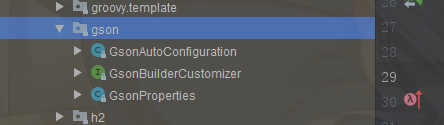
springboot 用的Google的gson
springboot启动代码(自用)的更多相关文章
- SpringBoot启动代码和自动装配源码分析
随着互联网的快速发展,各种组件层出不穷,需要框架集成的组件越来越多.每一种组件与Spring容器整合需要实现相关代码.SpringMVC框架配置由于太过于繁琐和依赖XML文件:为了方便快速集成第三 ...
- Springboot启动源码详解
我们开发任何一个Spring Boot项目,都会用到如下的启动类 @SpringBootApplication public class Application { public static voi ...
- SpringBoot启动流程解析
写在前面: 由于该系统是底层系统,以微服务形式对外暴露dubbo服务,所以本流程中SpringBoot不基于jetty或者tomcat等容器启动方式发布服务,而是以执行程序方式启动来发布(参考下图ke ...
- SpringBoot启动原理及相关流程
一.springboot启动原理及相关流程概览 springboot是基于spring的新型的轻量级框架,最厉害的地方当属自动配置.那我们就可以根据启动流程和相关原理来看看,如何实现传奇的自动配置 二 ...
- springboot启动的时候排除加载某些bean
由于公司把redis相关的配置类,工具类放在了一个类似common的工程里,这样以后肯定不可避免的出现某些项目可能并不需要使用redis,但是还是依赖common里的别的一些类库 所以排除spring ...
- SpringBoot启动tomcat源码解读
一.SpringBoot自动拉起Tomcat 原文链接:http://www.studyshare.cn/blog-front/blog/details/1136 SpringBoot框架是当前比较流 ...
- Springboot 启动详解
1.前言 最近一直在看Springboot和springcloud代码,看了将近20多天,对这两个系统的认知总算是入了门.后续应该会有一个系列的文章,本文就先从Springboot的启动入手. 2.容 ...
- SpringBoot 启动概述
透过现象看本质,SpringApplication 只是将一个典型的Spring应用的启动流程进行了扩展,因此,透彻理解 Spring 容器是打开 Spring Boot 大门的一把钥匙. Sprin ...
- SpringBoot启动加载类ApplicationRunner
SpringBoot启动加载类ApplicationRunner 有时希望项目在启动的时候加载一些系统参数,就要用到ApplicationRunner ApplicationRunner是一个接口,我 ...
随机推荐
- Oracle emca on linux
http://blog.csdn.net/haibusuanyun/article/details/16338591 bash-3.2$ lsnrctl status LSNRCTL for Lin ...
- Linux 桌面玩家指南:19. 深入理解 JavaScript,及其开发调试工具
特别说明:要在我的随笔后写评论的小伙伴们请注意了,我的博客开启了 MathJax 数学公式支持,MathJax 使用$标记数学公式的开始和结束.如果某条评论中出现了两个$,MathJax 会将两个$之 ...
- delphi中的copy函数和pos函数
1.copy(‘csdn’,1,2) 返回的结果是 cs 注释: Copy有3个参数,第一个是要处理的字符串,第二个是要截取的开始位置,第三个是截取位数 当第三个参数大于字符长度,那么效果就是取开始位 ...
- 【原创】ABAP根据文件路径获取文件所在目录(续)
在上一篇文章<ABAP根据文件路径获取文件所在目录>中,我主要的思路是采用 “SPLIT dobj AT sep INTO TABLE result_tab” 句型将文件全路径按分隔符“\ ...
- OpenProj打开不了或者提示”Failed to load Java VM Library”的错误的解决方案
一.双击打开OpenProj.exe没反应的解决方案: 1) 修改OpenProj1.4.0.ini,将Maximum Version=any改为Maximum Version=1.7,保存. 2)这 ...
- ASP.NET Core MVC 之路由(Routing)
ASP.NET Core MVC 路由是建立在ASP.NET Core 路由的,一项强大的URL映射组件,它可以构建具有理解和搜索网址的应用程序.这使得我们可以自定义应用程序的URL命名形式,使得它 ...
- package.json 详解
使用package.json 属性说明 name - 包名. version - 包的版本号. description - 包的描述. homepage - 包的官网 url . author - ...
- Python基础(八) 模块的引入与定义
模块定义 什么是模块:一个py文件就是一个模块 模块分为三类: 内置模块,(标准库):.python解释器自带的,time,os,sys,等等.200多种. 自定义模块:自己写的模块 第三方库(模块) ...
- 22 | 从0到1:API测试怎么做?常用API测试工具简介
- [乐意黎原创]Centos 7里apache(httpd)自启动
最近,Aerchi在折腾 ECS服务器 (Centos 7),每次重启后都要手动开启apache服务,好繁琐. 仔细研究了下:Apache 的服务第一.启动.终止.重启systemctl start ...