
使用 BeanDefinition 描述 Spring Bean
什么是BeanDefinition
在Java中,一切皆对象。在JDK中使用java.lang.Class来描述类这个对象。
在Spring中,存在bean这样一个概念,那Spring又是怎么抽象bean这个概念,用什么类来描述bean这个对象呢?Spring使用BeanDefinition来描述bean。
BeanDefinition

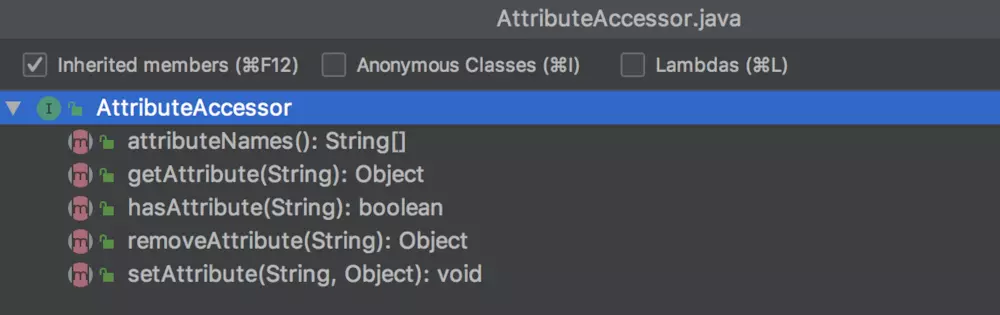
BeanDefinition继承了AttributeAccessor和BeanMetadataElement接口。在Spring中充斥着大量的各种接口,每种接口都拥有不同的能力,某个类实现了某个接口,也就相应的拥有了某种能力。
AttributeAccessor
顾名思义,这是一个属性访问者,它提供了访问属性的能力。
BeanMetadataElement
BeanMetadataElement中只有一个方法,用来获取元数据元素的配置源对象:
public interface BeanMetadataElement {

	@Nullable

	Object getSource();

}
BeanDefinition
BeanDefinition接口是Spring对bean的抽象。
我们可以从源码中可以看出,Spring是怎么描述一个bean:
public interface BeanDefinition extends AttributeAccessor, BeanMetadataElement {

	/**

	 * Scope identifier for the standard singleton scope: "singleton".

	 * <p>Note that extended bean factories might support further scopes.

	 *

	 * @see #setScope

	 */

	String SCOPE_SINGLETON = ConfigurableBeanFactory.SCOPE_SINGLETON;

	/**

	 * Scope identifier for the standard prototype scope: "prototype".

	 * <p>Note that extended bean factories might support further scopes.

	 *

	 * @see #setScope

	 */

	String SCOPE_PROTOTYPE = ConfigurableBeanFactory.SCOPE_PROTOTYPE;

	/**

	 * Role hint indicating that a {@code BeanDefinition} is a major part

	 * of the application. Typically corresponds to a user-defined bean.

	 */

	int ROLE_APPLICATION = 0;

	/**

	 * Role hint indicating that a {@code BeanDefinition} is a supporting

	 * part of some larger configuration, typically an outer

	 * {@link org.springframework.beans.factory.parsing.ComponentDefinition}.

	 * {@code SUPPORT} beans are considered important enough to be aware

	 * of when looking more closely at a particular

	 * {@link org.springframework.beans.factory.parsing.ComponentDefinition},

	 * but not when looking at the overall configuration of an application.

	 */

	int ROLE_SUPPORT = 1;

	/**

	 * Role hint indicating that a {@code BeanDefinition} is providing an

	 * entirely background role and has no relevance to the end-user. This hint is

	 * used when registering beans that are completely part of the internal workings

	 * of a {@link org.springframework.beans.factory.parsing.ComponentDefinition}.

	 */

	int ROLE_INFRASTRUCTURE = 2;

	// Modifiable attributes

	/**

	 * Set the name of the parent definition of this bean definition, if any.

	 */

	void setParentName(@Nullable String parentName);

	/**

	 * Return the name of the parent definition of this bean definition, if any.

	 */

	@Nullable

	String getParentName();

	/**

	 * Specify the bean class name of this bean definition.

	 * <p>The class name can be modified during bean factory post-processing,

	 * typically replacing the original class name with a parsed variant of it.

	 *

	 * @see #setParentName

	 * @see #setFactoryBeanName

	 * @see #setFactoryMethodName

	 */

	void setBeanClassName(@Nullable String beanClassName);

	/**

	 * Return the current bean class name of this bean definition.

	 * <p>Note that this does not have to be the actual class name used at runtime, in

	 * case of a child definition overriding/inheriting the class name from its parent.

	 * Also, this may just be the class that a factory method is called on, or it may

	 * even be empty in case of a factory bean reference that a method is called on.

	 * Hence, do <i>not</i> consider this to be the definitive bean type at runtime but

	 * rather only use it for parsing purposes at the individual bean definition level.

	 *

	 * @see #getParentName()

	 * @see #getFactoryBeanName()

	 * @see #getFactoryMethodName()

	 */

	@Nullable

	String getBeanClassName();

	/**

	 * Override the target scope of this bean, specifying a new scope name.

	 *

	 * @see #SCOPE_SINGLETON

	 * @see #SCOPE_PROTOTYPE

	 */

	void setScope(@Nullable String scope);

	/**

	 * Return the name of the current target scope for this bean,

	 * or {@code null} if not known yet.

	 */

	@Nullable

	String getScope();

	/**

	 * Set whether this bean should be lazily initialized.

	 * <p>If {@code false}, the bean will get instantiated on startup by bean

	 * factories that perform eager initialization of singletons.

	 */

	void setLazyInit(boolean lazyInit);

	/**

	 * Return whether this bean should be lazily initialized, i.e. not

	 * eagerly instantiated on startup. Only applicable to a singleton bean.

	 */

	boolean isLazyInit();

	/**

	 * Set the names of the beans that this bean depends on being initialized.

	 * The bean factory will guarantee that these beans get initialized first.

	 */

	void setDependsOn(@Nullable String... dependsOn);

	/**

	 * Return the bean names that this bean depends on.

	 */

	@Nullable

	String[] getDependsOn();

	/**

	 * Set whether this bean is a candidate for getting autowired into some other bean.

	 * <p>Note that this flag is designed to only affect type-based autowiring.

	 * It does not affect explicit references by name, which will get resolved even

	 * if the specified bean is not marked as an autowire candidate. As a consequence,

	 * autowiring by name will nevertheless inject a bean if the name matches.

	 */

	void setAutowireCandidate(boolean autowireCandidate);

	/**

	 * Return whether this bean is a candidate for getting autowired into some other bean.

	 */

	boolean isAutowireCandidate();

	/**

	 * Set whether this bean is a primary autowire candidate.

	 * <p>If this value is {@code true} for exactly one bean among multiple

	 * matching candidates, it will serve as a tie-breaker.

	 */

	void setPrimary(boolean primary);

	/**

	 * Return whether this bean is a primary autowire candidate.

	 */

	boolean isPrimary();

	/**

	 * Specify the factory bean to use, if any.

	 * This the name of the bean to call the specified factory method on.

	 *

	 * @see #setFactoryMethodName

	 */

	void setFactoryBeanName(@Nullable String factoryBeanName);

	/**

	 * Return the factory bean name, if any.

	 */

	@Nullable

	String getFactoryBeanName();

	/**

	 * Specify a factory method, if any. This method will be invoked with

	 * constructor arguments, or with no arguments if none are specified.

	 * The method will be invoked on the specified factory bean, if any,

	 * or otherwise as a static method on the local bean class.

	 *

	 * @see #setFactoryBeanName

	 * @see #setBeanClassName

	 */

	void setFactoryMethodName(@Nullable String factoryMethodName);

	/**

	 * Return a factory method, if any.

	 */

	@Nullable

	String getFactoryMethodName();

	/**

	 * Return the constructor argument values for this bean.

	 * <p>The returned instance can be modified during bean factory post-processing.

	 *

	 * @return the ConstructorArgumentValues object (never {@code null})

	 */

	ConstructorArgumentValues getConstructorArgumentValues();

	/**

	 * Return if there are constructor argument values defined for this bean.

	 *

	 * @since 5.0.2

	 */

	default boolean hasConstructorArgumentValues() {

		return !getConstructorArgumentValues().isEmpty();

	}

	/**

	 * Return the property values to be applied to a new instance of the bean.

	 * <p>The returned instance can be modified during bean factory post-processing.

	 *

	 * @return the MutablePropertyValues object (never {@code null})

	 */

	MutablePropertyValues getPropertyValues();

	/**

	 * Return if there are property values values defined for this bean.

	 *

	 * @since 5.0.2

	 */

	default boolean hasPropertyValues() {

		return !getPropertyValues().isEmpty();

	}

	/**

	 * Set the name of the initializer method.

	 *

	 * @since 5.1

	 */

	void setInitMethodName(@Nullable String initMethodName);

	/**

	 * Return the name of the initializer method.

	 *

	 * @since 5.1

	 */

	@Nullable

	String getInitMethodName();

	/**

	 * Set the name of the destroy method.

	 *

	 * @since 5.1

	 */

	void setDestroyMethodName(@Nullable String destroyMethodName);

	/**

	 * Return the name of the destroy method.

	 *

	 * @since 5.1

	 */

	@Nullable

	String getDestroyMethodName();

	/**

	 * Set the role hint for this {@code BeanDefinition}. The role hint

	 * provides the frameworks as well as tools with an indication of

	 * the role and importance of a particular {@code BeanDefinition}.

	 *

	 * @see #ROLE_APPLICATION

	 * @see #ROLE_SUPPORT

	 * @see #ROLE_INFRASTRUCTURE

	 * @since 5.1

	 */

	void setRole(int role);

	/**

	 * Get the role hint for this {@code BeanDefinition}. The role hint

	 * provides the frameworks as well as tools with an indication of

	 * the role and importance of a particular {@code BeanDefinition}.

	 *

	 * @see #ROLE_APPLICATION

	 * @see #ROLE_SUPPORT

	 * @see #ROLE_INFRASTRUCTURE

	 */

	int getRole();

	/**

	 * Set a human-readable description of this bean definition.

	 *

	 * @since 5.1

	 */

	void setDescription(@Nullable String description);

	/**

	 * Return a human-readable description of this bean definition.

	 */

	@Nullable

	String getDescription();

	// Read-only attributes

	/**

	 * Return whether this a <b>Singleton</b>, with a single, shared instance

	 * returned on all calls.

	 *

	 * @see #SCOPE_SINGLETON

	 */

	boolean isSingleton();

	/**

	 * Return whether this a <b>Prototype</b>, with an independent instance

	 * returned for each call.

	 *

	 * @see #SCOPE_PROTOTYPE

	 * @since 3.0

	 */

	boolean isPrototype();

	/**

	 * Return whether this bean is "abstract", that is, not meant to be instantiated.

	 */

	boolean isAbstract();

	/**

	 * Return a description of the resource that this bean definition

	 * came from (for the purpose of showing context in case of errors).

	 */

	@Nullable

	String getResourceDescription();

	/**

	 * Return the originating BeanDefinition, or {@code null} if none.

	 * Allows for retrieving the decorated bean definition, if any.

	 * <p>Note that this method returns the immediate originator. Iterate through the

	 * originator chain to find the original BeanDefinition as defined by the user.

	 */

	@Nullable

	BeanDefinition getOriginatingBeanDefinition();

}
AnnotatedBeanDefinition
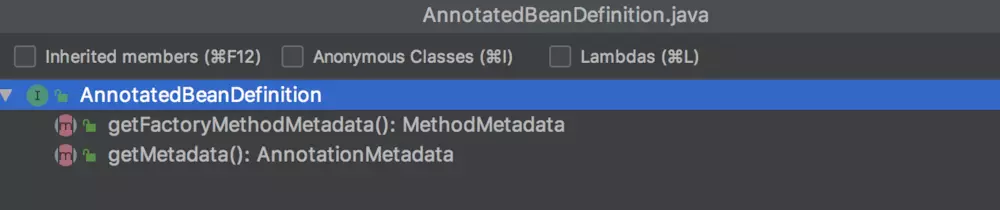
AnnotatedBeanDefinition 继承了BeanDefinition,拓展了BeanDefinition接口的能力:
BeanDefinition常见实现类
- ChildBeanDefinition
- RootBeanDefinition
- GenericBeanDefinition
- AnnotatedGenericBeanDefinition
- ScannedGenericBeanDefinition
BeanDefinitionBuilder
BeanDefinitionBuilder是Builder模式的应用。通过这个类我们可以方便的构建BeanDefinition的实例对象。举个例子:
@Component

public class MyBeanDefinitionRegistryPostProcessor implements BeanDefinitionRegistryPostProcessor {

	@Override

	public void postProcessBeanDefinitionRegistry(BeanDefinitionRegistry registry) throws BeansException {

		BeanDefinition beanDefinition = BeanDefinitionBuilder.genericBeanDefinition(OrderService.class)

				//这里的属性名是根据setter方法

				.addPropertyReference("dao", "orderDao")

				.setInitMethodName("init")

				.setScope(BeanDefinition.SCOPE_SINGLETON)

				.getBeanDefinition();

		registry.registerBeanDefinition("orderService", beanDefinition);

	}

	@Override

	public void postProcessBeanFactory(ConfigurableListableBeanFactory beanFactory) throws BeansException {

		//do nothing

	}

}
关于BeanDefinitionRegistryPostProcessor,这里先简单介绍一下,详细的我们后面再说。
BeanDefinitionRegistryPostProcessor继承了BeanFactoryPostProcessor接口,同时又增加了一个新的方法BeanDefinitionRegistryPostProcessor#postProcessBeanDefinitionRegistry,该方法允许程序员通过代码编码的方式手动往程序中注册BeanDefinition。
实例中的具体程序已上传到github:https://github.com/shenjianeng/spring-code-study
欢迎关注公众号:

使用 BeanDefinition 描述 Spring Bean的更多相关文章
- spring bean的重新加载
架构体系 在谈spring bean的重新加载前,首先我们来看看spring ioc容器. spring ioc容器主要功能是完成对bean的创建.依赖注入和管理等功能,而这些功能的实现是有下面几个组 ...
- 0003 - 基于xml的Spring Bean 的创建过程
一.目录 前言 创建 Bean 容器 加载 Bean 定义 创建 Bean Spring Bean 创建过程中的设计模式 总结 二.前言 2.1 Spring 使用配置 ApplicationCont ...
- Ioc容器beanDefinition-Spring 源码系列(1)
Ioc容器beanDefinition-Spring 源码系列(1) 目录: Ioc容器beanDefinition-Spring 源码(1) Ioc容器依赖注入-Spring 源码(2) Ioc容器 ...
- Spring之2:Spring Bean动态注册、删除
IoC容器的初始化包括BeanDefinition的Resource定位.载入和注册这三个基本的过程. 一.Resource定位.BeanDefinition的资源定位有resourceLoader通 ...
- Spring Bean的一生
Spring Bean的一生 When you work directly in Java, you can do anything you like with your objects and do ...
- 【转】spring bean 卸载
spring bean 卸载起因: 群里的一个朋友问到: 关于配置destory-method, springboot中 yml如何指定 首先介绍 bean卸载的三种形式 自定义destory-met ...
- 【Spring】IoC容器 - Spring Bean作用域Scope(含SpringCloud中的RefreshScope )
前言 上一章学习了[依赖来源],本章主要讨论SpringBean的作用域,我们这里讨论的Bean的作用域,很大程度都是默认只讨论依赖来源为[Spring BeanDefinition]的作用域,因为在 ...
- 大厂高频面试题Spring Bean生命周期最详解
Spring作为当前Java最流行.最强大的轻量级框架.Spring Bean的生命周期也是面试高频题,了解Spring Bean周期也能更好地帮助我们解决日常开发中的问题.程序员应该都知道Sprin ...
- Spring8:一些常用的Spring Bean扩展接口
前言 Spring是一款非常强大的框架,可以说是几乎所有的企业级Java项目使用了Spring,而Bean又是Spring框架的核心. Spring框架运用了非常多的设计模式,从整体上看,它的设计严格 ...
随机推荐
- NLP(二) 获取数据源和规范化
Why we do this 将获取的数据统一格式,得到规范化和结构化得数据 字符串操作 # 创建字符串列表和字符串对象 namesList = ['Tuffy','Ali','Nysha','Tim ...
- TK可视化之文件内容查找(升级篇)
升级为带有选择框 分三种查看格式一种是表格查看 一种是文本查看 一种是列表 1.列表查看类 # listbox 显示数据 import tkinter class ListShowData: def ...
- 小米 OJ 编程比赛 02 月常规赛 3 Logic Gatekeeper CDQ分治
link:https://code.mi.com/problem/list/view?id=139 题意: 有一个1e6 * 1e6 大的格子,现在有两种操作:1,给一个子矩阵中的每个格子加上k.2, ...
- P2154 [SDOI2009]虔诚的墓主人 树状数组
https://www.luogu.org/problemnew/show/P2154 题意 在一个坐标系中,有w(1e5)个点,这个图中空点的权值是正上,正下,正左,正右各取k个的排列组合情况.计算 ...
- codeforces D. Mahmoud and Ehab and the binary string(二分)
题目链接:http://codeforces.com/contest/862/submission/30696399 题解:这题一看操作数就知道是二分答案了.然后就是怎么个二分法,有两种思路第一种是找 ...
- bzoj 2726 任务安排 斜率优化DP
这个题目中 斜率优化DP相当于存在一个 y = kx + z 然后给定 n 个对点 (x,y) 然后给你一个k, 要求你维护出这个z最小是多少. 那么对于给定的点来说 我们可以维护出一个下凸壳,因为 ...
- codeforces 284 C. Cows and Sequence(线段树)
题目链接:http://codeforces.com/contest/284/problem/C 题意:就是给出3个操作 1)是将前i 个数加x 2)在数组最后添加一个数x 3)删除数组最后的那个数 ...
- Linux下设置path
1.直接用export命令: #export PATH=$PATH:自定义路径 查看是否已经设好,可用命令export查看: 2.修改profile文件: #vi /etc/profile 在里面加入 ...
- JUC(1)
cmd目录切换 D:\>cd /d D:\Program Files\Java\jdk1.8.0_201\bin 1. JUC 简介 在 Java 5.0 提供了 java.util.concu ...
- 相同类中方法间调用时日志Aop失效处理
本篇分享的内容是在相同类中方法间调用时Aop失效处理方案,该问题我看有很多文章描述了,不过大多是从事务角度分享的,本篇打算从日志aop方面分享(当然都是aop,失效和处理方案都是一样),以下都是基于s ...