
内核中dump_stack的实现原理(2) —— symbol
环境
正文
 static __printf(, )

 void __check_printsym_format(const char *fmt, ...)

 {

 }

 static inline void print_symbol(const char *fmt, unsigned long addr)

 {

     __check_printsym_format(fmt, "");

     __print_symbol(fmt, (unsigned long)

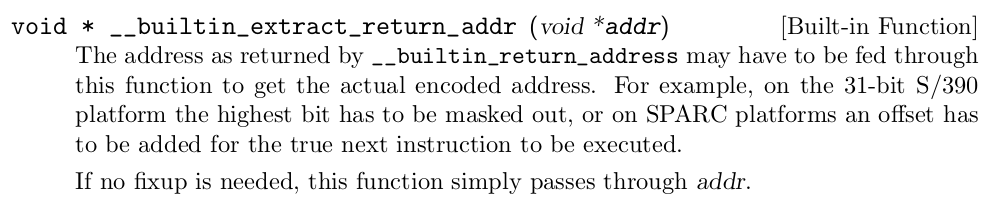
                __builtin_extract_return_addr((void *)addr));

 }
 /* Look up a kernel symbol and print it to the kernel messages. */

 void __print_symbol(const char *fmt, unsigned long address)

 {

     char buffer[KSYM_SYMBOL_LEN];

     sprint_symbol(buffer, address);

     printk(fmt, buffer);

 }
 /**

  * sprint_symbol - Look up a kernel symbol and return it in a text buffer

  * @buffer: buffer to be stored

  * @address: address to lookup

  *

  * This function looks up a kernel symbol with @address and stores its name,

  * offset, size and module name to @buffer if possible. If no symbol was found,

  * just saves its @address as is.

  *

  * This function returns the number of bytes stored in @buffer.

  */

 int sprint_symbol(char *buffer, unsigned long address)

 {

     return __sprint_symbol(buffer, address, , );

 }
 /* Look up a kernel symbol and return it in a text buffer. */

 static int __sprint_symbol(char *buffer, unsigned long address,

                int symbol_offset, int add_offset)

 {

     char *modname;

     const char *name;

     unsigned long offset, size;

     int len;

     address += symbol_offset;

     name = kallsyms_lookup(address, &size, &offset, &modname, buffer);

     if (!name)

         return sprintf(buffer, "0x%lx", address - symbol_offset);

     if (name != buffer)

         strcpy(buffer, name);

     len = strlen(buffer);

     offset -= symbol_offset;

     if (add_offset)

         len += sprintf(buffer + len, "+%#lx/%#lx", offset, size);

     if (modname)

         len += sprintf(buffer + len, " [%s]", modname);

     return len;

 }
上面的第11行的kallsyms_lookup就是根据address获取size,offset,modname
 /*

  * Lookup an address

  * - modname is set to NULL if it's in the kernel.

  * - We guarantee that the returned name is valid until we reschedule even if.

  *   It resides in a module.

  * - We also guarantee that modname will be valid until rescheduled.

  */

 const char *kallsyms_lookup(unsigned long addr,

                 unsigned long *symbolsize,

                 unsigned long *offset,

                 char **modname, char *namebuf)

 {

     const char *ret;

     namebuf[KSYM_NAME_LEN - ] = ;

     namebuf[] = ;

     if (is_ksym_addr(addr)) {

         unsigned long pos;

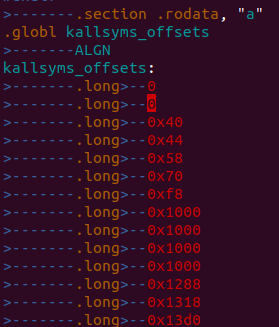
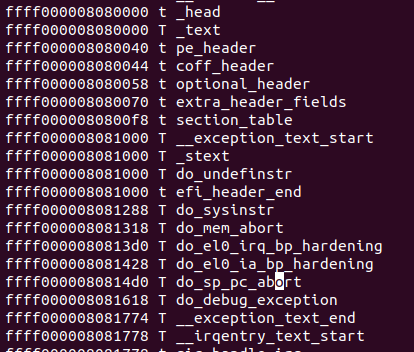
         pos = get_symbol_pos(addr, symbolsize, offset);

         /* Grab name */

         kallsyms_expand_symbol(get_symbol_offset(pos),

                        namebuf, KSYM_NAME_LEN);

         if (modname)

             *modname = NULL;

         ret = namebuf;

         goto found;

     }

     /* See if it's in a module or a BPF JITed image. */

     ret = module_address_lookup(addr, symbolsize, offset,

                     modname, namebuf);

     if (!ret)

         ret = bpf_address_lookup(addr, symbolsize,

                      offset, modname, namebuf);

 found:

     cleanup_symbol_name(namebuf);

     return ret;

 }

 static unsigned long get_symbol_pos(unsigned long addr,

                     unsigned long *symbolsize,

                     unsigned long *offset)

 {

     unsigned long symbol_start = , symbol_end = ;

     unsigned long i, low, high, mid;

     /* This kernel should never had been booted. */

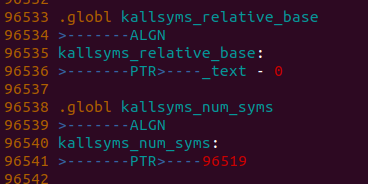
     if (!IS_ENABLED(CONFIG_KALLSYMS_BASE_RELATIVE))

         BUG_ON(!kallsyms_addresses);

     else

         BUG_ON(!kallsyms_offsets);

     /* Do a binary search on the sorted kallsyms_addresses array. */

     low = ;

     high = kallsyms_num_syms;

     while (high - low > ) {

         mid = low + (high - low) / ;

         if (kallsyms_sym_address(mid) <= addr)

             low = mid;

         else

             high = mid;

     }

     /*

      * Search for the first aliased symbol. Aliased

      * symbols are symbols with the same address.

      */

     while (low && kallsyms_sym_address(low-) == kallsyms_sym_address(low))

         --low;

     symbol_start = kallsyms_sym_address(low);

     /* Search for next non-aliased symbol. */

     for (i = low + ; i < kallsyms_num_syms; i++) {

         if (kallsyms_sym_address(i) > symbol_start) {

             symbol_end = kallsyms_sym_address(i);

             break;

         }

     }

     /* If we found no next symbol, we use the end of the section. */

     if (!symbol_end) {

         if (is_kernel_inittext(addr))

             symbol_end = (unsigned long)_einittext;

         else if (IS_ENABLED(CONFIG_KALLSYMS_ALL))

             symbol_end = (unsigned long)_end;

         else

             symbol_end = (unsigned long)_etext;

     }

     if (symbolsize)

         *symbolsize = symbol_end - symbol_start;

     if (offset)

         *offset = addr - symbol_start;

     return low;

 }
 /*

  * Find the offset on the compressed stream given and index in the

  * kallsyms array.

  */

 static unsigned int get_symbol_offset(unsigned long pos)

 {

     const u8 *name;

     int i;

     /*

      * Use the closest marker we have. We have markers every 256 positions,

      * so that should be close enough.

      */

     name = &kallsyms_names[kallsyms_markers[pos >> ]];

     /*

      * Sequentially scan all the symbols up to the point we're searching

      * for. Every symbol is stored in a [<len>][<len> bytes of data] format,

      * so we just need to add the len to the current pointer for every

      * symbol we wish to skip.

      */

     for (i = ; i < (pos & 0xFF); i++)

         name = name + (*name) + ;

     return name - kallsyms_names;

 }
 /*

  * Expand a compressed symbol data into the resulting uncompressed string,

  * if uncompressed string is too long (>= maxlen), it will be truncated,

  * given the offset to where the symbol is in the compressed stream.

  */

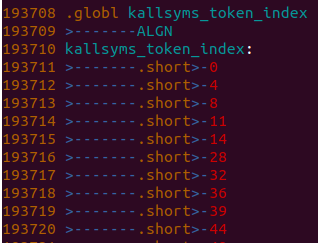
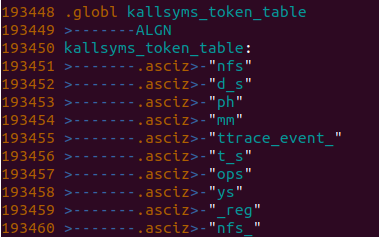
 static unsigned int kallsyms_expand_symbol(unsigned int off,

                        char *result, size_t maxlen)

 {

     int len, skipped_first = ;

     const u8 *tptr, *data;

     /* Get the compressed symbol length from the first symbol byte. */

     data = &kallsyms_names[off];

     len = *data;

     data++;

     /*

      * Update the offset to return the offset for the next symbol on

      * the compressed stream.

      */

     off += len + ;

     /*

      * For every byte on the compressed symbol data, copy the table

      * entry for that byte.

      */

     while (len) {

         tptr = &kallsyms_token_table[kallsyms_token_index[*data]];

         data++;

         len--;

         while (*tptr) {

             if (skipped_first) {

                 if (maxlen <= )

                     goto tail;

                 *result = *tptr;

                 result++;

                 maxlen--;

             } else

                 skipped_first = ;

             tptr++;

         }

     }

 tail:

     if (maxlen)

         *result = '\0';

     /* Return to offset to the next symbol. */

     return off;

 }
内核中dump_stack的实现原理(2) —— symbol的更多相关文章
- 内核中dump_stack的实现原理(3) —— 内核函数printk的实现
参考内核文档: Documentation/printk-formats.txt 在内核中使用dump_stack的时候可以看到如下用法: static inline void print_i ...
- 内核中dump_stack的实现原理(1) —— 栈回溯
环境 Aarch64 Qemu aarch64-linux-gnu-gcc linux-4.14 概述 栈回溯的目的是将函数的调用栈打印出来,对于分析函数调用和debug系统异常会很有帮助 ...
- 内核中dump_stack()的实现,并在用户态模拟dump_stack()【转】
转自:https://blog.csdn.net/jasonchen_gbd/article/details/44066815?utm_source=blogxgwz8 版权声明:本文为博主原创文章, ...
- linux内核中打印栈回溯信息 - dump_stack()函数分析【转】
转自:http://blog.csdn.net/jasonchen_gbd/article/details/45585133 版权声明:本文为博主原创文章,转载请附上原博链接. 目录(?)[-] ...
- Openvswitch原理与代码分析(5): 内核中的流表flow table操作
当一个数据包到达网卡的时候,首先要经过内核Openvswitch.ko,流表Flow Table在内核中有一份,通过key查找内核中的flow table,即可以得到action,然后执行acti ...
- Linux 2.6内核中新的锁机制--RCU
转自:http://www.ibm.com/developerworks/cn/linux/l-rcu/ 一. 引言 众所周知,为了保护共享数据,需要一些同步机制,如自旋锁(spinlock),读写锁 ...
- Linux VFS中write系统调用实现原理【转】
转自:http://blog.chinaunix.net/uid-28362602-id-3425881.html 目录 用户空间的write函数在内核里面的服务例程为sys_write Vfs_wr ...
- [php-src]理解Php内核中的函数与INI
内容均以php-5.6.14为例. 一. 函数结构 内核中定义一个php函数使用 PHP_FUNCTION 宏 包装,扩展也不例外,该宏在 ./main/php.h:343 有着一系列类似以 PHP ...
- linux内核中异步通信机制--信号处理机制【转】
转自:http://blog.csdn.net/lu_embedded/article/details/51131663 什么是异步通信?很简单,一旦设备准备好,就主动通知应用程序,这种情况下应用程序 ...
随机推荐
- 第08组 Beta冲刺(4/5)
队名:955 组长博客:点这里! 作业博客:点这里! 组员情况 组员1(组长):庄锡荣 过去两天完成了哪些任务 文字/口头描述 ? 测试新功能中 展示GitHub当日代码/文档签入记录 接下来的计划 ...
- LEDE安装zerotier 无法启动解决方法
进入命令行模式,vi /etc/config/zerotier文件,把option enabled '0'的0改为1.
- leetcode 1110. 删点成林
题目描述: 给出二叉树的根节点 root,树上每个节点都有一个不同的值. 如果节点值在 to_delete 中出现,我们就把该节点从树上删去,最后得到一个森林(一些不相交的树构成的集合). 返回森林中 ...
- Delphi阿里云邮件推送【支持单一发信、邮件批量发送和获取指定条件下的发送数据】
作者QQ:(648437169) 点击下载➨Delphi阿里云邮件推送 阿里云api文档 [Delphi阿里云邮件推送]支持SingleSendMail(单一发信接口). ...
- 【转载】数字IC设计流程及开发工具
原文链接:https://www.zhihu.com/question/28322269/answer/42048070 Design Flow &lt;img src="h ...
- CentOS 7 -防火墙设置--安装数据库,远程连接报错--Can't connect to MySQL server on localhost (10061)
前提简介:在CentOS 7 上安装了mysql5.7版本,已设置了远程访问权限,但是其他服务器无法访问到此Mysql,提示[Can't connect to MySQL server on loca ...
- LeetCode-SQL(一)
1.组合两个表 表1: Person +-------------+---------+| 列名 | 类型 |+-------------+---------+| Person ...
- 在RedHead中安装Oracle
配置Linux系统下Oracle的安装环境. 1.检查和更新所需软件包. # rpm -q binutils compat-libstdc++-33 elfutils-libelf elfutils- ...
- java加密解密工具类
package com.founder.mrp.util; import java.nio.charset.StandardCharsets; import java.security.Key; im ...
- Netty高性能原理和框架架构解析
1.引言 Netty 是一个广受欢迎的异步事件驱动的Java开源网络应用程序框架,用于快速开发可维护的高性能协议服务器和客户端. 本文基于 Netty 4.1 展开介绍相关理论模型,使用场景,基本组件 ...