
【Spring源码分析】AOP源码解析(下篇)
AspectJAwareAdvisorAutoProxyCreator及为Bean生成代理时机分析
上篇文章说了,org.springframework.aop.aspectj.autoproxy.AspectJAwareAdvisorAutoProxyCreator这个类是Spring提供给开发者的AOP的核心类,就是AspectJAwareAdvisorAutoProxyCreator完成了【类/接口-->代理】的转换过程,首先我们看一下AspectJAwareAdvisorAutoProxyCreator的层次结构:
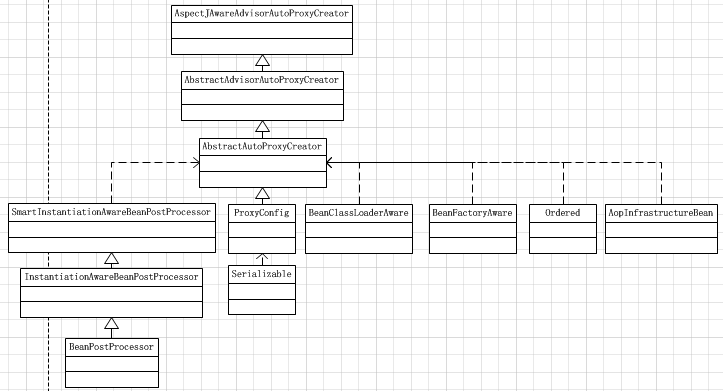
这里最值得注意的一点是最左下角的那个方框,我用几句话总结一下:
- AspectJAwareAdvisorAutoProxyCreator是BeanPostProcessor接口的实现类
- postProcessBeforeInitialization方法与postProcessAfterInitialization方法实现在父类AbstractAutoProxyCreator中
- postProcessBeforeInitialization方法是一个空实现
- 逻辑代码在postProcessAfterInitialization方法中
基于以上的分析,将Bean生成代理的时机已经一目了然了:在每个Bean初始化之后,如果需要,调用AspectJAwareAdvisorAutoProxyCreator中的postProcessBeforeInitialization为Bean生成代理。
代理对象实例化----判断是否为<bean>生成代理
上文分析了Bean生成代理的时机是在每个Bean初始化之后,下面把代码定位到Bean初始化之后,先是AbstractAutowireCapableBeanFactory的initializeBean方法进行初始化:
 protected Object initializeBean(final String beanName, final Object bean, RootBeanDefinition mbd) {

     if (System.getSecurityManager() != null) {

         AccessController.doPrivileged(new PrivilegedAction<Object>() {

             public Object run() {

                 invokeAwareMethods(beanName, bean);

                 return null;

             }

         }, getAccessControlContext());

     }

     else {

         invokeAwareMethods(beanName, bean);

     }

     Object wrappedBean = bean;

     if (mbd == null || !mbd.isSynthetic()) {

         wrappedBean = applyBeanPostProcessorsBeforeInitialization(wrappedBean, beanName);

     }

     try {

     invokeInitMethods(beanName, wrappedBean, mbd);

     }

     catch (Throwable ex) {

         throw new BeanCreationException(

                 (mbd != null ? mbd.getResourceDescription() : null),

                 beanName, "Invocation of init method failed", ex);

     }

     if (mbd == null || !mbd.isSynthetic()) {

         wrappedBean = applyBeanPostProcessorsAfterInitialization(wrappedBean, beanName);

     }

     return wrappedBean;

 }
初始化之前是第16行的applyBeanPostProcessorsBeforeInitialization方法,初始化之后即29行的applyBeanPostProcessorsAfterInitialization方法:
 public Object applyBeanPostProcessorsAfterInitialization(Object existingBean, String beanName)

         throws BeansException {

     Object result = existingBean;

     for (BeanPostProcessor beanProcessor : getBeanPostProcessors()) {

         result = beanProcessor.postProcessAfterInitialization(result, beanName);

         if (result == null) {

             return result;

         }

     }

     return result;

 }
这里调用每个BeanPostProcessor的postProcessBeforeInitialization方法。按照之前的分析,看一下AbstractAutoProxyCreator的postProcessAfterInitialization方法实现:
 public Object postProcessAfterInitialization(Object bean, String beanName) throws BeansException {

     if (bean != null) {

         Object cacheKey = getCacheKey(bean.getClass(), beanName);

         if (!this.earlyProxyReferences.contains(cacheKey)) {

             return wrapIfNecessary(bean, beanName, cacheKey);

         }

     }

     return bean;

 }
跟一下第5行的方法wrapIfNecessary:
 protected Object wrapIfNecessary(Object bean, String beanName, Object cacheKey) {

     if (this.targetSourcedBeans.contains(beanName)) {

         return bean;

     }

     if (this.nonAdvisedBeans.contains(cacheKey)) {

         return bean;

     }

     if (isInfrastructureClass(bean.getClass()) || shouldSkip(bean.getClass(), beanName)) {

         this.nonAdvisedBeans.add(cacheKey);

         return bean;

     }

     // Create proxy if we have advice.

     Object[] specificInterceptors = getAdvicesAndAdvisorsForBean(bean.getClass(), beanName, null);

     if (specificInterceptors != DO_NOT_PROXY) {

         this.advisedBeans.add(cacheKey);

         Object proxy = createProxy(bean.getClass(), beanName, specificInterceptors, new SingletonTargetSource(bean));

         this.proxyTypes.put(cacheKey, proxy.getClass());

         return proxy;

     }

     this.nonAdvisedBeans.add(cacheKey);

     return bean;

 }
第2行~第11行是一些不需要生成代理的场景判断,这里略过。首先我们要思考的第一个问题是:哪些目标对象需要生成代理?因为配置文件里面有很多Bean,肯定不能对每个Bean都生成代理,因此需要一套规则判断Bean是不是需要生成代理,这套规则就是第14行的代码getAdvicesAndAdvisorsForBean:
 protected List<Advisor> findEligibleAdvisors(Class beanClass, String beanName) {

     List<Advisor> candidateAdvisors = findCandidateAdvisors();

     List<Advisor> eligibleAdvisors = findAdvisorsThatCanApply(candidateAdvisors, beanClass, beanName);

     extendAdvisors(eligibleAdvisors);

     if (!eligibleAdvisors.isEmpty()) {

         eligibleAdvisors = sortAdvisors(eligibleAdvisors);

     }

     return eligibleAdvisors;

 }
顾名思义,方法的意思是为指定class寻找合适的Advisor。
第2行代码,寻找候选Advisors,根据上文的配置文件,有两个候选Advisor,分别是<aop:aspect>节点下的<aop:before>和<aop:after>这两个,这两个在XML解析的时候已经被转换生成了RootBeanDefinition。
跳过第3行的代码,先看下第4行的代码extendAdvisors方法,之后再重点看一下第3行的代码。第4行的代码extendAdvisors方法作用是向候选Advisor链的开头(也就是List.get(0)的位置)添加一个org.springframework.aop.support.DefaultPointcutAdvisor。
第3行代码,根据候选Advisors,寻找可以使用的Advisor,跟一下方法实现:
 public static List<Advisor> findAdvisorsThatCanApply(List<Advisor> candidateAdvisors, Class<?> clazz) {

     if (candidateAdvisors.isEmpty()) {

         return candidateAdvisors;

     }

     List<Advisor> eligibleAdvisors = new LinkedList<Advisor>();

     for (Advisor candidate : candidateAdvisors) {

         if (candidate instanceof IntroductionAdvisor && canApply(candidate, clazz)) {

             eligibleAdvisors.add(candidate);

         }

     }

     boolean hasIntroductions = !eligibleAdvisors.isEmpty();

     for (Advisor candidate : candidateAdvisors) {

         if (candidate instanceof IntroductionAdvisor) {

             // already processed

             continue;

         }

         if (canApply(candidate, clazz, hasIntroductions)) {

             eligibleAdvisors.add(candidate);

         }

     }

     return eligibleAdvisors;

 }
整个方法的主要判断都围绕canApply展开方法:
 public static boolean canApply(Advisor advisor, Class<?> targetClass, boolean hasIntroductions) {

     if (advisor instanceof IntroductionAdvisor) {

         return ((IntroductionAdvisor) advisor).getClassFilter().matches(targetClass);

     }

     else if (advisor instanceof PointcutAdvisor) {

         PointcutAdvisor pca = (PointcutAdvisor) advisor;

         return canApply(pca.getPointcut(), targetClass, hasIntroductions);

     }

     else {

         // It doesn't have a pointcut so we assume it applies.

         return true;

     }

 }
第一个参数advisor的实际类型是AspectJPointcutAdvisor,它是PointcutAdvisor的子类,因此执行第7行的方法:
 public static boolean canApply(Pointcut pc, Class<?> targetClass, boolean hasIntroductions) {

     if (!pc.getClassFilter().matches(targetClass)) {

         return false;

     }

     MethodMatcher methodMatcher = pc.getMethodMatcher();

     IntroductionAwareMethodMatcher introductionAwareMethodMatcher = null;

     if (methodMatcher instanceof IntroductionAwareMethodMatcher) {

         introductionAwareMethodMatcher = (IntroductionAwareMethodMatcher) methodMatcher;

     }

     Set<Class> classes = new HashSet<Class>(ClassUtils.getAllInterfacesForClassAsSet(targetClass));

     classes.add(targetClass);

     for (Class<?> clazz : classes) {

         Method[] methods = clazz.getMethods();

         for (Method method : methods) {

             if ((introductionAwareMethodMatcher != null &&

                 introductionAwareMethodMatcher.matches(method, targetClass, hasIntroductions)) ||

                     methodMatcher.matches(method, targetClass)) {

                 return true;

             }

         }

     }

     return false;

 }
这个方法其实就是拿当前Advisor对应的expression做了两层判断:
- 目标类必须满足expression的匹配规则
- 目标类中的方法必须满足expression的匹配规则,当然这里方法不是全部需要满足expression的匹配规则,有一个方法满足即可
如果以上两条都满足,那么容器则会判断该<bean>满足条件,需要被生成代理对象,具体方式为返回一个数组对象,该数组对象中存储的是<bean>对应的Advisor。
代理对象实例化----为<bean>生成代理代码上下文梳理
上文分析了为<bean>生成代理的条件,现在就正式看一下Spring上下文是如何为<bean>生成代理的。回到AbstractAutoProxyCreator的wrapIfNecessary方法:
 protected Object wrapIfNecessary(Object bean, String beanName, Object cacheKey) {

     if (this.targetSourcedBeans.contains(beanName)) {

         return bean;

     }

     if (this.nonAdvisedBeans.contains(cacheKey)) {

         return bean;

     }

     if (isInfrastructureClass(bean.getClass()) || shouldSkip(bean.getClass(), beanName)) {

         this.nonAdvisedBeans.add(cacheKey);

         return bean;

     }

     // Create proxy if we have advice.

     Object[] specificInterceptors = getAdvicesAndAdvisorsForBean(bean.getClass(), beanName, null);

     if (specificInterceptors != DO_NOT_PROXY) {

         this.advisedBeans.add(cacheKey);

         Object proxy = createProxy(bean.getClass(), beanName, specificInterceptors, new SingletonTargetSource(bean));

         this.proxyTypes.put(cacheKey, proxy.getClass());

         return proxy;

     }

     this.nonAdvisedBeans.add(cacheKey);

     return bean;

 }
第14行拿到<bean>对应的Advisor数组,第15行判断只要Advisor数组不为空,那么就会通过第17行的代码为<bean>创建代理:
 protected Object createProxy(

         Class<?> beanClass, String beanName, Object[] specificInterceptors, TargetSource targetSource) {

     ProxyFactory proxyFactory = new ProxyFactory();

     // Copy our properties (proxyTargetClass etc) inherited from ProxyConfig.

     proxyFactory.copyFrom(this);

     if (!shouldProxyTargetClass(beanClass, beanName)) {

         // Must allow for introductions; can't just set interfaces to

         // the target's interfaces only.

         Class<?>[] targetInterfaces = ClassUtils.getAllInterfacesForClass(beanClass, this.proxyClassLoader);

         for (Class<?> targetInterface : targetInterfaces) {

             proxyFactory.addInterface(targetInterface);

         }

     }

     Advisor[] advisors = buildAdvisors(beanName, specificInterceptors);

     for (Advisor advisor : advisors) {

         proxyFactory.addAdvisor(advisor);

     }

     proxyFactory.setTargetSource(targetSource);

     customizeProxyFactory(proxyFactory);

     proxyFactory.setFrozen(this.freezeProxy);

     if (advisorsPreFiltered()) {

         proxyFactory.setPreFiltered(true);

     }

     return proxyFactory.getProxy(this.proxyClassLoader);

 }
第4行~第6行new出了一个ProxyFactory,Proxy,顾名思义,代理工厂的意思,提供了简单的方式使用代码获取和配置AOP代理。
第8行的代码做了一个判断,判断的内容是<aop:config>这个节点中proxy-target-class="false"或者proxy-target-class不配置,即不使用CGLIB生成代理。如果满足条件,进判断,获取当前Bean实现的所有接口,讲这些接口Class对象都添加到ProxyFactory中。
第17行~第28行的代码没什么看的必要,向ProxyFactory中添加一些参数而已。重点看第30行proxyFactory.getProxy(this.proxyClassLoader)这句:
 public Object getProxy(ClassLoader classLoader) {

     return createAopProxy().getProxy(classLoader);

 }
实现代码就一行,但是却明确告诉我们做了两件事情:
- 创建AopProxy接口实现类
- 通过AopProxy接口的实现类的getProxy方法获取<bean>对应的代理
就从这两个点出发,分两部分分析一下。
代理对象实例化----创建AopProxy接口实现类
看一下createAopProxy()方法的实现,它位于DefaultAopProxyFactory类中:
 protected final synchronized AopProxy createAopProxy() {

     if (!this.active) {

         activate();

     }

     return getAopProxyFactory().createAopProxy(this);

 }
前面的部分没什么必要看,直接进入重点即createAopProxy方法:
 public AopProxy createAopProxy(AdvisedSupport config) throws AopConfigException {

     if (config.isOptimize() || config.isProxyTargetClass() || hasNoUserSuppliedProxyInterfaces(config)) {

         Class targetClass = config.getTargetClass();

         if (targetClass == null) {

             throw new AopConfigException("TargetSource cannot determine target class: " +

                     "Either an interface or a target is required for proxy creation.");

         }

         if (targetClass.isInterface()) {

             return new JdkDynamicAopProxy(config);

         }

         if (!cglibAvailable) {

             throw new AopConfigException(

                     "Cannot proxy target class because CGLIB2 is not available. " +

                     "Add CGLIB to the class path or specify proxy interfaces.");

         }

         return CglibProxyFactory.createCglibProxy(config);

     }

     else {

         return new JdkDynamicAopProxy(config);

     }

 }
平时我们说AOP原理三句话就能概括:
- 对类生成代理使用CGLIB
- 对接口生成代理使用JDK原生的Proxy
- 可以通过配置文件指定对接口使用CGLIB生成代理
这三句话的出处就是createAopProxy方法。看到默认是第19行的代码使用JDK自带的Proxy生成代理,碰到以下三种情况例外:
- ProxyConfig的isOptimize方法为true,这表示让Spring自己去优化而不是用户指定
- ProxyConfig的isProxyTargetClass方法为true,这表示配置了proxy-target-class="true"
- ProxyConfig满足hasNoUserSuppliedProxyInterfaces方法执行结果为true,这表示<bean>对象没有实现任何接口或者实现的接口是SpringProxy接口
在进入第2行的if判断之后再根据目标<bean>的类型决定返回哪种AopProxy。简单总结起来就是:
- proxy-target-class没有配置或者proxy-target-class="false",返回JdkDynamicAopProxy
- proxy-target-class="true"或者<bean>对象没有实现任何接口或者只实现了SpringProxy接口,返回Cglib2AopProxy
当然,不管是JdkDynamicAopProxy还是Cglib2AopProxy,AdvisedSupport都是作为构造函数参数传入的,里面存储了具体的Advisor。
代理对象实例化----通过getProxy方法获取<bean>对应的代理
其实代码已经分析到了JdkDynamicAopProxy和Cglib2AopProxy,剩下的就没什么好讲的了,无非就是看对这两种方式生成代理的熟悉程度而已。
Cglib2AopProxy生成代理的代码就不看了,对Cglib不熟悉的朋友可以看Cglib及其基本使用一文。
JdkDynamicAopProxy生成代理的方式稍微看一下:
 public Object getProxy(ClassLoader classLoader) {

     if (logger.isDebugEnabled()) {

         logger.debug("Creating JDK dynamic proxy: target source is " + this.advised.getTargetSource());

     }

     Class[] proxiedInterfaces = AopProxyUtils.completeProxiedInterfaces(this.advised);

     findDefinedEqualsAndHashCodeMethods(proxiedInterfaces);

     return Proxy.newProxyInstance(classLoader, proxiedInterfaces, this);

 }
这边解释一下第5行和第6行的代码,第5行代码的作用是拿到所有要代理的接口,第6行代码的作用是尝试寻找这些接口方法里面有没有equals方法和hashCode方法,同时都有的话打个标记,寻找结束,equals方法和hashCode方法有特殊处理。
最终通过第7行的Proxy.newProxyInstance方法获取接口/类对应的代理对象,Proxy是JDK原生支持的生成代理的方式。
代理方法调用原理
前面已经详细分析了为接口/类生成代理的原理,生成代理之后就要调用方法了,这里看一下使用JdkDynamicAopProxy调用方法的原理。
由于JdkDynamicAopProxy本身实现了InvocationHandler接口,因此具体代理前后处理的逻辑在invoke方法中:
 public Object invoke(Object proxy, Method method, Object[] args) throws Throwable {

     MethodInvocation invocation;

     Object oldProxy = null;

     boolean setProxyContext = false;

     TargetSource targetSource = this.advised.targetSource;

     Class targetClass = null;

     Object target = null;

     try {

         if (!this.equalsDefined && AopUtils.isEqualsMethod(method)) {

             // The target does not implement the equals(Object) method itself.

             return equals(args[0]);

         }

         if (!this.hashCodeDefined && AopUtils.isHashCodeMethod(method)) {

             // The target does not implement the hashCode() method itself.

             return hashCode();

         }

         if (!this.advised.opaque && method.getDeclaringClass().isInterface() &&

                 method.getDeclaringClass().isAssignableFrom(Advised.class)) {

             // Service invocations on ProxyConfig with the proxy config...

             return AopUtils.invokeJoinpointUsingReflection(this.advised, method, args);

         }

         Object retVal;

         if (this.advised.exposeProxy) {

             // Make invocation available if necessary.

             oldProxy = AopContext.setCurrentProxy(proxy);

             setProxyContext = true;

         }

         // May be null. Get as late as possible to minimize the time we "own" the target,

         // in case it comes from a pool.

         target = targetSource.getTarget();

         if (target != null) {

             targetClass = target.getClass();

         }

         // Get the interception chain for this method.

         List<Object> chain = this.advised.getInterceptorsAndDynamicInterceptionAdvice(method, targetClass);

         // Check whether we have any advice. If we don't, we can fallback on direct

         // reflective invocation of the target, and avoid creating a MethodInvocation.

         if (chain.isEmpty()) {

             // We can skip creating a MethodInvocation: just invoke the target directly

             // Note that the final invoker must be an InvokerInterceptor so we know it does

             // nothing but a reflective operation on the target, and no hot swapping or fancy proxying.

             retVal = AopUtils.invokeJoinpointUsingReflection(target, method, args);

         }

         else {

             // We need to create a method invocation...

             invocation = new ReflectiveMethodInvocation(proxy, target, method, args, targetClass, chain);

             // Proceed to the joinpoint through the interceptor chain.

             retVal = invocation.proceed();

         }

         // Massage return value if necessary.

         if (retVal != null && retVal == target && method.getReturnType().isInstance(proxy) &&

                 !RawTargetAccess.class.isAssignableFrom(method.getDeclaringClass())) {

             // Special case: it returned "this" and the return type of the method

             // is type-compatible. Note that we can't help if the target sets

             // a reference to itself in another returned object.

             retVal = proxy;

         }

         return retVal;

     }

     finally {

         if (target != null && !targetSource.isStatic()) {

             // Must have come from TargetSource.

             targetSource.releaseTarget(target);

         }

         if (setProxyContext) {

             // Restore old proxy.

             AopContext.setCurrentProxy(oldProxy);

         }

     }

 }
第11行~第18行的代码,表示equals方法与hashCode方法即使满足expression规则,也不会为之产生代理内容,调用的是JdkDynamicAopProxy的equals方法与hashCode方法。至于这两个方法是什么作用,可以自己查看一下源代码。
第19行~第23行的代码,表示方法所属的Class是一个接口并且方法所属的Class是AdvisedSupport的父类或者父接口,直接通过反射调用该方法。
第27行~第30行的代码,是用于判断是否将代理暴露出去的,由<aop:config>标签中的expose-proxy="true/false"配置。
第41行的代码,获取AdvisedSupport中的所有拦截器和动态拦截器列表,用于拦截方法,具体到我们的实际代码,列表中有三个Object,分别是:
- chain.get(0):ExposeInvocationInterceptor,这是一个默认的拦截器,对应的原Advisor为DefaultPointcutAdvisor
- chain.get(1):MethodBeforeAdviceInterceptor,用于在实际方法调用之前的拦截,对应的原Advisor为AspectJMethodBeforeAdvice
- chain.get(2):AspectJAfterAdvice,用于在实际方法调用之后的处理
第45行~第50行的代码,如果拦截器列表为空,很正常,因为某个类/接口下的某个方法可能不满足expression的匹配规则,因此此时通过反射直接调用该方法。
第51行~第56行的代码,如果拦截器列表不为空,按照注释的意思,需要一个ReflectiveMethodInvocation,并通过proceed方法对原方法进行拦截,proceed方法感兴趣的朋友可以去看一下,里面使用到了递归的思想对chain中的Object进行了层层的调用。
【Spring源码分析】AOP源码解析(下篇)的更多相关文章
- 七、Spring之深入理解AOP源码
Spring之深入理解AOP源码 在上一篇博文中,我们对AOP有了初步的了解,那么接下来我们就对AOP的实现原理进行深入的分析. 在之前写的那个AOP示例代码当中有这样一个注解:@Enable ...
- springMVC源码分析--HandlerMethodReturnValueHandlerComposite返回值解析器集合(二)
在上一篇博客springMVC源码分析--HandlerMethodReturnValueHandler返回值解析器(一)我们介绍了返回值解析器HandlerMethodReturnValueHand ...
- [源码分析] 从源码入手看 Flink Watermark 之传播过程
[源码分析] 从源码入手看 Flink Watermark 之传播过程 0x00 摘要 本文将通过源码分析,带领大家熟悉Flink Watermark 之传播过程,顺便也可以对Flink整体逻辑有一个 ...
- JVM源码分析-JVM源码编译与调试
要分析JVM的源码,结合资料直接阅读是一种方式,但是遇到一些想不通的场景,必须要结合调试,查看执行路径以及参数具体的值,才能搞得明白.所以我们先来把JVM的源码进行编译,并能够使用GDB进行调试. 编 ...
- k8s client-go源码分析 informer源码分析(2)-初始化与启动分析
k8s client-go源码分析 informer源码分析(2)-初始化与启动分析 前面一篇文章对k8s informer做了概要分析,本篇文章将对informer的初始化与启动进行分析. info ...
- k8s client-go源码分析 informer源码分析(3)-Reflector源码分析
k8s client-go源码分析 informer源码分析(3)-Reflector源码分析 1.Reflector概述 Reflector从kube-apiserver中list&watc ...
- spring源码分析系列 (15) 设计模式解析
spring是目前使用最为广泛的Java框架之一.虽然spring最为核心是IOC和AOP,其中代码实现中很多设计模式得以应用,代码看起来简洁流畅,在日常的软件设计中很值得借鉴.以下是对一些设计模式的 ...
- Spring源码分析(九)解析默认标签中的自定义标签元素
摘要:本文结合<Spring源码深度解析>来分析Spring 5.0.6版本的源代码.若有描述错误之处,欢迎指正. 到这里我们已经完成了分析默认标签的解析与提取过程,或许涉及的内容太多,我 ...
- MapReduce之提交job源码分析 FileInputFormat源码解析
MapReduce之提交job源码分析 job 提交流程源码详解 //runner 类中提交job waitForCompletion() submit(); // 1 建立连接 connect(); ...
- 精尽MyBatis源码分析 - MyBatis-Spring 源码分析
该系列文档是本人在学习 Mybatis 的源码过程中总结下来的,可能对读者不太友好,请结合我的源码注释(Mybatis源码分析 GitHub 地址.Mybatis-Spring 源码分析 GitHub ...
随机推荐
- vim学习、各类插件配置与安装
vim学习.各类插件配置与安装 vim 插件 配置 1. vim学习 vim基础学习:根据网上流行基础文章<简明Vim练级攻略>,进阶书籍<vim实用技巧>.注:进阶书籍可以在 ...
- bzoj 3048[Usaco2013 Jan]Cow Lineup 思想,乱搞 stl
3048: [Usaco2013 Jan]Cow Lineup Time Limit: 2 Sec Memory Limit: 128 MBSubmit: 237 Solved: 168[Subm ...
- .NET中的按需加载/延迟加载 Lazy<T>
业务场景: 在项目开发中,经常会遇到特定的对象使用的加载问题,有的实例对象我们创建之后并非需要使用,只是根据业务场景来调用,所以可能会导致很多无效的实例加载 延迟初始化出现于.NET 4.0,主要用于 ...
- nginx的环境配置的问题
在安装好nginx之后,运行nginx,报错: nginx dyld: Library not loaded: /usr/local/lib/libpcre.1.dylib Referenced fr ...
- Android WebView 保持登录问题
最近有个需求是这样的:在应用中添加一个商城,商城的实现是H5(包括登录).需要将这个H5嵌到原生应用中,并在原生代码中添加支付功能. 接到这个需求的时候,想这不是很简单么,用WebView加载这个页面 ...
- 学习笔记︱深度学习以及R中并行算法的应用(GPU)
笔记源于一次微课堂,由数据人网主办,英伟达高级工程师ParallerR原创.大牛的博客链接:http://www.parallelr.com/training/ 由于本人白痴,不能全部听懂,所以只能把 ...
- free 或delete后指针怎么样了
free()和delete()只是把指针所指向的内存释放掉,但是并没有把指针本身删除,也没有把指针置为NULL; #include<iostream> using namespace st ...
- (二十)java小练习二
练习4:定义一个整数数组,编写程序求出一个数组的基数和偶数个数 package demo; /* * 定义一个整数数组,编写程序求出一个数组的基数和偶数个数 */ public class Tes ...
- C#的动态链接库和XML配置
今天对昨天的实例进行了改进和提高,将堆排序和冒泡排序封装在一个动态链接库中,提供函数调用和事件委托.此外加入XML进行配置,在XML中存入相关配置信息,提供一个单独的XmlClass对其进行操作,加深 ...
- C#简单工厂和抽象类的实例
using System; using System.Collections.Generic; using System.Diagnostics; using System.IO; using Sys ...