
曹工说Spring Boot源码(5)-- 怎么从properties文件读取bean
写在前面的话
相关背景及资源:
曹工说Spring Boot源码(1)-- Bean Definition到底是什么,附spring思维导图分享
曹工说Spring Boot源码(2)-- Bean Definition到底是什么,咱们对着接口,逐个方法讲解
曹工说Spring Boot源码(3)-- 手动注册Bean Definition不比游戏好玩吗,我们来试一下
曹工说Spring Boot源码(4)-- 我是怎么自定义ApplicationContext,从json文件读取bean definition的?
工程结构图:

整体思路
bean definition实在太过重要,可以说是基础中的基础,所以我们花了很多讲在这上面,本讲的主题,还是这个。这次,我们是从properties文件里读取bean definition。
但是,上次,从json读取,我们自己实现了org.springframework.beans.factory.support.AbstractBeanDefinitionReader,使用fastjson从json文件内读取。
这次,我们不需要自己实现,是因为spring-beans包内,居然自带了从properties文件读取bean的实现类。

所以,这样就变得很简单了,我们只需要定义一个applicationContext,让它使用这个开箱即用的reader即可。
闲言少叙,let's code!
本场大佬简介--PropertiesBeanDefinitionReader
本类的javadoc如是说:
* Bean definition reader for a simple properties format.

*

* <p>Provides bean definition registration methods for Map/Properties and

* ResourceBundle. Typically applied to a DefaultListableBeanFactory.
这里说,就是一个从properties格式的文件读取bean definition的,那么,是不是properties可以随便怎么写呢?嗯,按理说,是可以随便写,你别管我怎么写,形式重要吗,重要的是,有这个数据。
bean definition的核心数据有哪些?再回忆一下,beanClassName、scope、lazy-init、parent、abstract等。
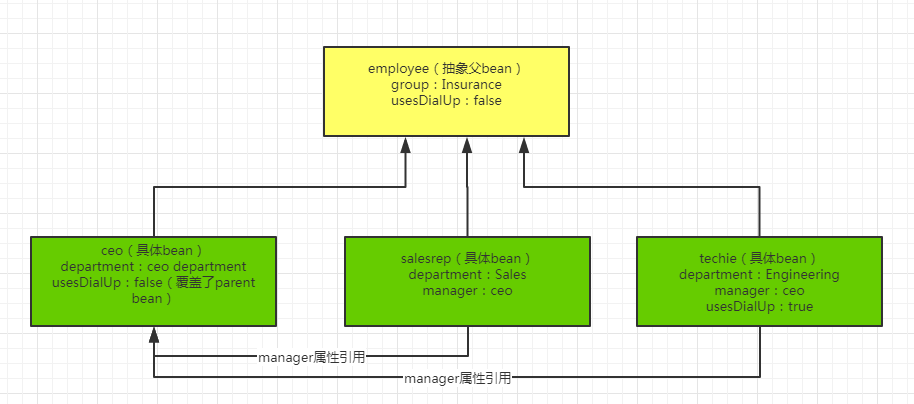
parent和abstract,是个新概念,前面我也没有提,大家看下面的例子可能就懂了(来自于PropertiesBeanDefinitionReader的注释,我自己梳理了一下)。
这个reader,对properties的格式是有要求的,参考下面这份:
//定义一个抽象bean,名称为employee(句号前面为bean的名称),表示为员工,类型为Employee,两个属性:组名:Insurance;useDialUp(我理解为工位是否配电话):true

employee.(class)=org.springframework.simple.Employee

employee.(abstract)=true

employee.group=Insurance

employee.usesDialUp=false

//定义一个非抽象bean,parent为抽象的employee,department属性为CEOdepartment,usesDialUp为true,覆盖了parent的false

ceo.(parent)=employee

ceo.department=ceo department

ceo.usesDialUp=true

//定义另一个非抽象bean,表示销售人员,lazy-init,经理字段:引用了另一个bean,name为ceo;部门为Sales

salesrep.(parent)=employee

salesrep.(lazy-init)=true

salesrep.manager(ref)=ceo

salesrep.department=Sales

//这个类似

techie.(parent)=employee

techie.(scope)=prototype

techie.department=Engineering

techie.usesDialUp=true

techie.manager(ref)=ceo
贴心的我给大家花了个图:
详细剖析
接下来,我们还是先看看这个类:
实现接口
看一个类,其实主要看接口,才能快速了解一个类的用途,这里,它实现了org.springframework.beans.factory.support.BeanDefinitionReader接口。
这个接口的方法如下:
public interface BeanDefinitionReader {

	//获取bean definition 注册中心,老朋友DefaultListableBeanFactory实现了该接口

	BeanDefinitionRegistry getRegistry();

	// 获取资源加载器

	ResourceLoader getResourceLoader();

    //获取classloader

	ClassLoader getBeanClassLoader();

	//获取bean名称生成器

	BeanNameGenerator getBeanNameGenerator();

	//从指定资源充,加载bean definition

	int loadBeanDefinitions(Resource resource) throws BeanDefinitionStoreException;

	//重载

	int loadBeanDefinitions(Resource... resources) throws BeanDefinitionStoreException;

    //重载

	int loadBeanDefinitions(String location) throws BeanDefinitionStoreException;

    //重载

	int loadBeanDefinitions(String... locations) throws BeanDefinitionStoreException;

}
大体,可以看出来,这个bean definition reader接口,就是使用指定的classloader,从指定的resource,去加载bean definition。
加载bean definition
我们先看看PropertiesBeanDefinitionReader怎么构造:
	//调用父类,参数传入了bean definition 注册表

	public PropertiesBeanDefinitionReader(BeanDefinitionRegistry registry) {

		super(registry);

	}

	//构造默认的资源加载器、environment

	protected AbstractBeanDefinitionReader(BeanDefinitionRegistry registry) {

		this.registry = registry;

		// Determine ResourceLoader to use.

		if (this.registry instanceof ResourceLoader) {

			this.resourceLoader = (ResourceLoader) this.registry;

		}

		else {

			this.resourceLoader = new PathMatchingResourcePatternResolver();

		}

		// Inherit Environment if possible

		if (this.registry instanceof EnvironmentCapable) {

			this.environment = ((EnvironmentCapable)this.registry).getEnvironment();

		}

		else {

			this.environment = new StandardEnvironment();

		}

	}
再看主要的loadBeanDefinition方法,是怎么实现的:
	public int loadBeanDefinitions(Resource resource) throws BeanDefinitionStoreException {

		return loadBeanDefinitions(new EncodedResource(resource), null);

	}
调用了内部的:
//加载bean definition

public int loadBeanDefinitions(EncodedResource encodedResource, String prefix)

			throws BeanDefinitionStoreException {

	//读取properties文件内容到props变量

    Properties props = new Properties();

    InputStream is = encodedResource.getResource().getInputStream();

    if (encodedResource.getEncoding() != null) {

        InputStreamReader reader = new InputStreamReader(is, encodedResource.getEncoding());

        props.load(reader);

    }

    else {

        props.load(is);

    }

    //注册bean definition

    return registerBeanDefinitions(props, prefix, null);

}
继续深入上面的倒数第二行的函数:
public int registerBeanDefinitions(Map map, String prefix, String resourceDescription)

			throws BeansException {

		if (prefix == null) {

			prefix = "";

		}

		int beanCount = 0;

		for (Object key : map.keySet()) {

			String keyString = (String) key;

			if (keyString.startsWith(prefix)) {

				// Key is of form: prefix<name>.property

				String nameAndProperty = keyString.substring(prefix.length());

				// Find dot before property name, ignoring dots in property keys.

				int sepIdx = nameAndProperty.lastIndexOf(SEPARATOR);

				if (sepIdx != -1) {

					String beanName = nameAndProperty.substring(0, sepIdx);

					if (!getRegistry().containsBeanDefinition(beanName)) {

						// 如果之前没注册这个bean,则注册之,这里的prefix:prefix+beanName,其实就是从properties文件中筛选出beanName一致的key-value

						registerBeanDefinition(beanName, map, prefix + beanName, resourceDescription);

						++beanCount;

					}

				}

			}

		}

		return beanCount;

	}
主要就是遍历map,将property的key用.分割,前面的就是beanName,用beanName作为前缀,然后调用下一层函数:
public static final String CLASS_KEY = "(class)";

public static final String PARENT_KEY = "(parent)";

public static final String SCOPE_KEY = "(scope)";

public static final String SINGLETON_KEY = "(singleton)";

public static final String ABSTRACT_KEY = "(abstract)";

public static final String LAZY_INIT_KEY = "(lazy-init)";

public static final String REF_SUFFIX = "(ref)";

protected void registerBeanDefinition(String beanName, Map<?, ?> map, String prefix, String resourceDescription)

			throws BeansException {

		String className = null;

		String parent = null;

		String scope = GenericBeanDefinition.SCOPE_SINGLETON;

		boolean isAbstract = false;

		boolean lazyInit = false;

		ConstructorArgumentValues cas = new ConstructorArgumentValues();

		MutablePropertyValues pvs = new MutablePropertyValues();

		for (Map.Entry entry : map.entrySet()) {

			String key = StringUtils.trimWhitespace((String) entry.getKey());

			if (key.startsWith(prefix + SEPARATOR)) {

				String property = key.substring(prefix.length() + SEPARATOR.length());

                  //核心属性,bean的ClassName

				if (CLASS_KEY.equals(property)) {

					className = StringUtils.trimWhitespace((String) entry.getValue());

				}//parent属性

				else if (PARENT_KEY.equals(property)) {

					parent = StringUtils.trimWhitespace((String) entry.getValue());

				}//是否抽象bean definition

				else if (ABSTRACT_KEY.equals(property)) {

					String val = StringUtils.trimWhitespace((String) entry.getValue());

					isAbstract = TRUE_VALUE.equals(val);

				}//scope

                  ...此处不重要的属性代码进行省略

				//通过构造器注入其他bean,我们例子里没涉及

				else if (property.startsWith(CONSTRUCTOR_ARG_PREFIX)) {

					if (property.endsWith(REF_SUFFIX)) {

						int index = Integer.parseInt(property.substring(1, property.length() - REF_SUFFIX.length()));

						cas.addIndexedArgumentValue(index, new RuntimeBeanReference(entry.getValue().toString()));

					}

					else {

						int index = Integer.parseInt(property.substring(1));

						cas.addIndexedArgumentValue(index, readValue(entry));

					}

				}

                // 这里引用其他bean,语法是我们例子用到的,(ref)

				else if (property.endsWith(REF_SUFFIX)) {

					property = property.substring(0, property.length() - REF_SUFFIX.length());

					String ref = StringUtils.trimWhitespace((String) entry.getValue());

					Object val = new RuntimeBeanReference(ref);

					pvs.add(property, val);

				}

				else {

					// It's a normal bean property.

					pvs.add(property, readValue(entry));

				}

			}

		}

		//构造一个bean definition

        AbstractBeanDefinition bd = BeanDefinitionReaderUtils.createBeanDefinition(

            parent, className, getBeanClassLoader());

        bd.setScope(scope);

        bd.setAbstract(isAbstract);

        bd.setLazyInit(lazyInit);

    	//下面这两行,进行构造器注入和属性注入

        bd.setConstructorArgumentValues(cas);

        bd.setPropertyValues(pvs);

        //注册

        getRegistry().registerBeanDefinition(beanName, bd);

	}
本类的主要代码就这些,删减了部分,主要是避免太冗余,代码有删减就会使用...表示。
定义applicationContext
package org.springframework.beans.extend.properties.applicationcontext;

import org.springframework.beans.BeansException;

import org.springframework.beans.factory.support.DefaultListableBeanFactory;

import org.springframework.beans.factory.support.PropertiesBeanDefinitionReader;

import org.springframework.beans.factory.xml.XmlBeanDefinitionReader;

import org.springframework.context.ApplicationContext;

import org.springframework.context.support.AbstractRefreshableConfigApplicationContext;

import java.io.IOException;

public class ClassPathPropertyFileApplicationContext extends AbstractRefreshableConfigApplicationContext {

    /**

     * Loads the bean definitions via an XmlBeanDefinitionReader.

     * @see XmlBeanDefinitionReader

     * @see #loadBeanDefinitions

     */

    @Override

    protected void loadBeanDefinitions(DefaultListableBeanFactory beanFactory) throws BeansException, IOException {

        // 构造一个propertiesBeanDefinitionReader,就是前面我们的主角

        PropertiesBeanDefinitionReader beanDefinitionReader = new PropertiesBeanDefinitionReader(beanFactory);

        beanDefinitionReader.setEnvironment(this.getEnvironment());

        beanDefinitionReader.setResourceLoader(this);

        // Allow a subclass to provide custom initialization of the reader,

        // then proceed with actually loading the bean definitions.

        loadBeanDefinitions(beanDefinitionReader);

    }

	//使用reader,加载bean definition

    protected void loadBeanDefinitions(PropertiesBeanDefinitionReader reader) throws BeansException, IOException {

        String[] configResources = getConfigLocations();

        if (configResources != null) {

            //看这,兄弟

            reader.loadBeanDefinitions(configResources);

        }

    }

    public ClassPathPropertyFileApplicationContext(String[] configLocations, boolean refresh, ApplicationContext parent)

            throws BeansException {

        super(parent);

        setConfigLocations(configLocations);

        if (refresh) {

            refresh();

        }

    }

}
测试代码
@Slf4j

public class BootStrap {

    public static void main(String[] args) {

        ClassPathPropertyFileApplicationContext context = new ClassPathPropertyFileApplicationContext("beanDefinition.properties");

        Map<String, Employee> beansOfType = context.getBeansOfType(Employee.class);

        for (Map.Entry<String, Employee> entry : beansOfType.entrySet()) {

            log.info("bean name:{},bean:{}",entry.getKey(),entry.getValue());

        }

    }

}
output:
22:17:26.083 [main] INFO  o.s.b.extend.properties.BootStrap - bean name:techie,bean:Employee(group=Insurance, usesDialUp=true, department=Engineering, manager=Employee(group=Insurance, usesDialUp=true, department=ceo department, manager=null))

22:17:26.083 [main] INFO  o.s.b.extend.properties.BootStrap - bean name:salesrep,bean:Employee(group=Insurance, usesDialUp=false, department=Sales, manager=Employee(group=Insurance, usesDialUp=true, department=ceo department, manager=null))

22:17:26.083 [main] INFO  o.s.b.extend.properties.BootStrap - bean name:ceo,bean:Employee(group=Insurance, usesDialUp=true, department=ceo department, manager=null)
这里可以看出来,子bean是继承了父bean的bean definition,并override了父bean中已经存在的属性。
总结
工程源码:
这一讲,主要是讲解了另一种读取bean definition的方式,其实就是告诉我们要打破思想束缚,bean的来源可以用很多,不一定只有xml和注解。另外,也是培养我们的抽象思维,至少bean definition reader这个接口,给我们的感觉就是如此,我不管你resource来自哪里,只要能读取bean definition即可,正所谓:英雄不问出处!
我们作为技术从业人员也是如此,只要技术够ok,到哪都能混得走。
下一讲,我们将继续讲解bean definition,主要是bean definition的继承和override相关内容。
觉得有帮助的话,大家点个赞哈
曹工说Spring Boot源码(5)-- 怎么从properties文件读取bean的更多相关文章
- 曹工说Spring Boot源码系列开讲了(1)-- Bean Definition到底是什么,附spring思维导图分享
写在前面的话&&About me 网上写spring的文章多如牛毛,为什么还要写呢,因为,很简单,那是人家写的:网上都鼓励你不要造轮子,为什么你还要造呢,因为,那不是你造的. 我不是要 ...
- 曹工说Spring Boot源码(2)-- Bean Definition到底是什么,咱们对着接口,逐个方法讲解
写在前面的话 相关背景及资源: 曹工说Spring Boot源码系列开讲了(1)-- Bean Definition到底是什么,附spring思维导图分享 工程代码地址 思维导图地址 工程结构图: 正 ...
- 曹工说Spring Boot源码(3)-- 手动注册Bean Definition不比游戏好玩吗,我们来试一下
写在前面的话 相关背景及资源: 曹工说Spring Boot源码系列开讲了(1)-- Bean Definition到底是什么,附spring思维导图分享 工程代码地址 思维导图地址 工程结构图: 大 ...
- 曹工说Spring Boot源码(4)-- 我是怎么自定义ApplicationContext,从json文件读取bean definition的?
写在前面的话 相关背景及资源: 曹工说Spring Boot源码系列开讲了(1)-- Bean Definition到底是什么,附spring思维导图分享 工程代码地址 思维导图地址 工程结构图: 大 ...
- 曹工说Spring Boot源码(6)-- Spring怎么从xml文件里解析bean的
写在前面的话 相关背景及资源: 曹工说Spring Boot源码(1)-- Bean Definition到底是什么,附spring思维导图分享 曹工说Spring Boot源码(2)-- Bean ...
- 曹工说Spring Boot源码(7)-- Spring解析xml文件,到底从中得到了什么(上)
写在前面的话 相关背景及资源: 曹工说Spring Boot源码(1)-- Bean Definition到底是什么,附spring思维导图分享 曹工说Spring Boot源码(2)-- Bean ...
- 曹工说Spring Boot源码(8)-- Spring解析xml文件,到底从中得到了什么(util命名空间)
写在前面的话 相关背景及资源: 曹工说Spring Boot源码(1)-- Bean Definition到底是什么,附spring思维导图分享 曹工说Spring Boot源码(2)-- Bean ...
- 曹工说Spring Boot源码(9)-- Spring解析xml文件,到底从中得到了什么(context命名空间上)
写在前面的话 相关背景及资源: 曹工说Spring Boot源码(1)-- Bean Definition到底是什么,附spring思维导图分享 曹工说Spring Boot源码(2)-- Bean ...
- # 曹工说Spring Boot源码(10)-- Spring解析xml文件,到底从中得到了什么(context:annotation-config 解析)
写在前面的话 相关背景及资源: 曹工说Spring Boot源码(1)-- Bean Definition到底是什么,附spring思维导图分享 曹工说Spring Boot源码(2)-- Bean ...
随机推荐
- JIRA7.13版本创建项目:字段和界面(三)
这是我从网上找的资料和最新版的相差不大,可以借鉴原文链接:http://ju.outofmemory.cn/entry/367224 项目的版本号取决于修复版本,不是影响版本 字段 我们已经知道如何在 ...
- 前端学习之三——jquery选择器
Jquery中的选择器分为几大类:基本过滤选择器,层次选择器,内容过滤选择器,可见性过滤选择器,属性过滤选择器,子元素过滤选择器,表单对象选择器和表单对象属相过滤选择器. 1.非基本过滤选择器,一般需 ...
- java 后台封装json数据学习总结
一.数据封装 1. List集合转换成json代码 List list = new ArrayList(); list.add( "first" ); list.add( &quo ...
- JS 类和继承
function User(name, pass) { this.name = name this.pass = pass } User.prototype.showName = function ( ...
- JS基础_Null和Undefind
1.Null Null类型的值只有一个值,就是null null专门用来表示一个为空的对象 var a=null; console.log(a);//nulltypeof a //object 2.U ...
- leetcode 115不同的子序列
滚动数组: /***** 下标从1开始 dp[i][j]:= numbers of subseq of S[1:j] equals T[1:i] if(s[j]==t[i]):(那么之后的子串可以是是 ...
- Selenium 2自动化测试实战18(上传文件)
一.上传文件 上传文件是比较常见的web功能之一,但WebDriver没有提供专门用于上传的方法. 一般web页面的上传功能的操作需要单击“上传”按钮后打开本地的Window窗口,从窗口选择本地文件进 ...
- VSCode添加 console.log 快捷键
file - preferences - keyboard shortcuts - keybindings.json: 添加: { "key": "ctrl+ ...
- 去除雨滴的滤镜 Derain in FFmpeg
Remove the rain in the input image/video by applying the derain methods based on convolutional neura ...
- pycharm修改代码后第一次运行不生效解决
问题: 用pycharm每次修改代码后第一次运行还是原来的结果,运行第二次的时候才是修改后代码的结果 解决: 每次修改代码后保存一下即可解决