
spring中的BeanDefinitionRegistryPostProcessor
spring中的BeanDefinitionRegistryPostProcessor是BeanFactoryPostProcessor的子接口,BeanFactoryPostProcessor的作用是在bean
的定义信息已经加载但还没有初始化的时候执行方法postProcessBeanFactory()方法,而BeanDefinitionRegistryPostProcessor是在
BeanFactoryPostProcessor的前面执行。
public interface BeanDefinitionRegistryPostProcessor extends BeanFactoryPostProcessor {

    /**

     * Modify the application context's internal bean definition registry after its

     * standard initialization. All regular bean definitions will have been loaded,

     * but no beans will have been instantiated yet. This allows for adding further

     * bean definitions before the next post-processing phase kicks in.

     * @param registry the bean definition registry used by the application context

     * @throws org.springframework.beans.BeansException in case of errors

     */

    void postProcessBeanDefinitionRegistry(BeanDefinitionRegistry registry) throws BeansException;

}
自定义一个实现了BeanDefinitionRegistryPostProcessor接口的MyBeanDefinitionRegistryPostProcessor 实现类,它会重写
BeanDefinitionRegistryPostProcessor的postProcessBeanDefinitionRegistry()方法和BeanFactoryPostProcessor的postProcessBeanFactory()方法
@Component

public class MyBeanDefinitionRegistryPostProcessor implements BeanDefinitionRegistryPostProcessor {

    @Override

    public void postProcessBeanDefinitionRegistry(BeanDefinitionRegistry registry) throws BeansException {
     //BeanDefinitionRegistry可以给容器注册bean

        System.out.println("MyBeanDefinitionRegistryPostProcessor...添加了foo之前的bean数="+registry.getBeanDefinitionCount());

        RootBeanDefinition rootBeanDefinition = new RootBeanDefinition(Foo.class);

        registry.registerBeanDefinition("helloFoo",rootBeanDefinition);

    }

    @Override

    public void postProcessBeanFactory(ConfigurableListableBeanFactory beanFactory) throws BeansException {

        int beanDefinitionCount = beanFactory.getBeanDefinitionCount();

        System.out.println("MyBeanDefinitionRegistryPostProcessor...postProcessBeanFactory...的bean数="+beanDefinitionCount);

    }

}
配置类:
@Configuration

@Import({MyBeanDefinitionRegistryPostProcessor.class})

public class ExtConfig {

    @Bean

    public Foo foo(){

        return new Foo();

    }

}
foo类:
public class Foo {

    public Foo(){

        System.out.println("bean的创建");

    }

    @PostConstruct

    public void init(){

        System.out.println("bean的初始化");

    }

    @PreDestroy

    public void destroy(){

        System.out.println("bean的销毁");

    }

}
测试结果:
MyBeanDefinitionRegistryPostProcessor...添加了foo之前的bean数9

MyBeanDefinitionRegistryPostProcessor...postProcessBeanFactory...的bean数+10

bean的创建

bean的初始化

bean的创建

bean的初始化
debug:refresh()--》invokeBeanFactoryPostProcessors(),这里和注册bean和beanFactory类似,按照优先级的的来进行。
    // Do not initialize FactoryBeans here: We need to leave all regular beans

            // uninitialized to let the bean factory post-processors apply to them!

            // Separate between BeanDefinitionRegistryPostProcessors that implement

            // PriorityOrdered, Ordered, and the rest.

            List<BeanDefinitionRegistryPostProcessor> currentRegistryProcessors = new ArrayList<BeanDefinitionRegistryPostProcessor>();

            // First, invoke the BeanDefinitionRegistryPostProcessors that implement PriorityOrdered.

            String[] postProcessorNames =

                    beanFactory.getBeanNamesForType(BeanDefinitionRegistryPostProcessor.class, true, false);

            for (String ppName : postProcessorNames) {

                if (beanFactory.isTypeMatch(ppName, PriorityOrdered.class)) {

                    currentRegistryProcessors.add(beanFactory.getBean(ppName, BeanDefinitionRegistryPostProcessor.class));

                    processedBeans.add(ppName);

                }

            }

            sortPostProcessors(currentRegistryProcessors, beanFactory);

            registryProcessors.addAll(currentRegistryProcessors);

            invokeBeanDefinitionRegistryPostProcessors(currentRegistryProcessors, registry);

            currentRegistryProcessors.clear();

            // Next, invoke the BeanDefinitionRegistryPostProcessors that implement Ordered.

            postProcessorNames = beanFactory.getBeanNamesForType(BeanDefinitionRegistryPostProcessor.class, true, false);

            for (String ppName : postProcessorNames) {

                if (!processedBeans.contains(ppName) && beanFactory.isTypeMatch(ppName, Ordered.class)) {

                    currentRegistryProcessors.add(beanFactory.getBean(ppName, BeanDefinitionRegistryPostProcessor.class));

                    processedBeans.add(ppName);

                }

            }

            sortPostProcessors(currentRegistryProcessors, beanFactory);

            registryProcessors.addAll(currentRegistryProcessors);

            invokeBeanDefinitionRegistryPostProcessors(currentRegistryProcessors, registry);

            currentRegistryProcessors.clear();

            // Finally, invoke all other BeanDefinitionRegistryPostProcessors until no further ones appear.

            boolean reiterate = true;

            while (reiterate) {

                reiterate = false;

                postProcessorNames = beanFactory.getBeanNamesForType(BeanDefinitionRegistryPostProcessor.class, true, false);

                for (String ppName : postProcessorNames) {

                    if (!processedBeans.contains(ppName)) {

                        currentRegistryProcessors.add(beanFactory.getBean(ppName, BeanDefinitionRegistryPostProcessor.class));

                        processedBeans.add(ppName);

                        reiterate = true;

                    }

                }

                sortPostProcessors(currentRegistryProcessors, beanFactory);

                registryProcessors.addAll(currentRegistryProcessors);

                invokeBeanDefinitionRegistryPostProcessors(currentRegistryProcessors, registry);

                currentRegistryProcessors.clear();

            }

            // Now, invoke the postProcessBeanFactory callback of all processors handled so far.

            invokeBeanFactoryPostProcessors(registryProcessors, beanFactory);

            invokeBeanFactoryPostProcessors(regularPostProcessors, beanFactory);
invokeBeanDefinitionRegistryPostProcessors()方法:
/**

     * Invoke the given BeanDefinitionRegistryPostProcessor beans.

     */

    private static void invokeBeanDefinitionRegistryPostProcessors(

            Collection<? extends BeanDefinitionRegistryPostProcessor> postProcessors, BeanDefinitionRegistry registry) {

        for (BeanDefinitionRegistryPostProcessor postProcessor : postProcessors) {

            postProcessor.postProcessBeanDefinitionRegistry(registry);

        }

    }
最后去执行invokeBeanFactoryPostProcessors()方法;
/**

     * Invoke the given BeanFactoryPostProcessor beans.

     */

    private static void invokeBeanFactoryPostProcessors(

            Collection<? extends BeanFactoryPostProcessor> postProcessors, ConfigurableListableBeanFactory beanFactory) {

        for (BeanFactoryPostProcessor postProcessor : postProcessors) {

            postProcessor.postProcessBeanFactory(beanFactory);

        }

    }
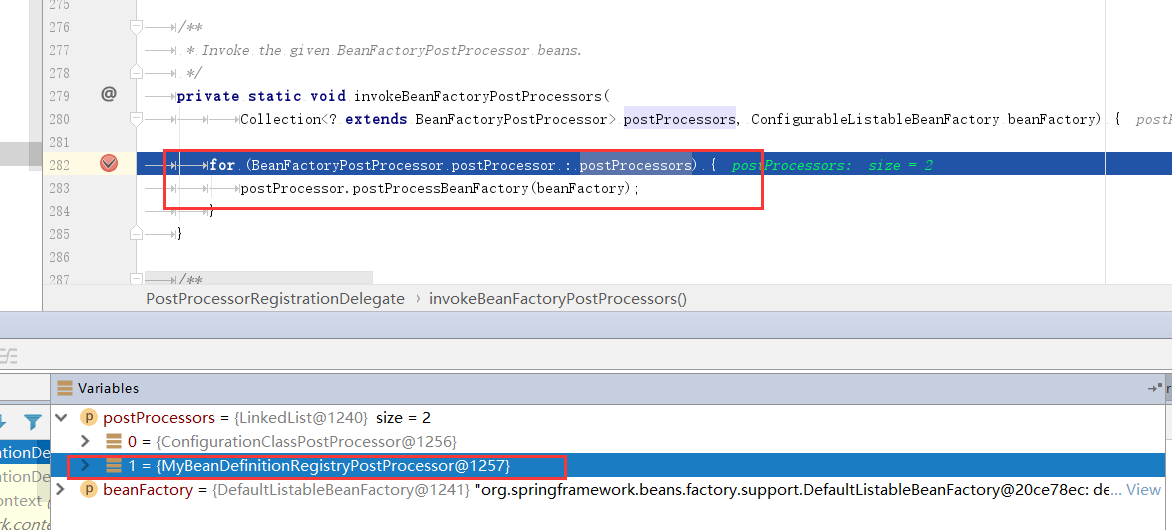
它获取到所有的BeanFactoryPostProcessor 后,遍历执行每一个具体的方法:在这里会去调用
MyBeanDefinitionRegistryPostProcessor的postProcessBeanFactory()方法:
spring中的BeanDefinitionRegistryPostProcessor的更多相关文章
- 框架源码系列十:Spring AOP(AOP的核心概念回顾、Spring中AOP的用法、Spring AOP 源码学习)
一.AOP的核心概念回顾 https://docs.spring.io/spring/docs/5.1.3.RELEASE/spring-framework-reference/core.html#a ...
- Spring Boot 使用Java代码创建Bean并注册到Spring中
版权声明:本文为博主原创文章,未经博主允许不得转载. https://blog.csdn.net/catoop/article/details/50558333 声明同一个类下的多个实例: packa ...
- 0000 - Spring 中常用注解原理剖析
1.概述 Spring 框架核心组件之一是 IOC,IOC 则管理 Bean 的创建和 Bean 之间的依赖注入,对于 Bean 的创建可以通过在 XML 里面使用 <bean/> 标签来 ...
- Spring 中常用注解原理剖析
前言 Spring 框架核心组件之一是 IOC,IOC 则管理 Bean 的创建和 Bean 之间的依赖注入,对于 Bean 的创建可以通过在 XML 里面使用 <bean/> 标签来配置 ...
- Mybatis的mapper接口在Spring中实例化过程
在spring中使用mybatis时一般有下面的配置 <bean id="mapperScannerConfigurer" class="org.mybatis.s ...
- 简说Spring中的资源加载
声明: 本文若有 任何纰漏.错误,请不吝指正!谢谢! 问题描述 遇到一个关于资源加载的问题,因此简单的记录一下,对Spring资源加载也做一个记录. 问题起因是使用了@PropertySource来进 ...
- Spring中的Mybatis
1. 前言 在构建一个web应用时基本的套路就是SSM,其中的M就是Mybatis. Mybatis作为一款开源的ORM框架, 由于其易于上手的特点成为当下比较流行的ORM框架,当然它还有一款插件能够 ...
- Spring中各种扩展原理及容器创建原理
一.BeanFactoryPostProcessor BeanFactory的后置处理器:在BeanFactory标准初始化之后调用,来定制和修改BeanFactory的内容:所有的bean定义已经保 ...
- 面试官:spring中定义bean的方法有哪些?我一口气说出了12种,把面试官整懵了。
前言 在庞大的java体系中,spring有着举足轻重的地位,它给每位开发者带来了极大的便利和惊喜.我们都知道spring是创建和管理bean的工厂,它提供了多种定义bean的方式,能够满足我们日常工 ...
随机推荐
- 18、属性赋值-@Value赋值
18.属性赋值-@Value赋值 18.1 使用@Value赋值三种方式 基本数值 可以写SPEL 表达式,例如: #{} 可以写${} ,取出配置文件中的值(在运行环境变量里面的值) package ...
- python自动华 (七)
Python自动化 [第七篇]:Python基础-面向对象高级语法.异常处理.Scoket开发基础 本节内容: 1. 面向对象高级语法部分 1.1 静态方法.类方法.属性方法 1.2 ...
- python基础-垃圾回收机制
垃圾回收 Python中的垃圾回收是以引用计数为主,分代收集为辅.引用计数的缺陷是循环引用的问题. 引用计数 原理:当一个对象的引用被创建或者复制时,对象的引用计数加1:当一个对象的引用被销毁时,对象 ...
- Windows 用户和内核模式
上图: APP -> user mode OS-> kernel mode Drivers -> user or kernel mode 正所谓 一阴一阳之谓道,继之者善也,成之者性 ...
- Irrlicht引擎剖析二
- Spring框架AOP
aop技术是面向切面编程思想,作为OOP的延续思想添加到企业开发中,用于弥补OOP开发过程中的缺陷而提出的编程思想.AOP底层也是面向对象:只不过面向的不是普通的Object对象,而是特殊的AOP对象 ...
- SpringMVC返回Map类型转换成JSON失败
错误信息:WARN DefaultHandlerExceptionResolver:380 - Failed to write HTTP message: org.springframework.ht ...
- mvc partialView断点调试问题
mvc中的partialview 在前端f12调试时,默认看不到代码的. 在Js中加上debugger; 调试时会走到断点,多出个VM打头的局部视图页面.
- web前端——Vue.js基础学习
近期项目的前端页面准备引入Vue.js,看了网上一些简介,及它和JQuery的对比,发现对于新入门的前端开发来说,Vue 其实也是比较适用的一个框架,其实用性不比JQuery差,感觉还挺有意思,于是研 ...
- gensim word2vec实践
语料下载地址 # -*- coding: utf-8 -*- import jieba import jieba.analyse # suggest_freq调节单个词语的词频,使其能(或不能)被分出 ...