
Spring Cloud Gateway(五):路由定位器 RouteLocator
本文基于 spring cloud gateway 2.0.1
1、简介
直接 获取 路 由 的 方法 是 通过 RouteLocator 接口 获取。 同样, 该 顶 级 接口 有多 个 实现 类,
RouteLocator 路由定位器,顾名思义就是用来获取路由的方法。该路由定位器为顶级接口有多个实现类,如类图所示,本节会对其实现类一一进行介绍。
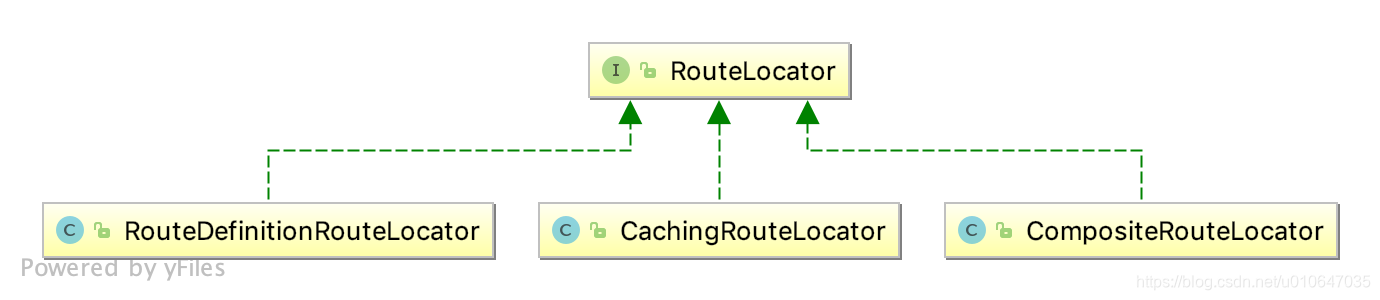
通过类图可知,路由定位器接口有三种实现方法:
- RouteDefinitionRouteLocator 基于路由定义的定位器
- CachingRouteLocator 基于缓存的路由定位器
- CompositeRouteLocator 基于组合方式的路由定位器
2、RouteLocator 路由定位器
与上节学习的路由定义定位器接口类似,RouteLocator 路由定位器只有一个 getRoutes 方法,用来获取路由信息。
public interface RouteLocator {

    //获取路由对象

	Flux<Route> getRoutes();

}
2.1、Route 路由对象
Route 路由定义了路由断言、过滤器、路由地址及路由优先级等信息。当请求到达时,在转发到代理服务之前,会依次经过路由断言匹配路由 和 网关过滤器处理。
public class Route implements Ordered {

    //路由 Id

    private final String id;

    //路由地址

    private final URI uri;

    //路由的优先级

    private final int order;

    //路由断言,判断请求路径是否匹配

	private final AsyncPredicate<ServerWebExchange> predicate;

    //网关过滤器

	private final List<GatewayFilter> gatewayFilters;

    -----------------------省略-------------------------

}
3、 RouteDefinitionRouteLocator 基于路由定义的定位器
3.1、初始化
RouteDefinitionRouteLocator 构造函数有多个参数:路由定义定位器、路由断言工厂、网关过滤器及网关配置对象。 根据传入的参数,设置 routeDefinitionLocator 和 网关配置,并初始化路由断言 和 网关过滤器。 RouteDefinitionRouteLocator 的实现方式是基于路由定义来获取路由,它实现了 RouteLocator 接口,用来获取路由信息。
public class RouteDefinitionRouteLocator implements RouteLocator, BeanFactoryAware, ApplicationEventPublisherAware {

	protected final Log logger = LogFactory.getLog(getClass());

	private final RouteDefinitionLocator routeDefinitionLocator;

	private final Map<String, RoutePredicateFactory> predicates = new LinkedHashMap<>();

	private final Map<String, GatewayFilterFactory> gatewayFilterFactories = new HashMap<>();

	private final GatewayProperties gatewayProperties;

	private final SpelExpressionParser parser = new SpelExpressionParser();

	private BeanFactory beanFactory;

	private ApplicationEventPublisher publisher;

	public RouteDefinitionRouteLocator(RouteDefinitionLocator routeDefinitionLocator,

									   List<RoutePredicateFactory> predicates,

									   List<GatewayFilterFactory> gatewayFilterFactories,

									   GatewayProperties gatewayProperties) {

		//设置路由定义定位器

		this.routeDefinitionLocator = routeDefinitionLocator;

		//初始化路由断言工厂

		initFactories(predicates);

		//初始化网关过滤器

		gatewayFilterFactories.forEach(factory -> this.gatewayFilterFactories.put(factory.name(), factory));

		this.gatewayProperties = gatewayProperties;

	}

	@Autowired

	private Validator validator;

	@Override

	public void setBeanFactory(BeanFactory beanFactory) throws BeansException {

		this.beanFactory = beanFactory;

	}

	@Override

	public void setApplicationEventPublisher(ApplicationEventPublisher publisher) {

		this.publisher = publisher;

	}

	private void initFactories(List<RoutePredicateFactory> predicates) {

		predicates.forEach(factory -> {

			String key = factory.name();

			if (this.predicates.containsKey(key)) {

				this.logger.warn("A RoutePredicateFactory named "+ key

						+ " already exists, class: " + this.predicates.get(key)

						+ ". It will be overwritten.");

			}

			this.predicates.put(key, factory);

			if (logger.isInfoEnabled()) {

				logger.info("Loaded RoutePredicateFactory [" + key + "]");

			}

		});

	}

    --------------------------------省略---------------------------------

}
- 此种方式的路由获取是通过 RouteDefinitionRouteLocator 获取 RouteDefinition 并将路由定义转换成路由对象
- 这里的routeDefinitionLocator是CompositeRouteDefinitionLocator,它组合了InMemoryRouteDefinitionRepository、PropertiesRouteDefinitionLocator、DiscoveryClientRouteDefinitionLocator三个RouteDefinitionLocator。
- PropertiesRouteDefinitionLocator是直接使用GatewayProperties的getRoutes()获取,其是通过spring.cloud.gateway.routes配置得来。
3.2、RouteDefinition 转换成 Route 的流程

// RouteDefinitionRouteLocator.java
@Override

	public Flux<Route> getRoutes() {

		return this.routeDefinitionLocator.getRouteDefinitions()

				.map(this::convertToRoute)

				//TODO: error handling

				.map(route -> {

					if (logger.isDebugEnabled()) {

						logger.debug("RouteDefinition matched: " + route.getId());

					}

					return route;

				});

		/* TODO: trace logging

			if (logger.isTraceEnabled()) {

				logger.trace("RouteDefinition did not match: " + routeDefinition.getId());

			}*/

	}

	private Route convertToRoute(RouteDefinition routeDefinition) {

		AsyncPredicate<ServerWebExchange> predicate = combinePredicates(routeDefinition);

		List<GatewayFilter> gatewayFilters = getFilters(routeDefinition);

		return Route.async(routeDefinition)

				.asyncPredicate(predicate)

				.replaceFilters(gatewayFilters)

				.build();

	}
getRoutes() :根据传入的 RouteDefinitionLocator 获取路由定义对象,使用map方法将每个 RouteDefinition 转换为 Route。
RouteDefinitionLocator#convertToRoute :是具体的转换方法,转换过程中涉及到路由断言 和 网关过滤器的处理,最后构建为Route 对象。
此处网关过滤器处理包括两种,一种是默认过滤器,作用于所有路由;一种是指定路由的自定义过滤器。首先获取默认过滤器,根据过滤器名称获取对应的过滤器,最终转换成有优先级的OrderedGatewayFilter。
3.2.1、convertToRoute##combinePredicates
combinePredicates主要是对找出来的predicate进行and操作
private AsyncPredicate<ServerWebExchange> combinePredicates(RouteDefinition routeDefinition) {

		List<PredicateDefinition> predicates = routeDefinition.getPredicates();

		AsyncPredicate<ServerWebExchange> predicate = lookup(routeDefinition, predicates.get(0));

		for (PredicateDefinition andPredicate : predicates.subList(1, predicates.size())) {

			AsyncPredicate<ServerWebExchange> found = lookup(routeDefinition, andPredicate);

			predicate = predicate.and(found);

		}

		return predicate;

	}

	@SuppressWarnings("unchecked")

	private AsyncPredicate<ServerWebExchange> lookup(RouteDefinition route, PredicateDefinition predicate) {

		RoutePredicateFactory<Object> factory = this.predicates.get(predicate.getName());

		if (factory == null) {

            throw new IllegalArgumentException("Unable to find RoutePredicateFactory with name " + predicate.getName());

		}

		Map<String, String> args = predicate.getArgs();

		if (logger.isDebugEnabled()) {

			logger.debug("RouteDefinition " + route.getId() + " applying "

					+ args + " to " + predicate.getName());

		}

        Map<String, Object> properties = factory.shortcutType().normalize(args, factory, this.parser, this.beanFactory);

        Object config = factory.newConfig();

        ConfigurationUtils.bind(config, properties,

                factory.shortcutFieldPrefix(), predicate.getName(), validator);

        if (this.publisher != null) {

            this.publisher.publishEvent(new PredicateArgsEvent(this, route.getId(), properties));

        }

        return factory.applyAsync(config);

	}
3.2.2、convertToRoute##getFilters
getFilters 主要是利用loadGatewayFilters获取filter,使用AnnotationAwareOrderComparator进行排序
loadGatewayFilters利用工厂方法,使用GatewayFilterFactory根据config 获取具体的GatewayFilter实例
@SuppressWarnings("unchecked")

	private List<GatewayFilter> loadGatewayFilters(String id, List<FilterDefinition> filterDefinitions) {

		List<GatewayFilter> filters = filterDefinitions.stream()

				.map(definition -> {

					GatewayFilterFactory factory = this.gatewayFilterFactories.get(definition.getName());

					if (factory == null) {

                        throw new IllegalArgumentException("Unable to find GatewayFilterFactory with name " + definition.getName());

					}

					Map<String, String> args = definition.getArgs();

					if (logger.isDebugEnabled()) {

						logger.debug("RouteDefinition " + id + " applying filter " + args + " to " + definition.getName());

					}

                    Map<String, Object> properties = factory.shortcutType().normalize(args, factory, this.parser, this.beanFactory);

                    Object configuration = factory.newConfig();

                    ConfigurationUtils.bind(configuration, properties,

                            factory.shortcutFieldPrefix(), definition.getName(), validator);

                    GatewayFilter gatewayFilter = factory.apply(configuration);

                    if (this.publisher != null) {

                        this.publisher.publishEvent(new FilterArgsEvent(this, id, properties));

                    }

                    return gatewayFilter;

				})

				.collect(Collectors.toList());

		ArrayList<GatewayFilter> ordered = new ArrayList<>(filters.size());

		for (int i = 0; i < filters.size(); i++) {

			GatewayFilter gatewayFilter = filters.get(i);

			if (gatewayFilter instanceof Ordered) {

				ordered.add(gatewayFilter);

			}

			else {

				ordered.add(new OrderedGatewayFilter(gatewayFilter, i + 1));

			}

		}

		return ordered;

	}

	private List<GatewayFilter> getFilters(RouteDefinition routeDefinition) {

		List<GatewayFilter> filters = new ArrayList<>();

		//TODO: support option to apply defaults after route specific filters?

		if (!this.gatewayProperties.getDefaultFilters().isEmpty()) {

			filters.addAll(loadGatewayFilters("defaultFilters",

					this.gatewayProperties.getDefaultFilters()));

		}

		if (!routeDefinition.getFilters().isEmpty()) {

			filters.addAll(loadGatewayFilters(routeDefinition.getId(), routeDefinition.getFilters()));

		}

		AnnotationAwareOrderComparator.sort(filters);

		return filters;

	}
4、 CachingRouteLocator 基于缓存的路由定位器
public class CachingRouteLocator implements RouteLocator {

	private final RouteLocator delegate;

	private final Flux<Route> routes;

	private final Map<String, List> cache = new HashMap<>();

	public CachingRouteLocator(RouteLocator delegate) {

		this.delegate = delegate;

		routes = CacheFlux.lookup(cache, "routes", Route.class)

				.onCacheMissResume(() -> this.delegate.getRoutes().sort(AnnotationAwareOrderComparator.INSTANCE));

	}

	@Override

	public Flux<Route> getRoutes() {

		return this.routes;

	}

	/**

	 * Clears the routes cache

	 * @return routes flux

	 */

	public Flux<Route> refresh() {

		this.cache.clear();

		return this.routes;

	}

	@EventListener(RefreshRoutesEvent.class)

	/* for testing */ void handleRefresh() {

		refresh();

	}

}
基于缓存的路由定位器比较简单和缓存路由定义定位器比较类似,只需要调用 RouteLocator# getRoutes 即可获取路由。
根据传入的路由定位器获取路由信息并存储到缓存中。通过监听 RefreshRoutesEvent 事件刷新缓存的路由信息。
5、 CompositeRouteLocator 基于组合方式的路由定位器
public class CompositeRouteLocator implements RouteLocator {

	private final Flux<RouteLocator> delegates;

	public CompositeRouteLocator(Flux<RouteLocator> delegates) {

		this.delegates = delegates;

	}

	@Override

	public Flux<Route> getRoutes() {

		return this.delegates.flatMap(RouteLocator::getRoutes);

	}

}
组合方式的路由定位器,将实现 RouteLocator 接口的路由定位器组合在一起,提供获取路由的统一入口。
6、小结
RouteLocator 接口用于获取路由信息,其有三个实现类
- RouteDefinitionRouteLocator
- CompositeRouteLocator
- CachingRouteLocator
最终使用的是CachingRouteLocator,它包装了CompositeRouteLocator,而CompositeRouteLocator则组合了RouteDefinitionRouteLocator。
RouteDefinitionRouteLocator 与 RouteDefinitionLocator比较容易混淆,前者是一个RouteLocator(路由定位器),后者是一个RouteDefinitionLocator(路由定义定位器),前者的 RouteDefinitionRouteLocator 主要从后者获取路由定义信息。
Spring Cloud Gateway(五):路由定位器 RouteLocator的更多相关文章
- 通过Nacos动态刷新Spring Cloud Gateway的路由
通过Nacos动态刷新Spring Cloud Gateway的路由 一.背景 二.解决方案 三.实现功能 四.实现步骤 1.网关服务的实现 1.pom文件 2.bootstrap.yml配置文件 3 ...
- springcloud3(五) spring cloud gateway动态路由的四类实现方式
写这篇博客主要是为了汇总下动态路由的多种实现方式,没有好坏之分,任何的方案都是依赖业务场景需求的,现在网上实现方式主要有: 基于Nacos, 基于数据库(PosgreSQL/Redis), 基于Mem ...
- Spring Cloud gateway 五 Sentinel整合
微服务当前这么火爆的程度,如果不能学会一种微服务框架技术.怎么能升职加薪,增加简历的筹码?spring cloud 和 Dubbo 需要单独学习.说没有时间?没有精力?要学俩个框架?而Spring C ...
- Spring Cloud Alibaba学习笔记(17) - Spring Cloud Gateway 自定义路由谓词工厂
在前文中,我们介绍了Spring Cloud Gateway内置了一系列的路由谓词工厂,但是如果这些内置的路由谓词工厂不能满足业务需求的话,我们可以自定义路由谓词工厂来实现特定的需求. 例如有某个服务 ...
- spring cloud gateway网关路由分配
1, 基于父工程,新建一个模块 2,pom文件添加依赖 <dependencies> <dependency> <groupId>org.springframewo ...
- Spring Cloud Alibaba学习笔记(16) - Spring Cloud Gateway 内置的路由谓词工厂
Spring Cloud Gateway路由配置的两种形式 Spring Cloud Gateway的路由配置有两种形式,分别是路由到指定的URL以及路由到指定的微服务,在上文博客的示例中我们就已经使 ...
- Spring cloud gateway 如何在路由时进行负载均衡
本文为博主原创,转载请注明出处: 1.spring cloud gateway 配置路由 在网关模块的配置文件中配置路由: spring: cloud: gateway: routes: - id: ...
- Spring Cloud Gateway(一):认识Spring Cloud Gateway
1.Spring Cloud Gateway 简介 Spring Cloud Gateway 系列目录 Spring Cloud Gateway(一):认识Spring Cloud Gateway S ...
- Spring Cloud Gateway服务网关
原文:https://www.cnblogs.com/ityouknow/p/10141740.html Spring 官方最终还是按捺不住推出了自己的网关组件:Spring Cloud Gatewa ...
- 网关服务Spring Cloud Gateway(一)
Spring 官方最终还是按捺不住推出了自己的网关组件:Spring Cloud Gateway ,相比之前我们使用的 Zuul(1.x) 它有哪些优势呢?Zuul(1.x) 基于 Servlet,使 ...
随机推荐
- 【转载】在windows上部署使用Redis
下载Redis 在Redis的官网下载页上有各种各样的版本,我这次是在windows上部署的,要去GitHub上下载.目前的是2.8.12版的,直接解压,在\bin\release 目录下有个压缩包, ...
- TextBox 显示横线
public class Xtxt3 : TextBox { private bool m_underLine; public bool UnderLine { get { return m_unde ...
- Android笔记(三) 使得Activity之间可以跳转---Intent
什么是Intent 一个APP肯定不单单由一个Activity构成,我们在使用过程中,经常需要在多个Activity中跳转,Android中Intent可以帮我们来完成在各个Activity中跳转的功 ...
- c# 接口实现
- RestFramework之频率组件
一.频率组件的使用 频率组件的存在对我们这web开发有着很大的影像,它的作用就是限制用户在一段时间内访问的次数. 下面让我们介绍一下频率组件怎样使用 1.首先需要导入 from rest_framew ...
- RestFramework之权限组件
一.权限组件的使用 1.首先需要导入包 from rest_framework.permissions import BasePermission 2.编写权限类 class VipPermissio ...
- Django之form表单详解
构建一个表单 假设你想在你的网站上创建一个简单的表单,以获得用户的名字.你需要类似这样的模板: <form action="/your-name/" method=" ...
- 容器自动化(一):docker基础(上)
一,Docker简介,功能特性与应用场景 1.1 Docker简介 Docker是一个开源的应用容器引擎,让开发者可以打包他们的应用以及依赖包到一个可移植的容器中,然后发布到任何流行的Linux机器上 ...
- 【基础搜索】poj-2676-Sudoku(数独)--求补全九宫格的一种合理方案
数独 时限:2000 MS 内存限制:65536K 提交材料共计: 22682 接受: 10675 特别法官 描述 数独是一个非常简单的任务.一个9行9列的正方形表被分成9个较小的3x ...
- 神奇搜索算法A*
A* A*是一种启发式搜索算法,又叫最佳图搜索算法. 何谓启发式搜索? 众所周知,计算机在执行搜索算法时是没开上帝视角的.因此,在搜索时,往往显得盲目,把所有可能的状态全部遍历,这种搜索我们统称盲目搜 ...