
spring boot容器启动详解
一、前言
spring cloud大行其道的当下,如果不了解基本原理那么是很纠结的(看见的都是约定大于配置,但是原理呢?为什么要这么做?如何串联起来的?)。spring cloud是基于spring boot快速搭建的,今天咱们就看看spring boot容器启动流程(全文基于1.5.9版本)。(本文不讲解如何快速启动spring boot,那些直接官方看即可,官网文档飞机票)
二、容器启动
spring boot一般是指定容器启动main方法,然后以命令行方式启动Jar包,如下图:
 @SpringBootApplication

 public class Application {

     public static void main(String[] args) {

         SpringApplication.run(Application.class, args);

     }

 }
这里核心关注2个东西:
下面我们就分别探究这两块内容。
2.1 @SpringBootApplication注解
源码如下:
 @Target(ElementType.TYPE)

 @Retention(RetentionPolicy.RUNTIME)

 @Documented

 @Inherited

 @SpringBootConfiguration

 @EnableAutoConfiguration

 @ComponentScan(excludeFilters = {

         @Filter(type = FilterType.CUSTOM, classes = TypeExcludeFilter.class),

         @Filter(type = FilterType.CUSTOM, classes = AutoConfigurationExcludeFilter.class) })

 public @interface SpringBootApplication {
核心注解:
@SpringBootConfiguration(实际就是个@Configuration):表示这是一个JavaConfig配置类,可以在这个类中自定义bean,依赖关系等。-》这个是spring-boot特有的注解,常用到。
@EnableAutoConfiguration:借助@Import的帮助,将所有符合自动配置条件的bean定义加载到IoC容器(建议放在根包路径下,这样可以扫描子包和类)。-》这个需要详细深挖!
@ComponentScan:spring的自动扫描注解,可定义扫描范围,加载到IOC容器。-》这个不多说,spring的注解大家肯定眼熟

其中@EnableAutoConfiguration这个注解的源码:
 @SuppressWarnings("deprecation")

 @Target(ElementType.TYPE)

 @Retention(RetentionPolicy.RUNTIME)

 @Documented

 @Inherited

 @AutoConfigurationPackage

 @Import(EnableAutoConfigurationImportSelector.class)

 public @interface EnableAutoConfiguration {
核心是一个EnableAutoConfigurationImportSelector类图如下:

核心方法在顶级接口ImportSelector的selectImports(),源码如下:
 @Override

     public String[] selectImports(AnnotationMetadata annotationMetadata) {

         if (!isEnabled(annotationMetadata)) {

             return NO_IMPORTS;

         }

         try {         //1.从META-INF/spring-autoconfigure-metadata.properties文件中载入483条配置属性(有一些有默认值),

             AutoConfigurationMetadata autoConfigurationMetadata = AutoConfigurationMetadataLoader

                     .loadMetadata(this.beanClassLoader);

             AnnotationAttributes attributes = getAttributes(annotationMetadata);//2.获取注解属性

             List<String> configurations = getCandidateConfigurations(annotationMetadata,//3.获取97个自动配置类

                     attributes);

             configurations = removeDuplicates(configurations);//4.移除重复的

             configurations = sort(configurations, autoConfigurationMetadata);//5.排序

             Set<String> exclusions = getExclusions(annotationMetadata, attributes);//6.获取需要排除的

             checkExcludedClasses(configurations, exclusions);//7.校验排除类

             configurations.removeAll(exclusions);//8.删除所有需要排除的

             configurations = filter(configurations, autoConfigurationMetadata);//9.过滤器OnClassCondition(注解中配置的当存在某类才生效)

             fireAutoConfigurationImportEvents(configurations, exclusions);//10.触发自动配置导入监听事件

             return configurations.toArray(new String[configurations.size()]);

         }

         catch (IOException ex) {

             throw new IllegalStateException(ex);

         }

     }
这里注意3个核心方法:
1)loadMetadata 加载配置
其实就是用类加载器去加载:META-INF/spring-autoconfigure-metadata.properties(spring-boot-autoconfigure-1.5.9.RELEASE-sources.jar)文件中定义的配置,返回PropertiesAutoConfigurationMetadata(实现了AutoConfigurationMetadata接口,封装了属性的get set方法)
2)getCandidateConfigurations获取默认支持的自动配置类名列表
自动配置灵魂方法,SpringFactoriesLoader.loadFactoryNames 从META-INF/spring.factories(spring-boot-autoconfigure-1.5.9.RELEASE-sources.jar)文件中获取自动配置类key=EnableAutoConfiguration.class的配置。
 protected List<String> getCandidateConfigurations(AnnotationMetadata metadata,

             AnnotationAttributes attributes) {//话说这里2个入参没啥用啊...谁来给我解释一下...

         List<String> configurations = SpringFactoriesLoader.loadFactoryNames(

                 getSpringFactoriesLoaderFactoryClass(), getBeanClassLoader());

         Assert.notEmpty(configurations,

                 "No auto configuration classes found in META-INF/spring.factories. If you "

                         + "are using a custom packaging, make sure that file is correct.");

         return configurations;

     }

 //返回的是EnableAutoConfiguration类

 protected Class<?> getSpringFactoriesLoaderFactoryClass() {

         return EnableAutoConfiguration.class;

     }
实际获取了什么?spring.factories文件如下,实际获取了# Auto Configure自动配置模块的所有类。
# Initializers

org.springframework.context.ApplicationContextInitializer=\

org.springframework.boot.autoconfigure.SharedMetadataReaderFactoryContextInitializer,\

org.springframework.boot.autoconfigure.logging.AutoConfigurationReportLoggingInitializer

# Application Listeners

org.springframework.context.ApplicationListener=\

org.springframework.boot.autoconfigure.BackgroundPreinitializer

# Auto Configuration Import Listeners

org.springframework.boot.autoconfigure.AutoConfigurationImportListener=\

org.springframework.boot.autoconfigure.condition.ConditionEvaluationReportAutoConfigurationImportListener

# Auto Configuration Import Filters

org.springframework.boot.autoconfigure.AutoConfigurationImportFilter=\

org.springframework.boot.autoconfigure.condition.OnClassCondition

# Auto Configure ===========这里就是全部的自动配置类===============================

org.springframework.boot.autoconfigure.EnableAutoConfiguration=\

org.springframework.boot.autoconfigure.admin.SpringApplicationAdminJmxAutoConfiguration,\

org.springframework.boot.autoconfigure.aop.AopAutoConfiguration,\

org.springframework.boot.autoconfigure.amqp.RabbitAutoConfiguration,\

org.springframework.boot.autoconfigure.batch.BatchAutoConfiguration,\

org.springframework.boot.autoconfigure.cache.CacheAutoConfiguration,\

org.springframework.boot.autoconfigure.cassandra.CassandraAutoConfiguration,\

org.springframework.boot.autoconfigure.cloud.CloudAutoConfiguration,\

org.springframework.boot.autoconfigure.context.ConfigurationPropertiesAutoConfiguration,\

org.springframework.boot.autoconfigure.context.MessageSourceAutoConfiguration,\

org.springframework.boot.autoconfigure.context.PropertyPlaceholderAutoConfiguration,\

org.springframework.boot.autoconfigure.couchbase.CouchbaseAutoConfiguration,\

org.springframework.boot.autoconfigure.dao.PersistenceExceptionTranslationAutoConfiguration,\

org.springframework.boot.autoconfigure.data.cassandra.CassandraDataAutoConfiguration,\

org.springframework.boot.autoconfigure.data.cassandra.CassandraRepositoriesAutoConfiguration,\

org.springframework.boot.autoconfigure.data.couchbase.CouchbaseDataAutoConfiguration,\

org.springframework.boot.autoconfigure.data.couchbase.CouchbaseRepositoriesAutoConfiguration,\

org.springframework.boot.autoconfigure.data.elasticsearch.ElasticsearchAutoConfiguration,\

org.springframework.boot.autoconfigure.data.elasticsearch.ElasticsearchDataAutoConfiguration,\

org.springframework.boot.autoconfigure.data.elasticsearch.ElasticsearchRepositoriesAutoConfiguration,\

org.springframework.boot.autoconfigure.data.jpa.JpaRepositoriesAutoConfiguration,\

org.springframework.boot.autoconfigure.data.ldap.LdapDataAutoConfiguration,\

org.springframework.boot.autoconfigure.data.ldap.LdapRepositoriesAutoConfiguration,\

org.springframework.boot.autoconfigure.data.mongo.MongoDataAutoConfiguration,\

org.springframework.boot.autoconfigure.data.mongo.MongoRepositoriesAutoConfiguration,\

org.springframework.boot.autoconfigure.data.neo4j.Neo4jDataAutoConfiguration,\

org.springframework.boot.autoconfigure.data.neo4j.Neo4jRepositoriesAutoConfiguration,\

org.springframework.boot.autoconfigure.data.solr.SolrRepositoriesAutoConfiguration,\

org.springframework.boot.autoconfigure.data.redis.RedisAutoConfiguration,\

org.springframework.boot.autoconfigure.data.redis.RedisRepositoriesAutoConfiguration,\

org.springframework.boot.autoconfigure.data.rest.RepositoryRestMvcAutoConfiguration,\

org.springframework.boot.autoconfigure.data.web.SpringDataWebAutoConfiguration,\

org.springframework.boot.autoconfigure.elasticsearch.jest.JestAutoConfiguration,\

org.springframework.boot.autoconfigure.freemarker.FreeMarkerAutoConfiguration,\

org.springframework.boot.autoconfigure.gson.GsonAutoConfiguration,\

org.springframework.boot.autoconfigure.h2.H2ConsoleAutoConfiguration,\

org.springframework.boot.autoconfigure.hateoas.HypermediaAutoConfiguration,\

org.springframework.boot.autoconfigure.hazelcast.HazelcastAutoConfiguration,\

org.springframework.boot.autoconfigure.hazelcast.HazelcastJpaDependencyAutoConfiguration,\

org.springframework.boot.autoconfigure.info.ProjectInfoAutoConfiguration,\

org.springframework.boot.autoconfigure.integration.IntegrationAutoConfiguration,\

org.springframework.boot.autoconfigure.jackson.JacksonAutoConfiguration,\

org.springframework.boot.autoconfigure.jdbc.DataSourceAutoConfiguration,\

org.springframework.boot.autoconfigure.jdbc.JdbcTemplateAutoConfiguration,\

org.springframework.boot.autoconfigure.jdbc.JndiDataSourceAutoConfiguration,\

org.springframework.boot.autoconfigure.jdbc.XADataSourceAutoConfiguration,\

org.springframework.boot.autoconfigure.jdbc.DataSourceTransactionManagerAutoConfiguration,\

org.springframework.boot.autoconfigure.jms.JmsAutoConfiguration,\

org.springframework.boot.autoconfigure.jmx.JmxAutoConfiguration,\

org.springframework.boot.autoconfigure.jms.JndiConnectionFactoryAutoConfiguration,\

org.springframework.boot.autoconfigure.jms.activemq.ActiveMQAutoConfiguration,\

org.springframework.boot.autoconfigure.jms.artemis.ArtemisAutoConfiguration,\

org.springframework.boot.autoconfigure.flyway.FlywayAutoConfiguration,\

org.springframework.boot.autoconfigure.groovy.template.GroovyTemplateAutoConfiguration,\

org.springframework.boot.autoconfigure.jersey.JerseyAutoConfiguration,\

org.springframework.boot.autoconfigure.jooq.JooqAutoConfiguration,\

org.springframework.boot.autoconfigure.kafka.KafkaAutoConfiguration,\

org.springframework.boot.autoconfigure.ldap.embedded.EmbeddedLdapAutoConfiguration,\

org.springframework.boot.autoconfigure.ldap.LdapAutoConfiguration,\

org.springframework.boot.autoconfigure.liquibase.LiquibaseAutoConfiguration,\

org.springframework.boot.autoconfigure.mail.MailSenderAutoConfiguration,\

org.springframework.boot.autoconfigure.mail.MailSenderValidatorAutoConfiguration,\

org.springframework.boot.autoconfigure.mobile.DeviceResolverAutoConfiguration,\

org.springframework.boot.autoconfigure.mobile.DeviceDelegatingViewResolverAutoConfiguration,\

org.springframework.boot.autoconfigure.mobile.SitePreferenceAutoConfiguration,\

org.springframework.boot.autoconfigure.mongo.embedded.EmbeddedMongoAutoConfiguration,\

org.springframework.boot.autoconfigure.mongo.MongoAutoConfiguration,\

org.springframework.boot.autoconfigure.mustache.MustacheAutoConfiguration,\

org.springframework.boot.autoconfigure.orm.jpa.HibernateJpaAutoConfiguration,\

org.springframework.boot.autoconfigure.reactor.ReactorAutoConfiguration,\

org.springframework.boot.autoconfigure.security.SecurityAutoConfiguration,\

org.springframework.boot.autoconfigure.security.SecurityFilterAutoConfiguration,\

org.springframework.boot.autoconfigure.security.FallbackWebSecurityAutoConfiguration,\

org.springframework.boot.autoconfigure.security.oauth2.OAuth2AutoConfiguration,\

org.springframework.boot.autoconfigure.sendgrid.SendGridAutoConfiguration,\

org.springframework.boot.autoconfigure.session.SessionAutoConfiguration,\

org.springframework.boot.autoconfigure.social.SocialWebAutoConfiguration,\

org.springframework.boot.autoconfigure.social.FacebookAutoConfiguration,\

org.springframework.boot.autoconfigure.social.LinkedInAutoConfiguration,\

org.springframework.boot.autoconfigure.social.TwitterAutoConfiguration,\

org.springframework.boot.autoconfigure.solr.SolrAutoConfiguration,\

org.springframework.boot.autoconfigure.thymeleaf.ThymeleafAutoConfiguration,\

org.springframework.boot.autoconfigure.transaction.TransactionAutoConfiguration,\

org.springframework.boot.autoconfigure.transaction.jta.JtaAutoConfiguration,\

org.springframework.boot.autoconfigure.validation.ValidationAutoConfiguration,\

org.springframework.boot.autoconfigure.web.DispatcherServletAutoConfiguration,\

org.springframework.boot.autoconfigure.web.EmbeddedServletContainerAutoConfiguration,\

org.springframework.boot.autoconfigure.web.ErrorMvcAutoConfiguration,\

org.springframework.boot.autoconfigure.web.HttpEncodingAutoConfiguration,\

org.springframework.boot.autoconfigure.web.HttpMessageConvertersAutoConfiguration,\

org.springframework.boot.autoconfigure.web.MultipartAutoConfiguration,\

org.springframework.boot.autoconfigure.web.ServerPropertiesAutoConfiguration,\

org.springframework.boot.autoconfigure.web.WebClientAutoConfiguration,\

org.springframework.boot.autoconfigure.web.WebMvcAutoConfiguration,\

org.springframework.boot.autoconfigure.websocket.WebSocketAutoConfiguration,\

org.springframework.boot.autoconfigure.websocket.WebSocketMessagingAutoConfiguration,\

org.springframework.boot.autoconfigure.webservices.WebServicesAutoConfiguration

============================================end================================================

# Failure analyzers

org.springframework.boot.diagnostics.FailureAnalyzer=\

org.springframework.boot.autoconfigure.diagnostics.analyzer.NoSuchBeanDefinitionFailureAnalyzer,\

org.springframework.boot.autoconfigure.jdbc.DataSourceBeanCreationFailureAnalyzer,\

org.springframework.boot.autoconfigure.jdbc.HikariDriverConfigurationFailureAnalyzer

# Template availability providers

org.springframework.boot.autoconfigure.template.TemplateAvailabilityProvider=\

org.springframework.boot.autoconfigure.freemarker.FreeMarkerTemplateAvailabilityProvider,\

org.springframework.boot.autoconfigure.mustache.MustacheTemplateAvailabilityProvider,\

org.springframework.boot.autoconfigure.groovy.template.GroovyTemplateAvailabilityProvider,\

org.springframework.boot.autoconfigure.thymeleaf.ThymeleafTemplateAvailabilityProvider,\

org.springframework.boot.autoconfigure.web.JspTemplateAvailabilityProvider
3)filter过滤器 根据OnClassCondition注解把不满足条件的过滤掉
 private List<String> filter(List<String> configurations,

             AutoConfigurationMetadata autoConfigurationMetadata) {

         long startTime = System.nanoTime();

         String[] candidates = configurations.toArray(new String[configurations.size()]);

         boolean[] skip = new boolean[candidates.length];

         boolean skipped = false;
           //获取需要过滤的自动配置导入拦截器,spring.factories配置中就一个:org.springframework.boot.autoconfigure.condition.OnClassCondition

         for (AutoConfigurationImportFilter filter : getAutoConfigurationImportFilters()) {

             invokeAwareMethods(filter);

             boolean[] match = filter.match(candidates, autoConfigurationMetadata);

             for (int i = 0; i < match.length; i++) {

                 if (!match[i]) {

                     skip[i] = true;

                     skipped = true;

                 }

             }

         }

         if (!skipped) {//多条件只要有一个不匹配->skipped = true,全部匹配-》skipped = false->直接返回

             return configurations;

         }

         List<String> result = new ArrayList<String>(candidates.length);

         for (int i = 0; i < candidates.length; i++) {

             if (!skip[i]) {//匹配-》不跳过-》添加进result

                 result.add(candidates[i]);

             }

         }

         if (logger.isTraceEnabled()) {

             int numberFiltered = configurations.size() - result.size();

             logger.trace("Filtered " + numberFiltered + " auto configuration class in "

                     + TimeUnit.NANOSECONDS.toMillis(System.nanoTime() - startTime)

                     + " ms");

         }

         return new ArrayList<String>(result);

     }
2.2 SpringApplication.run()静态方法
SpringApplication.run
 public ConfigurableApplicationContext run(String... args) {

         StopWatch stopWatch = new StopWatch();

         stopWatch.start();

         ConfigurableApplicationContext context = null;

         FailureAnalyzers analyzers = null;

         configureHeadlessProperty();

         SpringApplicationRunListeners listeners = getRunListeners(args);//1.获取监听器

         listeners.starting();-->启动!

         try {

             ApplicationArguments applicationArguments = new DefaultApplicationArguments(

                     args);

             ConfigurableEnvironment environment = prepareEnvironment(listeners,//2.准备好环境,触发ApplicationEnvironmentPreparedEvent事件

                     applicationArguments);

             Banner printedBanner = printBanner(environment);//打印启动提示字符,默认spring的字符图

             context = createApplicationContext();//实例化一个可配置应用上下文

             analyzers = new FailureAnalyzers(context);

             prepareContext(context, environment, listeners, applicationArguments,//3.准备上下文

                     printedBanner);

             refreshContext(context);//4.刷新上下文

             afterRefresh(context, applicationArguments);//5.刷新上下文后

             listeners.finished(context, null);--关闭!

             stopWatch.stop();

             if (this.logStartupInfo) {

                 new StartupInfoLogger(this.mainApplicationClass)

                         .logStarted(getApplicationLog(), stopWatch);

             }

             return context;

         }

         catch (Throwable ex) {

             handleRunFailure(context, listeners, analyzers, ex);

             throw new IllegalStateException(ex);

         }

     }
如上图,容器启动流程可以分为5个主要步骤:
1.getRunListeners获取监听器(SpringApplicationRunListeners )
实际是SpringApplicationRunListener类
 private SpringApplicationRunListeners getRunListeners(String[] args) {

     Class<?>[] types = new Class<?>[] { SpringApplication.class, String[].class };

     return new SpringApplicationRunListeners(logger, getSpringFactoriesInstances(

             SpringApplicationRunListener.class, types, this, args));

 }

 private <T> Collection<? extends T> getSpringFactoriesInstances(Class<T> type) {

     return getSpringFactoriesInstances(type, new Class<?>[] {});

 }

 private <T> Collection<? extends T> getSpringFactoriesInstances(Class<T> type,

         Class<?>[] parameterTypes, Object... args) {

     ClassLoader classLoader = Thread.currentThread().getContextClassLoader();

     // 使用Set确保的字符串的唯一性

     Set<String> names = new LinkedHashSet<String>(

             SpringFactoriesLoader.loadFactoryNames(type, classLoader));// 1.载入工厂名称集合

     List<T> instances = createSpringFactoriesInstances(type, parameterTypes,// 2.创建工厂实例

             classLoader, args, names);

     AnnotationAwareOrderComparator.sort(instances);// 排序

     return instances;

 }
载入工厂名称(loadFactoryNames)
当前类的类加载器从META-INF/spring.factories文件中获取SpringApplicationRunListener类的配置
 public static List<String> loadFactoryNames(Class<?> factoryClass, ClassLoader classLoader) {

         String factoryClassName = factoryClass.getName();

         try {

             Enumeration<URL> urls = (classLoader != null ? classLoader.getResources(FACTORIES_RESOURCE_LOCATION) :

                     ClassLoader.getSystemResources(FACTORIES_RESOURCE_LOCATION));

             List<String> result = new ArrayList<String>();

             while (urls.hasMoreElements()) {

                 URL url = urls.nextElement();

                 Properties properties = PropertiesLoaderUtils.loadProperties(new UrlResource(url));

                 String factoryClassNames = properties.getProperty(factoryClassName);

                 result.addAll(Arrays.asList(StringUtils.commaDelimitedListToStringArray(factoryClassNames)));

             }

             return result;

         }

         catch (IOException ex) {

             throw new IllegalArgumentException("Unable to load [" + factoryClass.getName() +

                     "] factories from location [" + FACTORIES_RESOURCE_LOCATION + "]", ex);

         }

     }
上图,获取到工厂类名后,下面来看看META-INF/spring.factories中定义了啥:
# PropertySource Loaders

org.springframework.boot.env.PropertySourceLoader=\

org.springframework.boot.env.PropertiesPropertySourceLoader,\

org.springframework.boot.env.YamlPropertySourceLoader

# Run Listeners  这里呢,看这里!!!!

org.springframework.boot.SpringApplicationRunListener=\

org.springframework.boot.context.event.EventPublishingRunListener

# Application Context Initializers

org.springframework.context.ApplicationContextInitializer=\

org.springframework.boot.context.ConfigurationWarningsApplicationContextInitializer,\

org.springframework.boot.context.ContextIdApplicationContextInitializer,\

org.springframework.boot.context.config.DelegatingApplicationContextInitializer,\

org.springframework.boot.context.embedded.ServerPortInfoApplicationContextInitializer

# Application Listeners

org.springframework.context.ApplicationListener=\

org.springframework.boot.ClearCachesApplicationListener,\

org.springframework.boot.builder.ParentContextCloserApplicationListener,\

org.springframework.boot.context.FileEncodingApplicationListener,\

org.springframework.boot.context.config.AnsiOutputApplicationListener,\

org.springframework.boot.context.config.ConfigFileApplicationListener,\

org.springframework.boot.context.config.DelegatingApplicationListener,\

org.springframework.boot.liquibase.LiquibaseServiceLocatorApplicationListener,\

org.springframework.boot.logging.ClasspathLoggingApplicationListener,\

org.springframework.boot.logging.LoggingApplicationListener

# Environment Post Processors

org.springframework.boot.env.EnvironmentPostProcessor=\

org.springframework.boot.cloud.CloudFoundryVcapEnvironmentPostProcessor,\

org.springframework.boot.env.SpringApplicationJsonEnvironmentPostProcessor

# Failure Analyzers

org.springframework.boot.diagnostics.FailureAnalyzer=\

org.springframework.boot.diagnostics.analyzer.BeanCurrentlyInCreationFailureAnalyzer,\

org.springframework.boot.diagnostics.analyzer.BeanNotOfRequiredTypeFailureAnalyzer,\

org.springframework.boot.diagnostics.analyzer.BindFailureAnalyzer,\

org.springframework.boot.diagnostics.analyzer.ConnectorStartFailureAnalyzer,\

org.springframework.boot.diagnostics.analyzer.NoUniqueBeanDefinitionFailureAnalyzer,\

org.springframework.boot.diagnostics.analyzer.PortInUseFailureAnalyzer,\

org.springframework.boot.diagnostics.analyzer.ValidationExceptionFailureAnalyzer

# FailureAnalysisReporters

org.springframework.boot.diagnostics.FailureAnalysisReporter=\

org.springframework.boot.diagnostics.LoggingFailureAnalysisReporter
哇,都是些类全名称,且key都是接口,value都是实现类。我们根据key=“org.springframework.boot.SpringApplicationRunListener”查询得到实现类value="org.springframework.boot.context.event.EventPublishingRunListener"事件发布启动监听器,一猜也知道肯定要用”反射”根据类名获取类实例,下面很快得到验证...
创建spring工厂实例(createSpringFactoriesInstances)
根据第一步得到的Set<String> names(SpringApplicationRunListener的唯一实现类EventPublishingRunListener)生成"事件发布启动监听器"工厂实例
 @SuppressWarnings("unchecked")

     private <T> List<T> createSpringFactoriesInstances(Class<T> type,

             Class<?>[] parameterTypes, ClassLoader classLoader, Object[] args,

             Set<String> names) {

         List<T> instances = new ArrayList<T>(names.size());

         for (String name : names) {

             try {

                 Class<?> instanceClass = ClassUtils.forName(name, classLoader);// 利用反射获取类

                 Assert.isAssignable(type, instanceClass);

                 Constructor<?> constructor = instanceClass

                         .getDeclaredConstructor(parameterTypes);// 得到构造器

                 T instance = (T) BeanUtils.instantiateClass(constructor, args);// 根据构造器和参数构造实例

                 instances.add(instance);

             }

             catch (Throwable ex) {

                 throw new IllegalArgumentException(

                         "Cannot instantiate " + type + " : " + name, ex);

             }

         }

         return instances;

     }
2.准备好环境
构造一个ConfigurableEnvironment,这里不多说。
3.准备上下文
 private void prepareContext(ConfigurableApplicationContext context,

             ConfigurableEnvironment environment, SpringApplicationRunListeners listeners,

             ApplicationArguments applicationArguments, Banner printedBanner) {

         context.setEnvironment(environment);

         postProcessApplicationContext(context);//单例一个BeanNameGenerator,把ResourceLoader设置进应用上下文

         applyInitializers(context);//执行初始化器

         listeners.contextPrepared(context);// 监听器执行上下文"已准备好"方法

         if (this.logStartupInfo) {

             logStartupInfo(context.getParent() == null);

             logStartupProfileInfo(context);

         }

         // 添加spring boot特殊单例bean

         context.getBeanFactory().registerSingleton("springApplicationArguments",

                 applicationArguments);

         if (printedBanner != null) {

             context.getBeanFactory().registerSingleton("springBootBanner", printedBanner);

         }

         // 载入资源

         Set<Object> sources = getSources();

         Assert.notEmpty(sources, "Sources must not be empty");

         load(context, sources.toArray(new Object[sources.size()]));

         listeners.contextLoaded(context);// 监听器执行"上下文已加载"方法

     }
4.刷新上下文
 private void refreshContext(ConfigurableApplicationContext context) {

     refresh(context);//核心类

     if (this.registerShutdownHook) {

         try {

             context.registerShutdownHook();//注册关闭钩子,容器关闭时执行

         }

         catch (AccessControlException ex) {

             // Not allowed in some environments.

         }

     }

 }

 protected void refresh(ApplicationContext applicationContext) {

     Assert.isInstanceOf(AbstractApplicationContext.class, applicationContext);

     ((AbstractApplicationContext) applicationContext).refresh();

 }
最终执行的是AbstractApplicationContext抽象类的refresh方法。
 public void refresh() throws BeansException, IllegalStateException {

         synchronized (this.startupShutdownMonitor) {

             //准备刷新的上下文环境,例如对系统属性或者环境变量进行准备及验证。

             prepareRefresh();

             //启动子类的refreshBeanFactory方法.解析xml

             ConfigurableListableBeanFactory beanFactory = obtainFreshBeanFactory();

             //为BeanFactory配置容器特性,例如类加载器、事件处理器等.

             prepareBeanFactory(beanFactory);

             try {

                 //设置BeanFactory的后置处理. 空方法,留给子类拓展用。

                 postProcessBeanFactory(beanFactory);

                 //调用BeanFactory的后处理器, 这些后处理器是在Bean定义中向容器注册的.

                 invokeBeanFactoryPostProcessors(beanFactory);

                 //注册Bean的后处理器, 在Bean创建过程中调用.

                 registerBeanPostProcessors(beanFactory);

                 //初始化上下文中的消息源,即不同语言的消息体进行国际化处理

                 initMessageSource();

                 //初始化ApplicationEventMulticaster bean,应用事件广播器

                 initApplicationEventMulticaster();

                 //初始化其它特殊的Bean, 空方法,留给子类拓展用。

                 onRefresh();

                 //检查并向容器注册监听器Bean

                 registerListeners();

                 //实例化所有剩余的(non-lazy-init) 单例Bean.

                 finishBeanFactoryInitialization(beanFactory);

                 //发布容器事件, 结束refresh过程.

                 finishRefresh();

             }

             catch (BeansException ex) {

                 if (logger.isWarnEnabled()) {

                     logger.warn("Exception encountered during context initialization - " +

                             "cancelling refresh attempt: " + ex);

                 }

                 //销毁已经创建的单例Bean, 以避免资源占用.

                 destroyBeans();

                 //取消refresh操作, 重置active标志.

                 cancelRefresh(ex);

                 // Propagate exception to caller.

                 throw ex;

             }

             finally {

                 //重置Spring的核心缓存

                 resetCommonCaches();

             }

         }

     }
5.刷新完上下文后
spring boot提供的2个供用户自己拓展的接口:ApplicationRunner和CommandLineRunner。可以在容器启动完毕后(上下文刷新后)执行,做一些类似数据初始化的操作。
 private void callRunners(ApplicationContext context, ApplicationArguments args) {

         List<Object> runners = new ArrayList<Object>();

         runners.addAll(context.getBeansOfType(ApplicationRunner.class).values());//从上下文中获取ApplicationRunner类型的bean

         runners.addAll(context.getBeansOfType(CommandLineRunner.class).values());//从上下文中获取CommandLineRunner类型的bean

         AnnotationAwareOrderComparator.sort(runners);//排序

         for (Object runner : new LinkedHashSet<Object>(runners)) {

             if (runner instanceof ApplicationRunner) {

                 callRunner((ApplicationRunner) runner, args);//执行

             }

             if (runner instanceof CommandLineRunner) {

                 callRunner((CommandLineRunner) runner, args);

             }

         }

     }
两个区别在于入参不同,根据实际情况自己选择。
 public interface CommandLineRunner {

     void run(String... args) throws Exception;

 }

 public interface ApplicationRunner {

     void run(ApplicationArguments args) throws Exception;

 }
CommandLineRunner中执行参数是原始的java启动类main方法的String[] args字符串数组参数;ApplicationRunner中的参数经过处理提供一些方法例如:
List<String> getOptionValues(String name);
根据名称获取值list,java 启动命令中 --foo=bar --foo=baz,则根据foo参数名返回list["bar", "baz"]
三、总结
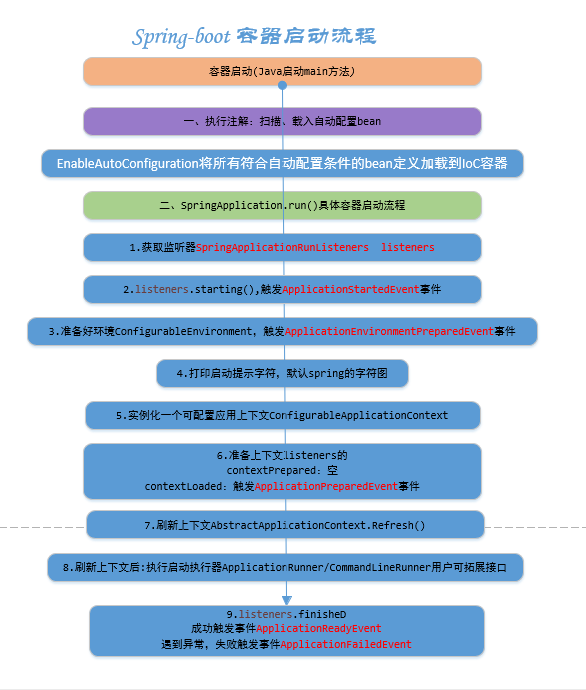
按照前面的分析,Spring-boot容器启动流程总体可划分为2部分:
1)执行注解:扫描指定范围下的bean、载入自动配置类对应的bean加载到IOC容器。
2)man方法中具体SpringAppliocation.run(),全流程贯穿SpringApplicationEvent,有6个子类:
ApplicationFailedEvent.class
ApplicationPreparedEvent.class
ApplicationReadyEvent.class
ApplicationStartedEvent.class
ApplicationStartingEvent.class
SpringApplicationEvent.class
这里用到了很经典的spring事件驱动模型,飞机票:Spring事件驱动模型和观察者模式
类图如下:

如上图,就是一个经典spring 事件驱动模型,包含3种角色:事件发布者、事件、监听者。对应到spring-boot中就是:
.EventPublishingRunListener这个类封装了事件发布,
2.SpringApplicationEvent是spring-boot中定义的事件(上面说的6种事件),继承自ApplicationEvent(spring中定义的)
3.监听者 spring-boot并没有实现针对上述6种事件的监听者(我没找到...),这里用户可以自己实现监听者(上述6种事件)来注入spring boot容器启动流程,触发相应的事件。
例如:实现ApplicationListener<ApplicationReadyEvent>这个接口,在容器启动完毕时最后一步listener.finished时,如果启动没有异常,就会执行!可以做一些数据初始化之类的操作。
spring boot容器启动详解的更多相关文章
- Spring Boot 自定义日志详解
本节内容基于 Spring Boot 2.0. 你所需具备的基础 什么是 Spring Boot? Spring Boot 核心配置文件详解 Spring Boot 开启的 2 种方式 Spring ...
- Spring Boot 集成 FreeMarker 详解案例(十五)
一.Springboot 那些事 SpringBoot 很方便的集成 FreeMarker ,DAO 数据库操作层依旧用的是 Mybatis,本文将会一步一步到来如何集成 FreeMarker 以及配 ...
- Spring Boot 之 Redis详解
Redis是目前业界使用最广泛的内存数据存储. Redis支持丰富的数据结构,同时支持数据持久化. Redis还提供一些类数据库的特性,比如事务,HA,主从库. REmote DIctionary S ...
- Spring Boot 之 HelloWorld详解
摘要: 原创出处:www.bysocket.com 泥瓦匠BYSocket 希望转载,保留摘要,谢谢! “以前是人放狗看家,现在是狗牵着人散步” — 随笔 一.Spring Boot 自述 世界上最好 ...
- spring boot 面试题详解
1.什么是springboot 用来简化spring应用的初始搭建以及开发过程 使用特定的方式来进行配置(properties或yml文件) 创建独立的spring引用程序 main方法运行 嵌入的T ...
- Spring Boot Tomcat配置详解
参数配置容器 server.xx开头的是所有servlet容器通用的配置,server.tomcat.xx开头的是tomcat特有的参数,其它类似. 所有参数绑定配置类:org.springframe ...
- Spring Boot的Maven插件Spring Boot Maven plugin详解
Spring Boot的Maven插件(Spring Boot Maven plugin)能够以Maven的方式为应用提供Spring Boot的支持,即为Spring Boot应用提供了执行Mave ...
- Spring Boot Thymeleaf 使用详解
在上篇文章Spring Boot (二):Web 综合开发中简单介绍了一下 Thymeleaf,这篇文章将更加全面详细的介绍 Thymeleaf 的使用.Thymeleaf 是新一代的模板引擎,在 S ...
- spring boot application.properties详解
附上最新文档地址:https://docs.spring.io/spring-boot/docs/current/reference/html/common-application-propertie ...
随机推荐
- 01.阿里云SDK调用,获取ESC主机详细信息
一:通过python SDK获取云主机的详细信息 1.创建Accessky码(不做展示) 2.通过pip安装SDK模块,这个阿里云帮助里面有,也不做详细展示. 3.详细使用方法看代码 我下面展示的返回 ...
- Linux下磁盘监控及系统版本-CPU-内存等查看
1.磁盘IO监控工具 iotop 输入命令:iotop 主要查看程序使用的磁盘IO的信息 安装:yum -y install iotop 第一行:10:01:23 — 当前系统时间126 days ...
- maven 打包Could not resolve dependencies for project和无效的目标发行版: 1.8
1.maven 打包Could not resolve dependencies for project 最近项目上使用的是idea ide的多模块话,需要模块之间的依赖,比如说系统管理模块依赖授权模 ...
- golang 轮训加密算法
Roy's friends has been spying on his text messages, so Roy thought of an algorithm to encrypt text m ...
- Django入门实战【3步曲】
环境准备 junhongdeMacBook-Air:site-packages junhongchen$ python -V Python 2.7.10 junhongdeMacBook-Air: ...
- MicroPython教程之TPYBoard开发板DIY小型家庭气象站
众所周知,iPhone6/6Plus内置气压传感器,不过大家对于气压传感器还是很陌生.跟字面的意思一样,气压传感器就是用来测量气压的,但测量气压对于普通的手机用户来说又有什么作用呢? 海拔高度测量 对 ...
- git和github新手安装使用教程(三步入门)
git和github新手安装使用教程(三步入门) 对于新手来说,每次更换设备时,github的安装和配置都会耗费大量时间.主要原因是每次安装时都只关心了[怎么做],而忘记了记住[为什么].本文从操作的 ...
- Linux 创建子进程执行任务
Linux 操作系统紧紧依赖进程创建来满足用户的需求.例如,只要用户输入一条命令,shell 进程就创建一个新进程,新进程运行 shell 的另一个拷贝并执行用户输入的命令.Linux 系统中通过 f ...
- 使用Tomcat的Reload提高开发速度(翻译)
欢迎转载http://www.cnblogs.com/coodream2009,有翻译的不太准确的地方请大家指出,我继续修改完善. 按照Java Servlet规范第四部分推荐的,Tomcat系统的实 ...
- blog建表操作
表思维导图: 数据库:表 from django.db import modelsfrom django.conf import settingsfrom django.contrib.auth. ...