
C++ 按址操作
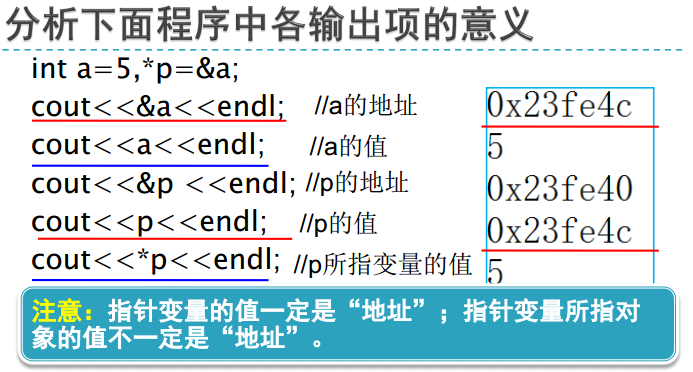
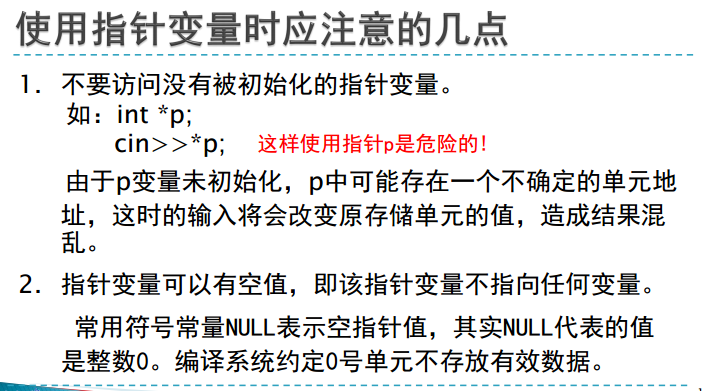
一、指针
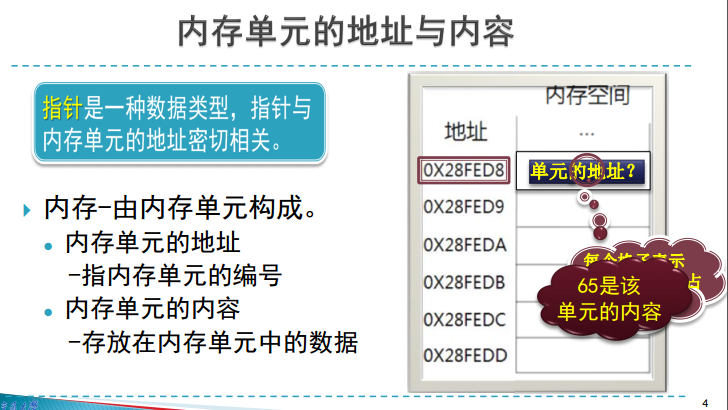
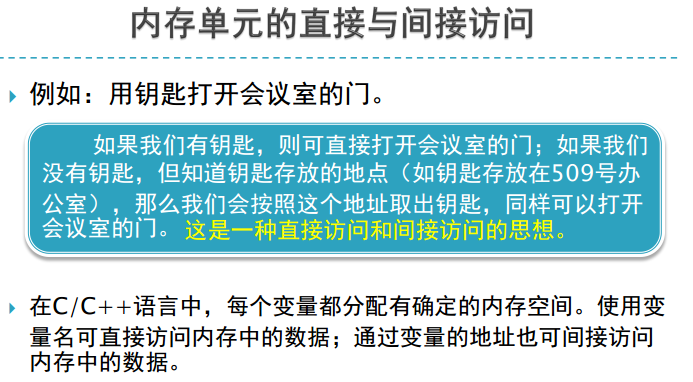
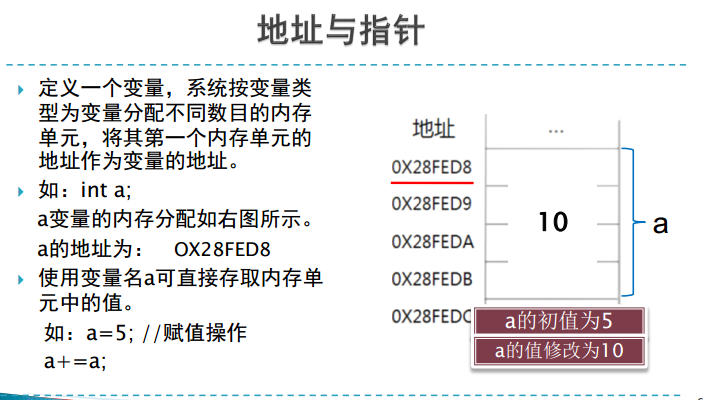
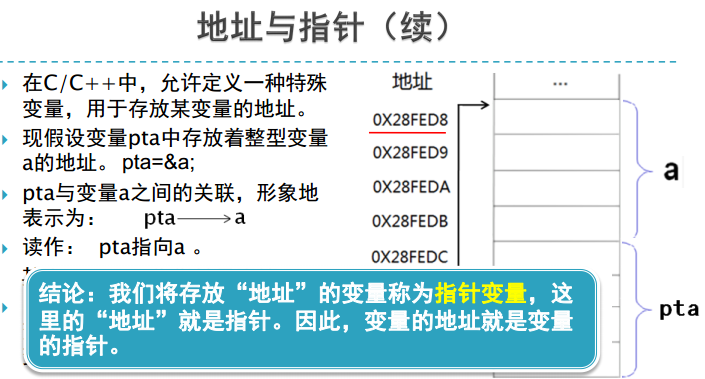
二、变量与指针
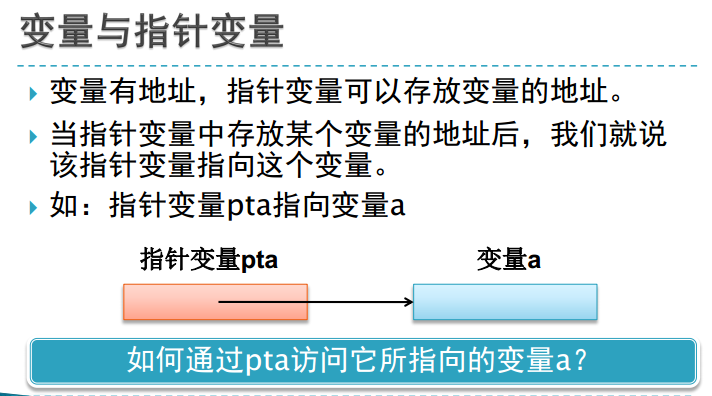
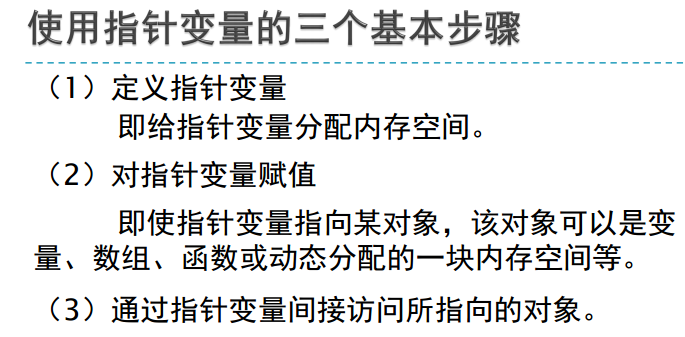
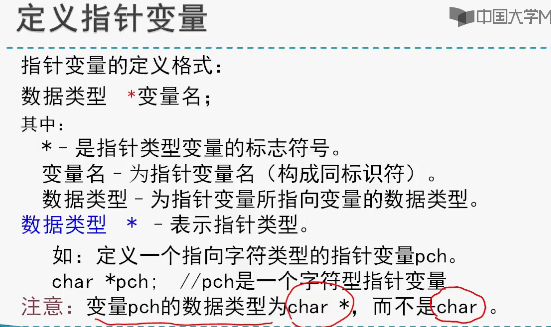
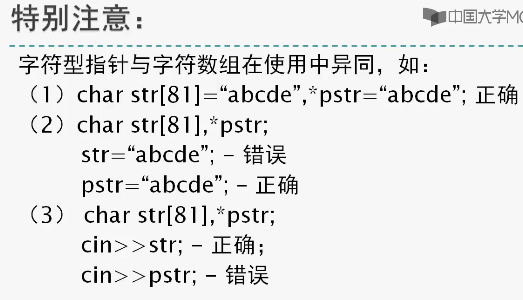
 注意区别char 和char *。
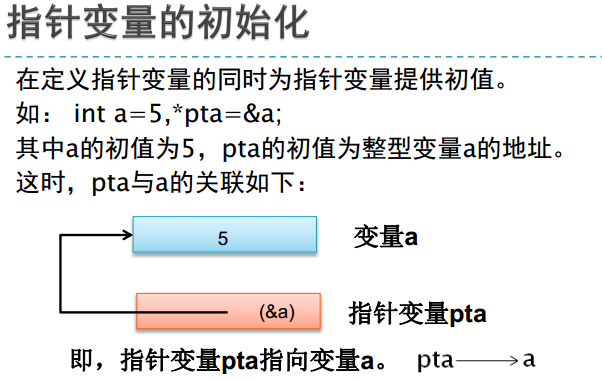
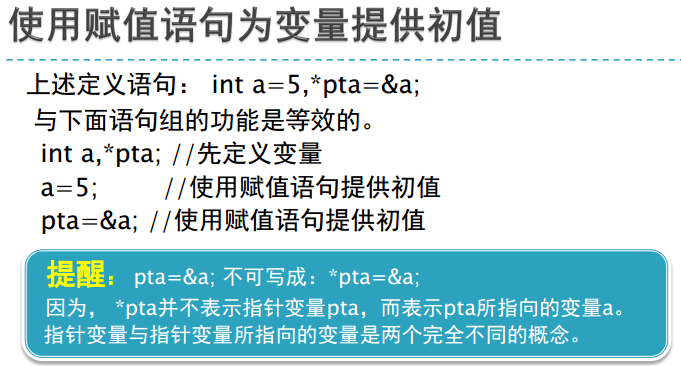 !!!!!!!
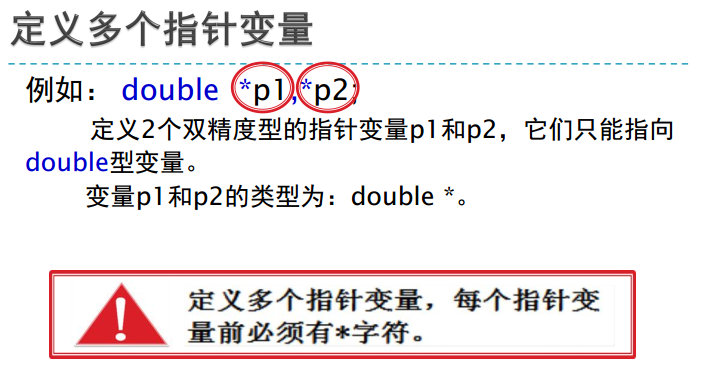
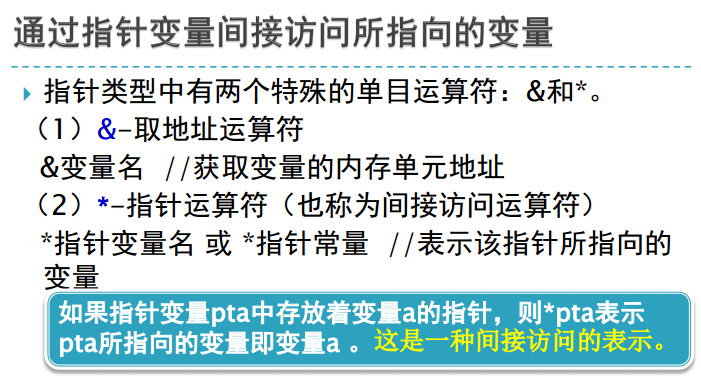
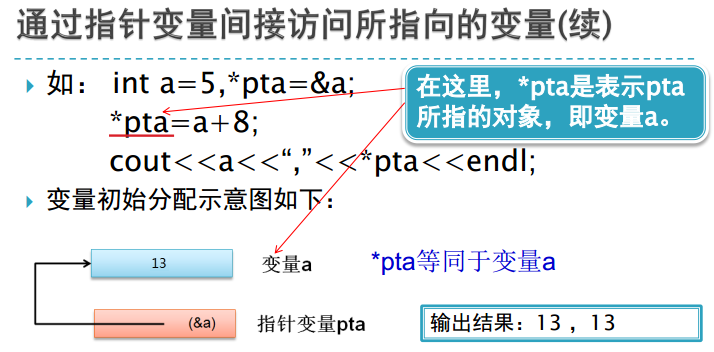
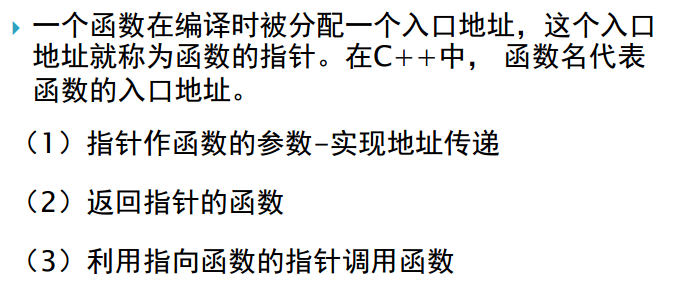
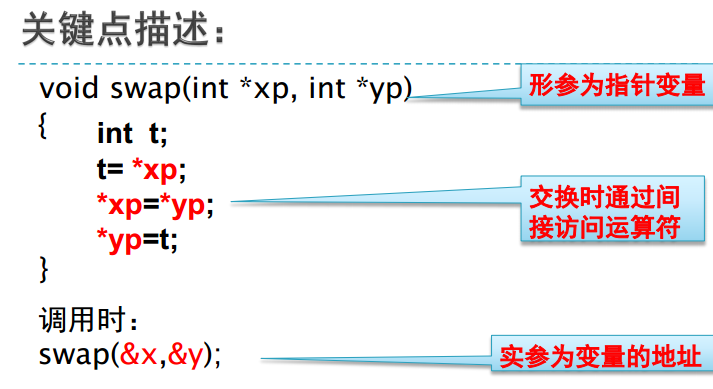
二、函数与指针
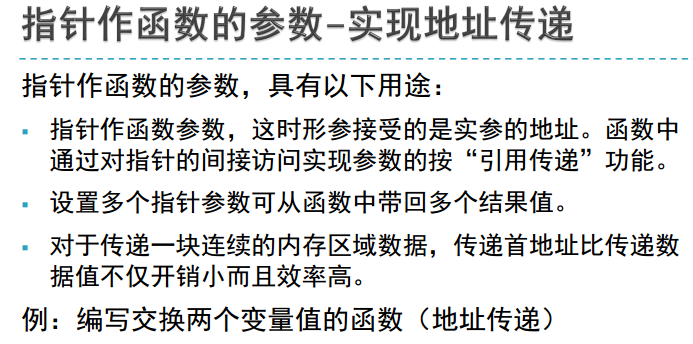
#include<iostream>

#include<string>

using namespace std;

void swap(int *px,int *py)

{

	int t;

	t=*px;

	*px=*py;

	*py=t;

};

int main()

{

	int x=2,y=3;

	cout<<"调用前:x="<<x<<",y="<<y<<endl;

	swap(&x,&y);

	cout<<"调用后:x="<<x<<",y="<<y<<endl;

}
#include<iostream>

#include<string>

using namespace std;

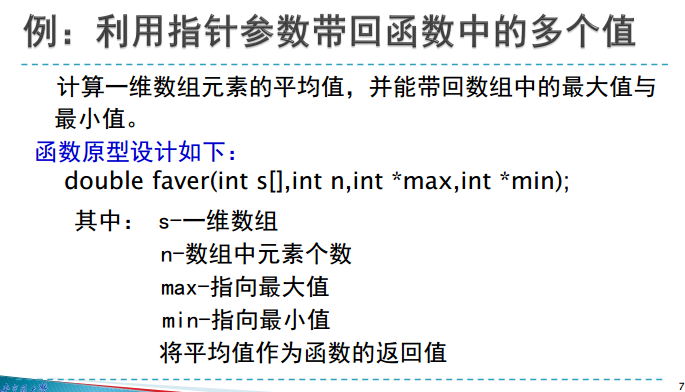
double faver(int a[],int n,int *max,int *min)

{

	double aver=0;

	for(int i=0;i<n;i++)

	{

		aver+=a[i];

		*max=*min=a[0];

		if(*max<a[i])

		    *max=a[i];

		if(*min>a[i])

		    *min=a[i];

	}

	return aver/n;

};

int main()

{

	int s[]={1,3,5,6,7,8},min,max,n=6;

	double aver;

	aver=faver(s,n,&max,&min);

	cout<<"average="<<aver<<endl;

	cout<<"max="<<max<<" min="<<min<<endl;

}
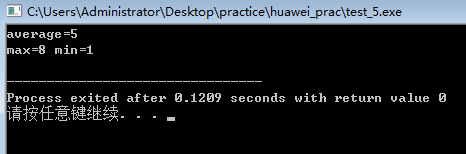
注意1、通过指针这种形式,可以将最大和最小值,平均值带回主函数,通过return的话只能带回一个数。2、调用就用&,定义就用*。
#include<iostream>

#include<string>

using namespace std;

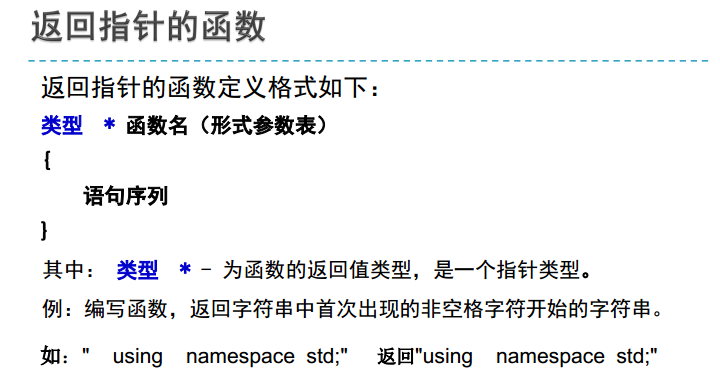
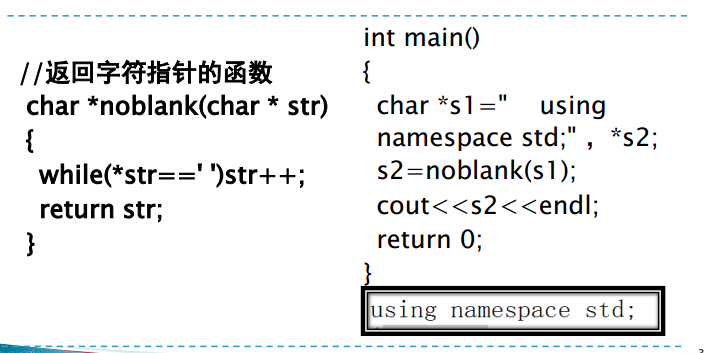
char *noblank(char *str)

{

	while(*str=='')

	    str++;

	return str;

}

int main()

{

	char *s1="  using namespace std;";

	char *s2;

	s2=noblank(s1);

	cout<<s2<<endl;

	return 0;

}
觉得这个例子有点扯
三、数组与指针
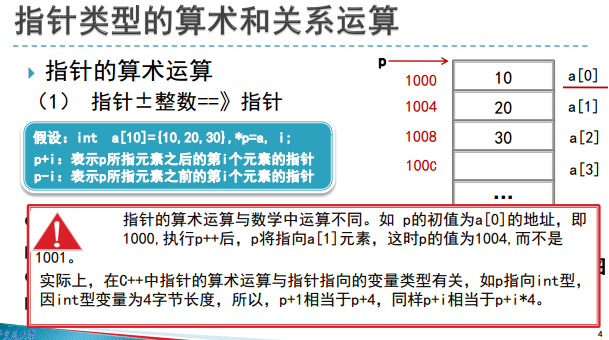
#include<iostream>

#include<string>

using namespace std;

int main()

{

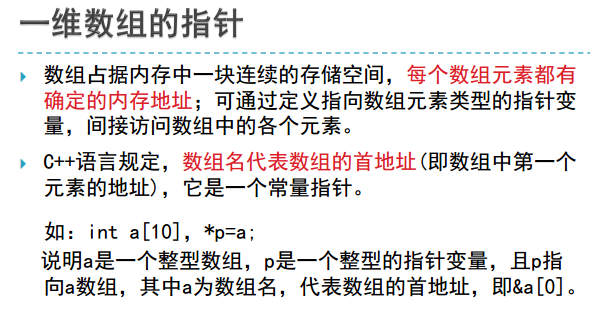
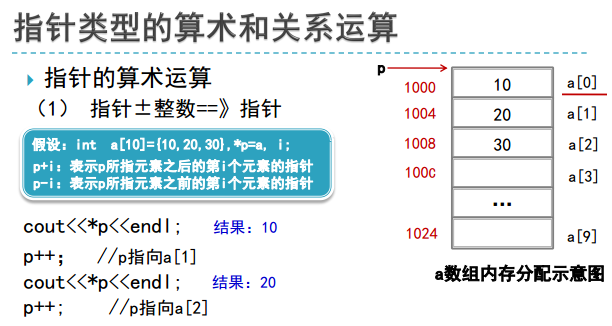
	//int a[10]={10,20,30},*p=a,i;

	int a[10]={10,20,30},i,*p;

	p=a;

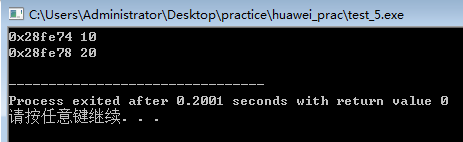
	cout<<p<<" "<<*p<<endl;

	p++;

	cout<<p<<" "<<*p<<endl;

}
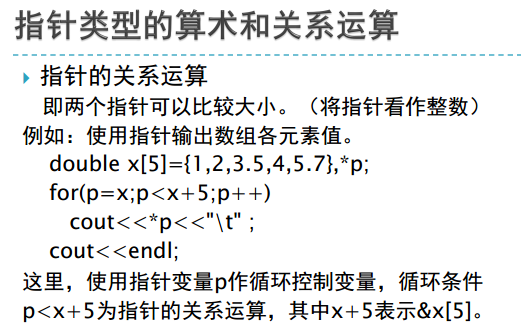
2、指针的关系运算
#include<iostream>

#include<string>

using namespace std;

int main()

{

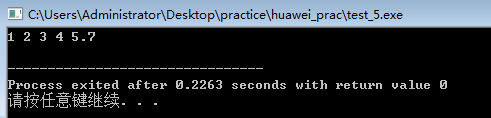
	double x[5]={1,2,3,4,5.7},*p;

	for(p=x;p<x+5;p++)

	{

		cout<<*p<<" ";

	}

	cout<<endl;

}
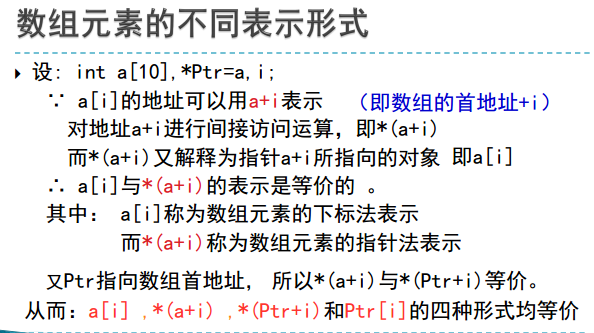
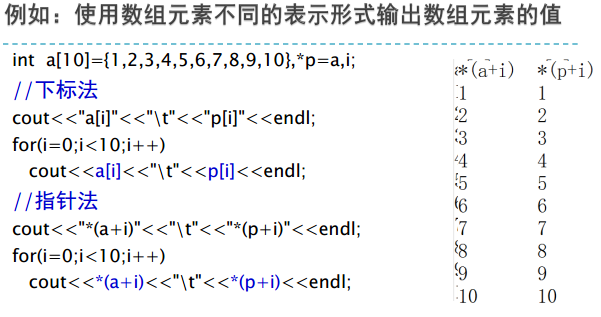
#include<iostream>

#include<string>

using namespace std;

int main()

{

    int a[5]={1,2,3,4,5},i;

    cout<<"a[i]:";

    for(i=0;i<5;i++)

        cout<<a[i]<<" ";

    cout<<endl;

	cout<<"*(a+i):";

    for(i=0;i<5;i++)

        cout<<*(a+i)<<" ";

    cout<<endl;

}
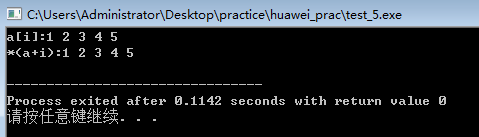
可以看到(a)是地址
#include<iostream>

#include<string>

using namespace std;

int main()

{

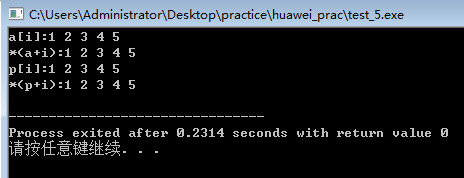
    int a[5]={1,2,3,4,5},*p=a,i;

    cout<<"a[i]:";

    for(i=0;i<5;i++)

        cout<<a[i]<<" ";

    cout<<endl;

	cout<<"*(a+i):";

    for(i=0;i<5;i++)

        cout<<*(a+i)<<" ";

    cout<<endl;

    cout<<"p[i]:";

    for(i=0;i<5;i++)

        cout<<p[i]<<" ";

    cout<<endl;

    cout<<"*(p+i):";

    for(i=0;i<5;i++)

        cout<<*(p+i)<<" ";

    cout<<endl;

}
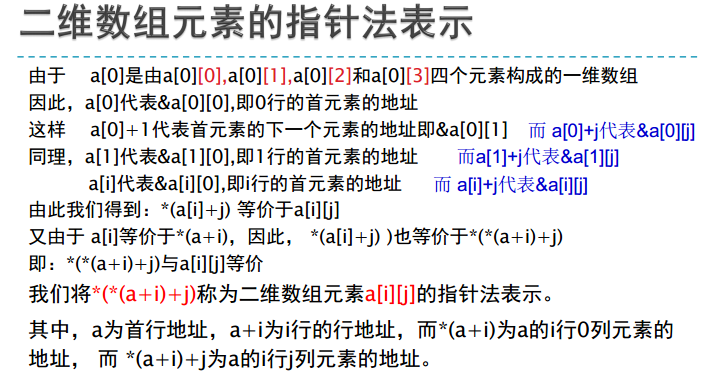
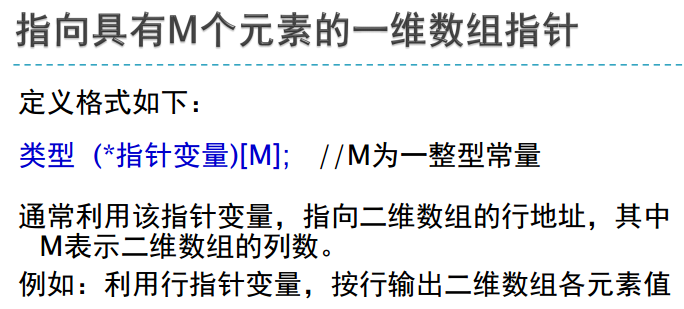
3、二维数组
#include<iostream>

#include<string>

using namespace std;

int main()

{

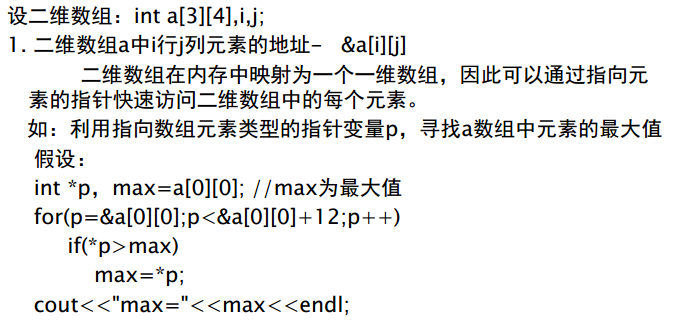
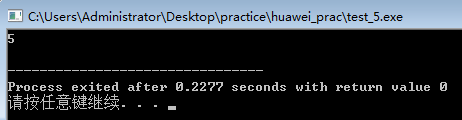
    int a[2][2]={1,2,4,5},*p;

    int max=a[0][0];

    for(p=&a[0][0];p<&a[0][0]+4;p++)

    {

    	if(max<*p)

    	    max=*p;

	}

	cout<<max<<endl;

}
#include<iostream>

#include<string>

using namespace std;

int main()

{

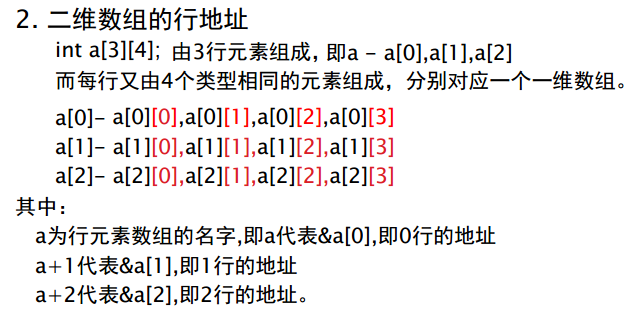
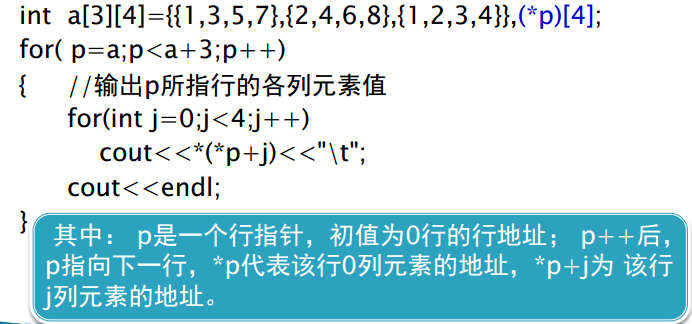
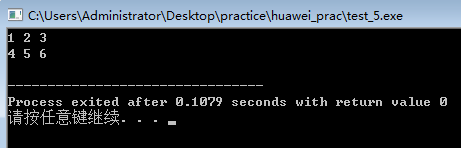
    int a[2][3]={1,2,3,4,5,6},(*p)[3];

    for(p=a;p<a+2;p++)

    {

    	for(int i=0;i<3;i++)

    	{

    	    cout<<*(*p+i)<<" ";

		}

		cout<<endl;

	}

}
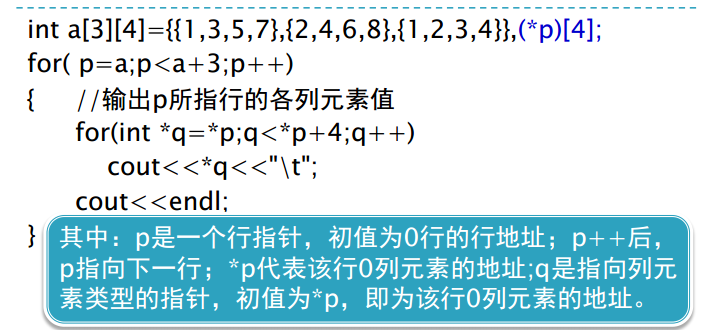
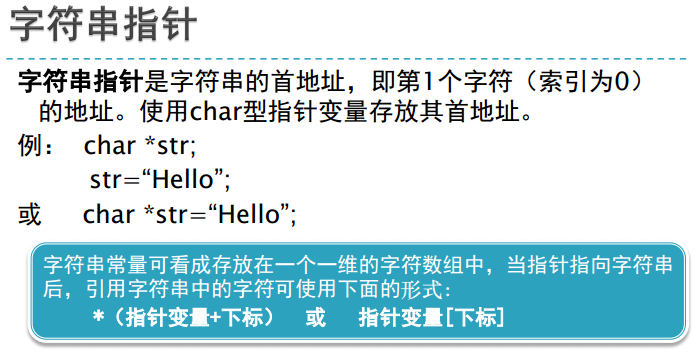
例子
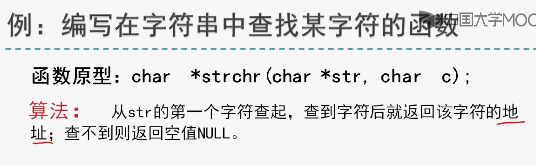
#include<iostream>

#include<string>

using namespace std;

char *strchr(char *str,char c)

{

	while(*str!='\0')

	{

		if(*str==c)

		    return str;

		    str++;

	}

	return NULL;

}

int main()

{

    char *str="abcdefghij";

    char *p;

    p=strchr(str,'a');

	if(p==NULL)

	    cout<<"Null";

	else

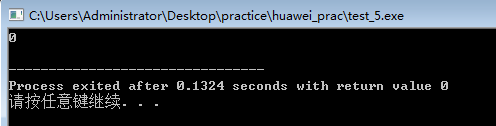
	    cout<<p-str<<endl;

}
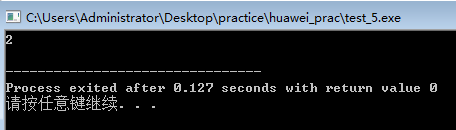
#include<iostream>

#include<string>

using namespace std;

char *strchr(char *str,char c)

{

	while(*str!='\0')

	{

		if(*str==c)

		    return str;

		    str++;

	}

	return NULL;

}

int main()

{

    char str[]="abcdefghij";

    char *p;

    p=strchr(str,'c');

	if(p==NULL)

	    cout<<"Null";

	else

	    cout<<p-str<<endl;

}
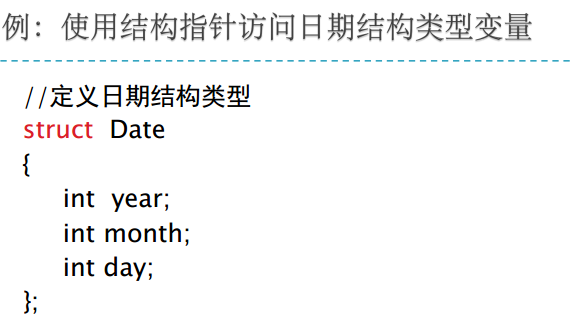
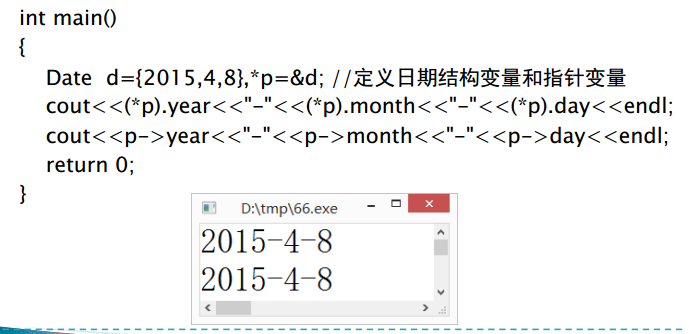
5、指针与结构体
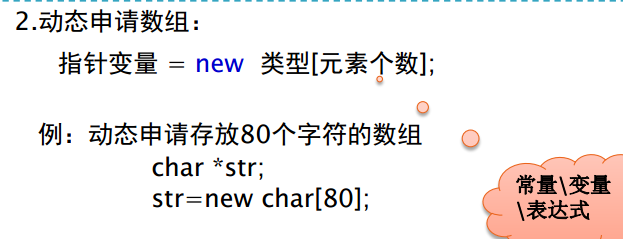
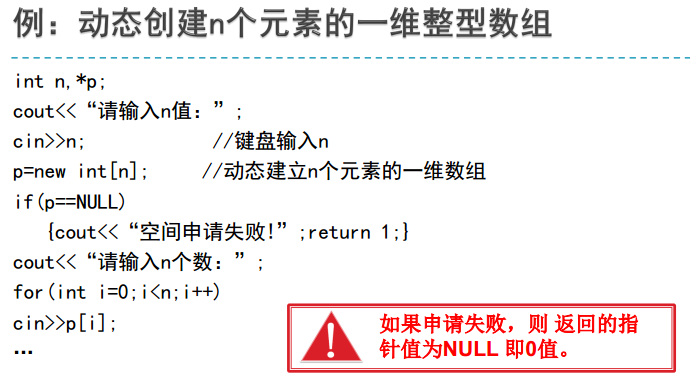
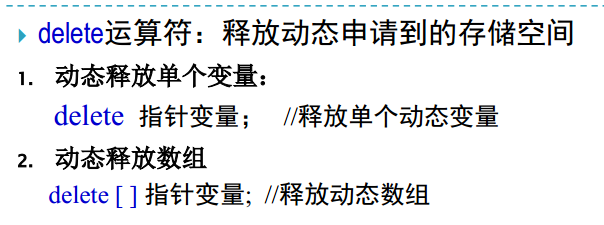
6、动态数组
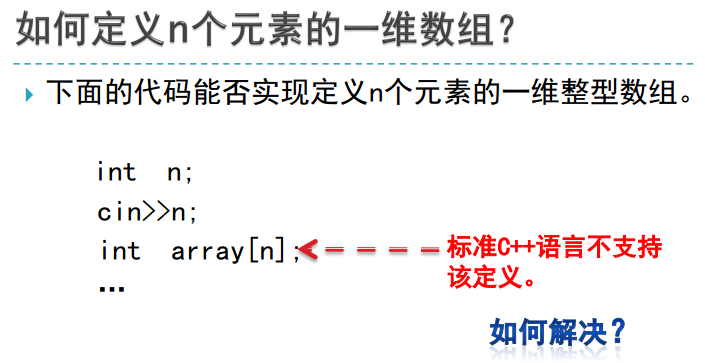
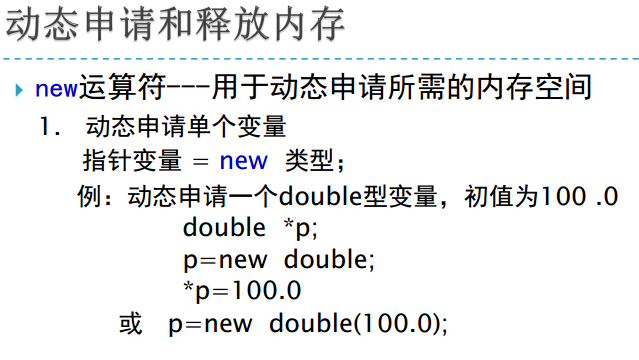
#include<iostream>

#include<string>

using namespace std;

int main()

{

    int n,*p;

    cout<<"请输入n值";

	cin>>n;

	p=new int[n];

	if(p==NULL)

	{

		cout<<"空间申请失败";

	 }

	for(int i=0;i<n;i++)

	    cin>>p[i];

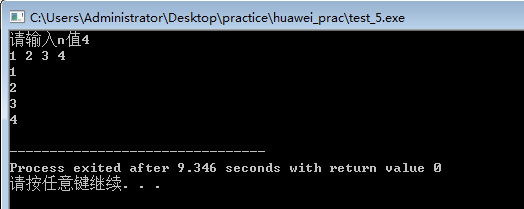
	for(int j=0;j<n;j++)

	    cout<<p[j]<<" "<<endl;

	return 0;

}
C++ 按址操作的更多相关文章
- RTTI、虚函数和虚基类的实现方式、开销分析及使用指导(虚函数的开销很小,就2次操作而已)
白杨 http://baiy.cn “在正确的场合使用恰当的特性” 对称职的C++程序员来说是一个基本标准.想要做到这点,首先要了解语言中每个特性的实现方式及其开销.本文主要讨论相对于传统 C 而言, ...
- C语言 结构体传值与传址分析
/********************************************************************** * 版权所有 (C)2017, Wang maochun ...
- 编译器开发系列--Ocelot语言5.表达式的有效性检查
本篇将对"1=3""&5"这样无法求值的不正确的表达式进行检查. 将检查如下这些问题.●为无法赋值的表达式赋值(例:1 = 2 + 2)●使用非法的函数 ...
- C++ 指向成员函数指针问题
成员函数指针与常规指针不同,一个指向成员变量的指针并不指向一个内存位置.通常最清晰的做法是将指向数据成员的指针看作为一个偏移量. class ru_m { public: typedef int (r ...
- char* 和char[]的区别
以下内容均来自互联网,系笔者汇总并总结. 1. 问题介绍 问题引入:在实习过程中发现了一个以前一直默认的错误,同样char *c = "abc"和char c[]="ab ...
- 【C】 04 - 表达式和语句
程序的生命力体现在它千变万化的行为,而再复杂的系统都是由最基本的语句组成的.C语句形式简单自由,但功能强大.从规范的角度学习C语法,一切显得简单而透彻,无需困扰于各种奇怪的语法. 1. 表达式(exp ...
- C++ 虚函数在基类与派生类对象间的表现及其分析
近来看了侯捷的<深入浅出MFC>,读到C++重要性质中的虚函数与多态那部分内容时,顿时有了疑惑.因为书中说了这么一句:使用“基类之指针”指向“派生类之对象”,由该指针只能调用基类所定义的函 ...
- drupal module 自定义
01 <?php function mytracer_menu() { $items = array(); $items['admin/config/mytracer'] = array( 't ...
- typeof、offsetof、container_of的解释
链表是内核最经典的数据结构之一,说到链表就不得不提及内核最经典(没有之一)的宏container_of. container_of似乎就是为链表而生的,它的主要作用是根据一个结构体变量中的一个域成员变 ...
随机推荐
- 使用 custom element 创建自定义元素
很早我们就可以在 HTML 文档中写 <custome-element></custom-element> 这样的自定义名称标签.但是浏览器对于不认识的标签一律当成一个普通的行 ...
- C#爬取微博文字、图片、视频(不使用Cookie)
前两天在网上偶然看到一个大佬OmegaXYZ写的文章,Python爬取微博文字与图片(不使用Cookie) 于是就心血来潮,顺手撸一个C#版本的. 其实原理也很简单,现在网上大多数版本都需要Cooki ...
- Java基础--Java基本数据类型
一.基本数据类型(primitive type) (1)数值型 1.数值型包括整数类型(byte,short,int,long) a.byte :1字节=8bit位 (-128~127) 包装类: ...
- 跟我猜Spring-boot:依赖注入
依赖注入 引&目标 本篇是<跟我猜Spring-Boot>系列的第二篇(Oh,我竟然已经写了10篇了,真不容易). 在上一篇中,我们实现了Bean的创建,但是仅仅是创建而已,并没有 ...
- iOS 17个常用代码整理
.判断邮箱格式是否正确的代码: //利用正则表达式验证 -(BOOL)isValidateEmail:(NSString *)email { NSString *emailRegex = @" ...
- R时间序列分析实例
一.作业要求 自选时间序列完成时间序列的建模过程,要求序列的长度>=100. 报告要求以下几部分内容: 数据的描述:数据来源.期间.数据的定义.数据长度. 作时间序列图并进行简单评价. 进行时间 ...
- js实现字符串逆向输出的4种方式
一.第一种方式(利用charAt()这个函数实现) 代码如下: var str="你好世界!!!!"; var str1="";//这里创建一个空字符串用来拼接 ...
- 数据结构 - Collection接口
简介 Collection继承自Iterable,Collection接口是Java集合两大分支中的一支,Queue.List.Set都是Collection的扩展:集合大类分为了Collection ...
- js 模拟鼠标绘制方块
<!DOCTYPE html PUBLIC "-//W3C//DTD XHTML 1.0 Transitional//EN" "http://www.w3.org/ ...
- 【视频+图文】Java基础经典练习题(一)输出2-100之间的素数,及素数个数
目录 第一题:判断2-100之间有多少个素数,并输出所有素数. 1.视频讲解: 2.思路分析: 代码讲解:以i=4为例 4.为大家准备了彩蛋: 能解决题目的代码并不是一次就可以写好的 我们需要根据我们 ...