
线性回归 - LinearRegression - 预测糖尿病 - 量化预测的质量
线性回归是分析一个变量与另外一个或多个变量(自变量)之间,关系强度的方法。
线性回归的标志,如名称所暗示的那样,即自变量与结果变量之间的关系是线性的,也就是说变量关系可以连城一条直线。
模型评估:量化预测的质量
https://scikit-learn.org/stable/modules/model_evaluation.html#model-evaluation
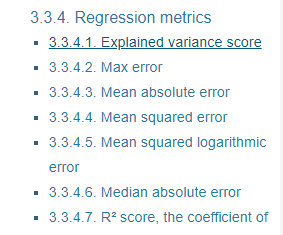
线性回归的 7种 预测质量方法,
1、导包,
# 导包

import numpy as np

import matplotlib.pyplot as plt

%matplotlib inline

from sklearn.linear_model import LinearRegression

import sklearn.datasets as datasets
2、加载数据集, 糖尿病数据
# 获取数据集  diabetes

data = datasets.load_diabetes()

data
{'data': array([[ 0.03807591,  0.05068012,  0.06169621, ..., -0.00259226,

          0.01990842, -0.01764613],

        [-0.00188202, -0.04464164, -0.05147406, ..., -0.03949338,

         -0.06832974, -0.09220405],

        [ 0.08529891,  0.05068012,  0.04445121, ..., -0.00259226,

          0.00286377, -0.02593034],

        ...,

        [ 0.04170844,  0.05068012, -0.01590626, ..., -0.01107952,

         -0.04687948,  0.01549073],

        [-0.04547248, -0.04464164,  0.03906215, ...,  0.02655962,

          0.04452837, -0.02593034],

        [-0.04547248, -0.04464164, -0.0730303 , ..., -0.03949338,

         -0.00421986,  0.00306441]]),

 'target': array([151.,  75., 141., 206., 135.,  97., 138.,  63., 110., 310., 101.,

         69., 179., 185., 118., 171., 166., 144.,  97., 168.,  68.,  49.,

         68., 245., 184., 202., 137.,  85., 131., 283., 129.,  59., 341.,

         87.,  65., 102., 265., 276., 252.,  90., 100.,  55.,  61.,  92.,

        259.,  53., 190., 142.,  75., 142., 155., 225.,  59., 104., 182.,

        128.,  52.,  37., 170., 170.,  61., 144.,  52., 128.,  71., 163.,

        150.,  97., 160., 178.,  48., 270., 202., 111.,  85.,  42., 170.,

        200., 252., 113., 143.,  51.,  52., 210.,  65., 141.,  55., 134.,

         42., 111.,  98., 164.,  48.,  96.,  90., 162., 150., 279.,  92.,

         83., 128., 102., 302., 198.,  95.,  53., 134., 144., 232.,  81.,

        104.,  59., 246., 297., 258., 229., 275., 281., 179., 200., 200.,

        173., 180.,  84., 121., 161.,  99., 109., 115., 268., 274., 158.,

        107.,  83., 103., 272.,  85., 280., 336., 281., 118., 317., 235.,

         60., 174., 259., 178., 128.,  96., 126., 288.,  88., 292.,  71.,

        197., 186.,  25.,  84.,  96., 195.,  53., 217., 172., 131., 214.,

         59.,  70., 220., 268., 152.,  47.,  74., 295., 101., 151., 127.,

        237., 225.,  81., 151., 107.,  64., 138., 185., 265., 101., 137.,

        143., 141.,  79., 292., 178.,  91., 116.,  86., 122.,  72., 129.,

        142.,  90., 158.,  39., 196., 222., 277.,  99., 196., 202., 155.,

         77., 191.,  70.,  73.,  49.,  65., 263., 248., 296., 214., 185.,

         78.,  93., 252., 150.,  77., 208.,  77., 108., 160.,  53., 220.,

        154., 259.,  90., 246., 124.,  67.,  72., 257., 262., 275., 177.,

         71.,  47., 187., 125.,  78.,  51., 258., 215., 303., 243.,  91.,

        150., 310., 153., 346.,  63.,  89.,  50.,  39., 103., 308., 116.,

        145.,  74.,  45., 115., 264.,  87., 202., 127., 182., 241.,  66.,

         94., 283.,  64., 102., 200., 265.,  94., 230., 181., 156., 233.,

         60., 219.,  80.,  68., 332., 248.,  84., 200.,  55.,  85.,  89.,

         31., 129.,  83., 275.,  65., 198., 236., 253., 124.,  44., 172.,

        114., 142., 109., 180., 144., 163., 147.,  97., 220., 190., 109.,

        191., 122., 230., 242., 248., 249., 192., 131., 237.,  78., 135.,

        244., 199., 270., 164.,  72.,  96., 306.,  91., 214.,  95., 216.,

        263., 178., 113., 200., 139., 139.,  88., 148.,  88., 243.,  71.,

         77., 109., 272.,  60.,  54., 221.,  90., 311., 281., 182., 321.,

         58., 262., 206., 233., 242., 123., 167.,  63., 197.,  71., 168.,

        140., 217., 121., 235., 245.,  40.,  52., 104., 132.,  88.,  69.,

        219.,  72., 201., 110.,  51., 277.,  63., 118.,  69., 273., 258.,

         43., 198., 242., 232., 175.,  93., 168., 275., 293., 281.,  72.,

        140., 189., 181., 209., 136., 261., 113., 131., 174., 257.,  55.,

         84.,  42., 146., 212., 233.,  91., 111., 152., 120.,  67., 310.,

         94., 183.,  66., 173.,  72.,  49.,  64.,  48., 178., 104., 132.,

        220.,  57.]),

 'DESCR': '.. _diabetes_dataset:\n\nDiabetes dataset\n----------------\n\nTen baseline variables, age, sex, body mass index, average blood\npressure, and six blood serum measurements were obtained for each of n =\n442 diabetes patients, as well as the response of interest, a\nquantitative measure of disease progression one year after baseline.\n\n**Data Set Characteristics:**\n\n  :Number of Instances: 442\n\n  :Number of Attributes: First 10 columns are numeric predictive values\n\n  :Target: Column 11 is a quantitative measure of disease progression one year after baseline\n\n  :Attribute Information:\n      - Age\n      - Sex\n      - Body mass index\n      - Average blood pressure\n      - S1\n      - S2\n      - S3\n      - S4\n      - S5\n      - S6\n\nNote: Each of these 10 feature variables have been mean centered and scaled by the standard deviation times `n_samples` (i.e. the sum of squares of each column totals 1).\n\nSource URL:\nhttps://www4.stat.ncsu.edu/~boos/var.select/diabetes.html\n\nFor more information see:\nBradley Efron, Trevor Hastie, Iain Johnstone and Robert Tibshirani (2004) "Least Angle Regression," Annals of Statistics (with discussion), 407-499.\n(https://web.stanford.edu/~hastie/Papers/LARS/LeastAngle_2002.pdf)',

 'feature_names': ['age',

  'sex',

  'bmi',

  'bp',

  's1',

  's2',

  's3',

  's4',

  's5',

  's6'],

 'data_filename': 'c:\\python37\\lib\\site-packages\\sklearn\\datasets\\data\\diabetes_data.csv.gz',

 'target_filename': 'c:\\python37\\lib\\site-packages\\sklearn\\datasets\\data\\diabetes_target.csv.gz'}
3、将数据分为 训练数据 和 测试数据
# 导包, 将数据分为 训练数据 和 测试数据

from sklearn.model_selection import train_test_split

X_train, X_test, y_train, y_test = train_test_split(X, y, test_size=0.1)

display (X_train.shape, y_train.shape, X_test.shape, y_test.shape)
(397, 10)

(397,)

(45, 10)

(45,)
4、建模
# 使用线性回归算法 训练数据

lr = LinearRegression()

lr.fit(X_train, y_train)
5、预测数据
# 开始预测数据

lr.predict(X_test)
array([230.00915863, 109.37448796, 135.55277842, 151.10470676,

       112.50492861,  60.06173076, 185.98893008, 154.37782567,

       226.83758259,  35.04571744,  72.66756812,  58.39584888,

       174.04109657, 236.22478163, 140.04573477, 179.59637478,

       290.40096377, 232.79655649, 127.57606558, 155.94225585,

       233.96170807, 122.18494431, 124.57198973,  97.73726963,

       261.60495587, 170.48284605, 128.85673176,  93.16011898,

       198.08756371, 179.37427503, 199.42069686, 106.91159532,

       114.42691898, 215.81999925, 200.58503886, 168.46631094,

       123.85604486, 118.02004664, 189.81321827,  80.30230583,

       108.35537981,  80.98007737, 180.839016  ,  83.22091387,

       117.70861488])
6、查看真实数据
# 查看真实的 结果值, 与上面测试结果 对比

y_test
array([246.,  69.,  40., 150., 107.,  70.,  67., 252., 236., 104.,  48.,

        77., 311., 270., 187., 200., 270., 217., 135., 144., 280., 191.,

        65., 170., 303., 138.,  42., 158., 222.,  85., 173., 129.,  68.,

       279., 248., 235., 111., 153., 101.,  77.,  72.,  42., 107., 102.,

       183.])
7、回归评价得分 (R²得分,决定系数)
回归评价7种方法,
# 调用算法, 算出 评价分,   负无穷 到 1 的范围,  1为最好

lr.score(X_test, y_test)
0.5103097598041384
8、代码实现 预测评价(R²得分,决定系数)
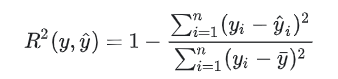
'''

The coefficient R^2 is defined as (1 - u/v), where u is the residual

sum of squares ((y_true - y_pred) ** 2).sum() and v is the total

sum of squares ((y_true - y_true.mean()) ** 2).sum().

'''
y_pred = lr.predict(X_test).round(2)

y_true = y_test

# 代码实现  评价标准

# 真实结果: y_true

# 测试结果: y_pred
u = ((y_true - y_pred)**2).sum()
v = ((y_true - y_true.mean())**2).sum()
score = (1 - u/v)
score
0.5103097598041384
线性回归 - LinearRegression - 预测糖尿病 - 量化预测的质量的更多相关文章
- 机器学习之路: python 线性回归LinearRegression, 随机参数回归SGDRegressor 预测波士顿房价
python3学习使用api 线性回归,和 随机参数回归 git: https://github.com/linyi0604/MachineLearning from sklearn.datasets ...
- Eviews 9.0新版本新功能——预测(Auto-ARIMA预测、VAR预测)
每每以为攀得众山小,可.每每又切实来到起点,大牛们,缓缓脚步来俺笔记葩分享一下吧,please~ --------------------------- 9.预测功能 新增需要方法的预测功能:Auto ...
- 数据挖掘-diabetes数据集分析-糖尿病病情预测_线性回归_最小平方回归
# coding: utf-8 # 利用 diabetes数据集来学习线性回归 # diabetes 是一个关于糖尿病的数据集, 该数据集包括442个病人的生理数据及一年以后的病情发展情况. # 数据 ...
- 量化预测质量之分类报告 sklearn.metrics.classification_report
classification_report的调用为:classification_report(y_true, y_pred, labels=None, target_names=None, samp ...
- 时间序列预测——深度好文,ARIMA是最难用的(数据预处理过程不适合工业应用),线性回归模型简单适用,预测趋势很不错,xgboost的话,不太适合趋势预测,如果数据平稳也可以使用。
补充:https://bmcbioinformatics.biomedcentral.com/articles/10.1186/1471-2105-15-276 如果用arima的话,还不如使用随机森 ...
- 手把手丨我们在UCL找到了一个糖尿病数据集,用机器学习预测糖尿病(三)
梯度提升: from sklearn.ensemble import GradientBoostingClassifier gb=GradientBoostingClassifier(random_s ...
- 数据预测算法-ARIMA预测
简介 ARIMA: AutoRegressive Integrated Moving Average ARIMA是两个算法的结合:AR和MA.其公式如下: 是白噪声,均值为0, C是常数. ARIMA ...
- (转载)微软数据挖掘算法:Microsoft 时序算法之结果预测及其彩票预测(6)
前言 本篇我们将总结的算法为Microsoft时序算法的结果预测值,是上一篇文章微软数据挖掘算法:Microsoft 时序算法(5)的一个总结,上一篇我们已经基于微软案例数据库的销售历史信息表,利用M ...
- 机器学习-线性回归LinearRegression
概述 今天要说一下机器学习中大多数书籍第一个讲的(有的可能是KNN)模型-线性回归.说起线性回归,首先要介绍一下机器学习中的两个常见的问题:回归任务和分类任务.那什么是回归任务和分类任务呢?简单的来说 ...
随机推荐
- javascript - 所有的视图属性和方法(offsetHeight、clientHeight、scrollHeight、innerHeight等)
注意:本文只简单的介绍了各个视图的属性和方法.如果想要知道兼容性或者更多,请至文章底部参考链接处. 本文内容分为五大部分: Window视图属性 innerHeight 和 innerWidth ou ...
- fork()系统调用的理解
系统调用fork()用于创建一个新进程.我们可以通过下面的代码来理解,最好是能自己敲一遍运行验证. #include<stdio.h> #include<stdlib.h> ...
- 本地项目推送到Github
1.在github上repositories新建一个git项目工程 2.使用git,把刚建好的项目clone到本地 3.把本地项目中的文件全部移动到下载下来的git项目中,以下是我本地项目中的文件 4 ...
- 新手必须知道的13个Xcode小技巧
当谈论到iOS开发工具时,有一个肯定是所有iOS开发者都熟悉的,那就是Xcode.Xcode是使所有令人赞叹的iOS app成为可能的驱动力. Xcode能帮助我们完成非常多的事情,但是这也有点让人头 ...
- OS X10.10.3正式版和Xcode 6.3正式版下载
4.09日,OS X10.10.3 正式版 IOS8.3 正式版和 Xcode 6.3 正式版在今天发布,这是 2015 年里面,IOS 系统和 Mac OS 系统,以及 IOS 和 Mac OS 专 ...
- 使用python pip安装工具组件包:出现 requests File “<stdin>",line 1 pip install xxx ^ SyntaxError:invalid syntax
最近想要试试python ,软件安装完成了,但是,import 组件包时,出了问题,一直不得解:安装pycharm 工具感觉麻烦,不想安装那些,只想单纯使用python . 问题复现: 1.Windo ...
- Delphi 文件操作(4)Reset
procedure Reset(var F [: File; RecSize: Word ] ); { 作用: 对于文本文件,Reset过程将以只读方式打开文件,对于类型文件和无类型文件, ...
- 给想学python但还没有接触过的你,python代码的书写规则,小白入门
Python 文件结构 变量命名 注释 单行注释 多行注释 缩进 Python 文件结构 #!/usr/bin/env python3 # 指定python解释器 # -*- coding: utf- ...
- 引用传参与reference_wrapper
本文是<functional>系列的第3篇. 引用传参 我有一个函数: void modify(int& i) { ++i; } 因为参数类型是int&,所以函数能够修改传 ...
- python selenium模块 css定位
selenium是python的非标准库,使用时需要下载安装 安装命令 pip install selenium selenium是python的自动化测试模块,可以模拟浏览器的行为 所以在使用之前 ...