
Spring原理(1)——容器
容器接口

BeanFactory
是ApplicationContext的父接口,所有ApplicationContext的实现都组合了BeanFactory。
BeanFactory才是Spring的核心容器。

从BeanFactory提供的方法来看,主要是从容器中获取Bean。实际上控制反转,依赖注入以及Bean的生命周期管理,都由它的实现类提供。如下展示了BeanFactory其中一个实现类DefaultListableBeanFactory的继承关系。
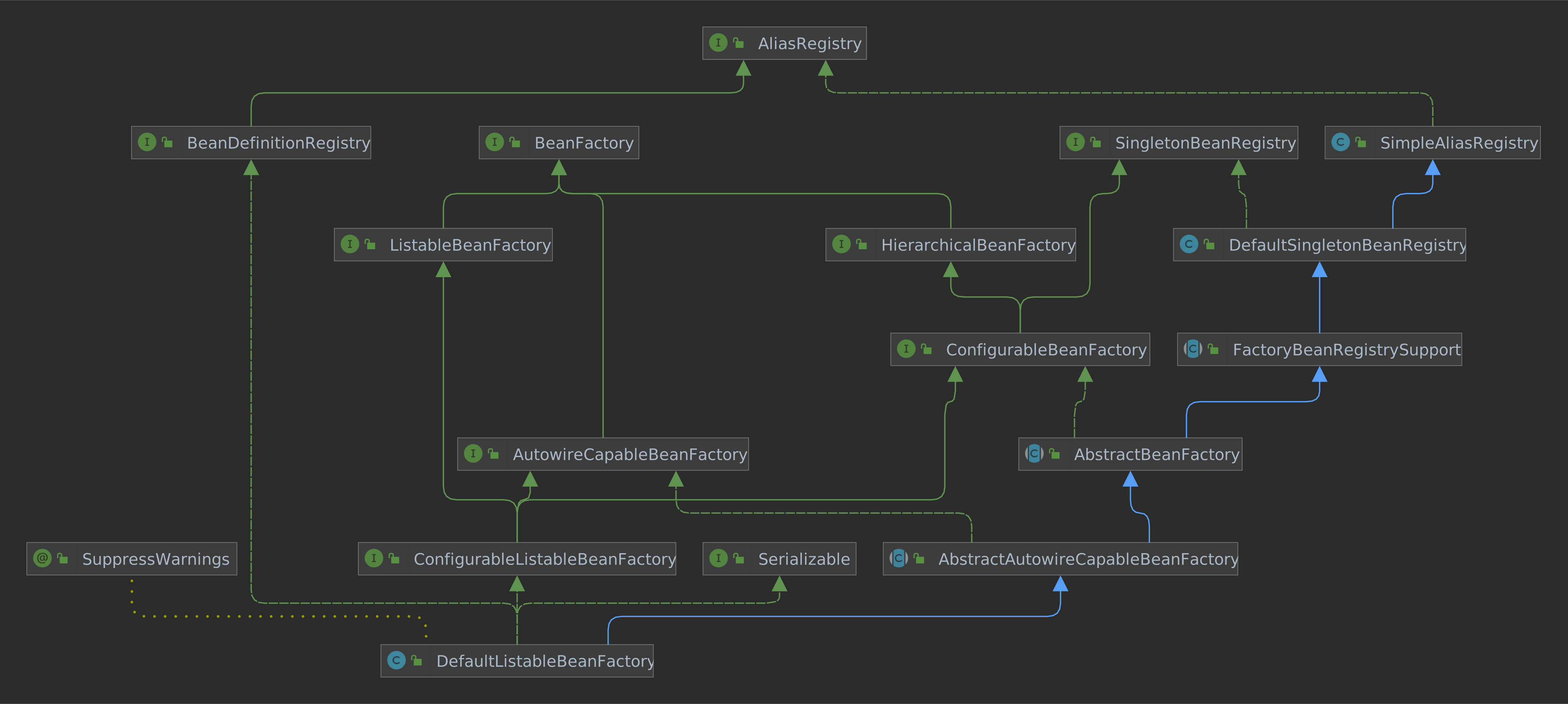
可以看到,它的继承路线上有一个DefaultSingletonBeanRegistry类,这个类我们打开可以看到如下代码段,其中singletonObjects对象正是容器中所有单例对象被保存的地方。
public class DefaultSingletonBeanRegistry extends SimpleAliasRegistry implements SingletonBeanRegistry {

	/** Cache of singleton objects: bean name to bean instance. */

	private final Map<String, Object> singletonObjects = new ConcurrentHashMap<>(256);  // 保存了所有的单例对象

	/** Cache of singleton factories: bean name to ObjectFactory. */

	private final Map<String, ObjectFactory<?>> singletonFactories = new HashMap<>(16);

	...

}
ApplicationContext
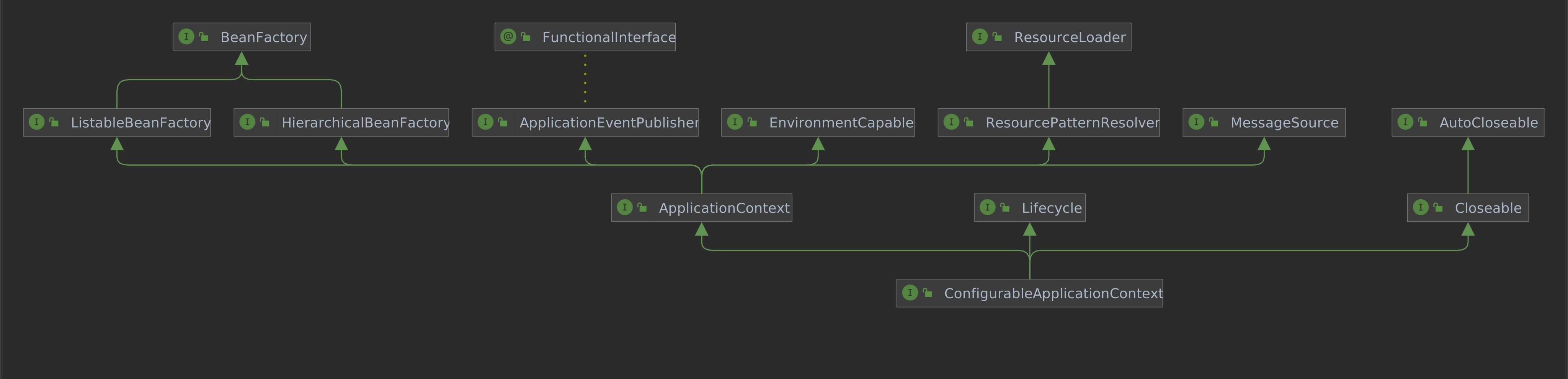
ApplicationContext继承自多个接口,因此提供了多种能力,具体提供的能力如下代码所示。
@SpringBootApplication

public class SsmpApplication {

    public static void main(String[] args) throws IOException {

        final ConfigurableApplicationContext context = SpringApplication.run(SsmpApplication.class, args);

        // MessageSource接口提供的功能,实现国际化能力

        context.getMessage("hi", null, Locale.CHINA);

        context.getMessage("hi", null, Locale.US);

        // ResourcePatternResolver接口提供的能力,实现读取资源文件的能力

        final Resource[] resources = context.getResources("classpath*:spring.factories");

        // EnvironmentCapable接口提供的能力,实现获取环境参数的能力,可以获取环境变量、配置等

        final String java_home = context.getEnvironment().getProperty("java_home");

        final String port = context.getEnvironment().getProperty("server.port");

        // ApplicationEventPublisher提供的能力,可以发送事件,实现解耦

        context.publishEvent(new MyEvent(context));

    }

    public static class MyEvent extends ApplicationEvent {

        public MyEvent(Object source) {

            super(source);

        }

    }

}
容器实现
BeanFactory实现
以下代码的注释中展示了BeanFactory是如何注册Bean的,以及注册后如何进行后处理的。
点击查看代码
package com.leo.ssmp;

import lombok.extern.slf4j.Slf4j;

import org.springframework.beans.factory.annotation.Autowired;

import org.springframework.beans.factory.config.BeanDefinition;

import org.springframework.beans.factory.config.BeanFactoryPostProcessor;

import org.springframework.beans.factory.config.BeanPostProcessor;

import org.springframework.beans.factory.support.BeanDefinitionBuilder;

import org.springframework.beans.factory.support.DefaultListableBeanFactory;

import org.springframework.boot.autoconfigure.SpringBootApplication;

import org.springframework.context.annotation.AnnotationConfigUtils;

import org.springframework.context.annotation.Bean;

import org.springframework.context.annotation.Configuration;

import java.util.Collection;

@SpringBootApplication

@Slf4j

public class SsmpApplication {

    public static void main(String[] args) {

        // 将MyConfig类注册到BeanFactory中,由BeanFactory管理Bean的生成,销毁

        DefaultListableBeanFactory beanFactory = new DefaultListableBeanFactory();

        final BeanDefinition configDefinition = BeanDefinitionBuilder.genericBeanDefinition(MyConfig.class)

            .setScope("singleton")

            .getBeanDefinition();

        beanFactory.registerBeanDefinition("config", configDefinition);

        // 向BeanFactory上注册一些后处理器,这些后处理器可以解析@Configuration和@Bean这些注解

        AnnotationConfigUtils.registerAnnotationConfigProcessors(beanFactory);

        // BeanFactory后处理器,执行后处理操作,处理@Configuration注解,将bean1和bean2生成出来

        final Collection<BeanFactoryPostProcessor> beanFactoryPostProcessors = beanFactory.getBeansOfType(

            BeanFactoryPostProcessor.class).values();

        log.info("---------------BeanFactory后处理器------------------");

        beanFactoryPostProcessors.forEach(beanFactoryPostProcessor -> log.info(beanFactoryPostProcessor.toString()));

        beanFactoryPostProcessors.forEach(beanFactoryPostProcessor -> {

            beanFactoryPostProcessor.postProcessBeanFactory(beanFactory);

        });

        log.info("---------------BeanFactory后处理器------------------");

        // Bean后处理器,针对Bean的生命周期的各个阶段做扩展,例如@Autowired @Resource,

        // 这样才能在生成bean1后,向bean1中注入bean2

        final Collection<BeanPostProcessor> beanPostProcessors = beanFactory.getBeansOfType(BeanPostProcessor.class)

            .values();

        log.info("----------------Bean后处理器-----------------");

        beanPostProcessors.forEach(beanPostProcessor -> log.info(beanPostProcessor.toString()));

        beanPostProcessors.forEach(beanFactory::addBeanPostProcessor);

        log.info("----------------Bean后处理器-----------------");

        log.info("------------------注册的所有Bean定义信息------------------");

        final String[] beanDefinitionNames = beanFactory.getBeanDefinitionNames();

        for (String beanDefinitionName : beanDefinitionNames) {

            log.info(beanDefinitionName);

        }

        log.info("------------------注册的所有Bean定义信息------------------");

        final Bean1 bean1 = beanFactory.getBean(Bean1.class);

        log.info(bean1.getBean2().toString());

    }

    @Configuration

    static class MyConfig {

        @Bean

        public Bean1 bean1() {

            return new Bean1();

        }

        @Bean

        public Bean2 bean2() {

            return new Bean2();

        }

    }

    static class Bean1 {

        @Autowired

        private Bean2 bean2;

        public Bean1() {

            log.info("Bean1 construct...");

        }

        public Bean2 getBean2() {

            return bean2;

        }

    }

    static class Bean2 {

        public Bean2() {

            log.info("Bean2 construct");

        }

    }

}
以上代码的运行结果如下:
点击查看代码
10:56:43.379 [main] DEBUG org.springframework.beans.factory.support.DefaultListableBeanFactory - Creating shared instance of singleton bean 'org.springframework.context.annotation.internalConfigurationAnnotationProcessor'

10:56:43.395 [main] DEBUG org.springframework.beans.factory.support.DefaultListableBeanFactory - Creating shared instance of singleton bean 'org.springframework.context.event.internalEventListenerProcessor'

10:56:43.398 [main] INFO com.leo.ssmp.SsmpApplication - ---------------BeanFactory后处理器------------------

10:56:43.398 [main] INFO com.leo.ssmp.SsmpApplication - org.springframework.context.annotation.ConfigurationClassPostProcessor@724af044

10:56:43.398 [main] INFO com.leo.ssmp.SsmpApplication - org.springframework.context.event.EventListenerMethodProcessor@4678c730

10:56:43.512 [main] DEBUG org.springframework.beans.factory.support.DefaultListableBeanFactory - Creating shared instance of singleton bean 'org.springframework.context.event.internalEventListenerFactory'

10:56:43.513 [main] INFO com.leo.ssmp.SsmpApplication - ---------------BeanFactory后处理器------------------

10:56:43.513 [main] DEBUG org.springframework.beans.factory.support.DefaultListableBeanFactory - Creating shared instance of singleton bean 'org.springframework.context.annotation.internalAutowiredAnnotationProcessor'

10:56:43.513 [main] DEBUG org.springframework.beans.factory.support.DefaultListableBeanFactory - Creating shared instance of singleton bean 'org.springframework.context.annotation.internalCommonAnnotationProcessor'

10:56:43.516 [main] INFO com.leo.ssmp.SsmpApplication - ----------------Bean后处理器-----------------

10:56:43.516 [main] INFO com.leo.ssmp.SsmpApplication - org.springframework.beans.factory.annotation.AutowiredAnnotationBeanPostProcessor@6385cb26

10:56:43.516 [main] INFO com.leo.ssmp.SsmpApplication - org.springframework.context.annotation.CommonAnnotationBeanPostProcessor@38364841

10:56:43.517 [main] INFO com.leo.ssmp.SsmpApplication - ----------------Bean后处理器-----------------

10:56:43.517 [main] INFO com.leo.ssmp.SsmpApplication - ------------------注册的所有Bean定义信息------------------

10:56:43.517 [main] INFO com.leo.ssmp.SsmpApplication - config

10:56:43.517 [main] INFO com.leo.ssmp.SsmpApplication - org.springframework.context.annotation.internalConfigurationAnnotationProcessor

10:56:43.517 [main] INFO com.leo.ssmp.SsmpApplication - org.springframework.context.annotation.internalAutowiredAnnotationProcessor

10:56:43.517 [main] INFO com.leo.ssmp.SsmpApplication - org.springframework.context.annotation.internalCommonAnnotationProcessor

10:56:43.517 [main] INFO com.leo.ssmp.SsmpApplication - org.springframework.context.event.internalEventListenerProcessor

10:56:43.517 [main] INFO com.leo.ssmp.SsmpApplication - org.springframework.context.event.internalEventListenerFactory

10:56:43.517 [main] INFO com.leo.ssmp.SsmpApplication - bean1

10:56:43.517 [main] INFO com.leo.ssmp.SsmpApplication - bean2

10:56:43.517 [main] INFO com.leo.ssmp.SsmpApplication - ------------------注册的所有Bean定义信息------------------

10:56:43.517 [main] DEBUG org.springframework.beans.factory.support.DefaultListableBeanFactory - Creating shared instance of singleton bean 'bean1'

10:56:43.518 [main] DEBUG org.springframework.beans.factory.support.DefaultListableBeanFactory - Creating shared instance of singleton bean 'config'

10:56:43.529 [main] INFO com.leo.ssmp.SsmpApplication - Bean1 construct...

10:56:43.535 [main] DEBUG org.springframework.beans.factory.support.DefaultListableBeanFactory - Creating shared instance of singleton bean 'bean2'

10:56:43.536 [main] INFO com.leo.ssmp.SsmpApplication - Bean2 construct

10:56:43.537 [main] INFO com.leo.ssmp.SsmpApplication - com.leo.ssmp.SsmpApplication$Bean2@55040f2f

Process finished with exit code 0
后处理器的执行顺序跟它们之间的排序策略有关,先执行的后处理器会生效。
ApplicationContext实现
ClassPathXmlApplicationContext
首先我们定义一个实体类
package com.leo.domain;

import lombok.Data;

@Data

public class Book {

    private Integer id;

    private String type;

    private String name;

    private String description;

}
在resources目录下创建b01.xml文件作为Spring的配置文件
<?xml version="1.0" encoding="UTF-8"?>

<beans xmlns="http://www.springframework.org/schema/beans"

       xmlns:xsi="http://www.w3.org/2001/XMLSchema-instance"

       xmlns:context="http://www.springframework.org/schema/context"

       xsi:schemaLocation="http://www.springframework.org/schema/beans http://www.springframework.org/schema/beans/spring-beans.xsd http://www.springframework.org/schema/context https://www.springframework.org/schema/context/spring-context.xsd">

    <bean id="bean1" class="com.leo.domain.Book"/>

</beans>
通常我们会使用如下方式来启动和加载Spring容器
package com.leo;

import org.springframework.beans.factory.support.DefaultListableBeanFactory;

import org.springframework.beans.factory.xml.XmlBeanDefinitionReader;

import org.springframework.boot.autoconfigure.SpringBootApplication;

import org.springframework.context.support.ClassPathXmlApplicationContext;

import org.springframework.core.io.ClassPathResource;

@SpringBootApplication

public class SpringApplication {

    public static void main(String[] args) {

        final ClassPathXmlApplicationContext context = new ClassPathXmlApplicationContext(

            "b01.xml");

    }

}
其内部实现如果简单的拆开来,可以用如下步骤表示,BeanFactory是真正的容器,我们使用XmlBeanDefinitionReader将xml中定义的bean转化成BeanDefinition并注册到BeanFactory中。
package com.leo;

import org.springframework.beans.factory.support.DefaultListableBeanFactory;

import org.springframework.beans.factory.xml.XmlBeanDefinitionReader;

import org.springframework.boot.autoconfigure.SpringBootApplication;

import org.springframework.core.io.ClassPathResource;

@SpringBootApplication

public class SpringApplication {

    public static void main(String[] args) {

        testClasspathXmlApplicationContext();

    }

    private static void testClasspathXmlApplicationContext() {

        DefaultListableBeanFactory beanFactory = new DefaultListableBeanFactory();

        System.out.println("=======================>before");

        for (String beanDefinitionName : beanFactory.getBeanDefinitionNames()) {

            System.out.println(beanDefinitionName);

        }

        XmlBeanDefinitionReader reader = new XmlBeanDefinitionReader(beanFactory);

        reader.loadBeanDefinitions(new ClassPathResource("b01.xml"));

        System.out.println("=======================>after");

        for (String beanDefinitionName : beanFactory.getBeanDefinitionNames()) {

            System.out.println(beanDefinitionName);

        }

    }

}
以上代码的运行结果如下:
=======================>before

14:14:13.483 [main] DEBUG org.springframework.beans.factory.xml.XmlBeanDefinitionReader - Loaded 6 bean definitions from class path resource [b01.xml]

=======================>after

bean1
我们会发现这是容器里只有一个Bean,但是当我们用springboot自动配置来启动容器时,会发现即使我们不定义Bean,默认也会加载一些内置的bean。那么Spring是如何加载这些内置的Bean的呢。我们可以在xml文件中加入如下配置:
<?xml version="1.0" encoding="UTF-8"?>

<beans xmlns="http://www.springframework.org/schema/beans"

       xmlns:xsi="http://www.w3.org/2001/XMLSchema-instance"

       xmlns:context="http://www.springframework.org/schema/context"

       xsi:schemaLocation="http://www.springframework.org/schema/beans http://www.springframework.org/schema/beans/spring-beans.xsd http://www.springframework.org/schema/context https://www.springframework.org/schema/context/spring-context.xsd">

    <bean id="bean1" class="com.leo.ssmp.domain.Book"/>

    <!--这里开启了各种注解,例如Autowired-->

    <context:annotation-config/>

</beans>
这样我们运行上面的代码时打印出来的结果如下:
=======================>before

14:14:13.483 [main] DEBUG org.springframework.beans.factory.xml.XmlBeanDefinitionReader - Loaded 6 bean definitions from class path resource [b01.xml]

=======================>after

bean1

org.springframework.context.annotation.internalConfigurationAnnotationProcessor

org.springframework.context.annotation.internalAutowiredAnnotationProcessor

org.springframework.context.annotation.internalCommonAnnotationProcessor

org.springframework.context.event.internalEventListenerProcessor

org.springframework.context.event.internalEventListenerFactory
可以看到这时已经加载了很多处理注解和事件监听的Bean。
FileSystemXmlApplicationContext
基本原理与ClassPathXmlApplicationContext相似,只不过这里改为从文件系统直接读取xml配置。
AnnotationConfigApplicationContext
直接通过@Configuration注解的类来加载Bean,这种方法加载Bean时,会默认加载注解处理器这些内置的Bean。同时还会将config类也加载为Bean。
Spring原理(1)——容器的更多相关文章
- Spring MVC 原理探秘 - 容器的创建过程
1.简介 在上一篇文章中,我向大家介绍了 Spring MVC 是如何处理 HTTP 请求的.Spring MVC 可对外提供服务时,说明其已经处于了就绪状态.再次之前,Spring MVC 需要进行 ...
- spring 原理1:java 模拟springIOC容器
本篇博客主要是使用java代码模拟spring的IOC容器,实现依赖注入:当然只是模拟spring容器中简单的一点实现原理而已,加深一些自己对spring框架的底层原理的理解: 使用的技术:dom4j ...
- Spring框架IOC容器和AOP解析
主要分析点: 一.Spring开源框架的简介 二.Spring下IOC容器和DI(依赖注入Dependency injection) 三.Spring下面向切面编程(AOP)和事务管理配置 一.S ...
- 03 Spring的父子容器
1.概念理解和知识铺垫 在Spring整体框架的核心概念中,容器是核心思想,就是用来管理Bean的整个生命周期的,而在一个项目中,容器不一定只有一个,Spring中可以包括多个容器,而且容器有上下层关 ...
- spring 原理
1.spring原理 内部最核心的就是IOC了,动态注入,让一个对象的创建不用new了,可以自动的生产,这其实就是利用java里的反射,反射其实就是在运行时动态的去创建.调用对象,Spring就是在运 ...
- 学习认识Spring原理
学习认识Spring原理 Spring 是一种业务层框架.搭建Spring框架需要Spring开发包和commons-logging包.Spring的核心思想是控制反转也称依赖注入(创建者--(实例) ...
- Spring框架IOC容器和AOP解析 非常 有用
Spring框架IOC容器和AOP解析 主要分析点: 一.Spring开源框架的简介 二.Spring下IOC容器和DI(依赖注入Dependency injection) 三.Spring下面 ...
- 7.1 Spring原理
7.1 Spring原理 一.spring是什么?(IOC.AOP.MVC) Spring是一个基于IOC和AOP的结构J2EE系统的框架 , 1.1 IOC 控制反转 是Spring的基础,Inve ...
- Spring——原理解析-利用反射和注解模拟IoC的自动装配
解析Spring的IoC容器基于注解实现的自动装配(自动注入依赖)的原理 1.本文案例 使用注解和反射机制来模拟Spring中IoC的自动装配功能 定义两个注解:@Component,用来标注组件:@ ...
- Spring原理系列一:Spring Bean的生命周期
一.前言 在日常开发中,spring极大地简化了我们日常的开发工作.spring为我们管理好bean, 我们拿来就用.但是我们不应该只停留在使用层面,深究spring内部的原理,才能在使用时融汇贯通. ...
随机推荐
- OSPF之路由过载overflower 及GR(Graceful Restart优雅重起)
- DRF_基本使用
基本使用 视图内 from rest_framework.viewsets import ModelViewSet from app01 import models from app01 import ...
- 一文读懂字符编码ASCII、Unicode与UTF-8
先说一下,为什么写这篇文章? 最近在写一个Http协议栈当涉及CRLF控制字符写入时,发现自己对CRLF与\r\n的关系不太了解,因此决定详细学习一下:查阅资料的同时,又遇到UTF-8与ASCII编码 ...
- Pod概述
Pod的类型 Pod的类型有如下两个: 自主式Pod:自主式Pod的含义简白来说就是不是被控制器管理的Pod,另一种就是被控制管理的Pod,不被控制器管理的Pod你会发现,它一旦死亡的话,就没有人把它 ...
- 《程序员的自我修养》学习笔记——ELF 文件结构介绍【第二弹】
ELF 文件结构介绍 文件头 以 ELF 文件64位版本为例: e_ident [ELF魔数 16byte] 1-4字节:ELF 文件都必须相同的标识码,分别为 0x7F,0x45,0x4C,0x46 ...
- 19.new和delete用于数组
程序1: //2022年9月20日22:06:27 #include <iostream> #pragma warning(disable:4996) using namespace st ...
- App 用户新体验——Agora Native SDK 3.4.0
声网Agora Native SDK 3.4.0 本月已正式上线.新版本不仅增加了更丰富的实时美声音效.屏幕共享.虚拟节拍器等功能,同时在 SDK 的稳定性.兼容性及安全合规上做了大幅度升级,希望为 ...
- [Python]语音识别媒体中的音频到文本
@ 目录 准备工作 视频转音频 识别音频到文本 音频直接转换文本 准备工作 安装python3环境 申请一个可用的语音转换API,此篇以Microsoft Azure Speech为例 在Micros ...
- 8.XSS和CSRF漏洞
XSS和CSRF漏洞 目录 XSS和CSRF漏洞 XSS漏洞介绍 XSS分类 利用XSS漏洞如何实行攻击 利用XSS盗取用户的Cookie 利用XSS实行钓鱼 利用XSS进行键盘监控 CSRF漏洞介绍 ...
- $\mathcal{Friends\,\,Of\,--Mathic}$