
Linux下的线程
一、线程的优点
与传统进程相比,用线程来实现相同的功能有如下优点:
(1)系统资源消耗低。
(2)速度快。
(3)线程间的数据共享比进程间容易的多。
二、多线程编程简单实例
#include <stdio.h>

#include <stdlib.h>

#include <errno.h>

#include <pthread.h>

void

thread1_routine(void)

{

    printf("new thread:thread_id is %u, process_id is %u\n",

         pthread_self(), getpid());

}

void

thread2_routine(void)

{

    printf("new thread:thread_id is %u, process_id is %u\n",

         pthread_self(), getpid());

}

int

main(void)

{

    pthread_t pt;

    printf("old thread:thread_id is %u, process_id is %u\n",

        pthread_self(), getpid());

    pthread_create(&pt, NULL, (void *)thread1_routine, NULL);

    pthread_create(&pt, NULL, (void *)thread2_routine, NULL);

    usleep(5);

    return(0);

}
运行结果如下(可以看出在同一个进程中有三个不同的线程同时在运行):


三、线程属性
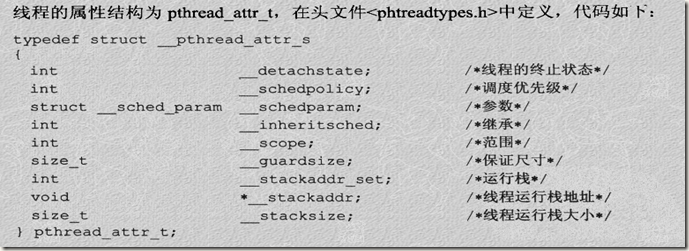
线程属性包括绑定属性、分离属性、堆栈地址、堆栈大小和优先级。其中分离属性、堆栈地址以及堆栈大小的介绍可参考http://www.cnblogs.com/nufangrensheng/p/3522583.html。系统默认的是非邦定、非分离、缺省1M的堆栈、与父进程同样级别的优先级。在pthread_create中,把第二个参数设置为NULL的话,将采用默认的属性配置。
1、绑定属性
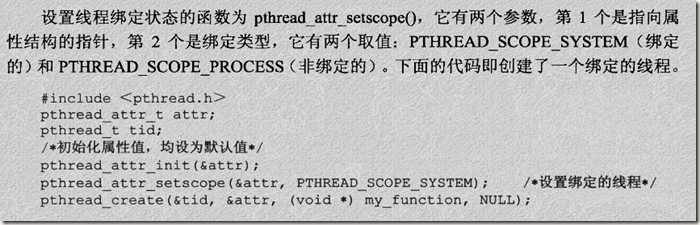
线程可以分为用户级线程和内核级线程两种(可参考http://blog.csdn.net/songjinshi/article/details/9042265以及http://www.xuebuyuan.com/1380720.html),而绑定属性正是设置用户级线程和内核级线程之间的关系。
绑定属性分为两种:绑定和非绑定。在绑定属性下,一个用户级线程固定分配给一个内核线程,因为CPU时间片的调度是面向内核线程(轻量级进程)的,因此具有 绑定属性的线程可以保证在需要的时候总有一个内核线程与之对应。在非绑定属性下,用户线程和内核线程的关系不是始终固定的,而是由系统根据实际情况分配的。
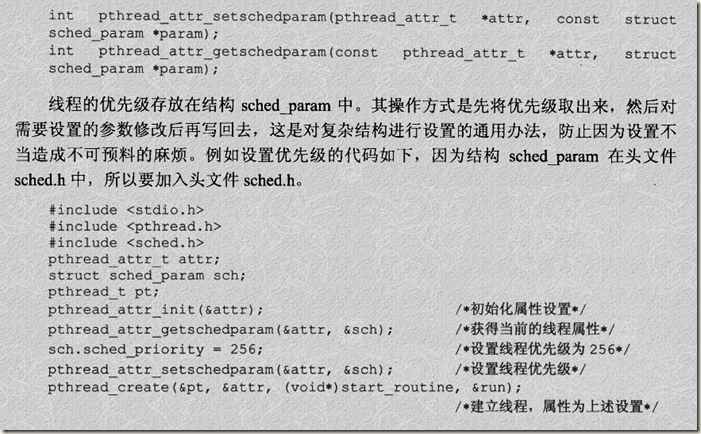
2、优先级

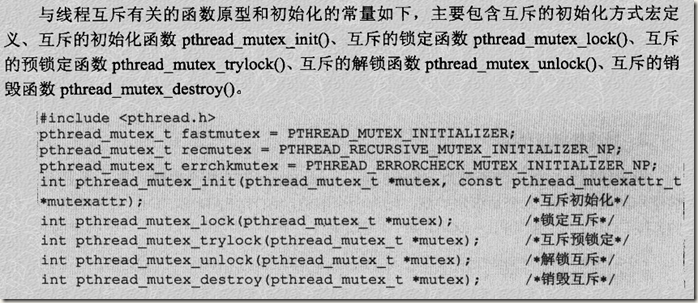
四、线程互斥

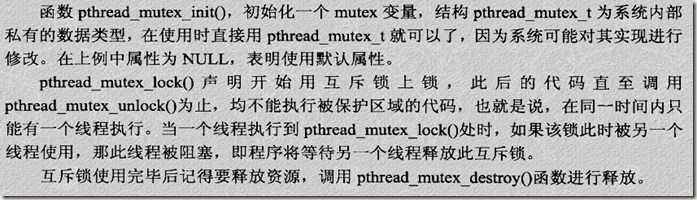
生产者消费者实例(多线程+互斥量):
#include <stdio.h>

#include <pthread.h>

#include <sched.h>

void *producter_f(void *arg);

void *consumer_f(void *arg);

int buffer_has_item = 0;

pthread_mutex_t mutex;

int running = 1;

int

main(void)

{

    pthread_t consumer_t;

    pthread_t producter_t;

    pthread_mutex_init(&mutex, NULL);

    pthread_create(&producter_t, NULL, (void *)producter_f, NULL);

    pthread_create(&consumer_t, NULL, (void *)consumer_f, NULL);

    sleep(1);      /* 等待线程创建完毕 */

    running = 0;

    pthread_join(consumer_t, NULL);

    pthread_join(producter_t, NULL);

    pthread_mutex_destroy(&mutex);

    return(0);

}

void *

producter_f(void *arg)

{

    while(running)

    {

        if(buffer_has_item < 10) /* 最多允许生产10个 */

        {

            pthread_mutex_lock(&mutex);

            buffer_has_item++;

            printf("product, total: %d\n", buffer_has_item);

            pthread_mutex_unlock(&mutex);

        }

    }

}

void *

consumer_f(void *arg)

{

    while(running)

    {

        if(buffer_has_item > 0)   /* 缓冲区为空时不允许再消费 */

        {

            pthread_mutex_lock(&mutex);

            buffer_has_item--;

            printf("consume, total: %d\n", buffer_has_item);

            pthread_mutex_unlock(&mutex);

        }

    }

}
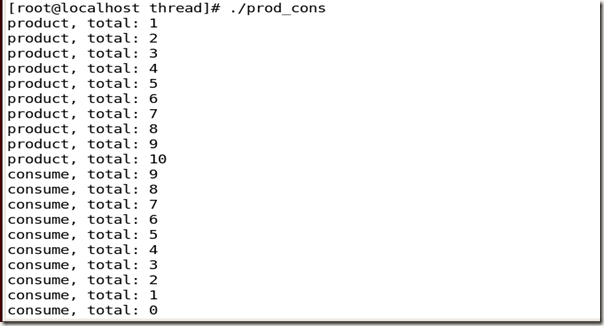
编译运行结果如下:

五、线程中使用信号量
(此处使用的信号量是POSIX无名信号量:http://www.cnblogs.com/nufangrensheng/p/3564306.html)
线程的信号量与进程的信号量类似,使用线程的信号量可以高效地完成基于线程的资源计数。信号量实际上是一个非负的整数计数器,用来实现对公共资源的控制。在公共资源增加的时候,信号量的值增加;公共资源消耗的时候,信号量的值减少;只有当信号量的值大于0时,才能允许访问信号量所代表的公共资源。

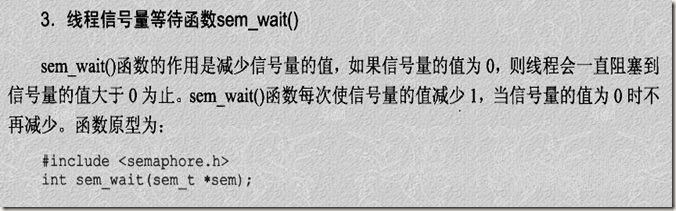
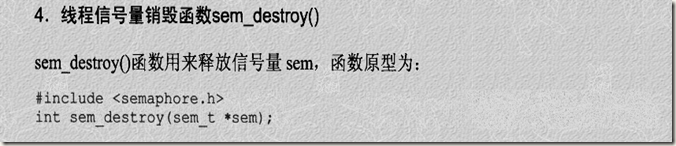
生产者消费者实例(多线程+信号量):
#include <stdio.h>

#include <pthread.h>

#include <semaphore.h>

void *producter_f(void *arg);

void *consumer_f(void *arg);

sem_t sem;

int running = 1;

int

main(void)

{

    pthread_t consumer_t;

    pthread_t producter_t;

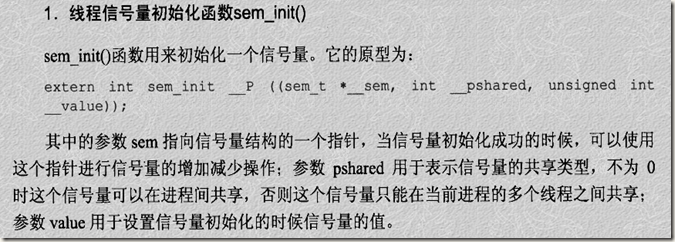
    sem_init(&sem, 0, 16);

    pthread_create(&producter_t, NULL, (void *)producter_f, NULL);

    pthread_create(&consumer_t, NULL, (void *)consumer_f, NULL);

    sleep(1);

    running = 0;

    pthread_join(consumer_t, NULL);

    pthread_join(producter_t, NULL);

    sem_destroy(&sem);

    return(0);

}

void *

producter_f(void *arg)

{

    int semval = 0;

    while(running)

    {

        usleep(1);

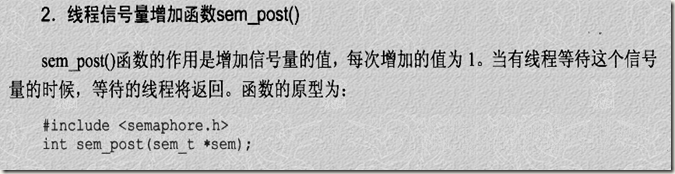
        sem_post(&sem);

        sem_getvalue(&sem, &semval);

        printf("product, total: %d\n", semval);

    }

}

void *

consumer_f(void *arg)

{

    int semval = 0;

    while(running)

    {

        usleep(1);

        sem_wait(&sem);

        sem_getvalue(&sem, &semval);

        printf("consume, total: %d\n", semval);

    }

}
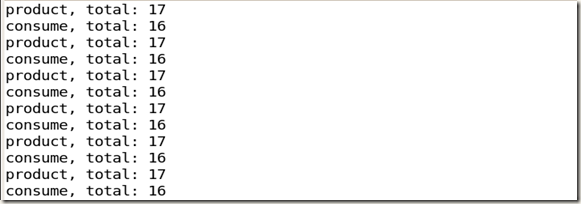
编译运行如下:


更多关于线程的介绍可参考http://www.cnblogs.com/nufangrensheng/p/3518114.html及其后续博文。
Linux下的线程的更多相关文章
- Linux下查看线程数的几种方法汇总
Linux下查看线程数的几种方法汇总 作者:尹正杰 版权声明:原创作品,谢绝转载!否则将追究法律责任. 一.Linux下查看某个进程的线程数量 pstree命令以树状图显示进程间的关系(display ...
- Linux下Java线程具体监控和其dump的分析使用----分析Java性能瓶颈[张振华-Jack]
作者:张振华(Jack) 这里对linux下.sun(oracle) JDK的线程资源占用问题的查找步骤做一个小结: linux环境下,当发现java进程占用CPU资源非常高,且又要想更进一步查出哪一 ...
- Linux下进程线程,Nignx与php-fpm的进程线程方式
1.进程与线程区别 进程是程序执行时的一个实例,即它是程序已经执行到课中程度的数据结构的汇集.从内核的观点看,进程的目的就是担当分配系统资源(CPU时间.内存等)的基本单位. 线程是进程的一个执行流, ...
- Linux下简单线程池的实现
大多数的网络服务器,包括Web服务器都具有一个特点,就是单位时间内必须处理数目巨大的连接请求,但是处理时间却是比较短的.在传统的多线程服务器模型中是这样实现的:一旦有个服务请求到达,就创建一个新的服务 ...
- 一个Linux下C线程池的实现
什么时候需要创建线程池呢?简单的说,如果一个应用需要频繁的创建和销毁线程,而任务执行的时间又非常短,这样线程创建和销毁的带来的开销就不容忽视,这时也是线程池该出场的机会了.如果线程创建和销毁时间相比任 ...
- linux下的线程池
什么时候需要创建线程池呢?简单的说,如果一个应用需要频繁的创建和销毁线程,而任务执行的时间又非常短,这样线程创建和销毁的带来的开销就不容忽视,这时也是线程池该出场的机会了.如果线程创建和销毁时间相比任 ...
- linux下使用线程锁互斥访问资源
linux使用线程锁访问互斥资源: 1.线程锁的创建 pthread_mutex_t g_Mutex; 2.完整代码如下 #include <stdio.h> #include <s ...
- Linux下获取线程TID的方法——gettid()
(转载)http://blog.csdn.net/delphiwcdj/article/details/8476547 如何获取进程的PID(process ID)? 可以使用: #include & ...
- Linux下简易线程池
线程池简介 线程池是可以用来在后台执行多个任务的线程集合. 这使主线程可以自由地异步执行其他任务.线程池通常用于服务器应用程序. 每个传入请求都将分配给线程池中的一个线程,因此可以异步处理请求,而不会 ...
随机推荐
- 一道关于java 类初始化 成员初始化的笔试题的解析
代码如下: java笔试题public class Mapplication { private static int n; private static Mapplication m1 = new ...
- Embedded之memory type
1 Types of memory 2 Characteristics
- win7的centos虚拟机上搭建mysql5.6服务
1 安装包下载 mysql5.6下载地址: http://dev.mysql.com/downloads/mysql/ 这里选择linux版本: navicat11破解版的下载地址: http://d ...
- air for ios
在 Adobe AIR 中为不同屏幕尺寸的多种设备提供支持 使用Flash Builder 4.5进行多平台游戏开发 手机屏幕触控技术与提升AIR在Android上的触控体验 AIR Native E ...
- var隐式类型
var dogName = "ruiky"; 1.[编译器]会在编译时自动根据值的类型推断这个变量的类型: 2.变量类型不可更改:因为声明的时候已经确定类型了. 3.可 ...
- JavaScript 变量、作用域及内存详解
基本类型值有:undefined,NUll,Boolean,Number和String,这些类型分别在内存中占有固定的大小空间,他们的值保存在栈空间,我们通过按值来访问的. (1)值类型:数值.布尔值 ...
- EntityFramework简单例子
@(编程) 这个例子是用vs2013连接mysql数据库. 1. NuGet安装EF和mysql 略 2. 对象 namespace EFDemo { class Student { public s ...
- 摄影初学者挑选相机的常见问题 FAQ
数码相机一次次降价,越来越多的人加入摄影的行列,照相器材还是一个比较专业的领域,并非简单的参数比一下高低就可以知道好坏,很多朋友往往了解了好久还没弄清孰优孰劣,在购机前踌躇半天拿不定主意,我收集了被问 ...
- Windows消息机制要点
1. 窗口过程 每个窗口会有一个称为窗口过程的回调函数(WndProc),它带有四个参数,分别为:窗口句柄(Window Handle),消息ID(Message ID),和两个消息参数(wP ...
- 6 种CSS设置居中的方法
原文 Demos of each of the methods below by clicking here. Horizontal centering with css is rather easy ...