
分布式监控系统开发【day38】:报警模块解析(六)
一、负责把达到报警条件的trigger进行分析 ,并根据 action 表中的配置来进行报警
1、目录结构

2、功能如下
- 1、找到trigger的关联动作,
- 2、收到的数据传给trigger_msg就是trigger_data
- 3、trigger_id') == None怎么会等于None
- 4、每个action都可以直接包含多个主机或主机组
3、实现代码
class ActionHandler(object):

    '''

    负责把达到报警条件的trigger进行分析 ,并根据 action 表中的配置来进行报警

    '''

    def __init__(self,trigger_data,alert_counter_dic):

        self.trigger_data = trigger_data

        #self.trigger_process()

        self.alert_counter_dic = alert_counter_dic

    def record_log(self,action_obj,action_operation,host_id,trigger_data):

        """record alert log into DB"""

        models.EventLog.objects.create(

            event_type = 0,

            host_id=host_id,

            trigger_id = trigger_data.get('trigger_id'),

            log = trigger_data

        )
二、报警发送邮件内容
1、实现代码
   def action_email(self,action_obj,action_operation_obj,host_id,trigger_data):

        '''

        sending alert email to who concerns.

        :param action_obj: 触发这个报警的action对象

        :param action_operation_obj: 要报警的动作对象

        :param host_id: 要报警的目标主机

        :param trigger_data: 要报警的数据

        :return:

        '''

        print("要发报警的数据:",self.alert_counter_dic[action_obj.id][host_id])

        print("action email:",action_operation_obj.action_type,action_operation_obj.notifiers,trigger_data)

        notifier_mail_list = [obj.email for obj in action_operation_obj.notifiers.all()]

        subject = '级别:%s -- 主机:%s -- 服务:%s' %(trigger_data.get('trigger_id'),

                                              trigger_data.get('host_id'),

                                              trigger_data.get('service_item'))

        send_mail(

            subject,

            action_operation_obj.msg_format,

            settings.DEFAULT_FROM_EMAIL,

            notifier_mail_list,

        )
2、邮件截图类似于下图

三、分析trigger并报警
1、为什么tigger里关联了template,template里又关联了主机,那action还要直接关联主机呢?
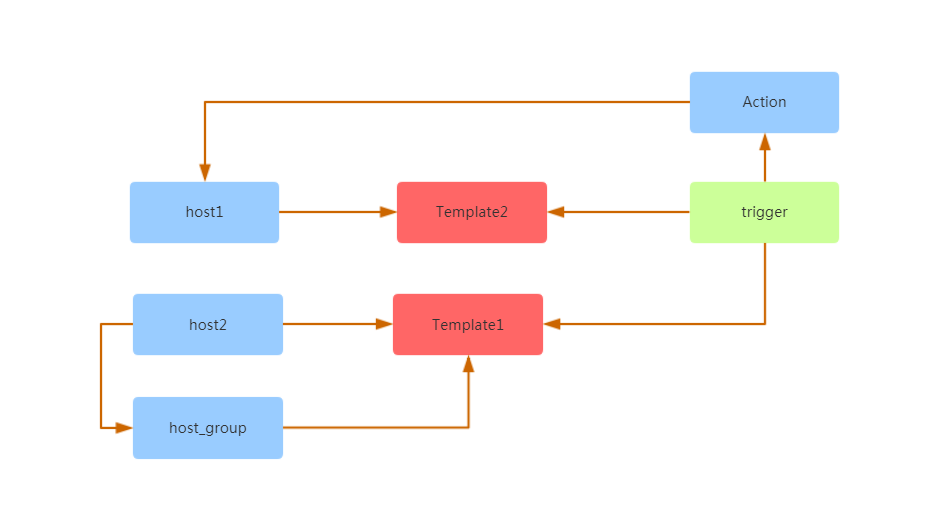
那是因为一个trigger可以被多个template关联,这个trigger触发了,不一定是哪个tempalte里的主机导致的
2、功能如下
1、第一次被 触,先初始化一个action counter dic
2、这个主机第一次触发这个action的报警
你不是触发一次我报一次,我是到了触发时间触发才报警,
3、如果达到报警触发interval次数,就记数+1
4、该报警了
- 报完警后更新一下报警时间 ,这样就又重新计算alert interval了
- 打印离下次触发报警的时间还有[%s]s" %
3、实现代码
    def trigger_process(self):

        '''

        分析trigger并报警

        :return:

        '''

        print('Action Processing'.center(50,'-'))

        if self.trigger_data.get('trigger_id') == None: #trigger id == None

            print(self.trigger_data)

            if self.trigger_data.get('msg'):

                print(self.trigger_data.get('msg'))

                #既然没有trigger id,直接报警给管理 员

            else:

                print("\033[41;1mInvalid trigger data %s\033[0m" % self.trigger_data)

        else:#正经的trigger 报警要触发了

            print("\033[33;1m%s\033[0m" %self.trigger_data)

            trigger_id = self.trigger_data.get('trigger_id')

            host_id = self.trigger_data.get('host_id')

            trigger_obj = models.Trigger.objects.get(id=trigger_id)

            actions_set = trigger_obj.action_set.select_related() #找到这个trigger所关联的action list

            print("actions_set:",actions_set)

            matched_action_list = set() # 一个空集合

            for action in actions_set:

                #每个action 都 可以直接 包含多个主机或主机组,

                # 为什么tigger里关联了template,template里又关联了主机,那action还要直接关联主机呢?

                #那是因为一个trigger可以被多个template关联,这个trigger触发了,不一定是哪个tempalte里的主机导致的

                for hg in action.host_groups.select_related():

                    for h in hg.host_set.select_related():

                        if h.id == host_id:# 这个action适用于此主机

                            matched_action_list.add(action)

                            if action.id not in self.alert_counter_dic: #第一次被 触,先初始化一个action counter dic

                                self.alert_counter_dic[action.id] = {}

                            print("action, ",id(action))

                            if h.id not in self.alert_counter_dic[action.id]:  # 这个主机第一次触发这个action的报警

                                self.alert_counter_dic[action.id][h.id] = {'counter': 0, 'last_alert': time.time()}

                                # self.alert_counter_dic.setdefault(action,{h.id:{'counter':0,'last_alert':time.time()}})

                            else:

                                #如果达到报警触发interval次数,就记数+1

                                if time.time() - self.alert_counter_dic[action.id][h.id]['last_alert'] >= action.interval:

                                    self.alert_counter_dic[action.id][h.id]['counter'] += 1

                                    #self.alert_counter_dic[action.id][h.id]['last_alert'] = time.time()

                                else:

                                    print("没达到alert interval时间,不报警",action.interval,

                                          time.time() - self.alert_counter_dic[action.id][h.id]['last_alert'])

                            #self.alert_counter_dic.setdefault(action.id,{})

                for host in action.hosts.select_related():

                    if host.id == host_id:   # 这个action适用于此主机

                        matched_action_list.add(action)

                        if action.id not in self.alert_counter_dic:  # 第一次被 触,先初始化一个action counter dic

                            self.alert_counter_dic[action.id] = {}

                        if h.id not in self.alert_counter_dic[action.id]: #这个主机第一次触发这个action的报警

                            self.alert_counter_dic[action.id][h.id] ={'counter': 0, 'last_alert': time.time()}

                            #self.alert_counter_dic.setdefault(action,{h.id:{'counter':0,'last_alert':time.time()}})

                        else:

                            # 如果达到报警触发interval次数,就记数+1

                            if time.time() - self.alert_counter_dic[action.id][h.id]['last_alert'] >= action.interval:

                                self.alert_counter_dic[action.id][h.id]['counter'] += 1

                                #self.alert_counter_dic[action.id][h.id]['last_alert'] = time.time()

                            else:

                                print("没达到alert interval时间,不报警", action.interval,

                                      time.time() - self.alert_counter_dic[action.id][h.id]['last_alert'])

            print("alert_counter_dic:",self.alert_counter_dic)

            print("matched_action_list:",matched_action_list)

            for action_obj in matched_action_list:#

                if time.time() - self.alert_counter_dic[action_obj.id][host_id]['last_alert'] >= action_obj.interval:

                    #该报警 了

                    print("该报警了.......",time.time() - self.alert_counter_dic[action_obj.id][host_id]['last_alert'],action_obj.interval)

                    for action_operation in action_obj.operations.select_related().order_by('-step'):

                        if action_operation.step > self.alert_counter_dic[action_obj.id][host_id]['counter']:

                            #就

                            print("##################alert action:%s" %

                                  action_operation.action_type,action_operation.notifiers)

                            action_func = getattr(self,'action_%s'% action_operation.action_type)

                            action_func(action_obj,action_operation,host_id,self.trigger_data)

                            #报完警后更新一下报警时间 ,这样就又重新计算alert interval了

                            self.alert_counter_dic[action_obj.id][host_id]['last_alert'] = time.time()

                            self.record_log(action_obj,action_operation,host_id,self.trigger_data)

                        # else:

                        #     print("离下次触发报警的时间还有[%s]s" % )
分布式监控系统开发【day38】:报警模块解析(六)的更多相关文章
- Python之路,Day20 - 分布式监控系统开发
Python之路,Day20 - 分布式监控系统开发 本节内容 为什么要做监控? 常用监控系统设计讨论 监控系统架构设计 监控表结构设计 为什么要做监控? –熟悉IT监控系统的设计原理 –开发一个 ...
- 分布式监控系统开发【day37】:需求讨论(一)
本节内容 为什么要做监控? 常用监控系统设计讨论 监控需求讨论 如何实现监控服务器的水平扩展? 监控系统架构设计 一.为什么要做监控? 熟悉IT监控系统的设计原理 开发一个简版的类Zabbix监控系统 ...
- Python之分布式监控系统开发
为什么要做监控? –熟悉IT监控系统的设计原理 –开发一个简版的类Zabbix监控系统 –掌握自动化开发项目的程序设计思路及架构解藕原则 常用监控系统设计讨论 Zabbix Nagios 监控系统需求 ...
- day26 分布式监控系统开发
本节内容 为什么要做监控? 常用监控系统设计讨论 监控系统架构设计 监控表结构设计 为什么要做监控? –熟悉IT监控系统的设计原理 –开发一个简版的类Zabbix监控系统 –掌握自动化开发项目的程序设 ...
- 分布式监控系统开发【day38】:报警阈值程序逻辑解析(三)
一.需求讨论 1.请问如何解决延迟问题 1000台机器,每1分钟循环一次但是刚好第一次循环第一秒刚处理完了,结果还没等到第二分钟又出问题,你那必须等到第二次循环,假如我这个服务很重要必须实时知道,每次 ...
- 分布式监控系统开发【day38】:主机存活检测程序解析(七)
一.目录结构 二.入口 1.文件MonitorServer.py import os import sys if __name__ == "__main__": os.enviro ...
- 分布式监控系统开发【day38】:报警自动升级代码解析及测试(八)
一.报警自动升级代码解析 发送邮件代码 def action_email(self,action_obj,action_operation_obj,host_id,trigger_data): ''' ...
- 分布式监控系统开发【day38】:监控trigger表结构设计(一)
一.需求讨论 1.zabbix触发器的模板截图 1.zabbix2.4.7 2.zabbix3.0 2.模板与触发器关联的好处 好处就是可以批量处理,比如我说我有1000机器都要监控cpu.内存.IO ...
- 分布式监控系统开发【day38】:报警策略队列处理(五)
一.目录结构 二.报警策略队列处理 1.入口MonitorServer import os import sys if __name__ == "__main__": os.env ...
随机推荐
- c/c++ 多线程 thread_local 类型
多线程 thread_local 类型 thread_local变量是C++ 11新引入的一种存储类型. thread_local关键字修饰的变量具有线程周期(thread duration), 这些 ...
- 一致性哈希算法----nginx负载均衡器配置之一
一直性Hash算法在很多场景下都有应用,尤其是在分布式缓存系统中,经常用其来进行缓存的访问的负载均衡,比如:redis等<k,v>非关系数据库作为缓存系统.我们首先来看一下采用取模方式进行 ...
- WIN提权总结【本地存档-转载】
[ web提权 ] 1.能不能执行cmd就看这个命令:net user,net不行就用net1,再不行就上传一个net到可写可读目录,执行/c c:\windows\temp\cookies\net1 ...
- 生成文件的MD5值
import hashlib #########测试################# m = hashlib.md5() m.update(b"hello") m.update( ...
- 【Teradata】安装SQL Assistant和Administrator 16.20(含查看.net版本)
1.安装介质获取: 获取的路径:connections==>Gateways==>Customer Services==>TOOLS & APPLICATIONS(点击Mor ...
- MySQL之初识数据库
一 数据库管理软件的由来 基于我们之前所学,数据要想永久保存,都是保存于文件中,毫无疑问,一个文件仅仅只能存在于某一台机器上. 如果我们暂且忽略直接基于文件来存取数据的效率问题,并且假设程序所有的组件 ...
- Linux:Day12(下) 进程、任务计划
vmstat命令: vmstat [options] [delay [ count]] procs: r:等待运行的进程的个数: b:处于不可中断睡眠态的进程个数:(被阻塞的队列的长度): memor ...
- 初学Python——协程
进程.线程和协程区分 我们通常所说的协程Coroutine其实是corporate routine的缩写,直接翻译为协同的例程,一般我们都简称为协程. 在linux系统中,线程就是轻量级的进程,而我们 ...
- C语言中可变参数的函数(三个点,“...”)
C语言中可变参数的函数(三个点,“...”) 本文主要介绍va_start和va_end的使用及原理. 在以前的一篇帖子Format MessageBox 详解中曾使用到va_start和va_end ...
- NOIP2018:The First Step
NOIP2018 RP=Ackermann(4,3) Day 0 日常不想做题也不知道要写什么qwq Day 1 接到$smy$巨佬的催更私信于是来更了(原本准备咕掉的) 最开始的策略是准备总览题目, ...