
第4章:LeetCode--链表
2. Add Two Numbers:
/**

 * Definition for singly-linked list.

 * struct ListNode {

 *     int val;

 *     ListNode *next;

 *     ListNode(int x) : val(x), next(NULL) {}

 * };

 */

class Solution {

public:

    ListNode* addTwoNumbers(ListNode* l1, ListNode* l2) {

        ListNode* ret, *tmp;

        int carry = 0, sum=0;

        ret = tmp = new ListNode(0);

        while(carry||l1||l2){

            sum = carry;

            if(l1)sum+=l1->val;

            if(l2)sum+=l2->val;

            carry = sum/10;

            tmp->val = sum%10;

            if(l1)l1 = l1->next?l1->next:NULL;

            if(l2)l2 = l2->next?l2->next:NULL;

            if(!l1 && !l2 && !carry)return ret;

            tmp->next = new ListNode(0);

            tmp=tmp->next;

        }

        return NULL;

    }

};
19. Remove Nth Node From End of List
/**

 * Definition for singly-linked list.

 * struct ListNode {

 *     int val;

 *     ListNode *next;

 *     ListNode(int x) : val(x), next(NULL) {}

 * };

 */

class Solution {

public:

    ListNode* removeNthFromEnd(ListNode* head, int n) {

        if(head == NULL || n == 0) return head;

        ListNode* slow = head;

        ListNode* fast = head;

        ListNode* pre = head;

        if(fast->next == NULL) return NULL; //[1] 1

        while(n>0){ //if n, slow will just point to the nth

            fast = fast->next;

            n--;

        }

        while(fast != NULL){

            fast = fast->next;

            pre = slow;

            slow = slow->next;

        }

        pre->next = slow->next;

        //if pre==slow==head [1,2] 2

        if(pre == slow) return head->next;

        return head;

    }

};
21. Merge Two Sorted Lists
ListNode* mergeTwoLists(ListNode* l1, ListNode* l2) {

     ListNode *retList = NULL, *tempList = NULL;

     if(!l1 && !l2) return retList;

     int val = 0, val1 = 0, val2 = 0;

     retList = tempList = new ListNode(0);

     while(l1 || l2){

         val1 = l1?l1->val:0;

         val2 = l2?l2->val:0;

         if(((val1<val2) && l1) || !l2){

             tempList->val = val1;

             if(!(l1->next) && !l2) return retList;

             tempList->next = new ListNode(0);

             tempList = tempList->next;

             l1 = (l1->next)?l1->next:NULL;

             continue;

         }

         else{

             tempList->val = val2;

             if(!(l2->next) && !l1) return retList;

             tempList->next = new ListNode(0);

             tempList = tempList->next;

             l2 = (l2->next)?l2->next:NULL;

             continue;

         }

     }

     return retList;

}

//Other guy's solution

ListNode* mergeTwoLists(ListNode* l1, ListNode* l2)

{

    if(!l1)         // If no l1, return l2

        return l2;

    if(!l2)         // If no l2, return l1

        return l1;

    if(!l2 && !l1)  // If neither, return NULL;

        return NULL;

    ListNode* head; // The pointer we will use to construct a merged list

    if(l1->val < l2->val)   // If l1 less than l2

    {

        head = l1;          // We start at l1

        l1 = l1->next;      // and iterate l1

    }

    else                    // If l2 less than l1

    {

        head = l2;          // We start at l2

        l2 = l2->next;      // and iterate l2

    }

    ListNode* ret = head;   // We need to save the addres of the head of the list

    while(l1 && l2)         // While both input lists have values

    {

        if(l1->val < l2->val)   // Compare the current values, if l1 is less

        {

            head->next = l1;    // Append the merged list with l1's current address

            l1 = l1->next;      // Advance l1

        }

        else                    // Else, l2 had the low value

        {

            head->next = l2;    // Append l2 to the list

            l2 = l2->next;      // Advance l2

        }

        head->next->next = NULL;    // Append a NULL teminator to the list

        head = head->next;          // Advance the merged list

    }

    // Lastly, if list were different lengths, we need to append the longer list tail to the merged list

    if(l1)

        head->next = l1;

    else if(l2)

        head->next = l2;

    return ret; // Return the starting address of head that we saved.

}
24. Swap Nodes in Pairs
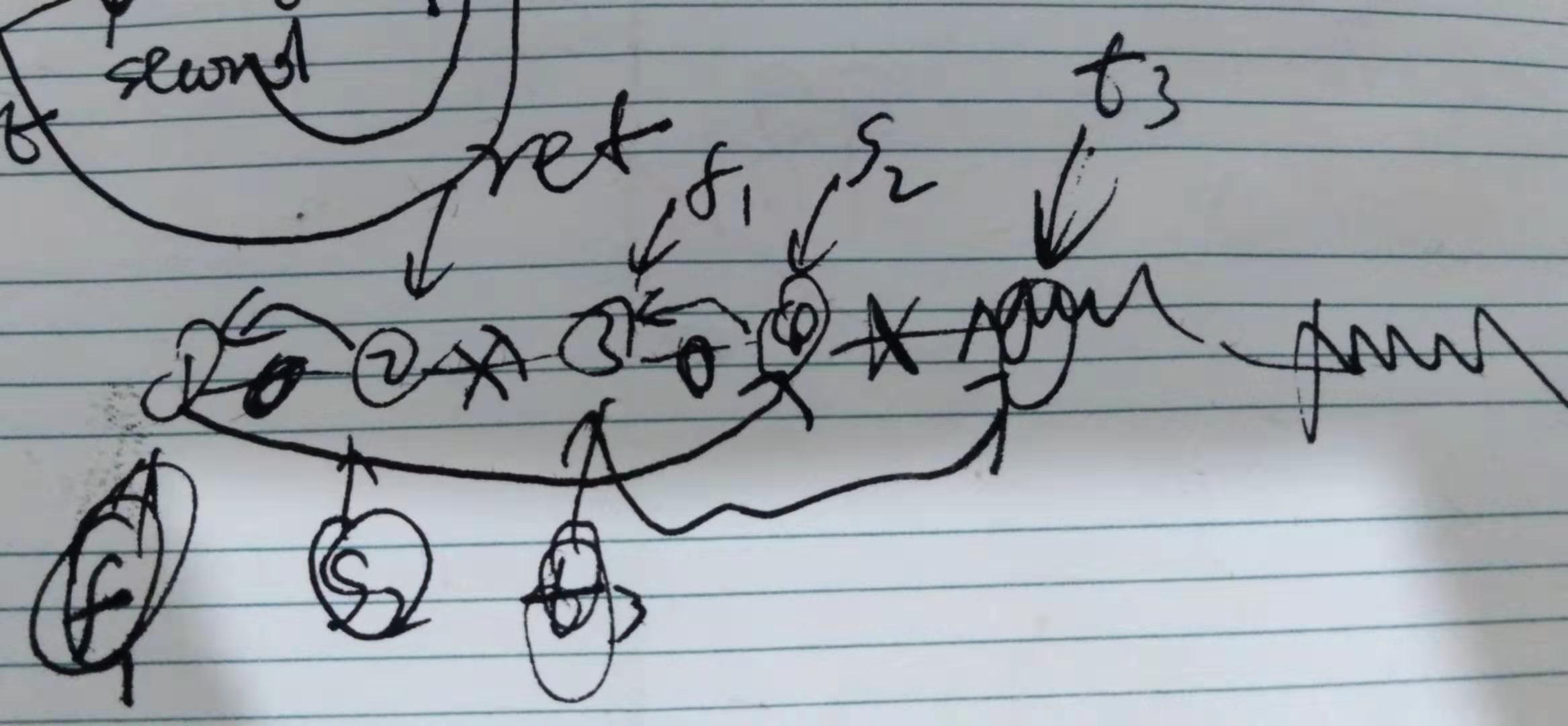
/**

 * Definition for singly-linked list.

 * struct ListNode {

 *     int val;

 *     ListNode *next;

 *     ListNode(int x) : val(x), next(NULL) {}

 * };

 */

class Solution {

public:

    ListNode* swapPairs(ListNode* head) {

        ListNode* first = head;

        if(head == NULL || head->next == NULL)return head;

        ListNode* second = head->next;

        ListNode* ret = second;

        ListNode* third = second->next;

        second->next = first;

        while(third && third->next){

            first->next = third->next;

            first = third;

            second = third->next;

            third = second->next;

            second->next = first;

        }

        if(third == NULL){

            second->next = first;

            first->next = NULL;

        }else{

            //third->next =NULL

            first->next = third;

        }

        return ret;

    }

};
61. Rotate List
/**

 * Definition for singly-linked list.

 * struct ListNode {

 *     int val;

 *     ListNode *next;

 *     ListNode(int x) : val(x), next(NULL) {}

 * };

 */

class Solution {

public:

    ListNode* rotateRight(ListNode* head, int k) {

        if(head == NULL || k==0) return head;

        int len = 1;

        ListNode* orighead = head;

        ListNode* newhead=head;

        while(head->next){

            len++;

            head = head->next;

        }

        //loop the link

        head->next = orighead;

        k = len - k%len-1; //find the front node of kth.

        while(k){

            newhead = newhead->next;

            k--;

        }

        ListNode* ret = newhead->next;

        newhead->next = NULL;

        return ret;

    }

};
83. Remove Duplicates from Sorted List:
/**

 * Definition for singly-linked list.

 * struct ListNode {

 *     int val;

 *     ListNode *next;

 *     ListNode(int x) : val(x), next(NULL) {}

 * };

 */

class Solution {

public:

    ListNode* deleteDuplicates(ListNode* head) {

        ListNode *dup = NULL;

        ListNode *cur = head;

        if(cur == NULL || cur->next == NULL) return head;

        ListNode *nxt = cur->next;

        while(nxt != NULL){

            if(cur->val == nxt->val){

                ListNode *dup = nxt;

                nxt = nxt->next;

                cur->next = nxt;

                delete dup;

            }else{

                cur = nxt;

                nxt = nxt->next;

            }

        }

        return head;

    }

};
141. Linked List Cycle
/**

 * Definition for singly-linked list.

 * struct ListNode {

 *     int val;

 *     ListNode *next;

 *     ListNode(int x) : val(x), next(NULL) {}

 * };

 */

class Solution {

public:

    bool hasCycle(ListNode *head) {

        ListNode* slow = head;

        ListNode* fast = head;

        while(fast && fast->next){

            slow = slow->next;

            fast = fast->next->next; //2step

            if(slow == fast) return true;

        }

        return false;

    }

};
147. Insertion Sort List
class Solution {

public:

    ListNode* insertionSortList(ListNode* head) {

        ListNode* dummy = new ListNode(0);

        ListNode* pre = dummy;

        ListNode* curr = head;

        if(head == NULL || head->next == NULL) return head;

        ListNode* next = NULL;

        while(curr != NULL){

            next = curr->next;

            while(pre->next != NULL && pre->next->val < curr->val){ //find insert pos

                pre = pre->next;

            }

            curr->next = pre->next; //insert

            pre->next = curr;

            curr = next; //move curr to next node

            pre = dummy;//reset the pre

        }

        return dummy->next;

    }

};
148. Sort List
/**

 * Definition for singly-linked list.

 * struct ListNode {

 *     int val;

 *     ListNode *next;

 *     ListNode(int x) : val(x), next(NULL) {}

 * };

 */

class Solution {

public:

    ListNode* sortList(ListNode* head) {

        ListNode*p = head;

        ListNode*q = NULL;

        int temp = 0;

        if(head == NULL) return head;

        for(; p!=NULL; p=p->next)

            for(q=p->next; q!=NULL; q=q->next){

                if(p->val > q->val){

                    temp = p->val;

                    p->val = q->val;

                    q->val = temp;

                }

            }

        return head;

    }

};
160. Intersection of Two Linked Lists
/**

 * Definition for singly-linked list.

 * struct ListNode {

 *     int val;

 *     ListNode *next;

 *     ListNode(int x) : val(x), next(NULL) {}

 * };

 */

class Solution {

public:

    ListNode *getIntersectionNode(ListNode *headA, ListNode *headB) {

        ListNode* p1 = headA;

        ListNode* p2 = headB;

        while(p1 != p2){

            p1 = p1?p1->next:headB;

            p2 = p2?p2->next:headA;

        }

        return p1;

    }

};
203. Remove Linked List Elements
/**

 * Definition for singly-linked list.

 * struct ListNode {

 *     int val;

 *     ListNode *next;

 *     ListNode(int x) : val(x), next(NULL) {}

 * };

 */

class Solution {

public:

    ListNode* removeElements(ListNode* head, int val) {

        if(head == NULL) return head;

        ListNode* p = head;

        while (p->next != NULL){

            if(p->next->val == val){

                ListNode *tmp = p->next;

                p->next = p->next->next;

                delete tmp;

            }

            else{

                p = p->next;

            }

        }

        if(head->val == val)

            head = head->next;

        return head;

    }

};
206. Reverse Linked List:
/**

 * Definition for singly-linked list.

 * struct ListNode {

 *     int val;

 *     ListNode *next;

 *     ListNode(int x) : val(x), next(NULL) {}

 * };

 */

class Solution {

public:

    ListNode* reverseList(ListNode* head) {

        if(head == NULL || head->next == NULL) return head;

        ListNode* pre = NULL;

        ListNode* cur = head;

        ListNode* nx = cur->next;

        while(nx != NULL){

            cur->next = pre;

            pre = cur;

            cur = nx;

            nx = nx->next;

        }

        cur->next = pre;

        return cur;

    }

};
237. Delete Node in a Linked List
/**

 * Definition for singly-linked list.

 * struct ListNode {

 *     int val;

 *     ListNode *next;

 *     ListNode(int x) : val(x), next(NULL) {}

 * };

 */

class Solution {

public:

    void deleteNode(ListNode* node) {

        ListNode* p = node->next;

        node->val = p->val;

        node->next = p->next;

        delete p;

    }

};
https://www.cnblogs.com/upcwanghaibo/p/6928887.html
https://blog.csdn.net/qq_37466121/article/details/88204678
https://www.cnblogs.com/upcwanghaibo/p/6928887.html
第4章:LeetCode--链表的更多相关文章
- 为什么我要放弃javaScript数据结构与算法(第五章)—— 链表
这一章你将会学会如何实现和使用链表这种动态的数据结构,这意味着我们可以从中任意添加或移除项,它会按需进行扩张. 本章内容 链表数据结构 向链表添加元素 从链表移除元素 使用 LinkedList 类 ...
- [LeetCode] [链表] 相关题目总结
刷完了LeetCode链表相关的经典题目,总结一下用到的技巧: 技巧 哑节点--哑节点可以将很多特殊case(比如:NULL或者单节点问题)转化为一般case进行统一处理,这样代码实现更加简洁,优雅 ...
- Leetcode链表
Leetcode链表 一.闲聊 边学边刷的--慢慢写慢慢更 二.题目 1.移除链表元素 题干: 思路: 删除链表节点,就多了一个判断等值. 由于是单向链表,所以要删除节点时要找到目标节点的上一个节点, ...
- [LeetCode] 链表反转相关题目
暂时接触到LeetCode上与链表反转相关的题目一共有3道,在这篇博文里面总结一下.首先要讲一下我一开始思考的误区:链表的反转,不是改变节点的位置,而是改变每一个节点next指针的指向. 下面直接看看 ...
- LeetCode链表解题模板
一.通用方法以及题目分类 0.遍历链表 方法代码如下,head可以为空: ListNode* p = head; while(p!=NULL) p = p->next; 可以在这个代码上进行修改 ...
- LeetCode链表相加-Python<二>
上一篇:LeetCode两数之和-Python<一> 题目:https://leetcode-cn.com/problems/add-two-numbers/description/ 给定 ...
- leetcode 链表类型题总结
链表测试框架示例: // leetcodeList.cpp : 定义控制台应用程序的入口点.vs2013 测试通过 // #include "stdafx.h" #include ...
- leetcode链表相关
目录 2/445两数相加 综合题(328奇偶链表, 206反转链表, 21合并两个有序链表 ) 92反转链表 II 链表排序(148排序链表, 876链表的中间结点) 142环形链表 II 160相交 ...
- LeetCode 链表题 ( Java )
leetcode 237. 删除链表中的节点 链接:https://leetcode-cn.com/problems/delete-node-in-a-linked-list/ 示例 : 输入: he ...
- LeetCode 链表的插入排序
Sort a linked list using insertion sort 创建一个新的链表,将旧链表的节点插入到正确的位置 package cn.edu.algorithm.huawei; pu ...
随机推荐
- yarn 强制孙依赖的版本
今天博主遇到一个棘手的问题,@vue/cli-service 依赖了一个包 portfiner@^1.0.20,但是 2 天前,这个包更新到了1.0.22,带来了一些问题. 博主第一反应就是想 yar ...
- 配置interfaces
demo1 # This file describes the network interfaces available on your system # and how to activate th ...
- 如何十倍提高你的webpack构建效率
前言 http://jafeney.com/2016/07/10/2016-07-10-webpack/ webpack 是个好东西,和 NPM 搭配起来使用管理模块实在非常方便.而 Babe ...
- mp4文件格式解析(转)
mp4文件格式解析 MP4文件格式带数据详解 MP4文件格式的解析,以及MP4文件的分割算法
- LC 375. Guess Number Higher or Lower II
We are playing the Guess Game. The game is as follows: I pick a number from 1 to n. You have to gues ...
- Leetcode: Find First and Last Position of Element in Sorted Array
Given a sorted array of integers, find the starting and ending position of a given target value. You ...
- ASP程序中调用Now()总显示“上午”和“下午”,如何解决?
ASP程序中调用Now()总显示这样的格式:“2007-4-20 下午 06:06:38”,我要的正确格式为“2007-4-20 18:06:38”,我已经通过控制面板==>区域和语言选项==& ...
- C#依赖注入实例
http://qing.weibo.com/tj/400082fa33001h7x.html 1.5 实现依赖注入1.5.1 背景介绍 设计模式中,尤其是结构型模式很多时候解决的就是对象间的依赖关系, ...
- 阶段5 3.微服务项目【学成在线】_day17 用户认证 Zuul_03-用户认证-认证服务查询数据库-查询用户接口-接口定义
1.2.4 查询用户接口 完成用户中心根据账号查询用户信息接口功能. 在ucenter这个服务里面定义查询用户信息的接口 这个接口在auth的服务的loadUserByUserName这个方法里面被调 ...
- 算法习题---3.12浮点数(UVa11809)
一:题目 尴尬的非会员水印 二:题目摘要 1.int和float比较 int共32位,可以表示的最大的数为2^32次方 float虽然也是32位,但是是以指数形式保存,指数占8位(含符号),最大127 ...